← All guests

Center Stage / the conversation

AJ Zagglin

Psychotherapist & Performance Coach

Watch full interview on YouTube ↗

Their story

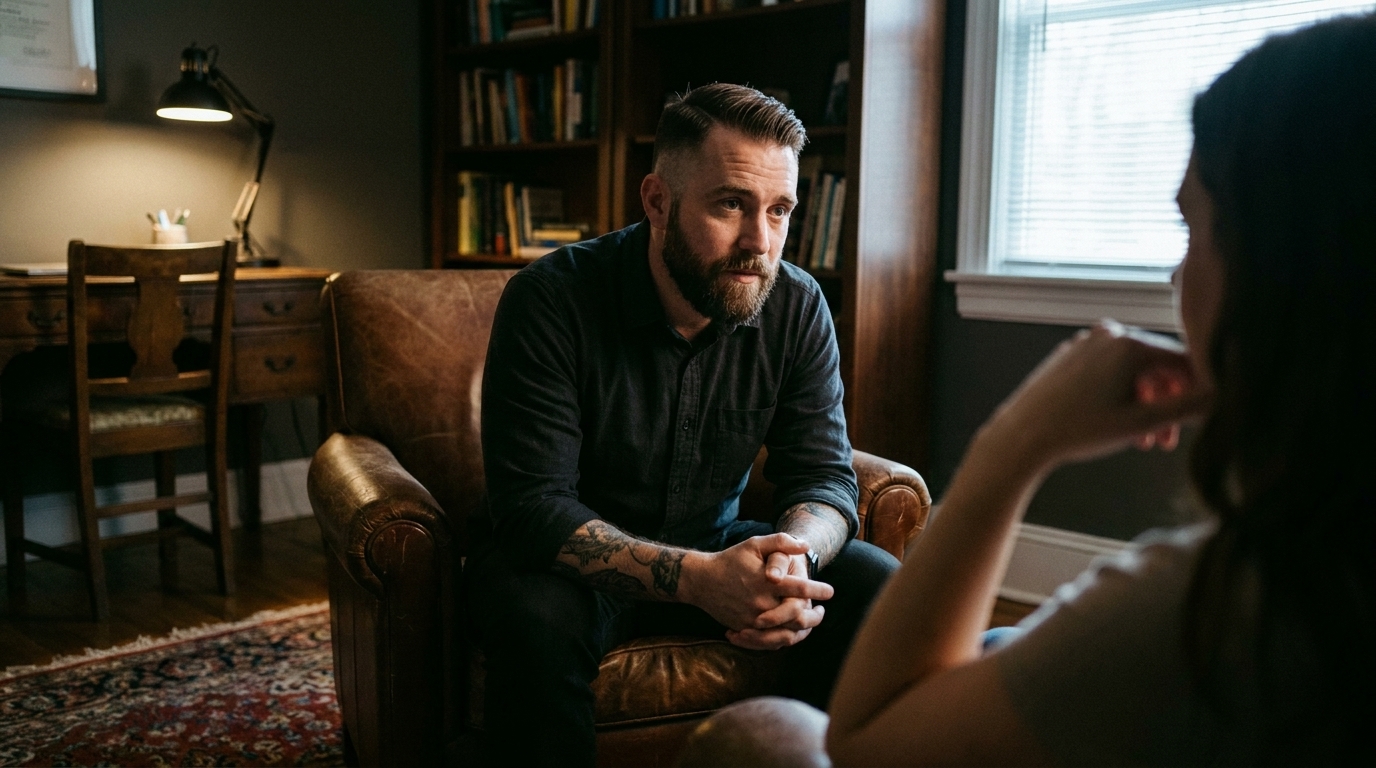
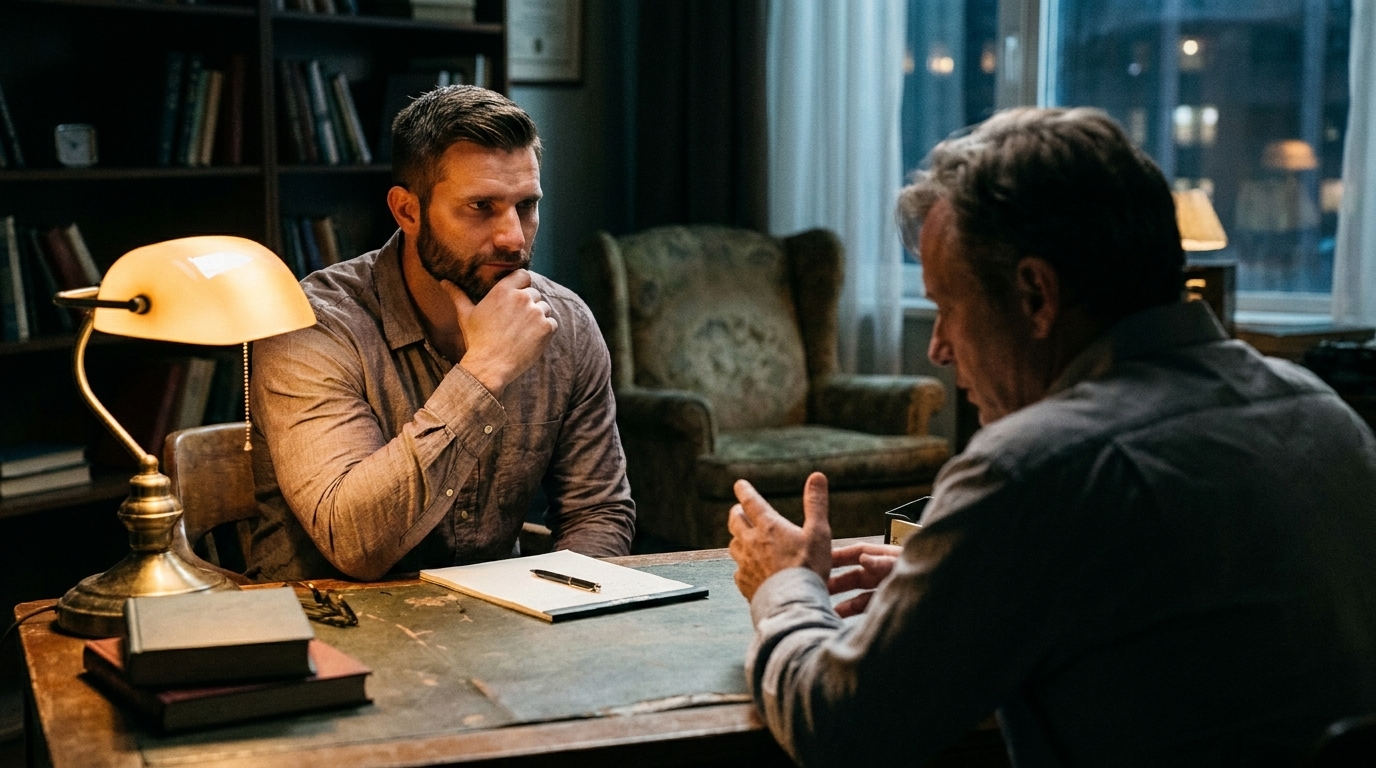
AJ Zagglin is a psychotherapist, performance coach, and trusted friend of the Mornings in the Lab community who has appeared multiple times on the show over the years — always returning to a warm roast and a genuine conversation. He works in private practice with men, women, and athletes, and has built a reputation as the kind of therapist you might not expect: Iron Maiden shirt, backwards hat, tattoos, and a directness that makes his clients feel both challenged and genuinely seen.

Read the full guest story

AJ Zagglin is a psychotherapist, performance coach, and trusted friend of the Mornings in the Lab community who has appeared multiple times on the show over the years — always returning to a warm roast and a genuine conversation. He works in private practice with men, women, and athletes, and has built a reputation as the kind of therapist you might not expect: Iron Maiden shirt, backwards hat, tattoos, and a directness that makes his clients feel both challenged and genuinely seen. His professional focus is on the patterns that run people's lives underneath the surface — the relational dynamics, the self-limiting beliefs, the performance blocks, and the emotional architecture that shapes every decision a person makes before they consciously decide anything. He works at the intersection of mental health and performance, drawing on therapeutic tools to help people not just feel better but operate better — as athletes, business owners, partners, and parents. AJ's practice is busy. On his Mornings in the Lab appearance, he noted that business was "extremely busy" — a good problem that came with its own challenge of balancing his two professional worlds (clinical therapy and performance coaching) alongside his personal life. He described the scheduling work of creating that balance with the equanimity of someone who genuinely enjoys being stretched, not just stressed. When asked about the consistent themes he sees across clients, AJ gave an answer that reflects both clinical depth and hard-won wisdom: 80% of human challenges are the same, regardless of profession, geography, or circumstance. And almost always, somewhere in the story, there is a relationship that is playing a central role. Not necessarily a romantic relationship — it might be with a coach, a co-worker, a family member, a business partner — but a relationship. His conviction: the ability to build and repair relationships is 90% of life, and it is the skill most people never explicitly develop. His approach in the therapy room is shaped by a critical belief about the client: they are the expert on their own life. His role is not to prescribe answers but to offer different perspectives, ask the questions the client's own mind cannot generate, and create enough safety that genuine self-examination becomes possible. He is keenly aware that his presentation — the tattoos, the backwards hat, the casual aesthetic — creates first impressions that can cut both ways. Some clients are immediately drawn to him; others need time to get past the image to the substance. He is comfortable with both, because his conviction is that over time, people form their opinions based on actions, not appearances. He is also a man with his own textures. He attended the Guns N' Roses reunion tour opening in Las Vegas in 2017 with the lab's host Keith Bilous — a friendship that predates and extends beyond the show. He is an Iron Maiden devotee. He is, by his own account, deeply invested in his children. He navigates two professional identities simultaneously and is doing the work to make them coexist with enough grace that neither one suffers. AJ Zagglin represents a type of therapist that is still underrepresented in the cultural imagination: someone who shows up in a room that feels safe because it doesn't feel clinical, whose directness is a form of respect, and who believes — as a professional conviction backed by years of practice — that the answer to most of what ails people is already inside them. His job is to help them find the question that proves it.

In their own words

80% of human challenges are universal

No matter what we do for work, no matter what our profession is, no matter where we live — 80% of our challenges are very similar to one another.

AJ naming the most important finding from years of clinical practice: that human beings are far more alike in their struggles than they are different. This reframe dissolves the shame of difficulty and the illusion that exceptional circumstances produce exceptional problems. Most of what people carry is common ground.

Every problem traces back to a relationship

Almost every story, almost every challenge — at some point you'll notice there's a relationship somewhere in that story that's playing a pretty big part.

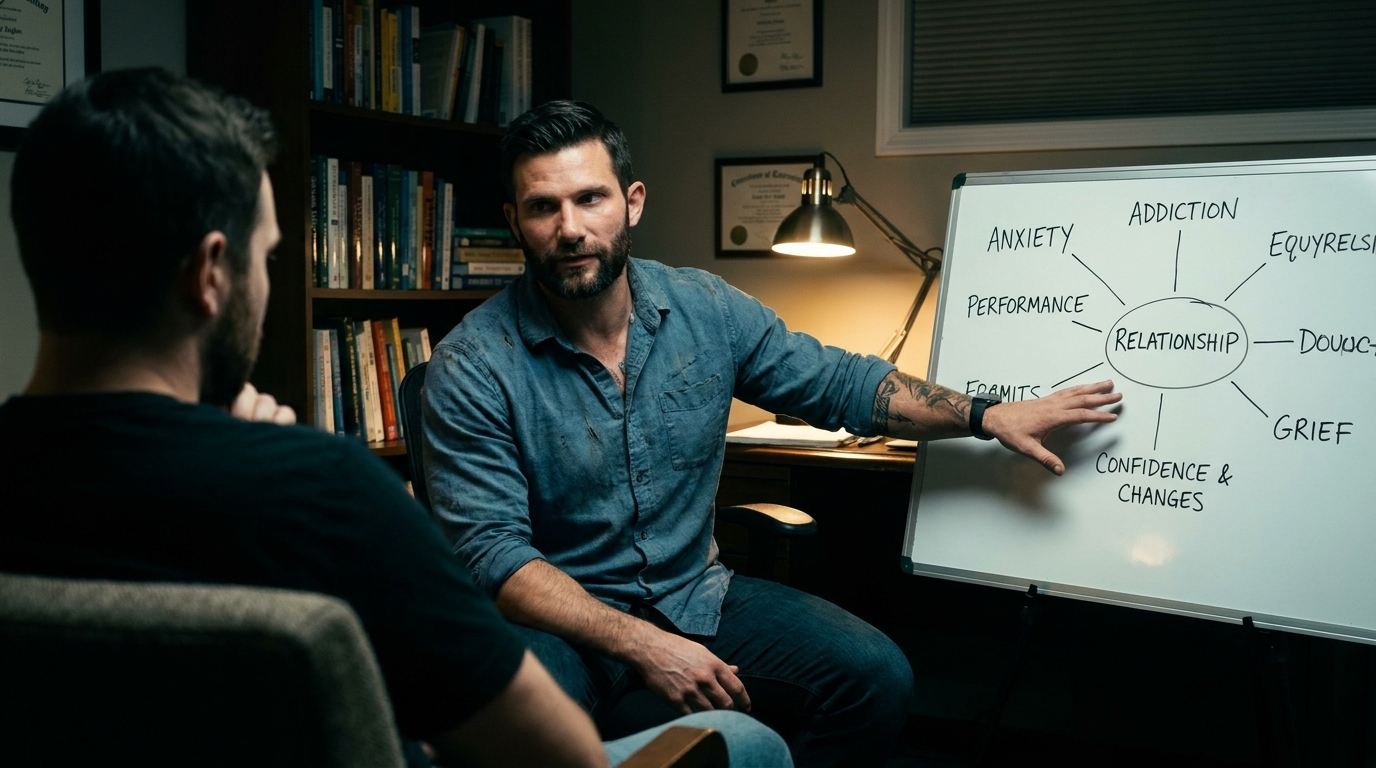
AJ identifying the consistent through-line across every presenting issue he encounters in practice. Whatever brings a client to the door — performance, anxiety, addiction, grief — there is almost always a relationship at the center of the story. Building relationship skills is therefore not soft work; it is the most practical work there is.

Relationship-building as the master skill

The ability to build relationships with people is 90% of life — whether that's privately or personally or professionally.

AJ's concise statement of the most undervalued practical skill he encounters. People train physical skills, professional skills, intellectual skills. Relationship skills — the actual mechanics of trust, repair, and connection — are rarely developed intentionally, and the gap shows up everywhere.

The client as the expert on their own life

My goal is to have people truly believe and understand that they're the ones that are capable in this. They are the expert on their own lives.

AJ articulating his core therapeutic philosophy — one that resists the dependency dynamic that many helping relationships create. Rather than positioning himself as the answer, he positions the client as the capacity and himself as the catalyst. This is a philosophically distinct and more empowering model than traditional advice-giving.

Actions over words — how trust is actually built

Over time, people are going to ultimately form their opinion on you based more so on what you do than what you say with your words alone.

AJ reflecting on the trust-building process in therapy and in life — acknowledging that his unconventional appearance creates first impressions that must be earned past. The principle applies universally: credibility is demonstrated, not claimed. This is also why his practice is full.

What clients show is not always what is

What they're showing me — is that actually what's going on? Sometimes you might find out that they were maybe not part of the bucket that they were presented.

AJ describing the careful interpretive work of the first meeting — that what clients present is often a performance of themselves rather than the truth of themselves, and that skilled therapeutic observation means holding the presented version lightly while looking for what's underneath it.

Relationship skills as the foundation of a good life

You know, it's like we've talked about this before — having a really great set of skills to help build relationships with people is important because that's like 90% of life.

AJ restating his core conviction in the context of a conversation about human universals. The repetition is deliberate: in his experience, relationship skill is so consistently the missing piece that it bears naming more than once.

Balancing abundance — the good problem of success

You've got to consciously schedule and balance these things to make it all fit, to make it all work. But that's a good problem to have.

AJ describing his current season of life — busy practice, competing professional identities, personal demands — and reframing it with characteristic equanimity. The 'good problem to have' framing is not dismissive; it reflects genuine gratitude for the abundance that creates the tension.

Appearances & videos

Original interview details

Every Problem You Have Comes Back to THIS

Episode #CS-030

Center Stage

  • Mornings in the Lab · Center StageFebruary 27, 2026Watch →

From the interview

No matter what we do for work, no matter what our profession is, no matter where we live — 80% of our challenges are very similar to one another.
My goal is to have people truly believe and understand that they're the ones that are capable in this. They are the expert on their own lives.
Over time, people are going to ultimately form their opinion on you based more so on what you do than what you say with your words alone.

Questions & answers

Who is AJ Zagglin and what does he do?

AJ Zagglin is a psychotherapist and performance coach who works with men, women, and athletes in private practice. He is a recurring guest and close personal friend of the Mornings in the Lab community, known for his distinctive presentation — Iron Maiden shirts, backwards hat, tattoos — that contrasts sharply with the clinical therapist stereotype and creates an immediately accessible environment for clients who might otherwise avoid seeking help. His practice focuses on the relational patterns, mental blocks, and emotional architecture that shape how people perform and connect across all areas of their lives.

What does AJ Zagglin believe is at the root of most people's problems?

AJ Zagglin's most consistent clinical observation is that almost every presenting challenge — regardless of how it arrives — contains a relationship at its core. Whether the client comes in for performance issues, anxiety, life transitions, or business struggles, somewhere in the story there is almost always a relationship that is playing a central role. His broader conviction is that 80% of human challenges are universal across professions, geographies, and circumstances, and that the ability to build and repair relationships is 90% of what a good life requires. Most people never explicitly develop this skill, and the gap shows up everywhere he works.

How does AJ Zagglin approach his work with clients?

AJ Zagglin's approach is built on a foundational belief: the client is the expert on their own life. His role is not to provide answers but to offer different perspectives and ask the questions that a person's own mind cannot generate in isolation. He is careful not to foster dependency, aiming instead to build each client's confidence in their own capacity. He is attuned to the difference between what a client presents in an initial session — often a performance of themselves — and what is actually going on underneath. He holds the presented version lightly while the trust required for deeper work develops, and he builds that trust through actions rather than promises.

Does AJ Zagglin work with athletes specifically?

Yes. AJ Zagglin works with athletes as part of his broader practice and has specific experience with performance psychology and the mental blocks that limit athletic performance. His directness and unconventional presentation are often a particularly good fit for athletes, who may be resistant to traditional therapy but are drawn to someone who communicates like a coach and thinks like a clinician. His frame — that relationship-building and internal emotional skills are the foundation of performance — applies across sport and life, and he regularly works with clients navigating the transition between athletic identity and other phases of professional and personal development.

What makes AJ Zagglin different from other therapists?

AJ Zagglin's distinctiveness lies in the combination of his aesthetic (Iron Maiden fan with tattoos, backwards hat, casual presentation) and his clinical depth. The presentation creates an entry point for people who would never seek out a traditional therapist — it signals that the room will be direct, non-judgmental, and real. The depth follows from years of practice and a consistent philosophical commitment to client empowerment rather than client dependency. He is comfortable with the fact that first impressions create both attraction and suspicion, knowing that people ultimately form their opinions based on actions. His practice is busy — both as a sign and as a result of this approach.

Is AJ Zagglin a returning guest on Mornings in the Lab?

Yes. AJ Zagglin is a recurring guest and close personal friend of the Mornings in the Lab hosts, particularly Keith Bilous. He has appeared on the show multiple times over the years — his returns are greeted with roasting rather than formal introduction, signaling the genuine friendship that underlies the professional conversations. He and Keith attended the Guns N' Roses reunion tour opening at T-Mobile Arena in Las Vegas in 2017. Their conversations on the show are informal catchups that happen to contain substantive discussion of therapy, human psychology, and the universal patterns he sees in his practice.

The full conversation

Read the transcript

Security just texted me. AJ's back. They asked guest or friend. I said friend. Gates opened. Friends don't get applauded. They get roasted. AJ, how's life been treating you since you vanished on us? We're doing the catchup lightning round. One win, one regret. One thing you're obsessed with right now. All right, friend of the lab. Seat's yours. We missed you. >> Hugh, Zagglin. >> What's going on, guys? >> What's up, brother? >> It's good to see you guys. How are you, pal? Good to see you, too. Been a long time. Oh, and you got the Iron Maiden shirt on today. >> One of the greatest bands of all time, man. >> So, Zeg, it's been a while, man. And I told Johnny that he would be happy because you were coming in today. I thought we'd keep it informal and we just catch up with our brother from another mother, AJ Zagglin.

Open transcript page →
Guest gallery
Pre-show shareable graphic generated by the Authority Page Builder.
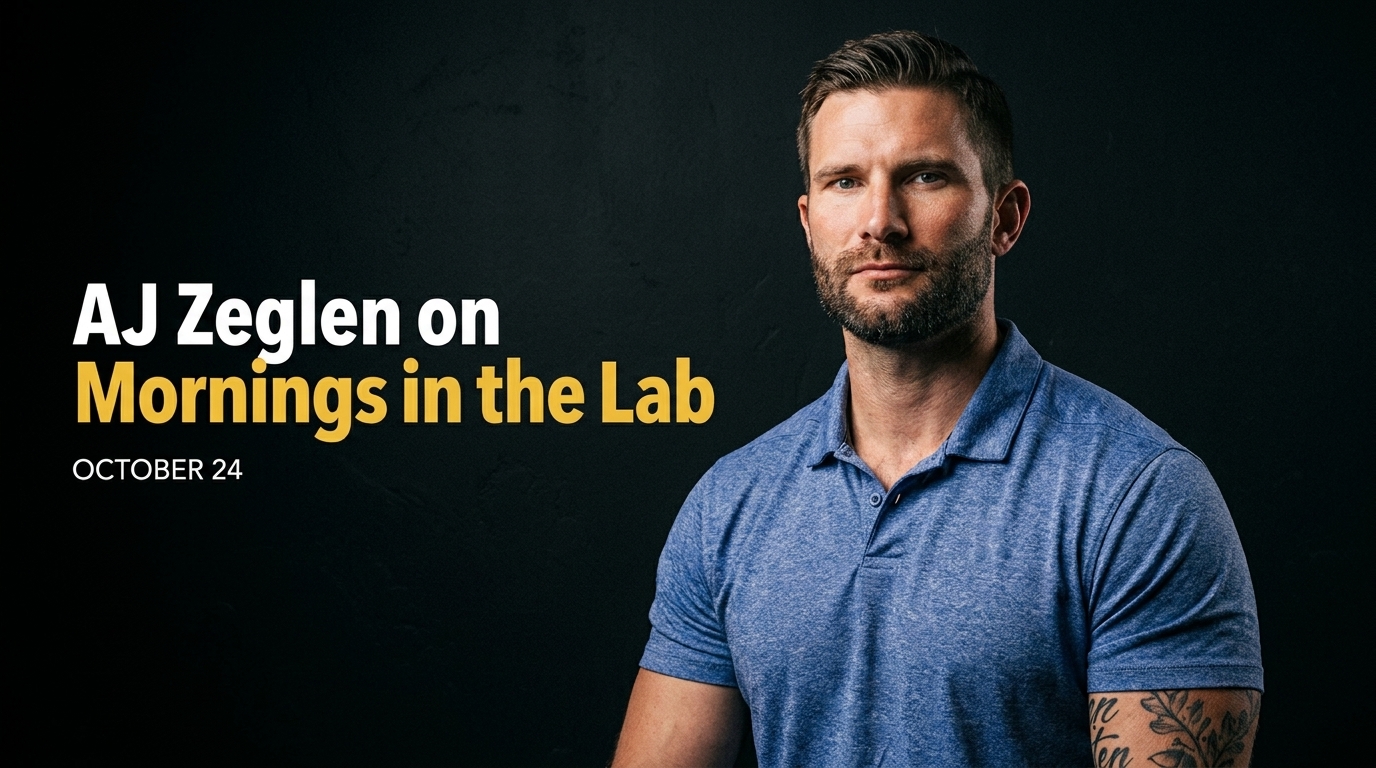
Announcement card · Pre-show shareable graphic generated by the Authority Page Builder.
80% of human challenges are universal
Every problem traces back to a relationship
Relationship-building as the master skill
The client as the expert on their own life
Actions over words — how trust is actually built
What clients show is not always what is
Relationship skills as the foundation of a good life
Balancing abundance — the good problem of success
Original headshot ↗
Conversation topics

The return — catching up with a friend of the lab · ~3 minutes · AJ returns to an enthusiastic roast from the hosts. The informal nature of the relationship is established immediately — this is not a formal interview but a genuine catch-up between people who know each other well. Iron Maiden shirt noted. Guns N' Roses Vegas memory surfaced. · What's going on in the practice — busy, balanced, grateful · ~3 minutes · AJ updates on his practice — extremely busy, navigating his two professional worlds (therapy and performance coaching), consciously scheduling balance. He frames the busyness as a good problem and describes the gratitude that comes with genuine demand. · The 80% theme — every problem is more universal than it looks · ~4 minutes · AJ names the most consistent observation from years of practice: that 80% of human challenges are the same regardless of who is presenting them. The apparent diversity of problems is mostly surface. Underneath it, the same handful of patterns run almost everyone. · Relationships at the center of every story · ~4 minutes · AJ walks the hosts through his clinical finding that almost every challenge traces back to a relationship — not always romantic, sometimes a coach, a co-worker, a parent. The conversation explores why relationship skill is so consistently the missing piece. · The first meeting — reading what's presented versus what's real · ~4 minutes · AJ describes the careful interpretive work of the first session — holding the presented version lightly, building the trust required for depth, and the common mistake of acting on first impressions. He also addresses Keith's question about whether clients sometimes seek his approval rather than his help. · The Iron Maiden therapist — what his look does for the room · ~3 minutes · The hosts explore what it's like to be a therapist who looks nothing like a therapist — and AJ reflects on how his presentation creates both immediate connection and initial resistance. His answer: trust is built through actions, not appearance, and the clients who find their way to him through the initial reaction are usually the ones who needed exactly this kind of room. · The client as expert — empowerment versus dependency · ~4 minutes · AJ articulates his core therapeutic philosophy: the goal is never to make a client dependent on him. He is there to provide perspectives and ask the questions that generate the client's own insight. The client's life and capacity are the tools. His job is to help them use them. · Coaching athletes — where mental health and performance intersect · ~3 minutes · AJ discusses his work with athletes and the specific dynamics of performance psychology — what mental blocks look like in a competitive context, how fear and self-doubt limit physical capability that is already there, and why the relationship-building skills that matter in therapy are the same ones that determine athletic outcomes. · What's coming — personal life, the show, and what AJ is building · ~3 minutes · A genuine conversation about AJ's life at this stage — his kids, his two professional worlds, what he is most excited about, and what he is carrying. The hosts close with warmth and a clear invitation for the next return visit.