← All guests

Center Stage / the conversation

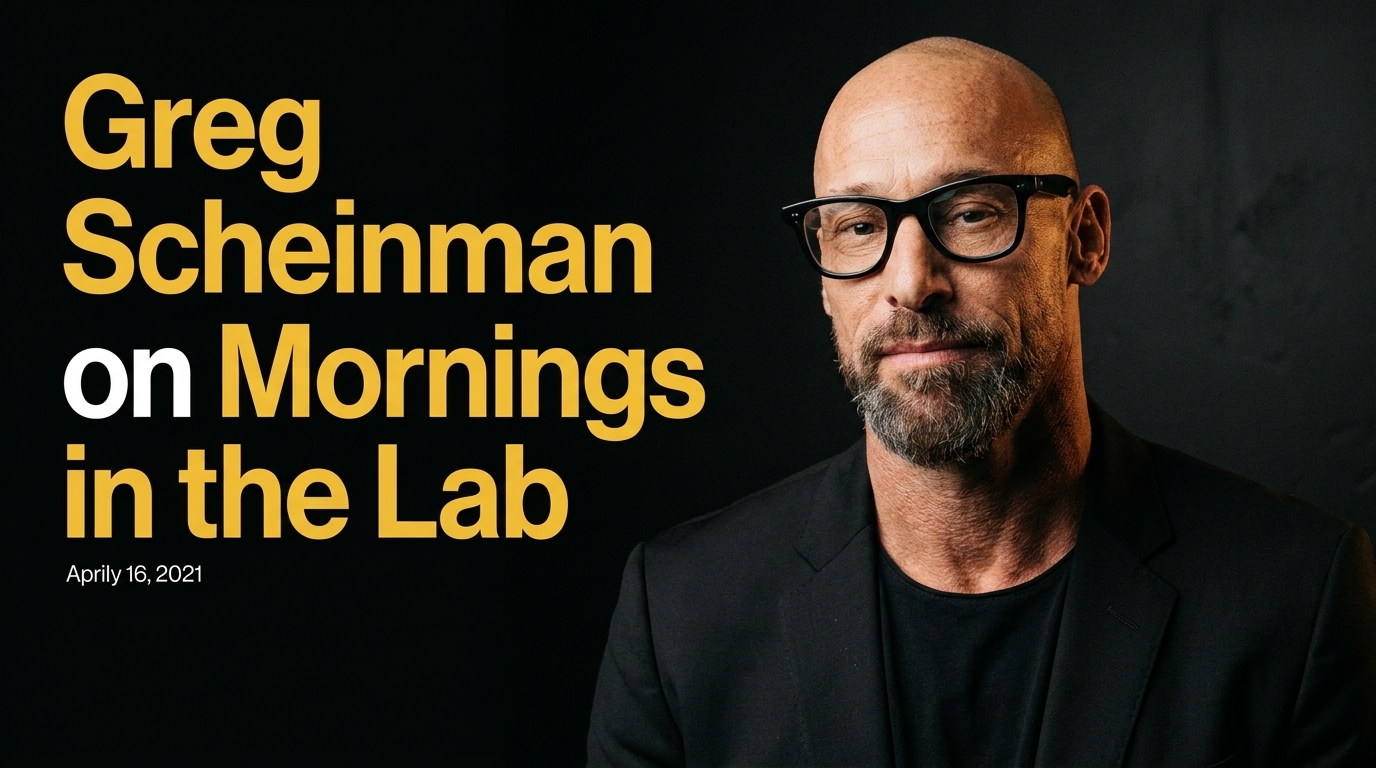
Greg Scheinman

Founder & CEO, Midlife Male Ventures | Author, Coach & Podcast Host

Watch full interview on YouTube ↗

Their story

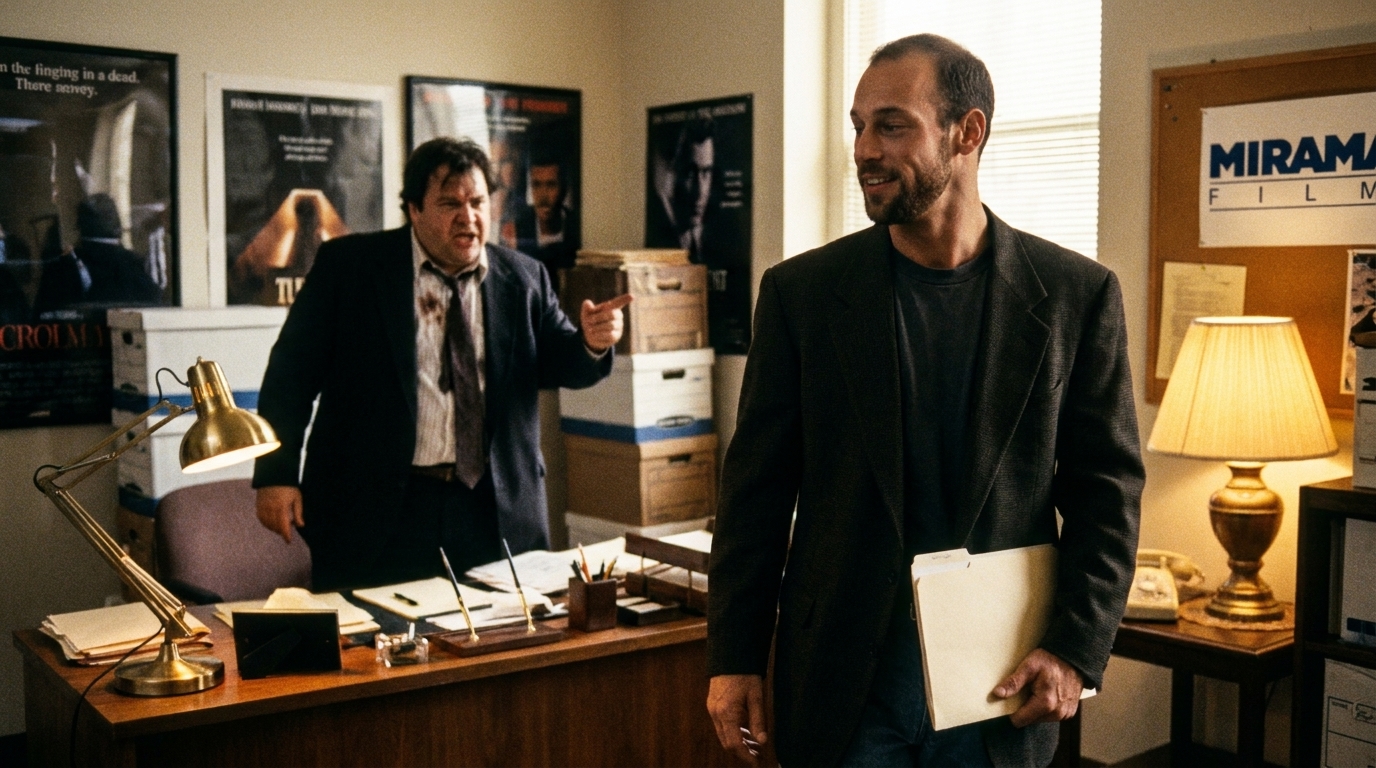
Greg Scheinman has earned the right to talk about midlife by living through the worst of it and building something extraordinary on the other side. He was born and raised in Great Neck, Long Island, educated at the University of Michigan, and arrived in his twenties with a film career that opened on Harvey Weinstein's desk at Miramax — and ended when Scheinman, 21 years old and two years past losing his father, told Weinstein exactly where to go. He never looked back. Shortly afterward, he built a sports children's video company called Team Baby Entertainment — the 'baby Einstein of the sports world,' as he describes it — and sold it to former Disney CEO Michael Eisner. Then he lost it all, rebuilt, got into insurance and risk management, built a firm to 200 people, and sold it again at 47, the same age his father died.

Read the full guest story

Greg Scheinman has earned the right to talk about midlife by living through the worst of it and building something extraordinary on the other side. He was born and raised in Great Neck, Long Island, educated at the University of Michigan, and arrived in his twenties with a film career that opened on Harvey Weinstein's desk at Miramax — and ended when Scheinman, 21 years old and two years past losing his father, told Weinstein exactly where to go. He never looked back. Shortly afterward, he built a sports children's video company called Team Baby Entertainment — the 'baby Einstein of the sports world,' as he describes it — and sold it to former Disney CEO Michael Eisner. Then he lost it all, rebuilt, got into insurance and risk management, built a firm to 200 people, and sold it again at 47, the same age his father died. The parallel was not lost on him. It hit him like a verdict. He could squander the years that followed — numb himself with the routines of conventional middle age, the slow slide into irrelevance that many capable men accept as the price of responsibility — or he could pour rocket fuel on what remained. He chose rocket fuel. What emerged was Midlife Male: a platform, a podcast, a newsletter, a coaching practice, and eventually a bestselling book — all built on the conviction that midlife is not a crisis to be endured but a frontier to be designed. The Midlife Male is not self-help for men who feel fine. It is a resource for the capable man who looks successful by every external metric — financially stable, dependable, respected — and still feels, in some private register he rarely admits to, like his life is running him rather than the other way around. Scheinman calls this the overindexing trap: the pattern where men build an A-plus in finance while quietly failing every other category — fitness, family, food, fashion, fun. His framework, built around the Six F's, asks men to compute their actual life GPA rather than confusing career achievement with a full life. He applies this framework to himself with the same directness he brings to his clients. He describes himself as 'galactically insecure' and gives full credit to his wife Kate — who he has been married to for 25 years — for checking his ego, calling out his impostor syndrome, and providing the security that made everything else possible. He started the gym at 13 because he was being bullied. He stopped drinking as part of the reset that produced Midlife Male. He started TRT at 49, gets bloodwork every 90 days, trains five times a week, and brings the same data-driven discipline to his personal health that he brought to his businesses. Greg Scheinman appeared on the Center Stage segment of Mornings in the Lab, where a conversation that began with the Six F's and the overindexing trap expanded into one of the most honest conversations about insecurity, masculinity, standards, and what it actually takes to build a life that holds up under scrutiny.
In their own words

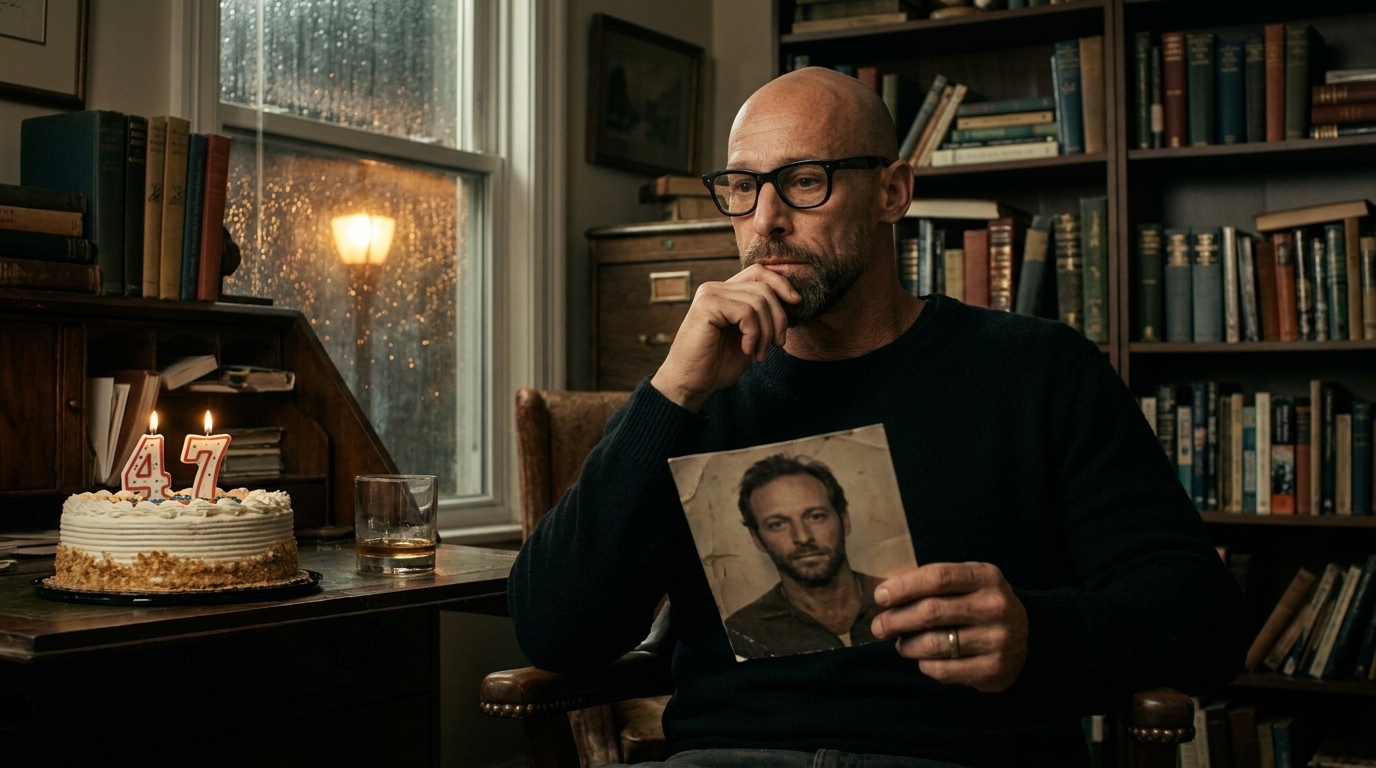
The 47th birthday reckoning

My father passed away when he was 47. That's when I turned 47. That's when this really hit me like, hey, you know, I could squander these years or I could pour some rocket fuel on them and make this next phase the best phase of my life.

Greg describing the defining moment that launched Midlife Male — the realization at 47, the same age his father died, that the years ahead could be squandered or ignited. This is the origin story of the entire movement he built, rooted not in aspiration but in mortality.

Self-care as a selfless act

Self-care is not selfish. It's one of the most selfless things that you can do so that you can show up for the things you talked about — being a better father, a better husband.

Greg dismantling the guilt that keeps capable men from investing in their own health, vitality, and identity. He reframes self-care not as indulgence but as the prerequisite for showing up fully in every role that matters, drawing on his own experience of neglecting himself while serving every other obligation.

Better choices compound into a better life

You make the better choice in life the majority of the time, the majority of your life is going to get better. It's really that simple.

Greg's most actionable framework — a philosophy of compound decisions rather than dramatic transformation. He is not selling reinvention through crisis. He is selling the incremental, consistent elevation of standards that produces a fundamentally different life without requiring a single dramatic moment.

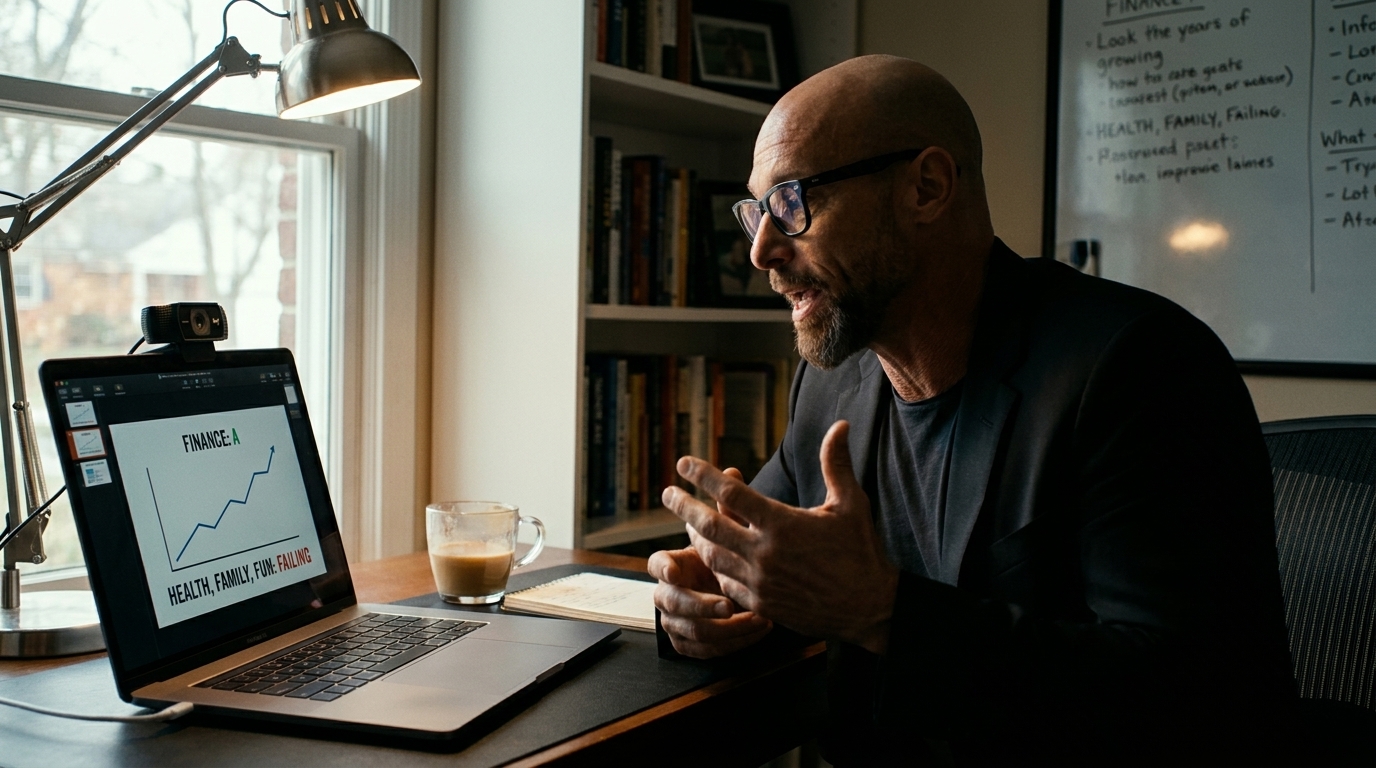
The overindexing trap: A in finance, F in fun

I have a virtual talk that I'm doing later this afternoon with a large business organization. These are men that have overindexed in business. But what has fallen by the wayside is health, family. And here they are in middle age where they've checked the box of finance. But if you get into some of my other apps — family, fitness, food, nutrition, fashion, style, fun — those boxes are not only not checked, but they're failing those subjects.

Greg describing the 'overindexing trap' — the pattern he sees constantly in high-achieving men who built A-plus careers while quietly failing every other life category. His Six F's framework exists precisely to expose this imbalance and give men a practical tool for rebalancing.

Galactic insecurity: the admission that changes everything

I'm a galactically insecure guy. And I spent a lot of years working on that. I'll always work on it for the rest of my life. A lot of it started when my father passed away.

Greg's most disarming moment on the show — a public admission of insecurity that would be unusual for any man, and is extraordinary coming from someone who told Harvey Weinstein to leave, sold a company to Disney's CEO, and built a platform with hundreds of thousands of followers. The admission humanizes the message and validates every man watching who feels the same way but has never been given permission to say it.

Raising standards attracts a new tribe

When you get up and go to that gym, and you make the decision that's different from those other guys — you might go alone, but I've never left alone. You start to attract and repel exactly what you deserve.

Greg describing the social transformation that accompanies the decision to raise personal standards — the way elevating your own choices naturally reshapes your peer group, attracts people operating at the same level, and creates a new tribe without requiring any dramatic break from the old one.

Telling Harvey Weinstein to leave: the early confidence

I was 21, 22 years old when I landed on Harvey's desk at Miramax Films. I didn't like the way he was talking to me. My father would be rolling over in his grave if he knew I let somebody talk to me like this and I didn't knock him out, so I'm out of here.

Greg recounting the defining professional moment of his early career — walking out on Harvey Weinstein at Miramax. The choice cost him what he thought was his only path into film, but the confidence (or recklessness) behind it established a pattern of refusing to accept degradation at any price.

No single door is the only door

It never occurred to me that I couldn't still be successful in the business. It never occurred to me to your point about confidence — or maybe ignorance — that I couldn't still do what I really wanted to do.

Greg explaining the cognitive framework behind his decision to walk away from Weinstein — and, implicitly, the framework that has guided every subsequent pivot. He describes an almost foundational refusal to accept that any single door is the only door.

Appearances & videos

Original interview details

3 Habits to Master Midlife

Episode #CS-035

Center Stage

  • Mornings in the Lab · Center StageJanuary 25, 2026Watch →

From the interview

My father passed away when he was 47. That's when I turned 47. That's when this really hit me — I could squander these years or pour some rocket fuel on them.
I'm a galactically insecure guy. I spent a lot of years working on that. I'll always work on it for the rest of my life.
You make the better choice in life the majority of the time — the majority of your life is going to get better. It's really that simple.

Questions & answers

Who is Greg Scheinman and what is Midlife Male?

Greg Scheinman is the founder and CEO of Midlife Male Ventures, a bestselling author, performance coach, and podcast host based in Houston, Texas. He is the creator of Midlife Male — a platform, podcast, newsletter, and community built for men between 40 and 60 who are financially successful but feel restless, disconnected, or underutilized. His work challenges the widely held belief that midlife means decline, building instead a framework he calls 'mastering the middle.' He is the author of The Midlife Male: A No-Bullshit Guide to Living Better, Longer, Happier, Healthier and Wealthier, has been featured in The Wall Street Journal, Esquire, Men's Health, and The New York Times, and has two successful business exits. He appeared on the Center Stage segment of Mornings in the Lab.

What is the Midlife Male Six F's framework?

Greg Scheinman's Six F's framework is the operational architecture of the Midlife Male program. The six F's are Family, Fitness, Finance, Food, Fashion, and Fun. The framework asks men to evaluate their performance honestly across all six categories — not just the one (typically finance) where they have overindexed — and to compute a genuine 'life GPA' that reflects total wellbeing rather than a single dimension of success. Greg uses this framework in coaching, in his podcast, in his newsletter, and in corporate speaking engagements, where he works with high-achieving men who have built A-plus careers while quietly failing the other five subjects.

What is Greg Scheinman's background before Midlife Male?

Greg Scheinman's career path is one of the more unusual in the wellness space. He began as an assistant at Miramax Films, where he famously walked out on Harvey Weinstein at age 21, telling him — in his own words — exactly what he thought. He then built Team Baby Entertainment, a sports children's video company he sold to former Disney CEO Michael Eisner. He later entered insurance and risk management, built a firm to over 200 people, which was acquired in 2020 when he was 47. He exited that business at the same age his father died. That parallel triggered the personal reinvention that became Midlife Male. He started the platform in 2018, conducting three years of interviews with high-performing midlife men before writing his bestselling book.

What is Greg Scheinman's advice for men in midlife?

Greg Scheinman's core advice for men in midlife operates across three levels. First: set standards rather than goals — standards are the daily operating rules that, when maintained consistently, make success inevitable rather than episodic. Second: make the better choice the majority of the time — he argues that better choices compound into a fundamentally better life without requiring any dramatic transformation. Third: stop calculating success by a single metric (usually finance) — evaluate your life GPA across all areas: family, fitness, finance, food, fashion, and fun. He also emphasizes that self-care is not selfish, that insecurity can be a driver of greatness when channeled rather than hidden, and that the men who change their lives at 45 or 50 are not the ones who had it figured out — they are the ones who stopped pretending they did.

How did Greg Scheinman overcome depression and alcohol?

Greg Scheinman addresses his experiences with depression, alcohol, and anxiety with the directness that characterizes everything in the Midlife Male brand. He describes a period in which the cumulative weight of business failure, his father's death, impostor syndrome, and the identity confusion of mid-career ambiguity converged into a dark chapter. His recovery involved not a single dramatic moment but a sustained process: stopping drinking, building consistent fitness habits (he went to the gym at 13 because he was being bullied), working on confidence and ego, leaning on his wife Kate, and eventually channeling the experience into a platform that could serve other men in similar situations. He describes himself as 'galactically insecure' even after this journey — evidence that the work is ongoing, not complete.

Where can I find Greg Scheinman's podcast and newsletter?

Greg Scheinman's content is available through Midlife Male at midlifemale.com, where subscribers can access his highly rated podcast, weekly newsletter, performance coaching services, and community events. The Midlife Male podcast features long-form conversations with high-performing men about health, fitness, purpose, finance, family, and reinvention. His book, The Midlife Male: A No-Bullshit Guide to Living Better, Longer, Happier, Healthier and Wealthier, is published by Amplify Publishing Group. He is also active on Instagram at @gregscheinman and on LinkedIn. For coaching inquiries, contact him through midlifemale.com.

The full conversation

Read the transcript

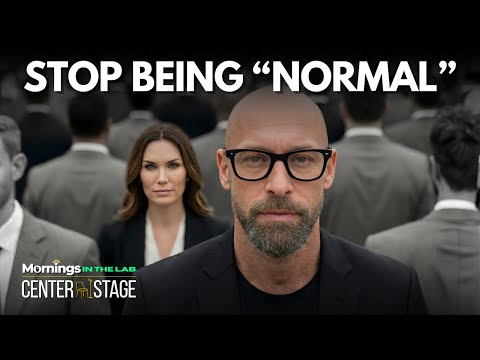
Somewhere in midlife, you realize the goal was never success. You can be respected, paid, and dependable, and still feel like your life is running you, not the other way around. The scariest part is how normal that feeling becomes. You stop calling it pain. You start calling it Tuesday. Greg built Midlife Male for that exact moment. The moment a capable man notices he's slowly disappearing. Not because he had it figured out, because he didn't. And pretending otherwise was no longer an option. His life has swung between extremes, major wins, tragic loss, depression, alcohol, anxiety, and the long work of pulling himself back together. Along the way, he built, exited, and rebuilt businesses across very different worlds. Each chapter tested what actually holds up under pressure. Today, he challenges the lie that midlife means decline, or that conformity and complacency are just what growing up looks like. If you're a man between 40 and 60 who looks successful but feels restless, disconnected, or underutilized, this conversation is for you. Greg believes midlife is where strength, health, wealth, purpose, and joy should finally align — not quietly fall apart. He doesn't sell escape fantasies. He talks about designing a life you actually want to stay present for. Greg, welcome to the big show.

Open transcript page →
Guest gallery
Pre-show shareable graphic generated by the Authority Page Builder.
Announcement card · Pre-show shareable graphic generated by the Authority Page Builder.
The 47th birthday reckoning
Self-care as a selfless act
Better choices compound into a better life
The overindexing trap: A in finance, F in fun
Galactic insecurity: the admission that changes everything
Raising standards attracts a new tribe
Telling Harvey Weinstein to leave: the early confidence
No single door is the only door
Original headshot ↗
Conversation topics

Opening: the moment a capable man notices he's disappearing · ~3 minutes · The show's intro frames Greg's story around the experience that defines his audience — the successful, dependable man who has stopped calling his restlessness 'pain' and started calling it 'Tuesday.' Greg enters with the energy and self-awareness that makes the conversation immediately credible. · The programming problem: following the path that ends in 'what happened?' · ~5 minutes · Greg describes how men are programmed — school, job, marriage, kids, provision — and how that path, followed without self-examination, leads to a mid-career reckoning. The conversation becomes honest about the herd mentality that keeps capable men trapped in a life they didn't consciously choose. · Self-care is not selfish: the counterintuitive reframe · ~4 minutes · Greg makes the case that investing in your own health, identity, and purpose is not an act of selfishness but one of the most selfless things a husband and father can do. This connects to his father's death at 47 and the wake-up call that produced Midlife Male. · The overindexing trap: A in finance, F in everything else · ~5 minutes · Greg introduces his Six F's framework and the concept of life GPA — the idea that overachieving in business while failing at fitness, family, and fun produces a mediocre life regardless of the net worth. He describes a coaching call he has that afternoon with executives living exactly this pattern. · Harvey Weinstein, Michael Eisner, and the early confidence · ~5 minutes · Greg recounts leaving Miramax after refusing to be talked down to by Weinstein — and then selling his next company to Disney CEO Michael Eisner. The hosts rightly point out that this does not sound like a galactically insecure man. Greg unpacks the paradox of confidence coexisting with deep insecurity. · Insecurity as a driver: the 'galactically insecure' admission · ~5 minutes · One of the most honest exchanges in the conversation: Greg describing himself as 'galactically insecure' and the ways his wife's confidence has given him permission to be vulnerable. The hosts share their own experiences with insecurity as fuel for discipline, and the exchange becomes a masterclass in reframing. · Standards vs. goals: the decision that makes everything else simpler · ~4 minutes · Greg explains his framework for standards — the non-negotiable daily operating rules that replace goals as the unit of personal accountability. When you have standards, you do not debate whether to go to the gym or kiss your spouse good morning. The decision is made. · Building a new tribe: attracting what you deserve · ~4 minutes · Greg describes how raising your personal standards inevitably changes your social environment — not through confrontation but through attraction. People who make different choices naturally gravitate toward others making those same choices. You go to the gym alone and find you never leave alone. · Marriage, partnership, and 25 years of accountability · ~4 minutes · Greg discusses his 25-year marriage and the role his wife Kate has played — checking his ego, calling out impostor syndrome, modeling the emotional security he has spent his life trying to build. An honest and warm portrait of a partnership that holds. · Midlife Male, the book, and what comes next · ~3 minutes · Greg closes by directing the audience to midlifemale.com and his newsletter, discussing the book and the events and experiences he runs for men in the second half. The hosts express genuine enthusiasm for what he is building and send him off warmly.