← All network guests
Howard Stephen Berg
Mornings in the Lab · Center Stage

Howard Stephen Berg

He Read a 1,500-Page Bill on Live TV in 50 Minutes — Then Trained Special Forces to Think Faster

Speed ReadingLearning AccelerationComprehension Strategies
Watch the conversation
Watch on YouTube ↗

Questions this episode answers

What reading exercise does Howard Berg recommend?

Howard Berg recommends choosing familiar material, timing a normal read and then using a hand to guide the eyes across each line. He says to increase the pace only while comprehension holds, slowing slightly when the text stops making sense.

Watch this moment →

What should you look for when learning from a book?

Berg’s checklist covers unfamiliar words, people and their roles, numerical information, major ideas and questions. He recommends checking that you understand those elements and can answer the questions the book raises.

Watch this moment →

Why does context matter for reading comprehension?

Berg demonstrates that a vague passage becomes easier to understand once the reader knows it is about laundry. He uses the example to explain how contextual clues can unlock the meaning of a larger passage.

Watch this moment →

Summary

Howard Berg explains his approach to speed reading as taking in larger visual chunks, while emphasizing that understanding and using information matter more than speed. He outlines a hand-pacing exercise, a checklist for extracting important information and a demonstration of how context can make a confusing passage understandable. The conversation also explores choosing books that meet a reader’s needs and recognizing abilities that school grades may not capture.

Key takeaways

  • Berg’s pacing exercise begins with familiar material and increases speed only until comprehension starts to fail, making understanding the limit rather than simply moving faster.
  • He recommends previewing a book to decide whether it contains useful information before investing in learning it more deeply.
  • His learning checklist covers unfamiliar vocabulary, people and their roles, numerical information, major ideas and questions the reader should be able to answer.
  • In his laundry example, an initially vague passage becomes clear once the topic is supplied, illustrating why identifying contextual clues matters for comprehension.
  • Responding to Jon’s account of difficulty reading, Berg argues for developing a core competency instead of interpreting weakness in one area as inability in every area.
Read the transcript →

Jump into the conversation

Howard Stephen Berg: He Read a 1,500-Page Bill in 50 Minutes — Then Trained Special Forces
  1. 4:40His visual approach to reading
  2. 6:43His hand-guided reading exercise
  3. 7:42Why he prioritizes comprehension
  4. 13:53Choosing college away from Brooklyn
  5. 19:04Deciding whether a book fits his needs
  6. 19:52His five-part learning checklist
  7. 22:33Looking beyond grades for strengths
  8. 26:45Demonstrating the role of context

Their story

Howard Berg holds the Guinness World Record as the world's fastest reader, capable of reading 25,000 words per minute—approximately a page and a half per second. Growing up in the violent housing projects of East New York, Berg found refuge in libraries, where books became his shelter from gang violence and ultimately transformed his life. By age 11, he tested at a 12th-grade reading level, and his extraordinary abilities caught national attention when he famously read Howard Stern's memoir in six minutes and provided a complete synopsis on live television.

Read the full guest story

Howard Berg holds the Guinness World Record as the world's fastest reader, capable of reading 25,000 words per minute—approximately a page and a half per second. Growing up in the violent housing projects of East New York, Berg found refuge in libraries, where books became his shelter from gang violence and ultimately transformed his life. By age 11, he tested at a 12th-grade reading level, and his extraordinary abilities caught national attention when he famously read Howard Stern's memoir in six minutes and provided a complete synopsis on live television. Berg's journey from the projects to becoming a learning expert began in college when a dean told him he wasn't smart enough to complete a four-year psychology program in one year while finishing his biology degree. Determined to prove him wrong, Berg developed his revolutionary speed learning methodology by studying how the brain works and applying those principles to learning. He successfully completed the four-year psychology program in one year and scored in the 99th percentile on the graduate record exam after reading 48 biology books in three nights. As an educator and learning expert, Berg founded a school where his methods transformed average C students into extraordinary achievers. His 11-year-old students completed college courses in one week, wrote graduate-level research papers in four hours, and some went on to graduate college at 15, earn law degrees, and pass the bar exam by age 18-19. Berg's approach goes beyond speed reading to encompass what he calls 'speed learning'—teaching people how their brains actually work so they can unlock their natural learning abilities. Now 76 and based in central Florida, Berg continues to teach his methods through live online courses, helping thousands of people double or quadruple their reading speed while improving comprehension. His revolutionary approach transforms learning from a slow, frustrating experience into a visual, movie-like process that taps into the brain's natural capacity for rapid information processing.


In their own words

VISUAL LEARNING BREAKTHROUGH

When you're in a car and you're driving, see, 70 miles an hour, you're reading the road front, back, left, and right, and you're bored. You turn on the radio, you're on your phone, you're talking to people in the car, and then you read a book. The average speed's about 200 words a minute. So why can you read in four directions at 70 miles an hour in a car and only read about 200 words a minute in a book and retain about 10%. The difference is in a car it's a movie. You're seeing all that information visually and making decisions. In a book it's like someone is in your head talking one word at time.

Berg explains the fundamental difference between how our brains naturally process visual information versus how we've been taught to read, revealing why traditional reading methods are so inefficient.

FROM SURVIVAL TO SUCCESS

I was in high school. I was a home monitor. I asked for a pass, pulled a knife out with a blade like this, put it against my throat. I said, 'This is my pass. What are you going to do about it?' I said, 'I'm going to hold the door and you can go anywhere you want. I think this is a very good pass.' And I'm fine with that. Was high school. It was a very violent neighborhood. There were a lot of kids killed. There were gangs that had 1500 kids in them. And I don't know if you could tell, but I'm not much of a gang kid.

Berg describes the dangerous environment of his youth in East New York housing projects, where libraries became his sanctuary and books his escape route from violence.

PROVING THE DOUBTERS WRONG

I had no psyches and the dean said, 'You have to do a four-year psych program in one year. All of it.' Ed finished the bio program at the same time and I had three jobs. I was working 18 hours a week. He said, 'You're not smart enough.' And that's when I learned to do this. And I did the four-year psych program in one year. And I took the graduate record exam in biology and I read 48 books in three nights like biochemistry, cell physiology, genetics. I got three questions wrong. I was in the 99th percentile in the world.

This pivotal moment when a college dean dismissed his abilities became the catalyst for Berg developing his revolutionary learning methods, ultimately proving his approach works at the highest academic levels.

TRANSFORMING C STUDENTS

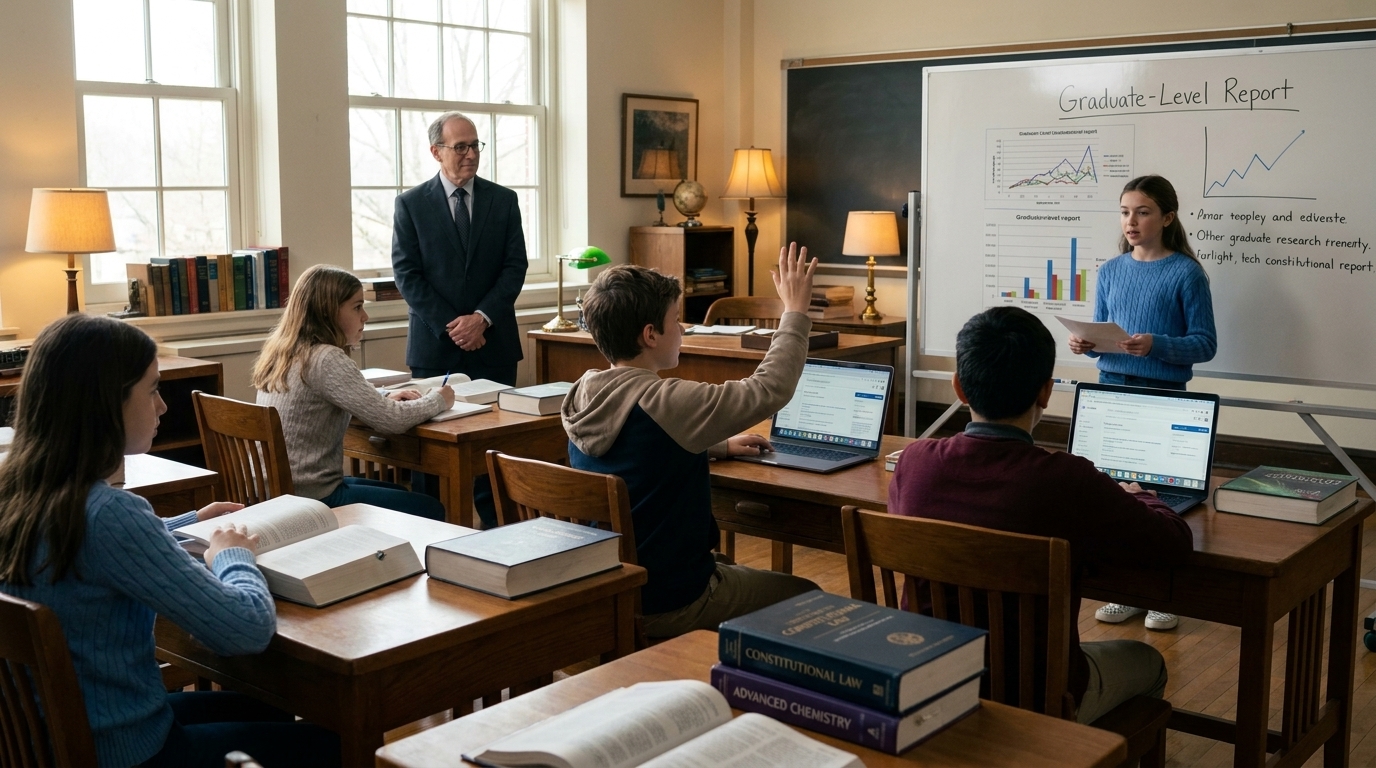
My 11 year olds were doing college classes in one week and passing them on KIPP exams. They wrote 28 page MLA cited reports at 11 at the graduate school level in four hours. And that's what excited me. Having 15, 16 year olds graduating college with 4.0's, law degrees, and passing the bar at 18, 19 years old going to medical school.

Berg demonstrates the real-world impact of his methods by showing how he transformed average students into exceptional achievers, proving that his techniques work for everyone, not just naturally gifted learners.

THE FIVE PILLARS OF COMPREHENSION

There's only five things you need to learn. The new words, which is the vocabulary, that's about 80% of a topic you don't know anything about. The names, who's in the book, and what did they do? Third, any number, date, statistical formula, something numerical. Four the five big concepts or takeaways in each section. What's the big thing here? What am I getting that I didn't know before? Five of them. You don't want to do less than five. You could do more, but five is the the cut off. And lastly, are there any questions and can I answer them?

Berg breaks down his systematic approach to true comprehension, showing that understanding isn't about reading every word but identifying and mastering the key elements that actually matter.

FOCUS ON YOUR STRENGTHS

Good grades don't necessarily mean you're intelligent. It means you're good at taking tests and reading books. What people should be asking is what makes me smart. Maybe I'm good at art. Maybe I'm a good musician like Paul McCartney. He's not a quantum physicist. It isn't about being good at everything. It's being good at something. And if people spent more time looking at their core competency, and what they do well instead of worry about all the things they can't do but excel at something as you have and you could be a success in life.

Berg emphasizes that intelligence comes in many forms and that focusing on your natural strengths rather than trying to fix weaknesses is the path to success and fulfillment.

THE SCHEMA SECRET

There's a concept in psychology called schema. I'm going to read a passage with no schema and watch how confusing this is. This is an easy thing to do. If possible, you could do it at home, but you could always go someplace else if it's necessary. Beware of overdoing it. This is a major mistake. It may cost you quite a bit of money. I haven't given you any context, so it doesn't mean anything. I'm going to read it second time with a title that has schema and watch how instantly it makes sense. Laundry.

Berg demonstrates how context and framing dramatically improve comprehension, showing that the brain needs organizational frameworks to make sense of information quickly and effectively.

Appearances & videos

  • Mornings in the Lab · Center StageApril 24, 2026Watch →

From the interview

Vision is analog. It takes everything in instantly. And hearing is digital, one bite at a time. Most people are reading digitally and I teach them how to read analytically.
We don't teach learning in school. Tell him to learn. You don't learn, it's your fault. You go back and do the same thing harder and you still don't learn.
I'm seeing a movie. So, if you look at all the books behind me, you see them all. But if I had to read the title on the spine of every single book, one at a time, we'd be here all day.
What changed? He learned how to learn. This is for normal people, people who aren't geniuses, it changes how their mind works so they can become geniuses.
I know in five minutes this book isn't going to satisfy my needs. I need a different book and I'm not wasting my time on a book that doesn't provide me with information I could actually use.

The guest conversation

A famous guy named Howard spent five years writing his memoir. One man read the whole book in six minutes and gave a full synopsis on live television. Stern's response was, "It took me 5 years to write that book. You read it in 6 minutes, you fat bastard." We've got the fastest reader in the world here today. He grew up in the housing projects of East New York, and he hid in the library to stay safe from the gangs outside. Books were shelter first, then they became something else entirely. By age 11, he tested at a 12th grade reading level. His seventh grade teacher caught him finishing Call of the Wild in 90 seconds and didn't believe it. The Guinness Book of World Records did. 25,000 words per minute, 80 pages per minute. He read a 1,500page congressional bill live on Fox Business in 50 minutes, then explained the contents. Today he has a complete learning system covering reading, writ…

Read the full transcript →
Guest gallery
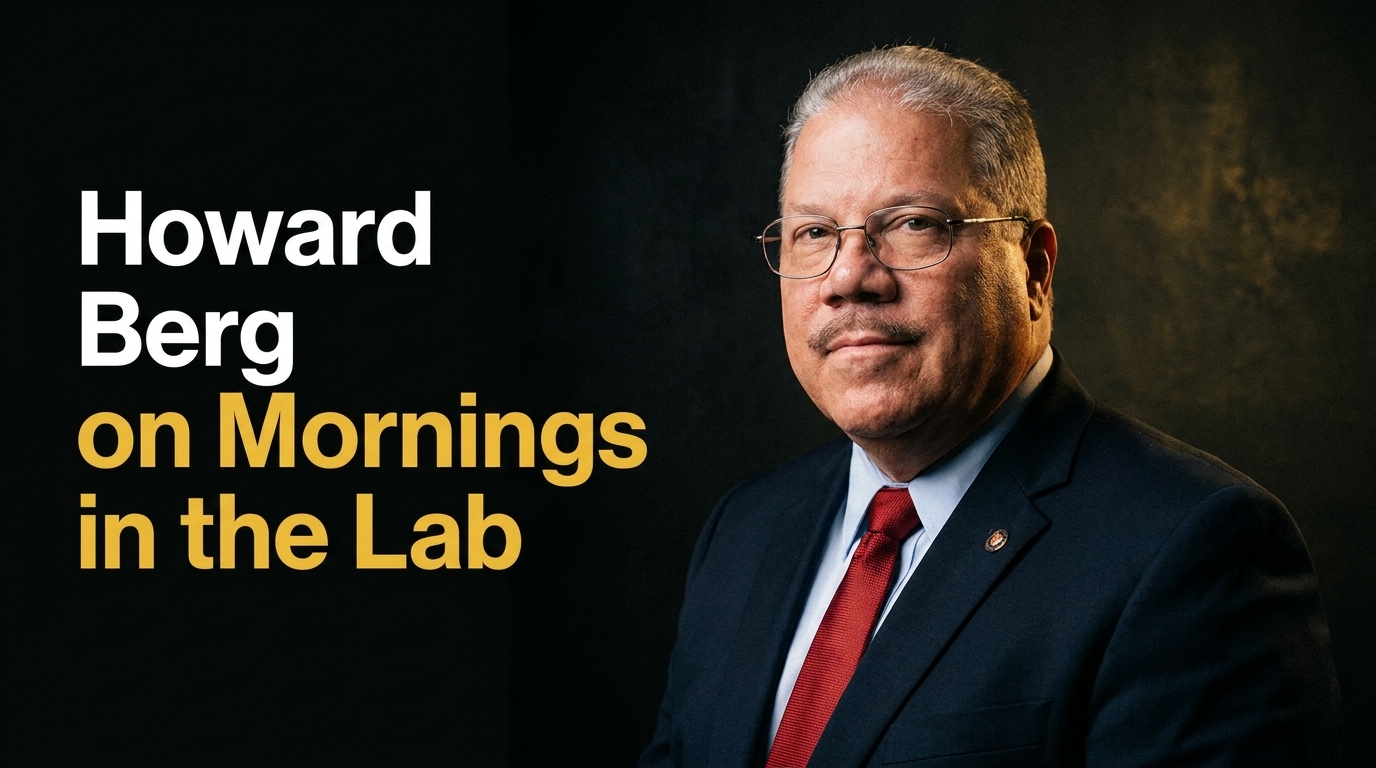
Pre-show shareable graphic generated by the Authority Page Builder.
Announcement card · Pre-show shareable graphic generated by the Authority Page Builder.
VISUAL LEARNING BREAKTHROUGH
PROVING THE DOUBTERS WRONG
TRANSFORMING C STUDENTS
THE FIVE PILLARS OF COMPREHENSION
FOCUS ON YOUR STRENGTHS
THE SCHEMA SECRET
THE SCHEMA SECRET
Original headshot ↗

Appeared in