← All guests

Center Stage / the conversation

Jacob Newton

Mental Performance Coach & Author, Newton's Mind

Watch full interview on YouTube ↗

Their story

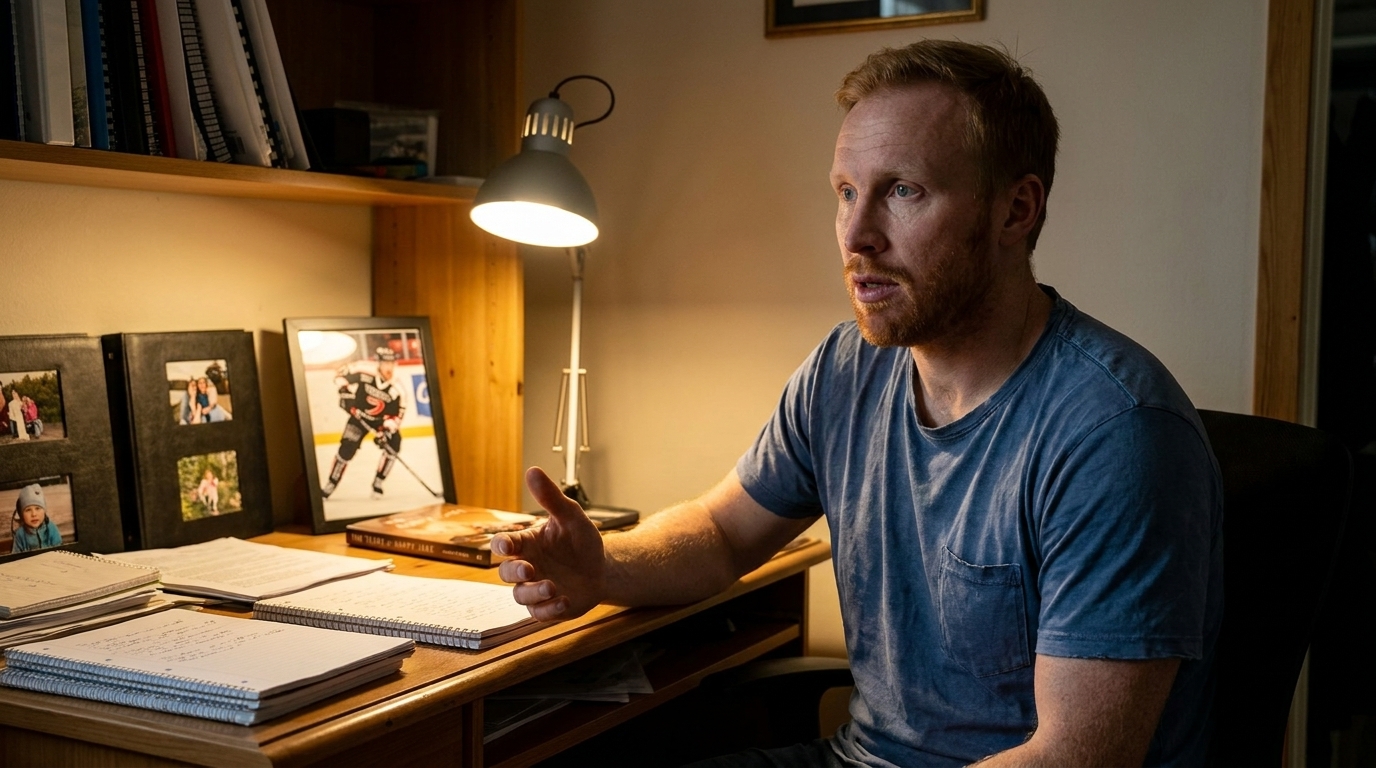
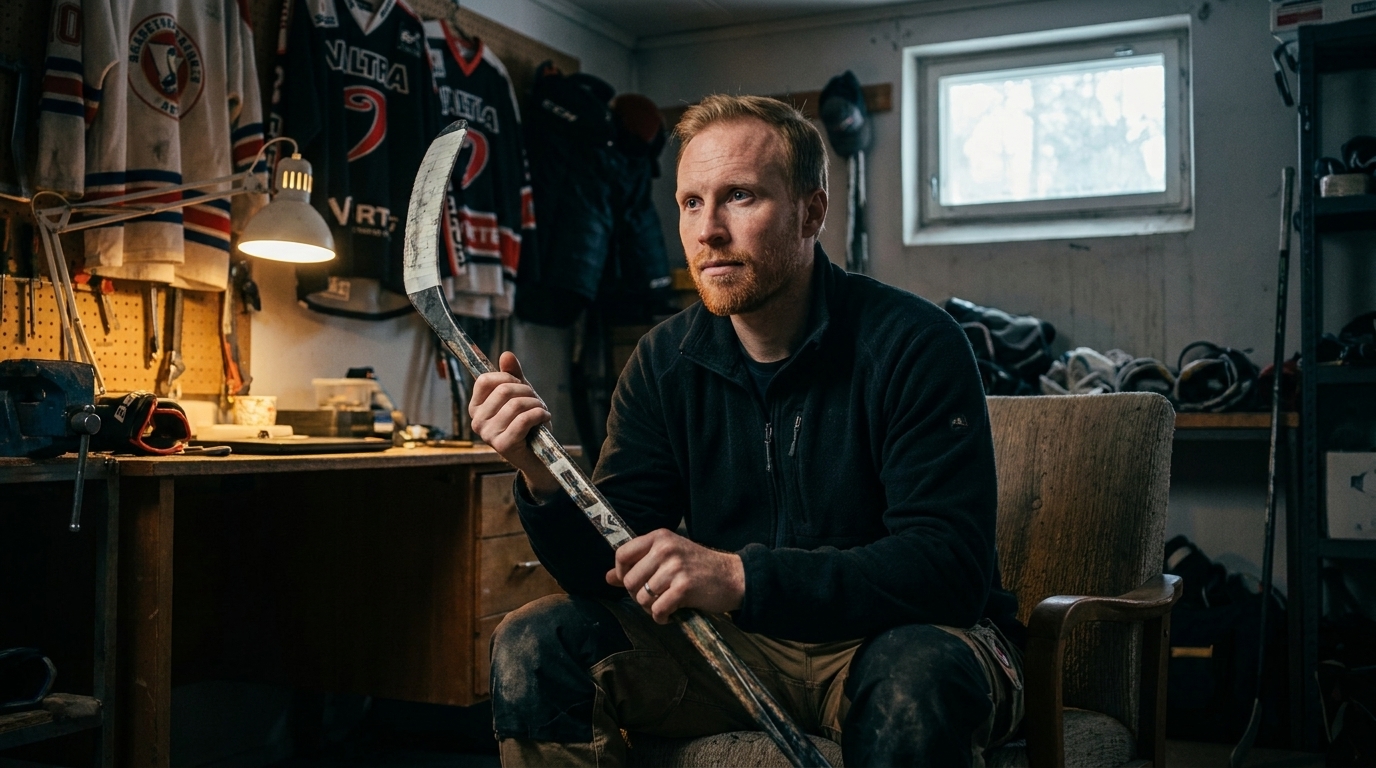
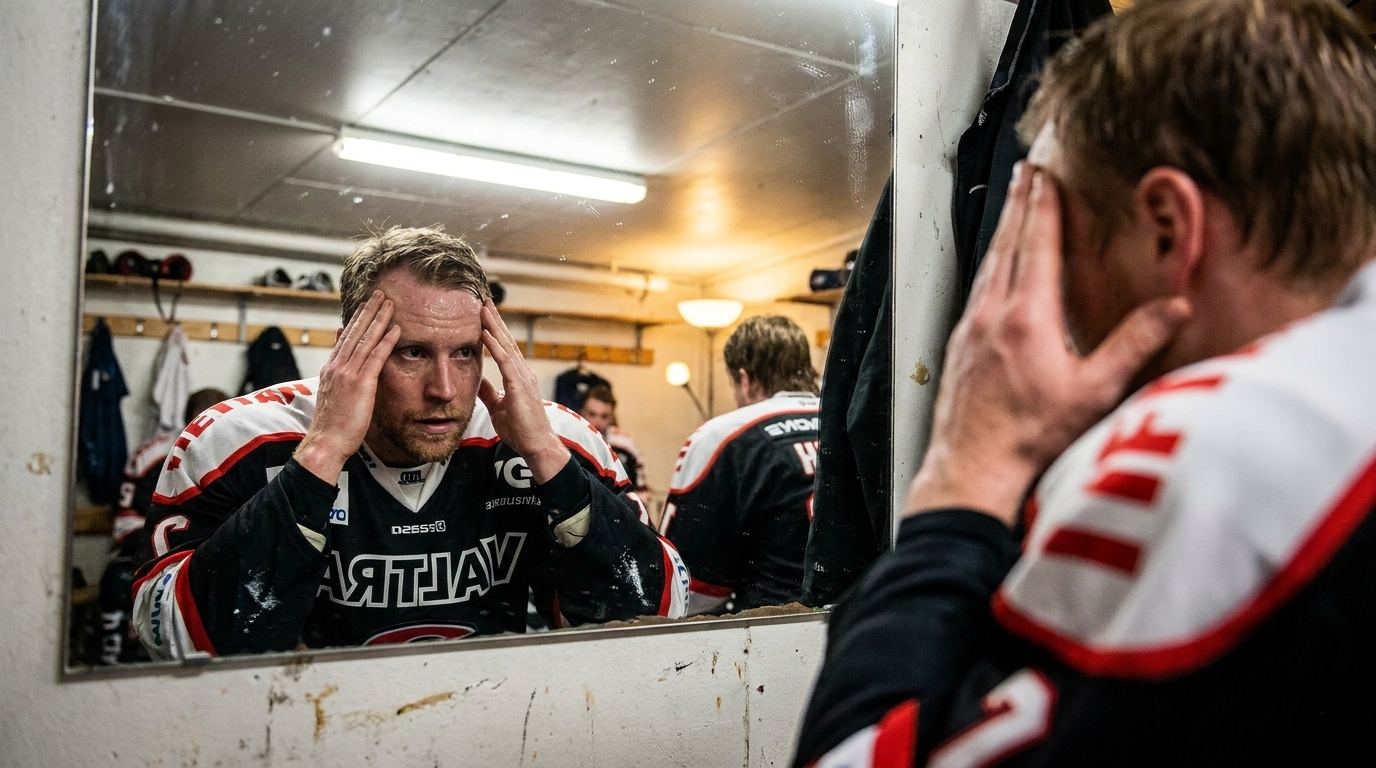
Jacob Newton has two names. The one the world gave him — Happy Jake, the nickname he earned by age seven, smiling so well and so convincingly that no one thought to look underneath it — and the one he is earning now, in his 30s, as the man who stopped performing and started living. The distance between those two names is the story in his book, The Tears of Happy Jake, and it is a story about what sexual abuse does to a boy, what suppression does to a man, and what forgiveness — real forgiveness, not the performed kind — can make possible.

Read the full guest story

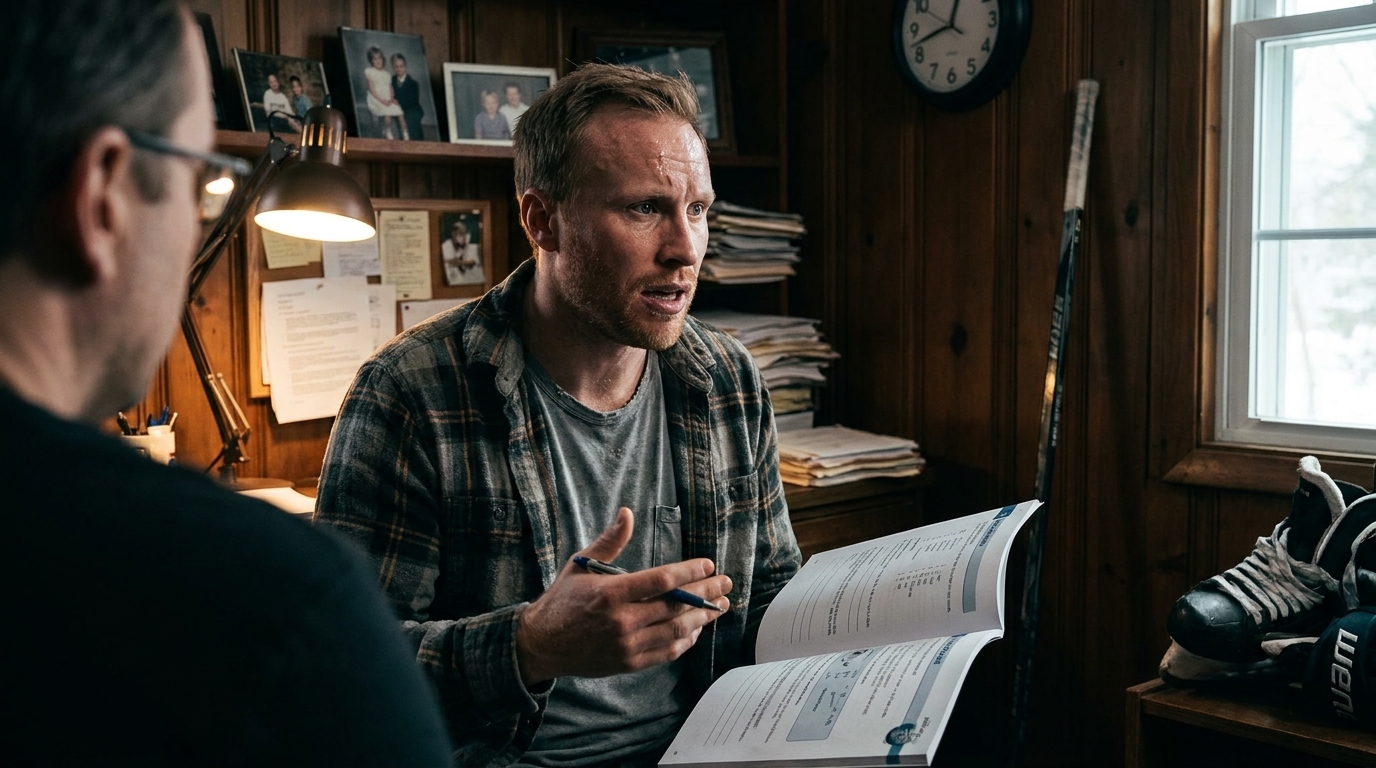
Jacob Newton has two names. The one the world gave him — Happy Jake, the nickname he earned by age seven, smiling so well and so convincingly that no one thought to look underneath it — and the one he is earning now, in his 30s, as the man who stopped performing and started living. The distance between those two names is the story in his book, The Tears of Happy Jake, and it is a story about what sexual abuse does to a boy, what suppression does to a man, and what forgiveness — real forgiveness, not the performed kind — can make possible. Jacob Newton grew up in San Jacinto, California, in the high desert east of Los Angeles. From the ages of five to seven, he was sexually abused by an older male cousin who lived in his home. He was five years old. He told no one. His cousin threatened to hurt him if he did, and for a five-year-old's mind, that threat was more terrifying than any alternative. The abuse ended when his older sister discovered it and the cousin was sent to a juvenile detention facility. But the damage had already been done — not to Jacob's body alone, but to his mind, and to the architecture of his emotional life for the next fifteen years. What followed was an athletic career of tremendous skill and persistent sabotage. Jacob left home at 15 to pursue hockey across the country. He played for the NAHL Texas Tornado, the USHL Lincoln Stars (where he was named to the USHL All-Star Game), and earned a spot at Northeastern University where he was named to the Hockey East All-Rookie Team in his freshman year. The Anaheim Ducks signed him to a three-year contract after his freshman season. He was 22 years old. The Ducks had just lost Scott Niedermayer to retirement, and Jacob — a 6'3", 200-pound puck-moving defenseman — had every reason to believe he was about to begin the career he had chased across the country. In his first preseason game, against the San Jose Sharks, he scored a power-play goal off a pass from Ryan Getzlaf. Five minutes later, the first fight of the night broke out. Then another. Then another. Six fights total. Every time, Jacob froze. He couldn't fight. Not because he lacked the physical ability — but because every time he faced an angry male opponent, he didn't see a hockey player. He saw his cousin. He was instantly transported back to being five years old, in fight-or-flight, paralyzed. The Ducks sent him down to AHL Syracuse the next day. He never made it back up. Traded to Colorado, demoted from the AHL to the CHL, he ended up in Allen, Texas, where the demons had the most room to run. He drank heavily. He became addicted to tobacco. He cheated on his then-wife. He was destroying everything good in his life and didn't understand why — because the memories from ages five to seven were still buried. He didn't know what was driving him. The turning point came in a way he still can't fully explain. His older sister made a comment at their apartment. His fiancée heard it and asked what it meant. And that question — that single question — cracked the door open on a room that had been locked since 1993. He started therapy. Intensive, multiple-times-a-week therapy. Buried memories surfaced. He spent years excavating the root cause of every relationship he had sabotaged, every moment of fear on the ice, every night he had drunk himself into blackness. And then he rebuilt. Starting in the 2012-13 season, Jacob rose through the European hockey ranks. He played in Italy, Finland, Sweden, Norway, Germany, and the Czech Republic over ten professional years across seven countries. He became a champion and league MVP in the Italian League. He played in the Czech Extraliga and the Finnish Liiga. He played in the Spengler Cup in Davos, Switzerland. He won a championship with his son watching from the stands — a moment he describes as one of the most complete of his life: his son watching his father play whole. In 2026, Jacob published The Tears of Happy Jake — a 280-page, 20-chapter biography written in narrative form with author Andrew Bajda. Available in hardcover, paperback, Kindle, and forthcoming audiobook on Amazon, the book covers his childhood, his hockey career, the buried trauma, the healing journey, the European years, and the forgiveness work that finally set him free. He describes it as a book of healing with "so much laughter" — a book that doesn't tell readers what to do, but leads them through a life and lets them draw their own conclusions. Jacob Newton is now the founder of Newton's Mind LLC, based in Rocky River, Ohio, where he operates as a mental performance and emotional control coach. He works primarily with athletes — from age 14 and up — helping them address the mental blocks, performance anxiety, negative self-talk, and fear patterns that no amount of physical training will resolve. He is also a father of two, an advocate for sexual abuse survivors, and a man who has done the work publicly and visibly enough that others have felt safe doing it too.

In their own words

Authentic joy versus numbing — what's on the other side

It's a high that you can't get from a drug. The only drug you can get that from is from the best dealer in the world, which is your brain.

Jacob describing the state of joy and peace he now lives in — a feeling he contrasts with every numbing strategy he used for years. The 'best dealer' framing is both funny and precise: the brain's capacity for genuine wellbeing is more potent than any substance, but it requires the inner work that most people avoid.

Nine years of vulnerability as preparation

I've done so much sharing. I've been vulnerable for the last nine years. I started all back there. For me in regards to the book and the things I shared, it was easy.

Jacob explaining why writing a 280-page biography about childhood sexual abuse felt, paradoxically, straightforward — because his nine years of public vulnerability had been the preparation. The book wasn't his first disclosure; it was his final, most complete one.

Refusing the shame that belongs to the perpetrator

I have no shame because it wasn't anything that I did. These were things that were done to me. So why would I carry any shame whatsoever?

Jacob's precise articulation of why he is able to speak freely about his abuse — a reframe of shame that is both philosophically clear and psychologically rare. Most survivors carry shame as if it belonged to them. His clarity on this is one of the most liberating things in his public message.

Forgiveness as performance training

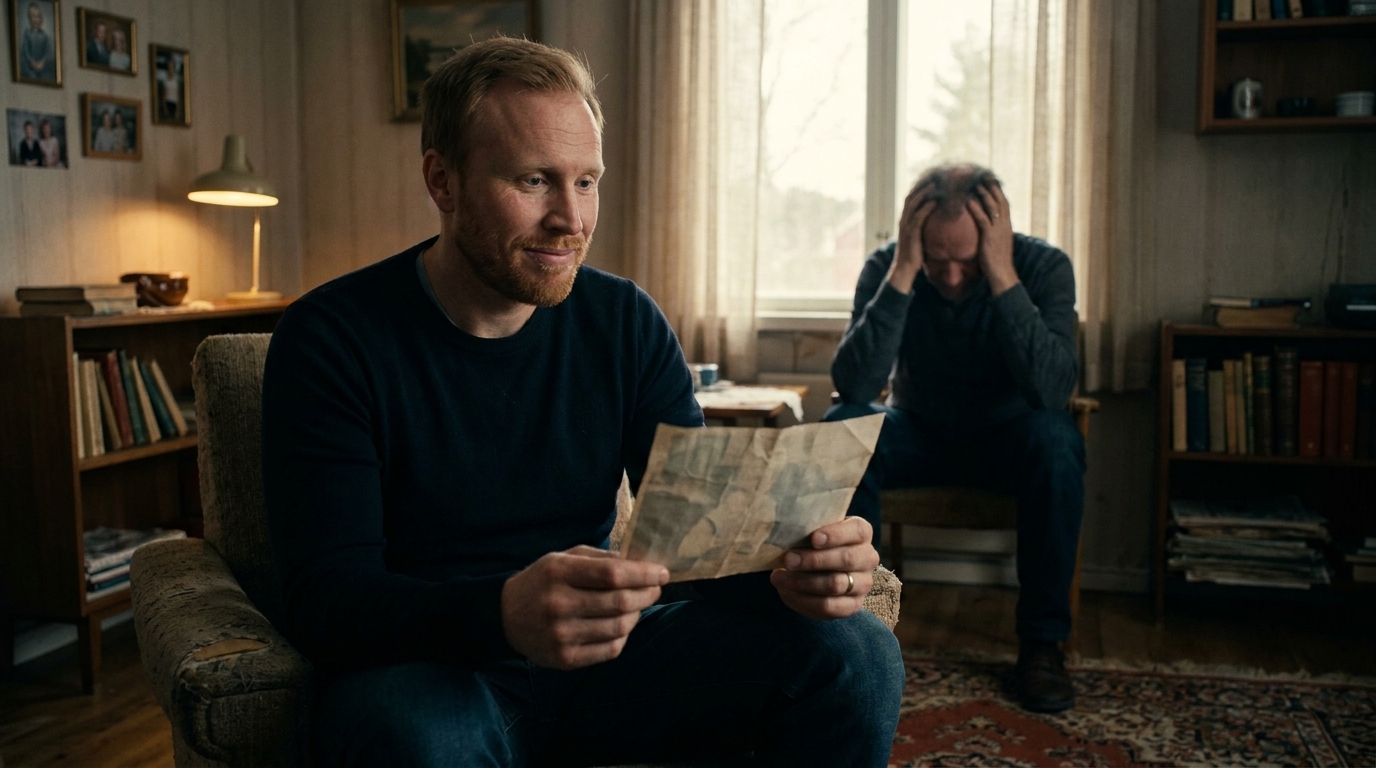
I forgave my cousin. I had to forgive my father for being drunk and not being able to see the signs. I had to forgive my mom for being gone all the time. So I forgave three people that had really nothing to do with hockey, but in forgiving them, I was able to get out on the ice and not play as afraid.

Jacob describing the forgiveness practice from a 21-day workbook that produced his most significant breakthrough in hockey performance. The insight is radical: his best performance gains came not from physical work but from forgiving people who had nothing directly to do with the sport.

The cycle is the enemy, not the person

He's not the enemy. The cycle is the enemy.

Jacob's reframe of his cousin — extending the same understanding to the perpetrator that he extended to himself. He recognized that his cousin had also been abused, and that the cycle was the real problem. This is the level of healing that makes Jacob's story singular: he arrived at genuine compassion for the person who harmed him.

The gift of the failure that forced the healing

I feel as though if I would have had a career in the NHL, I'm not sitting here having this conversation with you guys.

Jacob naming the paradox that defines his story: the failure that looked like the end was actually the beginning of the only life worth living. Not making the NHL sent him down and then sent him through — and through is where everything real was waiting.

Mental limits versus physical limits in elite sport

I played at the highest levels and every time, it was what was going on in my own head that limited my physical abilities. Physically, I was right there with everyone. But once I got to the NHL level, this thing took over, and it abused me. I didn't understand that I could change my thoughts.

Jacob identifying the precise mechanism of his underperformance — not a physical ceiling but a mental one constructed from twenty years of unprocessed trauma. His coaching work is built on this insight: at the elite level, what separates people is almost always internal.

Breaking the generational cycle — where the work lands

I know the cycle came to me and I know the cycle ends with me. So I don't have any fear whatsoever in these things happening to my kids any longer.

Jacob naming the final destination of his healing work: the certainty that the generational pattern of abuse stops with him. This is not just personal liberation — it is the protection of his children and of every generation that follows. It is the practical, measurable outcome of doing the work.

Appearances & videos

Original interview details

He Was Called Happy Jake But Was Hiding 20 Years of Trauma

Episode #CS-028

Center Stage

  • Mornings in the Lab · Center StageMarch 17, 2026Watch →

From the interview

I have no shame because it wasn't anything that I did. These were things that were done to me.
I forgave three people that had really nothing to do with hockey, but in forgiving them, I was able to get out on the ice and not play as afraid.
I know the cycle came to me and I know the cycle ends with me.

Questions & answers

Who is Jacob Newton and what is The Tears of Happy Jake?

Jacob Newton is a former professional ice hockey defenseman who played for ten years across seven countries (the US, Finland, Sweden, Norway, Italy, Germany, and the Czech Republic), including time in the Anaheim Ducks organization. He is the founder of Newton's Mind LLC, a mental performance and emotional control coaching practice, and the author of The Tears of Happy Jake — a 280-page biography published in 2026 and available in hardcover, paperback, and Kindle on Amazon. The book tells his full story: childhood sexual abuse beginning at age five, fifteen years of suppression and self-destruction, a hockey career derailed by untreated trauma, intensive therapy and healing, a rebuilt life and career in Europe, and the forgiveness work that finally set him free.

Why didn't Jacob Newton make the NHL despite being signed by the Anaheim Ducks?

Jacob Newton signed a three-year contract with the Anaheim Ducks after his freshman year at Northeastern University, where he had been named to the Hockey East All-Rookie Team. In his first preseason game against the San Jose Sharks, he scored a power-play goal off a pass from Ryan Getzlaf. Then six fights broke out in the same game. Every time one started, Jacob froze — because any confrontation with an angry male opponent triggered his fight-or-flight response, connected to childhood sexual abuse he had buried since age five. He was unable to fight, which at the NHL level in that era was functionally disqualifying. The Ducks sent him down the next day. He never made it back to the NHL, not because he lacked physical talent, but because untreated trauma had built a mental ceiling he couldn't break through until he did the healing work years later.

What is Jacob Newton's mental performance coaching practice?

Jacob Newton is the founder of Newton's Mind LLC, based in Rocky River, Ohio. He works as a mental performance and emotional control coach, primarily with athletes from age 14 and up. His coaching addresses the mental blocks, performance anxiety, negative self-talk, and fear patterns that limit athletic performance — the issues that no amount of physical training resolves. He draws on his own experience of being a physically capable elite athlete whose career was derailed by untreated psychological trauma, and on the tools he has accumulated through years of therapy, meditation, breathwork, and healing practices including psilocybin ceremonies and ayahuasca. His approach is explicitly positioned as 'for life' — the skills apply beyond sport to every area of human experience.

How did Jacob Newton overcome childhood sexual abuse?

Jacob Newton was sexually abused by an older male cousin from ages five to seven. He suppressed the memories entirely for approximately fifteen years, during which the unprocessed trauma manifested as performance anxiety, mood swings, self-destructive behavior, substance abuse, and repeated sabotage of relationships. The memories surfaced through intensive therapy that began around age 22, after a question from his then-fiancée cracked open what he had buried. He spent three years in intensive therapy and couples counseling. He also engaged in meditation, breathwork, a 21-day forgiveness practice, psilocybin ceremonies, and ayahuasca — all of which he credits with deepening and accelerating his healing. His core insight: the root of an inability to forgive others is always an inability to forgive oneself. True healing required forgiving not just his cousin but his parents — for failing to see the signs — and ultimately himself.

Where can I find Jacob Newton's book The Tears of Happy Jake?

The Tears of Happy Jake is available on Amazon.com in hardcover, paperback, and Kindle formats. An audiobook version is also in development. The book is authored by Andrew Bajda and based on Jacob Newton's life story. It runs approximately 280 pages across 20 chapters and covers his childhood in San Jacinto, California, his junior hockey journey, his NCAA career at Northeastern University, signing with the Anaheim Ducks, the trauma that derailed his NHL career, his years of healing, his decade of professional hockey across Europe, and his championship win with his son watching from the stands. Jacob describes it as factual biography written as a narrative story — not a self-help book that tells readers what to do, but a life that shows them what's possible.

What is Jacob Newton's 'Happy Jake' nickname and what does it mean?

Happy Jake was the nickname Jacob Newton earned as a young child — by age seven — because of how consistently and convincingly he smiled. The people around him saw a happy, sunny child. What they didn't know was what Happy Jake was smiling through: he had been sexually abused by a family member starting at age five and had learned, at an extraordinarily young age, to perform happiness as a survival mechanism. The smile became a mask. The title of his book, The Tears of Happy Jake, names the gap between the performance and the truth — and traces the journey from one to the other. Jacob describes the nickname not with bitterness but with a kind of earned clarity: the performance was real in its own way, and the tears were always there underneath it, waiting for the space to finally fall.

The full conversation

Read the transcript

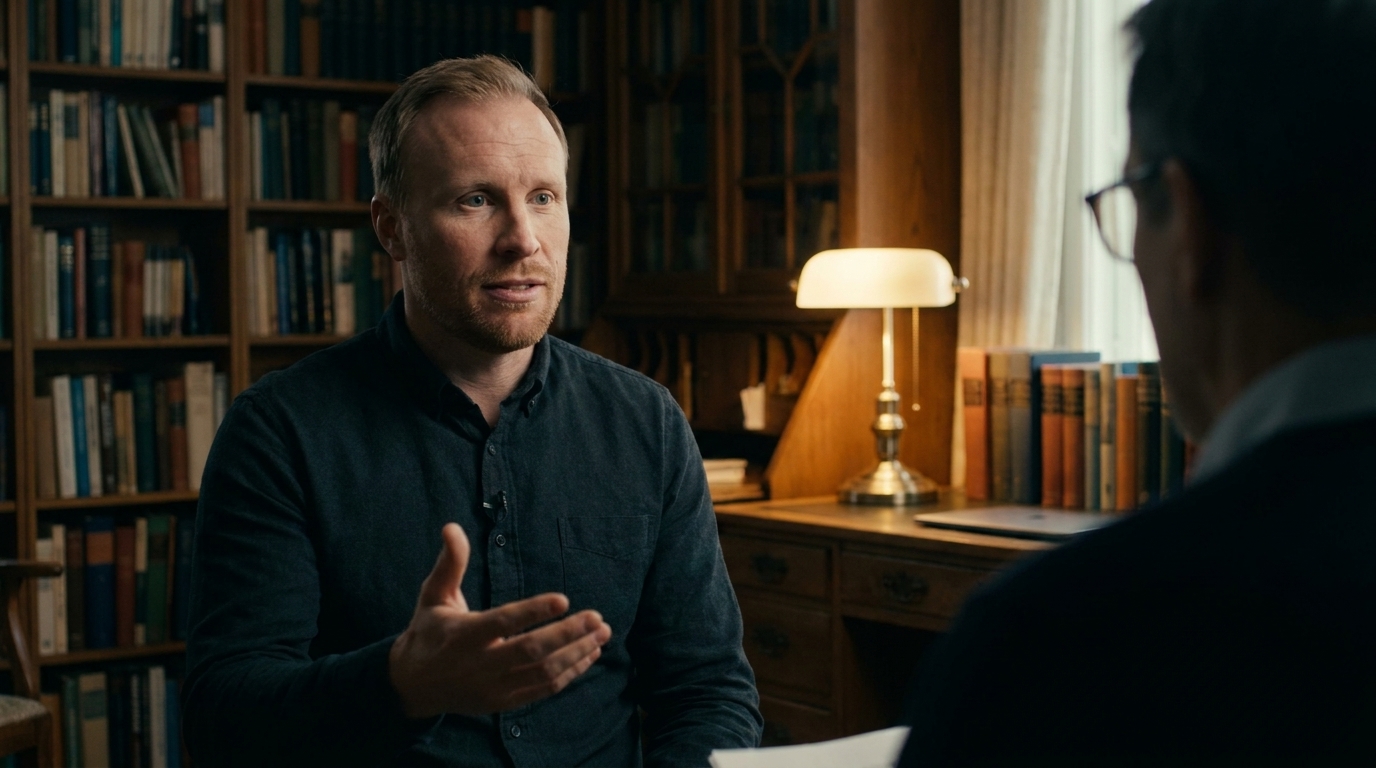
You know how to look fine. You've had years of practice. The smile is so convincing even you believe it sometimes. But there are moments where you catch yourself wondering who taught you to perform this well. You start to wonder if the thing you've been hiding from everyone else is the same thing you've been hiding from yourself. Jacob Newton learned to perform that young. By seven he had a nickname. People called him Happy Jake. What they didn't know was what Happy Jake was smiling through. He'd been sexually abused by a family member since he was five. He buried it, left home at 15, chased hockey across the country, got good enough to turn pro, went undrafted. Then Anaheim signed him. First preseason game he scored a power play goal off a pass from a teammate. That same game six fights broke out on the ice. He froze. He never made the NHL regular season, ended up in Allen, Texas drinking, cheating, falling apart. Therapy cracked it open. 20 years of memories surfaced. Everything Happy Jake had been hiding. He rebuilt across Europe, won a championship with his son in the stands, watching his father play whole. Now he's written it all down. The book is called The Tears of Happy Jake. If you've ever wondered what happens when you stop performing and finally face what's underneath, that's today's conversation. Jacob, it's great to have you here. Welcome to Mornings in the Lab.

Open transcript page →
Guest gallery
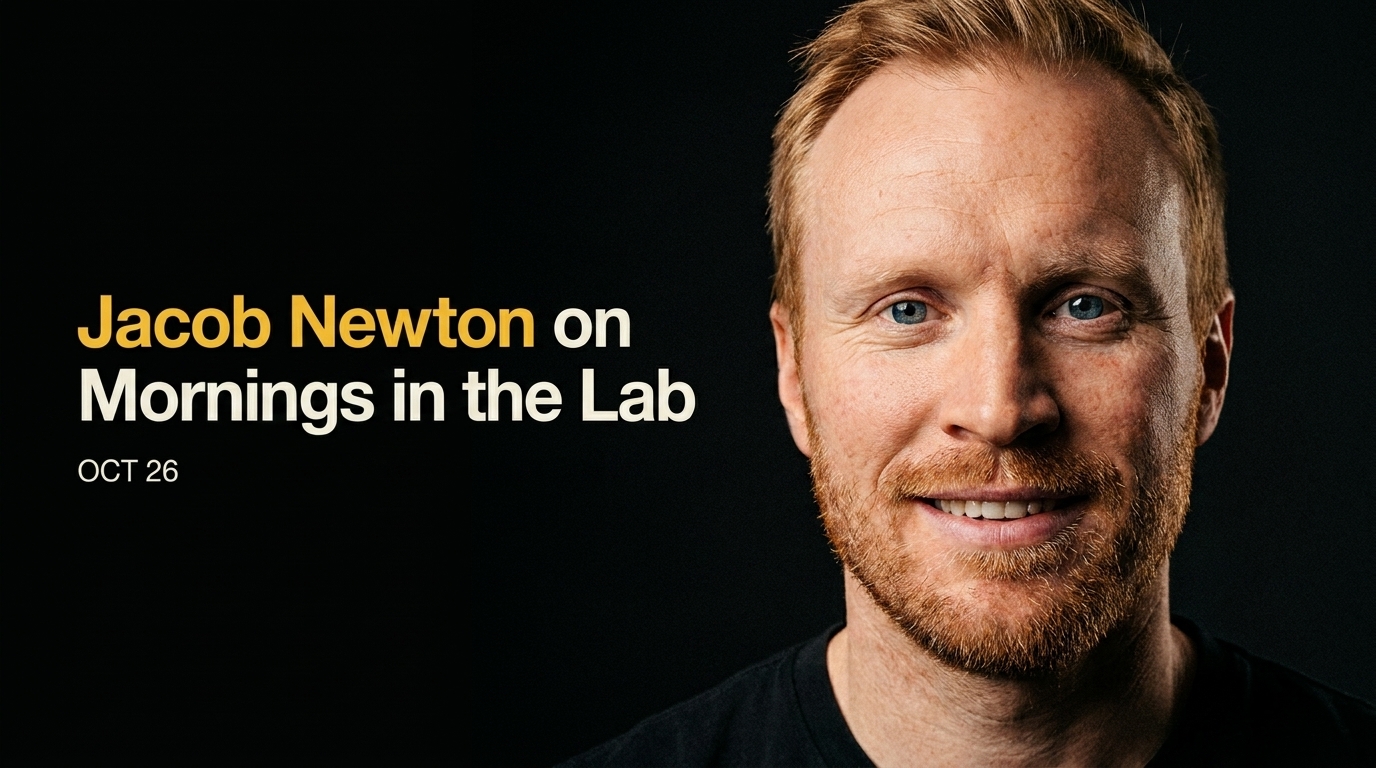
Pre-show shareable graphic generated by the Authority Page Builder.
Announcement card · Pre-show shareable graphic generated by the Authority Page Builder.
Authentic joy versus numbing — what's on the other side
Nine years of vulnerability as preparation
Refusing the shame that belongs to the perpetrator
Forgiveness as performance training
The cycle is the enemy, not the person
The gift of the failure that forced the healing
Mental limits versus physical limits in elite sport
Breaking the generational cycle — where the work lands
Original headshot ↗
Conversation topics

Introduction — the two Jacobs · ~2 minutes · Sophia introduces Jacob around the central tension: the boy everyone knew as Happy Jake, and what he was smiling through. Sets the conversation up around the book and the journey from performance to truth. · The book and the joy of this moment · ~4 minutes · Jacob reflects on the experience of publishing The Tears of Happy Jake — why writing it was easier than people might expect, and what it means to hold nine years of public vulnerability in a single coherent work. The 'best dealer in the world' quote lands here. · The abuse — what happened at age five and what it built · ~5 minutes · Jacob describes the abuse, the suppression, the fifteen years of not knowing what was driving him, and the way unprocessed trauma expressed itself as mood swings, fear on the ice, and self-destruction. The shame reframe — 'I have no shame because it wasn't anything I did' — comes here. · The Anaheim Ducks preseason — the night everything crystallized · ~4 minutes · Jacob walks through the first preseason game, the power-play goal off Getzlaf, and then the six fights — each one paralyzing him as he saw his cousin in every opponent. The moment that defined what his career could have been and wasn't. · Allen, Texas and hitting bottom · ~4 minutes · Jacob describes his time in the CHL — the drinking, the tobacco, the cheating, the downward spiral — and the question that finally cracked everything open. The beginning of therapy and what he found when he started excavating. · The forgiveness practice — forgiving three people who had nothing to do with hockey · ~5 minutes · Jacob describes the 21-day creative manifestation workbook he did alone in Finland, the day the forgiveness chapter hit, and what happened when he forgave his cousin, his drunk father, and his absent mother. The performance breakthrough that followed wasn't physical — it was spiritual. · The European years — rebuilding across six countries · ~4 minutes · Jacob covers his decade in European hockey — Italy, Finland, Sweden, Norway, Germany, Czech Republic — the championship in Italy with his son in the stands, the Spengler Cup in Davos, and what it meant to play whole after years of playing afraid. · Psychedelics, ceremonies, and the deeper healing · ~4 minutes · Jacob discusses his experiences with psilocybin and ayahuasca — the context, what they opened, how they led him to God at a deeper level, and how all of it was part of one continuous healing arc rather than an isolated intervention. · Newton's Mind — coaching athletes through the same gap · ~3 minutes · Jacob describes his coaching practice: working with athletes from age 14 on the mental blocks, performance anxiety, and fear patterns that physical training alone can't touch. The 'for life' positioning — these tools are not just for sport. · The book, where to find it, and what comes next · ~2 minutes · Jacob closes with the practical details of The Tears of Happy Jake — Amazon, hardcover, paperback, Kindle, forthcoming audio — and his conviction that it will be a movie at some point. A warm send-off from the hosts, who have followed his journey with genuine pride.