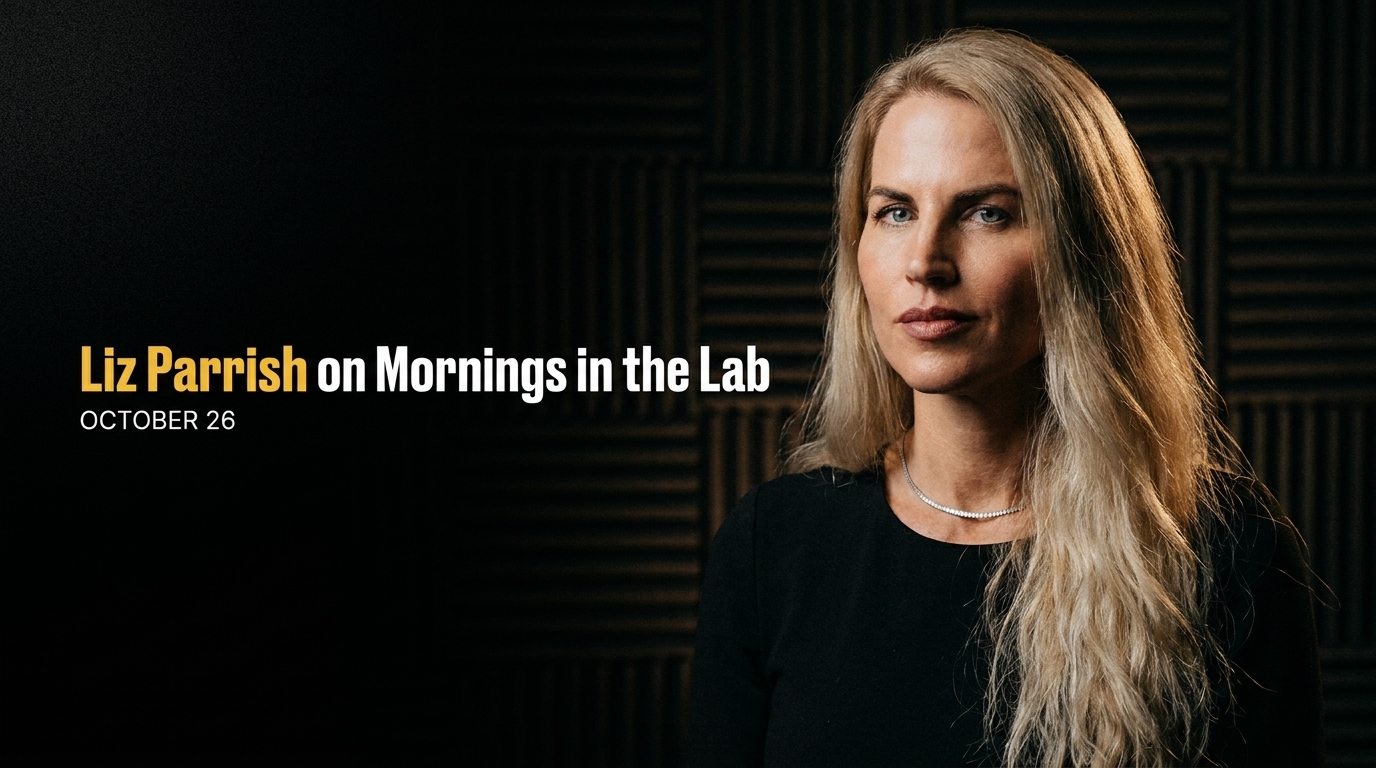
Elizabeth (Liz) Parrish, MBA, is the Founder and CEO of BioViva Sciences USA Inc., a biotechnology company based on Bainbridge Island, Washington, that is developing and licensing gene therapies to slow and reverse biological aging. She is widely recognized as "Patient Zero" — the first human being in history to undergo gene therapy specifically designed to combat the hallmarks of aging, a distinction she earned in September 2015 when she flew to Bogotá, Colombia, and received two experimental therapies: one targeting telomere lengthening via telomerase activation (hTERT), and a second inhibiting myostatin to counteract age-related muscle loss. That decision, made secretly and without informing her own family, became one of the most discussed acts of self-experimentation in modern biotech history.
Read the full guest story
Elizabeth (Liz) Parrish, MBA, is the Founder and CEO of BioViva Sciences USA Inc., a biotechnology company based on Bainbridge Island, Washington, that is developing and licensing gene therapies to slow and reverse biological aging. She is widely recognized as "Patient Zero" — the first human being in history to undergo gene therapy specifically designed to combat the hallmarks of aging, a distinction she earned in September 2015 when she flew to Bogotá, Colombia, and received two experimental therapies: one targeting telomere lengthening via telomerase activation (hTERT), and a second inhibiting myostatin to counteract age-related muscle loss. That decision, made secretly and without informing her own family, became one of the most discussed acts of self-experimentation in modern biotech history.
Parrish's path into longevity science was not academic — it was personal. In 2013, her son was diagnosed with Type 1 diabetes, and the encounter with standard medical care left her unsatisfied. She began attending scientific conferences, including the SENS Foundation's sixth biennial conference in Cambridge, England, where she engaged directly with researchers like Harvard geneticist George Church. She recognized that the science of gene therapy was far ahead of its clinical deployment, that therapies proven in animals had not been given a path to human trials at any reasonable pace, and that the regulatory and financial architecture of medicine was actively delaying treatments that could save lives. She decided to build the company that would push these therapies forward. BioViva Sciences was founded in 2014, and within a year Parrish had made herself its first patient.
The results she has reported from her own case are striking. Prior to the 2015 treatment, her biological age (measured via T-lymphocyte telomere length) registered at the equivalent of a 66-year-old — 22 years older than her chronological age. Six months after treatment, telomere length had increased by approximately 20 years, from 6.71kb to 7.33kb, as measured by SpectraCell Laboratories and independently reviewed by HEALES and the Biogerontology Research Foundation. She repeated the gene therapy in 2020, after which her biological markers declined again. As of her 55th birthday, she reports her epigenetic age is approximately 33 and her telomere-based biological age registers in the 20s.
Beyond her own case, Parrish has built BioViva into a global licensing and research platform. The company has developed a proprietary CMV-based gene therapy delivery platform alongside AAV vectors, and is developing therapies targeting telomere extension, follistatin (muscle preservation and performance), and klotho (cognitive enhancement). BioViva has worked with Rutgers University and holds patents in AAV-based gene therapies. Parrish has also structured access through offshore licensing partners, making therapies available in countries including Mexico, Colombia, the Bahamas, and Honduras at a fraction of US costs, while simultaneously building nonprofit pipelines to treat patients — including those with childhood diseases — at no charge. She has disclosed a pipeline in Switzerland focused on putting Type 1 diabetes into remission using patients' own genetically modified cells.
Parrish is a founding member of the International Longevity Alliance and an affiliated member of the Complex Biological Systems Alliance (CBSA), a Mensa-based scientific platform. She was formerly Secretary of the Board of the Regenerative Technology Alliance and Chief Marketing Officer at RNAx Ltd., an RNA therapy company. She has spoken at the WIRED Health conference in London, delivered a TEDx talk titled "Gene Therapy to Engineer Healthy Longevity," and has been profiled by the BBC World Service, Outside Magazine, Forbes, MIT Technology Review, Vice, and Wired. She is a vocal critic of the pharmaceutical subscription model, arguing that long-duration gene therapies — which can maintain protein expression for 10 to 15 years — represent an existential challenge to chronic disease drug economics, and that the United States' position as the world's most heavily medicated country while maintaining the shortest lifespan among industrialized nations is not a paradox but a consequence of a broken incentive structure.