Read the transcript
Most of us spend our whole lives trying
to prove something to someone. We're not
always sure who. We chase the
credential, the title, the number of
followers who watched us do the thing.
And [music] then every once in a while,
someone walks in who did all of it and
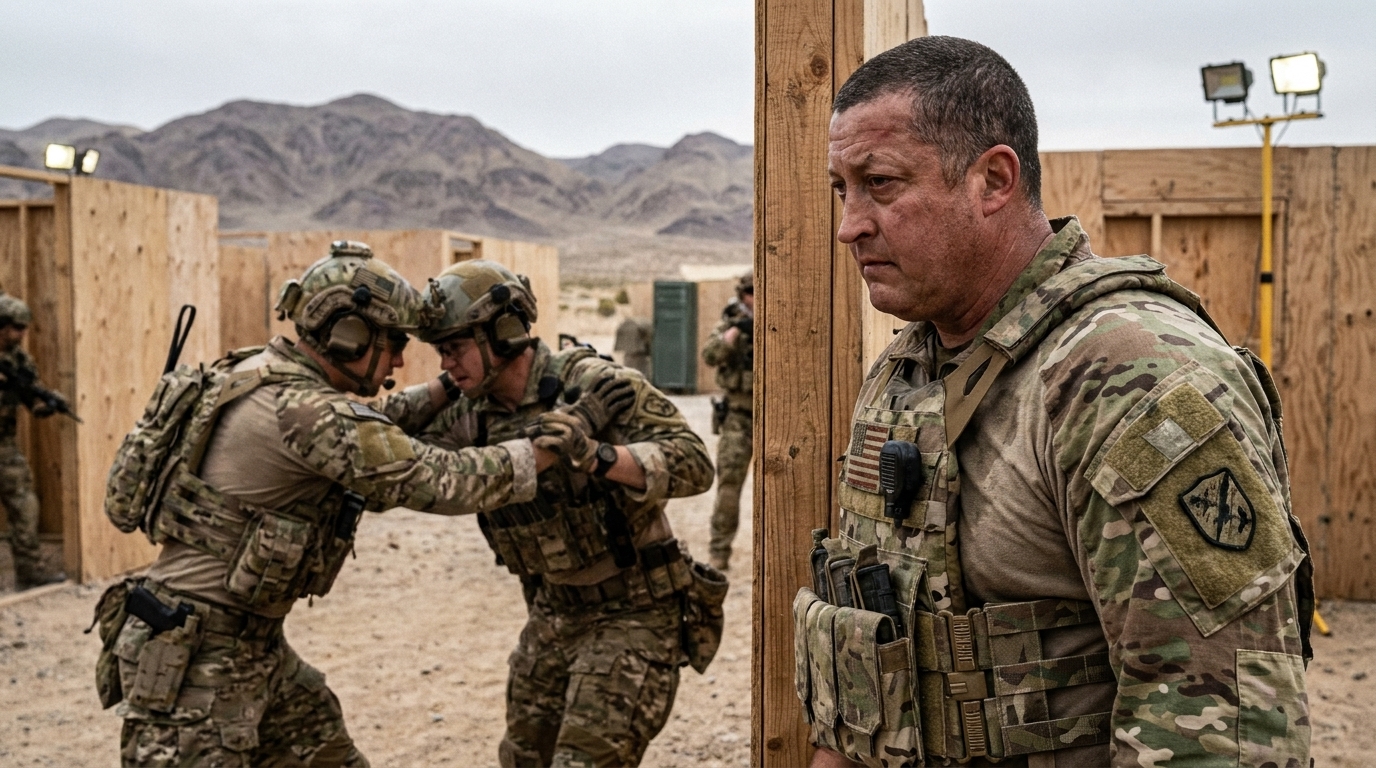
just doesn't care. His name is Nick. He
spent 20 years in the US Army, 14
[music]
as a Green Beret, First Special Forces
Group, 30 countries, three Bronze Stars,
a Valor Citation. He's never once made
it a brand. He retired at 38 and walked
onto a college football team to learn a
position he'd never play. He tore his
rotator cuff after one season, moved on
without a single post [music] about it.
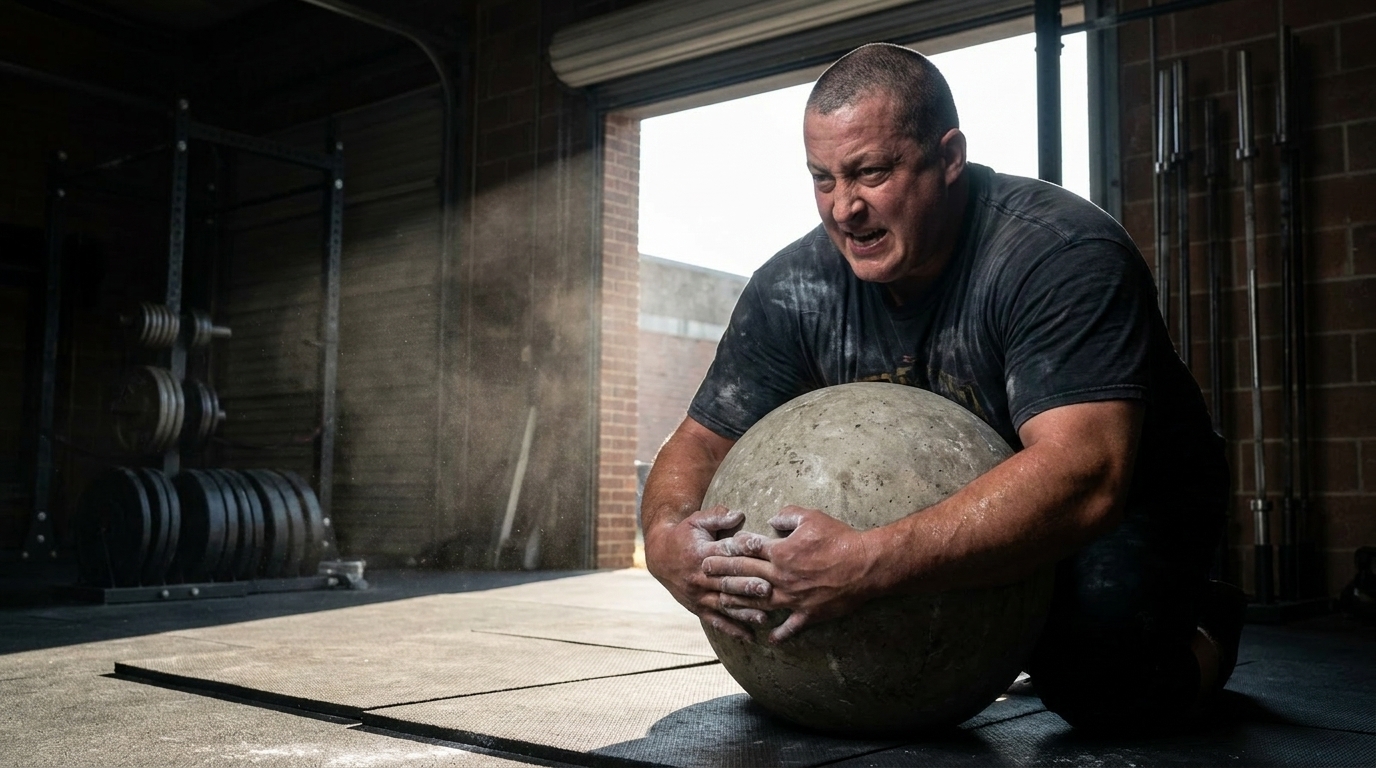
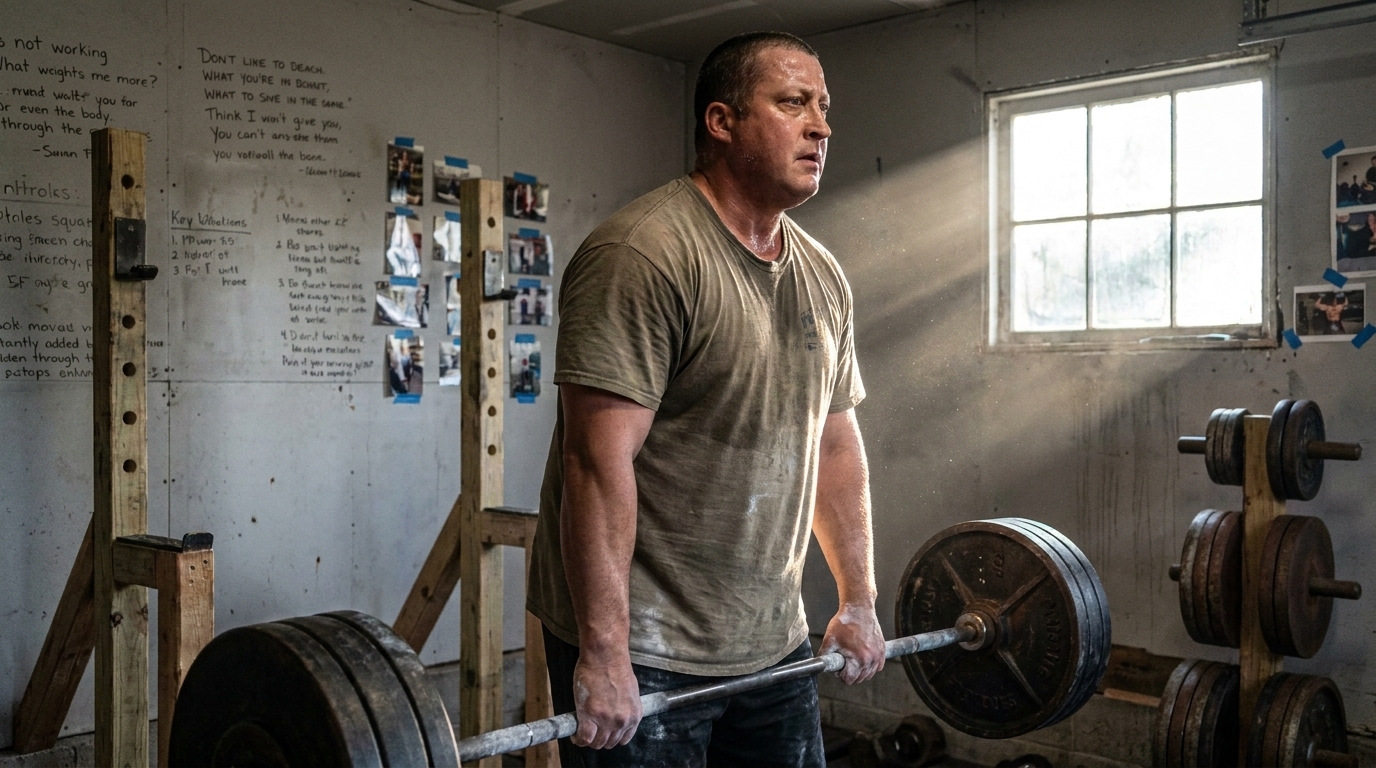
He found strongman, Atlas stones, kegs,
farmer carries. He finished ninth at the
2026 Arnold Masters World Championship,
built Sentinel Strength, a gym, a
coaching brand, a 58-episode podcast on
surviving what comes after service. We
asked him for his key message. He sent a
shrug emoji. It's the most honest answer
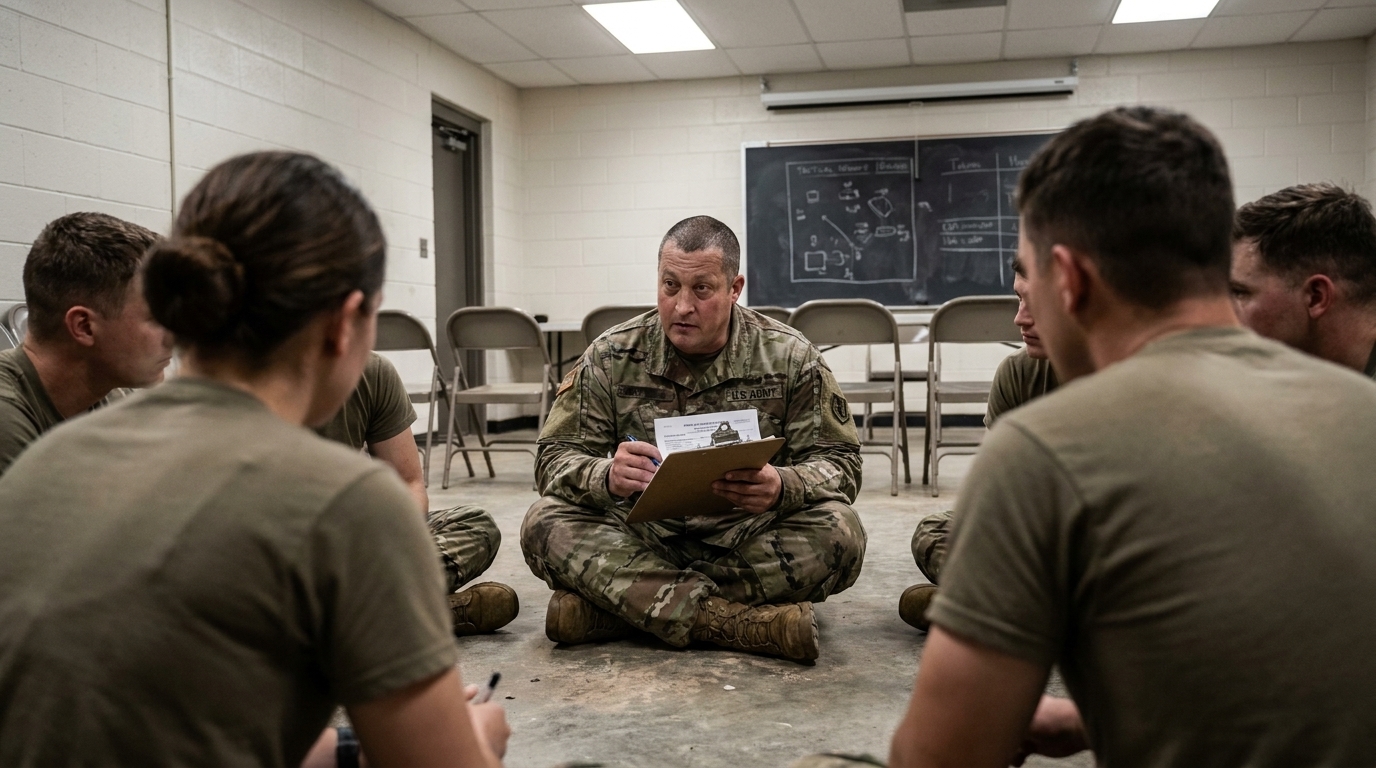
we've ever received. Nick now coaches
people through the part after the
medals, after the identity, after the
proof. That conversation starts now.
Nick, welcome to the big show. We're
honored to have you in the lab today.
Johnny, we got a guy with nothing left
to prove. And that's the point. His
name? Nick Humble. Nick, welcome to
Mornings in the Lab with Keith, Bad
Internet John and friends. Dude, that
might be the single greatest [ __ ]
intro I've ever heard in my life. Who
[ __ ] is this? Who
the [ __ ] IS THIS? OH, JOHNNY, HOLY [ __ ]
OH MY JOHNNY,
Nick doesn't have a green beret on his
head. I think he might be bullshitting
us.
It's actually over here on my wall.
Dude, you are you are you you are so far
[ __ ] off in left field with this
stuff. Unbelievable.
So Nick, check this out, brother.
Yesterday but did you hear that whole
thing about the green beret? You have
the difference but everybody's got the
hat. Am I green beret, too? Did you hear
that [ __ ] [ __ ] Were you listening?
>> I did. Thank [ __ ] god, dude. Thank
god.
>> [laughter]
>> Yesterday, this [ __ ] thought a
chicken, a single chicken was $5,000.
Well, cuz it produced nothing with food,
Nick. I'm thinking, "Hey, What is it,
five? It's a single chicken.
And so today he says, "Listen." He says,
"Today we got a green green beret
coming." He's all, "Well, in all
seriousness." He settles me down. "I
want to ask you a serious question."
>> [laughter]
>> He's like, "Well,
green beret, they all have the hats.
What's What How do you tell them apart?"
So Nick, how do you tell? How do you
tell? Because it's like saying you're a
SEAL. You're a green beret. It's a
symbol for Christ's sake.
It's Just because Yeah, I signed up for
the army. I got a green beret. I got
gave me a green hat. I'm a green beret.
What is wrong with this little [ __ ]
Nick, welcome to the show. Oh, it's it's
everything as it was been advertised.
I'll tell you that.
It's a real quick just so you know, when
he says this [ __ ] goofy [ __ ] just
kind of let it go by.
>> [laughter]
>> So okay, so we got you here for 22
minutes, maybe longer. I'm just going to
go to the kitchen and make some cookies.
You guys can talk strength, talk green
beret. I'll see you guys a little later,
Nick Humble.
>> some [ __ ] better internet.
>> [laughter]
>> Nick, where are you joining us from,
brother? Where are you coming from
today? West Virginia in the United
States. Nicely done. Nicely done.
So Johnny, 2026, this guy
decides to go become a He He decides to
compete in the Arnold Masters World
Championship in strongman. And Nick, you
probably know In terms of masters,
that's that's going to be right at the
top. And Johnny, he finished ninth.
I just Well, I heard the [ __ ] intro,
dude.
>> [laughter]
>> But Nick, you I never competed as a
master. I was back in I retired in '07,
so it was back right when the split was
happening from IFSA and that whole
thing, but cuz I believe it's where you
were Arnold Masters and then it would be
what, the Masters World Championship?
Those are the top two, correct?
So
there's
there was a OSG OSG enters that
equation, too? Yeah, yeah. So there was
a federation split at Strongman
Incorporated.
And that's a whole 'nother story in
itself, but when it split,
>> Yeah, Deonna Deonna was one of my good
friends. That was huge.
>> Okay, so you you know you know the deal,
then. Yeah. Okay, so when they when they
split,
he went and stood up US Strongman and
you can't go anywhere. Like you can go
to nationals, but after you do
nationals, you can't go anywhere else.
Strongman Incorporated
has always had nationals and then two
years ago, they started doing regionals
that can put you into the Arnolds.
And then
for a masters category, obviously. Like
if you go to the Pro Am and win the Pro
Am at the Arnolds, you go compete at the
Arnold Classic
>> next year. Next year, yeah. Yeah, which
is [ __ ] A couple of guys have done
really well with that, too. [ __ ]
>> They have. A ton of guys have done well
with that. So then [clears throat]
then OSG has been around and they used
to run a lot of regionals in the US. Now
they only run one regional in like I
think 15 different countries.
And then you can do an online qualifier.
So I'm going to try to do an online
qualifier for OSG Worlds this year.
So my next two comps will be Strongman
Incorporated Nationals in August and
then somehow between the end of July and
the 1st of September, I'm going to try
to qualify online for OSG as well.
Right on.
>> [clears throat]
>> Very cool.
Very cool.
>> I don't know how to stop. Like I I spent
20 years in the army. I spent 16 years
as that as a green beret and I was
always in a training cycle.
So when I retired, You're always
preparing for something. Yeah, and if
you don't do that, your mental My mental
health I don't know [clears throat]
about everybody else's, but my mental
health went to [ __ ] So I was like, "Hey
man, I got to I got to figure this out."
And I found the sport of strongman. In
my entire
life from adolescence to strongman, I
had worked on a team at some point.
Well, in strongman, as you know, there's
nobody to blame. Like you can't fake
strength. It's it You can't blame other
people. Like everything falls on you.
And that's your equalizer, isn't it?
That stone isn't getting any lighter.
You got to get stronger. Correct. Like
ever gets lighter. It just
keeps get This is the strongest I've
It's the heaviest I've ever been in my
life, which I'm not so sure if that's
all that great, but it's also the
strongest I've ever been in my life. But
but how old are you, brother?
What's that?
>> How old How old are you, brother? Uh 47.
I'll be 48 in June. Good for you, man.
That's [ __ ] cool. I I agree. Nick,
there is something to be said about
about the the That's what I love about
the gym, right? And you look at a 45-lb
plate, it's it's a 45-lb plate. It's not
It doesn't matter what color you are,
what sexuality you are, what gender you
are. It's 45 lbs. And they're all like
are like the stones you guys pick up,
right? There's no It doesn't know what
you are. You you you can't pick me up,
well then you better [ __ ] work at it.
It's just It's pretty simple, right?
Yeah, yeah. So Nick, you Johnny, get
this. He was a Special Forces Engineer
Sergeant, which means that you special
So your specialty was explosives and
demolitions. Dude, that's that's a
pretty hardcore [ __ ]
I It was
I loved it, man. It was
15 years of the greatest years of my
life. Yeah. I loved it, man. I being I
tell this to people all the time. People
like, "What is it like being in special
operations?" And I'm like, "It's the
most toxic [ __ ] competitive
environment that you could ever be in in
your life." However, it has to be that
way. It has to be uber competitive. And
that uber competitiveness turns it toxic
[clears throat] [ __ ] Well, it is I mean
the the guys on the other side are
trying to kill you. If you don't have
that competitiveness, the guys that are
doing that environment on the other
side, they're going to [ __ ] eat your
lunch and that's not you're not letting
that happen. 100% and that's but it was
I wouldn't trade the good days, the bad
days, the deployments,
the
multiple divorces and marriages that I
had. I wouldn't trade any of it.
[clears throat]
That experience that I had, those years
with all those guys.
Well, you know, brother, what I want to
hear and I I think I caught this in the
intro, you actually went and and tried
to play football at collegiate level
just
cold, just just showed up and tried? So
a year out, the army decided they wanted
to make a career decision for me and I
was like, "That's not [ __ ]
happening." It was the first time in my
career that it'd been done that way.
So I decided I'm going to retire. So
>> How old are you at this point? 37.
So yesterday. Yeah. So I started I I
found a long snapping coach. I What I
really really did is I looked on a
football roster and I was like, "What is
the most Where can I be the most
longevity at?" Like
>> Long snap will do the trick, yes.
Exactly. So
>> [clears throat]
>> I hired a coach, Chris Rubio, and he I
spent a year with him and one of his
satellite coaches and they taught me how
to long snap and then I played a year of
college football. I would have played
longer,
but I went to a private school and the
school came back and said, "None of your
military credits are going to count.
You're going to need to be here for 4
years to get a bachelor's degree." And
I'm a 38-year-old man at this point. I'm
not a 22-year-old kid and I'm like,
"Yeah, that's financial. That's
[ __ ]
I'm not going to do that." So I left
after a year of school there
and went online to finish my degree.
>> Where was it? What?
>> Belleville. So right It was an NAIA
school right outside of St. Louis on the
Illinois side. Okay. Small school,
nothing huge, not a D1, great
experience. And then the school
made a lot of coaching and AD changes
and like 4 years later, the whole school
ended up being shut down. So Lindenwood
>> Oh.
Lindenwood proper is in St. Louis,
really St. Charles, Missouri, and they
have a D1 program there now that went
from NAIA to D2 to D1. And when they
went to D2,
they started
putting in all these satellite colleges
and it's just like any corporation,
right? You're just cannibalizing
yourself at that point. They could They
couldn't sustain the just hemorrhaging
of money. So, they ended up closing all
of their satellite schools and all they
have is their main school now.
Got you. Well, that's so what what was
that experience like? I mean, you
basically will learn to snap, showed up,
said I want to try out. Yeah, I mean, I
got I I snapped
>> this because most people that's just
seems like such a stretch. That's like
what?
>> [laughter]
>> But I mean
you I mean you understand what it's like
to make a decision and go [ __ ] get
it. And I just just did it done. Let's
just do it. I don't know how to quit.
It's like what's the next? Like after I
competed at the Arnolds this year, it
took me about a month to go
what the [ __ ] am I going to do next?
Like I I've been a national qualifier
for 5 years. I've competed at nationals
twice with two top 10 finishes. Like
I've been to the Arnolds with a top 10
finish. Like what the [ __ ] do I do now?
So, I'm still training and I'm going
[clears throat] to go to nationals, but
there's a part a part of me that's a
little bit like what's next? What where
can I push myself to the next level of
this?
>> Yeah. Yeah.
So,
walking on the football team, I got
there and I had another kid that snapped
and I beat him out and I started the
first
six or seven games.
And from there I finished the rest of
the season and then obviously the whole
hey, your credits don't transfer over.
But I what it did for me is it just
getting out of the army is a transition
itself after 20 years of being
institutionalized.
>> Yeah. So,
going to school was sort of an
institution and I was on a team and had
made friends and it was funny that I'm
38 and now I have friends that are 18 to
22.
>> [laughter]
>> Yeah. Yeah.
So, brother so just cuz I'm I love this
idea because
there's I I guarantee there are people
that
wanted to walk on or maybe they're
hearing this, maybe they're sitting with
their dad and they listen to the show
and they want to walk on.
I mean, what do you literally and I'm
kind of curious myself. So, you get
trained for this?
Right? You get a coach [clears throat]
and school starts or you what you just
read send the [ __ ] coach an email and
say I want I want to walk on? No, I had
So, I had at the So, I don't have any
The only social media I have now is an X
account and a LinkedIn. At the time I
had Instagram and I had Facebook. So, I
was posting snapping videos. Chris Rubio
was helping me with recruiting.
Another coach was helping me with
recruiting that I met through the
journey.
And I had a coach call me from London
was like, "Hey, I want to put you on
scholarship and get you in." Now,
he says, "I think you'll be a really
good addition to this football team with
your
He looked at as maturity.
>> [laughter]
>> And it's a cool story.
Yeah. [ __ ] yeah. Yeah.
And so, I went and played football there
and like all the refs knew who I was. I
didn't know who they were. Like we would
be walking off the field at the end of
the game and they'd be like, "Hey, man,
it was like an honor being here with
you." And I'm like, "What the fuck?"
Like Yeah, thank you.
I had no idea that a lot of those
referees knew
like who I was and it would to me it
wasn't That's a [ __ ] story to have
someone in their mid-30s come and play
on a football. That's a great [ __ ]
story. Holy [ __ ] It was a blast, man. I
I had a great time. As a matter of fact,
I just got replica jerseys made and I'm
going to put one under that Marcus
Mariota jersey behind me Nice.
>> um here in the next week or two.
Hey Nick.
>> Are you a big Are you a Oregon fan or
just a Mariota fan? No, man. So, well,
we got season tickets when I was in the
army. I was at Fort Lewis in Tacoma and
we would drive down to the Ducks. I had
season tickets for 2 years. And the
first year I had tickets was the year
Mariota won his Heisman. And so, my wife
it's actually her jersey. She's a super
Mariota fan.
And because of the human being that he
is. And so, her
a bunch of employees got together for
Christmas and got her a signed Marcus
jersey.
And she was like, "I don't know where to
put this." So, I was like, "I know I
know exactly where that thing can go."
>> [laughter]
>> I do. I'll help you with that part.
You're hanging out with Nick on the but
he's got John Anderson this morning on
Mornings with Lab with Keith John and
Friends. Nick is a former Green Beret
Sentinel Street. Actually, I guess I I
incorrectly stated it. You're never a
former, you're always a Green Beret,
right? Like I was actually I'm being
serious. Can you correct me? How how do
you how how does one identify? Cuz Well,
brother, just kind of like this, you're
always going to be a weird [ __ ]
You're never going to get rid of that.
>> [laughter]
>> It's who it's I I'll say it like this.
Yeah. Being a Green Beret forged who I
am today, but it's not who I am today.
Oh, interesting response. I'm a husband.
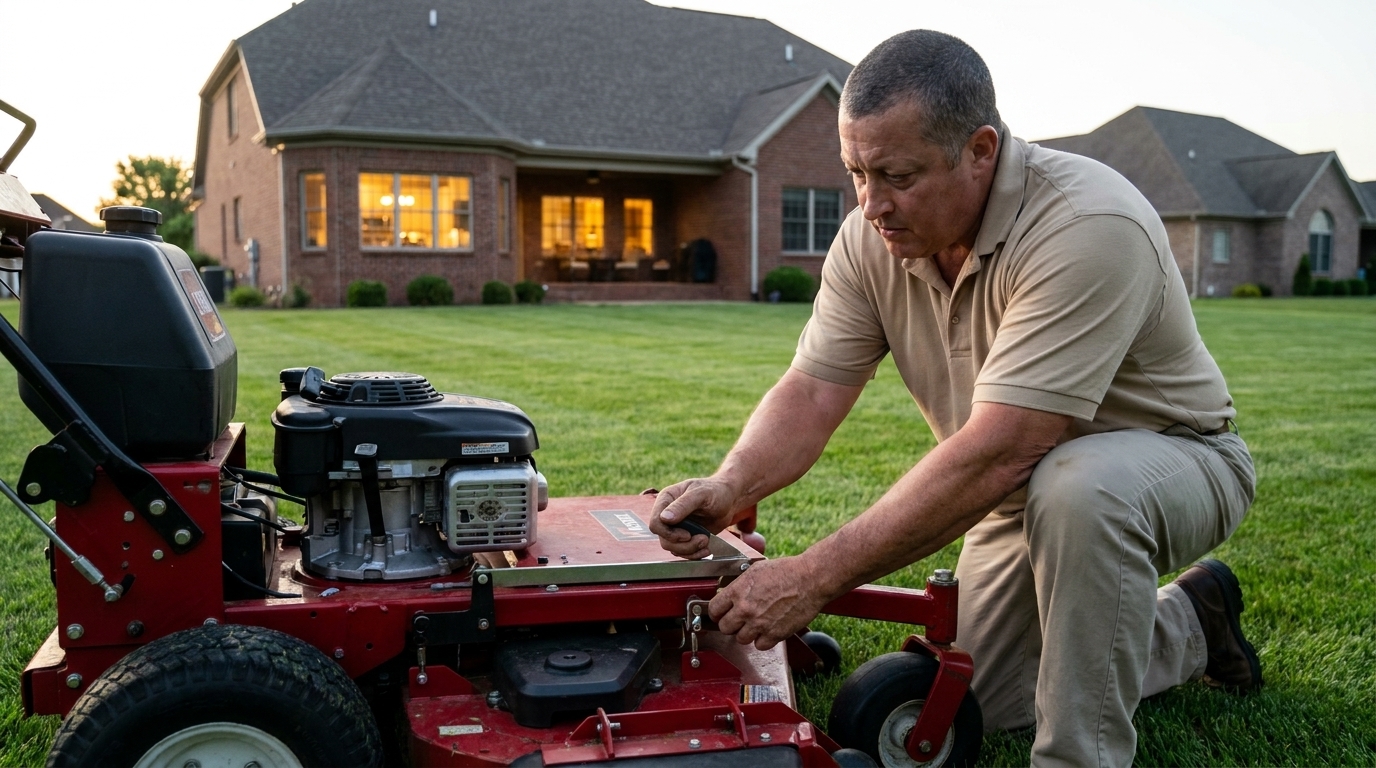
I'm a strong man. I'm I'm a guy that
likes to keep his [ __ ] grass looking
like a goddamn golf course. That's who I
am today. But for 15 years, you know, I
was a
guy that wanted to get after it on a
team. But that's not who I am now, but
it made me who I am today. I want to
hear, brother, I want to hear cuz
obviously,
>> [clears throat]
>> you know, like the
the process that turned you into that
warrior. Yes. Tell us a story about one
of the things that the public might have
a hard time comprehending that you
actually would do. Yeah. Good morning,
Rico.
You mean to like like my journey in
getting in getting Yeah, almost like
whatever whatever they call that phase
of of becoming that high-level warrior.
I guess
in the school sense, right? You'll go to
SFAS, Special Forces Assessment
Selection. If you get selected
and you make it through and get
selected, then you'll go to the Special
Forces Qualification Course. And that
can be anywhere from I think it's seven
or eight months up to a year and a half.
And then depending on what job you get,
like the medics are the longest and the
engineers and the weapons guys are the
shortest and then comms guys fall
somewhere in the middle. Okay. And then
you'll get through with that, you'll go
to SERE school and language school and
then you'll go in. I guess for me it was
I was in the army. I was a I was a
carpenter in the army. I was a
carpentry masonry engineer.
>> no [ __ ] And I was like, "There's got to
be something better." And my buddy made
a comment like I want to go try out to
be a Green Beret and I had no idea what
it was.
So, I kind of read a little bit about it
and then we just
>> Cuz you remember, brother, Rambo was a
[ __ ] Green Beret. Yes.
>> [laughter]
>> So was John Wayne. I mean, There we go.
There we go.
>> [laughter]
>> But I just I started to train for it and
it just gave me like I don't know. I've
always had this thing like the stronger
I get or the faster [clears throat] I
get or the the human performance side of
it. I didn't really understand that, but
the more that I trained it I got I would
get faster doing this or I would get
stronger doing this. It just appealed to
me. And so, going through some of that
[ __ ] I mean, SFAS isn't all that fun to
go through. I mean, that's 24 days of
[ __ ] insanity. What is Just describe
what that is. That's what I'm after.
Yes. So, I don't know there's tiers
where they're testing that you actually
have what it takes to stay in that
level. Talk about those tests. I don't
know how SFAS is run today because
obviously I've been out I've been out of
the army. I've been retired for 10 years
and I haven't been to selection in
25. So, 25 years ago you showed up and
you went to Camp McCall, North Carolina
and you did some you did three three
road marches that were four, six, four,
12, and 25 at the end.
You did three big runs. What does that
mean? What does that mean 425 at the
end? What does that mean?
So, a a ruck march is basically putting
a backpack on with 40 or 50 pounds on
your back and then you'll walk. So, we
we did a a four-miler was one day. Then
at some point in there we did a
12-miler. And then at the very end, the
last gut check of the 24 days is a
25-mile road march. Wow.
And so, you're basically just your dick
is in the dirt at that point.
>> That's a marathon right there with 50
pounds on your back in boots.
Oh, yeah. It's it's it's not all that
great. It's not fun.
>> [laughter]
>> And then in between that you did a whole
bunch of land navigation. So, you would
do day land nav and then night land nav.
And that's just walking through the
woods trying to find points doing
orienteering.
And then you would do a team week where
you would do two events a day for 5
days. And you would see who plays well
with others. And yeah. Some guys don't
play well with others. And then at the
end of it you do a peer. Like this guy
is awesome or this guy is sucks. And
then you can get peered out of the class
whenever if your whole team thinks that
you're a [ __ ] and
hey, you're done. And they'll just
you're you're you're gone. Then
sometimes guys go to a board and they
get personality looked at and they're
like, "Your personality's not what we
want."
>> [clears throat]
>> Is it a setting where they're trying to
get you to quit? You know, like they you
always hear the stories about the SEALs
where all you got to do is ring the bell
and you can go get you warm and have
some pizza.
No, I don't I don't remember anybody
actively going like, "Hey, you can." But
a lot of guys just leave. Like it sucks.
It's not fun.
Like it it's grueling and it just it's
just one of those things that just
slowly I don't remember anyone in SFAS
just actively trying to get you to quit
or [ __ ] with you on purpose to get
you to quit.
They were just like, "Wake up, do the
task." And if you can't do the task or
don't want to do the task. The funniest
part for me is this
is that I was a carpenter and there were
a lot of dudes that were like,
"I'm not going to leave out of here
unless I'm in a body bag." And the next
thing you know, you wake up the next
morning and they left during the night
and quit. And people would be like, "How
are you going to quit the [ __ ]
carpenter's still here?" That was the
joke, right? Like wait a minute, how is
this carpenter here and you're in a
[ __ ]
>> [laughter]
>> The carpenter's still here
and you quit.
Hey, Nick, so talk a little bit about
So, you know, we hear you know, so you
were in Special Forces Green Beret. So,
there's that. And then we you know, to
John's point we hear often about the you
know, SEAL Team or SEAL Team Six
training. Like like is it the same? Is
it different? Is it like like can you
kind of explain to He didn't He didn't
He didn't just say that. Yeah. So, let's
let's let's look at tiers, right? So
so you have SEALs
>> Oh, real real quick, I was going to say,
you realize a seal, the symbol means
they're in the water. Do you understand
that? [laughter]
I know what they Well, the difference,
maybe that alone will help you
understand what we're talking about
here, Wino. I I'm thinking so much about
just the training and the and and just
the hard-ass training that that that it
takes to create a green beret.
>> Training in the water or not? Well,
there's being on land. That's the
biggest difference, right? How it is?
Yeah, the SEALs spend a lot of time in
Hence hence the name SEAL. No, I know,
but but but that but that is the biggest
like so it's adding the the the land to
the water. So you're good on the land,
you want to be you want to you want to
be the ultimate elite, you got to go get
in the water, too, Nick. Well, so
special forces has dive teams. Yes.
>> And then there's tiers. So I'm going to
catch a lot of [ __ ] about this, but if
you think of special forces, maybe
SEALs, like normal SEAL teams, special
forces teams, Marine Raider teams, all
those guys are like on a tier of like
let's say that's a tier two level. Okay.
>> Your tier one level is like Delta, SEAL
Team Six.
>> Yeah. It's
>> [clears throat]
>> it's when they pick the select from that
tier two. Yeah, yeah, yeah.
>> like being in the NFL or being on the
being an All-Star in the NFL. Or excuse
me, what do they call it? All League or
whatever the the
or Hall of Fame, you know, I mean, it's
like you're the crème de la crème of the
best league in the world. So the
services run it different, right? So in
the Navy
to go to SEAL Team Six, you have to be a
SEAL already. Yeah, for sure.
>> Okay. Now, to be a Delta Force guy, you
can come from anywhere in the Army. You
can come from the [ __ ] Marine Corps
if you want to. If you go to selection,
they'll do a branch transfer.
Oh.
Okay.
>> Navy SEALs have gone over to be Yeah,
that that one right there, they don't
give a [ __ ] where you came from, but are
you badass enough to to do it? Yep. So
Nick is the Is it going to
[clears throat] be like the Is there
like like
Like what's the one? Like is there like
what like what's the pinnacle, like the
like the most elite soldier in the US
military? Like what would that Like what
is it? Is SEAL Team Six, Delta, like
what? Ranger? Like I'm I'm just throwing
names out. Delta, isn't it? Isn't that
what he just explained? The tier one
units would be Delta and and ST6.
Oh, yeah, okay. Okay.
Those [clears throat] are the Those are
the two that are picking from the all of
the best of the best, and they're just
taking a small group of the best of the
best of the best.
Correct?
>> those dudes are the guys that like
snatched Bin Laden. Like those are the
dudes that are killed Bin Laden.
[laughter]
The other dudes are the guys that
snatched [ __ ] dude in Venezuela. Yes.
Yeah. Like those are the guys doing
that. And what it really depends on and
who is is who is the Joint Special
Operations Command commander. If the
dude's in the Army, who's he going to
send? If the dude's in the Navy, who's
he going to send, right?
>> Oh, yeah, yeah, yeah.
>> down to that. Yeah, yeah. Keith, John,
and Nick hanging out this morning. Hey
Nick, we had you here for 30. Do you
have extra time to hang out with us or
do you got to get out of here? Oh, man,
I got whatever time you need. Awesome.
So let me ask this question about the So
you you have been in the forces and you
watch now from afar, do you still
yourself get fascinated by some like for
example, Venezuela, right? So it was
this operation all of a sudden just
happened. So do you still yourself kind
of go, "Wow, how'd they do that?" Or do
you kind of get all nerdy and get
fascinated? Or do or or is it just like
in in one ear, out the other? Oh, that's
just normal [ __ ] for those guys.
It's more of the latter, but with the
attitude of like, "Holy [ __ ] I didn't
see that coming." OH, OKAY.
>> [laughter]
>> LIKE THAT SHIT'S BADASS, BUT LIKE [ __ ]
I DID THAT WAS NOT ON MY BINGO CARD FOR
THIS YEAR.
>> [laughter]
[gasps]
>> OH, THERE YOU KNOW WHAT, JOHNNY? THERE'S
SOMETHING TO BE SAID FOR what Nick said,
cuz you and I've often joked about
whatever's happening over there, we
should go pay attention to what's
happening over here. So it's not lost
upon me, Nick, that a few months ago
there was a lot of noise happening over
there, just down below you. Now there's
a bunch of noise happening over there,
which makes me wonder, Nick, what
they're doing over there, if you know
what I'm talking about, right?
>> I do.
100% dude.
I COMPLETELY UNDER
>> [laughter]
>> OR OR HEY, JIMMY, get this clip ready.
Or what's happening with these NASA
engineers and UFO guys going missing?
Nick, have you heard about this? Yeah, I
A 29-year-old NASA engineer is dead, and
the FBI just opened a file on 12 more
scientists. That's not a coincidence
conversation, that's a national security
briefing. Joshua LeBlanc worked on
nuclear propulsion at NASA. His Tesla
was found burned beyond recognition in
Alabama. No confirmed connections yet,
but when the president says he's been
briefed, you stop calling it a theory.
Nick, thoughts on that?
I don't That's I I seen a podcast about
that the other day, and I I knew that
there were some missing. I just didn't
know the particulars behind every dude,
and they said the particulars behind
every guy.
I bro,
I'm not saying aliens are there, but
I mean, you can only dig so deep before
bad [ __ ] starts happening, it looks
like. Well, yeah, that's that's exactly
what I was thinking, too, brother. You
you don't want to know too much in that
world.
>> Yeah. Yeah. Well, Johnny, there's a
there's a I saw a post yesterday, a
young lady, her her partner, they're
working on anti-gravity technology.
One of them's gone missing. Yeah, she's
she's been doing it for like 15 years or
something. And one of them's gone like
that's just [ __ ] bizarre, right? So
think about Anderson, you you start down
this path, you start discovering
something, you create this invention,
Nick and Terry's like, "Where's John?"
I'm not sure.
Somebody [ __ ] took him. Like it's
crazy [ __ ] Nick. I mean, and this I
believe that these patterns are are not
[ __ ] new. This has been happening
[ __ ] decades. Yes. Yeah, all that's
new is that this administration is
choosing to talk about it publicly
instead of sign things with an auto pen.
So Nick
Nick and [laughter] John this morning on
Mornings with the Lion with Keith, John,
and friends. Hey, so I got a segment on
the show that I really enjoy, and John
breaks [ __ ] down, and it's called
committed, Nick. And one thing I really
enjoy about my brother here is he's got
an eye for for for movement. Like he he
he spots
>> Well, here's the thing, though. Our our
man has got it, too, because perfect
example, like part of what where where I
developed this, brother, was especially
coming into the sport of strongman, you
know, I I I got to I turned pro my third
contest. So I was traveling
internationally right away, and I didn't
[ __ ] I was back in the Mark Philippi
days, you know,
and [clears throat] Phil Pfister days,
and so I'm traveling with these guys,
and I'm like [ __ ] green, and I'm
having to figure [ __ ] out. So I'm like
literally [clears throat] studying like
all these little like, "Fuck, where are
they grabbing that stone? Like a field
stone, they're they're turning it this
way." So I was just breaking down all
these little details, you know, and of
course, then we would compete as a team,
they would help me with this [ __ ] but I
guarantee you do the same thing. You
walk in, yeah. You go to the arena, you
walk around, you look at the equipment,
go, "Okay, I need to grab this [ __ ] I
need to turn this stone this direction.
I want this side down when I pick this
[ __ ] up." He's got it, too, Keith. I
guarantee I know it. And Nick, I met
John, I thoroughly enjoyed it, cuz we'll
do things, and John will show me
something I haven't seen. He's like,
"No, look at that." I'm like, "Holy
fuck." Like he the way he can Yeah, it's
like you're you're not you're looking at
look don't look at the don't look at
this, look at that. And then it's like,
"Oh, I didn't even see that." Well,
[ __ ] that's our eyes go to what what
are we we've got to find the the little
[ __ ] handle. We need the little lip
to put our fingers on of whatever we're
lifting. That kind of [ __ ] you know. So
this is kind of ridiculous, but it's all
serious, [clears throat] because it
affects all of us every single day when
we're on the roads driving, but Jimmy
put this up here. Look at the commitment
to this task
of [ __ ] painting road lines.
Like and I'm being serious, think of the
commitment like you just like like the
monotony and the commitment to [ __ ]
color in the lines, Nick Umble. And I'm
not and I'm being actually [ __ ]
serious right now. He turns it into a
game.
Oh, yes, he does.
And he's turning he turns it into a
game. That's what he's doing. He's
turning it into an evolution. Because
it's the only way he can probably keep
himself motivated to do it non-stop,
like you know, and and and but when I
saw that, I'm like, could you imagine
doing that for eight to 10 [ __ ] hours
a day? Like the like the commitment you
have to movements and to going over a
line, and I know it sounds goofy, but
there's a lot of truth to what I'm
saying right now.
I mean,
that's how I that's how I mean Yeah, I
know, you're so correct, dude, cuz you
got to like, "Okay, I got to [ __ ]
nail this spot perfectly. I'm going to
put the I'm going to put the
[clears throat] whatever the spray guard
over here, cuz I can overspray this, but
this side's got to be [ __ ] perfect."
>> It's crazy, [laughter] man. You'd think
they'd have robots for all that, but no.
There there you go.