Read the transcript
Somewhere in your house there's a box
you haven't opened in years. Inside it
is a toy you loved so much the paint
wore off the edges. You probably never
thought about the person who designed
it. Someone did [music] though. They sat
at a desk and imagined it for you. For
30 years that person was Peter. In the
mid-1990s he designed a superhero action
figure that became the number one seller
in its line. Then he went bigger. He
themed the Batman and Viper roller
coasters at Six Flags Great Adventure.
He designed 500 products across toys,
entertainment, and live experiences. One
of his inventions even landed him on
late night television. Then in 2016 he
walked away from all of it. He took a
job teaching shop class at a California
high school. Today his students design
for Mattel, Universal Studios, and the
Santa Barbara Zoo. Hundreds of them have
moved on to college. In 2023 his class
built the longest charcuterie board in
the world. It stretched over 204 feet.
He's in his 60s now finishing a
doctorate on Ikigai and the bridge
between white collar and blue collar
careers. Peter, welcome. This is going
to be a fun one.
Johnny Johnny Peter Walktil joining us
this morning on Mornings in the Lab with
Keith, John, and friends with the
world's biggest charcuterie board.
What's up Peter Walktil? Hey, welcome
Keith. Welcome John. Thank you for
having me. That was quite an
introduction. I I I That's like a movie
theater like I couldn't believe it.
That's amazing.
>> it's it's if if we like you you're going
to get a good one. If we're going to
[ __ ] with you you get a terrible one.
>> [laughter]
>> I love it. I love it. And you got a
Guinness World Record shirt on. There
you go. That's awesome. And I got to
tell you man Sophia got a new outfit on
this morning. We upped her budget. Her
hair's looking great. Sophia's looking
like a smoke show this morning. So
welcome to the lab.
>> to put her put her in
something real risque, please. I I
agree. Yeah, I think we got to push the
limits. Like yeah, totally do it. Yeah,
yeah. Peter, where are you joining us
from this morning? Oh, thank you. Thank
you for having me. So I I I'm not as
buff as John there. It looks like he
works out a little bit. I mean I don't
know
I don't know if I got as much as he
does, but I'm glad and you guys were
talking about dogs earlier. So
I brought something along with me. I
invented this about a year and a half
ago. It's called Batter Batter Fetch and
it's for dogs obviously. And it's got
foam balls in here. And you can shoot it
like you go like this and go
Whoop, there you go. How how far will it
go?
But you can also throw it up in the air
and bat it and then you don't have to
touch the ball. You just go and it goes
sucks right in. So right there, Batter
Batter Fetch. And I'm not trying to get
any advertisement for the advertisement,
but I just thought, you know, I'm a toy
designer.
>> Brother, you [ __ ] better be trying to
get some [ __ ] free advertising.
What's wrong with you?
>> [laughter]
>> Well, you know, free advertising. Are
you guys looking
>> What What hey how when you shoot that
ball how far does it go? It goes maybe
like 20 25
>> What's up, Peter?
Are you guys in Canada?
I think Peter you're on I
I can hear him. It's It's back to your
great internet service, brother. No, I I
I I'm good here, too. I I
I'm fine.
Okay. Can you guys hear me now?
Peter Peter, where are you joining us
from today? I'm in Camarillo,
California.
Where is that? That is [snorts]
if you know where Los Angeles is we're
about maybe 45 miles north of there.
Okay.
Yeah.
>> Which highway are you close to the 5 or
or 101?
>> 101 101
>> Okay. Got you.
>> Where are you guys at? Are you guys in
Canada or where are you guys at?
Keith is. I'm sure you can tell
the you know, the little weirdo. You can
always tell the Canadians.
>> [snorts]
>> How about them Sabres last night, you
know, beating the
>> Oh, he dropped off. He's his I was just
busting his ass about internet and this
and then this happened. I love it.
>> [laughter]
>> He did freeze. I swear I saw him freeze.
>> I know he did. He's He freezes a lot. I
keep telling him get some better
service.
>> Oh my gosh. So tell me about the
charcuterie board, brother. Oh, yeah.
I'll tell you a little bit about that.
So basically like I designed toys and
stuff, theme parks
>> Well, actually let me rephrase that,
brother. How did you get the idea to
make the longest one to make a record
out of it?
>> Ah, now that's a good idea. I'll give
you an answer to that. So
a while back I won this prize this
teaching prize from the Harbor Freight
Tools for Schools. And we got together
over the summer in Colorado. And we were
just thinking about what what's next
what can we bring to our program? And
even though I'm a you know,
architectural product design wood shop
teacher I was thinking hmm
like what can we do in wood that's like
worldwide that's like amazing. So I
started thinking wood and then I just
Googled like Guinness World Record wood,
you know, and I'm like oh, look at that.
There's a charcuterie board. And I'm
like oh, that's pretty cool. So I call
cutting board, but whatever. So then we
started looking at it and I started
contacting Guinness and saying hey like
what's the record? What's the you know,
criteria you got to follow? How long
does it have to be? How thick does it
have to be? Why da da da da And then
when I got back to school after the
summer asked my students to go hey, you
guys want to do this? And interestingly
enough we were redoing our new gym
bleachers. So we took all the wood from
our gym bleachers
and
>> Oh, so you repurposed. That's actually
[ __ ] that's That's really cool. Yeah.
And then the problem was is that
Guinness isn't free. A lot of people
think oh, I just set a record and there
you go, but
for the Guinness likeness and all that
fun stuff they came out to quite a bit
of money. So we had to do a GoFundMe.
But I had to pay the money to do
>> quick
That's interesting question. What does
it take what do you have to pay to hold
a record in Guinness? It depends on what
it is. I mean they have different tiers,
but we wanted, you know, an adjudicator
to come down. We wanted official. We had
to get an official like a measurer. So
we got the carpenters union down. So I
had all these contacts. We couldn't
actually my school cafeteria couldn't
actually make the food. We had to
actually chop it up from another
school's culinary program, which was
kind of interesting. Had it covered, you
know, so the birds don't come by and do
that. And then people couldn't eat right
off of it. So we had to like give it to
them and stuff. Ended up being like 550
lbs of food, but Jesus Christ. Yeah, it
was an undertaking, but This is like
that. This is like that almost like
buying a real expensive car. The buying
it's the easy part. It's the [ __ ]
taking care of it that's the expensive
part. So Yeah, the idea is
>> you thought you were covered with the
wood, but now all this other shit's
popping up.
No, it it was a good chunk of change. It
was It mean there's all different things
you got to think about. You got to get
this, that, and the other thing. And but
yeah, it all came together, repurposed
the board, put it together. 150 kids
helped make it. Got it down on the
football field and it went from like end
zone all the way to 35 on the other
side. Oh, Jesus. So we're talking few
hundred feet. 65 yards.
[ __ ] What is that? 180
almost 200 feet. Yeah. [clears throat]
A little bit little bit less than what
Josh Allen could throw a football. He
could throw I think 75, but So
here's the question. Once you get the
record what the [ __ ] do you do with it
now? Cut it up and make individual
[laughter] boards out of it? Well, we
ate a lot of it and we had about two or
300 people there. They took a lot home,
ate it there. Every little piece had
actually be accounted for and taken
away. You couldn't leave any. We gave
some
>> No, no. I mean I mean the I'm I'm
talking about the board. I'm sure the
food was easy to get rid of. It's
[laughter] [ __ ] food. But they got
this 200 [ __ ] 200 foot long
charcuterie. What do you cut it
individual? Everybody takes a piece or
something? Well, that's that would be a
good idea. Well, actually what we did is
after it was done we did dismantle it
cuz we couldn't have this one big tree
that's 65 yards long. So we did take it
apart and then the people that donated
for our funding and everything like that
they got a personalized charcuterie
board with their name on it Guinness
World Record
>> That's cool. Yeah, yeah.
and we gave around two or 300 of those
away. And then the rest of it we just
repurposed and we used for other things
like that. And then interestingly enough
we held the record for almost a year.
But then someone in Canada beat us. So
we had the record for almost a year, but
That's why I don't like the Canadians.
Good morning.
this morning Johnny. I appreciate that
while I was out getting his face [ __ ] so
to speak. He fixed your internet. Hey
Johnny,
I I I found something. So Peter Walktil
was busy last week and I I don't know if
he's going to be talking about it this
morning. I I'm not sure if he's
comfortable talking about it, but John
Well, Jimmy let's just put this on the
table, man, because I got to ask Peter
about this because Peter we caught you.
Jimmy, run the clip.
A man replaced LEGO sets with pasta and
got $34,000 back from Target. 70 times.
Nobody checked the box. He weight
matched the pasta to the original LEGO
pieces so the box passed every quick
check at the return counter. That's not
a scam. That's a logistic operation with
a pasta budget. Irvine PD called it off
the charts. We're getting into it.
So Peter, there's a dude wandering
around United States who's buying LEGO
boxes
taking them home building the LEGO
Johnny with his smart brain and then
putting all that positive energy and
replacing the box of LEGO with pasta.
And then taking the box back to the
store and getting his money back. And
then all right, how much does a [ __ ]
box of LEGOs cost for God's sake?
20 bucks? 10 bucks? No, we're we're
talking Peter probably talking hundreds,
right? Like they're not cheap, but my
the point is Johnny back to what we said
all the time. If this dude would take
that energy and put it into something
positive
how well I I just want to take my arm
around and say dude, go put this energy
somewhere else. Like Peter, what do you
think about this whole thing? What
This is ridiculous.
>> I think that either he's a pasta chef
and just needs to get rid of that extra
pasta or he's just a good Samaritan.
Maybe he's trying to feed the homeless
or something because he has to put the
pasta in there. Like if I was going to
take the LEGOs
I wouldn't come back with a box full of
noodles, you know, but maybe maybe he's
trying to feed people secretly or
Good morning these features. I got to
admit that what that
you have to admit it's actually pretty
smart it is actually pretty smart theft.
Let's go and take the Legos and because
any young person working at Walmart when
you take it back is not questioning
whether Peter has actually taken the the
Lego out and put it back in
>> shake it. Yeah, you shake it sounds like
Legos but they
open it up cuz sometimes they take the
actual really cool characters like Darth
Vader or something like Yeah, yeah. Oh
yeah.
Yeah, there was another thing that was
in their system. I can't remember which
big store it was. Yeah.
You order it online. Yes. Gets
delivered. Yes.
You return it. Now if this item is under
a certain price, they just say keep it.
What?
Because it's more expensive to take it
back. Yeah, yeah, yeah. Well, I know
Costco's like that. I I People were
[ __ ] people were like taking like
tens of thousands of dollars
monthly and then what would happen is
the the system would catch on and just
[ __ ] turn off their account.
I I we I knew somebody who when I when
they told me this I was just I was
actually appalled by it. They said,
"Yeah, we use our coffee machine we
bought from Costco for whatever a couple
years and then when it broke we took it
back and they didn't ask any questions."
I'm like, "What?" Like that's just
[ __ ] low-bro, man. Like that's just
greasy. That's absolutely greasy. Hey
hey Peter.
You you pitched jump sticks, a scooter
pogo stick hybrid.
You are going to go panel of children
like not adults children on ABC's The
Toy Box. So I got to be honest, man.
What's it like having your career like
your whole business evaluated by
eight-year-olds on national television?
Like were you like, "Oh yeah." Like did
you take it seriously or did you roll
your eyes and go, "I'm just going to go
with it or what?"
Well, whatever you do in life you got to
be able to you know be willing to fail.
Yeah. So basically I had kids I have two
kids they're a lot older now they're
like 20 and 18 now but at the time they
did they're like little scooters around,
right? Yeah. And we [clears throat] had
a pogo stick as well and it just sort of
hit me one day I go you want to be able
to jump higher over the curb and stuff
like that, right? So I'm like, "What if
we put a pogo stick as like the handles
and you got a scooter?" And it was
interesting enough idea, right? So they
did and we had kids jumping and
everything that and it worked really
well. And then of course you know the
toy box and everything I tried this out
and I'm a little bit heavier than a
nine-year-old kid by like twice. All
right, so maybe a little more and so it
didn't really work out. I actually fell
on national TV which was a nice little
Fun. Yeah,
but it was kind of a great experience. I
mean it didn't go anywhere. I actually
reached out to like Razer and a couple
toy companies but basically it was more
of a an issue like with getting hurt and
stuff like that but I love the idea like
boing you could like go over the curb
really well and stuff like that but yeah
and we so I got a question. So you got
the pogo stick you got the dog ball
throwing apparatus.
>> [laughter]
>> I got something better for you right
here. I was going to say yeah, I was
going to say let's hear it. You you want
you got you've created 10 [ __ ]
things. What what tell about us all.
Yeah, all right. I'm going to give you
my best one. So Yeah, hold on hold on no
no no no we won't hear about them all.
All right,
all right, you ready for A? Well, let's
start with Q.
So a long time ago there was this
company called Quirky, right? They were
in New York City and they were basically
Hold on real quick. I'm sorry to
interrupt but how many is there because
if if you got like 17 we're going to
have to give you like a a 15 second time
limit per explanation. Whatever there's
like six or seven. Okay.
>> [laughter]
>> All right, so here's the here's the one
I'll show you. So I invented this thing
it's called the Grill Wrangler
and what it is is a barbecue tool but
it's a three-in-one barbecue tool. So if
you like barbecuing that's really cool.
But basically it's a spatula, right? You
use your spatula. But then it's got this
fork that slides out you know so you can
poke your hot dogs or whatever and then
if you do this
it's tongs. So you can actually get this
on Amazon if you return it you won't get
your money back and keep it like you're
saying but it's called the Grill
Wrangler. What does that what does that
retail for?
About 20 25 bucks.
That's reasonable. Yeah. And there's a
smaller version which is this one and
then there's a bigger version it goes
about this big.
But it's been around about 10 or 15
years now.
Okay, so that's number one we got six
more to go.
>> [laughter]
>> All right, here we go. So basically I
was a little kid I used to cut the lawn,
right? That's what kids do. So I got in
trouble and I actually took my dad's
lawnmower apart made a go-kart out of it
and I think he's still mad at me now.
But basically got me very curious and
creative and stuff like that. So I went
to design school and started working at
a toy company started F.A.O. Schwarz in
New York City and then went on to like
Tyco, Marvel, Six Flags, Jakks Pacific,
Mattel, Hasbro, Fisher-Price. But
basically designing toys from barbecue
tools to dog toys. There was a Tonka
road constructor that was made in ooh
that was a long time ago as well. Got
the best toy of the year award. There
was X-Men and Spider-Man action figures
when I worked at Marvel. Other vehicles
were really cool like that. I got to
meet really good movie stars and people
that worked on all these toys. At Six
Flags you know designed the Viper Batman
rides. That was cool because every
morning I didn't even need coffee. I was
on these roller coasters going down at
6:00 a.m. like flying through and stuff
like that. But basically I didn't
engineer them I designed all the theme
and the graphics and the names and stuff
like that. But there was so many and
then there's like little things like
that. But action figures, vehicles,
toys, puzzles, everything you could
think of. And then basically I got into
teaching because I wanted to share what
I did and I taught at like different
design schools across the country like
Pratt, Parsons, Otis Art Center.
And then basically I said, "Hey, what
about high school?" cuz we drive by the
high school and the kids were about to
go to high school. I said, "Hey, high
school." and then high school. And then
I started there about nine years ago. I
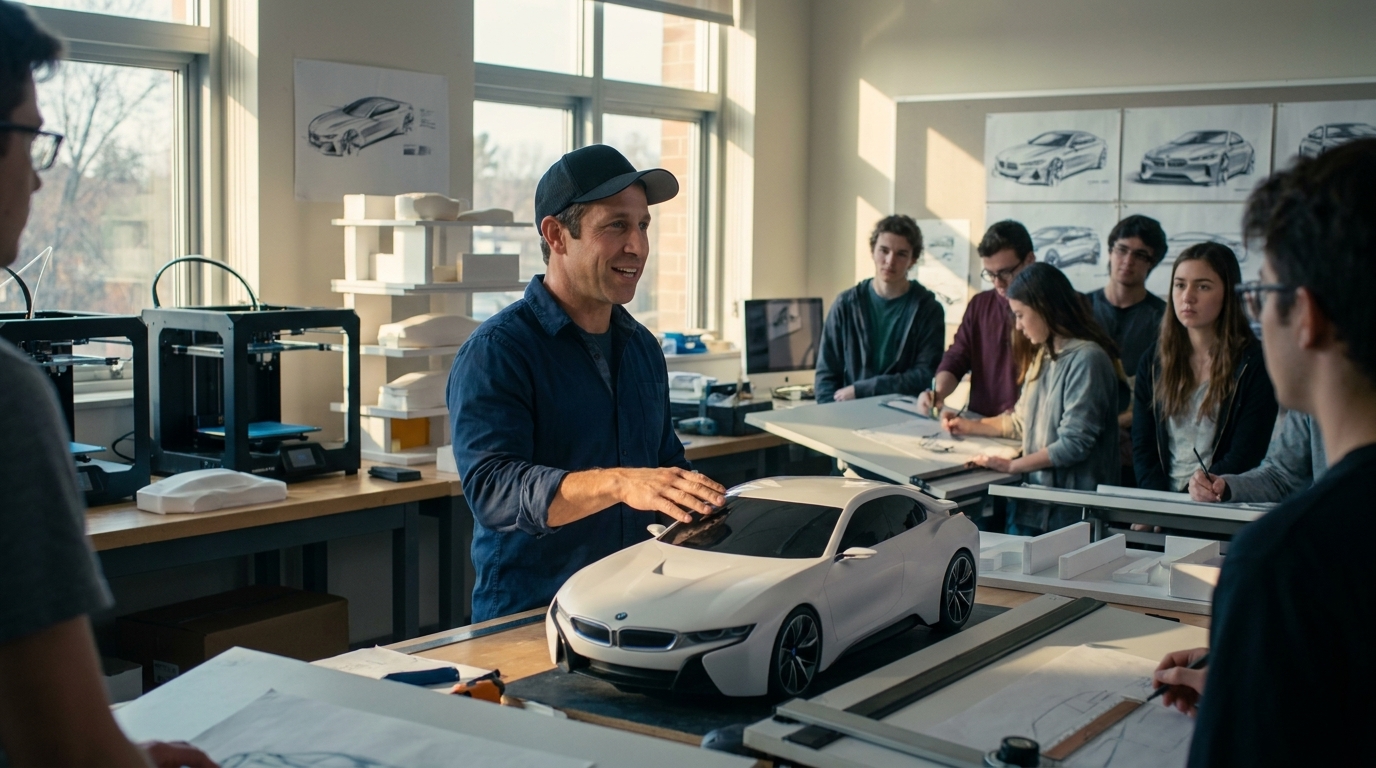
said I want to do that same stuff so I
teach my kids design. We work with toy
companies like Mattel and Hasbro. We'll
go on field trips to BMW and I show them
how the whole industry works and right
now we're working on movie props and
play props for real companies and so
they get a real look into what the
industry could be like. It could be fun
it's not just blue collar it could be
white collar or a little bit of new
collar. So they love it. So I'm sort of
taking my creativity to the kids.
It's fun stuff. So you you held up the
the meat poker and the tongs and the
three-in-one and the dog thrower, right?
You have more [ __ ] that you can hold up
or is that it?
>> [laughter]
>> I can see let's see what else we can get
here. So this is also a nice zombie tool
as well. And if you can see in the
background
there's some of my toys there there's
that Tonka road constructor up there
which is really cool. Did you make that?
Yeah. Well, basically yeah it was made
by Tonka so that's
>> going to say it's a Tonka toy, yeah. So
some of this stuff you actually you
actually was it like you were working
for these companies or you licensed it
to them or or A little of everything. So
>> [clears throat]
>> Wow. As a matter of fact that was all me
me my son came up with that long time
ago. I licensed this and invented it.
Same with the Grill Wrangler. The Tonka
thing I actually worked for a company
and did that. So while I was employed at
companies as like a creative director or
designer I designed a lot of toys as
well. And there was a lot of like little
>> [snorts]
>> X-Men and Spider-Man action figures like
here's Venom you know he's saying good
morning to you guys. Oh yeah. Good
morning creatures. What's up?
I like to So so the million dollar
question is literally the million dollar
question. Have any of these made
millions of dollars in your pocket? Uh
so that's a that's a trade secret but I
could just say that I have a house I
have a wife I have two kids a dog a pool
used to have a camper and I have a nice
car
and
>> Well, brother forgive me I know a lot of
security guards that have all that.
>> [laughter]
>> How does that work though, Peter? You
you you sell you get a licensing kind of
fee? We don't need the number is that
how it kind of works though like you get
a percentage of sales? Yeah, but it's
sort of like a lottery ticket. The
reason I say this, Peter, is because I
guarantee you there are people listening
going, "Fuck I have ideas. I want to try
to bring it to market." So I'm just
trying to get a little bit of a road map
here and of course if they can glimpse
it holy [ __ ] this [ __ ] guy made some
bank. I need to [ __ ] stop being
afraid of what people are going to say
about what I'm doing and just [ __ ] do
it. All right, I'll give you a little
bit of information with that. So
inventing is like lottery ticket
scratchers, right? Sometimes you win 50
bucks sometimes you win five sometimes
you'll win the 500,000, right? So with
licensing or inventing you everybody has
that idea. So your idea might be good or
not. But one thing I suggest is
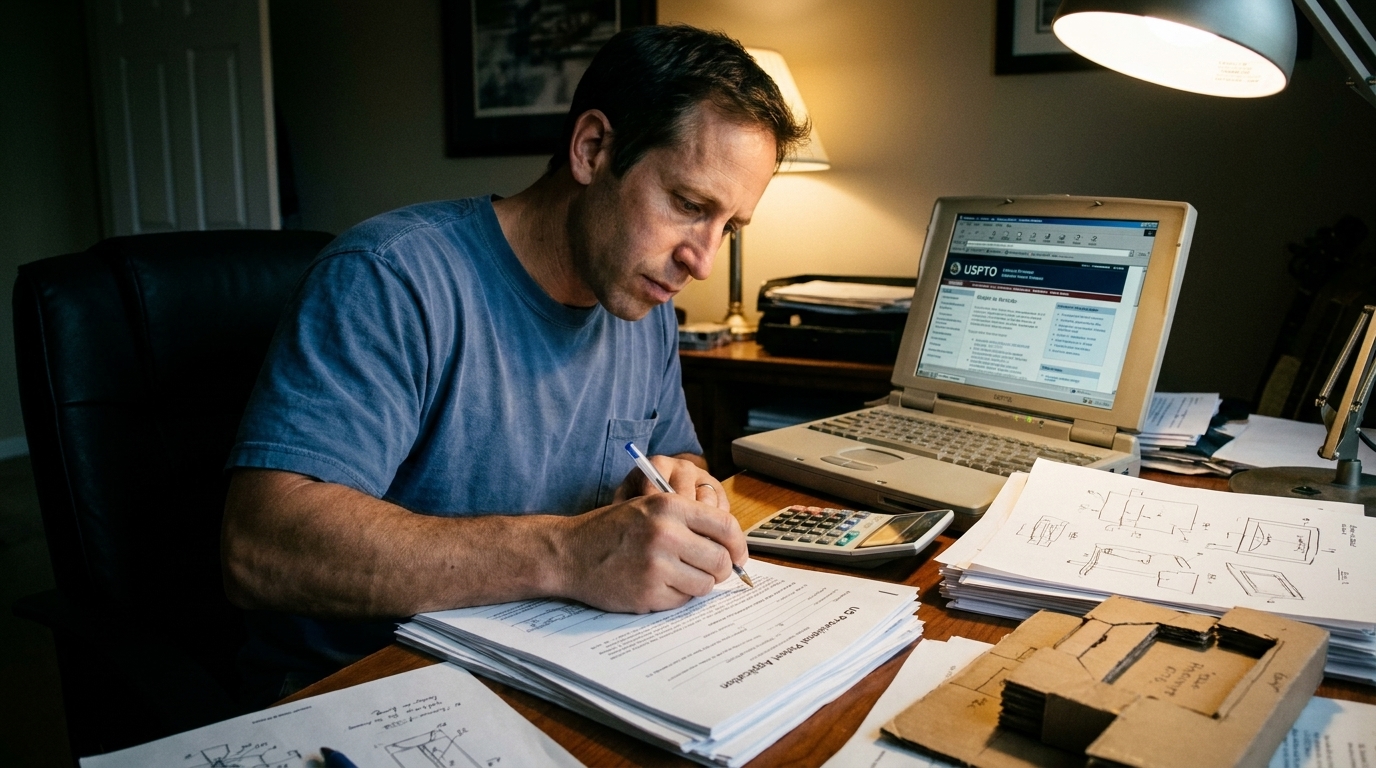
provisional patents they're like maybe
110 bucks protect your idea for a year
and then show it to as many companies as
you can but don't say that you have the
best idea in the world they'll be the
judge of that because unless you're
going to make it yourself and distribute
it and sale and marketing and take
returns in and any lawsuits that might
come in companies are best suited for
this because they already have lawyers
and traditional distribution everything
set up, right? And they'll give you a
percentage. Usually it's 5% if it's on
TV 2.5 if it's just wholesale and via
mail which isn't that much if you think
about it but if you had a Cabbage Patch
doll or a Furby that's millions of
dollars. However, if you invent like 5
10 15 20 things and here's the thing
with today's
>> Yeah, and they're all and they're all
making you a few grand a month you're
pretty [ __ ] happy. Yeah, it's not
bad. I mean you're not a million
trillionaire but here's the thing in the
olden days like when we were kids toys
and products stayed on the market 5 10
years, right? Now the life cycle of any
toy or product is like you know six
months to a year. So they don't usually
go through distributors.
They actually just give them to the
stores first and if anybody tries to
knock them off it doesn't matter because
the store space is already filled.
So you have six years to do it. So with
the barbecue tool made you know
definitely six figures with the Better
Batter Fetch not too bad but not as
close. But it's basically all about your
idea who the company is and how they
market it. And is it really fitting a
need to the world that's going to be
awesome? Or is it just like Is it really
solving a problem? Yeah, exactly. And
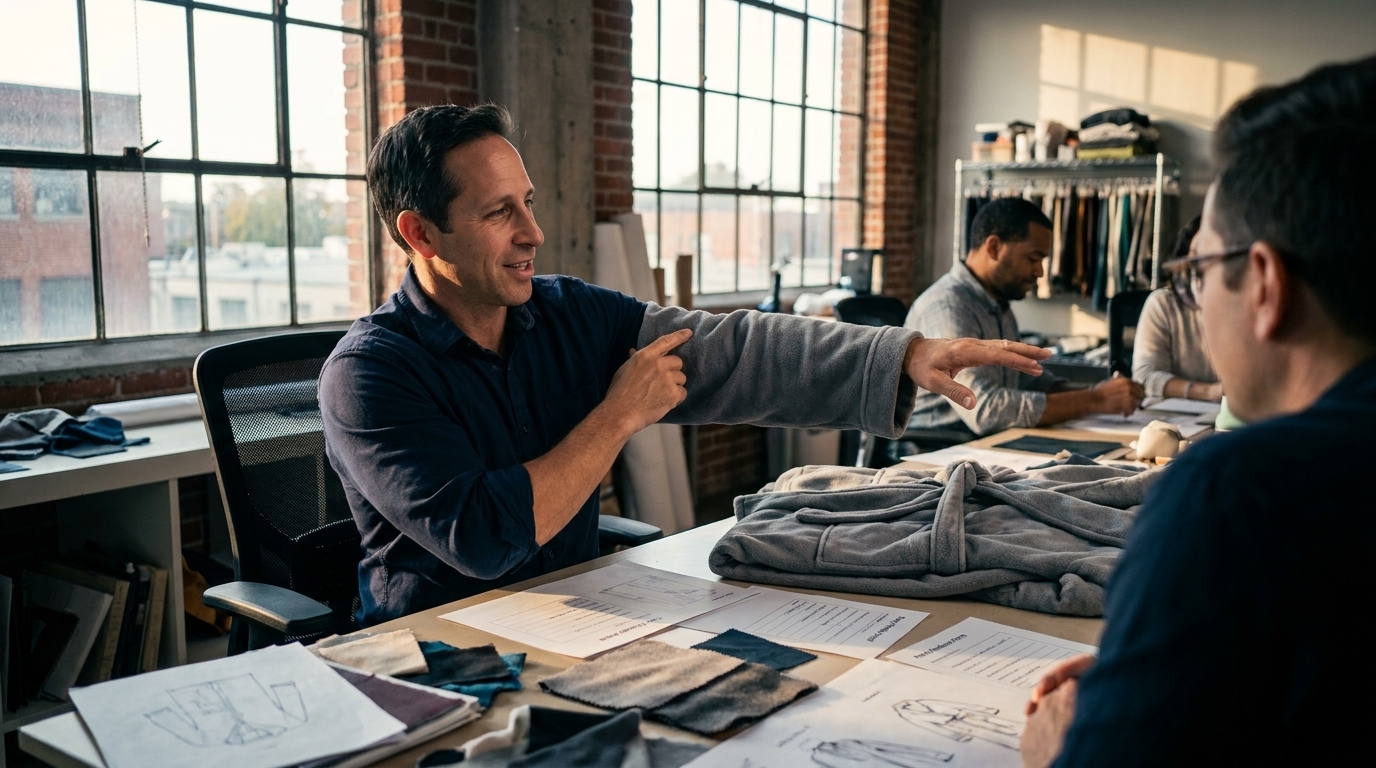
then it's also like, you know, those
that Flurby or blanket that you would
used to wear that was like a robe
blanket. I mean, it's little funny ideas
like that, million to dollars.
So even if you get 5, 20%, it's awesome.
But if you do yourself, it's going to be
all that money up front and you might or
might not make it. So, but I say if you
have ideas, go for them. I mean, you
never know. But just don't spend
millions of dollars or thousands of
dollars on patents and protection.
Just get
>> Yeah, don't try to protect something
that has no value.
Well, there's a lot of people don't know
that cuz they believe that don't give up
in your idea. So, I'm just going to keep
pouring money into it. And it comes to a
point it's like, "Dude, what are you
doing?"
But I see it all the time. So, let's
talk about that green that that fetch
fetch puff puff, whatever that thing is
for the dog.
I'm thinking puff puff pass. That's what
I do. I'm going to say Keith turned it
into a [ __ ] joint. Yeah, [laughter]
puff puff pass.
When when when you put that thing
together, you and your son, like are are
you like when you first put the the
original one, are you finding parts
around the house and creating something
before you go to like get plastic molds
and all that? Like talk us through like
the expense of creating the prototype.
Yeah, no, that that's a great question.
So,
back when my kid was a little kid, he
was hitting the ball around and stuff
like that. And you know, kids have so
many toys. So, next to it was like a
Nerf foam gun, right? So, I'm thinking
that's interesting. So, he's just
hitting the ball with a Wiffle bat and
he gets his foam gun. So, what I did is
I basically sawed apart the Wiffle bat,
stuck the Nerf gun like components into
the bat, and then basically it worked
like a Nerf gun. But then you could also
hit the ball up in the air and hit it
like that. And I showed it around to a
bunch of companies, right? Cuz I was
connected to the toy company, I'm in the
industry, they know me. Nothing.
Crickets. They're like, "Nah, whatever."
And then like since I've been teaching,
I said, "Oh, I got I got probably 23
ideas that I have that I think would
still be viable."
So, maybe 3 years ago, I started sending
it around again. And they had interest
in them. I'm like, "Why?" They're like,
"Maybe it's just the timing." So, this
one company, Jazwares in Florida, they
picked it up. They tested out. They got
some market feedback. They liked it a
lot. And it took about 2 [clears throat]
years to get to market, but
they reproduced it, prototyped it, made
the whole mold and everything, and then
they sold it. And it was it worked out
fairly good, but some things take some
time. Some things
[clears throat and cough]
take 15 years.
But what was cool is that it was all
based on my dog, Miko, here. I don't
know if you can see it. He's a Japanese
Akita. Oh, yeah. Yeah. He's a he's
awesome. But he just passed away,
unfortunately. Oh, sorry to hear about
that.
He was like one of the inspirations for
it because [clears throat] he liked his
balls and he got to eat them and chase
them and stuff.
So, it's really cool.
Awesome. Peter Walkto, Keith Billis,
John Anderson this morning at Mornings
with Al live with Keith, John and
friends. Hey Peter, do you got actually
a few minutes to hang out with us this
morning or do you got to rock and roll
out of here? I got a few minutes. We're
going to do this. We're going to do a
reset on hour two. We're going to come
back So, we're going to do a lifestyle
tip with Anderson, reset hour two. We're
going to keep the conversation going on
with Dr. Peter Walkto, Dr. Peter Walkto,
the doctor the the the workshop dude.
And our our our good old Miss Peaches
says, "I swear Peter's neighbors must
love him." And I'm thinking that they're
always looking at their window going,
"What's Peter inventing today?" Would
that be fair to say?
For some part. I mean, you know, if it
there's sort of like like if you were my
wife, he's like, "I'm tired of hearing
about it."
Oh, yeah. I guess, right? Yeah, but or
they say, "Hey, I have this idea. Let me
show you." And I'm like,
Yeah. Yeah, yeah, yeah. That's like
that's like the guy that That's like the
guy that says every time you see him,
"Hey, can I tell you a joke?" Yeah,
yeah. Yeah, I don't want to hear about
the [ __ ] German guy and the Polish
guy and the American guy one more time.
No, I don't want to hear your joke.
That's like if you lived next to Wayne
Gretzky, he'd say, "Hey, look at this
slap shot I just did." You know?