← All guests

Center Stage / the conversation

Rob Schwartz

High Performance Director & Head Strength & Conditioning Coach, US Air Force Special Warfare

Watch full interview on YouTube ↗

Their story

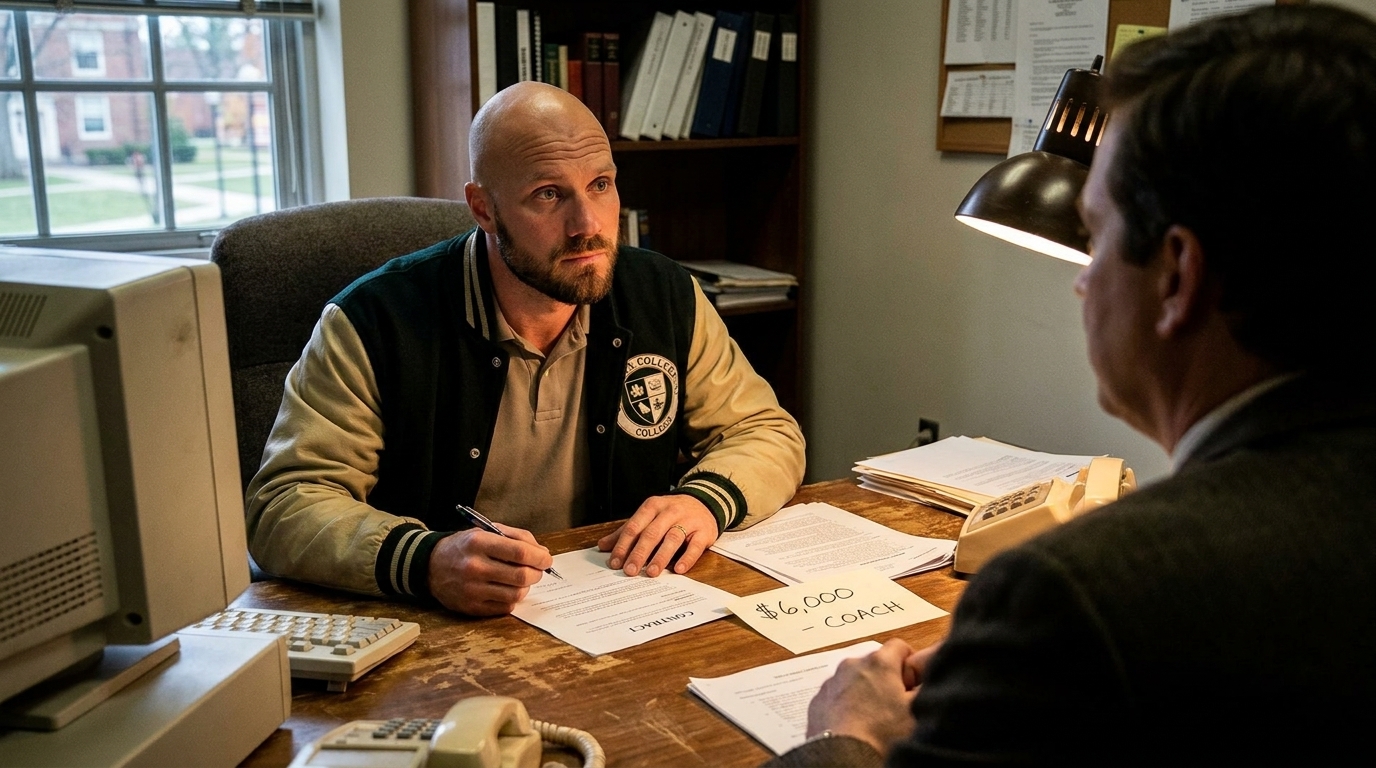
Rob Schwartz turned down $50,000 to take $6,000. That is the decision that explains everything that came after it. Fresh out of Bowling Green State University with a degree in exercise science, he had two job offers: a $50,000 position at a rehabilitation facility, and a $6,000 assistant strength coaching role at his alma mater with no benefits and no graduate classes included. He took the $6,000. Not because he was naive about money — in the three decades since, he has never once paid interest on a credit card — but because he understood, at the start of his career, that there was only one way to get where he wanted to go, and it wasn't the comfortable option.

Read the full guest story

Rob Schwartz turned down $50,000 to take $6,000. That is the decision that explains everything that came after it. Fresh out of Bowling Green State University with a degree in exercise science, he had two job offers: a $50,000 position at a rehabilitation facility, and a $6,000 assistant strength coaching role at his alma mater with no benefits and no graduate classes included. He took the $6,000. Not because he was naive about money — in the three decades since, he has never once paid interest on a credit card — but because he understood, at the start of his career, that there was only one way to get where he wanted to go, and it wasn't the comfortable option. Rob Schwartz is the High Performance Director and Head Strength and Conditioning Coach for United States Air Force Special Warfare. He is the 181st person in history to earn the Registered Strength and Conditioning Coach — Emeritus (RSCC*E) credential from the National Strength and Conditioning Association — a designation held by fewer than 1% of strength coaches worldwide. His athletes, across a career spanning more than three decades, have won 32 Olympic medals at the 2012 London Games across 14 different sports, 7 professional World Championship boxing fights, and 2 UFC World Championship titles. He has worked with athletes in 14 sports as they became World Champions, Olympic Medalists, or All-Stars. He was educated at Bowling Green State University and has described his path in precise terms: his college program was ACSM-focused and pointed toward Cardiac Rehab. One class with a strength coaching GA, using the NSCA Essentials textbook, changed everything. He decided no matter what, he would do his internship in strength and conditioning. He did. He took the $6,000 job. And he started a 30-year career that would take him to the Olympic Training Center, to professional boxing, to Army Special Forces, and to Air Force Special Warfare. After his time at Bowling Green, Rob moved through four Division I universities, building his methodology and his reputation. He was then appointed Director of Strength and Conditioning for the United States Olympic Committee, where he oversaw 23 national teams in combat and acrobatic sports — boxing, wrestling, judo, taekwondo, fencing, karate, gymnastics, diving, and synchronized swimming. At the 2012 London Olympics, the athletes he coached won 32 medals across those sports. He spent four years in that role before it concluded. Parallel to his Olympic work, Rob built a record of unmatched depth in professional combat sports. He worked as the Strength and Conditioning Coach and Nutritionist for Adrien Broner and Robert Easter, and his record with boxers is 74-4 overall, 13-1 in World Championship fights. He trained one Bellator MMA World Champion. He coached seven World Championship boxing fights. He never missed a training day to injury across his time with professional combat athletes. After his Olympic Committee role, he became the Combatives Strength Coach for US Army Special Forces at Fort Carson and completed the Special Operations Combat Preparation course. Then the Air Force recruited him. For the past 8.5 years, he has served as High Performance Director for the Air Force Special Warfare Innovation Cell for the TACP career field, based in Colorado Springs at approximately 6,000 feet altitude. His team collaborates with the Air Force Research Lab and AFWERX to conduct seminal research and evaluate sport science products and services. Rob Schwartz's coaching philosophy is built on a single organizing principle: high performance is about people. Not programs, not protocols, not supplements — people. He defines coaching as two things: being a teacher and being a leader. He is certified by the NSCA (CSCS), the International Society of Sports Nutrition (CISSN), USA Weightlifting, and FMS. He speaks at NSCA conferences, Team USA events, and Air Force Special Warfare presentations on topics including neck strength and concussion prevention, energy systems development, and strength for sprint biomechanics. Rob Schwartz is proof, as specific and documentable as numbers get, of what happens when you don't cut corners.

In their own words

The $6,000 decision that built a career

I took the other for $6,000 — not a typo — to coach at my alma mater. No benefits or grad classes included. I've never regretted my decision.

Rob describing the foundational decision of his career — choosing $6,000 over $50,000 because the cheaper option was the one aligned with where he wanted to go. The '30 years later, never paid credit card interest' postscript demonstrates that integrity and financial discipline are the same quality expressed differently.

Defining coaching: teacher and leader

I define coach by two things: being a teacher and a leader.

Rob's elegant compression of his entire professional philosophy. Not program design, not certifications, not athlete records — the two things that actually matter are whether you can transmit knowledge and whether you can earn the trust that makes people follow. Everything else is downstream of these.

High performance is a people problem

High performance is about people. Create an environment that rewards discipline, leadership, attention to detail and communication skills while embracing responsibility for the team's competitive results.

Rob's professional philosophy stated in full — the core belief that has guided him from a $6,000 job to the Olympic Training Center to Air Force Special Warfare. Performance is not a program design problem. It is a culture and character problem.

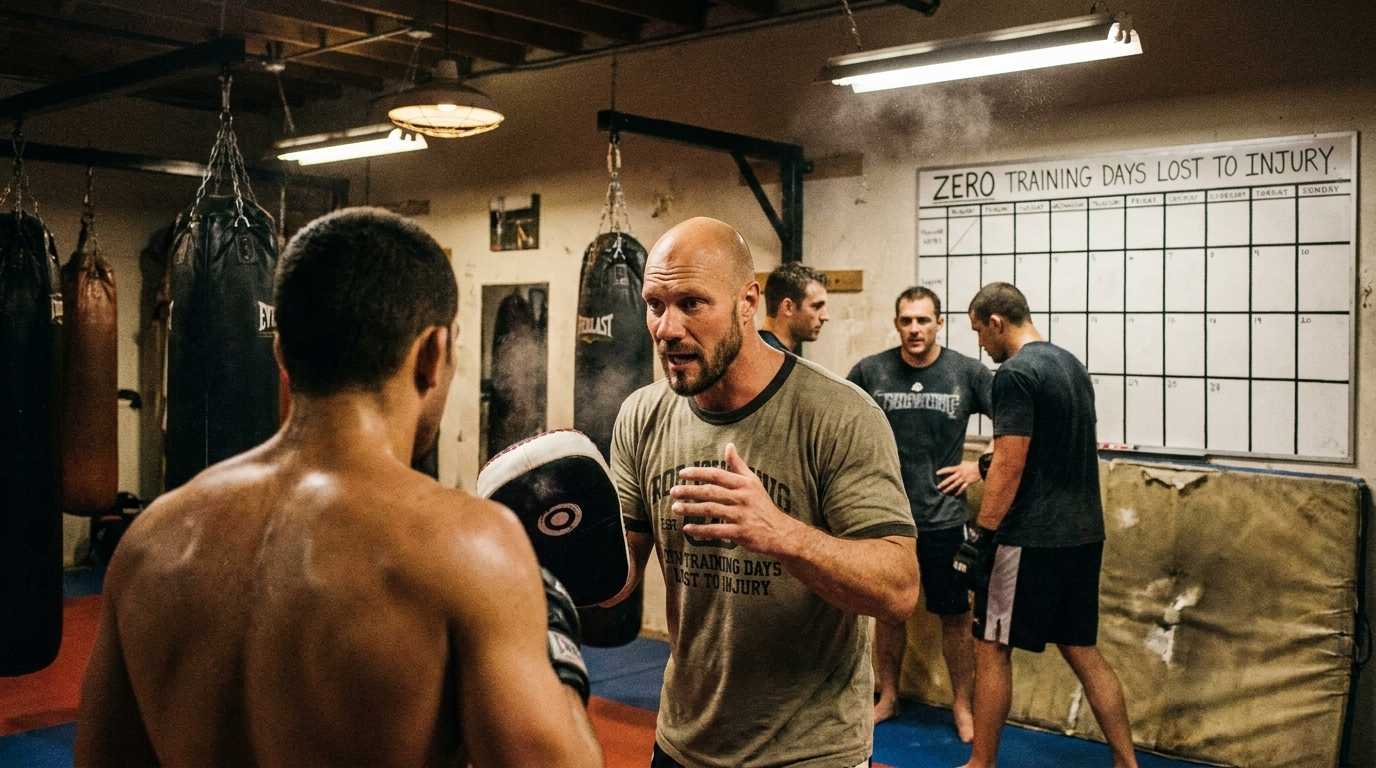
Zero training days lost to injury

We haven't lost a training day with our athletes to injury since I've been with the team. Being out of a fight because of injuries is just as bad as losing the fight.

Rob describing the benchmark he set and has maintained across years of professional combat sports coaching. Zero lost training days to injury is not just a safety record — it is the evidence that his system builds athletes as well as it pushes them.

Teaching intangibles through example

I try to teach them the intangibles of discipline, intensity, and work ethic through leading by example.

Rob naming the things that cannot be programmed into a training plan — the qualities that are only transmitted through the coach's own behavior. Credibility in strength coaching, as in most domains, comes from what the coach is willing to do, not just what they prescribe.

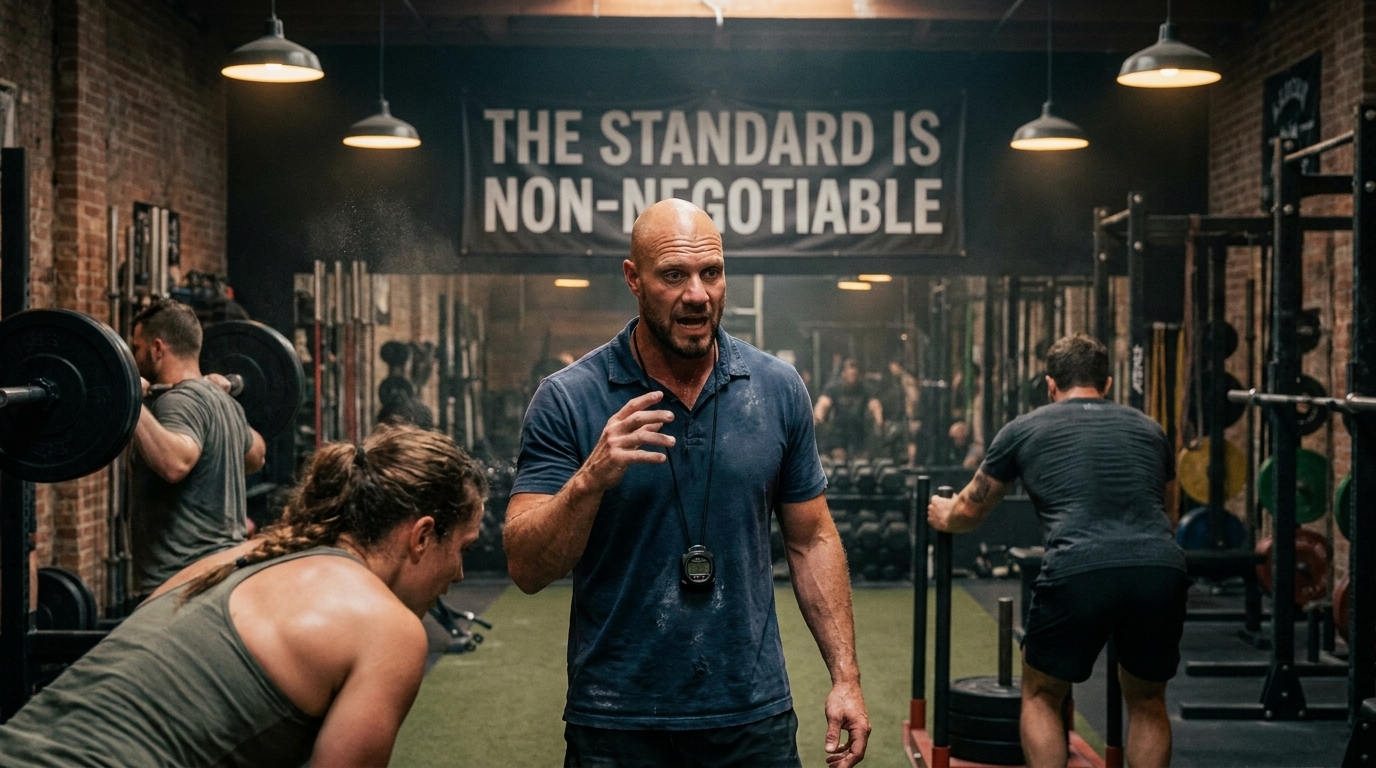
The non-negotiable standard of world champions

It doesn't matter if they're tired, have the sniffles, the weight is heavy — they have to perform the movements the way they've been coached and with great energy. The best athletes are the ones who not only accept this, but embrace it.

Rob articulating the standard he holds his athletes to and the pattern he has observed in world champions: the ones who win are the ones who embrace the non-negotiable standard, not just tolerate it. This is the mindset separator at the Olympic and Special Forces level.

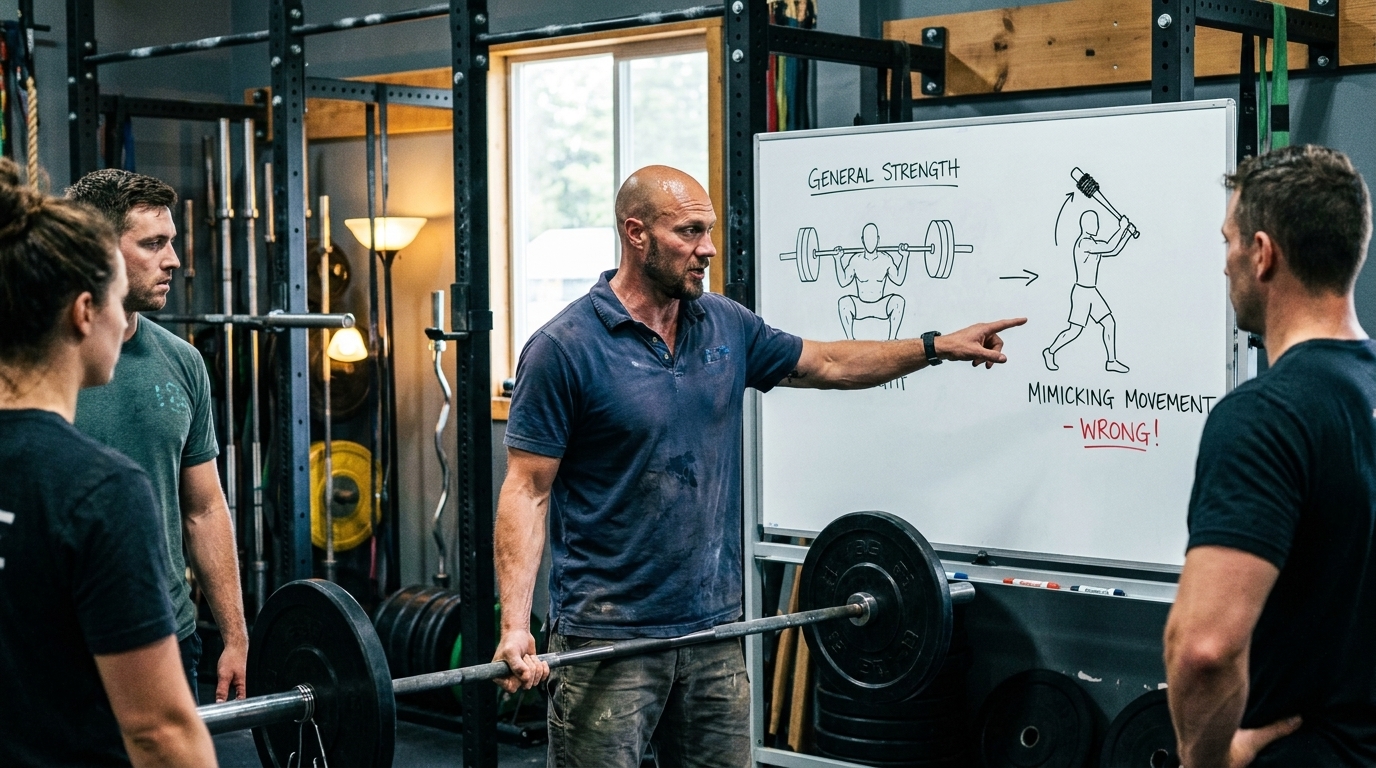
General vs. sport-specific training — the real distinction

Unless the athlete is a Weightlifter or Powerlifter, sport-specific is different than mimicking sport movements in the weight room. Attempting to mimic movements with great resistance ends up decreasing performance.

Rob making a technically precise point that contradicts common gym wisdom — that 'functional' training in the weight room often means exactly the wrong thing. His training is built on building athletes, not simulating their sport, because the transfer happens through general physical preparation done properly.

Earned discipline as the foundation of hard choices

I paid for my school. So, I had already been on my way of like, you know, I grew up in a very rural area working. And I paid for it. So, it was kind of like I was already in motion.

Rob contextualizing why the $6,000 decision was possible — he had already built the financial and personal discipline to operate without comfort as a baseline. The values that led him to take the harder job were already formed before the job offer arrived.

Appearances & videos

Original interview details

He Coached 32 Olympic Medalists & 2 UFC Champions

Episode #CS-026

Center Stage

  • Mornings in the Lab · Center StageMarch 12, 2026Watch →

From the interview

I took the other for $6,000 — not a typo — to coach at my alma mater. No benefits or grad classes included. I've never regretted my decision.
I define coach by two things: being a teacher and a leader.
High performance is about people. Create an environment that rewards discipline, leadership, attention to detail and communication skills.

Questions & answers

Who is Rob Schwartz and what has he accomplished as a strength coach?

Rob Schwartz is the High Performance Director and Head Strength and Conditioning Coach for United States Air Force Special Warfare, based in Colorado Springs. He is the 181st person to earn the NSCA's RSCC*E credential — held by fewer than 1% of strength coaches worldwide. His career includes serving as Director of Strength and Conditioning for the United States Olympic Committee, where his athletes won 32 Olympic medals at the 2012 London Games across 14 sports. He has coached athletes to 7 professional boxing World Championship wins, 2 UFC World Championships, and holds a 74-4 overall record training combat athletes. He has also served as the Combatives Strength Coach for US Army Special Forces at Fort Carson.

What is Rob Schwartz's coaching philosophy?

Rob Schwartz's coaching philosophy is built on the belief that high performance is fundamentally about people, not programs. He defines coaching as two things: being a teacher and being a leader. His system emphasizes general physical preparation before sport-specific work, movement quality before load, and the intangibles of discipline, intensity, and work ethic — which he argues can only be transmitted through the coach's own example. He is known for creating non-negotiable standards and for his record of zero training days lost to injury across his professional combat sports coaching career.

How did Rob Schwartz go from a $6,000 job to coaching Olympic medalists?

Rob Schwartz graduated from Bowling Green State University and was offered two jobs: a $50,000 rehab facility position and a $6,000 assistant strength coaching role at his alma mater. He chose the $6,000 job because it aligned with where he wanted to go, even though it offered no benefits and no grad classes. He paid for his own school and grew up in a rural area doing hard work, which meant the concept of operating without comfort was not new to him. He spent the next decade working through four Division I universities and building his methodology before being appointed Director of Strength and Conditioning for the United States Olympic Committee.

What sports and athletes has Rob Schwartz trained?

Rob Schwartz has trained athletes across 14 different sports as they achieved World Championships, Olympic medals, or All-Star status. At the USOC, he oversaw national teams in boxing, wrestling, judo, taekwondo, fencing, karate, gymnastics, diving, and synchronized swimming. In professional boxing, he trained Adrien Broner to three World Championship belts and worked with Robert Easter and Rau'shee Warren, compiling a 74-4 professional record. He trained one Bellator MMA World Champion. He also worked with US Army Special Forces combatives athletes and currently prepares Air Force Special Warfare operators.

What is the RSCC*E credential and why is Rob Schwartz's status notable?

The RSCC*E (Registered Strength and Conditioning Coach — Emeritus) is the highest certification offered by the National Strength and Conditioning Association (NSCA), the world's leading authority in strength and conditioning education. It is awarded to coaches who have demonstrated exceptional longevity, achievement, and contribution to the field. Rob Schwartz was the 181st person in history to earn this credential — placing him in a group representing fewer than 1% of strength coaches worldwide. The credential reflects not just technical competence but a career of sustained high-level performance across multiple elite athletic environments.

Where does Rob Schwartz work now and what does his current role involve?

Rob Schwartz is currently the High Performance Director and Head Strength and Conditioning Coach for US Air Force Special Warfare, based in Colorado Springs, Colorado (approximately 6,000 feet elevation). He has been in this role for 8.5 years. His team implements an Olympic multi-disciplinary model within the Special Warfare Human Performance program. They collaborate with the Air Force Research Lab and AFWERX to conduct research and evaluate sport science products. He speaks at NSCA, Team USA, and Air Force Special Warfare events on topics including neck strength and concussion prevention, energy systems development, and individualized warm-up protocols.

The full conversation

Read the transcript

You know exactly where you're cutting corners. You just hope nobody notices. The standard you lower. The effort you hold back. The good enough that became your normal. Our next guest built his entire career on refusing to cut a single one. Fresh out of college. Someone offered Rob Schwarz $50,000 for a rehab facility job. He said no. He took a $6,000 assistant strength coaching position at Bowling Green State instead. In 30 years since that decision, he has never once paid interest on a credit card. The US Olympic Training Center hired him to run strength and conditioning for combat and acrobatic sports. At the 2012 London Games, his athletes won 32 Olympic medals across 14 different sports. He coached seven World Championship boxing fights and trained two UFC champions. Then the Air Force recruited him. 8.5 years keeping special warfare operators at peak performance. He holds a credential fewer than 1% of strength coaches worldwide have earned. He was the 181st. If you've been cutting corners, this man is proof of what happens when you don't. Nation, let's welcome Rob Schwartz to Mornings in the Lab.

Open transcript page →
Guest gallery
authority_portrait
authority_portrait
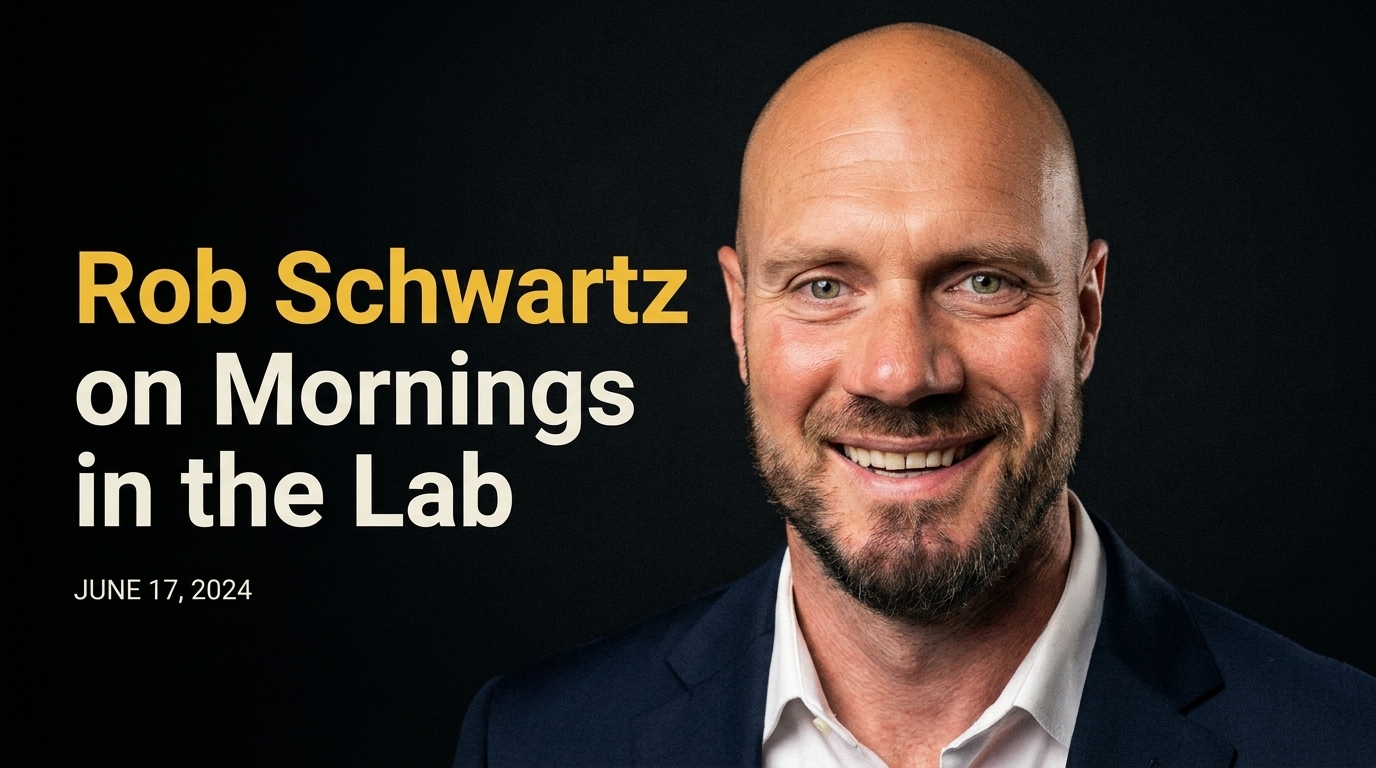
Pre-show shareable graphic generated by the Authority Page Builder.
Announcement card · Pre-show shareable graphic generated by the Authority Page Builder.
The $6,000 decision that built a career
Defining coaching: teacher and leader
High performance is a people problem
Zero training days lost to injury
Teaching intangibles through example
The non-negotiable standard of world champions
General vs. sport-specific training — the real distinction
Earned discipline as the foundation of hard choices
Conversation topics

The $6,000 decision — refusing to cut corners from day one · ~4 minutes · Rob explains the choice that defined his career: $50,000 in rehab or $6,000 in strength coaching. The reasoning behind the choice and what it reflects about the values that have made everything else possible. · Bowling Green to the Olympic Training Center — the 30-year path · ~4 minutes · Rob walks through the career arc: four Division I universities, building the methodology, being appointed Director of Strength and Conditioning for the USOC, and what it meant to arrive at that role after the discipline of the early years. · The 2012 London Olympics — 32 medals across 14 sports · ~4 minutes · Rob describes his work at the Olympic Training Center overseeing combat and acrobatic sports and what it looked like to prepare athletes across wrestling, boxing, gymnastics, diving, and more for the world's highest stage. · Professional boxing — Adrien Broner and the World Championship record · ~4 minutes · Rob covers his work with Adrien Broner, Robert Easter, Rau'shee Warren, and the professional boxing circuit. The 74-4 record, the 13-1 in World Championship fights, and zero training days lost to injury. · US Army Special Forces combatives coaching · ~3 minutes · Rob describes his time at Fort Carson with 10th Group Special Forces, the Special Operations Combat Preparation course, and the unique demands of preparing operators for real-world combat performance. · Air Force Special Warfare — current role and research · ~4 minutes · Rob explains his current work with Air Force Special Warfare, the collaboration with Air Force Research Lab and AFWERX, and what implementing an Olympic model looks like inside a military special operations environment. · Coaching philosophy — teacher, leader, and non-negotiable standards · ~4 minutes · Rob breaks down his organizing principle: high performance is about people. He defines coaching as teaching and leading, explains his assessment system, and articulates what the best athletes have in common — they embrace the standard. · General vs. sport-specific training — the real distinction · ~3 minutes · Rob addresses one of the most common misconceptions in strength coaching: that sport-specific means mimicking sport movements under load. He explains why general physical preparation done properly produces greater sport transfer. · Mentorship, earning access, and paying it forward · ~3 minutes · Rob reflects on the mentors who shaped him and what it takes to earn the knowledge that coaches have spent careers accumulating. He also discusses what he looks for in the people he is willing to mentor. · The RSCC*E credential and what it represents · ~2 minutes · Rob explains the significance of being the 181st person to hold the RSCC*E credential and what a 30-year career of non-negotiable standards has made possible.