← All guests

Center Stage / the conversation

Sarah Barnes-Humphrey

Founder & CEO, Let's Talk Supply Chain™

Watch full interview on YouTube ↗

Their story

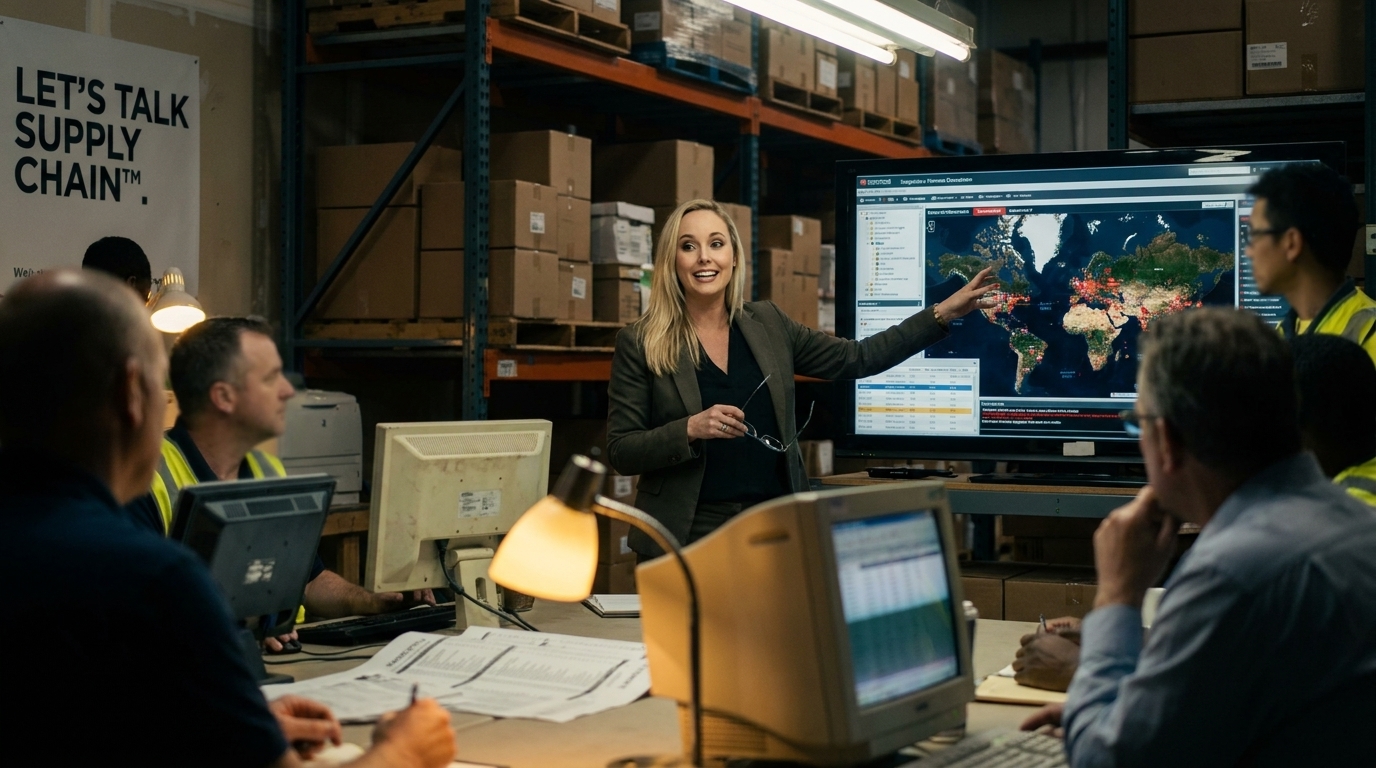
Sarah Barnes-Humphrey is a supply chain media entrepreneur, best-selling author, and one of the most recognized voices in global logistics — the founder and CEO of Let's Talk Supply Chain™, a media platform that has grown to connect over 1.5 million supply chain professionals worldwide. Named a Top 100 Most Influential Women Leader in Supply Chain globally and a Top 100 Most Influential Women in Canadian Supply Chain by the Supply Chain Management Association (SCMA), Sarah built her platform not from a position of comfort or credential, but from the rubble of professional collapse, personal reinvention, and hard-won self-discovery.

Read the full guest story

Sarah Barnes-Humphrey is a supply chain media entrepreneur, best-selling author, and one of the most recognized voices in global logistics — the founder and CEO of Let's Talk Supply Chain™, a media platform that has grown to connect over 1.5 million supply chain professionals worldwide. Named a Top 100 Most Influential Women Leader in Supply Chain globally and a Top 100 Most Influential Women in Canadian Supply Chain by the Supply Chain Management Association (SCMA), Sarah built her platform not from a position of comfort or credential, but from the rubble of professional collapse, personal reinvention, and hard-won self-discovery. Sarah grew up immersed in supply chain at the literal dinner table — her family ran Ice Corp Logistics, a freight forwarding business just outside Toronto, Canada. She went straight from high school into the family company, working her way up through reception, operations, and sales until she held the title of Director of Sales and Marketing. She spent two decades inside that world, becoming fluent in a language that most people didn't even realize they were speaking — until COVID supply shocks made global headlines. Then, in late 2017, the family business closed its doors. Ten days before her 37th birthday, the career she had spent her entire adult life building was gone. The plan was gone. And, as she has shared candidly, so was her sense of identity. What followed was a year that most people would keep hidden. Sarah struggled to land interviews. She took two part-time jobs to stay afloat — including mopping floors at a tennis club. But while she was navigating rock bottom, she was also honoring a quiet commitment: she had started a podcast in 2016, and by the time the company closed, companies were paying to appear on it. She kept recording out of obligation to them. That obligation became a lifeline. What began as the scrappy podcast '2 Babes Talk Supply Chain' was rebranded in April 2018 to Let's Talk Supply Chain™ — after she realized no woman would come on a show with that name — and the rest became supply chain media history. Let's Talk Supply Chain™ is now one of the top 1% most downloaded podcasts globally, with 450+ episodes, 300,000+ listeners, and 50 million supply chain professionals reached. Beyond the flagship show, Sarah hosts Women in Supply Chain™ — a series dedicated to amplifying female voices in a historically male-dominated industry — and Blended, a DEI-focused podcast and companion nonprofit (the Blended Pledge) that gathers people from different walks of life to have the conversations most rooms are afraid to have. She also founded the Secret Society of Supply Chain, the industry's largest private professional network. Sarah is a Forbes Business Council contributor and a FITT (Forum for International Trade Training) board director, and she co-founded Shipz, a digital platform designed to bring freight forwarders and shippers together in a collaborative ecosystem. The throughline in every venture Sarah has built is the same: creating safe spaces where underrepresented voices can be seen, heard, and understood. She has spoken on stages around the world — a remarkable fact given that she once had a lifelong terror of public speaking so severe that the idea of joining Toastmasters made her hands sweat. Her solution was characteristically extreme: she hired a talent agent, walked into auditions, got yelled out of rooms for being unable to memorize lines, and kept going. She ended up on live television twice. The fear didn't disappear — it just stopped being in charge. In October 2025, Sarah published her debut memoir, *I Buried Her in a French Press: A Memoir About Finding My Voice and the Power of Being Heard* — which immediately became an Amazon #1 Best Seller. The book is at once a deeply personal account of identity, loss, and rebuilding, and a universal guide to discovering the superpower hidden inside the struggle. It tells the story of a woman who lost everything and found, in that loss, the exact thing she needed to build something that would outlast it. For Sarah Barnes-Humphrey, the supply chain has always been about more than freight — it's about what it takes to keep moving when the system breaks down.

In their own words

The obligation that became a media empire

I kept it going out of obligation just to keep myself busy. I had obligation to those folks who had paid to come on the show. And so that's kind of what kept me up — or got me up in the morning.

Sarah describing what sustained her through the darkest period after the family business collapsed — not inspiration or grand vision, but a simple commitment to people who had trusted her. This is the real origin story of Let's Talk Supply Chain™: not a startup launch, but an obligation honored in the middle of a breakdown.

The moment of collapse and what it means to lose everything

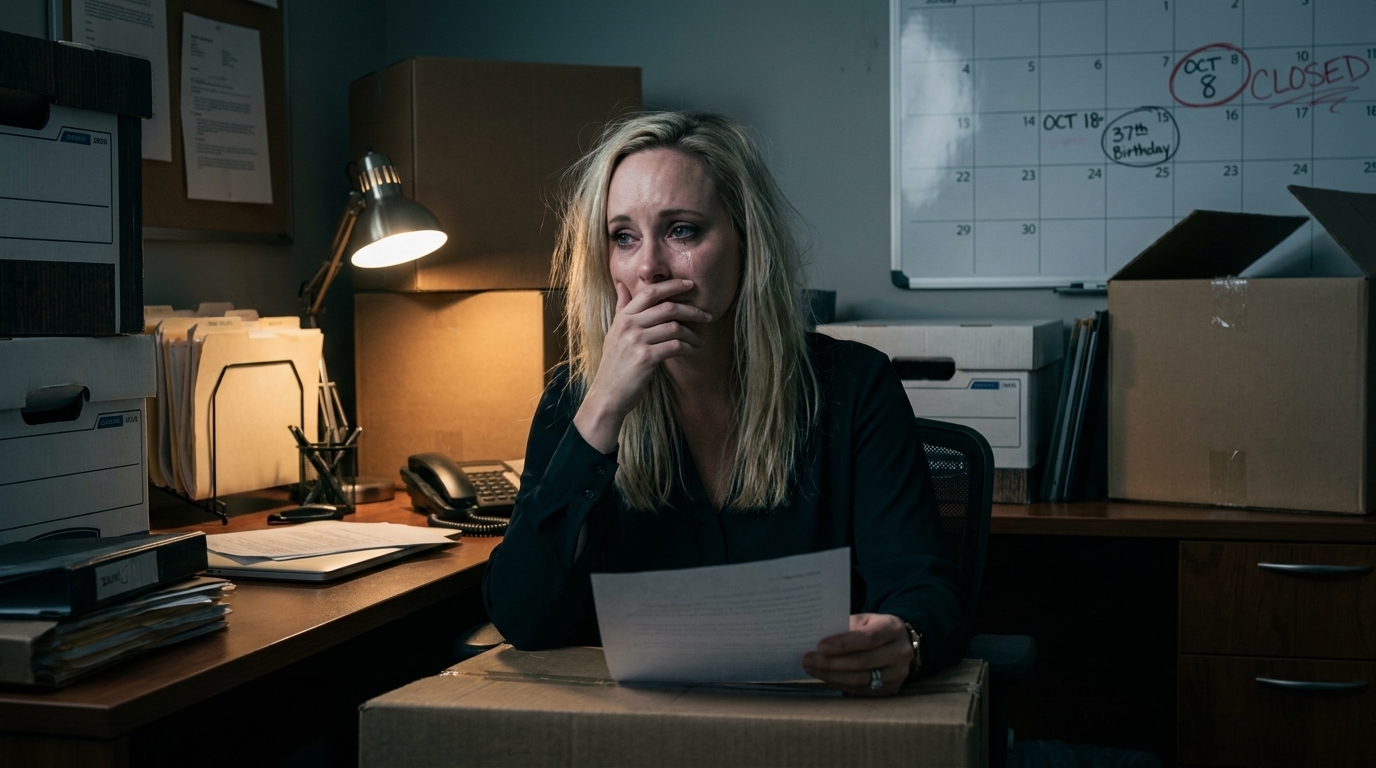
It was 10 days before my 37th birthday.

Sarah's precise, quietly devastating answer to the question of when the company closed its doors. The specificity of that detail — ten days before a birthday — captures the human dimension of professional collapse in a way that no statistic can. It landed the moment in the real.

Movement, momentum, and the psychology of rebuilding

Every step is towards something that is going to change your life in some way or another. And you might not see it right away. You might see it down the road. But I think you're right. I think movement and momentum really matters. If you start getting stuck and you start stopping, that's when you start getting into your head.

Sarah articulating her philosophy of momentum — that forward motion is not just tactically useful but psychologically protective. The risk of stillness isn't laziness; it's that your own mind fills the silence. This is the operating principle behind every chapter of her rebuilding story.

Facing fear with radical exposure instead of incremental comfort

My hands got sweaty every time I thought about going to Toast Masters. So I got a talent agent and I went on auditions and I got yelled at out of audition rooms — but it was okay because I didn't want to be an actress. I really just needed to get out of my own way.

Sarah on her unconventional approach to conquering a lifelong fear of public speaking. She didn't take the gentle path. She threw herself into the deep end — professional auditions, rejection, humiliation — because she understood that incremental exposure wasn't going to be enough. The goal was not to become an actress; it was to make standing on a stage feel survivable.

What 'safe space' really means — and how to measure it

When I stop the record button and I hear somebody say, 'Thank you. I felt seen and heard today.' Then I did my job.

Sarah defining, with absolute precision, what she means by safe space — not a comfortable room or a conflict-free conversation, but a moment where a person feels genuinely witnessed. This is the metric she has built her entire media platform around, and it reframes what success means in content creation.

Why inclusion conversations fail — and how to fix it

A lot of people get caught up in: I don't want to know because I'm going to say the wrong thing and I know I'm going to say the wrong thing and so therefore that's a full stop for me. And I think what we miss is the art of communication and the conversations that we can have.

Sarah on the real barrier to inclusion conversations — not malice, but the paralysis of anticipated failure. People opt out of hard conversations not because they don't care, but because they're afraid of getting it wrong. Her Blended podcast was built specifically to navigate that gap: diverse strangers, real topics, no editing.

The supply chain visibility gap — and why it matters

Most people who are in supply chain don't actually realize they're in supply chain. Until 2019, 2020, when the world realized — oh, supply chain's important — when we can't get stuff from over there.

Sarah delivering a succinct diagnosis of the industry's visibility problem: supply chain is the operating system of the global economy, but it's invisible until it breaks. This invisibility is precisely what she built Let's Talk Supply Chain™ to address — giving voice to the people who keep the world moving.

Self-worth, self-compassion, and the variable standard of showing up

We have to take each day separately. Today I could be at 100%, tomorrow my 100% could be 40%. But it's okay — instead of beating myself up over it, it's sort of that awareness to go: 'Wait a second. That's who I am today and that's got to be okay.'

Sarah on the practice of self-compassion as a performance tool — not lowering standards, but redefining what showing up looks like across different days and different states. This is not self-help platitude; it is the earned philosophy of someone who has had to show up and record a podcast from the couch while crying.

Appearances & videos

Original interview details

She Lost Everything & Mopped Floors to Survive

Episode #CS-002

Center Stage

  • Mornings in the Lab · Center StageFebruary 26, 2026Watch →

From the interview

It was 10 days before my 37th birthday. Gone. Boom.
When I stop the record button and I hear somebody say, 'Thank you. I felt seen and heard today.' — then I did my job.
I really just needed to get out of my own way.

Questions & answers

What is Let's Talk Supply Chain and why did Sarah build it?

Let's Talk Supply Chain™ (LTSC) is a global supply chain media platform founded by Sarah Barnes-Humphrey that connects over 1.5 million supply chain professionals worldwide through podcasts, live shows, news content, and community programming. Sarah launched the podcast in 2016 while still working in her family's freight forwarding business — initially as a creative outlet to explore the industry she loved. When the family business collapsed in late 2017, the show became a lifeline: she kept recording because companies had paid to appear, and that obligation gave her a reason to get up in the morning. What began as a scrappy solo podcast called '2 Babes Talk Supply Chain' was rebranded in April 2018 to Let's Talk Supply Chain™. Today it is one of the top 1% most downloaded podcasts globally, with 450+ episodes, 300K+ listeners, and a reach of over 50 million supply chain professionals.

How did Sarah Barnes-Humphrey go from mopping floors to building a media empire?

After the family business closed in late 2017, Sarah spent a year struggling to land interviews in a male-dominated industry where she often found herself one of only three women at any given conference. She took two part-time jobs to survive — one of which was mopping floors at a tennis club. But she never stopped building. She had started the podcast before the collapse, and she continued recording it out of obligation to sponsors who had paid to appear. That commitment — not a grand strategic vision — became the bridge. She rebranded the show in 2018, leaned into content creation as her primary vehicle, and built LTSC into a platform that would eventually reach millions. Her story is less about a pivot and more about what happens when someone refuses to abandon the one thing they were still doing even when everything else fell apart.

What is the Blended podcast and the Blended Pledge nonprofit?

Blended is a podcast Sarah founded in 2021 that brings together five people from different walks of life — strangers who have never met each other and often have never met Sarah — to have honest, unscripted conversations about diversity, equity, and inclusion in the workplace. The format is audio-only, without video, specifically because people become 'squirrely' around sensitive topics when they can be seen. Each episode opens with a question Sarah asks all guests: 'How do you identify?' — and the answer is entirely up to the guest, which itself reframes what identity conversation can look like. The Blended Pledge is the companion nonprofit, which exists to make the mission of creating space for underrepresented voices into a tangible organizational commitment. Sarah considers this work — alongside Let's Talk Supply Chain™ and Women in Supply Chain™ — part of a single coherent mission: creating safe spaces where people feel seen and heard.

What is Sarah's book about and why is the title so unusual?

Sarah's debut memoir, *I Buried Her in a French Press: A Memoir About Finding My Voice and the Power of Being Heard*, was published in October 2025 and became an Amazon #1 Best Seller. The title is not a metaphor — it refers to a real event Sarah describes in the book: during the COVID pandemic, her grandmother passed away in the UK while Sarah was in Canada. She flew over under quarantine restrictions, had only 20 minutes before the burial, and discovered that her grandmother's ashes were in a plastic bag in a white paper box — because the niece in charge had cleared the house before Sarah arrived. Searching through the only untouched cupboard, Sarah found a brand-new French press with a receipt from 1992, and used it as an urn. The book uses that story as an entry point into a broader memoir about identity, resilience, self-worth, and finding — and losing, and finding again — your voice. It is Sarah's most personal work and the fullest account of everything she went through before and after building Let's Talk Supply Chain™.

How did Sarah overcome her fear of public speaking?

Sarah has described a lifelong terror of public speaking so acute that even thinking about joining Toastmasters made her hands sweat. Her solution was characteristic of how she approaches fear: she didn't take the gentle path. She hired a talent agent and started going on acting auditions — with no intention of becoming an actress. She got yelled out of audition rooms repeatedly because she couldn't memorize lines. But that wasn't the point. The point, as she explains it, was to get out of her own way. By throwing herself into a high-stakes, high-rejection environment where no one expected her to succeed, she removed the pressure of performance and simply learned to survive being in the room. She eventually appeared on live television twice. Today she speaks at global conferences and has appeared on stage four times at a single event. The fear didn't disappear — she just stopped letting it be the deciding vote.

What awards and recognitions has Sarah Barnes-Humphrey received?

Sarah has been named a Top 100 Most Influential Women Leader in Supply Chain globally (by B2G) and a Top 100 Most Influential Women in Canadian Supply Chain by the Supply Chain Management Association (SCMA). She was recognized as a Pros to Know 2024 honoree by Supply & Demand Chain Executive and named a Top 10 Supply Chain Influencer by Supply Chain Digital in October 2024. Her memoir, *I Buried Her in a French Press*, became an Amazon #1 Best Seller upon its October 2025 release. She is a member of the Forbes Business Council (contributing since January 2025), a board director at FITT (Forum for International Trade Training), and a past recipient of the Women in Supply Chain award from Supply & Demand Chain Executive. She has also been featured as one of the 10 Most Admired Women by Success Pitchers.

The full conversation

Read the transcript

A lot of people are one phone call away from freefall. Job gone, plan gone, pride gone. You still have to act normal. You don't just lose money, you lose identity. You lose the part of you that knew what tomorrow was supposed to look like. If you've ever had to restart in silence, this is for you. Today's guest has lived that reset. And she rebuilt from the bottom. Sarah Barnes Humphrey grew up in her family freight forwarding business, Ice Corp Logistics. She spent years building a career in supply chain. She reached director level. Then the company closed in late 2017. The foundation cracked. The next chapter got rough. She spent a year struggling to land interviews. She took two part-time jobs. One of them was mopping floors at a tennis club. And that whole time she carried a secret. She had a lifelong terror of public speaking. But instead of joining Toast Masters to face that fear, she hired a talent agent for reps. She ended up on live TV twice. Then she built Let's Talk Supply Chain. It launched in 2016 and rebranded in 2018. It now reaches over 1.5 million professionals. She didn't build it from comfort. She built it from nights where self-worth was the real supply she couldn't afford to lose. So, if you're rebuilding right now, listen close. This isn't a highlight reel. It's a real blueprint for finding your voice again. Nation, please welcome Sarah to Mornings in the Lab. Sarah Barnes Humphrey, welcome to Mornings in the Lab with Keith, John, and friends. >> Morning. What did I get myself into? Thanks for having me. >> I was involved with inviting you to the show. True story. And I want to tell you why your resilience struck me. Because you know, we talk on the show to a lot of folks — and the reason we get out of bed is to help people achieve greatness and help people achieve goals that maybe they're stuck with. You had a great job, great career, and all of a sudden you lost it all. >> Gone. Boom. >> Yeah. But you didn't give up. >> It was 10 days before my 37th birthday. >> You didn't give up, though. And most people will. And I'm like, I got to go talk to Sarah because I got to find some inspiring words for her to help our community to learn from Sarah — as to why, what kept you going? >> I've had this question asked a couple of times because obviously the book came out in October and you know it goes through the story of where I started and what that looked like and everything that I had been through up until that point. And I had started this podcast back in 2016 and by the time that the company closed its doors, I had companies paying to come on the show. So, to be honest with you, I kept it going out of obligation just to keep myself busy. I had a couple of other side hustles, but I had obligation to those folks who had paid to come on the show. And so that's kind of what kept me up — or got me up in the morning. And you know, there would be periods through the day where I'd be on the couch crying, but then I'd get back to doing some work and trying to find a job. And, you know, it's just part of the human experience.

Open transcript page →
Guest gallery
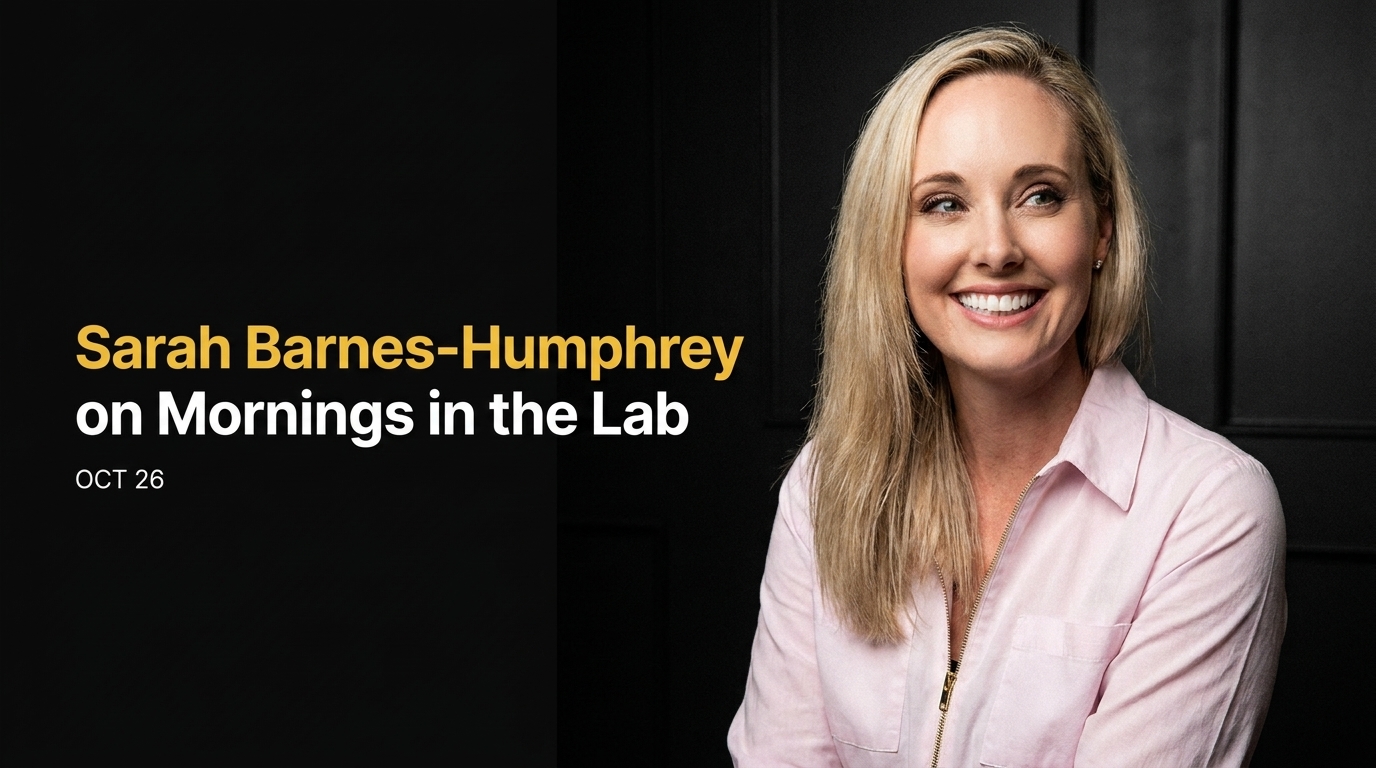
Pre-show shareable graphic generated by the Authority Page Builder.
Announcement card · Pre-show shareable graphic generated by the Authority Page Builder.
The obligation that became a media empire
The moment of collapse and what it means to lose everything
Movement, momentum, and the psychology of rebuilding
Facing fear with radical exposure instead of incremental comfort
What 'safe space' really means — and how to measure it
Why inclusion conversations fail — and how to fix it
The supply chain visibility gap — and why it matters
Self-worth, self-compassion, and the variable standard of showing up
Original headshot ↗
Conversation topics

Center Stage introduction — she lost everything and mopped floors · ~3 minutes · The host sets the scene: Sarah grew up in the family freight forwarding business, rose to director level, and then watched it all collapse in late 2017. She spent a year struggling to find work, took two part-time jobs including mopping floors at a tennis club, and rebuilt from there. The introduction frames the episode not as a success story but as a blueprint for restarting in silence. · The moment of collapse — 10 days before her 37th birthday · ~4 minutes · Sarah recounts what it was like when the company closed its doors — precisely timed to one of the most emotionally loaded moments of her year. She talks about what kept her going: not inspiration, but obligation. Companies had paid to appear on her podcast, and she honored that commitment even while crying on the couch between recording sessions. This segment establishes the real origin story of Let's Talk Supply Chain™. · 25 years in supply chain — a male-dominated world · ~4 minutes · Sarah discusses what it meant to spend 25 years in supply chain — an industry where she would show up to conferences and be one of three women in the room. The conversation broadens into a group discussion about what supply chain actually is, with Sarah explaining it in terms of first mile and last mile, and the conversation turning to how the world didn't understand supply chain's importance until COVID broke it. · The last mile, the first mile, and what supply chain really is · ~5 minutes · One of the most energetic stretches of the conversation, where Sarah explains supply chain using the example of Fabletics and the change room — redefining 'last mile' as anything from a transcontinental shipping lane to the final 200 feet inside a retail store. The hosts engage fully, and the conversation surfaces the insight that supply chain is invisible until it breaks, and nobody knows what it is until they can't get what they need. · I Buried Her in a French Press — the book, the title, the grandmother story · ~5 minutes · Sarah tells the extraordinary story behind her memoir's title: flying to the UK during COVID quarantine, arriving 20 minutes before her grandmother's burial with the ashes in a plastic bag, and finding a French press in the only untouched cupboard — with a receipt from 1992. She uses this story as an entry point into a book about resilience, finding your voice, and self-worth — and the hosts respond with visible emotion and surprise. · Movement creates momentum — the philosophy of the rebuild · ~4 minutes · Sarah offers her core operating philosophy: that movement itself is the destination, not a means to one. She connects this to her time in therapy, her practice of self-awareness, and the danger of stopping — because stillness is when the mind takes over. She encourages the audience to communicate where they are, speak it out, and stop measuring their worst days against their best ones. · Safe space, Blended, and the art of inclusion conversation · ~5 minutes · Sarah describes her second podcast, Blended, where five strangers from different walks of life discuss hard DEI topics — audio-only, no video, because people get 'squirrely' when they can be seen. She and the hosts debate the difference between checkbox diversity and genuine inclusion, and Sarah articulates her opening question to every guest — 'How do you identify?' — and why letting the guest define the terms changes everything. · Conquering public speaking — the talent agent gambit · ~3 minutes · Sarah reveals that she has never done Toastmasters — the fear was so real that she couldn't even think about it without her hands sweating. Instead she hired a talent agent and went to acting auditions, getting yelled out of rooms because she couldn't memorize lines. She did it not to become an actress, but to get out of her own way. The hosts react with disbelief and admiration. She ended up on live TV twice. · Closing — where to find Sarah, the book plug, and the connection offer · ~2 minutes · Sarah wraps with gratitude and a clean plug: search 'I Buried Her in a French Press' on Amazon, find her on Instagram and LinkedIn as Sarah Humphrey, and explore the Blended Pledge nonprofit at blendedpledge.org. One of the hosts offers to connect on LinkedIn for a coffee chat. Sarah departs with warmth, having clearly won over a room that didn't quite know what they were getting into.