← All guests

Center Stage / the conversation

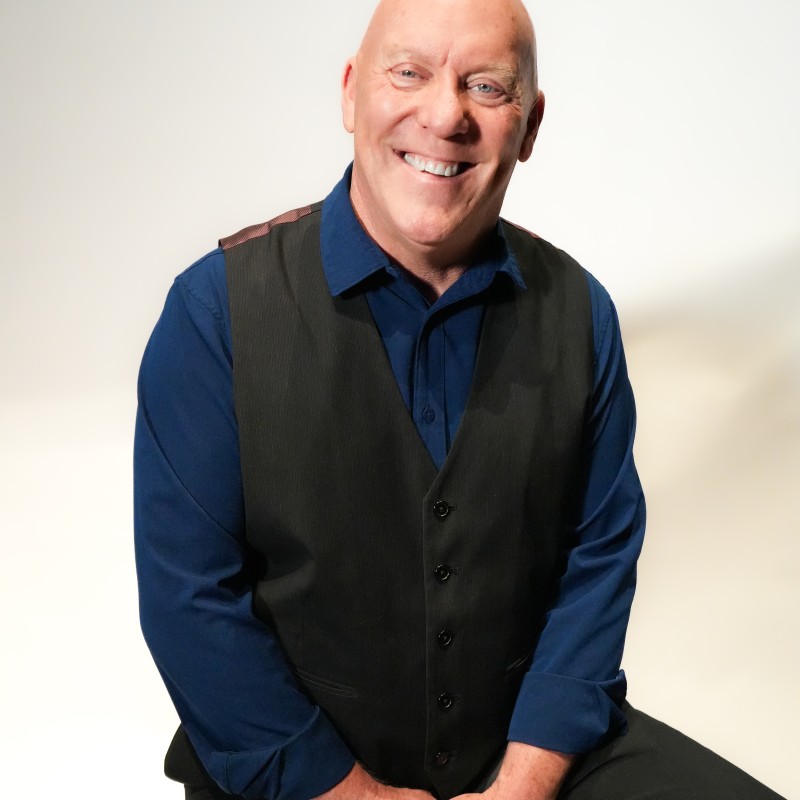
Tim Murphy

Author, 7 Secret Pillars of Sobriety / TEDx Speaker / Sobriety Coach / Retired USAF Senior NCO

Watch full interview on YouTube ↗

Their story

Tim Murphy grew up in Somerset, Kentucky, in a house where bullet holes in the walls were normal. His father was a violent, nomadic alcoholic who would disappear for months at a time and return without explanation. As a child, Tim played connect the dots — and the dots were bullet holes. He watched the curtains close, heard the paranoid muttering, never reported his father missing because absence was just what his father did. He normalized it completely, as children do. He never knew he was living something extraordinary until he was old enough to leave.

Read the full guest story

Tim Murphy grew up in Somerset, Kentucky, in a house where bullet holes in the walls were normal. His father was a violent, nomadic alcoholic who would disappear for months at a time and return without explanation. As a child, Tim played connect the dots — and the dots were bullet holes. He watched the curtains close, heard the paranoid muttering, never reported his father missing because absence was just what his father did. He normalized it completely, as children do. He never knew he was living something extraordinary until he was old enough to leave. By the time he graduated high school, Tim was depressed, had low self-esteem, and was suicidal. He joined the Air Force at 25 — late by most standards — and found, for the first time, that people did not judge him for his last name or his father. He excelled. He rose through the ranks to become a Senior NCO, eventually serving as Superintendent of Security Countermeasures for Air Force Space Command, where he oversaw nuclear convoy security training for more than 3,000 security personnel, guarded Langley Air Force Base, and retired with honors from NORAD — the North American Aerospace Defense Command. For 30 years, he maintained nuclear security at the highest levels of American national defense. He was drunk through nearly all of it. Two divorces, a borrowed car wrapped around a highway divider sign (crushed roof, shattered windshield, a mile from home, and he made it), and the day his son was sentenced to 30 years in prison — these were the accumulating weights. Tim went to AA. It did not work. He rejected the core affirmation: "My name is Tim and I'm an alcoholic." His objection was philosophical and deeply personal — if 'I am' is the most powerful affirmation a person can make, then repeating it as an identity tied to alcoholism was not recovery. It was reinforcement. He was not an alcoholic. He was a father, a veteran, a man who suffered from alcoholism. That suffering was not his identity. So he walked into his garage in Colorado Springs, grabbed a notebook, and started writing down everything. What he built over those sessions became the 7 Secret Pillars of Sobriety — a personalized, non-anonymous recovery system built on gratitude, affirmations, journaling, visualization, community, accountability, and a 100% firm commitment. Not a one-size-fits-all model. Not a program you attend indefinitely. A system you build for yourself, from your own life, that eventually makes the crutch unnecessary. That system became a book, published in November 2024 by WritersClique: 7 Secret Pillars of Sobriety: What To Do When AA and 12 Steps Aren't For You. It also became a TEDx talk at Texas A&M (TEDxTAMU) that TED flagged with a content warning for its unconventional approach. Tim has since spoken at nine Air Force bases, NORAD and USNORTHCOM, the American Legion, and community and corporate events nationwide. He also survived kidney cancer — adding cancer survivorship to the list of things he has walked through and refused to be defined by. Tim Murphy appeared on the Center Stage segment of Mornings in the Lab to talk about the promise he kept for 30 years — the one not to become his father — and the quiet night he heard his own voice and realized it had already broken. And what he built in the garage when he decided to write his own way out.
In their own words

Intergenerational alcohol trauma and the broken promise

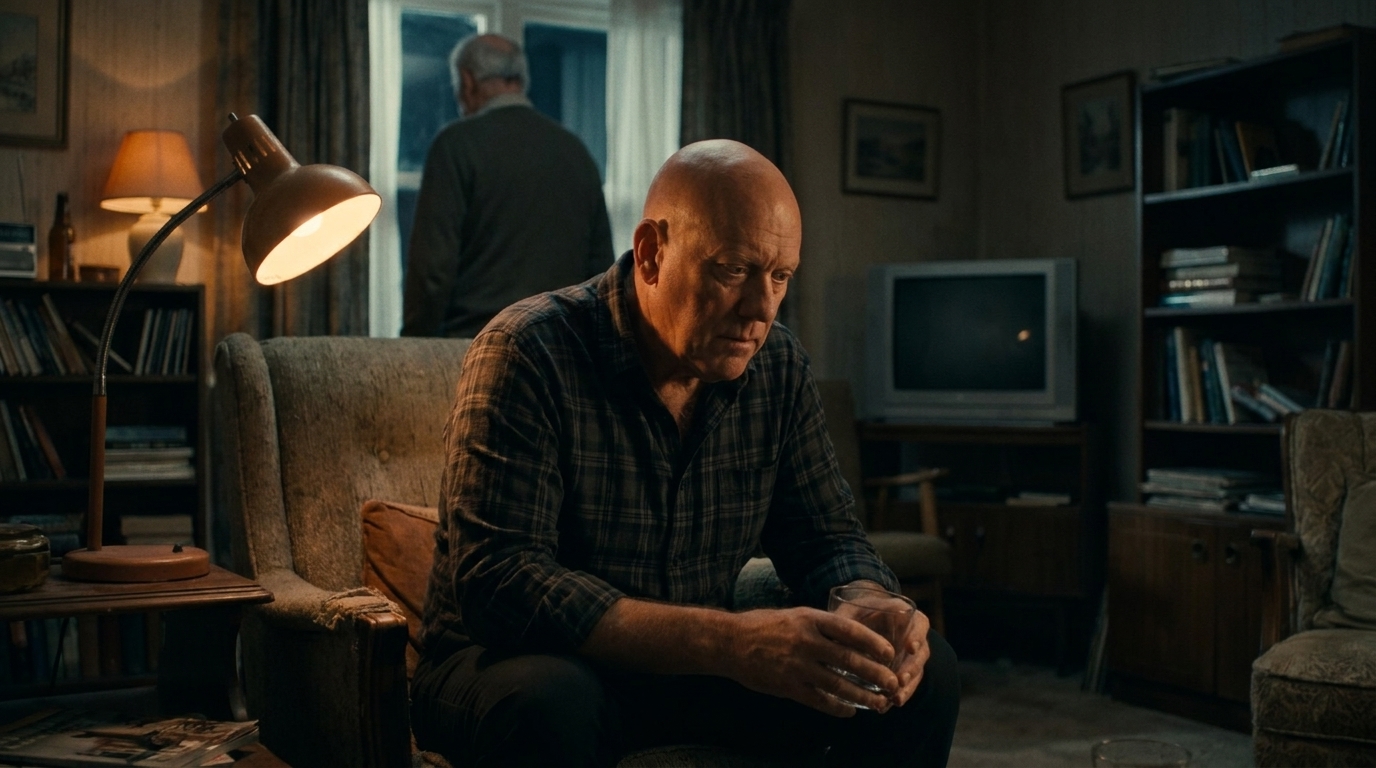
You already know the voice — the one you grew up hearing, the one you swore you'd never sound like. Then one quiet night you heard it. Your mouth, their words.

The episode's opening is Tim's story in its most essential form: intergenerational trauma replicates not through intention but through pattern. The promise not to become your father is the very thing that can blind you to the moment you already have. This framing resonates for anyone who has made a vow about who they would not become.

Childhood normalization of violence and trauma

Tim's childhood game was connect the dots. The dots were bullet holes.

One of the most haunting biographical images in the Mornings in the Lab Center Stage series. The normalization of violence as childhood play captures exactly how trauma perpetuates: not by being recognized as trauma, but by being so constant that it becomes invisible.

Military culture and hidden high-functioning alcoholism

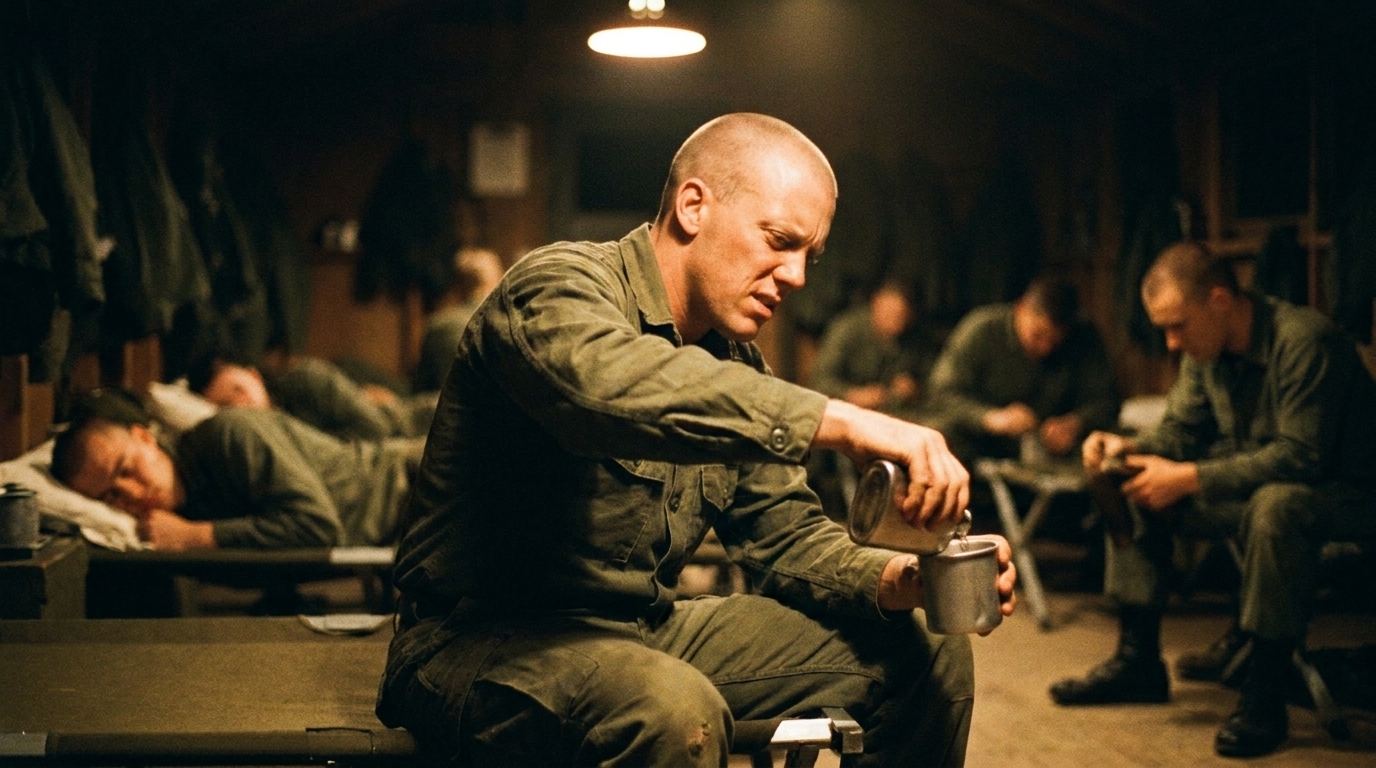
By basic training he was an alcoholic.

The military, which Tim joined specifically to escape his father's world and be judged on his own merits, reproduced the drinking culture he thought he was leaving. The irony is structural: the same discipline and belonging that saved him also provided cover for the addiction to deepen over 30 years of service.

100% personal responsibility as the foundation for recovery

I got myself into this. I need to be the one to get myself out of it.

Tim's rejection of the AA powerlessness framework is the philosophical center of his entire recovery system. Taking 100% responsibility — including responsibility for the patterns he inherited — is what made recovery possible. The victim framework, however compassionate, was not a foundation he could build on.

Identity vs. condition: the AA affirmation critique

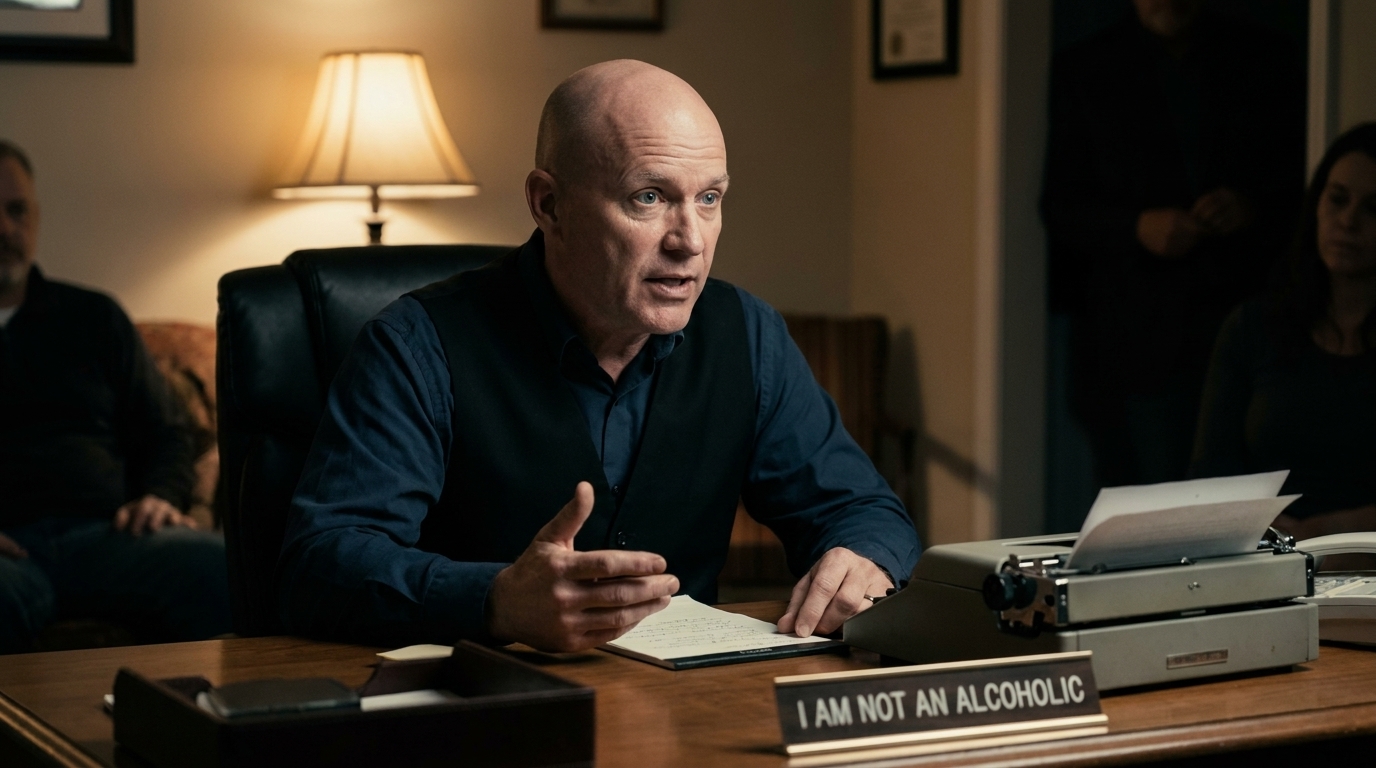
I'm an alcoholic — that is an affirmation. And alcohol was something I was suffering with. It wasn't who I was.

Tim's critique of AA's identity-based framing is linguistically precise: 'I am' statements are the most powerful affirmations available, and anchoring them to the addiction being overcome is counterproductive to the identity reconstruction that real recovery requires. He was a father, a veteran, a man — not an alcoholic.

The garage notebook that became a TEDx talk

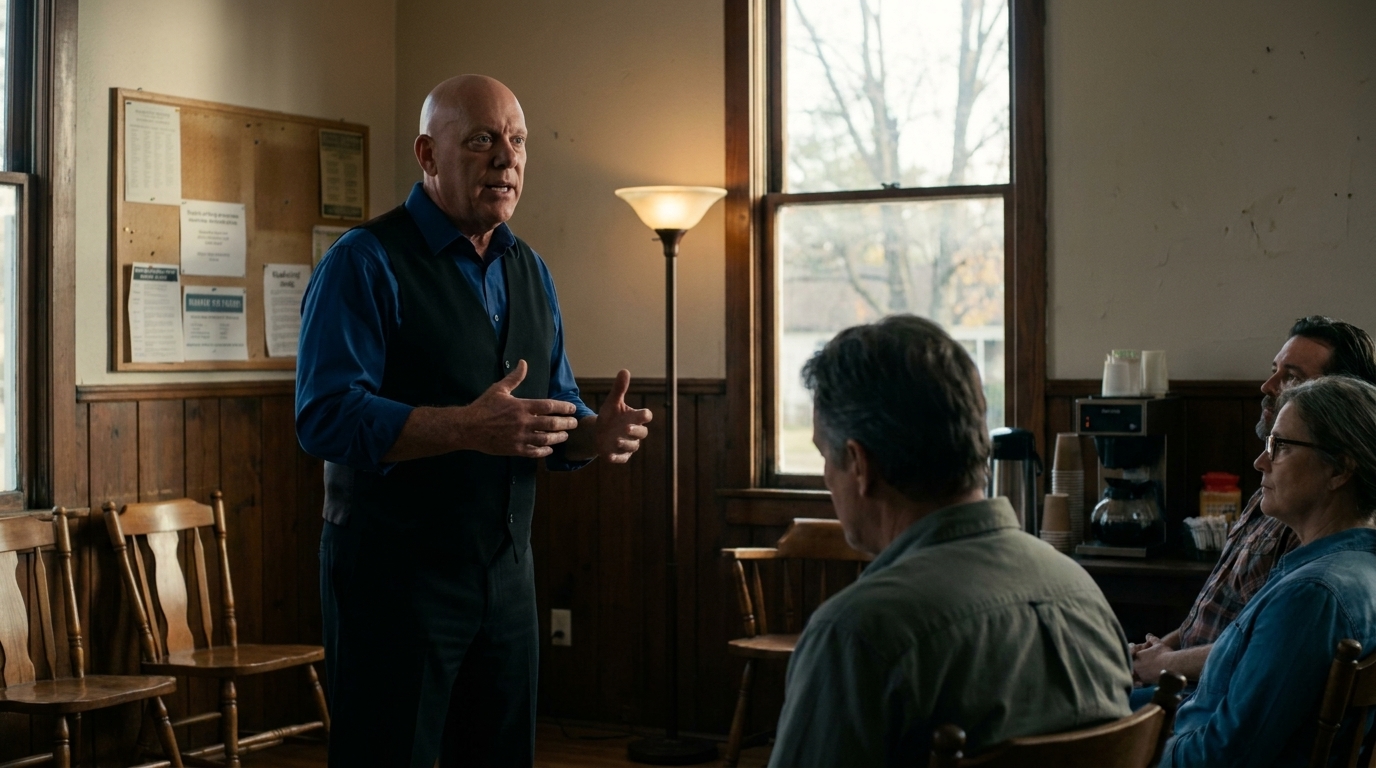
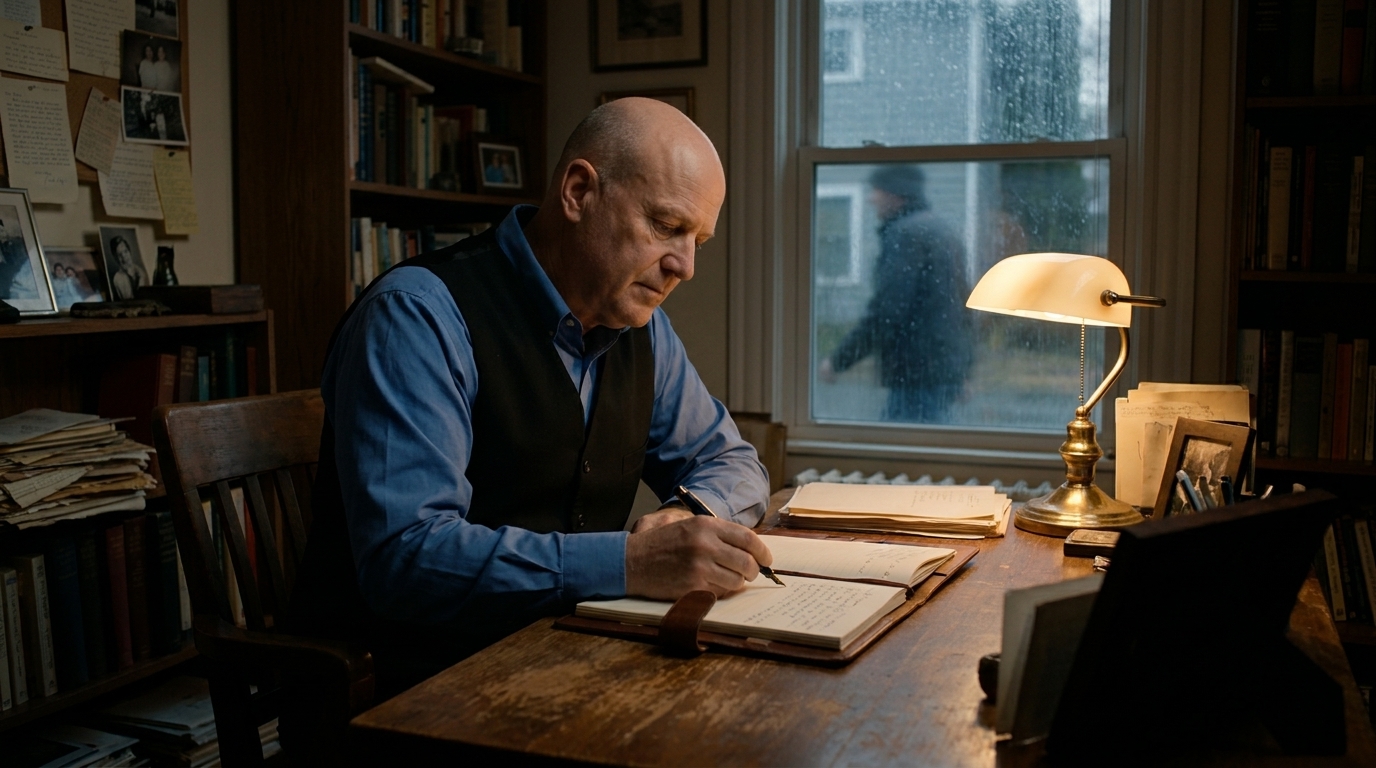
He walked into his garage, grabbed a notebook, and wrote his own system. That system became a book, then a TEDx talk so unconventional TED flagged it with a content warning.

Tim's recovery methodology did not emerge from a program — it was reverse-engineered from his own life. The garage notebook that became the 7 Secret Pillars of Sobriety is a literal example of engineering a solution to a problem the existing infrastructure failed to solve. The TED content warning is a badge of authentic disruption.

Why sobriety should not be anonymous

There's nothing anonymous about alcoholism. When I was out there womanizing, fighting, getting drunk, wrecking my car — what was anonymous about that? You can't be anonymous in your sobriety, either.

Tim's argument against anonymous recovery is deeply practical: the damage of alcoholism was public, visible, and had real consequences for real people. Concealing the recovery behind anonymity removes the social accountability and visibility that make sobriety real and sustainable.

Journaling as mental exercise: if you think it, ink it

If you think it, ink it. Words change your life. It's like what you say to yourself.

The simplest and most transferable principle from Tim's system: the act of writing makes thoughts real, accountable, and visible. Journaling as a mental exercise — not a therapeutic obligation — is one of the seven pillars because it externalizes the internal monologue in a way that makes patterns visible and changeable.

Appearances & videos

Original interview details

Leadership, Personal Growth & Leveling Up in Life

Episode #CS-020

Center Stage

  • Mornings in the Lab · Center StageMarch 23, 2026Watch →

From the interview

Tim's childhood game was connect the dots. The dots were bullet holes.
I got myself into this. I need to be the one to get myself out of it.
I'm not an alcoholic. Alcoholism was something I suffered from. That's not who I was.

Questions & answers

Who is Tim Murphy the sobriety author and what is his background?

Tim Murphy is a retired United States Air Force Senior NCO, TEDx speaker, sobriety coach, and author of '7 Secret Pillars of Sobriety: What To Do When AA and 12 Steps Aren't For You' (2024). He grew up in Somerset, Kentucky, in a home defined by his father's violent alcoholism. He enlisted in the Air Force at 25, served for 30 years in security forces and nuclear security roles including Superintendent of Security Countermeasures for Air Force Space Command (overseeing nuclear convoy training for 3,000+ personnel), and retired from NORAD with honors. He maintained high-functioning alcoholism throughout his service career. After two divorces, a blackout car crash, and his son's 30-year prison sentence, he attempted AA, found it ineffective for his needs, and wrote his own recovery system in his garage. That system became the 7 Secret Pillars of Sobriety and a content-warning TEDx talk at Texas A&M. He currently lives in Colorado Springs.

What is the 7 Secret Pillars of Sobriety book by Tim Murphy?

7 Secret Pillars of Sobriety: What To Do When AA and 12 Steps Aren't For You is Tim Murphy's 2024 recovery guide, published by WritersClique. It is a personalized, non-anonymous alternative to traditional 12-step programs, built on seven pillars that Tim developed in his garage after AA didn't work for him: gratitude, affirmations, journaling, visualization, community, accountability, and 100% committed decision-making. The core philosophy is that recovery cannot be a one-size-fits-all program — each person must build a system that fits their own life, values, and needs. The book challenges the 'I am an alcoholic' affirmation framework, arguing that anchoring identity to an addiction reinforces rather than dismantles it. Tim's program has been embraced by the U.S. Air Force, NORAD, the American Legion, and community organizations nationwide.

Why did Tim Murphy reject AA and what did he do instead?

Tim Murphy rejected AA primarily for two reasons: first, the identity affirmation 'My name is Tim and I'm an alcoholic' conflicted with his belief that 'I am' statements are the most powerful affirmations available — and therefore anchoring them to the addiction being overcome is counterproductive. He was suffering from alcoholism; that was not his identity. Second, the concept of powerlessness was incompatible with his recovery philosophy: 'I got myself into this. I need to be the one to get myself out of it.' Instead of AA, he sat in his garage in Colorado Springs with a notebook and wrote down everything that was driving his drinking, what helped, and what principles he needed to build a different life. The result was the 7 Secret Pillars of Sobriety — a personalized, actionable recovery system that he has since shared through his book, TEDx talk, and coaching practice.

What was Tim Murphy's military career and rank?

Tim Murphy served 30 years in the United States Air Force in security forces, ultimately reaching senior non-commissioned officer (SNCO) rank. His notable roles included Superintendent of Security Countermeasures for Air Force Space Command, where he developed inspection guides and oversaw nuclear specific convoy training for more than 3,000 security personnel charged with nuclear security. He also served in roles guarding Langley Air Force Base. He retired from the North American Aerospace Defense Command (NORAD) and U.S. Northern Command with honors. After his military retirement, he has spoken at nine Air Force bases and at NORAD & USNORTHCOM on the topics of addiction, recovery, and personal accountability.

What is Tim Murphy's TEDx talk about and why did TED flag it with a content warning?

Tim Murphy delivered a TEDx talk at Texas A&M (TEDxTAMU) titled 'Affirmations and the Road to Recovery,' in which he shares his personal experience with alcoholism and the central role of affirmations — particularly gratitude — in his recovery system. TED flagged the talk with a content warning for its unconventional approach to addiction recovery, which explicitly challenges the mainstream AA model and its identity-based framing. In the talk, Tim argues that the language we use about ourselves is one of the most powerful forces in recovery — that negative self-talk is a self-inflicted wound, and that daily affirmations and gratitude practices are not soft wellness advice but clinical tools for rebuilding the neural pathways that alcoholism alters. The talk is available on YouTube.

How can I contact Tim Murphy for speaking or coaching?

Tim Murphy is available for sobriety coaching, keynote speaking, and consultation through his website authortimmurphy.com and the book's companion site 7secretpillarsofsobriety.com. He speaks at corporate events, conferences, Air Force bases, community organizations, and veteran groups. His Facebook author page is at facebook.com/timmurphyauthor and his personal Facebook is at facebook.com/obi.baldkenobi.14. His LinkedIn is at linkedin.com/in/tim-murphy-sobriety and he accepts direct consultation bookings at calendly.com/murphy-tim. His book '7 Secret Pillars of Sobriety: What To Do When AA and 12 Steps Aren't For You' is available on Amazon.

The full conversation

Read the transcript

You already know the voice, the one you grew up hearing, the one you swore you'd never sound like. And for a while you didn't. You built your whole life as proof. Different job, different city, different choices. You were sure. Then one quiet night you heard it. Your mouth, their words. And you realized the promise had already broken. Tim Murphy grew up in Somerset, Kentucky. His father drank and put bullet holes in the walls of their house. Tim's childhood game was connect the dots. The dots were bullet holes. He made himself a promise. He would never end up like that. He left home and enlisted in the Air Force. Security forces. Structure, authority, a clean start. By basic training he was an alcoholic. For 30 years he served. He ran nuclear convoy security for 3,000 personnel. He guarded Langley. He retired from NORAD with honors. He was drunk through nearly all of it. When he finally stopped, AA didn't work. So he walked into his garage, grabbed a notebook, and wrote his own system. That system became a book, then a TEDx talk so unconventional Ted flagged it with a content warning. If you've ever kept a promise to yourself for so long that you forgot you'd already broken it, that's today's conversation. Tim, welcome to the lab.

Open transcript page →
Guest gallery
authority_portrait
authority_portrait
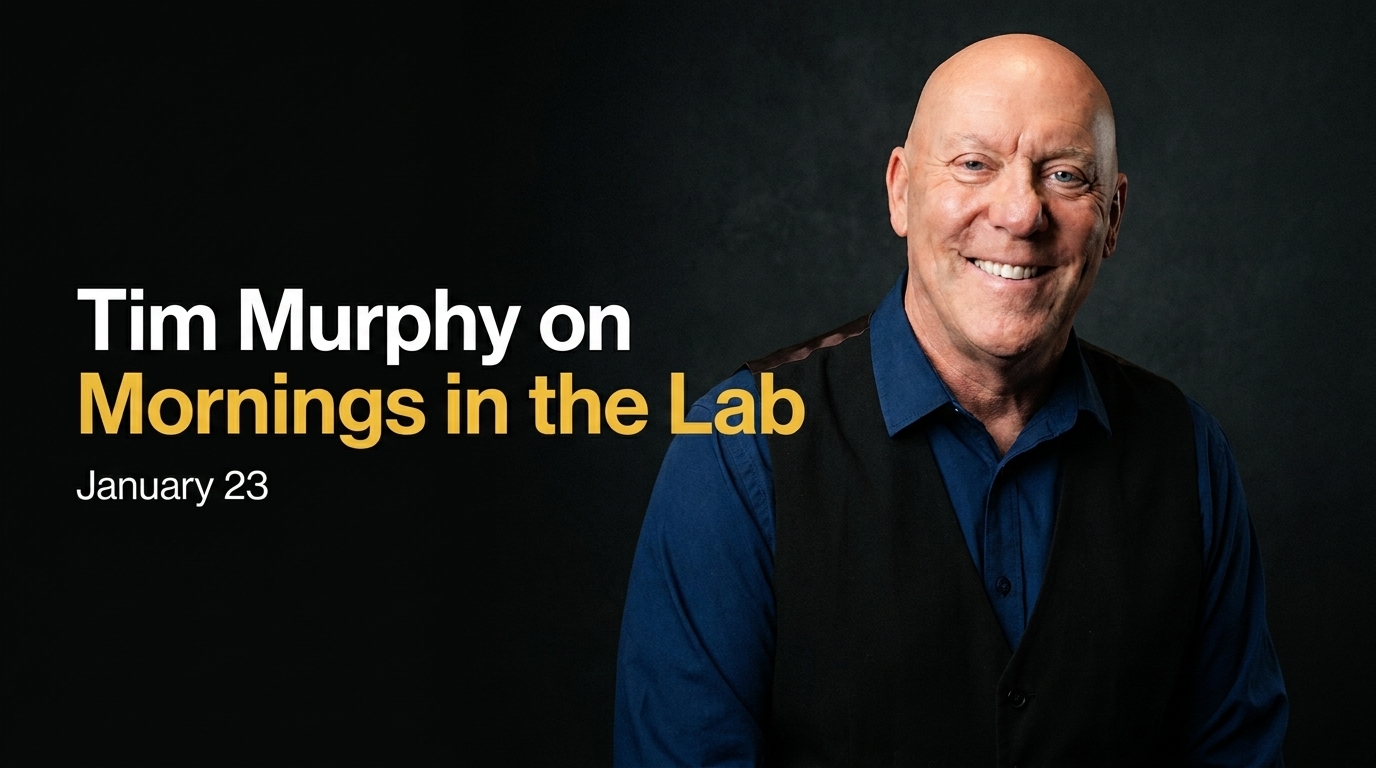
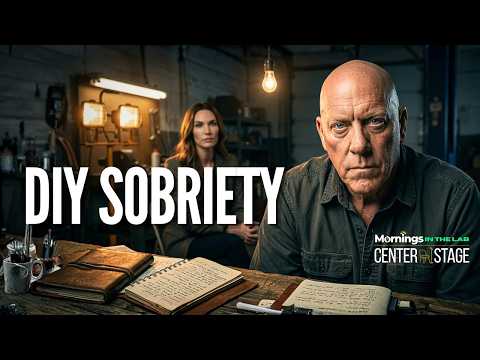
Pre-show shareable graphic generated by the Authority Page Builder.
Announcement card · Pre-show shareable graphic generated by the Authority Page Builder.
Intergenerational alcohol trauma and the broken promise
Childhood normalization of violence and trauma
Military culture and hidden high-functioning alcoholism
100% personal responsibility as the foundation for recovery
Identity vs. condition: the AA affirmation critique
The garage notebook that became a TEDx talk
Why sobriety should not be anonymous
Journaling as mental exercise: if you think it, ink it
Conversation topics

The open: the promise you kept until you forgot you'd broken it · ~2 minutes · The episode opens with the haunting frame of Tim's story — the voice you swore you'd never hear from your own mouth, and the quiet night you hear it anyway. The promise not to become his father, and the moment it was already gone. · Somerset, Kentucky: growing up in the house with bullet holes · ~4 minutes · Tim describes his father's violent, nomadic alcoholism — the guns fired in the house, the walls as a connect-the-dots canvas, the normalcy of it all until he got old enough to see it wasn't. His father would disappear for months and no one reported him missing. · The promise not to become his father — and the Air Force · ~3 minutes · Tim joins the Air Force at 25, finding for the first time a world where he is not judged by his last name. He excels. He also continues to drink, and the military culture of the era provides all the infrastructure he needs. · 30 years of nuclear security — drunk through most of it · ~4 minutes · Tim recounts his remarkable military career — nuclear convoy training for 3,000 personnel, guarding Langley, retiring from NORAD with honors — while maintaining a functioning alcoholism that everyone around him accepted as normal for the era and culture. · The car crash and his son's 30-year sentence · ~4 minutes · Tim describes the borrowed car wrapped around a highway divider sign, the crushed roof, the mile home he somehow drove. His son was simultaneously sentenced to 30 years. He looked at both and realized: dead or prison. He had to change. · AA and why it didn't work · ~5 minutes · Tim explains his experience with AA and his specific philosophical objections — the powerlessness framework and the 'I am an alcoholic' affirmation. He connects his rejection of AA to a deeper conviction about identity, language, and personal responsibility. · The garage notebook and the 7 Secret Pillars · ~4 minutes · Tim walks through what he was doing in his garage — writing, identifying patterns, building the system from scratch. He introduces the core pillars: gratitude, affirmations, journaling, visualization, community, accountability, and commitment. · Sobriety is not anonymous · ~3 minutes · Tim argues that anonymous recovery removes the social accountability that makes sobriety real. He told his bartenders. He told his friends. The ones who loved him supported him. The ones who didn't were already separated from his life. · His son in prison, faith, and forgiveness · ~4 minutes · Tim discusses his son's 30-year sentence, visiting every Sunday, the conversations that constitute real rehabilitation. He talks about faith, gratitude, and why forgiving others before seeking forgiveness for himself was the key that unlocked his recovery. · The TEDx talk and writing the book · ~3 minutes · Tim discusses the TEDxTAMU talk flagged with a content warning and the book '7 Secret Pillars of Sobriety.' Why he wrote it, who it is for, and why a personalized recovery model matters for people who have not found their answer in 12 steps. · Closing and how to connect · ~2 minutes · Sophia closes the Center Stage segment with Tim's core message — that the system you build from your own life may be the only one that will actually work for you. Viewers directed to authortimmurphy.com and 7secretpillarsofsobriety.com.