← All guestsCenter Stage

Center Stage · Mornings in the Lab

Darnell Lamont Walker

There is still life to live.

A death doula and children’s television writer on the conversations we postpone, the stories we leave behind, and making room for life while there is time.
Watch full interview on YouTube ↗
2026-10-05 · Episode #3149 · Keith Bilous & Jon AndersenFull conversation

Meet Darnell Lamont Walker

There is still life to live.

Darnell Lamont Walker is a death doula, Emmy-nominated children’s television writer and author of Never Can Say Goodbye: The Life of a Death Doula and the Art of a Peaceful End. His official biography lists Karma’s World, Work It Out Wombats! and Blue’s Clues & You. In this appearance, Keith and Jon explore his experiences supporting families, preserving stories and making room for what matters now.

Conversation
Center Stage
Hosts
Keith & Jon
Air date
2026-10-05
Talking About Death Helps Me Live illustrated story cover
Illustrative artwork · Approved illustrated artwork

MORE LIFE. LESS FEAR.

Talking About Death Helps Me Live

Darnell makes clear that he loves life and wants to remain here. Sitting with people near the end of life has made him think harder about how to use his own time. He describes asking clients how they want to live the time they have left.

07:27 · Watch this moment ↗

He Thought He Had More Time illustrated story cover
Illustrative artwork · Approved illustrated artwork

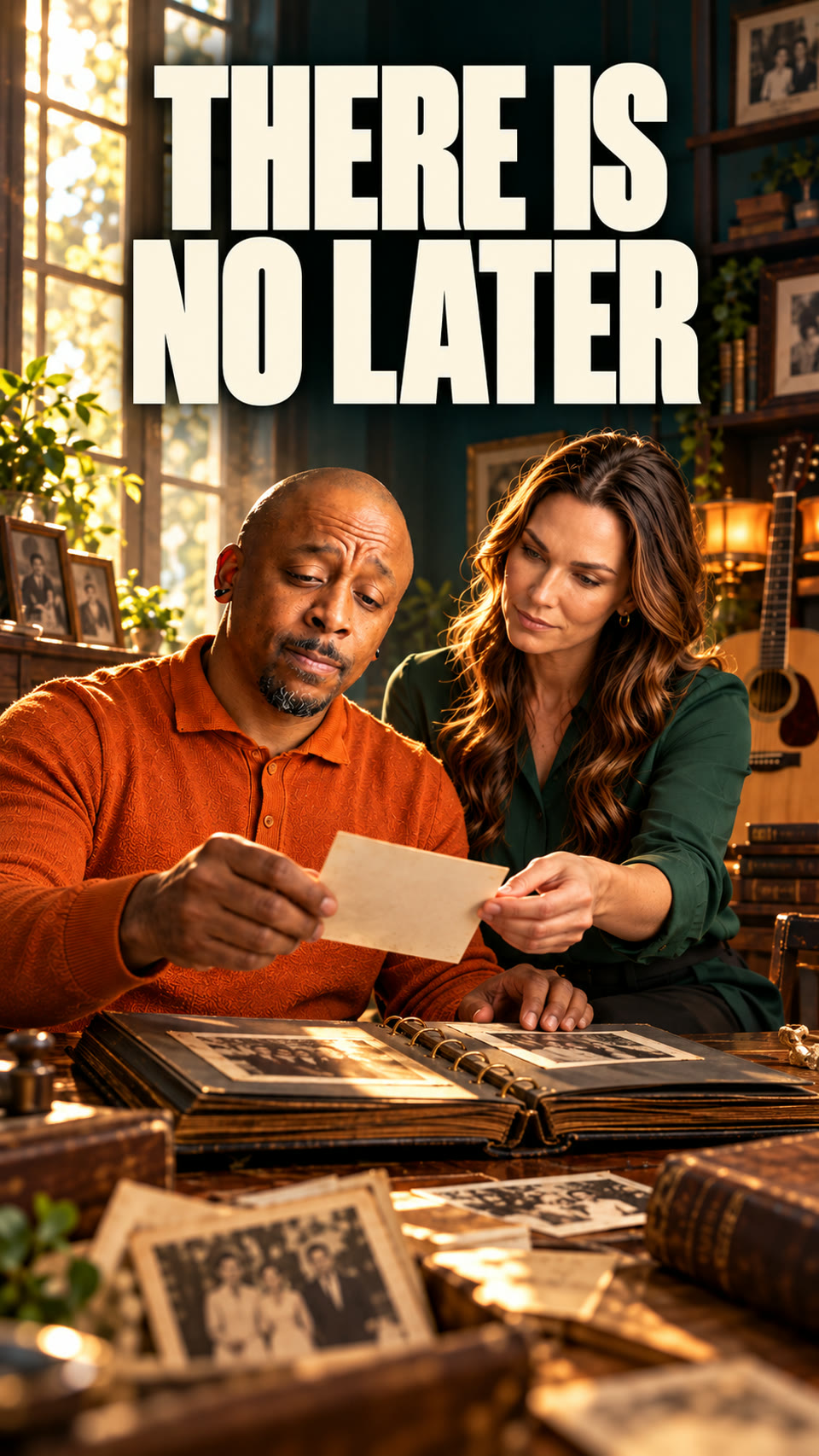
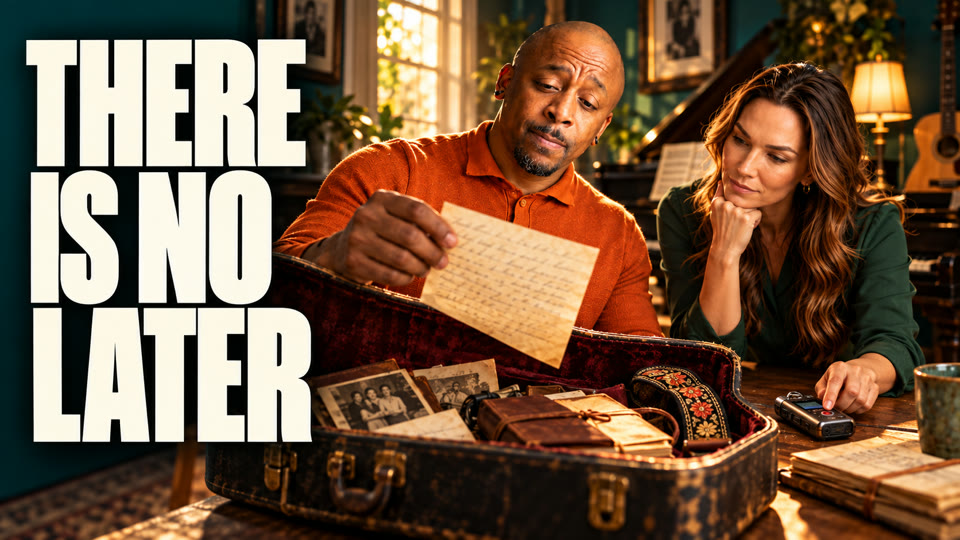
THERE IS NO LATER

He Thought He Had More Time

Darnell remembers a musician friend who had pursued things he thought his grandmother wanted. In Darnell’s account, the friend later learned that she had wanted him to live his own life. Keep the memory attributed to Darnell; the illustration does not document this friend or the events.

14:18 · Watch this moment ↗

More places to begin

A conversation in chapters

Current Library v1 full-cut coordinates: original Center Stage bumper, Sophia opener, interview continuation and farewell. Source broadcast coordinates remain preserved separately.

What the conversation brings forward

  • The guest describes conversations about living as part of his work near the end of life.
  • The friend’s story is Darnell’s personal account.
  • Storytelling and legacy are central to the work he describes.
  • The supported credential is Emmy-nominated writer.

The Reel Room

Two moments. Full context.

Recorded highlights. The original vertical frame and airtime text promote the recurring show.

MORE LIFE. LESS FEAR.

Talking About Death Helps Me Live

Darnell makes clear that he loves life and wants to remain here. Sitting with people near the end of life has made him think harder about how to use his own time. He describes asking clients how they want to live the time they have left.

Watch this moment in the full interview using the link below. Native horizontal and vertical downloads are being prepared.

07:27 · Watch this moment ↗

Video downloads

Native highlight downloads are being prepared.

Story covers · horizontal and vertical

Illustrations depict ideas from the conversation, rather than documented photographs of events.

Optional post · Guest may edit

Talking about death has made me want to live more. I don't want to leave this place. I love life. Being around people at the end of theirs hasn't changed that. What it has changed is the way I look at the time I have. When I sit with someone who is dying, the conversation is also about living: How do you want to live the rest of this time? What matters to you? What can we still make possible? Their stories make me look at my own life. Some show me what I want to move toward. Others show me what I don't want to leave unfinished. I spoke with Keith and Jon on Mornings in the Lab about why these conversations can help us live more fully while we're here. Watch the clip. Then ask yourself: What would you make room for this week if you stopped assuming it could wait?

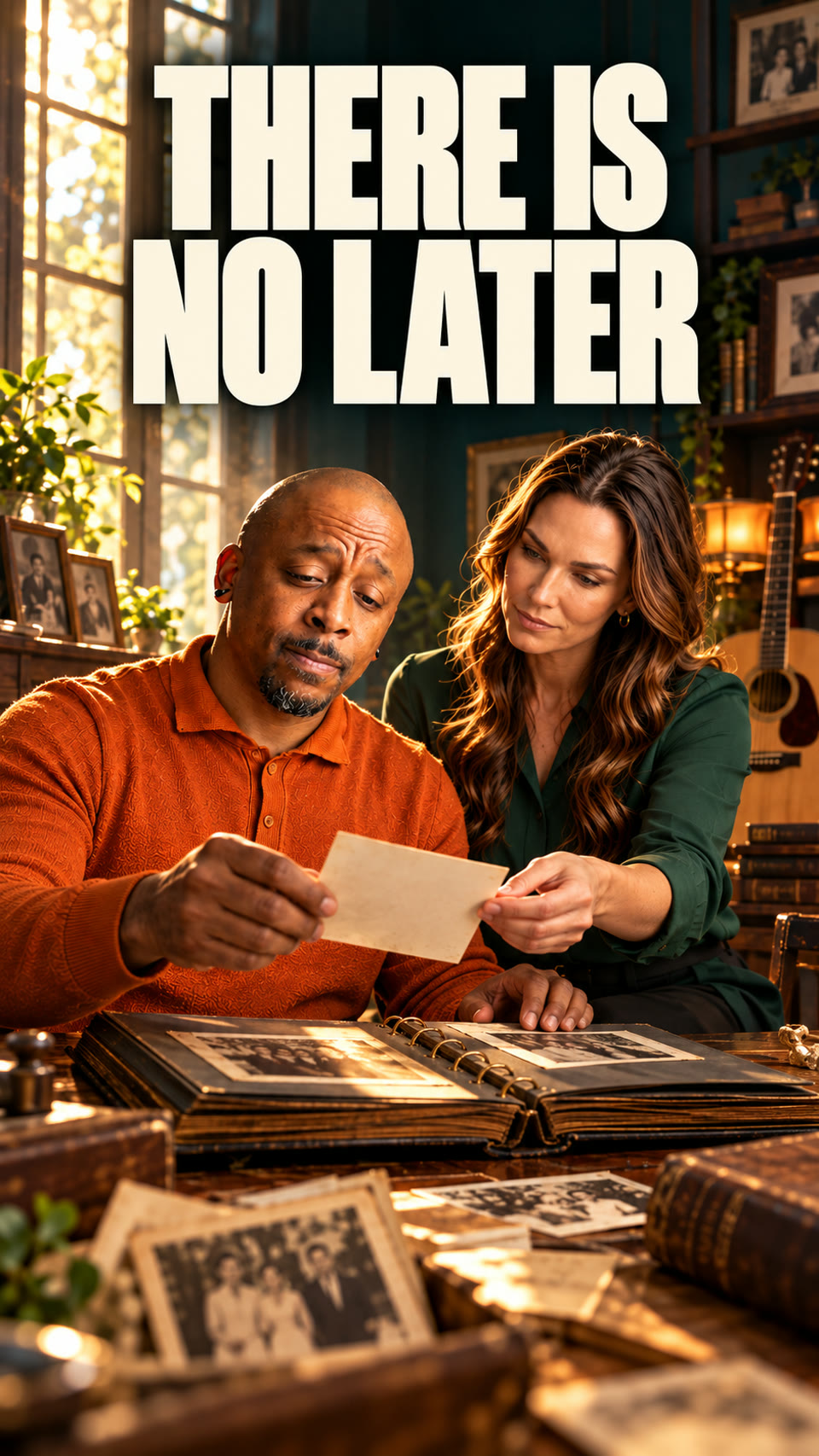
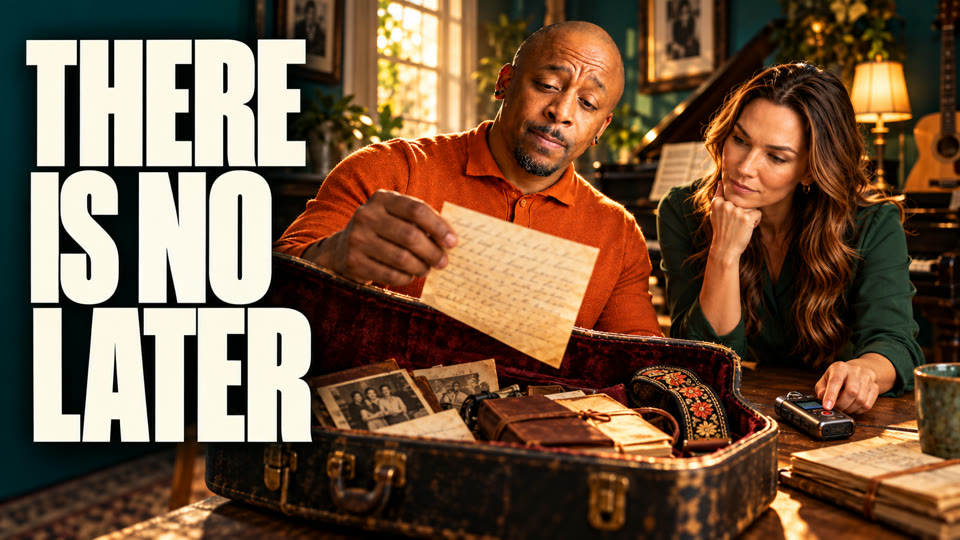
THERE IS NO LATER

He Thought He Had More Time

Darnell remembers a musician friend who had pursued things he thought his grandmother wanted. In Darnell’s account, the friend later learned that she had wanted him to live his own life. Keep the memory attributed to Darnell; the illustration does not document this friend or the events.

Watch this moment in the full interview using the link below. Native horizontal and vertical downloads are being prepared.

14:18 · Watch this moment ↗

Video downloads

Native highlight downloads are being prepared.

Story covers · horizontal and vertical

Illustrations depict ideas from the conversation, rather than documented photographs of events.

Optional post · Guest may edit

My friend was 39. He thought he had time. We had been friends for 20 years. He was an incredible musician, one of those people you imagine growing old with. Near the end of his life, I asked whether he'd done everything he wanted to do. He told me he'd spent years pursuing things he thought his grandmother wanted for him. When she was dying, she told him she hadn't wanted those things. She'd wanted him to live his life. Now he was dying a few years later, and he hadn't gotten around to it. He asked me to make sure his nephews didn't do the same thing. I told him I would do my best. I shared that conversation with Keith and Jon on Mornings in the Lab because I keep coming back to the same question: What are we postponing because we assume there will be more time? Watch the clip. If something important came to mind, give it some room now.

The conversation

In their own words

Selected dialogue from the conversation.

“I love life.”
Darnell Lamont Walker · His own wish to keep living.
Source cue 181
07:36 · Watch this moment ↗
“He was only 39.”
Darnell Lamont Walker · His account of the friend who thought he had time.
Source cue 351
15:13 · Watch this moment ↗
“Later may not come”
Darnell Lamont Walker · Closing discussion about acting on what matters.
Source cue 712
27:35 · Watch this moment ↗

One appearance. Full context.

Darnell Lamont Walker with Keith and Jon

Center Stage on Mornings in the Lab · Episode #3149 · Aired 2026-10-05. The air date is separate from a video’s upload date.

A death doula and children’s television writer on the conversations we postpone, the stories we leave behind, and making room for life while there is time.

Guest’s official website ↗

Questions and answers

A little more context

Who is Darnell Lamont Walker?

Darnell Lamont Walker is a death doula, Emmy-nominated children’s television writer and author of Never Can Say Goodbye: The Life of a Death Doula and the Art of a Peaceful End. His official biography lists Karma’s World, Work It Out Wombats! and Blue’s Clues & You. In this appearance, Keith and Jon explore his experiences supporting families, preserving stories and making room for what matters now.

What does this conversation explore?

A death doula and children’s television writer on the conversations we postpone, the stories we leave behind, and making room for life while there is time.

When did this appearance air?

2026-10-05, in episode #3149, with Keith Bilous and Jon Andersen.

Are the clips live?

These are recorded highlights. The vertical frame’s LIVE and airtime text promote the recurring show.

What can I download?

The full interview is available as a low-bandwidth review and a 720p download. All four H/V highlight videos and four dedicated H/V story covers are separately downloadable. Approval states remain individual.

Where can I learn more?

Use the guest’s official sources linked beside the biography.

Is Darnell an Emmy winner?

His supported description is Emmy-nominated writer.

  • Living fully
  • Family conversations
  • Storytelling
  • Legacy
  • Priorities
  • Presence

Optional sharing posts

The full appearance

Complete first-person drafts for the guest to edit. Copying does not publish or send a post.

Optional post · Guest may edit

I was helping people at the end of their lives long before I knew the words “death doula.” My grandmother talked with me about death when other people in my family didn't. When I was 12, a cousin came home to die, and I was there with her as she cared for him. The next year, I volunteered at a hospice. Sometimes the work was simply sitting with someone so they wouldn't be alone. Years later, a friend who worked in hospice told me that what I had been doing sounded like death-doula work. I looked it up and recognized the work I'd been doing since childhood. During COVID, I saw how lonely people had become. I began approaching the work more intentionally, helping people tell their stories, preserve what mattered, and find someone who could be present with them. In my full conversation with Keith and Jon on Mornings in the Lab, we talked about that path, my writing for children, Never Can Say Goodbye, and the conversations families can have before they are forced to guess. Watch the full conversation. There is room to talk about the end and still make more room for life.

Keep the conversation going

Share the full conversation.

Native full-interview and highlight downloads are being prepared. The full interview is available on YouTube, and the approved story covers are available above.