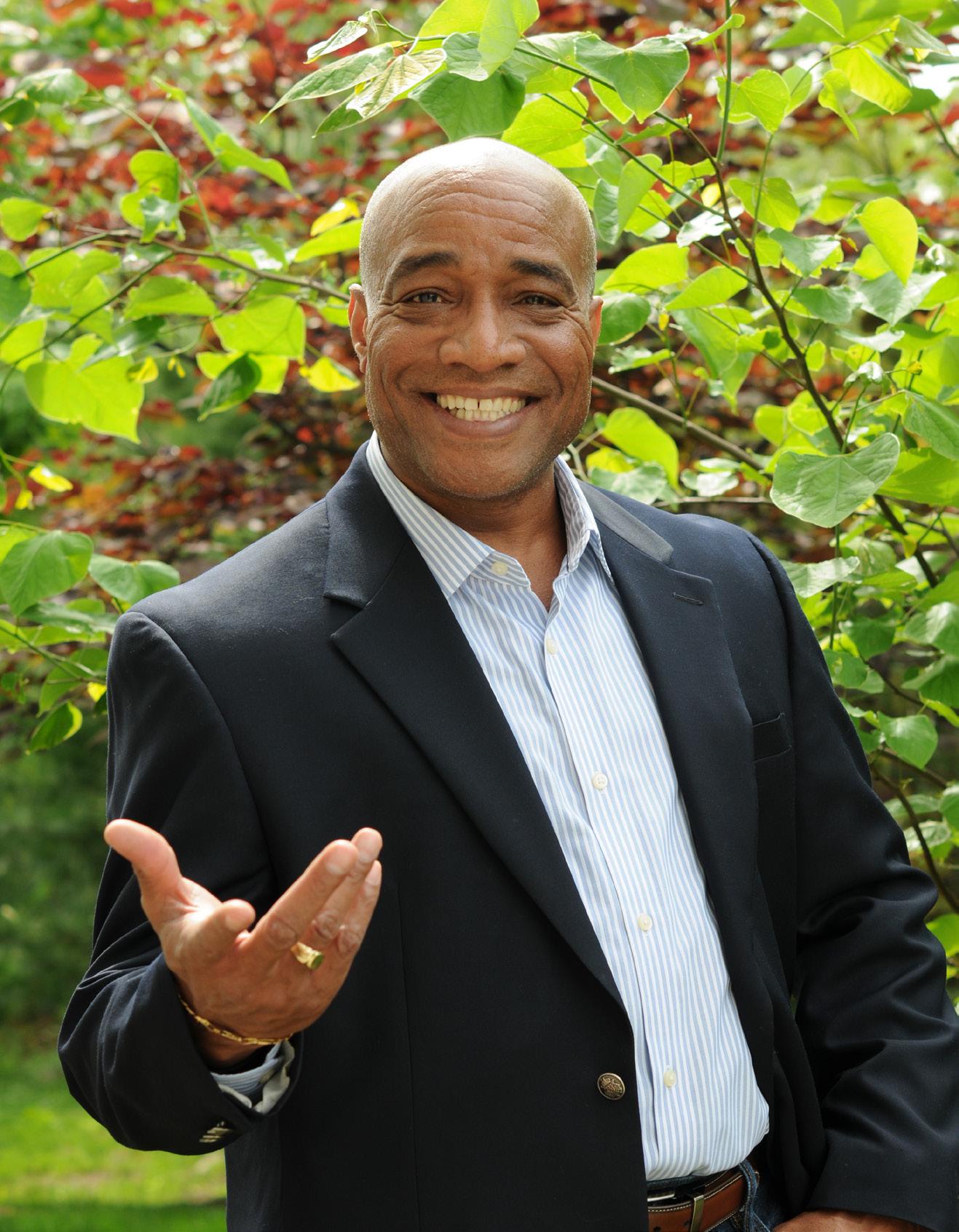
Dwayne Whitaker is a man who spent the better part of his adult life doing work that most people only encounter in movies. Born and raised in Bedford-Stuyvesant, Brooklyn — a neighborhood whose culture of toughness and street-level social intelligence shaped him long before any military training could — Dwayne entered the U.S. Army and discovered that his natural instincts for reading people, building trust, and finding connection even in adversarial situations were not common. They were rare. And they were valuable.
Read the full guest story
Dwayne Whitaker is a man who spent the better part of his adult life doing work that most people only encounter in movies. Born and raised in Bedford-Stuyvesant, Brooklyn — a neighborhood whose culture of toughness and street-level social intelligence shaped him long before any military training could — Dwayne entered the U.S. Army and discovered that his natural instincts for reading people, building trust, and finding connection even in adversarial situations were not common. They were rare. And they were valuable.
Over more than a decade of active service, Dwayne became a CID Special Agent — a member of the Army's Criminal Investigation Division, the military equivalent of the FBI, operating at a classification level where the stakes are always high and the margin for error is narrow. He served across multiple theaters: New Jersey, Germany, South Korea, and beyond. His portfolio was as broad as the range of human darkness: drugs, crimes against persons, forensic work, anti-terrorism, and high-level executive protection. He augmented Secret Service details on assignments involving two presidents, Colin Powell, and Dick Cheney. At 20 years old, still new to the work, he was navigating environments that veteran operators found harrowing.
But the assignment that would come to define Dwayne's understanding of human nature — and that would give him the framework he uses in every conversation today — was his role as a primary hostage negotiator for New York and New Jersey for approximately two and a half years. In that role, he developed what he calls the discipline of perspective-shifting: the ability to exit your own perception and enter the cognitive and emotional landscape of another person, even one who is doing something terrible. Not to condone. Not to reason away accountability. But to understand — because understanding is the only path to resolution.
The insight he brings from that work is deceptively simple and counterintuitive: people don't care what you know. They remember how you made them feel. Dwayne tells the story of a young man he arrested for a significant drug offense, treated with dignity and humanity despite the criminality of the act. Years later, that man tracked Dwayne down to thank him — having turned his life around, finished school, and built a business — because Dwayne treated him like a human being. That interaction is both a personal validation and a universal lesson.
Dwayne's framework — one he articulates with natural clarity and a Brooklyn realness that makes it land differently than any corporate training manual — is built around perspective versus perception. Everyone operates from their own perception, which is unique and non-transferable. The only way to influence, connect, or resolve conflict is to shift into someone else's perspective: to understand what they see, what they fear, what they need. He demonstrates this through a beloved Bugs Bunny illustration — the one where Bugs pulls the gun down into the hole and emerges standing beside Elmer Fudd, having maneuvered from target to ally without the opponent noticing the transition.
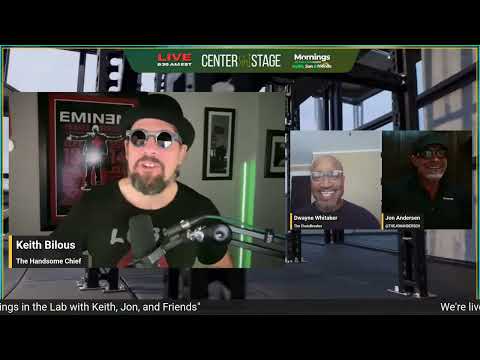
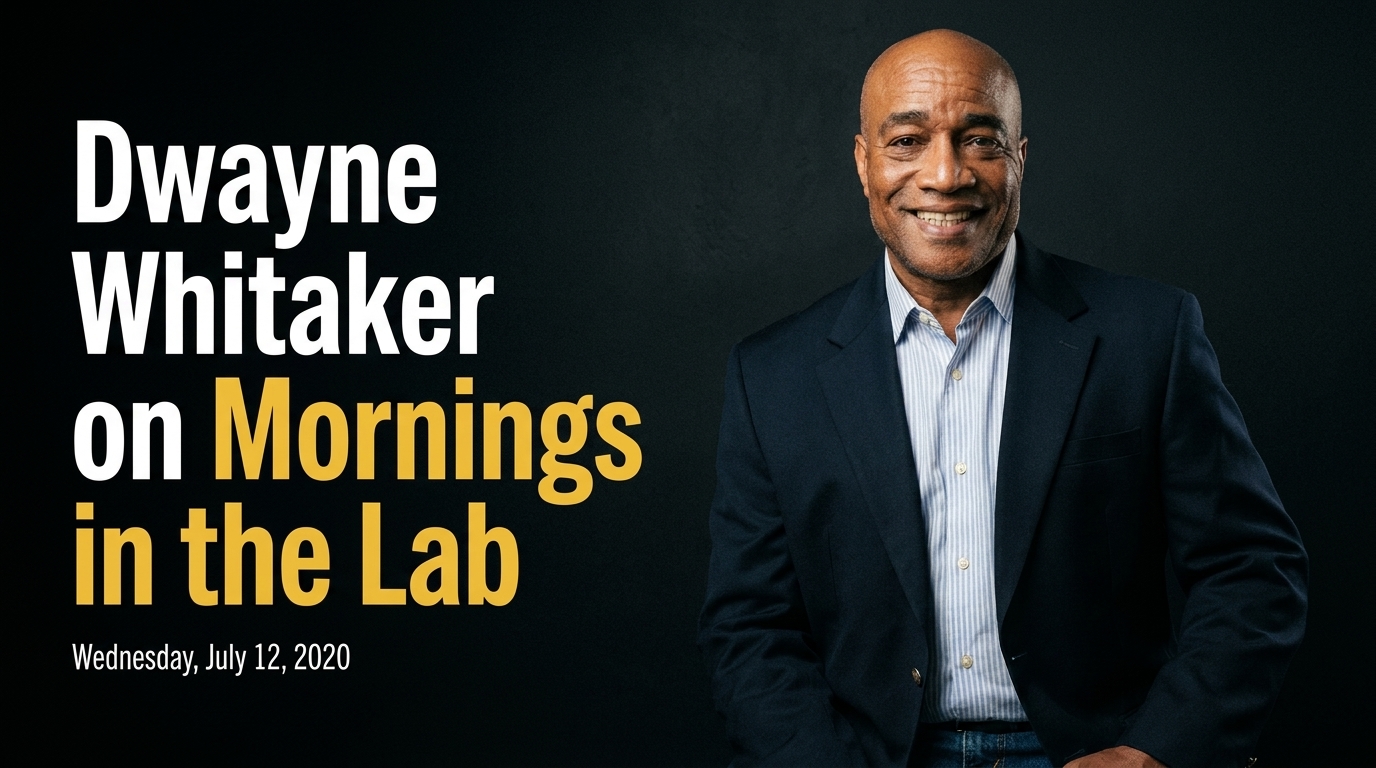
Dwayne Whitaker appeared on the Center Stage segment of Mornings in the Lab, where the hosts — clearly struck by both his background and his natural charisma — spent much of the conversation drawing out the lessons from his career and applying them to everyday leadership, communication, and human connection.