THE MORNING SHOW FOR GENERATION X.We grew up figuring it out. We still are.
THE MAGAZINE · #143
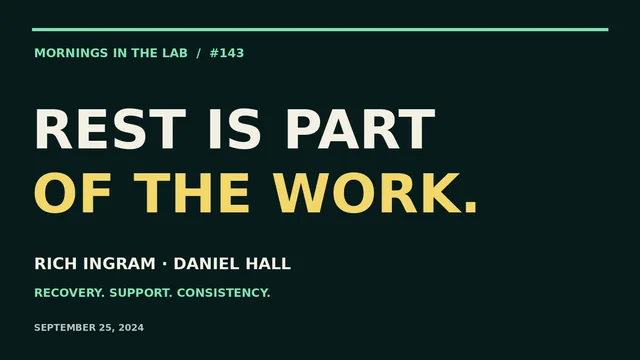
THE COVER STORYRECOVERY · SUPPORT · CONSISTENCY
FIVE HABITS OF ENDURANCE
Rest is part of the work.
Rich Ingram has a race to prepare for. His plan includes training, but it also includes rest, a coach who can slow him down and data that needs interpretation.
Keith and the panel explore five habits: setting and adapting goals, recovery, mental toughness, support and tracking progress. Their most practical exchanges concern what makes the next day’s effort possible.
Daniel Hall brings that conversation into family life, describing adoption and the support of his wife. Kristina Flynn closes her teaching segment with a small storytelling exercise: make two lists, then share a little at a time.
Across the morning, sustained effort becomes a question of people, preparation and habits that can be repeated.
Rich Ingram describes training in blocks, protecting recovery, relying on a coach and reading trends instead of reacting to a single watch score. 35:48 Daniel Hall corrects his introduction: his family has six adopted children and one biological child. He explains how his wife helped him reconsider fostering. 17:24 Kristina Flynn offers two lists for telling your story: facts that shaped your life and experiences that connect your expertise to an audience. 1:01:44 Keith and the team return to a common point: sustaining a demanding life depends on the people and habits supporting it. 14:22
Key takeaways
Rich uses smaller running and strength goals as milestones toward a larger race, with a coach adjusting the plan. 35:48
Jon argues for recovery habits that are already in place before a hard session, instead of scrambling to recover afterward. 38:18
Rich says a coach can remove emotion from a training decision and tell an athlete when to scale back. 52:10
Rich watches trends in individual measurements and perceived effort rather than allowing one outlier to rewrite his plan. 55:01
Daniel credits his wife with helping him recognize trauma, hunger and tiredness in their children’s behavior. 19:54
Keith introduces Daniel as the father of seven foster children. Daniel stops to clarify: six adopted children and one biological child. It is a small correction with a clear purpose—describe the family as it is.
Daniel recalls initially resisting his wife’s suggestion that they foster and adopt. Having grown up in foster care himself, he did not want to parent a child like he had been. Seeing his own childhood behaviors in their children changed that response; he describes the experience as healing.
Daniel calls his wife Tina the backbone of their family. He describes her helping him understand trauma and recognize when the children are hungry or tired, instead of responding only to the behavior in front of him.
Rich recalls his mother bringing a fly-fishing rod to hospital after he lost his arm. At first he could not see what he would do with it. Returning to something he identified with became, in his telling, a defining moment in rehabilitation.
Rich has an April race in mind, but his day-to-day work is divided into smaller blocks. Running goals and strength goals give him milestones along the way; a morning run and evening strength session are part of that plan.
He says his coach can adjust the work when the measurements change. Consistency is the aim, while the route can respond to what is happening.
Jon challenges the idea of recovery as something to scramble for after doing too much. His comparison is ordinary: you brush your teeth before they start falling out. He wants sleep and recovery habits established ahead of demanding work.
Rich describes protecting sleep because he has to get up and train again. When Keith asks what to do with the urge to work hard on a rest day, Jon suggests useful movement without adding another heavy session. These are their coaching approaches and personal practices.
Rich mentions a friend who is a coach and still has a coach of his own. The outside perspective helps take emotion out of the plan: the athlete may want to keep pushing, while the coach can say it is time to scale back.
Accountability works in both directions for Rich. He has set expectations for himself, but someone else has also invested work in the plan. He wants to do his part.
Rich distinguishes a watch’s overall readiness verdict from the individual measurements behind it. He looks at trends in things such as cadence, ground-contact time and heart rate, and says one outlier does not change his training.
He also compares the numbers with perceived effort. The point is to learn from repeated observations and adjust the plan over time, rather than obeying every daily label the device displays.
Kristina starts with two lists: broad facts that shaped your life, then specific experiences that connect your knowledge to an audience. Places, interests and values belong on one; roles, qualifications, failures and career moments belong on the other.
The next step is small. Work those details into an introduction, a profile or a piece of content gradually. Her example is mentioning college basketball: one detail can create a connection without telling an entire life story.
Automatic transcript with source speaker labels. Names and wording may contain transcription errors. Timestamps refer to the full episode.
Read the full transcript
0:00Opener: All right. So today, five habits of highly effective endurance athletes. For what? To get your ass to the bed. It's time for the morning loop. Mornington live with Keith and Frank. Hey,
2:33Keith: I got a new sound. Nope, I don't got the other one. I got the brag pipes today. Let's get up and dance.
2:42Opener: All right. So that's what happens when the internet goes out first thing before the show. Yeah. So I get, I sit down at the desk. I get the internet. Oops, I forgot to tell you guys this show has extreme language in an uncle Keith might drop an f bomb. Yep Jonymight drop a couple bombs along the way as well So I invite you guys put those headphones on for the kids Put the headphones on for the kids or walk them out of the lab this morning because we have We got some energy coming in the lab this morning.
3:11Opener: Rich Ingram is joining us to talk about the habits of highly effective endurance athletes. We're going to talk about what you need to fuel up as an endurance athlete. Hey, listen, nation business is endurance. Endurance is business. They're one in the same. And if you are a business person looking to drive your business to the next level, This is a show you want to be on because we're going to talk endurance athletics, which actually is really about business and endurance all in the same.
3:34Opener: And then coming up in the protein break, we're talking the fuel. You need to build your business today. Morning's in a lab. And of course on center stage, Daniel Hall. Oh yeah. We've got a real time superhero. We'll get two superheroes in the lab today. Rich Ingram and Daniel Hall. Daniel Hall is the man. Wow.
3:50Opener: We're going to introduce you to Daniel. Seven foster children. And the guy who wakes up every single day fighting fakery. On the social web, but hey, let's get uncle keith off stage. Let's get the rest of the team up here Let's get chatting. Let's bring up marty. What's up, man, Jonny.
4:33Opener: man. I know, but so listen, I had a meeting with Tina yesterday and guys, I haven't had a chance to tell you all this yet, but Tina sat down and we had a wonderful meeting and she said, Keith, I really want to talk about your dancing. I was like, yeah, she's I think it might be some of the most exceptional dancing I've seen in my life.
4:49Opener: I said, I know it was the way you move your head.
4:52Opener: The way you move your hip. Oh, goodness. No, I know. She's you might even show like some of those dudes that are awesome dancers how to dance. I know. Exactly. Tina, I thank you for the compliments this morning. Producer Flynn. Go around the table.
5:06Opener: What's up, JonyAndersen How are you this morning, brother?
5:08Jon: I'm great, brother. I'm looking at the way you're dressed or you're, are you doing the show from out in the cold? Looks like you're all wrapped up for a cold day in the snow or something. I.
5:22Opener: Oh, he's got a good jacket on. He's got a black shirt, black jacket. He's got a nice black hat, black glasses. And yes, Jonny, I did put all the old thin the thin what do you call these hoodies, but I got in his jacket over top of my black Kangol toque and I got my nice tank, my, my glasses on this morning, but you know what?
5:37Opener: It's just a little cooler here this morning. It's 12 degrees Celsius, Jonny. So what's that about zero degrees,
5:43Jon: this hat right here. This is actually one that doesn't breathe well. So it's a little cooler here. So this is my version of your jacket.
5:51Opener: That's it. There you go. Excellent. Excellent.
5:53Opener: Excellent. Marty, what's going on, brother? How are you today, pal?
5:57Marty: I'm good, man. I had the sweatsuit on today, so it's a little chilly and rainy here as well, but it's not that cold. That's
6:04Opener: it. That's it. Marty's wearing black. Less brunches, more crunches with the gold embossed. Yeah, man. Come on. We do it different over here, man.
6:12Opener: That's it with the traditional red Beats headphones. And of course we got Richie Ingram joining us here this morning. Richie's joining us in the black Nike t shirt, backwards hat, black headset on. What's going on, Richie?
6:23Rich: Oh, not much. It's a little bit warmer here in Austin, Texas. We're about 75 degrees still.
6:28Rich: Oh. There you go. Yeah. I thought about going shirtless today.
6:34Rich: I knew jonAndersen was in the show, oh, okay.
6:37Opener: Apparently coming up on Wednesday is gonna be shirtless Wednesdays with Rich Ingram and jonJonah Andersen. Tina Flynn. How are you today, kid?
6:43Kristina: I'm good. I'm good. I just wanna clarify.
6:49Marty: Yes. Oh, you're a liar. Get 'em. Tina .
6:54Kristina: say that about your dancing because I don't even know if your moves, we'll call them moves, would classify as dancing.
7:02Opener: Listen, I only have so much camera space to fit my large frame in because you guys know I'm the size of Jon.
7:13Jon: That's the fact that we can't see all of what's going on is trust me is working in your favor Just stay up close to the camera because you're getting a lot of slack if we can see the whole gig It would be a different conversation.
7:26Opener: my god You're here in the morning loop with mornings and live with keith and friends I'm only morning show to get you guys going in the morning here We got some comments coming in from the side here. We got our friend from the future Oh, Enzo's joining us this morning. Good morning, Enzo. Good to see you here this morning.
7:39Opener: Speaking of the future just a quick shout out to my beautiful, lovely sister, Sherry. Happy birthday, kid. I saw her yesterday and wished her happy birthday. She's no, it's not my birthday. And I'm like, all right I wish you had birthday this morning. So happy birthday, sister. Good morning to you.
7:49Opener: Good morning. Good time. And yes, good time. Stop hitting the snooze button or you will miss my dancing. And Hey, we got to tell Daniel Hall hanging out with us in the green room, coming up in center stage in about six minutes. We're going to meet Daniel Hall. He's banging on, he's banging on the bagpipes.
8:03Opener: Absolutely. And good time. I will keep being me. Cause if I keep being me, people keep showing up. That's how it works. That's how we're all just keep being ourselves. Seriously. That's how it works here. Let's see here. Yeah. Ah, so here we go. Nation. We know we got fans and stands and all of our members here calling you guys out.
8:21Opener: When one of our folks in the comments are saying, Keith, you're the only one dancing, so they can't judge. That's like Marty and Jon. That's like people can be in the comments and chatting you guys out. And you guys just saying, yeah, but we're doing this and you guys aren't doing anything.
8:33Opener: So I think good time has a point there. Thank you. Good time. Yep. I think good time has a point there. Nope. I'll
8:39Kristina: take my job. Stop trying to take my job. Good time. I see you.
8:46Opener: I got a quick topic this morning. I want to throw on the table for the morning loop, and I'm looking at you Andersen because I'm telling you, every time I look in my fridge, I see your head on my eggs, and then I read a story this morning about a man who ate over 700 eggs in one month.
9:04Opener: Who revealed the toll on his body. Now I'm thinking that some of you are going to yeah, that would just be who'd eat 700 eggs in a month. Now, Marty, I'm looking at you, brother. I'm suspecting that you and I both think jonAndersen probably eats 700 eggs in a week.
9:18Jon: How many is that a day is what I want to do.
9:22Opener: So it's 30 times, 30 times what 20 is how much. So that's not a big deal. No, that's what I mean.
9:31Jon: I've whooped the shit out of that before.
9:34Opener: So that's what I mean the headline is 700 eggs in a month. I'm going to suspect that jonAndersen can probably kill two dozen eggs in a sitting.
9:43Opener: Am I right, Jonny? Let's just talk about this for a
9:45Jon: second. You know what? I could, but I don't, that's, that would be like trying to put 10 gallons of gas in a five gallon gas tank more than we can be used. But when I was on the road, especially in Japan eggs were one of my biggest, sources of intake.
10:01Jon: And on a long day I would be eating, a single meal would be five or six eggs, hard boiled eggs. And I might have six or eight of those to do the math on that, multiply that by 30.
10:19Jon: And you remember if you heard the stiff, remember the story, it was a good chunk of that time where I was eating these set of a bitches with the shell on
10:29Jon: story where they told me I was making too much of a mess on the tour bus.
10:32Jon: He just miniature little pieces of shell on the ground. The Japanese are still clean. They're like, you can't do that anymore. So
10:39Marty: jonhas to smell terrible. Took that whole, that's the whole fart. Had to be horrible. Took
10:43Jon: that whole egg, put it in my mouth at once, chewed it up with the shell, and I said, can I do it like this?
10:48Jon: And they just sat there quietly. So I said, I guess we got a deal.
10:51Opener: So those of you tuning in right outta the morning loop on mornings in the lab, we're talking about eating eggs. There's some gentleman that ate 720 eggs in a month, and Andersen jonAndersen are talking about crushing whole eggs with a shell.
11:02Opener: So I just wanna pause and hang on that for a second. Like this idea month, and Andersen, jonAndersen are of shoving an entire egg in your mouth. And crunching the entire shell. So there's nothing left, Jon, like actually nothing left. It's like eating salt on the egg. And when you're done, like your hand is empty, just so we're clear, right?
11:18Jon: you take the whole thing. It's got the shell on there. You just put it in your mouth, remove your hand and go to town, eat it. You chew it up and swallow it.
11:27Opener: So rich, Mr. Endurance athlete. Could you imagine going on a hundred mile trek and sitting down with a couple of dozen eggs and crushing them whole rich Ingram?
11:39Opener: all. Not even one. And then hold on. And then I got to crack some humor. My good friend, Marty over here, who Jonny, who we all love protein here. But our friend, Christopher Martin. Does not love eggs. So Chris, when you hear this, what goes through your mind?
12:01Jon: Let's hold on. Let's get this straight. I'm going to smell terrible no matter what I'm eating at that quantity. So let's not worry about that part of the equation.
12:09Marty: If it already stinks. If it already stinks, it's worse.
12:13Jon: Listen, when I'm eating, when I'm eating five, six pounds of beef every day, my God, let's be all, what is it?
12:22Jon: You're talking about some rotting flesh. You're talking about some, eggs. It's all going to have a stank.
12:27Marty: Oh, I feel bad for Terry. She goes to the bathroom after I'm telling you right
12:32Jon: now, I've, I have, I've made videos saying you have, if you have a woman that deals with this, with the stuff, like I got, you need to thank her.
12:42Jon: You need to be appreciative because yeah, she is a.
12:46Opener: I don't know if Rich Ingram and Daniel Hall know what they got themselves into this morning. Tina, I'm going to flip it over to you for a kind of final comment here before we bring in the accountability check in, but I'm seeing your face and you're, I'm just wondering, is the female on the tab here?
12:58Opener: You're thinking of Terry. You're thinking about your own house. You're hanging out with a bunch of men that make smell and you're listening to Andersen Not this
13:23Jon: We got a system. See, what we do is, there's one, there's only one toilet in the house, right? Four bathrooms in the house. There's only one where I'll take a dump, so there's only one toilet that's got to get cleaned, at least from that capacity.
13:45Jon: I don't clean it. The cleaning ladies, funny enough that when the cleaning ladies come, she'll go check that toilet because she said, look, they didn't sign up to clean this kind of a toilet. And I'm like, yeah.
13:58Opener: Oh man. All right. Listen, it's coming up to this part of the show. We're going to take a little break.
14:03Opener: We're going to walk our guests off the stage, our friends off the stage for a quick moment. I'm going to get up here at the accountability check in and walk Marty. There we go. Let me see here. Yeah. Jonyflex them up there. There we go. There we go. All right. All right. So listen, the accountability check in the self made man.
14:22Opener: Listen, the self made man's a myth. Yeah, there I said it. Yep. Grit and grind matter, but no one makes it to the top alone. Never be kind. Every great win. There's always someone next to you. Eminem had Dr. Dre, Steve Jobs had Steve Wozniak, Serena Williams had her dad and her sister Venus. Hell I got Marty. I got Jon.
14:47Opener: I got Tina. So take a moment to pause today. Look around and acknowledge. And appreciate the people around you, the coach pushing you past your limits, the colleague giving you the tough love, the mentor guiding you when you are lost, and the partner holding down that fort at home. Or the friend who inspires you, even if they don't know it.
15:06Opener: So Nation, I remind you today, you are stronger, you're stronger because of them. Yeah, it has to do with part of your own mirror, but the truth is you are stronger because of your team. So remember, no one gets the top solo. That's what makes the journey. So meaningful here morning's in the lab. All right, let's keep the show going here.
15:27Opener: I'm gonna bring in my friend Daniel Hall Come back up here. All right, there's Daniel. What's going on? Daniel Hall,
15:38Opener: let's bring him up on horizontal to Jimmy. Hold on a second there Daniel Let's bring him up on horizontal there Jimmy. There we go here. Hold on a second here Oh, do we don't have you on horizontal?
15:47Opener: I don't think we have you on the horizontal feed there Daniel
15:52Opener: Yeah, we got to get you on both there. So I'm going to pull you off for a quick second. We'll get you up on the boat. So we'll get you on two tabs. Okay, brother. Hang tight. All right, cool. Okay. So we're gonna bring the rest of the team up here and make knowledge with comments here.
16:02Opener: We are coming in the comments. We got David, we got grumpy old man. We got Peter. We got a good time. Yeah. We got everybody popping up here. Let's see here. We got Marty and bring Marty up here. I'm gonna bring Richie up here. There we go. All right, guys. Okay. I
16:22Opener: if only we could spray stuff through the air, I wish we could, we got, we're gonna bring Daniel Hall up here in a second here. There he is over there. All right. We're going to bring him up here, right there, but Daniel up there. So Daniel joins us all the way from.
16:55Opener: So Daniel Hall, I invited Daniel to center stage today, guys. Nation Jonny, Richie, Daniel is. And now what I mean by that is Daniel gets up every single day taking care of leading the charge with his wonderful family or Daniel, not one, not two, not three, not four, not five, not six, seven, seven, wonderful foster children.
17:24Daniel: Adopted. Yes, we have six adopted and one biological
17:31Opener: So I don't know about you guys But when I just go through life and you meet these exceptional human beings some just rise to the top jonmarty rich you meet somebody like oh, yeah You know you talk to them you get to know them and then you lean into what they do and you're like Yeah, I have some foster children.
17:44Opener: Yeah, I adopted And you start talking to this fellow. And I had a coffee with Daniel a few weeks back and I loved getting to know Daniel. Daniel, I want to have you on the show. I want to get to know what it's like raising a family that you, that, your wonderful family of adopted foster children.
17:57Opener: And then I want to talk for a few minutes around fakery. On LinkedIn and social media because you also have a side job to all every pun intended where you like to wear the white hat and just maybe create curiosity my term create curiosity around what's happening behind the scenes on the social media platforms, but before we go there.
18:18Opener: Daniel, let's lean into being an being an exceptional dad of these foster children, these adopted foster children you had what you and your wife on that track to, to make that journey of of choosing this kind of life, Daniel.
18:32Daniel: I got to. Get my distance here. jonAndersen's have been eating eggs.
18:38Opener: spray. Marty's got to spray. I got you.
18:41Daniel: All right, pass it over. I remember the day my wife asked me, would you ever consider fostering and adopting? And I looked at her and I said. Oh, hell no. I'm not going to have to, I'm not, I don't want to ever parent a child like I was growing up.
18:59Daniel: I grew up in foster care was saved by the halls and I just didn't want any parts of that. But as we got deeper into that journey, I saw myself vicariously through our children's eyes, as a foster kid,
19:15Daniel: All the lying, the cheating, the stealing, the hoarding of food. It was all right there in front of me.
19:20Daniel: I'm like, Oh my God, this is me. And it was so healing for me to go through that. Yeah. And it inspired me to actually train over 450 foster families on what it's like, the good, the bad, and the ugly of fostering and growing up in foster care.
19:54Daniel: And she takes away the negativity. And she inserts the positivity in there and she helps me understand what the trauma is, how to work with that trauma, how to tell when the kids are hangry, when they're tired.
20:13Daniel: So she's just that amazing soul. That's the backbone of our family.
20:19Opener: That's exceptional. Jonny, when you hear Daniel talking and I see you leaning in there and I see your ears perking up and you know a little bit about Daniel's story, seven kids, foster children, talks about his wife being the anchor.
20:29Opener: What do you hear when you, Jon, when you're hearing Daniel talk what's coming to mind for you, jonAndersen?
20:36Jon: I, just how he's talking about his wife is exactly how I feel about Terry. She's been she's just like that, I don't know. She's that voice of read.
20:47Jon: It just made a video yesterday about how, when your mate really loves you, they will be brutally honest. So she's brutally honest. Tell me when I'm being a dickhead, and she'll tell me, she'll point blank, and I know that she has so much love for my, for me and our family that she is just being brutally honest so we can be better.
21:09Opener: Yeah. Yeah. What about you, Marty? You hear Daniel story. I know. I don't talk to you a little Daniel offline here over the last couple of weeks. You heard Daniel story. I talked about superhero. Now, the love that he's giving back to his family. Marty, what strikes you, brother?
21:22Marty: How he first said he was opposed to being a foster parent.
21:26Marty: I said no at first. And so it's crazy how we go against things that we've never thought we would do. You end up doing them and it ends up being the greatest thing you've ever done. Dan how important is it to have people like your wife and your life that are gonna not necessarily challenge you, but bring you to higher levels and higher callings.
21:47Marty: And probably this probably your journey and your purpose. So how important is it to have people in your life like that?
21:53Daniel: Yeah. My mom is the backbone of me. And my wife, Tina is so much like my mom. My mom, when I was eight years old, sat there bored off her ass. I would bring home reams of computer paper, just stacks of computer paper.
22:15Daniel: When I was eight years old from a college that I went to and. She would sit there bored off her ass and just cheerlead me. And my wife is just the same way with our kids and our family. She's just, she's a cheerleader. She's just everything. If you multiplied all the jobs she had up, everything I do would pale in comparison to what she does.
22:45Jon: man. I just, when he started off with talking about them as mom, I cannot tell you how, closely that hits my heart because I'm a huge mama's boy. Without, excuse me, without her influence, I wouldn't be who I am today on just about every level.
23:06Opener: Richie, when I met you and we've talked many times, what struck me is when you went through, you had your incident in over overseas and lost your arm, came back home. Mom gave you the fishing rod, the fishing reel, and she empowered you to live a life of possibility. Richie, talk about moms. We're clearly talking to moms this morning.
23:27Rich: that was a defining moment in my rehabilitation after I lost my arm. When I showed up in the hospital, she had my fly fishing rod in my way. What am I going to do with that? But she knew that was something I identified with. And once I got back into it, it made me realize anything as far as my mom is, my mom's one of my biggest heroes.
23:48Opener: Yeah. I, rich, I still get goosebumps when you tell that story. I just got it. I got chicken skin again, just now you tell that story. Cause I just I can't imagine what goes through your head. Mom walking in and you see the rod and what the fuck?
24:01Opener: So that's just, that's incredible to me, but hey, we're hanging out with Daniel Hall. Here. We're talking foster children. We're talking the power of moms and we're hanging out with Daniel on center stage. And I want to pivot the chat to what they do. Daniel also does during his many hours of his day is he puts the white hat on and it just goes out on the social platforms like LinkedIn and says, Hey, that activity over there is making it look a little bit curious.
24:24Opener: That activity over there might look a little bit. Like sorcery, that activity over there might look a little bit fake. So Daniel Hall talk a little bit about spot a pod peekaboo. And some of the things you're doing on the LinkedIn side of things with putting the white hat on and helping educate folks about what is real and the game and Daniel, the secret lies behind social media, Daniel Hall.
24:50Daniel: We we just talked about the human humanity part of all of us growing up and what inspired us, that is humanity for us. Those are the people that inspired us. If I reverse engineered that we'll use a technical term, reverse engineered what my parents did for me, then. The flip side of that would be teaching our kids to cheat as soon as they come out of the womb.
25:23Daniel: And what we're doing on social media, what a lot of people are doing are just gaming the system. They are dropping their posts into automated platforms that use AI to comment and like without people even knowing. Without creators that are part of those we call them pods without people that are in those pods, they have no clue what they're engaging on.
25:53Daniel: And that just if I were to create a fake news post right now and drop it in a pod, The two or three hundred people that engage with it and comment on it Don't even know that it's it's out there and it's fake news. I've done multiple fake news posts I and I can tell people in those pods what to Use as comments so that could be treasonous for them if they're You know if it had something to do with hamas or it had something to do with the elections That could be very bad for their brand, but let's get back to the humanity side of this You The, you see the wall back here, there's a cool story about that wall and it relates to LinkedIn and putting the human back in humanity.
26:44Daniel: Oh, Our youngest, a little girl, she was drug and alcohol exposed in utero. She spent two weeks in detox after she was born. And within four and a half months, part of her small intestines had died. So they had to reattach the large and the small intestine. So a lot of meltdowns, that fetal alcohol causes a lot of meltdowns, a lot of screamers.
27:10Daniel: One day she was throwing one of her screamers and it just went dead silent in the house.
27:19Daniel: She was four years old. She came back with this picture of her. And if I can grab the picture, her and I holding hands and you can see daddy was a little bit loud that day. Picture's worth a thousand words. She came to me and she handed it to me and she's daddy, I am sorry. I am so sorry. And she asked if she could hang it up on my wall in my office.
27:50Daniel: This wall is a very powerful wall for me. Because whenever our kids come in to my office, they see all their bumps in the road, they see when they showed up and made themselves accountable, it's all right there in front of them. And to me, this is the humanity part of our family. And to me, it took a four year old little girl to inspire me, to write software that would calculate how much time we spent with each other in the comments.
28:27Daniel: And I did that and being inspired by a four year old little girl who wrote her first book now, when she was seven, she's eight now. Last year, she wrote her first book. She would drop her teddy bear off in my office and ask me if Teddy could go to daddy daycare. And when she was seven, she, she said, Dad, I'm ready to write my book.
28:53Daniel: And I'm like, What? Yeah, I want to tell people how Teddy plays when I'm away.
29:03Daniel: Yeah. I really wanted to, Preface all the fakery and stuff with why I do what I do. My why is right here. My why is my family and my why is just making sure that we're setting our future generations up not to cheat, but to build relationships the old school way.
29:28Daniel: These face to face conversations, the conversations that we're having right here, not Hey, you want to get married? Hey, we're going to break up. Hey, everything's over text messaging. This is the power of community. This is the power of Being able to have connected humor conversations.
29:49Opener: The power of community and the power of humanity with our friend, Daniel Hall, joining us this morning on center stage, Daniel, I invited you in this morning to talk about your family, to talk about humanity, to tease a little bit about the sorcery stuff you're working on over there I'd love to have you back to continue that conversation, but I really wanted to root it in the foundation of who you are as a human.
30:07Opener: My friend, I respect what you do every single day. I love your purpose. I love your mission. I really enjoyed watching Richie's and Marty and Jon's face leaning in and their expressions. As you were talking your purpose, like I said, your mission is exemptional, my friend. And I I applaud you.
30:24Opener: I applaud you for everything you do. I I love that you are focusing on. putting the humanity back in social. And Marty and Jon, we talked yesterday or a couple days ago on the show that, Harvard did a study that 85 year old people when they were dying, what did they say? It was social connections, what they missed, right?
30:44Opener: It wasn't worrying about cholesterol. Wasn't worried about their social media accounts. It was that social fitness that they talked about. So Daniel, I know you're practicing it every single day. I thank you for joining us here in the lab this morning. Will you come back and hang on again to get into a deep dive with us?
30:57Opener: Just let me know when. Awesome, my friend. You come back and see us again. At this point, we're going to do this. Oh, no. Where's that? Yeah, there it is. Marty, your turn, my friend. And listen, nation. See we had a friend JJ Heff came to us and said, Hey, I need to work out for Marty. I'm like, all right, we'll put Marty onto it.
31:15Opener: So Marty's, I got something for you, JJ. Coming up. Marty's hit tip of the day was see Marty Christopher Martin.
31:23Marty: Yes, sir. All right. Let's do it, man. So we got I titled this know your limits, fitness and business aren't about shortcuts. All right. And I'll tell you why I named it that in a little bit. So just to sum up JJ's post that Keith was referring to basically some, sometimes pain isn't the good kind.
31:41Marty: And that's a lesson we all need to learn. All right. She went on a bike ride for 25 miles and she hadn't been active for a while. We're going to talk about this some more. She thought she would be fine. All right, she felt strong and for the first few hours, but later she got some leg cramps and she found herself trying to hydrate and she did not like how she felt.
32:04Marty: The first lesson out of this, fitness is a journey, not a sprint. You gotta push yourself, but build gradually. A lot of people, it's human nature. We fall off from fitness. It's easy to fall off. It's easy to find excuses to fall off. And what people like to do is they like to jump right back into it.
32:22Marty: You don't do that. All right. Work your way back in gradually because your body's not used to that or your body's not used to it anymore. So work your way in gradually, or you're going to have leg cramps like JJ and be super sore. And it's very painful because you want to work out and be able to go the next day.
32:41Marty: You want to be able to get that consistency. Always remember it's a journey and not a sprint and be careful how you jump back into it. And then the next lesson recovery. That's just as important as the workout. You got to recover. Don't ignore your rest. Make sure you hydrate, make sure you stretch, make sure you warm up, or you're going to pay for it with things like leg cramps, Charlie horses super sore, which being sore is part of it.
33:06Marty: Me and jonAndersen gets sore and Keith gets sore. Sometimes nope. But you don't want it to be unbearable to the point where you can't get up and work out the next day where your soreness is lasting a week or two weeks. All right. So now fitness is the greatest parallel to life. So let's bring this to life.
33:24Marty: All right. Let's talk about businesses that jump into rebranding. They don't do the prep work. They change the logo. They change the colors. They don't even know who they are. They haven't even established themselves. They haven't even established, that, that customer base. They haven't established the trust with the customer base, but you trying to change things, right?
33:42Marty: So don't just jump into things. Okay. Establish your foundation and remember there's no shortcuts and fitness, just like there's no shortcuts in business. Prep work matters in both of those. Or you'll be left in pain wondering what happened. All right, so again, know your limits. Fitness and business aren't about shortcuts.
34:01Marty: Play the long game, longevity. Me and jonAndersen talk about it all the time. That's the fitness tip for today.
34:07Opener: All right, there's the fit tip of the day with Christopher Martin and C. Marty Fitts. Every single day, eight 30, we drop it with you guys. Give you guys something to think about JJ. That was for you today.
34:17Opener: And today we're going to pivot the chat to, we're talking the five habits of highly effective endurance athletes with our friend cohost, Rich Ingram and good time boys, check this out. Good times ago, four weeks now. That is awesome. Good time. That is awesome. Awesome. And I'm glad that we are. Part of that journey with you.
34:35Opener: Listen, you hold us accountable. We hold you accountable. We do this together. We're accountable. I
34:40Marty: want to throw this in a good time is on my podcast too. I love that. So if you want some more fitness stuff specifically, go ahead and hop over there because we're going to keep you on track.
34:49Opener: Marty, when can folks find your podcast, brother?
34:52Marty: You can find it on YouTube Sunday, Wednesday, Friday, I'm going live, but I post on YouTube every day. So you're getting gyms every day. Awesome.
34:59Opener: Awesome. Awesome. All right. Let's get the conversation going around the five habits of highly effective endurance athletes. And listen, in my point of view, I know we're all sitting here on the lab.
35:07Opener: You're talking that business is endurance. Endurance is business. But Richie. Yeah. You like to hang out in the endurance world of athletes. You are an endurance athlete yourself. And let's get into the five habits of highly effective endurance athletes, 90 percent rich of top athletes, regular reassess and adjust their goals based on performance data and evolving circumstances.
35:29Opener: Number one, Richie, as you're starting out, I know you're looking at races around the world right now, but let's talk about number one. Relentless goal setting and adaption. Rich, talk about the difference between a long term goal and a short term goal and how you address that as an endurance athlete, rich.
35:48Rich: Yeah. We all know that we have blocks to get to wherever we're going. So we set up these blocks. And those are our small milestones to get to where we're going. So like right now, my main focus is an April race out in California. And so I have blocks that are going to take me to get there. So yesterday I did a two a day, I was running in the morning and I had strength at night.
36:10Rich: So I have strength goals. As well as running goals. So I'll have, these smaller races in between there. Now, fortunately I have a coach. And everybody has a coach, the professionals that you see out there have coaches. Whenever she sees differences in my analytics, so we've talked about this before, heart rate, variability, nighttime body temperature resting heart rate.
36:32Rich: She can adjust my training based on that, how we go. The bottom line is consistency. And and you're right, that's the same way in the workplace when we're starting to, whether it's a startup or trying to raise the bar, maintaining that consistency and silencing the noise.
36:53Opener: Hey, Jonny. So Marty talked to this in his fit tip day, but we talk about recovery. I want you to talk not only from the endurance side, but, muscle and our entire body, but talk about number two, habit number two. Five highly effective endurance athletes is mastering recovery, the art of rest.
37:12Opener: And I'm going to even add that the art of feeling you need recovery, Jon, let's talk about prioritizing rest days and active recovery and the importance of sleep and mental recovery to become an endurance athlete.
37:25Jon: First thing, I just want to kind of preface this whole thing. If you're sitting there, if you're a listener thinking I'm not an endurance athlete, let's flip the script here.
37:34Jon: Life is a sport and you, we all are endurance athletes because life is, we got to take, we got to use a hell of a lot of endurance to get through life. So this stuff applies to life as well as it does when we're talking about, specific athletic type of activity. My thing with rest and recovery is this is you have to think of it as more of a people think of Oh, I need to make sure that I'm getting my recovery.
38:02Jon: And they're doing it almost like they're playing behind the eight ball. Meaning they're trying to catch up. They're trying to make sure that they're doing the things or the, Oh my God, I'm really this, I'm really, I better really focus on, my sleep or my, whatever. This is stuff that needs to be focused on all the time.
38:18Jon: You don't wait until your teeth are falling out. Start brushing your teeth for Christ's sake, brush your teeth ahead of time so that you don't lose your teeth. Proper sleep, making sure that you keep a, daily inventory on what's going on in terms of everything is a part of this equation. So recovery, don't let recovery turn into less things that you're scrambling to put together because you did too much and you weren't staying on top of it.
38:48Jon: That's something you got to do always. It's almost a think of it more from ahead of time. You want to have those habits in play so that when you throw down the you've got those pieces of the equation that are already Ready to keep your equation moving forward.
39:04Opener: Yeah, rich. I see you nodding there as Jonny's talking.
39:07Rich: Yeah, because the biggest thing, so especially in endurance sports, overuse injuries are like a light switch. And so if every day, every single night I'm trying to at least get seven hours of sleep. every night. Doesn't matter what it is because I have to wake up the next day and do it all over again.
39:24Rich: So the recovery day, it's part of the training program, but all that is a muscle reset. I'm not really doing too much different anything else. And it all builds on it. And so if we are just trying to, we call it banking sleep hours. That's not a real thing, right? You can't just expect to get sleep in one day and think that's going to take care of all your recovery.
39:51Opener: Marty why do we, why are we all so reluctant to rest or have a nap or sleep? We all just want to try to squeeze so many hours in a day and I'm using anecdotes here, but it's we all just, we don't want to go to sleep or it's just like this year, finally Apple on the Apple watch said, Hey, we're going to, we're going to allow you to have a rest recovery and not break your streak in riches.
40:09Opener: Like I have to get seven hours to prepare for tomorrow. Jon's big on, habits stacking for tomorrow. Marty, why are we as human beings so reluctant to sleep and accept recovery? Is it FOMO? Marty, what do you think it is, brother?
40:25Marty: I just think we prioritize everything over our sleep. We prioritize business over sleep.
40:31Marty: We prioritize, this is going to sound messed up, but we prioritize family over sleep, which of course, sometimes you're going to have to sacrifice sleep for your family. Yeah. But it shouldn't be at to the point where You know, you're getting three hours of sleep every night, you got to figure out how to still be the great dad or the great mom and take care of yourself too.
40:50Marty: I just think it's not talked about, people aren't educated on sleep, they aren't educated on how important it is, they, especially when it comes to fitness, me and Jonydid a whole segment the other day on sleep. But nobody knows that's the key ingredient right there. That's when the muscle grows, that's when the fat burns.
41:05Marty: So I think it's lack of education and lack of prioritizing the sleep.
41:09Opener: Yeah. Jonny, do you tell your customers to sleep? Like you're like Hey, Joe,
41:17Jon: I gotta just jump on it. It's unbelievable. Sorry to interrupt. But you said that and it's just just bursts out of me because people need to hear this. I say point blank, if you had a shitty night's sleep, guess what? You do not. Get to train. It's your sleep is what allows you to have the opportunity to train.
41:39Jon: If you had a really bad night's sleep and you woke up feeling groggy. Let's not waste our time with breaking down muscle tissue that the body is not going to be able to heal. Let's invest our time into taking a nap. Let's invest our time into making sure that our nutrition is totally on point.
41:56Jon: Let's put our energy into making sure that shit doesn't happen again tonight.
42:02Opener: Rich, I see you nodding there as Jonny's jumping into that. You lean into the power of sleep as well, don't you, Richie?
42:09Rich: Oh, yeah, I love it. And I love that concept as well, man. That's inspiring because, Rest days are hard.
42:15Rich: We think we're moving backwards. Yeah. Magical,
42:19Rich: And I try not to focus too much on what my watch does with the data. I try and read into the data because it'll throw stuff out there. Like your performance condition is negative. That's horseshit, but it will give me, in the details.
42:37Rich: What those numbers are. But when we take that Garmin and we can see that we're being, it'll say unproductive. And a lot of times that's correct because you're over training. And so just because you're going harder doesn't mean that you're being productive. You're moving it. Your VO two max can go backwards.
42:58Opener: Yeah that's powerful because you're right. So today is rest recovery day Wednesday for me and Jonny, again, you fucking teach me something every single day and I'm, chasing the feeling and I got up, did my morning routine and I was out.
43:15Opener: Even though it's rest and recovery day and I'm mentally having to tell myself, rich, slow down. Accept it. Accept the rest, accept the recovery. And jontrying to find the feeling of of that dopamine rush. Do you know what I'm trying to say, Jon? Where, when you do a lift or you get your heart rate up, you get that dopamine rush.
43:32Opener: I don't know how to get that when I'm resting and recovering. What do you tell your clients, Jon, with that.
43:37Jon: So I don't want you to, and we can even literally talk about you specifically, excuse me, but I don't want you to do nothing. I don't want you to feel unproductive. Yeah. I want you to get your, I want you to check those boxes, get your dopamine.
43:50Jon: Yes. Don't lift any heavy shit. A little bit of blood flow is going to be really helpful in your body getting back to par, but let's not create any more stress. Let's look at this as activities based upon what's going to be helpful to get the body to recover, not what's going to be harmful.
44:10Opener: All right. You're hanging out with Keith, jonrich and see Marty fit here at eight 47 here on the Eastern time here on mornings in a lab with Keith and friends here Jonny, we're going to throw you up for the lifestyle tip and then we're going to come back and I got a couple more habits here on five habits of highly effective endurance athletes.
44:25Opener: But to Jon's point, five habits of highly effective endurance, business operators, life livers, listen, the habits we're talking about this morning are going to help you get through life. Frankly. So while we're wrapping in a title of endurance, athletics, business is about endurance. So Jonny, let's get into the lifestyle tip.
44:41Opener: We're going to come back, continue this conversation on the habits of highly effective tips for how to, and then we're gonna talk about nutrition in the protein break about Richie, how do you fuel yourself? As an endurance athlete, how do you make it through all these exceptional things? But until that, let's say, let's do this.
44:58Opener: There's that sound. Jon's got to come up here with his lifestyle tip. Hey Ty, Richie, hey Ty, Marty.
45:06Jon: All right, let's get it. All right. Check this out. Your kids, they don't give a shit what you say. They care what you do. Your kids are 75 percent more likely to live the way you live. If you're a smoker, they're 75 percent more likely to smoke whatever dumb shit you do. They're 75 percent more likely to do that dumb shit as well.
45:36Jon: So here's the tip. Let's look at this from a different perspective. Your self improvement is not selfish. Your self improvement is going to create a physical display. We're talking about. exercising. We're talking about eating right. We're talking about doing the things that you need to do to make a better version of you.
46:01Jon: You need to live a life that is going to give them the roadmap for them to be a better version of them because whatever you do, they are 75 percent more likely to follow in your footsteps. So let them be a reason. for you to do the positive things in your life to grow rather than an excuse to do the dumb shit that you may be doing.
46:27Jon: That's keeping you the same that's ultimately going to have them live a life that you don't want them to be living. That being said, lead by example, rock
46:41Opener: Oh, that's a great tip. Lead by example. I, Jon, in light of our conversation with Daniel Hall today, man, what a great tip. Great tip. It was
46:50Jon: I was like, okay I'm bringing one about the kids. I can't not after that.
46:54Opener: Isn't that true? How could you not have chicken skin? How could you not be inspired? How could you not want to lean into hearing more about Daniel Hall and his story? Hey, Jon, like the guy's getting up every single day, and leading a tribe, a troop of these young children that need leadership.
47:10Opener: That's a foster children, adopted children. And Daniel and his wife say, Hey, here's our house. Open the doors up and welcome them in. That is, and then Jonyleading by example on a daily basis. Hey, that's that's humanity at its finest. Richie Marty bringing you guys back up on stage here today. We're going to continue our chat around endurance.
47:28Opener: The the idea of endurance and athletics, endurance and sports. And we started the conversation at the bottom of the hour. Here are the five habits of highly effective endurance athletes. We're on number three here and then we're going to go four or five and then get into a nutrition for our protein break.
47:40Opener: But Richie, when you listen, talk about, we talked last week about the Leadville 100. I want to talk a little bit about cultivating mental toughness through discomfort. You know that old saying of, I don't know the old saying, the pain is temporary. The results are forever.
47:58Opener: There has been times that you are grinding up a trail. There's times that you're going at it and you're just saying, I'm done. I'm ready to give up. Inspire somebody right now where you had to cultivate some mental toughness through discomfort. Somebody is listening. Somebody is not wanting to get out of bed.
48:13Opener: Somebody stuck. Richie, give him something to hang on to get the moving brother.
48:18Rich: So one again, it's about consistency. You can train yourself to get through daunting times. And I'll tell you, Keith I don't say I'm done. I don't say I'm gonna quit. And it's because I've trained myself that no matter what, somebody's carrying me off that fucking hill.
48:34Rich: So when I was in like level 100 you have a five mile climb up to a whole pass, which is a, 12, 600 feet. So you're five miles, you're coming from like 9, 500 feet. It's a fucking hike. And I don't ever tell myself that I'm not gonna quit. And so I think by doing the uncomfortable things repetitively, you train your brain to think in that manner.
49:03Rich: So you're more accustomed to attacking those challenges.
49:07Opener: Yeah. Marty, talk about cultivating mental toughness through discomfort again, getting in the squat rack, getting in the gym as many times. I don't think I can do this, but you grind through it. What do you use to grind through it, brother?
49:23Marty: I can. Convince myself I'm the president if I need to, that's just how I roll, man. Like you can't break me. So you got to develop that confidence and it might not be talking like that for you, but you got to find what kind of talk works for you, like what is going to get you going?
49:41Marty: And mine comes from, getting through obstacles, getting through hard things. That's where mine comes from. So you got to tap into whatever made you great. Because, we're all unique and we all separate ourselves in some unique way. Whatever makes you great, tap into that.
49:58Marty: And that's how I develop my mental toughness to get me through things.
50:01Opener: Oh, I like that. Jonny, athletes who have a support network. I talked about this during my during my accountability check in, but athletes who have a support network. Coaches, teammates, family are 60% more likely to stick with long-term goals.
50:16Opener: Jon, talk about the power of building a strong support system. You've had success in your life because of the coaches around you. Talk about the role of coaches, mentors, and community, and then the power of an accountability partner to help you reach those exceptional goals. And then, Richie, I'm gonna come to you next after Jonny's response, Jonny,
50:38Jon: Let's talk about any topic. Successful people have coaches and mentors period. And it's one of those things where you just have to realize that there's always somebody that knows a little more, there's always someone that has a slightly more efficient way of doing things and you need to basically, get to those people, surround yourself with those people and.
51:01Jon: Especially when it comes to, like a really big goal in athletics, of course but in any type of when you're really working hard, sometimes what you need is to be told exactly what to do and not have to think because there are times when, you want to make a decision or you want to do, your cognitive skills, whatever you want to call it, are in that position where You might not be making the best decision.
51:28Jon: So you have that coach say, no, you're going to do it like this and you're going to do it now, and then you just disconnect all this shit and physically carried out. So a coach, a mentor, all the above they're there. They're there for so many different reasons in so many different situations. I think the biggest thing is that people need to understand that.
51:49Jon: Even coaches have coaches and that's a huge part of what makes someone successful is their support group.
51:56Opener: Yeah. Richie, I saw you laughing and smiling there. I'd like to hear your comments on this.
52:02Rich: That was exactly what I was thinking. So I have one of my best friends, he is a coach. And he's running the Moab 240 coming up here in a couple of weeks.
52:10Rich: He has a coach. And the reason why is because it takes emotion out of the process. He's going to want to build his schedule to just crush it. To keep going. And his coach is there to say, Hey, hold on, man. We got to scale back and so it's to take emotion out of it. And also I like a coach as well in that support group, because maybe I'm self conscious, but I don't want to let them down.
52:34Rich: They put a plan out there. They have certain expectations. I've set expectations for myself. So that's how I hold myself accountable as like, all right, this is a team effort and I'm going to do my part to get there.
52:44Opener: I love that. Hey, just a quick, I got to pause here, guys. Jonny, you can relate to this, man.
52:48Opener: I just got it. I just got a wonderful text from my wife. And I love getting wonderful texts from my wife, Jonny. Those texts that come out of the blue that put a smile on your face. Those ones that you're like, Oh. That's what you're thinking right now. I love you, baby. I love you, Lauren, and I love the text.
53:03Opener: And you know what, Jonny? It's always nice when there's a picture attached to it, too, eh, brother? So there
53:07Jon: you go. I guess it depends on what the picture is and who's sending it.
53:13Opener: I love you, sweetheart. I appreciate that this morning. Put a big smile on my face. And boys, you got yourself a partner?
53:17Opener: You got yourself a wife? Girls, you got yourself a partner? You got yourself a wife? Send them a text. Tell them you love them right now. Stop, pause, and go. Pick up your phone. Tell your partner. You love them. Send them a picture. Send them a message because you know what? I just got one for my partner and it made me feel exceptionally freaking awesome.
53:32Opener: So if I can remind you right now to do that and Jonysends a message to his mom and his daughters every single morning. So Lauren, they wake
53:38Jon: up to a message. Every day before they wake up, boom, I shoot that thing through, whether it's a nice little phrase or just a heart, they wake up from some love from me.
53:47Opener: I love that. I love that. A nation knows how much I love my pet. My love, Lauren, and she's putting a whole thing on the screen here, but all so we're talking five habits of highly effective endurance athletes and rich, you said something with your garment. Habit number five, data driven performance, tracking and analyzing progress.
54:06Opener: Now this is intriguing to me because I know we've got old school Andersen on the call here, who was writes everything down. And we've got Marty in the middle here. I'm a data driven guy. Richie, do you lean into data nonstop? Stop. And does that drive everything that you do or how do you balance data compared to how you're feeling?
54:23Opener: Talk about data driven performance, tracking, and analyzing progress. Richie Ingram.
54:28Rich: So I'll pay attention to the micro data and not the macro data. So the, I have a Garmin Enduro. It's going to tell me based on a set of data what it believes my performance condition to be, what my training readiness.
54:44Rich: I don't pay attention to training readiness. I don't pay attention to performance condition. What I do pay attention to is the micro data. So for me, let's say when I'm running, I'll go back and look at what is my ground contact time? What is my cadence? Things like that. I'll look at again, heart rate variability for my sleep.
55:01Rich: And during workouts because what those numbers say is Hey, I might need some rest, but I'm looking at the trend line of that single data set. One outlier is not going to change how my training is. It's just not. But over time, if I have a few days where something has happened or, for example, I had a big race, I'm running and my heart rate is elevated.
55:25Rich: More than it normally is and that happens for more than a few days in a row. I'm changing something Because that's a trend. Yes, that's my point is I focus on single data sets and trends not how Garmin compiles multiple sets And tells me how I'm doing.
55:43Opener: How did you learn that rich register trial and error?
55:46Opener: And I ask that because again, when people get into this world of I'm going to go try to be an athlete or try to improve my business we ignore data or we're scared to enjoy the process and because enjoying the process means Enjoying and accepting patients because patients is part of the process.
56:04Opener: How did you learn rich to accept the process, to endure the patients, to analyze the data and not just rapidly make changes daily? Does that make sense?
56:15Rich: Yeah, absolutely. Consistency. And I think a strive to be the best version of myself. A lot of research, a lot of trial and error, a lot of failure.
56:25Rich: I think everybody gets this watch and they focus on their body battery. That is a whole lot of different numbers telling you what, how accurate is that? Are they focused on what the Garmin and all these watches will tell you what your VO two that you can't do a VO two max test on your wrist.
56:41Rich: It's just, you just can't. Don't focus on that. So I focus a lot on, we call it RPE so perceived effort, right? Yeah. So I try and be the most efficient that I can get when I'm just doing a regular endurance run. I want my heart rate as low as possible, but I'm managing that to how I feel and how fast I'm going.
57:01Rich: And based on that. I can tell if, how I'm, how well I'm performing. And and I can make shifts from there, but it's all about trial and error. But the biggest thing is, man, you just got to get out there and fucking get after it, just keep going, stick to the plan and make adaptations as you go.
57:17Opener: I love that because you can have all data in the world. You can have everything you want around you information ever, but if you're not fucking getting up and getting after it, everything's meaningless. We talked yesterday. Jon's you know, there's this, but if you're sitting around looking at this, nothing's happening.
57:32Opener: So don't focus on the micros, focus on the macros, get up out of your bed, get going. That's what we talk about here in the lab. And yes, Mike, this is a self improvement live stream. You want to call it that it's called mornings in a lot, but Keith and friends, we get up every single day, helping our audience, helping everybody tuning in to help achieve their big audacious goals.
57:50Opener: Today we're talking about. The five habits of highly effective endurance, athletes, endurance, humans, as we're knocking into the second hour of mornings in the lab on today's show, and just to wrap it up the conversation, we went to the five of them, number one, relentless goal setting and adaption number two, mastering recovery, the art of rest.
58:08Opener: I heard it very clearly. Don't sit around and do nothing, but embrace the rest that you can get ready for tomorrow. Cultivated that mental toughness through discomfort, building a strong support system, data driven performance, tracking, and analysis. And those are the five that I hope you guys get going and getting after it.
58:24Opener: And we're going to touch on nutrition here during the morning loop reloaded here, which I'm going to introduce here in a quick second, but I'm going to do this first.
59:01Jon: I think no, it's better than smoke Aronis. That's it. That's like smoke. Aronia is like. It's that's like freshman B team. You know what I said was at least JV,
59:11Marty: I'll give you that. I'll come up with the varsity term. I'll come up with the varsity. To
59:19Kristina: me, like Jon, that was like you going up to a girl and being like, could I be on your dance card?
59:28Jon: There's something about using like the language from, Four or five decades ago. That intrigues me. Like I say, my drawers, who says drawers we're talking about their underwear.
59:41Opener: Hey, you're hanging out with Keith, Jon, Marty, Kristina Flynn, and our Richie Ingram here joining us this morning.
59:48Opener: Golden codex is doing work for us. Thank you. Golden codex. Yes. Hit the like button, subscribe to the show. We are building this morning show right in front of you guys. The airplane that's flying, we're building it as we're flying it. And it's this point. Producer Flynn, who's our personal branding expert.
1:00:03Opener: So what we do here in the business out of the performance labs, we build business athletes. We build superheroes. We help you guys get unstuck. We help you guys hit those big audacious goals. Maybe you're waking up today. You're looking in the mirror, feeling shitty about yourself. Maybe you've got a big gut.
1:00:16Opener: Maybe you're just not feeling good about yourself. Mentally. Maybe you want to go achieve a race. Maybe you want to go and lose some weight. Maybe you want to go and do something special with yourself. Maybe your digital profile, your CV, your resume is stuck. Maybe you're thinking, I got to get a personal brand for myself.
1:00:31Opener: The person we're going to bring on stage here, we're gonna do a personal brand bite with Kristina Flynn. She's going to talk about how you can consider that personal brand, building it, and how we can help you here in the lab. So Flynn, let's talk personal brand during the personal brand bite. My mouth full of marbles right now.
1:00:45Opener: Then we're going to come back for morning loop reloaded and talk more about endurance and nutrition. A couple other topics before we get into Marty and jonin the gym. All right, let's do that. So Flynn, you are
1:00:55Jon: Keith real quick, brother. I got a dribble coming on.
1:00:58Opener: Yes, you do. So Jonny's leaving for this.
1:01:09Kristina: like a teacher. Like an Elementary school teacher. Keep you've got, put your name on the board.
1:01:16Opener: They gotta ask for permission is how it works, flinner. That's how it works I guess so. Okay. So listen, I think this is the sound effect I had here. Oh yeah, that's it.
1:01:27Opener: Marty. That's it for Flynn. Oh, she's dancing.
1:01:44Kristina: All right. All right. All right. Let's get after it. Okay. I talk about it all. I talk about it all the time. Sharing your story is simpler than you think. Just bear with me. So it shouldn't feel overwhelming, but I totally get it. It can seem like a lot. The good news is that you can do it and you can start to share your story in just 15 minutes.
1:02:06Kristina: Thanks. Give me 15 minutes of work and build these two simple lists and you will have everything you need to get started. So first is your primary list. So your primary stories are really, these are broad facts about your life. Think of things like where you've lived, where you were raised, where you traveled, where you went to school, your values, your beliefs.
1:02:29Kristina: Whatever your family dynamics are, any kind of health conditions or hobbies that you've had, anything that shaped who you are, your second list. And you can just write these things down very simple. Your second list are specific facts that prove why people should listen to you. They're not necessarily just broad facts about your life.
1:02:46Kristina: They're about your life and how that's connected to your audience. So the jobs that you had, the roles that you've had, the expertise that you bring to the table, what are your qualifications? What are your failures? Shitty bosses in the trees that you've been in any career defining moments, both good and bad.
1:03:06Kristina: Once you have those lists, here's what you do. Now you start weaving those into your talks, your intros, your contents, your keynote, your LinkedIn profile. Those are just little tiny bits. You don't want to do it all at once. You just want to do it piece by piece. And I call them micro stories. Simply me saying that I'm a basketball player and I grew up playing ball.
1:03:25Kristina: I played college basketball. There's somebody in this audience right now that's connecting to me in a different way because they are connected to basketball or they are connected to sport or their sibling or their cousin played ball just like me. You do it to build trust over time. It's not meant to blurt it all out and get it all out there, but you want to create these moments of connection with your audience.
1:03:46Kristina: So here's the deal. We talked about it yesterday. Sharing your story isn't about trauma spilling. It's not about being vulnerable all the time either. It's about using these micro stories. Even just a word in some cases to build micro moments of human connection. And yes, I promise you, it really is that simple.
1:04:05Kristina: I would love for you to give it a try and it's time to enter your no Fox era. Let's do this.
1:04:13Opener: It's time to enter the no Fox era. It's Kristina Flynn, the personal brand bite every single day on mornings in a lab, something to give you guys something to think about personal brands are more important than ever in a world of AI, in a world of fake content, you heard it with Daniel Hall.
1:04:28Opener: In a world of, you never know what's real, you never know what's fake. You want to create a personal brand for yourself and you put yourself out there. They know it's you. They know it's you as a real human being. All right.
1:04:39Kristina: Based on your story, it doesn't feel icky. If you're talking about things that are real to you, it's not going to feel like shitty talking about yourself.
1:04:48Kristina: Because you know that it's real. You know that it's authentic. No, that you're just being you. And if people don't like that, then they can fuck off.
1:04:56Opener: Yes, I agree. People don't like it. They can fuck off. And that's what I
1:05:02Kristina: told you. I entered my no fuck Sarah. It's what you
1:05:04Opener: get here on mornings. And if you don't like our show, go tune in somewhere else.
1:05:07Opener: And Oh, by the way, we are an explicit. So morning's in the lab and this is the morning loop reloaded the first 50 minutes of the hour. And boys, during the protein break, I was going to talk about nutrition, but we we continue to. Through that talk about endurance. But I want to talk right now during this reloaded segment around what energy drinks don't want you to know, Jonylooking at you, Marty, looking at you, Richie, looking at you Arnold Schwarzenegger newsletter, put something out.
1:05:34Opener: There's a recent study guys. A new study suggests you might be wasting money on energy drinks that charge a premium for extra ingredients. The question is. Can you get energy out of coffee? And do you need to buy all these extra energy drinks? Energy drinks are marketed as a proprietary blend of ingredients designed to boost mental, physical performance.
1:05:57Opener: Researchers, jonMarty compared a drink with 200 milligrams of caffeine to a drink with only the same amount of caffeine. The scientists measured attention, mood, hand grip, strength, and pushup endurance. Get this. Despite all the extras, there was no difference. Between the loaded energy drink and caffeine.
1:06:20Opener: In other words, the benefits could be attributed to consuming 200 milligrams of caffeine, the equivalent of about two cups of coffee. The bottom line is this. You don't need an energy drink, go have two cups of coffee. You're going to, you're going to hit the same benefits. According to this study, Jon, I see you nodding here, brother.
1:06:37Jon: Yeah, I've been a caffeine guy from the jump, back before there was even such thing as a pre-workout and I just feel myself through all of my years. What's so funny,
1:06:49Opener: I'm just wondering what pre-workout was 40 years ago. .
1:07:05Jon: pills? Exactly. It's caffeine pills. Oh, okay. Yeah. So Nodos, they were both 200 milligrams per pill and we would basically start popping those, about 30 minutes before the gym. By the time you get there, you're highly caffeinated.
1:07:21Jon: And yeah. And it was like, keep in mind, we always looked at whatever little research we had. It was hard to find before the internet, but there was studies that talked about high levels of caffeine slowed down lactic acid buildup. So man, we walked to the gym just for her and go, and Even as times move forward, I've tried plenty of different different products and like this perfect example, like there's niacin in many of the products. And that's a cool supplement on its own. But I'm, I guess I'm just, when it comes down to it. I try not to put all the shit in my body.
1:07:59Jon: I don't mind the caffeine. I don't mind the niacin. What else is, even the colors, are bothersome to me.
1:08:06Opener: Yes. Yes. We have Shelly joining. Shelly Spence. Hey, what's shaking, Shelly? Good to have you here this morning. I remember those, she says, and dexatrim as well. Richie, are you a Are you a coffee guy?
1:08:17Opener: Are you a caffeine guy? Are you a performance? Do you like to stuff a lot of performance enhancing drinks in your body
1:08:23Rich: coffee? And I don't do it for performance at all. I think that you don't need any of that stuff. You need to develop your body so that it can build on itself without those things.
1:08:34Rich: Now I do you for recovery. Protein. I'll take straight up protein just because I'm not that great at getting it into my diet. But other than that now, and again, I'm not coming from a huge strength background in the endurance world. So my diet is going to be a little bit different than other folks. Yeah, I don't think you need all that stuff.
1:09:17Marty: No, I will. I don't do it. I don't do it every day.
1:09:20Marty: I don't do it every workout, but I get. I get a lot of that shit for free, so I use it, I got to wean off of it because then you get, you can get addicted to it and then you could get to the point where it doesn't even wake you up. It doesn't do anything for you. So it's not good to take every day, but I indulge in it.
1:09:41Opener: Yeah. Kristina, you're a coffee person. Have you have you imbibed with any of these other energy drinks as well? Or you just stick to coffee?
1:09:49Kristina: Mostly coffee. I would say if I really got to get some shit done, I try to tap it in my brain and I'll take a Red Bull. I'll do a Red Bull, but like nothing from a performance perspective.
1:10:00Kristina: I very much so used to work only at night. And I had a thing with caffeine pills. I love caffeine pills when I was a kid, when I was younger, like in high school and university. Now, listen, I got ADHD. I take Vyvanse. That's a stimulant in and of itself. Vyvanse and coffee every morning. There's a reason why I'm wired.
1:10:21Opener: Did you say Vyvanse? What is a Vyvanse like a coffee pill too?
1:10:25Kristina: Yes. No, it's an ADHD stimulant. Okay.
1:10:31Kristina: I'm highly medicated. We can talk about it anytime. We can go there. Jonny. I don't quite fit the bill.
1:10:36Jon: Jon. When it comes down to it, everybody's talking about, enjoying coffee and stimulants and I'm, I would for, I would definitely put coffee as a pleasure in terms of the taste.
1:10:48Jon: Yes. And then the side effect is, yeah, getting caffeinated can help with focus and training, but I'm not going back to what I was talking about way back when. Yeah. Yeah. You're not going to find me taking caffeine pills now because what Rich is saying is so true, when you develop, you're going to realize that you don't need the things you thought you needed because the power of the mind is far greater than, some sort of pill or potion.
1:11:14Opener: Lauren shops in and says easy to become dependent on those drinks and substances. And I think Jon, you're relating to that. So I just want, I want to extend what you just said. So Jon, you drink your coffee in the morning, a couple of cups. You're, what do you do? Two, three cups in the morning.
1:11:26Jon: I got different comment. I got four different coffee makers. Man, I drink multiple different types of coffee. Sometimes I don't know how many cups I'm going to drink. It's just depends on how much fun I'm having drinking it.
1:11:37Opener: But let's talk about this because I'm thinking that you drink coffee cause you enjoy the flavor and you enjoy what it does for you and you enjoy it, it helps you.
1:11:45Opener: I'm going to think it helps you with hunger. It helps you with putting something in your body. It helps you not you're a big proponent of drinking lots of water. But. Why so much coffee? And then how does it impact your sleep at night, Jon?
1:11:59Jon: I, for me, I have a cutoff, by usually by noon, if I'm sleeping really well, I can, if my sleep is solid, I can carry it out to two.
1:12:09Jon: But if my sleep, I feel like I've, I need to invest a little more. Effort into my sleep at the cutoffs going to be noon
1:12:16Jon: yeah. And but when it comes down to it, it's I guess it's like I said it's a pleasure. It's a drink that's, is call it I guess you'd say semi natural now because coffee beans, or, you really got to be careful with coffee beans.
1:12:33Jon: They can be covered in toxins and all sorts of stuff, but it's a drink that I, I don't drink soda. I don't drink alcohol. Coffee and cigars are my jams. There's a good doozy right there. You give me a good cup of coffee and a Cuba Grande. Oh, I'm fricking happy, but I'm a happy dude.
1:12:55Opener: I saw Rich just lean back and go, Oh, I'm intrigued by that. He's saying to himself, you know what guys that you got your Jonny, close your ears, what I'm going to tell you next. I know you're an eating guy. Marty, Tina, Richie. I fasted for seven days once and all I did was drink coffee with MCC oil in it and some Makuna honey in it.
1:13:12Opener: But I, it's all I drank was coffee. Seven days seven day coffee, water fast. I felt exceptional during that period of time.
1:13:18Jon: Just so you know, bro, theoretically that's not a fast because you're giving your body some fuel.
1:13:24Opener: Okay. Okay. But I'm not eating food though. I'm just having the water and the coffee.
1:13:29Jon: I guess it just depends on what the fat you can call it. People can call it a juice fast. They can, you can call it a Snickers fast if you want to. Hell you can fast on Snickers
1:13:40Opener: or I can fast on my Reese's peanut butter cup.
1:13:42Jon: Exactly. But either way that limited, what you're doing with the limitation, giving your body a chance to recalibrate, I'm sure it was probably pretty good.
1:13:52Jon: Especially if you didn't have a really good diet to start.
1:13:55Opener: Yeah, when I felt good, but I bring it up, Jonny, because I, like yourself, I just enjoyed the coffee. I found myself looking forward to my cup of coffee. I found myself looking forward to that one o'clock in the afternoon cup, that hot cup that made me feel really good about it.
1:14:07Opener: In the flavor of the coffee, almost like a meal in many ways, right? It was like just having that coffee. And like yourself, Jon, I don't drink either. So sit down, having a cup of coffee is an enjoyable thing. 100
1:14:17Opener: Yup. Exactly. That's my voice, my coffee, my cannabis, your coffee and your cigars.
1:14:21Opener: Give me coffee and cannabis. I'm off to the races. All right. So listen today at this point we do this it is Yeah, that works in the gym. jonand marty boys. I got an idea I want to hear about Jon's experience in north korea marty. What do you think about that? I do it. I think we'll do this. Why don't you and I get off stage?
1:14:45Opener: Let's leave richie on stage with marty and jonRichie, why don't you and Marty sit down with Jonyfor the jonand Marty in the gym section. And down with Jonyfor the jonand Marty let's get to know what Jon's journey through North Korea as a wrestler, Jonny. Want to do that?
1:15:00Opener: Let's do it. This is going to be fun. Cause I want to Lauren's you food, chew fasted.
1:15:06Opener: Yes. All right, let's go. Martin. Let's get off stage. Let's let these guys go to work. Marty you're up brother.
1:15:15Marty: All right, let's talk about it. How did the process start you getting to North Korea? Who or who'd you talk to who'd you meet how the opportunity pop up and what was your thought when it popped up?
1:15:30Jon: I mean there was definitely some questioning going on for sure So ultimately my wrestling career had subsided my wrestling career was over. I've gotten released now. I'm a pro bodybuilder And so I'm doing the bodybuilding thing and got my gym and I've changed gears.
1:15:45Jon: And then one of the companies I worked for called, they reached out and it's not, it's fairly common, for them to bring you back for short little lips short, little too many tours, little blips said, Hey we got this gig, you're going to be team of Bob Sapp. He's another, he's a MMA fighter, did some wrestling too, big old monster.
1:16:05Jon: He said, we're going to tag you guys up. I said, okay, that sounds good. Give me more details where we're going. And they're like we're going to North Korea. I'm like, Oh shit. Okay. How are we, our first question is, how are we going to know we're going to be safe? And they said basically we've got it all set up to where the publicist for the company was going to be doing an associated press release every day.
1:16:27Jon: So that because we would be monitored in the worldwide news, it would be difficult for us to just disappear. I thought, okay, that's what
1:16:37Jon: Two, 2014. And so anyway so I said, okay, let's obviously, plus it was a, think of like hazard pay. It was a good payoff. So I thought, and then it's also too, one of the things I think about is God with the fat little boy.
1:17:00Jon: Because he was a fat little boy and turned all those difficulties into blessings. Look at this shit that I've got to do. I've traveled the world and how many people get to go to North Korea? And I also saw that thing with Dennis Rodman where he went there and blah, blah, blah. So it was like, okay, they're clearly bringing, some people in and out.
1:17:16Jon: And if it's done properly, there is some level of safety there. So I said, let's go. So I tell my mom and she's Oh no you're going to South Korea. I said, okay, mama, I'm just letting in about a month I'm going to be going. And so many people I told were like, no, you're going to South Korea.
1:17:37Jon: They're just looking at me. The big dummy doesn't know the difference between North and South Korea. So literally I'm at the airport. And I'm a mama's boy to the core man, and so I called my mom and I said, Hey, I just calling this. I'm getting ready to get on the plane.
1:17:56Jon: I'm going to North Korea. And she says, no, you're going to South Korea. I said, mom, I'm just calling you to let you know, I'm going to North Korea. I can look at my tickets and I can tell you I'm going to North Korea. She's a little. That's awfully dangerous. Obama. I tried to tell you this a month ago.
1:18:13Jon: So if you had any questions for me, I could answer it anyway. Boom. Anyway, we went through China. That was how they got us in and out of there. So we went to China for a night, then we flew into North Korea. But when we got there, man, it was it just was so different. Now, granted, they didn't let us see, they only let us see what we wanted to see, but here's a perfect example.
1:18:35Jon: We landed on this airstrip and looking around, there's nothing. It's just an airstrip in the middle of the forest, big clearing, and, we probably had to go three or four miles in this airplane to get to this airport. Basically get out and we get into customs and what do they do?
1:18:52Jon: They take our cell phones and they take our passports. So we are, we're basically stuck. Now I had a second phone and, but what they said was, and I kept it with me. They said, if. We find a signal. If you turn a cell phone on and we get a signal, basically politely said, we're coming to get you.
1:19:14Jon: It was very clear what we couldn't do. So I, it wasn't like I was trying to, I wanted to go home. So I had no problem. I just basically used that phone to take some pictures here and there, but anyway so we get there and it was, as the experience goes on, cell phone's gone.
1:19:36Jon: Passport's gone. It's becoming a little more real. And I'm getting a little alarmed. I'll be honest, cause it's only me and Bob Sapp. We're the only Americans there. There's a, it was called wrestling for peace. So there's people from Japan and there are other wrestlers from Japan and a few other countries, they're not American.
1:19:53Jon: We're like the public enemy number one over there. And so
1:19:55Rich: Jon, are y'all probably the only two Americans in the country though? Not just very
1:20:02Jon: possibly, at least the two Americans that are free. There may have been some there
1:20:09Jon: So we pull out from the, we pull out from the The airport, as soon as we get on the road, all these sirens come and I'm like, holy shit, they're already coming to get us, and and it's, you can hear these sirens coming and there's a lot of them and they're getting closer and closer. And this is just the part of me that's holy shit, what did I do? That voice in me is really starting to turn me like, Oh, what did you do? You dipshit. And all of a sudden, all these cop cars, they basically go right up in front of us, pull in front of us.
1:20:40Jon: So there's three or four in front, three or four behind we're being escorted. Everywhere we went, we had a police escort and then we get to the hotel. And if you want to see what we saw, you watch the Dennis Rodman documentary. Literally we were in the exact same spot. So clearly anytime they bring someone in, they're putting them in the same.
1:21:03Jon: They're putting you right there and they took great care of us. For me, it was perfect. Yeah, here's the kitchen or excuse me, here's the dining room and the kitchens right there. Anytime you want something to eat, just come sit down and there'll be someone to take care of. I was like talking my language, baby.
1:21:16Jon: So I was just plowing through steaks and everything else I wanted to order, which was great. Anyway, we're there and literally every time you do something outside of that hotel, they've got someone there to follow you or watch you. You're not doing anything without some sort of an escort. Do you have to
1:21:38Rich: Could you just walk out on the street or do you have to tell somebody like, hey, this is when I'm going?
1:21:43Jon: They we were on a schedule, but we had free time. So during that free time, we could walk out on the street, but keep in mind, you weren't getting out of the street without somebody walking five feet behind you.
1:21:53Jon: And you figured that out real quick. So some of the guys were cool and they even spoke English. So I remember, starting to befriend some of them because it was just interesting to talk to them, anyway, so then we the event, so we did all sorts of stuff. There's some of the stuff they showed us, like they took us to an opera house, it was absolutely beautiful.
1:22:11Jon: Some of the, the, we actually went to, I don't know what you'd call it, but it was the place where all of the leaders lived. It was like this castle. I've never been in a building that was that magnificent. We're talking 40 foot ceilings and they basically, they took us into. There was these, it was a tour basically.
1:22:33Jon: And they took us to these, the, I don't know what you'd call it. It was like a, an area where the different generations of leaders were. So the current one, by the way, we were told not even to say his name. Because if you said it with the wrong tone, that was an offense. So he just didn't say it, but ultimately crazy.
1:22:52Jon: You go into this room and the father of the current leader and he's in a casket and he's looks like he died yesterday. They've got him, Taking great care of him. They showed his car inside this room. They showed his favorite car that he drove. They showed, his private jet, all of the stuff that he used personally was in this room.
1:23:14Jon: So you were getting like a full flavor of what was going on with the previous leader. And as we, we want more generations. So we want to actually three generations to the point where. You're seeing that by the time you got to the oldest one, he was looking pretty sucked up. They needed to put some more filler in him because he was looking a little,
1:23:35Jon: Yeah, literally. Yeah. And check this out in the oldest one that we saw. It wasn't planes. It wasn't cars. It was like, literally, it was a train. It was a, they went by train and boat. That's what we saw. So we went from, like really luxury vehicles they were driven around in and private jets to, however many generations before where it was, A boat and a train.
1:24:06Jon: So it was a trip to see how times had changed as they had, gone through the generations that lived through into current time. So anyway but he, so at this thing, I'm tired, man I'm beat up. I just, I just won my pro card. So I was recovering from a really nasty prep and I was just in that mode where I could just be in the middle of the day.
1:24:27Jon: I could just fall asleep, so this tour, they're walking us through it. I'm like, Holy shit, man. I just need to sit down. I need to lay down. I'm tired and I keep just. Out of second, I just not even thinking about keep putting my hands in my pockets because I could put my hands in my pockets.
1:24:42Jon: I kind of prop myself up. So I do it. And the first time I do it, I don't think anything of it. Then shortly after I feel someone comes up behind me, grabs my forms and pulls my hands out of my pockets. It's Whoa, that was interesting. That might've been the first time that's ever happened. Okay. Not supposed to do that.
1:25:07Rich: say again? Oh, no, I said it was that a North Korean cuz they had to that dude had to be nervous you're a big guy,
1:25:14Jon: I don't know my he was a North Korean for sure But he's probably thinking I do my job or I get beheaded He's probably thinking that the consequence of me putting a whooping on doesn't even compare to what he's got a deal with He doesn't do his job Anyway, so I'm tired in it You know, we get to the next leader's room and I'm, I just do it again.
1:25:35Jon: Not even thinking about it all of a sudden the same thing, but it's much more firm grip on my forms, pull my hands out and put them down. Oh Jesus, I'm going to end my, this is not good. I'm not supposed to, when they tell us not to do something, we're not supposed to repeat the offense.
1:25:50Jon: I know this is little, but I'm thinking shit. But anyway, I do it a third time. I'm like, Oh God, did that. Now the hands are like, bam on my forms. They're pulling my hands out and jerking them down. I'm like, okay, uncle, I'm awake. I'm, so just weird shit like that, and then in the arena, this was a really trippy thing.
1:26:11Jon: So you basically, normally you'd walk out into a rain and you got, 25, 35, 000 people going bananas and they're yelling just because you walked out behind the curtain. And We walk out with these this place. It's dead silent. Nobody's saying a word, right? I mean you could hear a damn pin drop and I'm looking around and normally used to seeing all these different colors it's just this barrage of Colors and shapes because everybody is you know, a little different everybody's dressed different, maybe hats maybe not hats dude It was crazy everybody Was wearing a light blue t shirt and they all had a little red pin on their left peck and it was just like straight up.
1:27:02Jon: They, and you could, these people, they had no idea what was happening. Per example, in the match and Bob and I are doing our thing and we go to with our big finisher, which if you have any understanding of wrestling, what's going on. They had no idea that we just did our big finisher.
1:27:18Jon: They were still, it was, Still quiet, so they were, these people were basically told to show up here and clearly they had been not exposed to anything that we were doing because they had no clue what was happening. And so it was a very different experience to say the least, so the, really the biggest thing that happened that was scariest for me on this trip was this.
1:27:43Jon: So they tell us, Hey, we're going to get you there. We're going to, this is what's going to happen. We're going to, we'll basically stamp your passport in China, but we're not going to stamp it in North Korea. Cause obviously coming home, you got a stamp from North Korea. What the hell are you doing there?
1:27:59Jon: You know what I mean? And so U. S. Customs, I can only imagine what they're having a heyday with that one. So I get my passport back and they stamped it, which now is really cool that I have a passport stamp of North Korea. But at the time I was shitting in my pants, so anyway, I get home, we go through China again Basically get home and I'm coming through customs.
1:28:24Jon: And I just thought, I'm going to be totally honest and hopefully the questions I have to answer don't uncover exactly what I did. And so the guy said, where are you coming from? I said, China. He said, okay. He saw that passport. You saw that stamp, let me through. And I was like, man, did I just dodge a bullet right there?
1:28:43Jon: So the North Korea trip to say the least was a really interesting experience.
1:28:52Opener: Wow. That's all I can say. And I was like, I'm like, I can listen to that all day. And I think we've got to do more of this with jonand North Korea because nobody gets to go to North Korea. So I just, man, I know we had Adam already come in and say, did you have to pay respect to the statue?
1:29:08Opener: And I think that there's just, there's a number of questions that just come out of my mind when I'm hearing you tell the story, Jon, it's did you have to pay respect to the
1:29:16Jon: statue? What we did was here's what, and this was like an order. And this came from basically our people. They're like, look, when you go out there, I know you're all trained to go straight for the hard camera.
1:29:28Jon: Yeah. Do not look at the hard camera. You need to turn and address the panel and the panel was, it was like. It was there. He wasn't there. The leader wasn't there, but I'm sure all of his, whatever you call him, henchmen were, and it was like seven or eight of these chairs. And they're just regular people.
1:29:47Jon: And even little people sit in there. The backs of those chairs were probably 20 feet tall. So we were literally told to go out there, get in the ring. Turn left because the hard camera was actually a little bit to the right. So they did not want us addressing the hard camera first. We had to get in the ring, turn left, address, whoever these people were with a little bow.
1:30:08Jon: And then we went back to our thing. And if we didn't do that, it was going to be hammer time. And that's what they told us that you, if you mess this up we're really out of line. And basically they're trying not to freak us out too much because obviously we're getting ready to perform, but yeah, it was, you really had to take things literal over there.
1:30:31Opener: In the gym with jonand Marty, every single day we do it here at nine 15 Eastern time. It is a. Segment where we're, we put jonand Marty in the gym and we're going to tell stories, we're going to give you guys tips and tricks and hacks to help you guys get to the gym. And today we talked about Jon's journey to North Korea as a wrestler.
1:30:47Opener: And I want to come back to that. Hey, Richie, Marta that's just I, a, it's you, Jon, as I'm getting to know you and B it's North Korea. And I, that to me is passbook from North
1:31:00Jon: Korea. Yeah, I keep that passport tucked away because that's really cool. I've traveled so much. I actually have goodness.
1:31:08Jon: I've got three retired passports and they actually put extra pages in. The one that from North Korea, you know that one right there, man I'm keeping that thing in a safe spot because it's, that's something that's pretty cool.
1:31:23Opener: I've already put my hand up with Jonny. I was talking to him one day jonis a pencil and paper guy.
1:31:27Opener: And jonhas calendars, written calendars of 20, 30 years of his life. And I said to Jon, I'm like, Jon, if the girls don't want the calendars one day when life passes you, I'll put my hand up and I'll grab them. And Jonny, I want that passport. For two brother. I'll take care of it. I'll take care of
1:31:41Jon: Just to clarify, it's not it's even better. That's not a calendar. It's better than a calendar. It's a book where every single day has its own page. And these things go back to 1992. Oh man,
1:31:55Opener: I would love to be in Kristina Flynn's face is just scrunching over there with, we're all just wondering what's in those journals, because I would love.
1:32:02Opener: Love, love to sit back and read those Richie, Marty, Kristina Flynn. Okay. Hey, it's nine 34 Eastern time. Jonny's going to go for a quick break. We're going to work towards wrapping the show up with our community our community spotlight segment, where we like to shine the light on some folks which we call the creator of spotlight.
1:32:20Opener: And today we're going to shine a light on somebody in LinkedIn. Rich, you know how this works, Marty. You know how this works. We take the big old mornings in the lab light and we shine it. On somebody. And today, Kristina put something, somebody in front of me that I got to find my notes here, Kristina.
1:32:35Opener: There he is there. So today's crater spotlight man, Jimmy, I just don't feel as organized today as I should be for this whole part here is somebody from Montreal, Quebec, Canada, somebody who is the CEO of roof AI. And somebody who is sharing an unfiltered look into the world of entrepreneurship and startup life.
1:32:59Opener: Today's creator spotlight for mornings in the lab on Thursday. I'm sorry. Wednesday, September 25th. Cause I love to date this show. It is drum roll, please. Marty and Richie. I don't want to do that. Jesus. Bill is I keep. Yeah, that was terrible. Oh, man. Oh,
1:33:47Opener: I know. We're having some fun with you this morning.
1:33:50Opener: Listen, so Pierre celebrating you this morning. We do a little, we are a little morning show here. Our morning's in the lab with Keith and friends. We get up every single day, helping people achieve their big goals or accountability goals, and we like to celebrate what we call the creator spotlight, and we took some time to look at your profile here on LinkedIn and say, Hey, We want to go and shine a light on this guy.
1:34:07Opener: And if, and Kristina, let's talk about why we are shining the light on Pierre Sabbagh today. Kristina.
1:34:13Kristina: I think Pierre represents a lot of entrepreneurs out there who has been at it for a long time. He's been building roof AI for eight, nine years. He's thinking about what the next stage is in his journey.
1:34:29Kristina: He was the tech CEO that everyone said, and all VCs said, You can't be a CEO and be the tech founder. They don't exist together. And so he was never able to raise, he bootstrapped the company and now he turned it into something that's pretty incredible, but he talks very openly about what it's taken and the sacrifices he's need to made, needs to have made in order to get to where he is now.
1:34:54Kristina: So the only reason he's able to consider an exit is because. In the next two years, which is typically it is in the startup tech world. You're looking at a 10 year life cycle is because he's done all this work, but he's made a lot of sacrifices. And he talks about that. He talks about the fact that his wife was his first investor and he treated her like shit for a little while.
1:35:14Kristina: A lot of us entrepreneurs do because we're so in it. We're so obsessed with what we're doing. We don't realize the impact that we're having on our families and our friends. So he's open about that. And as he looks at the next stage of his journey. I think he's just an incredible example of somebody who can take advantage of building a personal brand online, particularly LinkedIn, share these really unique skills, expertise, and experiences.
1:35:40Kristina: And if you're willing to do it from a place that's authentic to you, that is really real talk, not just fluff and bullshit like Pierre does, I think you can help a lot of people not make the same mistakes that you did.
1:35:53Opener: Love it. So Pierre Sabbagh, we are celebrating here for our mornings in the lab with Keith and friends, creator spotlight, and CEO of Roof AI, I invite you to go find Pierre over on LinkedIn, go connect and go follow him, go learn a little bit about how he's sharing an unfiltered look into the world of entrepreneur and startup life, and hey, bonus.
1:36:11Opener: If you're from Montreal, Canada. Home of the Montreal Canadiens where Pierre resides. Pierre, come see us in the show. Come hang out with us and come nominate somebody in your world for Creator Spotlight. All right, team. Let's bring Jonyback up on stage here. There's jonover there. Let's go around the table here.
1:36:27Opener: We're wrapping up today. What do we take out of the show today? Christine, I'm going to start with you. What's one thing you took out of today's show as we go around the table? Rich, you're next, brother. What'd you take out of the show today? Kristina,
1:36:37Kristina: Inclusive language. If you're asking people to drum roll, ensure that they have the ability to do if you're asking people to stand up, don't just say, stand up. Say, if you can stand up, join us in standing up. That's what I'm taking out of today's show.
1:36:54Opener: Thank you, Tina. Said Marty. What did you take out of today's show? Brother?
1:37:00Marty: Jonny's a hell of a storyteller, man. That was one of the best stories I've heard in a while.
1:37:08Opener: Yeah. Richie, what'd you take out of today's show, brother? I listen, I love having you in on Wednesdays. I love having you in the lab, brother. What'd you take out of today's show?
1:37:16Rich: Man, just Humility. I think Dan's story really touched me. I have three children.
1:37:23Rich: I couldn't imagine having others that weren't mine. I want to give mine back sometimes to the big guy. It's that endurance that keeps them going. So my heart's really out to people that, that foster and adopt because the world needs it.
1:37:36Opener: Yeah, that's awesome. Jonny, would you take out of today's show brother?
1:37:39Jon: I think that as we caught we're basically business athletes. And I think one of the things that we touched on a little bit today reminded everyone that life is a sport. So if you think that this show doesn't apply to, and we talked athlete is just a term that helps you basically a better, be a better version of you for the sport.
1:38:01Opener: Yeah, I took the same thing out of today's show. I know we titled today's show with five habits, highly effective endurance athletes. I hope what you took out of today's show nation is that these habits are highly effective for every stage in your life. Whether you're starting with a cup of coffee or getting some rest and recovery in your day, or, tracking your macros, your macro activities throughout your day.
1:38:21Opener: I just took Everything out of today's show, but rooted in our guest, Daniel Hall and rooted in humanity. That to me is really what rooted today's show, right? And you know how he wakes up every single day, I got three beautiful children of my own and Richie. I'm like yourself. So I'm like, can we take them back?
1:38:39Opener: And the fact that the fact that Daniel wakes up making that choice with his wife. That's incredible to me. And then he puts the white hat on and does some good work on the internet is incredible as well. So Daniel, you can hear all the love coming from the lab over to you. We appreciate having you here in the lab.
1:38:55Opener: You come back and see us again. And then of course we have Rick joining us. We'll let Rick have the last word guys. Rick says managing your sleep and recovery was a great thing. And I love Jon's talk about coffee intake. Guilty as charged you, my friends. And yes, I absolutely love Jon's conversation, but though, and Rick also says that's a great showing input by our amazing guests, Rick.
1:39:15Opener: I appreciate it, man. I know I listen. I know you have a lot of choices and Marty and I talk about as often. You have a lot of choices tuned in to a lot of different people, but the fact that you choose to spend your time with us full of gratitude, thank you for that, and I appreciate that team. Wrapped up for today.
1:39:30Opener: What a great show. We're going to come back tomorrow Thursday. We have a, Oh, we have Seth Kuhn joining us tomorrow on the show. We have somebody, guys, who gets up every single day has a career, has a job, but has spent time focusing on the side hustle stuff. Talk about Marty, Jonny, the side, the hustle of trying to get better in life.
1:39:50Opener: And Seth gets up and he's got a dream to go make it over there to go take his family and raise himself up. And we're going to talk about that tomorrow and Seth's with tomorrow. I've got a
1:40:04Opener: Morning isn't allowed with Keith and friends and we've got Seth Kuhn joining us.
1:40:07Jon: Yeah. It's definitely not called Thursday.
1:40:10Opener: No it's called another day of the loop. It's funny last week, Jon's what day is it today? We're like, Oh, Jon, don't you know? Like it's, they're all the same. They're all the same in Jon's world. Anyways, we're going to get out of here.
1:40:26Opener: Jon, Marty, Rich, Tina. Love you guys. Great show today. We'll see you guys a little bit later. Let's do this and let's get out of here.
How does Rich Ingram organize training toward a larger race?
Rich describes smaller running and strength goals within training blocks leading to an April race. He says his coach reviews measurements such as heart-rate variability and resting heart rate and can adjust the plan.
Rich says a coach can take emotion out of the plan, including telling an athlete to scale back when they want to keep pushing. He also describes his accountability to the person who helped build the plan.
How does Rich decide which fitness-watch data to use?
Rich looks at individual measurements and their trends over several days rather than a single outlier or a composite readiness score. He also compares his heart rate, pace and perceived effort during a run.
What correction does Daniel Hall make about his children?
Daniel clarifies that he and his wife have six adopted children and one biological child. His correction follows Keith’s introduction of the family as seven foster children.
What two lists does Kristina Flynn suggest for telling your story?
Kristina suggests listing broad facts that shaped your life, then specific experiences and qualifications that connect your expertise to an audience. She recommends sharing those details gradually as small stories rather than telling everything at once.