THE MORNING SHOW FOR GENERATION X.We grew up figuring it out. We still are.
THE MAGAZINE · #3169
THE COVER STORYKEITH · JON · VAL BRUDERER
Read clip transcript (automatic)
CENTER STAGE / VAL BRUDERER
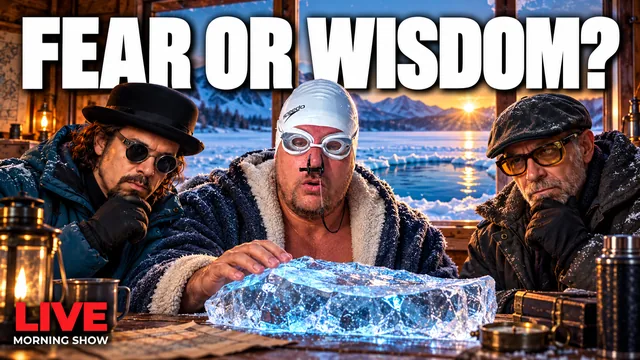
When is fear worth listening to?
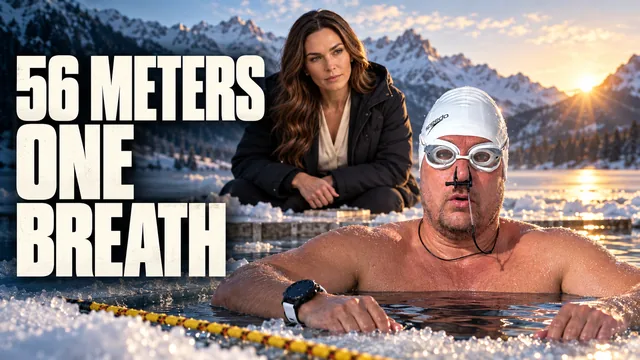
A record dive under the ice. A mind trained for the moment. Val Bruderer joins Keith and Jon to talk about the work that comes before courage.
Read the conversation +
The striking number is 56 metres. The more revealing part of Val Bruderer’s story is the repetition that came before it. Joining the lab from Zurich, the freediver describes combining two pursuits he already knew: cold-water swimming and freediving. His under-ice record grew out of that experience, rather than a sudden decision to prove he was fearless.
Keith asks whether Val nearly abandoned the attempt. Val brings the answer back to preparation: confidence, a physical foundation, and repeated exposure to the conditions. In his account, the few minutes that people see are supported by months or years they do not.
Jon recognises the mental commitment. Keith hears a connection with the everyday habit of postponing a decision. Yet the consequences are very different. Val describes an extreme sport in which errors can be fatal; his experience is a story about specialised preparation, not a challenge for a reader to copy.
The conversation then turns inward. Val calls freediving meditative because his attention has nowhere else to go. The cold, the body and the immediate task occupy the whole moment. The interview’s most useful question is the one that survives outside the water: what preparation would make the next decision clearer?
The hour-two prompt adds a useful counterweight: fear can warn of a real risk, and sometimes saying no is sensible. Courage still needs judgment about the consequences, including the consequences for other people.
Summary
Val Bruderer joins Keith and Jon to discuss the preparation behind his under-ice freediving record. 33:29 He describes combining cold-water swimming with freediving, repeatedly training for the conditions and focusing on the task underwater. 34:03 Val compares freediving to meditation because his attention stays in the present moment. 41:20 Later, Keith and Jon discuss self-trust, and Keith explains how his journal helps him compare his story about progress with what actually happened. 1:41:58
Key takeaways
Val says his under-ice attempt grew from two activities he already practised: cold-water swimming and freediving. 34:26
He describes confidence before the dive as something grounded in a physical foundation and repeated conditioning. 36:40
Val calls freediving meditative because the immediate task occupies his attention. 41:20
Keith and Jon connect self-trust with making a decision and sticking with it. 1:30:51
Keith uses written records of his days to check his account of progress against his actions. 1:42:17
Preparation, attention and a moment worth sharing.
CENTER STAGE / PREPARATION
Read clip transcript (automatic)
The work before the dive.
Val’s extraordinary moment rests on a very ordinary verb: repeat.
Read the conversation +
Val’s description of training is less cinematic than the record itself. He talks about returning to the water consistently, building familiarity, and learning what his body can handle. Confidence follows that work.
Keith connects it to the energy spent wavering between doing something and refusing it. Val’s answer is rooted in his own sport: he wants to know what he is there to do before he submerges.
His line about doubt consuming oxygen expresses how costly distraction feels to him. It is an athlete’s account of focus, rather than a measured comparison of oxygen use. The foundation of the story is the training he describes.
WORDS OF WISDOM / MARC RANDOLPH
Read clip transcript (automatic)
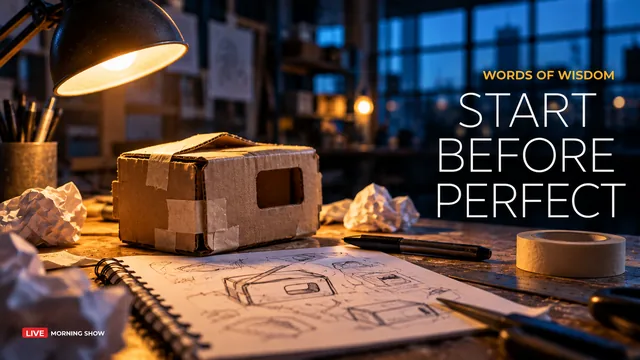
Start with the idea you have.
The Netflix co-founder’s clip turns the room toward testing, learning and beginning.
Read the conversation +
The Words of Wisdom clip lands in the middle of Val’s interview. Marc Randolph argues that the important skill is finding quick, inexpensive ways to try an idea. Waiting for a flawless starting point can become its own way of never beginning.
Keith hears an argument for execution. Jon’s response is practical: put the idea on the table, see whether it gains traction, and build around what works.
Later, after a morning full of technical trouble, Keith returns to the same thought. The new studio had problems. The show happened anyway. Starting supplied information that another rehearsal could not.
JON, BEFORE YOU GO…
Read clip transcript (automatic)
Make room for fun.
An aerobics clip, an outrageous outfit, and one last round of Keith-and-Jon commentary.
Read the conversation +
The segment presents a brightly dressed aerobics performer as the Handsome Chief’s secret workout. The joke is the outfit and the familiar gap-toothed resemblance, not documentary footage of Keith training.
Jon immediately starts inspecting the scene, from the empty room to the different shades of skin. Keith joins in, then Jon concedes that the performer has clearly put work into what he is doing.
It is a suitably ridiculous exit. Even the goodbye becomes another argument about how much the clocks have moved.
HIGHLIGHT / VAL BRUDERER
“You’re forcing yourself to go into the present moment.”
A moment with nowhere else to be.
Read the conversation +
Val describes freediving as an activity that takes his full attention. Ordinary worries—the parked car, tomorrow’s appointment—fall away because the immediate physical experience demands so much.
Jon hears peace on the other side of a demanding threshold. Keith asks whether Val would call the experience suffering. Val distinguishes the difficult beginning from the state of focus he finds after extensive adaptation.
That is his account of a highly trained performance. The takeaway for everyday life is the value he places on undivided attention, not a prescription for cold exposure.
HIGHLIGHT / VAL BRUDERERA moment with nowhere else to be.MORNINGS IN THE LAB · 3169
Read clip transcript (automatic)
EPIC SPOT
Read clip transcript (automatic)
The epic nod.
Keith finds a moment of effort and acknowledgment to send Val off with.
Read the conversation +
Before the guest leaves, Keith calls for an Epic Spot. He asks everyone to watch the finish and the performer’s expression: the nod is the point.
After a conversation about extraordinary effort, this is a small, wordless salute. Keith dedicates the moment to Val before the final goodbyes.
02 THE CONVERSATIONS YOU STAY FOR
Judgment, responsibility and the stories behind first impressions.
CONVERSATION DESK / CTE
Read clip transcript (automatic)
After the final whistle.
A discussion about head injuries becomes a debate about risk, research and what athletes leave behind.
Read the conversation +
The desk introduces a JAMA Network Open study of 2,362 former NFL players who died between 2008 and 2023. Adjusting for differences in brain donation, researchers estimated CTE pathology at 74.5%, with a conservative analysis at 63.7%. These are model-based estimates for deceased professionals; they cannot be applied to today’s living players or treated as the proportion who had dementia.
Jon emphasises the risks athletes knowingly accept. Keith asks what further brain research can teach future players. Their discussion of Dale Earnhardt Jr. leads to organ donation and the possibility that one person’s experience can help someone else.
The hosts also speculate about individuals’ health and the motives behind litigation. Those comments are not medical findings or established accounts of anyone’s motives. The meaningful question left on the table is how better evidence can help people understand the choices ahead of them.
The tattooed-teacher story tests how quickly appearance becomes a verdict.
Read the conversation +
A story about a heavily tattooed primary-school teacher puts an immediate question to the room: would you be comfortable having him teach your child?
Jon says he would need to know the person. Keith sees an opportunity to teach children not to judge by appearance. The exchange ends on a point they share: conduct matters.
The conversation does not inspect the teacher’s classroom or establish his professional performance. It examines the reaction to his image—and the extra information a fair judgment would require.
Artwork: editorial illustration.
WTF IS THIS?
Read clip transcript (automatic)
What’s in there?
A leap into the water produces exactly the kind of reveal this segment lives for.
Read the conversation +
Keith cues a clip whose target is not immediately obvious. Jon guesses at an alligator before the hosts identify a large snake.
The surprise leads Jon to recall a different clip involving an iguana. These are two separate stories, not two descriptions of the same animal.
The segment’s pleasure is the hosts’ startled reaction. It supplies no instructions for handling wildlife.
COMMITTED
Read clip transcript (automatic)
The glass climb.
Val watches a different kind of extreme commitment: a climber working his way up a building.
Read the conversation +
Keith turns from a diver under the ice to the climber in the planned Committed selection, Alexis Landot. The hosts notice bare feet, taped hands and the scale of the climb.
Val recognises the kind of sustained effort involved. It is not a two-minute performance, he points out. Then he returns to the subject that brought him into the lab: ask the climber about doubt.
The moment connects two visually different pursuits through the attention they demand. It remains a spectacle to discuss, not an invitation to imitate.
03 GOOD COMPANY. YOUR OWN CHOICES.
Media, memories and the freedom to trust yourself.
CONVERSATION DESK / MEDIA
Read clip transcript (automatic)
A recipe for attention.
The reported move toward cooking and podcasts gives Keith and Jon a new platform puzzle.
Read the conversation +
The desk discusses a report that Pornhub is encouraging non-explicit creator material, including cooking, gaming and podcasts, alongside its adult content.
Keith sees a bid to extend viewers’ connection with performers. Jon supplies the jokes. A viewer compares it to the old claim about buying Playboy for the articles.
The useful media question is familiar: once people know a personality for one thing, will they follow that person into something entirely different? The reported business direction is discussed here as the subject of the broadcast, not as an independently verified product launch.
Artwork: editorial illustration.
THE UNPLANNED CONVERSATION
THE UNPLANNED CONVERSATIONWhose line are you in?MORNINGS IN THE LAB · 3169
Read clip transcript (automatic)
Whose line are you in?
A trip back to 1979 becomes a friendly disagreement about conformity.
Read the conversation +
Jon remembers being pushed away from the crowd and finding his own interests. He argues that pop culture teaches people to fall into line. Keith remembers loving the media while still wanting to choose differently.
Keith offers the example of a school formal: everyone else wanted the familiar black-and-white tuxedo, while he wanted houndstooth. Jon offers a teasing revision—perhaps Keith was deeply in touch with pop culture and simply wanted different colours.
The disagreement is affectionate, but useful. Liking what everyone likes and surrendering your own judgment are not automatically the same thing.
HIGHLIGHT / KEITH & JON
HIGHLIGHT / KEITH & JONTrust yourself here, too.MORNINGS IN THE LAB · 3169
Read clip transcript (automatic)
Trust yourself here, too.
Keith describes a new sense of freedom. Jon gives the story an important correction.
Read the conversation +
Keith says that only recently has he felt this comfortable trusting his choices about sleep, food and the structure of his days. Saying what he will and will not do has become easier.
Jon points out that Keith already trusted himself enough to build unusual things and take a different path professionally. The change, he suggests, belongs to particular parts of life rather than an entirely new personality.
Keith accepts the distinction and describes the result as freedom within structure: a quiet morning, coffee, and a day built around commitments he understands. The exchange preserves both the new confidence and the history that made it possible.
AGE STRONG / THE COACHING CONVERSATION
AGE STRONG / THE COACHING CONVERSATIONLook at the log first.MORNINGS IN THE LAB · 3169
Read clip transcript (automatic)
Look at the log first.
Before changing the plan, Jon asks to see what Keith is actually doing.
Read the conversation +
Keith uses a blackjack metaphor: if he is already winning, how much should he change? Jon answers by asking for a clearer picture of the current routine.
The next step is a food log, averaged across enough days to show the pattern rather than one exceptional meal. Keith says he already records his intake and can bring that information to the discussion.
It is an individual coaching conversation, not a diet prescribed for readers. Its broader value is the sequence: observe what is happening, identify a specific problem, then consider a change.
VINTAGE THROWBACK
Read clip transcript (automatic)
Back to 1979.
My Sharona. The Dukes of Hazzard. Simon. One image opens a room full of memories.
Read the conversation +
Keith and Jon look back at the music, television and games associated with 1979. Keith remembers being a child drawn toward popular culture; Jon singles out Simon and the appeal of a game that worked his mind.
The memories are different enough to keep the conversation alive. One person sees the culture he followed; the other remembers the activities he found away from the crowd.
That difference carries the show beyond nostalgia and into the question of how each of them learned to make his own choices.
04 THE WORK BEHIND THE STORY
Commitment, curiosity and an honest daily record.
MONDAY IN THE LAB
MONDAY IN THE LABThe clock won round one.MORNINGS IN THE LAB · 3169
Read clip transcript (automatic)
The clock won round one.
New studio. Dead trackpad. Conflicting clocks. The morning arrives with a plot of its own.
Read the conversation +
Keith opens in a new studio and promptly discovers that the controls have plans of their own. Jon arrives after a connection problem and finds himself in a conversation about whose clock moved.
Their disagreement keeps returning throughout the morning. Keith thinks through locations and guest schedules; Jon keeps pointing to the time on his phone.
The result is part production diary, part comedy of certainty. The episode’s changing time-zone explanations are banter, not a schedule reference. Use the show’s current event listing when planning to join.
JON ANDERSEN / LIFESTYLE TIP
JON ANDERSEN / LIFESTYLE TIPFinish the small thing.MORNINGS IN THE LAB · 3169
Read clip transcript (automatic)
Finish the small thing.
Jon’s commitment question starts with the tasks that rarely make a highlight reel.
Read the conversation +
Jon asks what, if anything, you are fully committed to. He makes the question deliberately ordinary: laundry, keys, and the small tasks that remain almost finished.
For him, those incomplete actions can reveal a larger pattern. The tip is to notice where you repeatedly stop short and practise completing the task.
The useful scale is small enough to see. You can inspect one unfinished thing today without making a sweeping judgment about your character.
The retatrutide discussion raises the question behind every promising treatment headline.
Read the conversation +
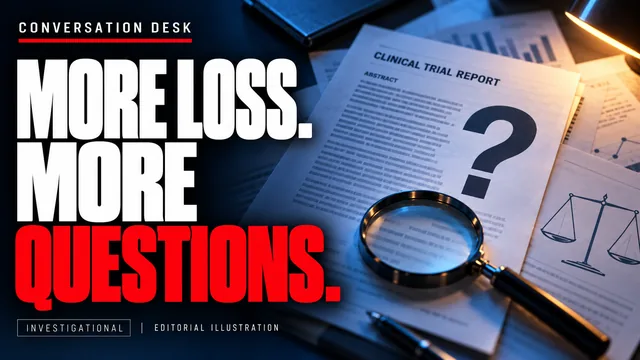
The desk discusses Lilly’s October 28 topline announcement for investigational retatrutide. In an open-label trial of 1,298 adults with type 2 diabetes, the company reported greater average weight loss than with semaglutide 2 mg over 80 weeks. The full peer-reviewed results were still forthcoming.
Keith’s enthusiasm then turns toward the company’s pipeline and business prospects. Those are his impressions, not an investment recommendation or a guarantee of future performance.
The tradeoff deserves space beside the headline: treatment discontinuation because of adverse events was 7.9% at the higher retatrutide dose, compared with 2.7% for semaglutide. Those figures do not predict an individual’s outcome. The study compares particular treatments in a defined population, and retatrutide remains investigational.
You don’t need a better story. You need the truth.
Keith’s journal makes the week visible—including the work he might otherwise forget.
Read the conversation +
Keith describes keeping an Age Strong journal in the morning and at the end of the day. Its least glamorous benefit is also its most useful: it makes it harder for him to fool himself.
A progress photograph records one part of the story. The journal records the walks, training, mornings and evenings behind it. It also has room for days that were ordinary, difficult or less impressive.
The point is not to prosecute yourself. It is to gather enough information to make the next choice. Sometimes an honest record reveals neglected work; sometimes it reveals more progress than you remembered.
Pick one thing that matters. What did you actually do? What happened? What do you want to repeat or change? Keith asks for short answers and a return to the record, so the future does not have to accommodate a version of the past you know is untrue.
05 THE REST OF THE CONVERSATION
Food, research, questions and one useful shortcut.
The show’s own introduction draws the distinction that matters in the compounding discussion.
Read the conversation +
The segment reports a temporary compounding route for six peptide substances. The HHS policy sets conditions for qualifying pharmacies and physicians, including patient-specific prescriptions, ingredient identity and supply requirements. It explicitly states that compounded drugs are not FDA-approved.
Keith describes the item as news rather than a recommendation. This recap retains that boundary and does not repeat the later shorthand about approval as a regulatory finding.
Access, product quality and clinical evidence answer different questions. This policy addresses how qualifying compounded products can be supplied while rulemaking proceeds; it does not establish every recovery or longevity claim attached to them.
An on-demand male contraceptive concept brings the desk back to evidence and trust.
Read the conversation +
The prepared item describes an experimental pill intended to temporarily stop sperm movement. Weill Cornell’s October 23 announcement confirms a four-year NIH grant to support safety work and preparation for the first human trial of this approach.
Keith places the idea within the wider pace of biomedical development. The comic question is whether a partner would believe someone who says he took it; the practical distinction is that a research concept is not an available contraceptive.
The broadcast’s headline is not a basis for changing contraception. Human effectiveness, safety and availability are not established by this conversation.
THE UNPLANNED CONVERSATION / FOODThe blueberry debate.MORNINGS IN THE LAB · 3169
Read clip transcript (automatic)
The blueberry debate.
A morning food argument foreshadows the more useful question later: what does the whole pattern look like?
Read the conversation +
Keith and Jon’s early food discussion centres on blueberries, sugar and fibre. They approach the subject through Keith’s own routine and Jon’s coaching perspective.
Later, the conversation becomes more concrete when Jon asks for Keith’s food log and an average across days. That shift matters: a single food cannot describe a whole eating pattern.
The exchange is personal coaching and banter. The magazine does not adopt a general rule that fruit is harmful or turn an individual’s preferences into a diet for everyone.
AGE STRONG / DAILY SYSTEMS
AGE STRONG / DAILY SYSTEMSMake the routine easier to follow.MORNINGS IN THE LAB · 3169
Read clip transcript (automatic)
Make the routine easier to follow.
Keith’s bottles-on-the-counter plan turns a supplement conversation into a discussion of habits.
Read the conversation +
Keith describes preparing what he needs ahead of time and placing bottles at familiar points in his day. The intention is to reduce the number of decisions required to follow his routine.
The discussion moves through creatine, magnesium and essential fatty acids. Jon describes supplements as an insurance policy alongside food, and Keith corrects himself after confusing fatty acids with BCAAs.
Their supplement amounts and health claims are individual, unverified on-air discussion. This recap’s practical observation is about preparation and consistency; it does not recommend the doses mentioned in the recording.
THE UNPLANNED CONVERSATION / NEWS
THE UNPLANNED CONVERSATION / NEWSWhat a viral clip cannot tell you.MORNINGS IN THE LAB · 3169
Read clip transcript (automatic)
What a viral clip cannot tell you.
A disturbing crash video prompts more questions than the pictures can answer.
Read the conversation +
Jon brings in a crash clip he encountered while checking social media. Keith and Jon discuss what the images seem to show and why the scene looks unfamiliar to them.
They also speculate about the aircraft, weather, speed and missing wreckage. The recording does not establish those explanations, and this edition does not repeat them as verified facts.
The conversation is a useful record of how rapidly a video can generate a story around itself. Identifying an incident and explaining its cause require evidence beyond a few frames and the claims attached to them.
LIFEHACKER
Read clip transcript (automatic)
Windows + V. Then choose.
The clipboard tip is small enough to use before you finish your coffee.
Read the conversation +
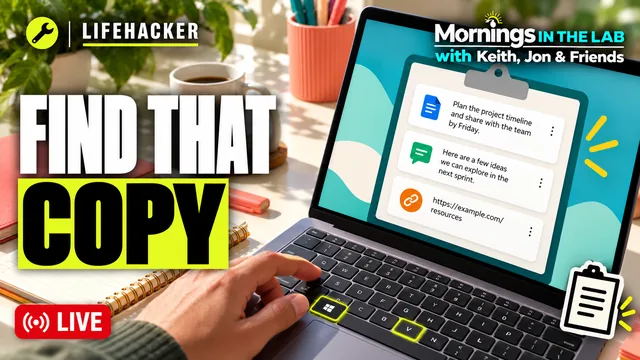
The Lifehacker segment demonstrates clipboard history on Windows: press Windows + V, turn the feature on if prompted, then choose a recent copied item.
The segment also points out that frequently used items can be pinned. Clearing the history leaves pinned entries behind, so those need to be deleted separately.
It is a practical shortcut with a practical caution: avoid putting passwords or other sensitive information into a clipboard history.
TAKE IT WITH YOU
TAKE IT WITH YOUWhat did you actually do?MORNINGS IN THE LAB · 3169
Read clip transcript (automatic)
What did you actually do?
A question to carry out of the lab and into the rest of the day.
Read the conversation +
Choose one thing you say matters. Write down what you did, what happened, and what you would repeat or change.
Keep the record short enough that you will return to it. Include the good work as honestly as the missed opportunity.
That is where this morning’s conversations meet: preparation makes choices clearer, and an honest record gives the next choice somewhere to begin.
More from the morning
The tangents, the context, and the thank-you at the end.
A banker, a boat and a detour
Val’s day job in banking sends the guest conversation toward Swiss accounts, financial privacy and crypto. The exchange is personal commentary and humour; it does not establish the reported hack or provide financial advice.
MORE FROM THE MORNINGA banker, a boat and a detourMORNINGS IN THE LAB · 3169
Read clip transcript (automatic)
A health claim that needs a correction
The hosts speculate about sugar and cancer. The National Cancer Institute reports no evidence that stopping sugar makes cancer shrink or disappear. Eliminating sugar is not a cancer treatment. Nutrition decisions during treatment belong with the treating clinical team.
MORE FROM THE MORNINGA health claim that needs a correctionMORNINGS IN THE LAB · 3169
Read clip transcript (automatic)
A show that kept going
The new studio’s trackpad and audio troubles interrupt the morning, and the team works through a streaming outage. Keith closes by thanking the crew and audience for their patience, returning to Marc Randolph’s idea: starting is how you learn what needs fixing.
MORE FROM THE MORNINGA show that kept goingMORNINGS IN THE LAB · 3169
Read clip transcript (automatic)
Full episode transcript
Automatic transcript with source speaker labels. Names and wording may contain transcription errors. Timestamps refer to the full episode.
Read the full transcript
0:00Sterling: Conversation you keep putting off? Maybe you're afraid it'll go badly, but what's it costing you not to have it? Let's figure out when fear deserves a seat at the table, only on The Big Show
0:44Keith: Good morning, nation. Good morning, good morning. Good morning, good morning, good morning. Good morning and welcome back to Mornings in the Live with Keith, Jon, and Friends, your live morning show for real talk, motivating con- and big conversations.
0:57Keith: We got Jimmy on the buttons, and of course, we got our very own producer, Neiman, out there making sure the words sound as good as I look this morning. We got Dwayne and Rico doing the fucking arm wrestle for who's gonna own the baby boomer token. He is toothless and proud. His name, Matt Roof. Our very own Dr.
1:13Keith: Jon Petrucelli, our resident bullshit professor. Brianna, you're always teaching around every single Tuesday. Nation, you will not find this kind of knowledge anywhere on the planet to start your day, other than Mornings in the Live with Keith, Jon, and Friends
1:40Keith: Good morning, nation. Hey, I promise we are on time. Yes, I promise we are on time. Little technical difficulties out there this morning. Good morning, everybody. Welcome to the big show we call Mornings in the Lab with Keith John and Friends. And I am in a brand-new studio set today, uh, trying to figure it out.
1:55Keith: And, uh, I think as I'm talking, I think my trackpad is dying. Yeah, true story. Hey, for, uh, for all my, uh... I think I might need to get this thing plugged in here, Jimmy, along the way. I'm just telling you out loud here. Uh, hey, guys, um, we're running a few minutes behind this morning. Good morning, everybody.
2:10Keith: What's shakin', nation? It is Monday, November something, and the world changed times, uh, except where I live. Yeah, so, uh, it is now 8:00. Yes, and usually in the... So I gotta tell you guys a funny story. I got up this morning. It was, uh... Gettin' ready for the show, I says to Jimmy, I says, "Hey, Jimmy." He's like, "Yeah?"
2:28Keith: He goes, "You're up an hour early." I go, "No, I, I'm just on time." He's like, "No, I think you're an hour early." And, uh, so as we conversed, I realized that, ah, I was an hour early today. Yeah, true story. So, uh, we are, uh, uh... But the show's at 8:00. I don't know. So Whitaker, I'm on the same time zone as you. Keithslaw, I'm on the same time zone as you.
2:47Keith: Uh, I'm on the same time zone as all of you now. Uh, hey, coming up today, I think we got a guest. Yes, I do think we have a guest, depending if, uh, the guy shows up here today, uh, because of the time zone change. Uh, coming up, yes, we do. We got Val Brodner. Uh, we're going back into the water. The guy dove 56 meters.
3:06Keith: Let's see this close camera right here. Yeah. Oh, there we go. Yeah. The guy dove 56 meters under ice, uh, I'm not sure why, with no suit or fins. Coming up, we got that Pick Side. Uh, we got, uh, we got Martha Stewart was in the news because of Halloween, you guys. Yes, she sure was. Uh, is it just me, Jimmy, or does Martha Stewart always seem to be in the news because of Halloween?
3:25Keith: Uh, she's coming up. Uh, uh, plus a bunch of other fun things going on this morning as I figure out how to work the controls in the brand-new studio that we call the Mornings in the Lab studio. Jimmy, let's get into the Morning Loop. It's gonna start right now.
3:38Sterling: Last week gave us flying cars and giant pumpkins.
3:42Sterling: Welcome back. Somehow, this week already needs a safety briefing. First rule, no takeoffs in the studio. Comment what nonsense you'd like us to investigate this week. Good morning, nation. Preston showed up an hour early because he thought America was finally done changing clocks. That man with orange hair wanted this nonsense gone.
4:05Sterling: I figured somebody would have finished the paperwork by now. They didn't, Preston. The clocks changed yesterday, and everybody's still trying to figure out what damn time it is.
4:15Preston: Nation, I know you can relate. My phone says 8:00, my kitchen clock says 9:00, and my body says, "Fuck Monday."
4:22Sterling: Trust the phone, and don't tell Chief there's an extra hour floating around, because he'll find a way to fill it.
4:28Sterling: Too late. I think he heard you. Let's start the Morning Loop
4:37Commercial: Before the noise, before the scroll, before the world starts asking for everything you've got, some people are already at work. Not for attention, not for applause. For clarity, for strength, for focus, for the discipline to meet the day on purpose. Different lives, different routines, same standard. And when that kind of intention comes together, it becomes more than a morning.
5:05Commercial: It becomes a signal. Mornings in the lab. Different mornings, one signal
5:16Keith: All right. So, uh, yeah, just figuring some stuff out here in the lab this morning. Um, yeah, true story. Uh, what a mess. Jimmy, what a mess. But, uh, it's okay because that's how we get things going here in the show. Uh, I am just trying to figure shit out here this morning. Uh, I... All weekend, I was in the studio, uh, getting stuff set up, and then, uh, because I thought I had an extra hour.
5:37Keith: Um, but lo and behold, uh, yeah, there you go. Looks like my, my track pad just died on me this morning. All right. That's awesome. Awesome. Good stuff this morning. Uh, that's, uh... Oh my God, are you serious? Like, right this second it's gonna die on me right now? Uh, all right. Uh, so here's what we're gonna do probably.
5:56Keith: I think, Jimmy, we're gonna go to a commercial, and I'm gonna go get a battery pack to get this thing rolling here. Um, uh, oh, there we go. Uh-
7:20Sterling: I built a detector for silent viewers. It glows when someone watches without commenting. It's basically genius. That's a desk lamp. Lurkers, leave one emoji in the comments and rescue this man from inventing electricity
9:09Sterling: I asked Tommy to be my emergency contact. He asked what qualifies. Apparently, losing the remote does not. Correct. You're not dying. You're inconvenienced. Comment who you know who treats everything like an emergency
9:23Keith: All right. So Jimmy, I'm learning something new this morning. Yeah, and I thought I learned it all on the weekend, but I'm learning it in real time right now.
9:32Keith: Uh, I have no clue why, uh, my, my, my, my, my, my mouse has decided to die, like, literally in real time on the show. Yeah, true story. Uh, all right, so this is gonna be a light and fun one today. Can I already tell? It's g- it's going in the shitter. Uh, yeah, it absolutely is. Uh, Jon Anderson's joining me here in a number of minutes.
9:51Keith: I think he is. Uh, Jimmy, let's just see what time it is in California right now, because I think Jon is here. I think Jon is gonna join us some more. Let's just double-check. Uh, hey, what time is it in California right now?
10:05Keith: Oh, there he is. Yeah, there he is showing up right now. That's awesome. Jimmy, let's bring the dog in. Jon Anderson joining me live on-
10:14Preston: Chief, my phone says 8:00, the dash says 9:00. Did we gain an hour or lose a fucking hour? You know what? I got my extra hour, spent the whole damn thing arguing with fucking clocks
10:32Jon Andersen: What's up, Johnny? Good morning, brother. How are you today? Sorry I'm late. I'm getting, I'm gonna get... We had a fucking big storm last night. I shouldn't say big, big enough that it was, it knocked some fucking WiFi out of place, so I was having a hell of a time getting logged on this morning. My apologies.
10:52Keith: Well, s- well, it's funny, man, because the
10:55Jon Andersen: other night- You know what I mean? When you, even though, even though you've, you've, you might show up on time, you were like, "Oh, fuck, I'm gonna be late," you feel late?
11:01Keith: Well, dude, I'm an hour behind, so the t- the clocks change. I know you and I, this'll, so listen.
11:07Keith: First of all, I know it doesn't impact you and I because we li- we're weird, or we're normal. Y- everybody else is weird. We're weird,
11:14Keith: whatever the fuck. So the, the, the, the planet changed times, all right? Like, so North America changed all fucking yesterday. So I get up this morning, I'm on, having my coffee, I send a note to Jimmy.
11:22Keith: Jimmy's like, uh, "Hey, you're up an hour early." I'm like, "Well, no, I'm getting ready for the show." He's like, "Well, no, it's, it's an hour early." And I'm like, "Well, yeah, I know we didn't change, but I know Toronto changed." I'm like, wait a minute. Well, holy fuck. I go, "What time is it in California?" I go, oh, it's only 2:15 for Johnny.
11:37Keith: I'm like, holy fuck, oh, so I am an hour early. So it's now 8:00 in Winnipeg, it's 6:00 o'cl- and I know it's 6:00 o'clock for you, but-
11:46Jon Andersen: No, no, no, no. It's 5:17 here.
11:52Jon Andersen: Well, you go to, you know there's a, there's... In, in this case, there's this really fucking cool thing that solves all these problems.
12:24Keith: Well, I know you are, but I was so... It was three... You were... Aren't you three, aren't you three hours? So it's 8:18 r- It's 5:18 in California. I just told you that. Oh, so you're- I just told you that ... yeah, I know, so you're three, so you're- What I told
12:35Keith: Okay. So no, fuck. So, ah. Okay, so the show starts at 8:00. So what time were you here last week? 5:18. Always 5:00, right? 5:00?
12:46Jon Andersen: No, I just magically know when to show up an hour difference when we don't discuss it. Dude, here, I don't know why you're fucking flustered, Jesus Christ. All you do is look at fucking this and it tells you what time it is.
12:59Keith: I woke up- No, but... No, but Johnny, but here's the... You're understanding is that it's not the same everywhere. Like my Tesla didn't change, my clocks didn't... So it's, so Toronto ch- Toronto didn't change, it changed here. So Brianna is now an hour behind me. Our... Brianna's now... So Brianna might not even be on the show no more because Brianna's now still an hour behind us.
13:17Keith: So I used to do the show in Winnipeg at 7:00 till 9:00, right? Now it's 8:00 to 10:00. 8:00 to- Oh, you're
13:24Jon Andersen: saying so some of the time zones are changing and some are not this time?
13:27Keith: Yes. So BC, so British Columbia, so you didn't change. You didn't change. I know you just go by the clock and so do I on my watch, but I,
13:35Jon Andersen: I- We, we did change, but I just watch my phone
13:40Jon Andersen: fucking m- microwave told me an hour difference.
13:44Keith: Yes. But you see, if I would've done the show today as I did last Friday, it would've been at 4:18 for you, and I would've been, "Anderson, you're late." You're like, "Bilous, what the fuck you doing, man? It's fucking 4:00 in the morning."
13:56Keith: So that's why I was like, "Well, no, we're gonna do it at 8:00." So we're, we're on the same time now as Toronto, which is, it doesn't matter to you and I 'cause we're both not in Toronto, but Eastern Time zone, 8:00, right? So the show has always been 8:00 to 10:00, always been 8:00 to 10:00, but because I've been here in Manitoba, I always, I always advertise it as 8:00 to 10:00, and I just adjusted for...
14:15Keith: 'Cause the world lives in Eastern Time, right? So that's why it's been so fucking confu- And then all of our friends are in South Africa or Philippines, so they're like, "What the fuck time is it?" I'm like, "I don't know. It's fu- I'm kinda confused." So, uh, so what happened in Manitoba is they did not change, so we're just staying the same now.
14:31Keith: Now in the spring, Toronto... Let's not worry about it. It's just a fucking clusterfuck. Anyways, we just need you- Yeah, you,
14:37Jon Andersen: you sound extraordinarily flustered over a time change.
14:40Keith: Well, so because... So it's actually a benefit to me. I'm not complaining about it. I just... We got so, so- You,
14:46Jon Andersen: you would never know that if you listen to the tone of your voice and the tone- Well, but, but-
14:49Jon Andersen: and the, the tones of what you're saying ...
14:51Keith: well, but Anderson, all of, like all of our schedules for guests for the future, like they're all a little bit, they're off too. Because for example, Brianna would come in at 8:30. She's now... I gotta talk to her if she can come in an hour... It's just, it's, it's j- all over the place.
15:06Jon Andersen: Tesla's- Well, I would, I would just, just, just, I'll invite you- ... just to, just to, just to calm do- l- look at all the time zones because you thought that I was 6:00 and I'm-
15:20Jon Andersen: Well, then I had a- So maybe some of these time zones you're worried about are not gonna be like you think.
15:23Jon Andersen: Well, and then I got- And once you sit down and actually look at it when you're not all revved up, you'll see it a little more clearly.
15:27Keith: Well, and then I got in, and as you can see, I'm, I'm in a new studio set here. Uh, my audio wasn't working. I was like, "What the fuck, man? Even you tell me that my, my time zone is wrong, plus I got my audio not working?"
15:38Keith: So I was a little bit flustered to get the show started here. Yeah, so, uh, yeah, I wanted you to see the full body version of me, so I, I, I, I'm, I'm, I'm... I got a new set set up here. Yeah, there you go. Check that out.
15:49Jon Andersen: You send me one garment shy of dick pics. I already know what you look like.
15:56Keith: Hey, did you have any kids at the house for Halloween?
15:59Keith: No, we didn't have anybody because we didn't want kids around there. I had-
16:02Jon Andersen: And we turn, we turn the front lights off anyway just- Oh, yeah ... just in case there's- Yeah ... you know, a couple families here that are here. Because I mean, dude, Newport, a lot of people here are from Newport.
16:27Jon Andersen: Not, not just on the West Coast, East Coast too.
16:29Keith: Yeah, yeah, yeah, yeah, no kidding. Yeah, we had... We had 50 kids, 50 kids for Halloween.
16:35Keith: I handed out a bunch of candy, and I didn't crush any of it, so yeah, feeling pretty good about that. Was in bed in good time, little bit of a party here. They all did their thing, and I went and I went to head to bed and had a, had a great productive weekend, all weekend actually. It was good, yeah.
16:49Keith: Oh, fuck no. Oh, oh, first for Halloween, yes. Oh, y- you're absolutely correct. I didn't crush any crap on Saturday. I was like, "No, not part of me." Uh, I was too busy enjoying, uh, the good nutritious food around the house this weekend actually. Yeah, so I left all that garbage away. Yeah. I'm on, I'm on a blueberry kick right now, Johnny, blueberry and protein milk.
17:05Keith: I throw it in the freezer, and, uh, it freezes like ice cream. It's actually quite good. You mix it up a little bit, and it's just, uh, it's literally just protein and fucking blueberries all mashed together. It's quite tasty actually, really quite tasty, with a little bit of non-sweetener stevia just to sweeten it up a little bit, right?
17:20Keith: I'll eat it sometimes after like a training session or something or after I have some protein just to... like a little bit of a treat sometime in the, sometime in the afternoon, sometime... maybe sometime a little bit in the afternoon, sometime in the evening, like bef- like after my like 6:00 kind of meal, just a little, little treat.
17:36Jon Andersen: So I got a good thought for you.
17:45Jon Andersen: We're gonna always look back to your diet because your diet wiggles away in these little directions. You don't think there's a problem, and for the most part there's not, but for what you want, yes there is.
18:14Jon Andersen: Yeah You're, you're... You can see there's enjoyment in your discussion when if you really wanna improve, the biggest fucking place for us to improve is to get rid of the conversations that have food for some bit of a, a, you know, wiggle or an enjoyment. Yeah. I mean, granted, we can enjoy our food that we eat, but- Yeah,
18:30Keith: we're veering- I don't know if I fully agree. I, I do not deviate actually. I, I don't deviate at all. Uh, the only thing... Like, seriously, the only, the only treat I'll have is, like, li- literally blueberries. Like, that's it. I do not deviate from anything that I've had over the last 125 days. I, I eat my staples every single time.
18:46Keith: The... Like, seriously, and I mean zero deviation, brother. Like, I, I am so disciplined on... I have no desires for anything.
18:53Jon Andersen: But the, you know, the idea of us going into, going into ripping you down and all that kinda good stuff-
18:59Jon Andersen: was to force your body to burn fat for fuel.
19:01Jon Andersen: Blueberries says, "Okay, everybody, all y- all, everybody's burning fat. Stop. Let's burn this."
19:07Keith: Yeah. So I'm, I'm not disagreeing. I'm not arguing with you. I, I thought, I thought... I was looking for some fiber. So I'm, I'm searching for fiber, right? Yeah. So-
19:15Jon Andersen: That's like, you know, fuck, I, I was... It's like an alcoholic saying, "Yeah, I just used a fucking half a gallon of fucking vodka 'cause I was out of Coke to share."
19:24Jon Andersen: So- That's fucking retarded. So- You can't look for fucking fiber in something that has sugar. So- That's, that's, that is an addict speaking all the way. You could use a, uh, you could use a tablespoon of, you know, Metamucil or you could use fucking broccoli for Christ's sake.
19:39Keith: Oh, I crush broccoli. I have no problem eating broccoli.
19:42Jon Andersen: Yeah. But when you're looking for fiber, looking for them and you're, you're way, you do way too much research to understand how little fiber is in blueberries versus every other things you could-
19:51Keith: Oh, no question. Yeah, I... Listen, I'm- So
19:53Jon Andersen: that was a, that... I have to take that statement and slap you in the face with it.
19:57Jon Andersen: no, I- Pretend, pretend that's a dead fucking wet fucking fish and I just belted you across the face with it 'cause you lied to me.
20:04Keith: I, uh, I, I'm, I'm, I'm getting, I'm getting results on my blueberries too, so, uh, 'cause I'm not, uh... Like, I, I, I've been eating blueberries now for fucking 60-some odd
20:13Jon Andersen: Okay. Let me ask you a question. Yeah. In this world- Yeah ... am I the authority or you?
20:18Keith: Oh, without a doubt you are. No question
20:20Jon Andersen: Okay, so what I'm trying to tell you is just one simple thing. Next time you get excited and you wanna make some progress, we're gonna look here first because of conversations like this.
20:29Keith: Sure. Val Brudner's joining us, the guy who swam underwater under ice. Not too sure why. We're gonna learn in a few moments with Val Brudner joining us in the lab. Uh, the guy went underwater. I gotta get my time clock here to make sure. Jimmy, just so you know, Jimmy, I do not have you in front of me here this morning.
20:44Keith: Uh, I'm still sorting out where you are in my face, Jim. So I see you there, Jimmy, but I'm gonna get you in my hand right now, just so you know. And, uh... Oh, yeah, I see that time zone there, 5:18. Yeah, I see that. Thank you for that. Yeah. Yeah.
20:57Jon Andersen: Is, is this the first time that the time zones have, have shifted but everybody's went different?
21:03Jon Andersen: Not everybody, but there's been different... Some, some have shifted- Yes ... and some haven't? Yeah, first- Is that what this, is that what this is all about? 'Cause
21:09Keith: I- First time ever. The creator. Yeah, ever. Yeah. Oh, yeah. Like, so British Columbia- Right ... which is north of you, is on a different time zone as you now, which is bizarre.
21:19Jon Andersen: Oh, so coastlines are switching.
21:25Keith: Well, so East Coast is the same as me now, but they're gonna change in the spring to a different time zone, and then I think they're gonna change to this. Yeah, but, but I
21:31Jon Andersen: mean, forgive me, is like the- Yeah ... northern part of the coastline on the east different than the south?
21:38Jon Andersen: Because on the... It sounds like the West Coast, that is the case now, is what you just said, correct?
21:42Keith: So British Columbia did not... Did or... I, I, I gotta be honest, man, 'cause it's, some did and some didn't change. British Columbia I don't think did, did change. T- to, I think, I think they're different as you.
21:52Jon Andersen: the same off the- The, so, so British Columbia is the same as me or no?
21:55Keith: Well, let's find out. I, I think they, I think they changed. Uh, what ti- what time is
22:01Jon Andersen: it in- That means that the, the coastlines would still be the same, then
22:04Keith: What time is it in British Columbia right now?
22:17Keith: Yeah. Hey, Jim, wanna pull it up for you right now? Yeah, I'm having some problems with my internet here. I, uh, yeah. So it's- Hey, I'll hit
22:22Keith: you a kudo, brother ... it's, it's been a clus- oh, fuck. It's been a cluster, it's been a cluster everywhere, actually.
22:26Jon Andersen: Hey, I wanted to give you a kudo on this whole thing.
22:28Jon Andersen: Yeah. So the, back to the diet. I don't question that you don't deviate. That's not the issue. It's just what you think you should do and what you should do sometimes are different.
22:38Keith: Well, that's fair, 100%. And I, listen, you know me, I'm all about being taught and being curious 100%. Yeah. Yeah, yeah, yeah, yeah, yeah, yeah.
22:44Jon Andersen: Yeah. So, 'cause I, I wasn't, that wasn't a you deviate, you know you're doing what you're not supposed to do. It's, it's more of a you believe something that is probably not what you think it is.
22:54Keith: Sure. Yeah. That, that, that's 100%, that's fair. I, I, I'm, I'm, I'm all about that and all about, uh, all about, uh, absolutely learning.
23:01Keith: Um, let's see here. Hold on. Uh, because I know that, uh... Yeah. So British Columbia did not move their clocks. So I, so but- Their clocks? ... that doesn't help me even, 'cause I don't, I don't know what that... Oh, so- Is it, is, is clock- Yeah, so right, right now it's- Is
23:15Keith: Yeah. So right now it's 6:30 in British Columbia, and it's, it's 5:30 for you.
23:21Keith: And yet you're just, yet it's just north of you in the same part of the,
23:25Jon Andersen: like it's- Yeah, that's the coastline's changing is definitely weird. We're used to the coastline, we're used to the time change going east to west-
23:54Keith: screwed too. No, you're, you're bang on. You're absolutely right. Y- you are, you are, uh, you are abs- that's exactly it. And then they decided that, uh, they're going to, uh, uh, they're gonna change that now.
24:07Jon Andersen: well, fuck, I grew up on a goddamn farm out there, so, you know, these, these are the stories that went around when you were having to fucking do shit you didn't wanna do.
24:14Keith: Yes. Uh, yeah, so, yeah, it is, uh, yeah, so listen, uh, uh, yeah, the sudden split between California and BC is causing major headaches for automatics, automated software calendars and users.
24:27Keith: So John, if you have a Tesla in British Columbia, like, like for example, it's a Tesla, it's completely off the time zone of what's in California, yet you're just on the same fucking part of the country. You know what I mean? Like, your microwave and clock- Yes, it's fucking weird, yeah. It's so, it's what I mean, right?
24:44Jon Andersen: Hey, did you see this, dude? Check this out. I don't have a fucking clue what I saw or what this supposedly is, but so when I was doing my, I, I always for, right before I get on the show, I do a quick check just to make sure everything is good with social media, that nothing's disappeared overnight- ... that kind of thing, you know?
25:04Jon Andersen: And, uh, you know, as I, as I open up the Instagram, it's always on your fucking, well, for me it seems to be always on the feed, right?
25:12Jon Andersen: yeah. And the first thing I fucking see is, it, I mean, granted, the person that's narrating this video says this is a fucking missile, right? Oh, you s- But then again-
25:24Jon Andersen: But then the, but then you, you, as, as I watched the whole thing, of course, the next thing it showed me was then the next one was a news reporter saying it was an airplane. And then the next one was, was actually a, a, like a home video of this fucking thing happening.
25:55Jon Andersen: If a Learjet fucking crashes into the ground, don't you find parts of the fucking plane? Every, every plane crash I've seen, there's always a part of the plane somewhere.
26:06Keith: So here's what's really crazy, brother.
26:08Keith: So, uh, I was reading about it this last night and this morning 'cause the science behind it, it moved at such a velocity like a missile. It vaporized. It was fucking- I was
26:17Jon Andersen: gonna say, I mean, it, I, it was-
26:26Keith: We saw the same thing ... fuck, man, I've
26:27Jon Andersen: seen some fucking goddamn airplane crashes, but I've never seen one moving at this speed.
26:31Keith: Johnny, horrific. And then, and then I, there's audio of the, of, of the, of the pilots and, uh, it's, and it's mayday, mayday, we're falling at thir- 25,000 feet a minute. And, uh, it vaporized.
26:44Keith: The, the wh- it was actually a missile. They, uh... And the, you hear, you hear the, one of the pilots go-
26:50Keith: No, but it was falling like a missile. Like a missile. Like it was- Okay. Because, yeah, like, like the speed and velocity, hence to your point, it looks like it vaporized because it was going so fast, nothing's left over.
27:00Keith: Everybody died immediately on impact, and obviously. But
27:04Jon Andersen: the hole didn't seem as big as you would think for a fucking airplane.
27:09Keith: Well, because it went, because again, the, there, there, there's, they broke it. I saw some scientists when I was, I was, I was gonna talk about it this morning, but it's kind of ran out of time.
27:16Keith: The velocity was, uh, you saw, but the video went so straight down into the ground, it literally just, the, the, the physics of it all just, it, it essentially vaporized like a, like a missile. And, uh, there's audio of them crashing. And if you look, there's a, there's a screen cap. Looks like the, the tailwind was actually f- when it would broke up...
27:34Keith: The, what they're speculating is it got into weather, ice g- ice f- on the rudder broke off. When that, when that back rudder falls, the plane basically goes like a missile, straight into the ground. No control. And, uh, you hear one of the pilots say, "We are out of time." Boom, and then gone. And then one of the pilots you hear saying, "Look outside," because they were going so fast, like 30,000 feet per minute.
27:57Keith: Remember that crash, Johnny? Well, not crash. Remember that hijacking we were talking about a few months ago where we, we, we were both commenting on how far... And you were like, "Holy shit, imagine how far it was falling and then they re-correct it again"? Well, this time there was no correction. It just was a stra- straight missile into the ground, and it was a Learjet 60, like one of those private jets, right?
28:15Keith: Nine people. Nine people. Fucking horrible, man. '
28:19Jon Andersen: Cause nine people is a pretty big fucking, that's a pretty big- Yeah ... vessel.
28:36Jon Andersen: And- So you- ... what I saw in that home video, and I, I tried to catch it a few times. I tried to hit my thumb on it to where I could get-
28:54Jon Andersen: s- But it didn't, it didn't look like a fucking plane that would carry fucking nine people, I'll tell you that.
28:59Keith: So there's, uh, somebody did g- grab a better screenshot. I'll find it to you, I'll send it to you later, and it, uh, they, you know, they u- they enhanced it, and you see, you see the Learjet just before it hits the ground.
29:09Keith: And, uh, once you see it, you'll go, "Yeah," 'cause you've seen them before. But yeah, uh, The Fun Times, uh, TV Corp says, uh, "They died faster than they could blink their eyes." True story. 100%, yeah, and pause it, actually. Uh, because you're right. They, they, they died faster than they could have blinked their eyes.
29:22Keith: Very sad. "What I don't understand is why did the nine people have to get on a private jet and go supersonic speeds? It doesn't make no sense that they needed to go that fast to get anywhere." Well, it's, it's a fair question, Fun Times TV Corp. So they're, so they're on a, a private jet leaving Texas. Johnny, they're going from Austin to Bahamas, and they got caught in weather.
29:41Keith: So they left Austin, they're on the way to Bahamas, and then as they're h- as they're over Florida was where they got this fl- where they, they got caught in weather here and ended up p- pummeling into the, into the ground as you saw. So horrific, just horrific
29:55Jon Andersen: Yeah, I mean, my, I, I don't know enough about this, but I, of course, I'm very curious just to, to try to learn more as it comes out.
30:02Jon Andersen: But my brain right now tells me that you, there would be some bit of, uh, I don't know. Fuck, man, there'd be some remnant
30:10Keith: Well, so there's, there's remnant spreads. Like there, there's, they actually, they, they evacuated. Uh, I think what we're, we're just, we're not used to seeing is i- I think it just because the velocity just went straight down.
30:20Keith: You look at some missile strikes, right? Like when you look at war zones, like some direct missile strikes, there's nothing really left of the missile, it just evaporates. But, uh, this thing here, yeah, horrific. Absolutely horrific. Hey, Val-
30:31Jon Andersen: But, but a, but a missile, it's, it's... So you're 100%.
30:38Jon Andersen: those fucking landing gear and fucking tires and shit- Yes ... that would just, that would just, you know, shrapnel, I don't know what you'd call it, that just would go every- 'Cause the, one of the pictures that I saw that made me think that was, I don't want to say a picture, it was a video. It was some fucker who got there shortly after, and there's six or eight people standing on the edge of this small fucking crater- Yeah,
31:00Jon Andersen: looking with- Yeah ... and there, there's nothing around. It's, it's like- Yeah ... it fucking... Every other time there's, I remember the, seeing something like this, it was like, there was, it was like a fucking yard sale.
31:13Jon Andersen: mean, granted, those pilots are trying to bring it in and land it. This one was, there was no landing even attempted.
31:19Keith: Yes. No, it just was direct into the ground, direct into the ground. So all right, Jimmy, let's do it. Let's bring our guest who's been patiently waiting for us as we are working out our new studio situation Keith and Johnny are getting after this morning. Val Bruderer. Jimmy, let's bring him out this morning on Mornings in the Lab with Keith, Jon, and friends.
31:37Sophia: Keith, Jon, a cold shower is one thing, but 56 meters under ice on one breath? Would you do it? Well, Swiss free diver Val Bruderer did, no fins, no diving suit, and earned a Guinness record for this kind of dive. He's also a free diving instructor. He wants to help people work through fear and mental blocks to explore what they're capable of.
32:00Sophia: And here's what surprised me. Val calls this an introvert activity, a way to connect deeply with the natural world. So what does fear feel like down there, and how do you decide when to stop? Guys, this is gonna be another interesting one. Val, I can't wait to hear your story. Welcome to the lab
32:25Keith: All right, Jimmy, let's bring him up here this morning. Uh, his name is Val Brandner. Val, good morning. Where are you joining us from today?
32:31Val Bruderer: Good morning. Hi, guys. So I'm from Zurich, Switzerland.
32:33Keith: Ah, are you joining us all the way from there today, too, yeah?
32:39Jon Andersen: Nicely- You live there now, brother?
32:40Val Bruderer: Yeah, yeah, I live there. Yeah. I, so- Since about 15 years, yeah.
32:43Jon Andersen: I have fucking heard... So I had a, a buddy of mine I used to compete with that lived there. And he would, well, he would come out and compete, and he would be like, "I can't wait to go home. It's so peaceful. It's this, it's that." You know, like, the rest of the world is just this fucking big ball of chaos to him.
33:01Val Bruderer: Yeah. Yeah, true. Yeah, we have some, we have some corners, like we have a lot of nature, and, uh, our cities are small. Although, um, yeah, we're, like, we have urban areas, and we have- Not a lot of crime, though- ... a lot of nature ... correct? People
33:16Val Bruderer: Yeah, it's starting to get a bit worse, uh, but still- Oh, is it?
33:19Val Bruderer: uh, we're, we're off, we're off pretty good. Yeah, we can't complain. So you can still, uh, walk the streets at night and don't have to bother too much. Yeah, that's true. That's
33:29Keith: So Johnny, our guest, one breath, no fins, no diving suit, 56-meter descent beneath the ice of a Swiss alpine lake. Val, you hold the Guinness Book record in that specific male under ice category.
33:45Keith: Uh, but you say it's an introvert activity. And I gotta be honest with you, I'm, I'm maybe not kind of surprised because you're by yourself, you're under the water, you're doing your own thing, you're in your own mind. First of all, why? Because I'm thinking that's ki- that, that's somewhat freaky just, just diving under ice
34:03Val Bruderer: That, uh, that evolved, like, uh, around a c- couple of corners. So a couple of years ago I started to, to do, like, uh, um, swimming in the cold water, and before I started that, I remember I wrote a ma- uh, a email to a, to a woman, I think the first woman who crossed the English Channel, and she wrote like, "Yeah, just wear two, uh, swimming briefs, oil your skin, and, um, good luck."
34:26Val Bruderer: That was basically it, and that's how I started. And as a free dive instructor, then one plus one was like, "Hey, why we not try to, uh, to dive in a... just with swimming briefs, without a wetsuit?" And that's how that, um, came to happen. That at the end, uh, I was, like, training to dive, um, under the ice and pretty crazy.
34:44Val Bruderer: But it was like, uh, yeah, it was like logic for me because I like the cold and I like free diving, and it was like a combination of the two activities, so.
34:53Jon Andersen: So oil on the skin. Clearly the idea is just to trap heat, correct?
34:58Val Bruderer: Yeah, that's right. So the... you know, these channel swimmers, the ice swimmers, uh, they use, like, a kinda special fat where they, they put on their body.
35:05Val Bruderer: But, uh, this year was the first time I was in a swimming, uh, championship, cold water swimming championship in France, and it's highly prohibited. And even, um, the officials at the Guinness Work, uh, Guinness Records, they told me, it's like, "Don't. No oil, no fat, no nothing." Oh, fuck. So you can, like, basically cheat, you know?
35:31Jon Andersen: clearly it works or people wouldn't do it.
35:33Val Bruderer: Yes, definitely. Yeah, it helps, uh, helps a lot. Uh, of course it's messy, it's slippery and everything, and you also see it.
35:39Val Bruderer: If you use the right product, it's almost a white, like, color, and, uh, we're not, uh, we're not doing that. We said we're gonna do, like, the, the full monty. No gloves. You see people with gloves. You see people with fins. Uh, all kinds of gadgets, like, to probably, uh, you know- Full monty,
35:55Val Bruderer: a pair of briefs? Yeah. Well, actually, actually we said that was the last, the last resort, which we said- I was gonna say goddammit- ...
36:01Jon Andersen: no, we're not gonna do that ... 'cause you gotta have just a little bit of heat trapped there, right?
36:07Keith: Hey, Val. So you, did you almost abort during the...
36:09Keith: Did you, did you almost find yourself aborting the mission during your, uh, your big Guinness, uh, Records dive? Did you kinda, did you get to the- No ... did your mind go, "I'm not gonna do it," or were you all dialed in right, right when you went?
36:20Val Bruderer: No, this is like, let's say if you enter, let's say if you, uh, if you...
36:23Val Bruderer: In most sports, yeah, if you, if you lose focus, you lose the game, yeah? Yeah. So you go, "Oh, let's go. Let's try," you know? But if you lose, um, uh, if you lose focus on the rise, basically there is no safety. You can lose your life because it's, uh, doubt consumes oxygen faster than mo- uh, than, than movement, right?
36:40Val Bruderer: So you must be 100% certain, uh- Oh ... before submerging what to do. So you have to be really, like, you have to go all the way. Uh, there is no, no room for fear or doubt. I mean, there is fear in the beginning, uh, but you need something to start with. You need confidence. You need, of course, you need to have a base.
36:56Val Bruderer: Uh, but there is no doubt that, uh, I, I went, um, I went till the end, till the bitter end. And, you know, the, the problem is, uh, it's like this, the mental conditioning, you know? When you do, you do the formation, the baseline, the routine. It's just like, you know, you, you dive couple of meters, you're getting used to the cold, but the conditioning, this is this brutal repetition, you know, on the micro level, where you just like for days on end, you have to go three times a week, I have to go into that water if you like it or not.
37:23Val Bruderer: Otherwise, if you, if you go off to the Bahamas for two weeks, you come back, you have to start all over because the receptors in your body, especially in your, uh, extremities, feet, head, face, uh, uh, hands, that has to be really conditioned well. Otherwise, you're not able
37:39Keith: You know what I find... So you said something interesting because, uh, you know, I, I s- I found a quote with Kobe Bryant a while back where he's like, uh, uh, "Do you ever have any doubt?"
37:47Keith: He's like, "Why waste time on doubt? You either win or you lose." Yeah. And, and you very much answered the same thing. You're like, "Why, why have any... Why waste any energy on the middle of it? I'm either diving or I'm not," essentially what your brain said. Would that be correct to say, Val?
38:00Val Bruderer: Yeah, absolutely. Uh, I even had a guy, he wrote me a letter, think about that, like from Idaho, a guy, and he asked me about the fear factor.
38:07Val Bruderer: "Were you scared?" And this and this. And I'm going like, "You know, fear is like..." I, I would say like take, take two captains, right? Yeah. One is an experienced captain, and he has, like, this really old shitty boat, no sonar, no nothing. Yes, yeah. And one is the one just fresh from the academy, you know, and, um, he has this best boat ever with a sonar and radar and things and the...
38:27Val Bruderer: And things going go wrong in many ways, so either you can be not trained sufficiently, or your mind is like, like you're, you're lacking confidence, or maybe the fear factor kicks in. You know, something w- wrong happens, you get distracted. So this is, is like it, it's a combination of mental... It's like a mental process, but within the physical, it's like a combination, like with everything.
38:47Val Bruderer: Only here it is like if you, if you lose a point, let's say in a ballgame or something, it's like, "Oh, let's go on." But here you have just one shot and that's it, you know. Yeah. And everybody's watching, and you can't just get another, uh, slot. "Oh, let's do the record tomorrow," you know, that's difficult. So it's really this couple of minutes where you working, like you working a couple of months or years even for just a few minutes, and then that's that.
39:09Jon Andersen: Yeah. And the other- I mean, I think there's a, there's a element where some people like yourself- understand what it's like to make a decision, understand what- Yeah ... the possibilities could be.
39:21Jon Andersen: Accept it, and move forward. I don't think that many people ever get to that place in their mind where they can truly accept- Yes
39:28Jon Andersen: the, the, the possible consequences for making a mistake in one of... Or I shouldn't say mistake, just maybe even underperforming in one of those situations. But you go in there-
39:39Jon Andersen: not giving a shit about that. You've already made peace with that, so all you do is focus on what you have to do.
39:44Val Bruderer: Absolutely, Jon. I, I agree 100%. Do you know, do you ever see the BASE jumpers in Lauterbrunnen in the Bernese part in Switzerland, very famous, the cliff where they all jump off?
39:53Val Bruderer: yeah. Yeah. And the, and these guys, they jump from helicopter, from hot air balloons, from planes. But you know, there are many people that they're extremely experienced, and I mean, it takes a lot of guts to...
40:04Val Bruderer: And then they fly through valleys and past trees and all this kind of stuff. Yes. But every now and then, uh, one doesn't make it. Why? Because it just, in that, in that split second where he takes off or we- where he's in additional situation, he's got a gust of wind, and that's it, you know? And that can happen here, too.
40:20Val Bruderer: You know, you can have, like, a contraction. A guy, um, like, tried to do a similar thing like I did, and, uh, he was spitting blood at the end. So you can have, like, a contraction. You can, um, have a squeeze we call it. Like, um, you can rupture your lung and all this kind of stuff, you know? But you have to, as Jon said, you have to, like, uh, mm, you have to fade this out.
40:39Val Bruderer: If you're going with fear into this, uh, uh, performance and you try to perform, it's, it's not gonna go, it's not gonna work out. You have to be absolutely 100% positive what you're
40:48Jon Andersen: doing. Well, you know, if you break that down, you know what it is? It's, it's crazy when you think about it like this. There are the majority of people in the world who have a plan A and a plan B.
41:00Jon Andersen: Then there's the people who only have plan A. Those are the ones we're talking about.
41:09Keith: Hey, Sophia. Uh, we're trying some new stuff out this morning, Brad. I'm Brad. Val will get some questions for, uh, Sophia. Throw something to Val for me.
41:20Sophia: Your intake calls this an introvert activity. What do you hear in that silence that ordinary life drowns out?
41:29Val Bruderer: Yeah, fair enough. Well, that's, uh, that's an important part. So I think it's, uh, like a medi- freediving in general is like a meditative, uh, activity. As we said before, uh, the more you think, the more oxygen you consume.
41:40Val Bruderer: So you're trying to put yourself, you're forcing yourself to, to go into the present moment. You ever heard that, like, uh, you know, in these seminars, try to be in the present moment, and then you're sitting down closing your eyes, and, "Oh, uh, where I park my car. Oh, this, uh, uh, this-" Yeah ... I'm gonna late for this- Yeah
41:55Val Bruderer: appointment tomorrow, and this and this. So it doesn't work out. But here you are forced to because you are so consumed by the pain and by the, the suffering of the body because the cold creeps into you. Uh, as we said, Jon, before, no oil, no fat, no nothing, no, no gloves. There is no escape. You know that you're gonna go into the water, you're gonna suffer, and you're gonna suffer, like, immensely because it's pure pain.
42:16Val Bruderer: And then the, the, the brain doesn't allow you to, to think about other things. You're just, like, in that present moment. That's the... I think that's the quintessence. It's like a meditative, uh, uh,
42:25Jon Andersen: approach. Well, see, I think that that pain is really... Just beyond that pain is where all the peace is.
42:32Keith: Well, and I would, I would even wonder if you'd call it suffering, Val, because it
42:36Jon Andersen: doesn't seem- Oh, it's, in the beginning, there's suffering going through those first pain thresholds.
42:40Jon Andersen: So no matter what we're talking about, th- those first pain thresholds are fucking brutal. Are they not, Val?
42:46Val Bruderer: They are, they are. Exactly, exactly. It's like a... Let's say first you have the initiation, yeah? You start- Yeah ... to go into the cold water. Yeah. And then you start to go in wh- when the water has like, I don't know, m- when it has, uh, uh, 20 degrees, uh, uh, what's that in, in Fahrenheit?
43:00Val Bruderer: Let's say, uh, maybe it has 40 degrees, yeah? Or maybe 50. Let's say, let's say 50 degrees. And then you g- you, you progressing, right? Until you, you're like at 32 degrees Fahrenheit, which is zero degrees Celsius, right? And then, as Jon said, like the first, uh, uh, the first approach is like to, to try to get yourself comfortable, right, in the situation.
43:20Val Bruderer: After, after a certain time, you'll be able to do like 20 minutes with no problem, and that's then where, that's when the performance start. That's when you come into this state when all the pain and all this like this suffering, as you s- as you named it, Keith, and all this disappears and you're, you start to be like in your zone, yeah?
43:38Val Bruderer: Totally in your zone. Then you can start your performance. And to find that sweet spot, because think about it, you cannot stay half an hour or, or, or, or an hour. You'd die, right? You'd, you'd totally die of hypothermia. After one hour, you'd be gone. So you have like a s- a slot of like 10, 15, 20 minutes, and in that slot, i- within that slot, you have to do your performance.
43:57Keith: So what does a, what does a Swiss free diver... What's considered too cold for you guys?
44:04Val Bruderer: We are adapted. You would be amazed at the gear we have- I don't think there's such thing, is there?
44:08Val Bruderer: yeah ... now. We're like... Yeah, we are very adapted. You know, it's like, um, uh... There was like, uh, Eric Fontana- Interesting
44:14Val Bruderer: a very famous, uh, free diver in Canada, diving in the lakes, you know? Yeah. Um, and, uh, in the lakes there. Think about it, guys. There is a thermocline. There is a big difference, yeah? If you're diving in a, let's say in the sea, and then you have like the, uh, the bottom. Uh, at, at, at the top it's like a, let's say, um...
44:31Val Bruderer: Well, I had a, I ha- I made myself even a list. Let's say 70 degrees Fahrenheit, right? And then you dive down 100 meters, you'd still be at 60. You don't feel a big difference. You know, some layers. But here we have the thermocline. That means after 10, 15 meters it drops. It drops due to, uh, uh, where we go- where were we at?
44:50Val Bruderer: Yeah, it drops to like four degrees, five degrees Celsius. And then to make this, um, um, the gap, it's like you start off well, warm, and then you come into the cold layer, and then everything in your body contracts and you start to feel. It's cold because there is no light down there. So to adapt to this, like Swiss free divers, they're, um- Yeah, they
45:13Jon Andersen: notice And I think it sounds like it's only too cold if the fucking ice is so thick you can't cut- Yeah
45:19Jon Andersen: that- That's when it's too cold The, the ice is too thick to cut a fucking hole for the machinery- ... we gotta go home.
45:25Keith: Val, Keith, and Jon, we're talking free diving this morning. Uh, hey, I found somebody, uh... Hey, Val, so, you know, somebody would say that, uh, "Ah, that's just dumb, swimming under ice."
45:34Keith: Jimmy, let's, let's, let's cue some words of wisdom up here. So Marc Randolph, one of the guys who founded Netflix back in the day, which would've been, "What do you mean you're gonna mail DVDs to people? Like, why the... How does that work?" Oof. Listen to Randolph's quote.
45:48video clip: Fall in love with your idea. You've gotta start.
45:51video clip: It's that predisposition to action is the single most important thing, and the key to doing that is to realize that your idea is stupid, but be okay with it and start with it. It's, it's like this, the best entrepreneurs are not the people who come up with good ideas. That's a dime a dozen. The best entrepreneurs are the people who are so clever and creative, they can figure out ways to try those ideas quickly- Oh
46:23Keith: There he is. So what he's saying is, get started. Yeah. The execution is the hardest thing for, I would suggest, almost every human being on the planet. Because Jon, we talk about it every day, right? "I'll start one day, I'll start someday. I got an idea." Well then do it. Just fucking
46:37Jon Andersen: Put the idea on the table, and if it has some traction, build some shit around it.
46:41Keith: Totally, and as Johnny would say, if, uh, if everybody thinks it's the worst idea, you might be onto something. Keep chasing it. Like, honestly, the darker it is, the brighter it might just be, actually. Ask Val, our, our, our deep s- our deep, our deep ice, uh, swimmer this morning.
46:55Keith: Good morning, Rico. Rico in the hospital. Dude, what are you doing in the hospital, Rico? Get your ass out of the hospital and come hang out with us on the morning show, Rico. Uh, all joking aside, I hope you are well. I'm sorry that you are in the hospital this morning. So Val, how old were you on your first dive?
47:09Keith: What was that f- how old were you? What was... W- what age was that?
47:13Val Bruderer: How old I was on, on my, my first dive, you mean? Yeah. When I started diving?
47:20Val Bruderer: And, um, we have a really good team here in Italy. It's the, like the deepest, uh, one of the deepest pools in Europe.
47:26Val Bruderer: Yeah. It's, uh, 40 meters deep. Yeah. And then, um, yeah, I made my bones in there because, uh, I just, um, visited some friends and, um, in Italy, and I dived there in that tower, and that gave me a lot of confidence because it's like a gym, yeah, for free divers. Oh, yeah. When you go out in the... Yeah, when you go out in the, in the open water, it helps you a lot to have already that confidence.
47:45Val Bruderer: So I started around 10 years ago. Yeah.
47:47Keith: Was it a dare, or was it a, "No, I wanna try this"?
47:50Val Bruderer: No, no, no. I was, I was already scuba diving. I was already a- Yeah ... scuba rescue diver, so it was just like, "Oh, let's try freediving." So I went off to Thailand to Koh Tao, and, uh, like on my third day I think I did 45 meters, and she was like, "Oh, you gotta do the instructor.
48:03Val Bruderer: You gotta do the second part of the course." So it was, for me, it was a natural, um, natural evolution, yeah. From, from tanks, dropping the tanks and going, uh, free. Yeah.
48:13Jon Andersen: Yeah. No- His, him being in the water is like me being in the weight room. Yes. That's- If anything was connected to the weight room, I was able to get outta the gate pretty fucking quickly with it
48:24Keith: So Val, what, uh, what pays the bills for you on a daily basis? And I'm thinking it's not freediving.
48:28Val Bruderer: Guys, I'm here in, uh, in the bank where I work. It, it's another, uh, another story. Like, uh, everybody like Jon said, "Oh, you're so quiet in Switzerland," but everybody works in a bank. Oh, fuck.
48:39Jon Andersen: So, uh, yeah. So you're, I got a connection to open a Swiss bank account, is
48:42Val Bruderer: Yeah, yeah, the- Yeah, gold. I got some couple of gold bars under the table.
48:47Keith: Well, you know what? Let's, let's talk about Swiss banking for a few moments, Val. Seriously. Uh, so, you know, uh, Keith and Johnny are a similar age, couple Gen Xers. Maybe you're, maybe you're a little bit younger than us. So, uh, we all grew- I think so.
48:59Keith: Yeah, we all grew up with, uh, Swiss banks were like the, uh, the, the epitome of Swiss banking. Yeah. But I think a lot of myths still- Right ... are perpetuated around that that aren't true anymore. Is that correct, Val? Like, it's not as, it's not as, uh, uh, not as closed as it used to be, right?
49:15Val Bruderer: Yeah, that's true. We had, like, this bank secret, like, years ago.
49:19Val Bruderer: Yeah. You could just open an account, and then you had this number. If you, if you'd lose that number or you disappear or you die, that, these funds, they were forever out in the blue. And they found out that, you know, family, uh, offices in Switzerland, they were like, uh... They were sitting on billions, uh, which were never claimed.
49:36Val Bruderer: And then, uh, you know, they started to do the amnesty, like, uh, thing a couple of years ago. Uh, many, uh, US residents, they, they came to claim, uh, or to get their money back, their cash, uh, and gold and all that stuff. Yeah. And when they came back to the States, they said, "Yeah, I admit it. I admit it. I have like 10 million in gold in a Swiss bank vault."
49:54Val Bruderer: "Please, oh, please." And then, um, uh, the tax office would say, "Okay, pay us 20%, uh, like, um, a fee," you know, and it's like, um, uh, it's good. So Switzerland is now much more transparent. And, um, you know, whenever there is, like, uh, some, uh, uh, some story in the news about some politicians, they were hiding the money, they're, they're going after them.
50:15Val Bruderer: Uh, like in the '80s, '90s, that was not the case. Now, it's much more harsh. They're mu- much more harsh on people who try to cheat and to, uh, to, to hide money. Yeah.
50:25Keith: Yeah. Yeah. Johnny, it's not, it's not as hidden as it used to be. Like, you can't
50:28Jon Andersen: just- Well, is it? But forgive me if, if... 'Cause obviously there's so many reasons why somebody may want to have a Swiss bank account.
50:35Jon Andersen: Yes. But as, as I understand it, it's if you go back in time in the US, and they did shit like confiscate your gold, and this is the kind of thing. The Swiss, they were looking for a government who was not gonna do this shit.
50:46Val Bruderer: Yeah, yeah. That's, it's a, it's a very complex topic. You know, there's a- Is
50:50Jon Andersen: that where the origin kind of came from?
50:52Val Bruderer: Well, the thing is that, you know, you must always understand that during Second World War, there was the thing with the repatriations, right? So you have the International Monetary Fund and they- Yeah ... these people, they try to control to pay the, this, this, uh, these countries back. Let's say, uh, Germany, uh, they looted all these countries, destroyed these countries, right?
51:11Val Bruderer: And then they said, "Oh, uh, what about us? We, we need a couple of billions, and we, and we..." And then they just get all the money together and try to distribute to them. And Switzerland was, uh, and is a neutral country. That's why, uh, for them it was like they meet in Switzerland, and they were neutral grounds, right?
51:27Val Bruderer: So- Hmm ... that was the ki- kind of reason for that, yeah. Like, we're in the middle of, of, of Europe. We were never, uh, like we didn't have a war for 700 years, so.
51:37Keith: And, and now, and now they want us to put our money in crypto. But then Johnny, after the big Binance hack on Friday, that was kind of, uh, it fucked a lot of people up.
51:44Jon Andersen: Jesus Christ. Oh! Okay, but le- but let's, listen. I know. If you leave your fucking cash in a fucking briefcase on your fucking front doorstep, are you gonna be bothered that somebody picks it up and walks away with it? You- Huh. Anybody in the crypto world is told, "Don't leave your..." Exchanges are for trading, not for holding.
52:02Jon Andersen: yep. Fuck, man. 100%. If you're, if you got... I mean, granted, if you chose to listen and you got, great. If you didn't, well, fuck, man, you, you were told.
52:13Val Bruderer: Well, what can I tell you guys? I wa- a couple of years ago I went to like some, uh, some investment office like- Yeah ... and then they, they, I asked them, "And you, you gonna put like crypto in a portfolio?"
52:25Val Bruderer: And he said, "Crypto is off limits. Don't, don't touch crypto." And um, I mean, you know, it's... They're trying, they're trying, I don't know. There's, there's positive, uh, maybe some positive stuff if you can buy like a boat off the internet. But then again, I mean, where the- ... where the funds are gonna go from which, which w- disappeared from
53:13Jon Andersen: And, but if, I mean, if that's your purpose, then it's a great thing. If you're just looking to diversify, then that's another thing, and everybody has their own...
53:21Jon Andersen: I mean, granted, I'm sure when this whole thing came out, the drug dealers were like, "This is fucking
53:36Val Bruderer: So a couple of months later it was like worth...
53:38Val Bruderer: I, I remember like pay, paid like 18 cents for the Ripple, and then couple of months later it was a dollar, worth a dollar. And I said to myself, "Oh, why didn't I buy for two, two, two grand worth, or 10 grand worth?"
53:49Val Bruderer: But now, what, what is that Ripple? What, how much is it worth? So you
53:52Keith: see- Hey, Val. I bought a Tesla Roadster, uh, I don't know, 15 years ago.
53:56Keith: If I would've spent the quarter million on the Roadster, if I would've bought Tesla stock instead, we wouldn't be hanging out here right now, 'cause I'd have a few extra zeros in the bank account right now. Yeah, true story. Fair enough. Hey, Jimmy, you got some committed for me? Uh, we like doing fun stuff on the show.
54:11Jon Andersen: we got- Well, let me real quick, brother. I, I'm gonna go back on this statement. Yeah. I think the difference would be you'd be doing this, but you'd be doing it at a different scale.
54:18Keith: Yeah, well, y- there, there you go. Yeah. Oh, 100%. Oh, yeah. This is, this is fucking gold, man.
54:22Jon Andersen: I'm- 'Cause that statement just uproots the whole project.
54:24Keith: Yeah, yeah. Well said, actually. Fucking... Oh, it would've been on a whole different scale. I was like, "Okay,
54:29Jon Andersen: I'll, I'll see you later." I'm, I'm gone,
54:31Keith: mother- No, it would've been on a whole different scale. Keith and Johnny on an... We would've been, Johnny, we would've been Teslas flying around the fucking world, just flying in space and shit, doing shit with Elon and crap.
54:40Keith: But, uh, hey, Jimmy, let's show some committed up here, man. Hey, Val, uh, so you like to go underwater. I found some dude that just likes to be a real life Spider-Man. Uh, you ever seen this, Val? Just somebody, you know, strapping up and climbing up the side of a building. Do they do that in Switzerland? Check this out
55:06Val Bruderer: me. Yeah, this is, this is, uh... I think it's pr- prohibited in Switzerland, uh, uh, uh, to climb buildings.
55:12Val Bruderer: But this is like- I think that's prohibited everywhere, isn't it? Yeah, yeah. Oh well, if you find a big building, yeah.
55:18Keith: Move forward. It's prohibited. Unless you got Bitcoin, you can buy some and you can go, you can go climb a building on the internet, Val. Yeah, there you
55:24Jon Andersen: go. Yeah, you, you... I suppose if you went and bought a building- Yeah, yeah.
55:26Jon Andersen: You can buy the building, yeah ... then you can climb it really quick, you know?
55:54Keith: Oh. No kidding. Game over. Yeah, no kidding. No kidding. Val Bruder, uh, listen dude, I really appreciate you hanging out with us today.
56:00Keith: A lot of fun. Uh, what time is it there in Switzerland right now?
56:03Val Bruderer: Yeah, we are 3:00. It's just time to go home and relax, yeah.
56:06Keith: Yeah. You know, so I, I came to, I came to Zurich a number of years back. I landed on a Sunday, and I was struck at how, uh, uh, how docile and soft the Sunday was. And what I mean by that, the guy w- the guy driving me, he's like, "Yeah."
56:19Keith: He goes, "It's a law here, it's a rule here that nobody does shit on Sunday. We take time to spend with our families. You don't cut grass. You just spend time with family." Is that still true, the case?
56:27Val Bruderer: Yeah, it is. It is. Sunday is a holy day, and, um, no noise, no travel. Yeah. They want, yeah.
56:34Keith: I was really taken by that- Switzerland
56:36Jon Andersen: isn't it? It's gotta be the last fucking place on the planet that exists.
56:38Keith: I, I know. It was bizarre, Jo. Walking around, it was dead. Like, I mean, no commercial, no retail, everything was closed. I was like, "Wow."
56:48Jon Andersen: The, the, the, the average age- Yeah ... has got to be higher there because of lack of fucking cortisol that, that, that populate, that the Swiss population deals with.
56:59Jon Andersen: Think about that. Yeah. I mean, to have a fucking day where it's the law where you are, uh, fucking forced to decompress. I mean, around here you'd have to put everybody in the fucking tank to get them
57:08Keith: to do it. Hey Val, thanks for hanging out with us today, man. Oh, you know what Jimmy? Yeah. Let's do this.
57:13Keith: I, I wanna give Val an epic nod. I found a dude on an epic spot that I was like, "I love this guy." Uh, we like showing people doing awesome stuff. Johnny, check this out, man. This guy is fucking getting after it, but watch him get after it, but watch the end because this dude just tells everybody watching right now that this is an epic nod.
57:41Keith: There you go, the epic nod from our friend to Val Bruder this morning on Mornings in the Lab with Keith, John and Friends. Val, thanks for hanging out with us today. Come back sometime- Thank you, guys ... and, uh, don't get st- Thanks ... don't get stuck under the ice in Doubt, eh?
57:54Val Bruderer: No worries. Don't worry about it.
58:00Keith: Thanks, guys. Val Bruder is here. We'll see you later, Val. All right, Jim, we're gonna do a Lifestyle Tip with Anderson. Come back and reset hour two. Um, uh, oh, Johnny, uh, Jimmy, YouTube just suddenly zapped somehow. I think for some reason...
58:12Keith: Jimmy, go check our show. It might be just doing some shit, uh, on, uh, on, uh, on our, on our... Yeah, I see that.
58:19Jon Andersen: You know, with your new position of standing that, in the wide open-
58:27Jon Andersen: fucking wide open. Yeah. And we're very, very, very clear that you're not quite as here, because you're, uh, doing this, you're doing that, 'cause you got, you're running this fucking thing, right?
58:34Jon Andersen: So you're on your phone looking at this, looking at that. Now there's nowhere to hide. Like, I'm the same way. If I, my phone is here-
58:43Keith: Well, you know what's crazy though, Johnny? Is that, so, 'cause I, I worked on it all weekend. I, I got, I reset this whole thing up. So I'm truthfully just learning some of the new controls and I'm, and I'm not fully...
58:51Keith: And then the time zone thing, so they just shut the YouTube thing down here. So I got the team sorting that out again. I just got texts from everybody saying YouTube just turned it off. So we're getting that figured out. So it's just been a fun morning. And I got a new camera over here. I got a camera over here, and yes, I got nowhere to hide.
59:06Keith: I'm just sorting it all out. But it's good, and I'm, uh, so we're having some fun doing it.
59:09Jon Andersen: Are you gonna fix that wire tomorrow?
59:13Keith: Fuck, man. So I started the show like, "Why is there no audio?" And then I realized it didn't have the wire plugged in. Yeah. Oh, fuck. So I was like, so I was all flustered like, "Why the fuck isn't it..."
59:25Keith: I'm looking, "Oh, I guess I gotta plug this fucking thing in." So yeah, I'll, uh, I'll fix it up. I'll fix it up. I'll fix it up. All right, brother. Jimmy, let's do Lifestyle Tip. We'll come back for hour two, and we'll keep this, uh, show on the rails as best as we can this morning live on Mornings in the Lab with Keith, John and Friends.
59:39Sterling: Welcome to my productivity museum. Here's my vision board, three planners, and 17 things I never finished. The gift shop's closed. Follow the show before he opens another museum for abandoned hobbies.
1:00:05Jon Andersen: Lifestyle tip What are you committing to? Ask yourself that question. Because many of us don't commit to anything. We just kind of fucking wander around and do a bunch of shit a little more than halfway, thinking this is what it's about, but at the same time wondering why we don't get what we want. Well, your problem very well could be commitment-based.
1:00:40Jon Andersen: When you do something, do you commit to it? Do you finish everything you do? I'm gonna bet you're gonna look around your life and you're gonna realize there's little things that you don't finish. Maybe it's fucking folding laundry, maybe it's whatever. Just the most small fuck-- Do you, do you just walk into the house and fucking throw your keys on the counter?
1:00:59Jon Andersen: Well, you could have put the keys where they belong. You could have folded that last pair of underwear. You could have finished anything that you're not committing to finish, and this is the difference-maker. You see, the way we do one thing is the way we do pretty much everything, and if you're not committing to what you do in all things you do, you've got a major fucking leak in the bucket.
1:01:27Jon Andersen: And the good news is, if you do have this problem, and you put any level of effort into this, you're gonna see a massive change in your development. Period. End of story. So, what's the tip? Ask yourself a question. What in your life, if anything, are you fully committed to? Rock and roll.
1:01:55Maya: Everybody says they're crushing their goals.
1:01:58Maya: Then you ask what they actually finished, and the room goes quiet.
1:02:02Sterling: I open my inbox without crying. Comment one real win, even if it's ridiculously small
1:02:17Keith: All right, all right. Are we back up? Yes, we are. Good morning everybody. Welcome back to Mornings in the Life with Keith, John and Friends. I am the host. Yeah, I'm the handsome one, Keith Bilous. We are in a brand-new studio set this morning, so, uh, uh, we are for- sorting things out here, as you guys can or cannot see.
1:02:34Keith: So I appreciate the patience. Uh, we just wrapped up with Val Bruderer. We just talked about going underwater for, uh, a long time and, uh, uh... Oh, it looks like we just lost Jimmy in the studio Neiman. Yeah, look at that. Uh, all right. Hour two and a bunch of fun stuff coming up next on Mornings in the Live with Keith, John and Friends.
1:02:57Sterling: You've typed that message six times. At this point, your drafts folder deserves a promotion. Fear can warn you about a real risk. It can also make an ordinary conversation feel like a disaster. So how do you tell the difference? Waiting has a cost, too, especially when the opportunity doesn't wait with you.
1:03:15Sterling: Before you call it courage, ask who else carries the consequences. Sometimes saying no is the smart move. For a small decision, you can gather information without committing. Keith and John, when is fear protecting us and when is it keeping us parked?
1:03:36Keith: Jon here on Morning's Live with Keith, Jon, and friends. Yes, I see you guys. Show goes in and out. Uh, yes, it is, uh, quite bizarre why it is going to private. Um, uh, but we are getting into that this morning, you guys. So I appreciate you, Rico. Uh, so guys, here's one thing I do appreciate. I appreciate all the feedback from, uh, from you guys, uh, keeping us on track, uh, because I can see, uh, the commitments to making sure this show is as awesome as it is on a daily basis.
1:04:02Keith: Uh, all right, uh, Jimmy, let's get to some, uh, conversation desk topics this morning. Um, how about, uh, Jimmy, let's start with, uh, football's hidden cost. Uh, let's get into that one this morning, Jimmy. Uh, some results coming out around CTE. So, uh, Jim, I, I think, Jimmy, if you can get that one running here, let's, uh, let's get that one.
1:04:21Sterling: This helmet comes with a chin strap, a mouth guard, and a we'll talk about that shit after you retire warranty. A study estimates nearly three-quarters of 2,362 deceased former NFL players had CTE pathology. An estimate, Preston, not a diagnosis of today's players. Football loves protecting the quarterback, but who the hell protects the guy after the final whistle?
1:04:45Keith: Yeah, so get this, man. A new football study, I talked about this last week, Charlie, that, uh, um, they figured a third of former football players have CTE. 2,400 former NFL players who died between 2000 and 2023, uh, does not, it does not diagnose the current league, but it talks about the fact that these researchers, uh, suspect that, uh, more, more than not had CTE.
1:05:08Keith: Again, we had, we had our, our, our guest, Dr. Bennet Omalu, who's, who, who discovered this. I, I, I would say that, uh, or my, my, my hypothesis that I wonder how many of these are caught behind a headline and not caught behind truth. Um, 'cause it's so easy to put a label on it. Right.
1:05:24Jon Andersen: I think, I mean, I think, and, and I agree with everything here, so I'm, I'm just-
1:05:54Jon Andersen: that this is what they're gonna do, and they have understood the consequences between injuries and lack of fucking birthday parties and-
1:06:05Jon Andersen: And, you know, keep in mind, way back when, okay, I get it, there was zero understanding about what's going on, but now we have plenty of understanding, and people are still just as committed to reaching their goals in these high impact sports as they were before.
1:06:23Jon Andersen: Now granted, some people have chose to drop out, but the ones that choose to move forward, they understand what they're doing.
1:06:31Jon Andersen: You know, it's, it's, you know, it's, it's usually the guys that... How many guys from the NFL or one of these sports that was fucking smart with their life after football came back and fucking filed a lawsuit?
1:06:49Jon Andersen: you raise- It's all the fuckers that, you know, that went fucking broke right when they were getting fucking released and, you know, it's just, it's like goddammit, you know?
1:06:57Keith: So you're raising... So, so, so Charlie, I see your comment there. You're right, Dale Jr. is- So I'm gonna put something controversial, 'cause I, I, I line up with Anderson here, like 100, a th- a thousand percent.
1:07:08Keith: Um, so we got athletes now, Dale Jr., Dale Earnhardt Jr., one of the greatest race car drivers of e- of all time, is gonna put his brain up for, for study when he passes. He's
1:07:32Jon Andersen: listen, I, I- ... with the understanding of the situation ...
1:07:33Keith: I, I understand that. I, I, I'm, I'm, I'm not, I'm not trying to be against that part. I'm just, I, I'm, and I'm, you know me, I'm all about curiosity. I guess what I'm asking is just this question: If we, if we know what we know, do we continue to per- to perpetuate that?
1:07:50Jon Andersen: But what are we perpetuating?
1:07:52Keith: That, that we, okay, so we know he has CTE, or he may have it. So it, and, and I guess I'm gonna answer my own question. Um- He
1:07:59Jon Andersen: lives in the environment where he probably has it, yes
1:08:02Keith: Yes. So is it obvious that he might have it when his brain is studied, or is that just bec- or is that because we want to know so that we might learn something new so we can educate people future?
1:08:15Jon Andersen: Well, I mean, it's prob- he's been in a fucking position where he's been in many high impact collisions, which- Yes ... like, which creates this.
1:08:24Jon Andersen: my gut says that he's saying, "Hey, you know, I chose to live this life, you know? And yes, you can use my brain to help the understanding of what this is so people can make the right decisions- Yes
1:08:36Jon Andersen: and they can choose what they wanna do with their brains."
1:08:39Keith: Are you a, uh... Are, are you, are you one of... Are you a human who's a fan of organ transplant? Like, when you die, you can have my arms or my a- my eyes or my legs or my ears or organs. Are you all- No,
1:08:49Jon Andersen: because I, because I, I don't think that my organs or my anything's-
1:08:53Jon Andersen: gonna be worth a damn when I die.
1:08:55Keith: Well, I know because you're using the vehicle up, but I I understand. With the full loss
1:08:59Jon Andersen: of- But if I, if I played a different role, if I was- Yeah ... trying to hide- Yeah ... from the, my... hide from the world so I could, you know... If I was gonna have parts that were not gonna be completely used up, I, I don't, I wouldn't have a problem with it.
1:09:11Jon Andersen: But I, I knew from the beginning that wasn't my, my deal.
1:09:14Keith: Yeah, yeah, yeah, yeah, yeah. Yeah. I, I have no problem with organ transplants and or- and organ donations, and I guess I go back to that conversation we had here a few weeks back with that heart on the table, right? It's like, yeah, if that heart's gonna keep somebody else alive, I don't know how that's a bad thing.
1:09:35Keith: That's pretty cool. That's really cool actually. Yeah. I, uh... It gives you another, another, another lease on life. And I guess to Dale, to Dale Jr., if we discover something new, because when he passes, his brain gives a new discovery, to your point, uh, somebody learns from that, might help them make a different decision.
1:09:51Keith: You know what? And it- But it's, it's
1:09:52Jon Andersen: all decision based. You fucking
1:09:54Keith: make- I agree. It's a- I agree ... you make a
1:10:05Keith: Right? It's, it's really as simple as that, right? So if you choose to tattoo yourself and cut your ears and your nose and, and put all these things everywhere, you might have a different impact. Jimmy, would you hire this guy?
1:10:21Sterling: Parent-teacher night. Your kid's teacher has tattooed eyeballs. I came to talk about fractions, now I'm trying not to say, "What the fuck?" That's Helaine, a Paris primary school teacher. He says he even had his nipples removed for more tattoo space. That's commitment to the syllabus. So are we judging the guy by his lesson plan, or because his nipples dropped the class?
1:10:40Sterling: Would you let him teach your kid?
1:10:43Keith: So I had this guy on the show a, a, a picture of him a while back. So Johnny, that is a dude, and, uh, uh, he's got his entire body tattooed, including his eyes.
1:10:53Jon Andersen: When, when you say he's a dude, what, what else would he be?
1:11:03Keith: So, you know what's funny? They, they contacted me a couple weeks back. Uh, was the name Nikki? No. Ah, I don't remember the name of the guest. And said they, they had such a great time, wanna come back sometime. So I'm like, "Oh yeah, it was the comedian. It was the they-" Yeah ... the girl that... Yeah, yeah. Yeah, the,
1:11:17Jon Andersen: the lady with the, with the tight cat.
1:11:19Keith: Yes. Yeah. But anyways, so Sylvain Ellaine speaks about his appearance, and he believes that his pupils can help his students to learn from him that just because he looks a certain way doesn't mean you have to judge him a certain way, right? So he's a school teacher, and uh, uh, if, if your kid was being taught by this guy, would you be, would you have a challenge with that?
1:11:43Jon Andersen: I mean, I would have to know the person
1:11:45Keith: Yeah. Interesting, 'cause some, some parents do have a challenge with it
1:11:49Jon Andersen: Well, I mean, because they're, they've ... I mean, there are, there are people that fucking get bent out of shape about a lot of shit with regards to their kids. Yes. Yeah. Well, right. But at the same time, they're not the ones, I believe, that in many of those cases, that these are the parents that are not doing enough of the work on their own
1:12:05Keith: Well, and, and then blame, and then blame the fucking teachers and blame, and blame society for all their kids' problems, right?
1:12:11Keith: "Oh, Ozzy Osbourne did this. That's why my kids are this."
1:12:15Keith: You know? Yeah, 100%. That's the ... Yeah. I, I'm with you. I got no problem. This is, this is one of those particular, you know, judge a book by its cover type thing. If it's a good human being- How old
1:12:23Jon Andersen: is it? What is, what is, what's the grade he teaches? Did you already say if he's-
1:12:26Keith: Uh, oh, he's a pri- uh, pri- he's a primary school teacher.
1:12:29Keith: So, uh, so it would be kindergarten to what? Ga- ken- K to K to gra- K to grade six probably, right? So elementary. So young kids, right? I would say it's a good thing, 'cause you're teaching kids right off the bat, "Don't judge a book by its cover." Like, you- we got a human being that's gonna teach you something, right?
1:12:45Keith: So I think there's some va- there's some value in that whole situation.
1:12:48Jon Andersen: Well, it all depends on how he behaves that
1:12:50Keith: makes me care or not. Well, that too. 100% that too.
1:12:53Jon Andersen: Yeah His behavior is, is what it- that's the driver of the whole thing
1:12:57Keith: Uh, no question. No question about it. Hey, uh, so, uh, Pornhub, uh, obviously the world's biggest porn platform, is, true story, what I'm gonna tell you next, is moving into cooking.
1:13:11Sterling: Before you check my browser history, I can explain. I went on Pornhub to watch someone pound a chicken. Sure you did. But now Pornhub actually wants performers making cooking videos, gaming, and podcasts. Don't worry, the porn's staying. But if that chicken is delicious, are you sending your mom the recipe or telling her you found it on a spiritual retreat?
1:13:33Keith: Yeah. They're reporting that, uh, they're encouraging performers to add cooking, gaming, and podcasts, um, because they're saying that these non-explicit videos will complement the existing adult material and other testing. Obviously, Pornhub's a massive data, data, data platform, but, uh, I guess human trends are changing.
1:13:53Keith: And adding women who would be doing stuff in the bedroom to the kitchen with clothes on is m- might, might suck the viewer in a little longer, and this idea around connecting to the performer, 'cause she sucks cock or goes in the kitchen and makes dinner at the same time. It's bizarre. It's actually bizarre Well, you
1:14:08Jon Andersen: figured well if you get nut, you want something to eat
1:14:13Jon Andersen: It's a full... It's, it just, they're just expanding the experience.
1:14:18Keith: PornHub kitchen c- food stuff. That's just bizarre. Absolutely bizarre to me is what it is. Good morning, Lauren. Yes, we're trying to figure out this new time zone stuff here. Charlie says, "That's like getting a Playboy for the article." Yeah, yeah, I got the Playboy for the article.
1:14:35Keith: Yes, because I'm, I'm subscribing, I'm subscribing to PornHub so I can learn how to cook new food. That's exactly what we're doing that for. Hey, Jimmy, we got a WTF for me there? I know you do. Let's put this one up for Johnny. Uh, what the WTF is this? Uh, oh yeah, watch this Johnny. Check this out, man. This is fucking crazy, 'cause you...
1:14:53Keith: I, I didn't know what this was until I, till
1:14:55Jon Andersen: I- Going to get something. An alligator or a fucking-
1:15:00Keith: Dive, dive in there like that? Uh, so it's a fucking big snake.
1:15:14Jon Andersen: know. It was a guy, he was just fucking walking down...
1:15:17Jon Andersen: I mean, I'm sure it was set up, but he did a good job setting it up. Crazy. He was walking down the street, I think it was in Florida-
1:15:32Jon Andersen: And the fucking guy sees this goddamn big iguana- What? ... and just takes his fucking shirt off and dives in there- ... and pulls this big fucker out of the goddamn, out of the, the water, kind of like that.
1:15:44Keith: But the way he just di- just stands there and dives on it, right? Just like the way... It's like his forearms went in the air and just did a big old, did a big old jump there.
1:15:51Keith: So, uh, uh, all right. So keeping the show rolling here. Uh, I want to get into some peptide conversation, guys, because I like talking about them. I, I'm a big fan of, of personal medicine and how things are changing in that world. I got two things. Uh, Jimmy, ret- retatrutide is beating Ozempic head to toe.
1:16:08Keith: Results were dropped last week. Double the weight loss. And, uh, you can-
1:16:13Sterling: Ozempic just got its ass kicked in a weight loss trial, and the new guy isn't even approved. That's a hell of a first date. Lilly says investigational retatrutide delivered over twice Ozempic's average weight loss in a diabetes trial.
1:16:24Sterling: At its highest dose, more people quit over side effects. So the new contender brings bigger results and a possible bathroom hostage situation. Jon, how much risk is worth the reward?
1:16:37Keith: Yeah, so guys, this one, this one just, uh, this, this one, uh, came out last week. But, uh, Lilly reports average weight reduction's almost 19 to twen- almost 21% with retatrutide compared to just under 10% with a semaglutide.
1:16:49Keith: So, uh, uh, and, and, and it's funny, Johnny, 'cause e- Elon on the weekend, he posts, he says, "Lilly has banger drugs coming in the future. Get behind it." Like, he made a post, but like Li- Lilly is fucking kill- If you're an investor, Lilly is killing it in that world. I'm telling you right now. The shit they got coming out now, but also in the pipeline, because this man here, I, I, I start researching and learning about this stuff.
1:17:15Keith: Lilly, Johnny, is fucking killing it right now, man, from purely a business perspective. When retatru- Yeah, their fucking, their stock went like $1,500 Fucking seven... I was... Yes. Yes. And you know what? Yeah. I was talking to my invest- Yeah. I was talking to my financial guy. I'm like, "Dude, let's keep our eyes o- because when they, when they launch retatrutide, like, uh, uh, to retail, fuck, it's gonna go like this.
1:17:35Keith: It's gonna absolutely go..." And they got, they got, they got a few behind them too, like, talking about addictions and alcohol. Like, Lilly is knocking it out the park, man. So, uh, and, and not even comparable with the other ones right now, actually. So it's quite fascinating, to be honest with you. Quite fascinating.
1:17:50Keith: Um, all right, and then Jimmy, got one more here. Uh, it's the same topic. I wanna get into, uh, HIMSS. Uh, so last week, uh, the government announced that we now can get compounding stuff, compounding peptides available to us now. Jimmy.
1:18:05Sterling: Sterling, I came to the pharmacy looking for a shortcut to eternal youth.
1:18:09Sterling: Turns out my midlife crisis needs a prescription and pants. HHS opened a temporary compounding route for six substances with conditions. That's not FDA approval, Preston. The white coat isn't a magic fucking cape. So the bottle can come from a pharmacy, and I still don't know if it works? John, is that progress or expensive hope?
1:18:29Keith: Hey guys, so last week, uh, the administration is, uh, is now, uh, uh, approving, uh, r- e- easier access to, uh, BPC-157, TB-500, uh, some of the peptides that we talk about on this show and others talk about on other platforms. Uh, uh, a- and this is news. This is not recommending or telling people to do this. This is just news, the fact that, uh, uh, this stuff is becoming e- readily easier available due to some of the FDA rulings, uh, several months ago.
1:18:56Keith: So, uh, wanted you guys to be aware of that, that you have choices. Speaking of choices, um, imagine taking a pill and, uh, before you're about to have sex with somebody to, to, uh, to stall the sperm. Jimmy.
1:19:11Sterling: Scientists want a pill that stops my sperm swimming 30 minutes before sex. Finally, my balls can quiet quit before I do.
1:19:19Sterling: Weill Cornell got funding to prepare human trials. It's experimental, Preston, not a hall pass for your dick.
1:19:25Commercial: But if it works someday, ladies, when your man says he took
1:19:28Sterling: it, do you trust him or ask for the fucking receipt?
1:19:33Keith: Well, they are, they're, they're, they're developing a pill, Johnny, for men to take, and, uh, it will, uh, uh, prevent sperm swimming, and it's an on-demand contraceptive for men.
1:19:44Keith: I put this on the table just like the peptide stuff because it's clear that we are moving through an absolute change right now with biomedicine, bioscience, with AI and technology accelerating the development of things. You're seeing things just dropping left and right. Mm. And it's quite fascinating, actually.
1:19:59Keith: It's quite exciting if you're in- into the biomedicine and some of the stuff that we are develop- that the world is developing, Johnny. It's interesting.
1:20:07Jon Andersen: It's interesting. And it's just gonna keep going, too.
1:20:08Keith: Oh, it's just gonna... You know, between quantum physics and AI and biomedicine. I was reading, uh, somebody in that space, that the next 36 months are just gonna blow humans away.
1:20:18Keith: Like, this idea of longevity and, and these things that... Solving cancer I know is this big thing. But it's, it's... There's a lot of exciting developments on the horizon in that space.
1:20:30Jon Andersen: You know, the, the whole thing with, with cancer, right? So-
1:20:46Jon Andersen: Right? And when they... I believe when they, when they test you for it, they put some, they give you some sort of a, I don't know, they, they give you some, like, sugary something, and it helps those cells. They can, uh, they, those cells, those cancer cells light up, 'cause they're, like, really, really greedy cells, right?
1:21:03Jon Andersen: Yes. They're just chewing up all the fucking resources.
1:21:07Jon Andersen: So, you know, unfortunately, somebody gets cancer, right? They start their, you know, whatever... Or maybe they don't even get, start their, their chemo or their radiation. But the, as soon as people find out they've got cancer, their friends, family, what do they do?
1:21:22Jon Andersen: They show up with fucking brownies.
1:21:28Keith: I just am right now. It's why I'm laughing.
1:21:31Jon Andersen: I mean- Oh my God ... swear to God, you, someone gets cancer, what do you... People start fucking baking cookies and fucking- Oh my God ... all this comfort
1:21:44Jon Andersen: not only- It's all good. It's just wh- it's com- food is comfort, and sugar is the top of the line.
1:21:49Keith: I mean- It absolutely is. Holy shit, Anderson, not only are we bringing the brownies to the guy dying of cancer, but we're bringing the brownies to all the families that are supporting the guy dying of cancer, and we're just perpetuating the whole fucking sugar.
1:22:00Keith: It, the whole thing's being perpetuated.
1:22:02Jon Andersen: Well, dude, a lot of times it's the- Dude ... families that are fucking making the goddamn brownies. They don't- Dude ... realize they're making their own job worse. I mean, and, and, and again, don't, don't quote me- No, I know what you... I know ... but I believe that if someone did enough digging, they would find that, you know, different, different types of civilizations, long before real medicine-
1:22:22Jon Andersen: they would fucking, they would starve cancer away.
1:22:24Keith: Well, I, I, I, again, don't quote me on this either. You know, I do believe, though, that inflammation i, is one of the triggers towards cancerous issues. Am I not correct? Like, right? Inflammation's caused
1:22:35Jon Andersen: by- Well, inflammation's just kind of a, a side effect of what you're eating.
1:22:38Jon Andersen: So, I mean- Yes ... granted, you know, inflamma- there's lots of different forms of inflammation. Eating sugar to create inflammation, yeah, that's right up the fucking pipe. That's- That's a h- that's 100 mile an hour-
1:22:48Jon Andersen: fastball when Barry Bonds, all he does is know how to hit those right out, right out of the park.
1:22:53Jon Andersen: So you're just serving up the best fucking pitch for the cancer to knock it home on you.
1:22:57Keith: Yeah, 'cause we know that's a fact, Jon. Like, that's a scientific fact. Sugar causes inflammation. M- that's correct, right? Like, it does.
1:23:02Jon Andersen: Yeah, lots of- There, there's no argument ... lots of things do. But I mean- Yes ... keep in mind, it could be a bad night's sleep creates
1:23:08Jon Andersen: But when you're talking about the inflammation from food that you're, the, from sugar, you're, then it's, it's, the sugar is literally feeding the cancer.
1:23:46Jon Andersen: Jimmy, what- Speaking of which, you started taking creatine, correct?
1:23:48Keith: Dude, nailing, yep. Oh, fuck, I'm nailing it every... Oh, nailing every day. Yeah, 100%. Uh, what, seven days now in a, in a row, a streak. Uh, but what I also did was I took a page out of your book. I got some ordered today. They're arriving today. I got five bottles arriving.
1:24:03Jon Andersen: And is it your, your, how many grams a day are you getting?
1:24:06Keith: Five. I'm sorry, five, five per serving. I'm doing 25 grams a day.
1:24:10Keith: Yeah. Perfect. Yeah. So I ordered my five bottles, and I'm gonna set them up throughout the day, uh, just like you do, and I'm gonna, and I'm gonna grab my bo- and I got a bottle per, per, per segment. So I, I, I live my marks, my three-hour marks, right?
1:24:21Keith: So I'm gonna- Yeah ... I, I got a bottle per segment. I'm gonna prep them all the night before, get them all ready to go, and, uh, Bob's your- bronce. So, um, just tweaking systems, Mr. Anderson, tweaking systems so that there's no decisions actually. And that's what this guy-
1:24:33Jon Andersen: Now, Randy, you're, you're already so down the path of things being in line.
1:24:51Jon Andersen: actually may gain clarity from creatine because the, the, just the cognitive- Oh, yeah
1:24:57Jon Andersen: functions of that helps. Yes. I don't know that you're gonna go, "Oh, my God, I took creatine, I feel this," but it's just one more, one more spoke in making your wheel more sturdy.
1:25:07Keith: Yeah. That, that's, that's how I look at it, too. And then one, one more I wanted to ask you about, too, is, uh, talk to me about d- are you, uh, magnesium?
1:25:15Keith: Is that t- is that a fluffy fluffy or is that one of your dailies like a creatine? No, it's,
1:25:19Keith: It's, so, so like a daily, like a creatine? Can you talk to me about your magnesium? How do you, how do you do yours? What's your sup- what's your, what's your, uh, uh, regimen?
1:25:26Jon Andersen: I believe it's in, it's in the evening.
1:25:32Jon Andersen: Well, 'cause, uh, 'cause Carrie, Carrie deals with... 'Cause we kinda split roles, you know? Okay. Yeah. Like I deal with certain things, she deals with certain things, and so, like, all of the- I guess you'd say all the vitamin shop type-
1:25:44Jon Andersen: she's in charge of that. So I know that, I, I believe it's Evening Dose.
1:25:47Keith: Yes. And then, uh, are you, um, about your essential fatty acids, are you on BCAAs? Or is that a Terry question, too? Not BCAAs. Essential fat- I'm sor- I'm sorry ...
1:25:56Jon Andersen: essential fatty acid and BCAAs have-
1:25:57Keith: I'm sorry ... very little connection I know. I'm, yeah, I meant fatty acids, not BCAAs.
1:26:03Jon Andersen: Yes, but it, it's, they're... think of it like a fucking insu- you can't, you can't bank on those, like, in, in a, in a supplement.
1:26:13Jon Andersen: Because you have to... it's where you're gonna get them through your food because it's, you know, the little, the little fucking pill that you take, the little fish oil pill, there's just so many things that can make that not have the potency you need.
1:26:25Jon Andersen: Yeah. So you can't bank on that. That's it. That's your insurance policy. It's like a multivitamin-
1:26:48Keith: I love it. Okay. Jimmy, what do you got for vintage before I walk the young man out, who I'm always learning from, I'm always looking for things to learn from? Oh, yeah. So look back at 1979. Uh, yeah, I remember looking at things like that. Uh, that would've been... I would've been seven years old, Johnny.
1:27:05Keith: You two, when that came out, that would've been, uh... what things cost, big moments, popular music. Would've been... Oh, yeah, My Sh-
1:27:13Keith: Yeah, My Sharona was number one back in '79. My Sharona. Uh, the Dukes of- Okay ... Hazz... Oh, the Dukes of Hazzards debuted in '79. Fuck, I didn't realize that was '79 it debuted.
1:27:29Keith: to fucking- Oh, fucking Simon S- oh, yes ...
1:27:33Jon Andersen: I loved that motherfucker. 'Cause it was a mind game. Yes. That was the kind of shit that they gave, you know. Yeah, yeah, yeah. I had a lot of the stuff in the bottom left, which were real games.
1:27:40Jon Andersen: And then I had, you know, stuff that, and that involved my brain. Yeah. Um, like the Simon Says, I had those, but then I didn't have the video game controller.
1:27:51Keith: Interesting. It's interesting, man, because I, uh, uh... so when I look at this, th- these have been all the things, like, like I was, I, I as a pop culture kid was moving towards where my mom and dad weren't, would've been trying to push me against, right?
1:28:04Keith: 'Cause my dad was not a pop culture guy. Ver- prob- my dad probably very similar to how you were raised with your family. But, so when I was running towards this, I, my dad would've been, like, fucking pushing back on it, right? But I could see the sports highlights, yes. Uh, I remember playing Simon Says. Um- But, you
1:28:23Jon Andersen: It, it might be. And, and again, I, I am very thankful that I kind of not only was pushed away because of my, you know, my learning abilities or lack thereof- Yeah ... but also because I realized that, you know, I didn't, you know, I had a hard time existing in those areas. So where there was a lot of people, that was usually where I kind of veered away from a little bit.
1:28:46Jon Andersen: Yeah, yeah, yeah. But here's the thing. Yeah. When we're pushed into pop culture, it fucking teaches us to get in line.
1:28:52Keith: Y- yes, I won't argue with you there. But interestingly enough though, Anderson, I would say for me, what it i- what, what it taught me though was I think for me it perpetuated as much as a Gen X thing, and what I say by that is maybe lack of trust and questioning.
1:29:06Keith: Like, just que- like, just questioning a bunch of things. Because I saw everybody getting into line, and I didn't want to get into line. Like, I remember- Well, why did
1:29:14Keith: I, I didn't. I struggled with it seriously. Like, and I'm, I'm being serious. Like, so I, I never really got into a line. Like, I, I'm... And I'm even saying over the last couple weeks- But
1:29:22Jon Andersen: if, but if you followed pop culture- Well, that's-
1:29:25Keith: Not, n- I would say not fully. I would say that sure, you know, 'cause it was p- part, part of society and part of culture, but I never... Like, I'll remember grade nine grad, grade nine grad, where everybody was getting their black and white tuxedo for grade nine grad, and I'm, it was an argument in my house because I wanted not the black and white tux.
1:29:42Keith: I wanted, like, the houndstooth tux. And then they
1:29:45Jon Andersen: n- Okay, so, so, so let's just kind of make a little bit of a slightly changed definition.
1:29:58Jon Andersen: So you were, so you were definitely in touch with pop culture. Yes. You were just a little bit of a weirdo and wanted some different colors.
1:30:03Keith: 100%. Yeah, 100%. Like, I, I'm, and I'm being really truly with you is where it's, it's really been the last few weeks of my life, last few months of my life where I can honestly say that I trust myself and my decisions and who I am.
1:30:17Keith: Because I would, I, I, like, I, I And I know that sounds really goofy to you, but, but it's not to me because I, I, I've, I've had these you know, getting pulled in different directions. Like I, I grew up drinking. I didn't wanna drink, but yet peer pressure, getting sucked into like my, my, my 13 male cousin. I'm not trying to make excuses, I'm just continuing to paint a picture of how I was raised and who I am.
1:30:40Keith: But I... But the life that I have now, my friend, if I would've known you as a young man growing up with you, I'm probably closer to you than not. I just didn't find a guy like you. Yeah. Seriously.
1:30:51Jon Andersen: I think it's, I think what you're describing, you tell me, is that- Yeah ... you finally learned to put your foot down and stick with it.
1:31:08Jon Andersen: You, you know what? The, the, the moment that you stop giving a shit about what people say is the moment you become free.
1:31:16Keith: I, yes. I would say, Anderson, the moment I began trusting myself, and that's been a recent thing, and that's, that's big, trusting myself And, and, you know, and that's, that's s- and, and it's maybe it's, it's, it's the same as not giving a shit, but it's trusting myself.
1:31:33Keith: No, this is who I am and this is the decision I am making today. There's no decision to make. I go to bed, nine o'clock. It's just what it is. I don't eat this shit. I
1:31:41Jon Andersen: don't do this. Well, we could, but so just for a fun argument- Yeah ... I could argue that you trusted yourself en- enough to do a lot of pretty fucking cool things before we met.
1:32:17Jon Andersen: that's, but that's not- Yes ... the conversation.
1:32:19Jon Andersen: Yeah. The conversation is tru- I think I agree with what you... I think you now you're trusting yourself with this pillar of your
1:32:26Keith: life. Well, and I, and I think that's why you're seeing such a happy, free human now. You just said it, free. Yeah. I've never felt more free. Never felt more free. I've never felt more free in the structure.
1:32:37Keith: Like, oh my, oh my goodness, like yesterday morning, man, when I got up, I was so happy. I was four, after- This
1:32:43Keith: Oh. I got up after 4:00, the house was quiet, it was dark, had the fire on, had my coffee. You know, Johnny, I had nowhere to be except hitting my marks, and as the day went on, I hit my marks.
1:32:54Keith: It was such a fun thing, man. Seriously. Seriously. Uh, hey, I've, uh, I'm keeping you overtime. Before I do that, though, a quick question for you. I'm gonna keep it cryptic here. Um, uh, because I'm at the blackjack table and I'm winning- Ah ... I, I, uh, I, I'm, I'm reluctant to change the, the technology stack that is helping me win, but I need some coaching from you because our goals are changing a little bit.
1:33:20Keith: So are we tweaking the technology stack as we're winning and our strategies are changing at the table? I, that's right. Not at the moment. One, one thing at a time. That, that's what I thought. That's what I thought. Okay. That's what I thought, but I wanted to, I, I-
1:33:30Jon Andersen: So you're, you're, you're at the blackjack table and you're winning and you want- Yeah
1:33:33Jon Andersen: to switch from a Jack and Coke to a fucking, you know, vodka and, you know-
1:33:49Jon Andersen: Yeah, what we need to do is we need to put you on a more, um- I guess it just, we need to have a, a stronger hand in what you're eating.
1:34:05Jon Andersen: But I think there are some beliefs in there that still... Like, perfect example, you've made all this progress, still not eating for hours after you wake, right?
1:34:14Jon Andersen: So what other things are in there that we can pull out and change? That's gonna be our next move.
1:34:19Keith: Yeah, and I'm all for that. So- I, and I'm all for that, seriously.
1:34:22Jon Andersen: Yeah, so what, probably the best thing to do would be to just make a log of, you know, seven days- Yeah ... so we can see the average-
1:34:48Jon Andersen: So one- But once I see, 'cause really what I'm gonna look for is, is there any problems that I can remove first?
1:34:54Keith: Good. 'Cause you know what's awesome? 'Cause I was having this con- in, in my brain yesterday, 'cause I log everything. So when I go to my doctor or I talk with you, I can say, "Here's, here's the last 90 days of what I've eaten."
1:35:06Keith: I fucking log it all, brother, seriously. So I'm happy to have this dialogue with you and see what we can tweak here, here or here. So I, I log what I eat, so you'll know what I eat all the time. It's the fucking same, man, but it's, that's- It's
1:35:16Jon Andersen: perfect. So if you could take, if you could take, say, Chat or whatever-
1:35:23Jon Andersen: and say, "Hey, can you take the last, you know, 30 days and make it- Yes ... an average so I, so that I can see on average what I've been eating and at what time."
1:35:50Jon Andersen: Right? Yes. And then once we've pulled the bad out, then we put, we put in the, the, uh, the s- the supporting elements.
1:35:57Keith: Okay, okay. 'Cause I can tell you all that I've, quote-unquote, "added" has really been, uh, I've added, uh, I just, I've, I've bumped up my protein as per our chat, and I have, uh, and I've just bumped up my fat a little bit by adding a little bit more avocado, like, and that's actually it. But I'll, I'll, I'll get it all to you not to con- I'll get it all to you so we can talk about it, seriously.
1:36:13Jon Andersen: have a look at your endocrine system. We need to know where your endocrine system is.
1:36:17Keith: Yes, and I'll, I'll, I'll have some questions for you on that too, but yes, 100%.
1:36:21Jon Andersen: Let's do- We just need to have a, uh, we just need to basically look at your, I mean, the biggest thing is your estrogen and testosterone.
1:36:29Keith: Let me, uh, let me, let me send that to you later today, you and Terry, and we can talk about it. Okay? Perfect. Awesome. Uh, hey, Johnny, before you go, what do we got, Jimmy?
1:36:37Sterling: Hey, Jon, before you go, we found another video of our handsome chief. Apparently, this is how he stays young. Pink tank top, turquoise shorts, purple leg warmers.
1:36:46Sterling: The chief looks like an aerobics instructor who fires people between sets. He calls it a business workout. The only thing being stretched is the damn dress code. Those shorts are working harder than the entire production team. One wrong move and we're an entirely different kinda show. Look at the gap in those teeth.
1:37:02Sterling: You can change the outfit, chief, but you can't hide the evidence. Hey, Jon, does the chief know we found his secret workout, or should we let those teeth give him away? That's definitely Keith. Nobody else could wear those shorts and still think the gap is what people are staring at.
1:37:20Jon Andersen: Are two things- ... right out of the gate. Number one, why is he in a fucking empty room? What? Number two, it looks like he fucking took an AI and put two different bodies together. He's tan on the top and fucking butt white on the bottom.
1:37:35Keith: Well, I think this, th- th- I think those are leota- oh, no, they're not leotards.
1:37:39Keith: skin. I thought... So I honestly thought at first when I f- when I grabbed this, I thought they were fucking leotards till you called it out.
1:37:44Jon Andersen: You wouldn't see the separations in his legs- Yes ... with the leotards.
1:37:50Jon Andersen: That's ridiculous. It was just like he just go at an empty room.
1:37:54Jon Andersen: Any place that he can find and do this where nobody's looking or something. It just
1:37:57Keith: looked like a tool. Just looked like a tool. Yeah. Oh, my God,
1:38:01Jon Andersen: he's- I mean, he's, he's committed to what he's doing. He's ca- He's committed to whatever's- Listen, I may not, I may not- ... strive to be like him, but he's put some work into that.
1:38:10Keith: He's put some work into it. Oh. All right, I gotta get you outta here. Wave a little fucking time it is. It's, it's normal time for you. It's 45 minutes later for me, but it's all good. It's all good. It's all good.
1:38:24Jon Andersen: 45 minutes is... Or hour, correct? Not 45.
1:38:27Keith: Yeah, I know, but I'm, but it's 9:45 here, and usually it's 8:45 in the old days, but n- but it's this all- Wouldn't that be
1:38:51Keith: are we doing it? Are we doing it? Are we doing it? Because I'm just still trying to fucking figure it out, man. Oh, my God. Okay. Jimmy, yes. What? I, uh... Yes, Neiman, I know. Neiman, I'm confused because you got... So Neiman, I'm a little bit confused because you got a new picture on your, on your Rome thing here.
1:39:15Keith: So every time I see it I'm like, "Oh, that's Neiman." Yeah, it's a good picture, by the way. Uh, I think I gotta get Jimmy's picture updated too, uh, 'cause I'm like, "What's that? Oh, yeah, there we go." All right. So Jim, I'm... Uh, can you give me 68 seconds? And then I'm gonna come back and do this Morning Focus. We're gonna try to figure that out.
1:39:30Keith: All right. Well, let's try that. 68 seconds and coming back with the Morning Focus in the brand new studio live this morning on Mornings in the Lab with Keith, Jon, and friends. Man. Sorry, guys. It's been a cluster today. Jimmy, let's do it.
1:39:42Sterling: This bottle claims better sleep, perfect focus, endless energy, and an improved personality.
1:39:48Sterling: I'm only worried about the last one. Four promises. O evidence. Share this with someone who reads past the fancy label
1:39:58Maya: We all have a story about how we're doing, but when did we last check it against what actually happened?
1:40:04Sterling: That's the hard part. Feeling like we're making progress isn't quite the same as seeing the work we've done.
1:40:10Maya: And when we don't look closely, it's easy to fill in the gaps. We remember what we meant to do.
1:40:16Sterling: Meanwhile, something important can go unattended. We may not notice the distance in a relationship until it's already there.
1:40:23Maya: Writing things down gives us a place to start. We can look at the week we actually had, not the one we imagined.
1:40:30Sterling: We don't have to turn that into a case against ourselves. The point is to understand what needs our attention.
1:40:38Maya: And sometimes we'll see that we did more than we thought. That belongs in the record, too.
1:40:44Sterling: Once we can see what happened, we've got a better chance of deciding what comes next. We can change course without guessing.
1:40:51Maya: Handsome Chief keeps a journal, and it's helped him take that honest look. Let us hear what he's learned
1:41:06Keith: All right, so this is the part of the show where I do my monologue and, uh, we are going to get this figured out here uh, once I get my tech going again I- I'm flummoxed, Jimmy, because it was all perfect yesterday. I'm like, "Yeah, I'm excited about today." Was up apparently an hour before the show and then I get down here and then things decide that it wants to work on its own time zone today.
1:41:31Keith: Uh, all right, so let's get after it. Uh, guys it would, uh... Let's see here. Oh, my goodness I am beside myself with my mouse just deciding. There we go. Uh, yes, you do not need a better story, you need to tell the truth. Yes. All right. I keep an Age Strong journal. I do, I do. Yep, and I, uh, I love my Age Strong journal.
1:41:58Keith: I, I journal in it every single day, every single morning and every single day at the end of my day. And one of the most useful things about it is also one of the least glamorous. You see, it makes us harder to bullshit myself. Yep. Oh, fuck, Petro, it makes it really hard to bullshit myself. Not impossible.
1:42:17Keith: Let me s- Let's, let's, let's be clear. It's not impossible to bullshit myself, but it's much harder. 'Cause I'm still very capable of presenting a compelling argument on behalf of Keith, not the handsome chief, but Keith, yeah. You see, but when I write down what actually happened, I have something to look at besides the story I feel like telling.
1:42:36Keith: On day 90, I wrote about feeling proud. I could see changes in the mirror, and I felt good. And I also wrote about the mornings, the walks, the training, and, you know, the nights that I, you know, that I, that I shut the computer down. But the photograph showed one part of the story, but the journal showed me the work that, well, I'd lived behind it.
1:42:56Keith: And you see, and the journal had room for the days that didn't look particularly impressive, too. And I think that matters because we all have, we all have that version of ourselves that we like to believe in. Yes, I'm patient. Like to think I'm patient. Yeah, I take care of myself, like to take care of myself.
1:43:11Keith: I'm present as much as I can, and I even like to make decisions. Yep, true story. But, uh, as everything freezes up on me this morning, I think I'm just gonna get to the situation where I'm gonna fucking blow a top, but I'm not going to because I'm just gonna react instead of respond, Jon. Jimmy, yes. True story.
1:43:30Keith: You see, I work hard to make progress on everything I'm working on. And yeah, maybe all that is true, but what happened this week? It hasn't happened yet. And that uncomfortable question can feel uncomfortable. It can also feel like it could be a relief because once I can see what actually happened, which is the purpose of my journal, I don't have to spend so much energy defending the version that I hoped was true.
1:43:54Keith: I got no problem making decisions, nope. Uh, and if I keep saying a relationship matters, and three weeks have passed with a real conversation, I can call that person as well. But guys, listen, here's the thing. The point isn't to put yourself on trial. Nope. You're collecting information so you can make a better choice.
1:44:11Keith: And sometimes the truth is better than the story itself. You might discover that you did more than you gave yourself credit for, or you might discover that you achieved it. So here's the thing, guys. Pick one thing. Pick one thing that matters. Then ask three questions. What did I actually do? What did I do?
1:44:27Keith: What happened? And what do I wanna repeat, or what do I want to change? Keep the answers short you don't need a spreadsheet, just put it in your journal. And then go back and reflect upon it because guys the future, yes, the future, it gets a lot easier to work when you stop asking it to accommodate a story that you know isn't true
1:44:58Maya: Lifehacker time, Nation. I copied a link, then copied something else. Now the link is gone. Tommy, show me the shortcut.
1:45:05Sterling: Press the Windows key and V. If clipboard history is off, select-
1:45:20Sterling: Keep passwords out of your clipboard. Clear all leaves pinned items behind, so delete those separately. Today's lifehacker, copy smarter, clear carefully.
1:45:34Keith: All right. We're gonna get the handsome one out of here. He has struggled today. Guys, I appreciate all your patience. Jimmy, thank you for your patience with me. Melissa, thank you for your patience with me. Uh, Nation, Rico, Petro, Charlie, Lauren, the entire gang out there in the community, appreciate your patience with me as well.
1:45:55Keith: Uh, I know that we wake up here to spend the mornings together, and, uh, you know, uh, I pride myself on putting together a great... Dwayne Whitaker, Cheryl Whitaker, appreciate you guys as well. I pride myself on putting together a great, uh, tight show that, uh, is seamless, that you guys can enjoy, and today was one of those shows where, yeah, there was nothing but gremlins and bugs in every single crack possible.
1:46:18Keith: Uh, but I guess that's what happens when you do it daily, you do it live, and you try to figure shit out on the fly. What did Mark Randolph say, Jimmy? What did he say? We, we can, we can, we can just keep trying, we can keep trying, we can keep trying, or we can just start. And you know what? We just started. So, uh, we're gonna get out of here, but we're back tomorrow live right here on Mornings and Live with Keith, John, and friends, 8:00.
1:46:39Keith: Yes. I don't give a fuck where you live. It's 8:00. That's the time the show goes live. Uh, so I'm gonna get out of here. Jimmy, I'm gonna go and, uh, grab myself a coffee, and then I'm gonna c- no, it's actually not Eastern time. John, Jimmy, so EST is gone because EST and m- where I live is all the same now, so it's 8:00.
1:47:03Keith: 8:00, so it's just... Yeah, exactly, Jimmy. It's actually 8:00 daylight time. Uh, uh, yes. Hey, Petro, I'm glad you like the new setup. It's only gonna get better. I'm gonna move some cameras around here and, uh, and get this studio looking a little better. Uh, well, so ET exists, Melissa, but not really. It's, it's, it's It's confusing,
1:47:25Keith: I, I know it still exists in the calendars, like on the technology calendars but don't get caught up in saying EST because EST and Manitoba time are now the same. So and Manitoba's not on EST. Manitoba's on daylight time so it's actually called CDT. CDT, Central Daylight Time is the new, uh, is the new, uh...
1:47:51Keith: Yeah, I know Melissa, but that's... No, no, Melis, that's changing though. Here's what, here, here's what you guys are understanding. That's all changing. That's gone. It's Central Daylight Time. That's, that's what's happening here. Because then in the spring, uh, Ontario is changing again. They're springing ahead in Ontario in the spring.
1:48:10Keith: But then they're talking about not making the change the following fall, which will then line us back up with what's happening here in North America. I'm sorry, in the middle, which is where we are. I believe the goal is, is for Manitoba, Ontario, and for most of North America to line up kind of in this zone, which is what we are in right now.
1:48:30Keith: I know it's confusing. It's 8:00 is what time the show goes. 8:00 to 10:00, uh, and that's what time this show rolls here. Um, so just fucking go to YouTube. 8:00 to 10:00, that's when we go live. Guys, I'll see you tomorrow, 8:00. Yes. It's almost 10:00 here now. I'm fucking confused. We'll see you guys tomorrow, nation.
1:48:52Keith: Have a good one. Jimmy, get me outta here.
1:49:00Sterling: That's our Monday show. I've scheduled an emergency meeting with coffee tomorrow. Attendance is mandatory. Great. We're closing. Join us live tomorrow at 8:00 Eastern. Bring yourself and maybe a normal-sized mug
Questions this episode answers
How did Val Bruderer get into under-ice freediving?
Val says the idea grew from combining two activities he already practised: cold-water swimming and freediving. As a freediving instructor who enjoyed the cold, he began training to bring them together under the ice.
How does Val Bruderer prepare mentally for an under-ice dive?
Val connects confidence with having a physical foundation and repeatedly training in the conditions. He describes preparation as ongoing conditioning, including returning to cold water even on days when he does not feel like it.
Why does Val Bruderer compare freediving to meditation?
Val says the immediate demands of the dive pull his attention into the present moment. He describes having little mental room for ordinary distractions while dealing with the cold and the task in front of him.