Preston: Your friend says it's just a weekend away. Then you see the price and realize it's a very different kind of weekend. Yeah. You wanna go, but you're doing math in your head while they're already picking restaurants. And when one friend gets rich, how do you stay close without pretending you can still spend the same way? You can suggest something cheaper, and if they offer to pay, you can ask what they mean without assuming there's a catch. Keith, Brianna, what would make that offer feel like generosity instead of something hanging over the friendship?
Jon Andersen: Oh, I can, I can imagine. Keith: Yeah. That was wonderful. So, so B, let's get into this. So my- so kind of a different topic. I, I wanted to… Uh, couples and family… I'm sorry, couples and friendships and do people come into your lab and ever talk about how life has changed for them? All of a sudden they have cash and, and/or their friends have cash and, and they're like, "Oh, uh, our social circle is changing considerably because, because Brianna and partner wanna go there and they're gonna stay here, they're gonna do that, but we can't afford to do that and it's changing our life." Maybe it sounds kind of fluffy, but I think it's kind of real 'cause I kind of went through it and I wanna talk about it with you today, Brianna. Briana: Yeah, this is an interesting conversation. I, you know, I, I always wanna be as accurate as possible, and so this one- Yeah … coming up in, in session, you know, not so much on the nose, but- Yes, yes overall the subject of finance is the subject of being left behind, uh, all the time. All the time. Left behind in, in, in the finance space, but left behind also in other ways in which, um, people may describe their lives, right? You know, I'm, I'm, uh, the Instagram culture, comparison culture, um, you know, I'm not making enough at work. Just in general the subject of feeling like somebody else has more than you and you're kind of the underdog in a dynamic. That absolutely all the time is, is talked about. Keith: It's a thing, eh? It's an absolute thing. Johnny, have you ex- have you and Terri experienced this with your friends? And I'm serious. Have you guys experienced it where, you know, I know you've done well in life where you and Terri might be going one way. Yeah. Jon Andersen: Yeah? 'Cause there's, I mean, there's some relationships that you're not gonna distance because they can't afford. Keith: Yeah. Jon Andersen: So you just fucking pay for them. Bring them along. You bring them along. Yes, exactly. Right You buy the fucking ticket. You buy, you buy the, the airfare. You buy the tickets. You buy, you do what you gotta do, you know? And you bring them, you know, you… I mean, then there's some relationships that, that that's a very easy way to create the distance because they can't afford. Keith: Yeah. Oh, yes. That is the easy way, isn't it? Brianna. Briana: Yeah. I, um, but the, the, the que- so I love John's point, and I, and I agree with him, but I don't know if John and I are in the majority on this, 'cause I've ran u- into conversations, or not conversations, situations where there was a party and I- Yeah … the family members and things like that that are in a, a, a different, a different planet financially, and they never s- call it sponsor anything. Um, versus- Ah, yeah … my, my attitude is like John's where I'm going, I win the lottery today, I would take my people with me. I'd be saying, "John and Steve-" Yes … "don't worry about it." Like, it would be my pleasure, uh, it would be my privilege, um, for me to, to pick up that tab. Like John's talking about, I wanna go do these things, and I want you to come with me. Yeah. Uh, but that I don't think is that common. Um, but nonetheless, you know, the, the whole point of, you know, the who does what, right? It, it's, it's not so much about one party, you know, being begrudgingly kind of coming along and stretching their bank account. It's silent resentment. It's, it's building resentment against that friend, right? Silent Keith: resentment. Briana: Yeah, you might not wanna say- Yes … that's not in budget or I can't afford it. And then also in the, in the, in the higher earnings friend defense, friend's defense- Keith: Yeah … Briana: the, the lower earning friend also doesn't wanna say let's go somewhere crappier or stay at a, a three-star instead of a five-star and bring the friend down either. Like, you know, I don't think both parties are trying to be, you know, s- sucky about all this. It's just a weird thing to do. But yeah. Keith: Yeah. The idea, resentment's a crazy word, man, whether it's in relationships or whether it's just friendships. Jon Andersen: Well, that fucking ends the whole deal right there. I know. Yes. I've, I've had… That's another, if- Keith: Yes … Jon Andersen: if so- I was just having a conversation with one of my buddies who's done really well, too, and he's like, he bought this fucking… Well, he shows me this, the listing of this house he bought. It's like a $3 million house. Beautiful. And I was like, "Dude, that is fucking awesome." And he's, it's like, he texted me back. He goes, "I, I'm so happy you responded like that." He goes, "I, I-" Oh … "had a feeling you would." He goes, "But I can't tell you how many people just… It's just, it's, it's the fucking, I guess the resentment, the je-" Whatever other adjectives we connect to that. When people aren't happy for others' success, that doesn't under- I don't know. It doesn't make sense to me. Keith: Jon, I went through that. I, so I, I did. When my life changed and I, I built my home and made some money- Mm … um, I, I had that, those, that, that exact conversation, Jonny, with your buddy where people didn't wanna come to my house anymore, because it's like, "Oh, uh, we don't wanna go to your house because when you come to our house, you're not gonna feel as…" Like, I see Brianna nodding, and it was awkward, man, for a while because people would come over and they're like, "Oh, oh." And I'm like, "What?" They're like, "Oh." And it was r- it was a kind of a, it was a, it was, it was an awkward feeling. And my real estate, when I built the house, the guy's like, "People are gonna question." I was like, "What?" I, it was, 'cause I'm blue collar guy and, and… But it was a thing. It was an actual thing I had to go through for a while. And then for my birthday, Jonny and Brianna, for my 40th, I took a bunch of people to Vegas. That was a thing, too, 'cause, guys, I paid for everybody, but that was a thing. It w- because people were like, it was an uncomfortable thing for those, and it was an odd situation Briana: Yeah, yep, yep. Um, envy and, and, and jealousy, right, is, is a lot of it. Yes. And, and the thing is people get bucket into these very black and white things. It's not that simple. Just because somebody doesn't want to go to- Yes … your house or they don't want to do the thing doesn't necessarily mean they want to take it away from you and give it to themselves, right? It's envy… Envy is I want what you have, right? Yes. Jealousy is I'm afraid that you'll take what I have. True. En- envy is about comparison- Mm … and jealousy is about attachment and loss, right? It- So, yeah … Keith: these words are interesting though, Brianna, because n- I know you, you specialize in relationships, which is three words we just talked about, resentment, envy, and jealousy. Whether it's friendships or couples, those words are, those are, those are, those are tough words for, for humans, right? Like, you know, Keith and Lauren, whether it's envy or jealousy, and I'm not saying it is, but those words or resentment, you resent somebody, those can creep up and kill relationships. Eh, Brianna? Briana: Yeah. Re- e- envy and jealousy I don't see too much in relationships unless of course- Okay … you're talking about the threat of another- Keith: Yes, Briana: yes … partner. That's different. But, you know, i- ideally you're going, "Your wins are, are my wins." Um, now you might feel like there is some sort of disproportionate, you know, m- management of that wins. You know, maybe the breadwinner then gets to spend the funds. The other person has to ask about it. You get into some weird dynamics about that. But usually jealousy and envy I see in a, a platonic, friends, colleagues, work, people that we used to know, exes, right? No one wants an ex that's, that's, that's, uh, best friends- Right, Commercial: right with your spouse. Right, yes. Briana: Yeah, right? Yeah, yeah. So, uh, yeah, yeah, yeah. But jealousy, jealousy often says more about insecurity- Yes … and the person who is the one that is jealous than the, the rival, the target. Jealousy is… Right? So I- I have a, I have a, a, an empathy and a compassion for jealousy. When I hear about the people- Oh, really? who go to your house, yeah, and people going to your house and feeling insecure about it, right, I know that that's not about Keith. They don't want to take it from you and, and give it to themselves. They just want to have it also. Jon Andersen: Right. Briana: Um, so yeah. Mm-hmm. Jon Andersen: But you're- Yeah, you're reminding, you're reminding them of what they're not doing. Briana: Yeah. Ri- Jon Andersen: ah. Right. Briana: What a confrontation. What a confrontation, especially if they've known you for a while because you're going- Well, and it's interesting … from technically a celebrity, right? You can automatically in your head file that away. You're like, "Well, they're a whole world away. There's nepotism. They got… You know what? Whatever." But then yeah, somebody in your life, somebody you went to high school with, somebody you went to college with, somebody you've known for a while, seeing them climb and climb and climb going, "Uh-oh." That's a whole different confrontation with yourself. Yeah. Because we had the same resources. We had access to kind of the, the same things here. That's really painful. Keith: So we're gonna walk Jon in here in a quick second here 'cause I know he's got to rock and roll. But Jon, that's why we're talking to you for a quick sec 'cause you've gone on a, on a similar journey. Like, you, you've done well for yourself. I, uh, um, that, that, that whole idea of, uh, of, of, of, of folks not having what you have or Brianna or s- or somebody has, it's like I don't- I had to go through a point, guys, where I didn't wanna make apologies for the work that I put in. Well, no, I fucking worked hard for this. I worked hard for my bank account, so don't judge me 'cause I work hard. Don't wor- don't judge me 'cause of the decisions that I make. Don't judge me 'cause of the sacrifices that I make, Jon Anderson. You know what I mean? No, there's a balance there, isn't there, Jonny? Without kind of being a dick about it. Jon Andersen: When there, you wanna, b- when, a- and here's the thing. There's, we're talking about a status of, of things. Then there's status of the, we have many statuses. We have obviously our, our bank accounts. We have our relationships. We have our physiques. We have all these different… And, and if you're fucking crushing all of them, then you're really fucking pulling, you know, the, especially those people that, you know, you, you were equal to when you were a kid, or in my case, lesser to for many of them. Keith: Right. Right. Jon Andersen: And all of a sudden, it's not just one pillar, it's like, and even accomplishment, like, you know, with athletics and this, that. So it's, it's, it's, there, there can be so many different pillars that this can happen on. And when you put them all together, then it's like, you know, that, that's really when you pull the, that's when you hit the biggest string, I, I believe. Keith: Yeah, no shit. No shit. Jon, I'm gonna get you out of here, 'cause I promised to get you out of here, uh, in good time. Uh- I Jon Andersen: just wanna hear, I do wanna hear Breanna speak about- Yeah … the, the, the concept with pillars beyond cash Briana: Oh, yeah. Um, are we talking about jealousy still? Jon Andersen: Yes Briana: We're talking about jealousy Jon Andersen: all the above. Briana: Yeah, yeah. And the Jon Andersen: jealousy. Briana: Yeah, yeah. Yeah, a, a jealous person is, is not often reacting to the other person, right? They're reacting to the pillars that Jon's saying, which sure, absolutely. Are you kidding me? Absolutely pass cash. We're talking attention that they're get- that the other person's getting, the freedom that they have, the status, um, success, happiness, the s- the assumed quality of life being in a relationship. Uh, anything that you feel deficit in, right? The other person, if they represent, um, the abundance of that or the having of that, that's that confrontation that I talk about. Yeah. And you feel it in your stomach, right? And as we get older, okay, as we get older, jealousy has a different kind of weight to it. It's still just as powerful when we're, let's say, in high school. You know, those feelings are some of the strongest. But as we get older, our relationship with jealousy changes, becomes i- because it becomes more existential, okay? It's less of what she has or what he has, and it's did I make the wrong choices? Did I make the right choices in life? Am I running out of time? So jealousy when we're 40 feels really, really different than when we're 20. Keith: Um- Briana: Wow. Keith: Yes. Briana: Yeah. Keith: Yeah, yeah, yeah, yeah.
Keith: Hey guys, got one last question for you. I got one last question for you. Stick around for the outro. Yeah, I'm gonna get to it right now, and then I want to put one answer in the chat before you go. If your oldest friend, Jimmy, if your oldest friend offered to pay for the whole thing, would you go? Would you go? Let me know in the chat or bring it back to the show tomorrow, or would the money change how it felt for you? Look behind me, guys. This is what we got into on the entire show today. It was a fucking fun one. Yeah, I had to emphasize that. It was a fucking fun one. Thanks to Jimmy on the buttons. Yeah. Thanks to Melissa on the words. Wait a minute, me and Jimmy, Melissa's not even here. But guys, before you go, think of a friend you'd call if the plan was just coffee. Not the friend who gets the invite when there's a big thing, the one you'd sit with for 20 minutes on a Tuesday. Yes, send the text. Give them a day and a place. And if the last time you turned down that invite, it was really about the money, well, try being honest. There's more than I wanna spend. I still see you, and I love you. A friend can do a lot more than just with, "Hey, sorry, I'm busy." So guys, thanks for keeping me company live this morning. The show is getting bigger, it's getting better, and you can find it at themornings.network. Or, and if you're looking for an Age Strong experience to get after your future, go check us out, agestrong.life. Nation, my invitation goes like this: Own your morning, own your life. Nation, we'll see you in the morning. I'm the handsome one. I'm out of here
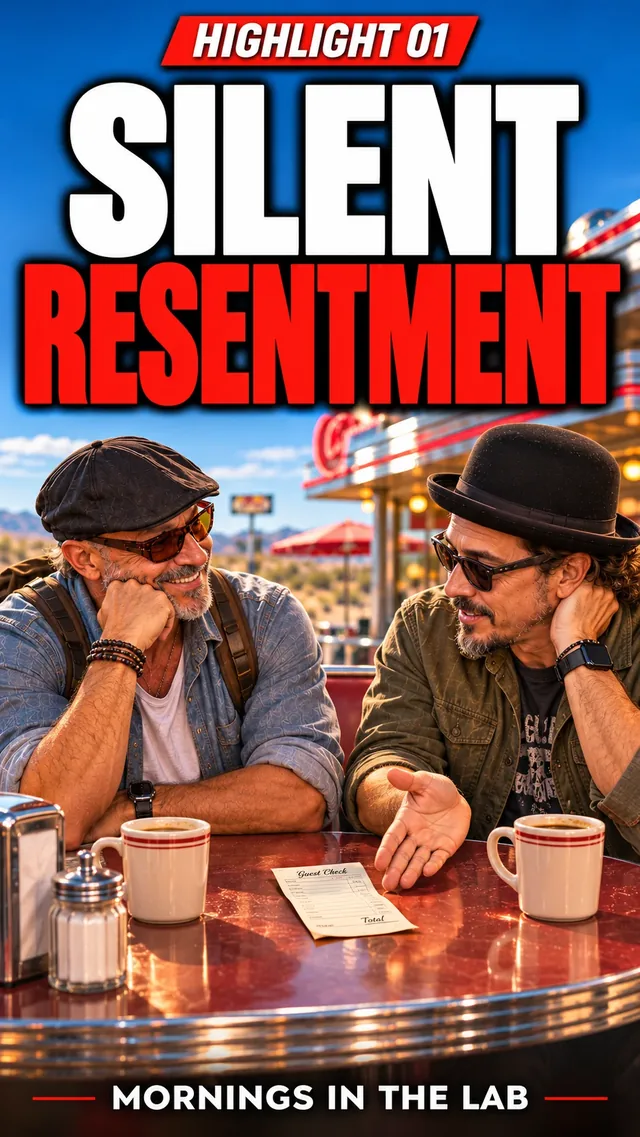
The invitation sounds simple. The budget isn’t. Briana Bass joins Keith and Jon to talk generosity, pride and the resentment that builds when friends stop saying what they can afford.
Read story +
One friend wants the weekend away. The other is quietly doing mortgage math. On No Safe Words, Briana Bass, Keith and Jon get past the easy answer that real friends should be happy for each other. A friendship can survive different bank balances, but the plans, the expectations and the unspoken obligations still need a conversation.
Jon would rather pay for people he loves than leave them behind. Briana points out why accepting can still feel awkward: the friend with less money may feel guilty about changing the plan, while the friend with more may not realize how far the budget is being stretched. Keith brings his own stories of a bigger house and a birthday trip that changed the social temperature.
The discussion widens into envy, jealousy and what success actually looks like. Money is only one measure beside health, relationships, freedom and happiness. By the outro, the invitation is practical: send the honest text, suggest the coffee, and give the friendship a chance to work with the truth.
What keeps a friendship equal when the bank balances aren’t?
Inside the issue.
27 stories · 6 highlights
Friendship gets complicated when the money changes. Briana Bass joins the conversation, Bill Sullivan takes us inside the world of parasites, and Keith closes with a question about the habits we want to leave behind. Explore 27 stories, six highlights and the complete exported conversation.
Sophia: Nation, imagine feeling perfectly fine while a parasite you picked up years ago is still tucked away in your brain. Bill Sullivan studies that parasite. He's got a talk called How My Lab Will Stop the Zombie Apocalypse. I'd go. Are you coming along, John? The parasite is called toxoplasma, and it can lie dormant in tiny cysts. Here's the catch: drugs can treat the infection while it's active. The parasite can survive treatment inside those cysts, and if your immune defenses weaken, that same parasite can wake up years later and make you seriously ill. Bill and his team found a clue. When the parasite goes dormant, it changes which proteins it makes. I thought the zombie apocalypse was the creepy part. Turns out it's the bit where everything goes quiet. Bill, we've got questions. Welcome to the lab Keith: Bringing our guest this morning. Hit subscribe if you like a show that makes you reconsider who owns that river. Epic spot, we're gonna show you why a jaguar doesn't have to stay on any dry land to hunt. But before we do that, let's bring up our guest this morning. This morning, can you trust your memory, Bill Sullivan? What's going on, Bill? Bill Sullivan: Good morning, guys. It's a pleasure to be here. Keith: It's a pleasure to have you here. We're talking parasites, my brother. Bill Sullivan: That's right. Toxoplasma gondii is the one we've been studying in my lab. I've been working on that- … since I was a graduate student way back when. A fascinating parasite. About a third of the world carries this parasite in their brain, and virtually no one knows about it. Jon Andersen: So right, let's- Dude … let me jump in right there, brother. First off, pleasure to meet you. So a third of the people, what is it that they demonstrate or that they do or that you see that helps you identify that they have it? So, like, give us a way to- Oh, yeah … if there's… if it's possible to self-diagnose, let's talk through that. Bill Sullivan: I don't know that it's possible to self-diagnose. There are some risk factors that you can make some correlations to. But Jon, to answer your question, the primary answer we get is very quantifiable. It's scientific. It's a blood test. So when people, um, you know, submit to physicals or volunteer for certain studies, we do epidemiology studies for toxoplasma positivity. We can see antibodies to toxoplasma in people's blood, we consider them positive for the parasite, and we deduce from that that they currently have the latent form in their brain if they're not showing any overt symptoms at the time. Jon Andersen: So what are the, what are the severe symptoms of this? Bill Sullivan: Well, this is what we call a stealthy parasite. Toxoplasma is a single-celled organism. Okay? In scientific terms, that… we call that a protozoan organism, and it's transmitted to humans and virtually all warm-blooded animals, uh, through the cat feces, its eggs. It enters life in a very unglamorous way. It comes out of a cat's rear end in a pile of crap and- Oh, Keith: Billy, you Bill Sullivan: hit- you hit Keith: the mute. There we go. Keep going, sorry. Bill Sullivan: A- and those, um, those parasite eggs are in- are highly infectious, and they're stable in the environment for up to one to two years. That's one way to get the parasite. Jesus. Second way to Jon Andersen: get the parasite- So, so real quick, if, if someone's ever played with cat shit, they've got this thing Bill Sullivan: Yeah, I generally don't advise playing with cat shit. That's not a good way to start your day Jon Andersen: or- Just, just, just kind of helping people understand here Bill Sullivan: But you bring up a really good point, Jon. You do have to be very careful if you own a cat to, um, properly take care of it. In other words, clean the litter box promptly, because those parasite eggs take about 24 hours to undergo a process called sporulation to become infectious. So if you clean up the cat shit before that happens, probably gonna be okay. But a really clinically important reason why we need to do that is because one of the other ways this parasite can transmit is from mother to child. Really? So many, um, you know, many mothers who are pregnant- One of the first things the doctor says is get someone else to clean the litter box. Toxoplasma is why. Because if she acquires the parasite, becomes infected for the first time in her life during the pregnancy, the parasite can cross the placenta, uh, and infect the fetus, and that can cause, uh, abortion, it can cause stillbirth or congenital birth defects. Uh, and that's a very, a clinically important reason why we need to be very careful about this parasite. The third reason, and this is another biggie, eating undercooked meat or unwashed vegetables can also- Well, can I, real quick, can I, Jon Andersen: can I go back real quick? … uh, transmit the parasite. We'll Bill Sullivan: go quick back to the… Jon Andersen: Let me just ask on the cat shit. So I was making a joke, I said play with cats. But if you're cleaning up cat, cat shit and you get some on your hand, is that enough? I mean, just have contact with it? Bill Sullivan: Oh, no. No, good point. Jon Andersen: Um- So you gotta wipe this shit on your face to get it. Bill Sullivan: N- no. You literally have to ingest it. Jon Andersen: Oh, Christ. Okay. So, so- So we're, we got, so we got a little bit of a barrier here. But Bill Sullivan: there's- Got a little bit of a barrier, but- … it gets interesting, okay? Real quick. Jon Andersen: Fucking Keith: God. Bill Sullivan: If you don't, like, wear gloves or wash your hands and you accidentally eat a hot dog or something after you clean the litter box- … you Jon Andersen: know? Yeah. Yeah. That's gonna- Don't dip your hot dog in the cat shit. Bill Sullivan: Yeah. I- it basically, you've put a little more than mustard on that hot dog, right? Jon Andersen: Yeah. Bill Sullivan: Yeah. Um, so that, that is the oral, the fecal-oral route is one way, but, and this is where, like, kitty litter gets a little dangerous, and in dry households it can, it can dry that out, right? You can inhale. There's evidence that inhaling these oocysts, either from the litter box or a dirty litter- Oh, really? or even out in the environment, you know, like a sandbox or a garden, anywhere cats like to go to the bathroom, you could potentially inhale the Jon Andersen: cysts. I never liked sandboxes for that fucking reason. You know, you're, you're making a sand castle, next thing you got fucking cat Keith: shit. Hey, Bill, a solution, not just get a fucking cat. Have a dog instead. Bill Sullivan: That's one way you can handle it. Jon Andersen: But, you know, but, you know, Keith: real quick, did you- See, I knew it, Anderson. I knew it, Anderson. Did you, did you hear- 'Cause I, I want a fucking dog anyway. I don't want a cat anyways. I just want, I want- Well, Jon Andersen: brother, did you hear? I stopped him when he opened up the next topic about- eating fucking raw, rare meat. I was like- I know … "I don't know if I'm ready to hear that one yet." I know. Let's go back to the cat shit, 'cause I do- Keith: I heard you rewind it. Jon Andersen: I was like- I was like, "No, I'm not ready to go there yet. I, I'm gonna, I'm gonna procrastinate on the cat shit a little more." Bill Sullivan: Yeah. I'm sorry, John. I, I have to, I have to be honest and say- Jon Andersen: Goddammit Keith: Oh, my God … Jon Andersen: I was thinking I was Scot-free 'cause I live in a Bill Sullivan: cat. But to Keith's point, you know, there was actually a study that just came out very recently that shows- Um, that people who, or countries who have high cat ownership tend to be happier. Now, that's a correlation. I don't know how much, you know, uh, you'd want to- Bullshit … bet on that kind of study. But what we can, uh, say safely is that a lot of people, I don't think the three of us perhaps, but a lot of people get a lot of, um, you know, reward from owning a cat. And they can be very therapeutic- My, my middle daughter is, is Jon Andersen: exactly that person you're talking about Bill Sullivan: in certain cases. We, we, we are just, um, you know, advising people to be responsible in how they take care of that cat. You know, there's diseases you can get from a dog as well. Um, but, but you know, at the end of the day, I don't own a cat, not because of toxoplasma, it's because I'm allergic to them, and I really don't… You know, if I wanted to talk to something that didn't care if I existed or not, you know, I got my children for that. So I don't, I don't need a cat. Jon Andersen: So let's get into the meat. How much fucking… Because I eat a lot of fucking meat, baby. Yeah. I eat a lot of meat, and I've eaten a lot of fucking raw meat, and I eat rare meat almost fucking daily. Bill Sullivan: Yep. I, and yeah, yeah, and a lot of Americans do. That is, um, you know, people are- Well, and this Keith: week of Thanksgiving, there'll be a lot of people crushing meat. Bill Sullivan: Yeah, yeah. A- and to overcook it, a lot of people, that doesn't work well with their palate. No, that doesn't work at all. They prefer it, uh, um, a, you know, uh, an undercooked form. What I can tell you, John, is that American beef and, um, uh, swine, generally pretty safe compared- Oh … to some other countries. Frankie: Oh, really? Bill Sullivan: Um, the, um, level of toxoplasma in, uh, those animals, fairly low, especially if they're factory farmed. The risk does increase if they're on, um, an organic farm, you know, which is a little counterintuitive, but- No shit those farms are not, um, as well regulated and controlled as some of the factory farms. In other words, you may have feral cats- So- … running around at the same time. Jon Andersen: Well, I thought you were gonna say, "So all the fucked up shit that Americans- … that farmers do to their cows actually kills this stuff." Bill Sullivan: Well, it doesn't kill. It just helps them prevent… It prevents them from getting it. Because if, if the animal's on a farm where feral cats are running around, there's really strong odds that that animal's going to be infected with toxoplasma. It incysts in their muscle tissue. Just like at the introduction we said it incysts in the brain, toxoplasma loves the brain, it loves the heart, it loves the muscle tissue. So if you have an infected animal on your plate and that meat's not cooked to 165 Fahrenheit, um, you know, if it's, if it's infected with toxoplasma, that's a good way to catch the parasite Keith: Interesting Bill Sullivan: Lamb is one of the major culprits. That is one of the, um, foods that tends to be served on the less well-cooked side. And sheep and lamb have a preponderance of toxoplasma. Um, in fact, that is probably one of the most common, uh, animals through which people, uh, acquire toxoplasma infection Jon Andersen: So once you got this shit, what starts happening to you? Yeah. Is it, is it like g- is it like catching fucking mad cow disease where your brain starts chewing itself from the ins- inside out? Bill Sullivan: No. No. But that's what's so stealthy about it. This thing is really sinister, really devious. In most normal, healthy people, this parasite doesn't do much more than, like, give you symptoms of a cold or minor flu. You will never know you got infected with it. Um, and this is why so, I, you know, I get emails from time to time, uh, from people who just had a congenitally infected infant. This happens up to 4,000 times in the United States every year, and we- Good Lord … don't test for it, okay? It costs us between $8 and $10 billion, um, in, in taxpayer money to deal with this problem, whereas a testing program would be even cheaper. Um, but that's, that's another can of worms. Uh, no pun intended. Um, but- … but, but yeah, you, you got, you, you initially get very minor illness if you have symptoms at all. But, uh, what is very cryptic about this is that even after the parasite goes into its encysted form, and this can take place inside of your neurons, okay, inside your brain cells, if you become immunocompromised later in life, that can reactivate and cause a life-threatening acute infection. Or, as some studies suggest, it starts to, you know, deviously, uh, potentially modify your behavior and even your personality, and this is where s- things get really interesting. And, you know, we can't, we can only do correlational studies in humans, but we can do them from a variety of angles, and we keep seeing some of the same trends popping up. But in well-defined laboratory or field experiments, you can positively say that latent toxoplasma infection has a major impact on the behavior of rodents, like rats and mice. Jon Andersen: Wow. Wow. Like, what does it do to them? Yeah. What are they doing? Bill Sullivan: They, they get really strange. They get really weird. The primary thing that gets the most press is that rodents that are infected with toxoplasma, and this is the latent form. There's no, like, symptoms. You can't tell this, this rat is sick in any way, shape, or form, unless you go in and look at its brain. Until it starts acting Jon Andersen: all these fucked up behavior Bill Sullivan: things. And then, you know, you start observing them in the cage, okay? Myself this morning live. They start running around a lot more than an uninfected, uh, mouse. They start picking fights a lot more than an uninfected mouse. And one of the more striking findings is that- Mm … if you have a uninfected mouse and it smells cat urine, for example, it'll scurry to the other end of the arena, right? It'll get a, it'll get as far away as from it as it can Of course it would. We've all seen Tom and Jerry, you know? That, that's what it should do. Keith: Yeah. Jon Andersen: Cat piss- But- … is one of the worst smelling piss Keith: Oh my God, cat piss is absolutely one Bill Sullivan: of the worst smelling. You're a connoisseur of, of animal urine, Jon. Jon Andersen: I had a fucking cat that I used to be, I… We didn't get along, and the little fucker would piss in my laundry all the time. Oh. Bill Sullivan: Oh, man. No wonder you don't like cats. Jon Andersen: Yeah. Well, you know, I just don't like that cat. Keith: That's true. My, my, my ex had a cat, and I, uh, we didn't get along either, Anderson, so I can, uh, I can certainly, uh, take, take- Well, once you Jon Andersen: piss in my fucking, in my, my, my freshly done laundry, we've got a problem. Keith: Yeah. Yeah, yeah, yeah, yeah. Bill Sullivan: I'll remember that if I ever come to your house, Jon. Keith: That's it. That's it. Hey, so guys, the referees- Jon Andersen: So hold on. So real quick, what is the, the rat then has this stuff. What, does he run up and start lapping the fucking cat piss up? Bill Sullivan: You're right. It doesn't run away from it at all. It is unafraid of it. So here's where things get really evolutionarily interesting, because that's exactly what the parasite would want to do. Once it's in the rodent brain, it would want to, um, restructure that brain, rewire it, if you will, to be unafraid of cats. Because then the infected rat is more likely to be eaten by the cat. The cat is what we call the definitive host for the parasite. It's where it wants to really be. Wow. Because only in the cat gut- Oh, Jesus Jon Andersen: Christ … Bill Sullivan: is where the parasite- Wow … can undergo the sexual stage of its life cycle and make those oocysts that I talked about earlier that gets spread into the environment. So the cat is the major vehicle of transmission for the parasite. It's where it wants to be. It's the only place it can have sex, right? So it really wants to be in the belly of a cat. So if it, if it finds itself in a rat, the next best thing it can do is go to its brain, rewire it, and make it unafraid of cats. Jon Andersen: And then the cat eats it, and now the son of a bitch is back in its belly. Bill Sullivan: Exactly. Yeah. Jon Andersen: Yeah, yeah, yeah. Yeah. And they've done studies to- Quite a fucking cycle of life here. Bill Sullivan: Jesus Jon Andersen: Christ. Bill Sullivan: Yeah, it's a s- it's a different take on The Lion King, Jon Andersen: right? Thank fucking Christ- A different kind of cycle of life cats aren't like 10 feet taller. We'd all be in big fucking trouble. Bill Sullivan: Well, they've done studies in chimps, okay? S- chimps that are infected with Toxoplasma gondii are less afraid of leopards Jon Andersen: Really? Oh. Holy shit Really? So it is, oh my God. So it's, wow, that's fucking heavy. No kidding. Bill Sullivan: Now, in, in humans we can't really, like, put people next to a lion cage and see if they'll jump in, um, if they're infected with toxoplasma. But we can do correlational studies, and the same theme of risk aversion pops up. So in humans that are infected with toxoplasma, for example, they're three times more likely to be involved in a car accident. They're more prone to rage disorder. They're more prone, um, to fly off the handle, um, y- you know, if they're angered, and they're more prone to be engaging in risky business, things like gambling, drug addiction, uh, things of that sort. So this theme of heightened risk-taking, uh, is, is correlated in humans that are infected. Jesus Christ. You know, I had a lot of Jon Andersen: cats Bill Sullivan: when I was a Jon Andersen: kid. You're starting to describe me more and more the deeper we get into this. I'm wondering if maybe I caught this when I was a kid. Bill Sullivan: Well, that kind of circles back to the beginning. How can you tell if you have it? Well, if you've been around cats or eat a lot of rare meat, and you take a lot of risks that you really can't explain, you know, there is a blood test. You can ask your doctor, uh, you know. Jon Andersen: But what if you love the life that this fucking parasite has created for you? Why take the test? Bill Sullivan: Oh, yeah. Now you're getting into one of my most favorite philosophical questions. I run a lab at the Indiana University School of Medicine, and we're trying to cure this thing. Currently, there is no way to get these cysts out of your brain, okay? We can control a prolific acute infection with, with certain drugs, but they don't eliminate the cysts. Nothing can. So we've developed some compounds that can do just that. Doesn't eliminate them completely, but knocks them down. So what if we're successful one day and we can eliminate these cysts from the brain with a new drug? Would we fundamentally change some people's behavior and their personality? Yeah, Jon Andersen: I wouldn't, I wouldn't take the drug. I would like- Would that be helpful to some people? You know what? Because my risk-taking has served me fucking really well for, I, I'm living the life that I… Fuck, as a fat little boy, I didn't know how to dream this big. Bill Sullivan: Keith, Jon, did you know there's another study that's been done on humans that says entrepreneurs, people who engage in risky business, are more likely to be infected with toxoplasma? Jon Andersen: I've never had a job in my life, not one. Really? I've never collected a paycheck. Keith: So, Jon Andersen: so what I- And I had fucking cats, and when I say play with cat shit, I, not that I intended to play with cat shit, but I guarantee I've had cat shit on me before. I had to clean that shit up. They shit in the house all the time, and I had to fucking clean it up. Keith: Brianna Bass is joining us. In a few moments, we're hanging with Bill Sullivan this morning. We are talking parasites. Bill, how did you, uh, how did you discover this whole situation? Bill Sullivan: Well, I was a graduate student at University of Penn in the '90s, and I had no idea what I wanted to do. So for your, before you begin your PhD, you rotate in various labs, and I rotated in a couple labs. It didn't really resonate with me. I rotated in the third lab just because I really liked the guy, David Roos. He was really funny and approachable, and I thought I could get along with him well. Frankly, I didn't care what he studied. I wanted to work with this guy. And, um, I looked under the microscope, and I was watching these parasites just eat their way through human fibroblast cells in a culture dish, and I was blown away. And I was like, "This is in one-third of human brains all around the world, and there's no cure? Sign me up. I wanna work on this thing Jon Andersen: Well, brother, real quick, I would say if I was a young scientist and I was in your- I would, I would look at you and I would say the same thing. I, I like this motherfucker. I don't give a shit what he's studying, I wanna fucking join his team. Oh. So you picked up some really cool traits from that dude, and you carry a, you're, you literally pro- you are, you literally described yourself when you talked about him. Bill Sullivan: Oh, well, thanks, John. That means a lot, man. Jon Andersen: Yeah. Hey, guys- You know, you're, I mean, with scientists, you're, you're a cool motherfucker. Jesus Christ- … a lot of times talking to scientists is like talking to fucking a, a brick wall that won't speak up. Keith: Anderson, I got a topic coming up- Yeah, I wish I was … I got a topic in the lab coming up this week that, uh, uh, Bill, there's scientists around the world that are arguing, and we have one that hangs out as a co-host every single Friday. His name's Dr. John Petrocelli. He's a bullshit professor. But, uh, they, uh, they're arguing over what a scientist is, Bill. And, and, and, and the idea of what science is and what science has become. And, uh, and it's interesting because science is competitive,
Bill Sullivan: Well, I d- don't have a blood test handy, but I'm willing to bet he's toxoplasma infected. Keith: Oh my God, Bill Sullivan hanging out with us this morning. So Bill, uh, one of the, one of the things we, we heard about during COVID was ivermectin and, uh, and parasites. Uh, please lean into, uh, that for, uh, for a couple sec- for a couple minutes before we wrap up and bring our g- uh, our next, uh, guest in, Brianna Bass. Bill. Bill Sullivan: Yeah, so, uh, ivermectin is a wonderful drug if you have worms. Uh, it's a parasitic worm drug. It paralyzes the worm, um, and it works in a m- a, upon a multicellular animal like a worm. There's very little to no evidence that it works in a viral infection Um, so, and I think clinical trials have even been carried out, uh, just to thoroughly investigate the notion that it might work in some undefined way that we haven't discovered yet. But there hasn't been any promising leads that ivermectin is effective, effective against the, the COVID virus. Jon Andersen: Uh, Bill Sullivan: just for the worms, 100% Jon Andersen: But it does make for a Bill Sullivan: wonderful anti-worm drug. Jon Andersen: Yeah. That's, uh, yeah, well, I, I've taken it a few times, and it's been about making sure that if I got shit living in my tract, we, I, you know, I'm able to crap it out versus it qui- keeps swimming. You know, these bastards keep sw- swimming upstream. You can't get rid of them. Keith: Yeah. So Bil, what, Bill Sullivan: let's- Is that because of the rare meat that you consume? Uh, you know- Are you worried about tapeworms and things like that? Jon Andersen: A buddy of mine took some ivermectin, and he sent me a fucking picture, and I was like, "Dude, tell me you're fucking getting ready to go fishing." He's like, " Keith: No." Jon Andersen: He's like, "No, this is from ivermectin." I was like, "Okay, where did you get it? I'm ready." Keith: Oh, wow. Wow. Yeah, no shit. Uh, or every shit along the way. No pun Bill Sullivan: intended, right? Keith: Yeah, every pun intended. Yeah, yeah, yeah. Hey, Jimmy. Hi. Check this out. Johnny, Bill, uh, one of the things that we stand for in this lab, Bill, is never
And that's what the, that's what the fucking, the, the fucking, the cysts in my brain tell me to do all the time. Bill Sullivan: And it, it, I don't have those cysts, and I still have that philosophy, so, uh- I love it, brother we're just a little more universally human, um, than we think. Keith: We're, we're wrapping up with Bill in a couple moments here. But before we do that, Sophia Grant, our lovely host who hosts this segment for us, uh, she's got a question for Bill, uh, before we set up hour two here. Jo- uh, Jimmy, let's bring up Sophia Grant Sophia: Your public talks include how my lab will stop the zombie apocalypse. What's the wildest monster myth people bring to you that accidentally contains a real piece of biology? Keith: Oh, good one Bill Sullivan: Yeah. Yeah. So one of the monster myths out there that people, uh, enjoy, you know, we're obsessed with zombies. It's, it's a, it's been- Yes … a huge part of our culture- Sure … for a couple decades now. And the latest and greatest take on the zombie, um, you know, uh, uh, cultural, um, in- invasion is The Last of Us. Started out as a video game, now it's a- Yeah … television show. Yes. Yeah And, um, everyone knows the concept. You know, there's this contagious fungal spore that people can inhale and then they become zombified. But this is actually based on a real living creature, the cordyceps fungus, or so-called zombie ant fungus. And the writers of this game and this show have done a reasonably good job of extrapolating what that fungus might look like if it were ever to exist in human beings. And the first thing I'll do is reassure you that's never gonna happen. Um, but- … this thing can invade invertebrates like ants- Um, or excuse me, it c- yeah, it can invade ants and spiders and some other things. And what it does, just like you see on the show, it attacks, um… The spores fall onto the ant, and the fungus attaches itself and starts growing throughout the ant's body. It makes its way to the brain and starts to change the, um, ant's behavior. Wow. The ant will leave the colony, which ants normally don't do, climb up to the underside of a bush or a, or a shrub, and clamp itself down on the middle of a leaf. And there it will die as the fungus takes over the rest of its body. And after the fungus- Dude … does that, it starts to rain spores down onto the ant floor where all of his little buddies are crawling, so that he's basically infecting, you know, his family and friends down below. And then those ants get infected and the cycle repeats itself. But that's exactly what is, um, d- that, that's where they drew the idea from when they created The Last of Us, and that's a real, uh, organism out there that I find endlessly fascinating. And has a few parallels to things like toxoplasma. These, uh, infectious agents get to the brain or release some agent that can contaminate the brain and fundamentally alters who we're supposed to be. Keith: Jeez. Bill Sullivan, Keith Bilous, Jon Anderson. Love it. Jonny, what an interesting, gross, sorry Bill, conversation for the last 30 minutes about parasites. Jonny? You know, Jon Andersen: I, I didn't even think it was gross. I thought it was extremely intriguing. I mean- Oh, Keith: me too … like, there'd be things- I s- I u- I use a fun word, but yeah, I Jon Andersen: agree with you. Yeah. I mean, when we're, when we're- Yeah … talking about cat shit, I'll give you- Keith: Yeah. Jon Andersen: But, but just the fact that these things- My head right now are altering our behavior, it's, whoa, way out there, man. Keith: Yeah, yeah. Bill Sullivan: Br- It's, um, some really deep philosophical questions, doesn't it? Keith: Yeah, yeah. A little. So Bill, you, Bill, you might have to come back and have some of those deep philosophical questions with us because, uh, you know, we like to have them here in the lab, and I think you currently could probably fit in and have some of them with us. Brianna Bass will join us in a couple minutes. Uh, but before we do that, Bill, where can folks find you, work with you, learn more, and say, "Hey, Bill, I might have a parasite in my brain. What do I do now?" Bill Sullivan: Yeah, well, go see your doctor. I'm a scientist, damn it. I'm not a, I'm not a physician. Keith: I'm a scientist, damn it. I'm not a physician. Bill Sullivan: That's right. Um, so yeah, do n- I get that all the time. Do not email me pictures of your feces or anything like that. I really don't wanna see that when I open my email in the morning. I'm not a physician. I can't write a prescription for you, um, and I can't do a blood test, so I'm a scientist. I'm trying to work on new drugs that your physician then can then prescribe you. But I'll be more than happy to answer questions about toxoplasma or any other thing. I would love to come back and, um, chat with you guys. This is a great way to start the day. Keith: Yes. Bill Sullivan: And, um, people can find me… I wrote a book, actually, that talks about toxoplasma and some of these other microbes that influence who we are. It's called Pleased to Meet Me. Keith: Yeah. Bill Sullivan: Genes, Germs, and the Curious Forces That Make Us Who We Are. Pleased to Meet Me. Yeah. And, um, you can find that and some of my current writing at authorbillsullivan.com. Keith: Authorbillsullivan.com. Johnny, look at this dude. Look at this dude. Look at Stephen King on the right, and look at our guest today. Johnny, do not tell me this guy is not the same fucking guy. Jon Andersen: He's way better looking. Keith: I agree, but he's c- so… Who, Bill or, or Stephen? Jon Andersen: Our guest. Keith: I suspect Bill is much smarter than Stephen King, but look at… Bill, have you ever been told you look like Stephen King? Look at you. You look just like the dude, man. Bill Sullivan: That's the first time I've gotten that one. Keith: But you would have- I would have Jon Andersen: to… If somebody said that, I'd… If I was you, I'd be like, "Keith, fuck off. I'm way better Keith: looking." Bill, you're awesome, man. I'm a big fan. I really enjoyed having you on the show today. I'd like to have you back and dig further into this, man. I think you… Johnny, I suspect this fellow probably has a few other interesting topics up his sleeve. Look at the bookshelf behind him, man. Do you Jon Andersen: think? Keith: Do you think? Yeah. Yeah. Do you think? Yeah, I think he has a few. So Bill, what… Do you read all those books behind you or just part of them? Bill Sullivan: All of those have been read. Keith: Oh, Bill Sullivan: good. The stack that I have to read is much higher, and it's in the other room. Keith: Nice. Well done. Well done. Bill- I tell you Jon Andersen: what, something tells me there's not a lot of pictures in those books. Keith: No. Bill Sullivan: No, they're all pop-up books, Keith: Jon. Hey, Sullivan, you are welcome back here anytime, my friend. Anytime. You come hang out with us. Come find us. Uh, come tune into the mornings, Mornings Live with Keith, Jon, and friends. We go live at 8:00. We'd love to see you in the comments. We'd love to see your engagement, and we'd love to hear your point of view, man. I like what you have to offer. You dropped some nuggets for us today, my brother. Preston: Thanks, Jon Andersen: man. Hey, it's been a blast. Thank you, brother. Keith: Awesome. Awesome.
The Parasite That Can Hide in Your Brain for Years
Bill Sullivan takes the conversation from cat litter and rare meat to risk-taking, research and a surprisingly personal question: how much of who we are comes from forces we cannot see?
Read story +
Scientist and author Bill Sullivan joins Keith and Jon to explain Toxoplasma gondii, a parasite that can persist in the body. What begins with basic questions about exposure quickly becomes a lively conversation about food, cats, latent infection and why pregnancy and a weakened immune system can change the stakes.
Sullivan draws a crucial distinction as the conversation turns to behavior. Researchers can study causal effects in controlled animal experiments; the human findings discussed here are associations. They do not prove that an infection caused a particular person’s personality, ambition or choices. Jon turns that uncertainty into a philosophical question: what if someone likes the life they have built?
The interview also visits ivermectin, the biology behind The Last of Us, the mentor who made science inviting, and Sullivan’s book Pleased to Meet Me. The jokes are plentiful; the useful thread is curiosity about biology without turning a conversation into a personal diagnosis.
How much can an organism we cannot see change the way we think about ourselves?
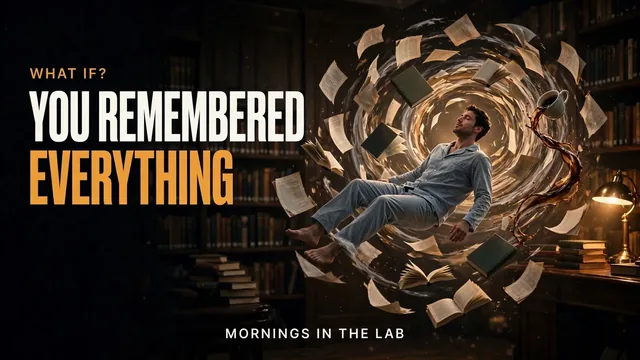
What if you woke up remembering every word you've ever read? Every book, every text, even the messages you wish you'd missed. I'm going straight to a game show. Every book I've ever read is suddenly a cheat sheet. You'd remember old texts too. That painful breakup message would still be there, word for word. Frankie: Wait, people could use me as a human backup. One glance at their secret plans and I'm carrying them forever. Preston: Nation, would you take perfect recall of everything you read, including the words you'd rather forget, or would you pass?
It's kind, it's a fun question. It's a fun question. So you have a good memory. Uh, you know, you might not think you do, but you have a fucking pretty great memory. I have a good Jon Andersen: memory in some things. Keith: Yeah. Well, yeah, you, I, I would say you do. What if you remembered everything you ever read or had? Could you imagine, like, as a human being, you could just sit back, like, right now and go, "Holy fuck, I remember that conversation with da, da, da, da, da"? It, it's just, that's just a fun, loose little conversation to get the show going here, but could you imagine, Johnny? Like- Jon Andersen: Wouldn't that… Yeah, it would be kind of like a person who has a photographic memory. Keith: Yeah. And I, I don't know if it would be any good, actually. You know, because my brain's fucking crazy enough as it is, and so is yours. You're like, "Okay, I gotta get… My brain's going fucking crazy. I gotta go to…" Like, if you remembered everything, I just, I wonder if that would be any good. That's why I like these agents, 'cause I can let them remember everything for me, and I can just execute being the human. You know? Like, it might be, it might be a deucer Jon Andersen: You could see that go, you could see that going multiple ways because- I Keith: think so, yeah Jon Andersen: you know, if you, if you were able to categorize everything- Keith: Yes … Jon Andersen: and say, "Okay, this is a category- Oh my God … I want to remember. This is a category- Yeah … I don't." Keith: Yes. Jon Andersen: Like, you could actually kinda like gather and, and kinda keep the shit that, that you knew you were gonna go back to and- Yes … get rid of the stuff that you knew was a waste of your, your brain bank space. Keith: Yes, yes. Jon Andersen: That would be fucking killer. Keith: Well, yeah, for sure it would.
Perfect recall sounds like a superpower until you remember the things you would rather leave behind.
Read story +
Today’s What If asks whether you would choose to remember everything you ever read. The imagined upgrade comes with a catch: useful knowledge would arrive alongside bad advice, old insults and every other sentence you wish had never found you.
When Keith and Jon return to the question, remembering everything becomes less attractive than being able to use what matters. The conversation leaves room for an overlooked skill: letting the unnecessary stuff go.
What would you most want to remember, and what would you rather forget?
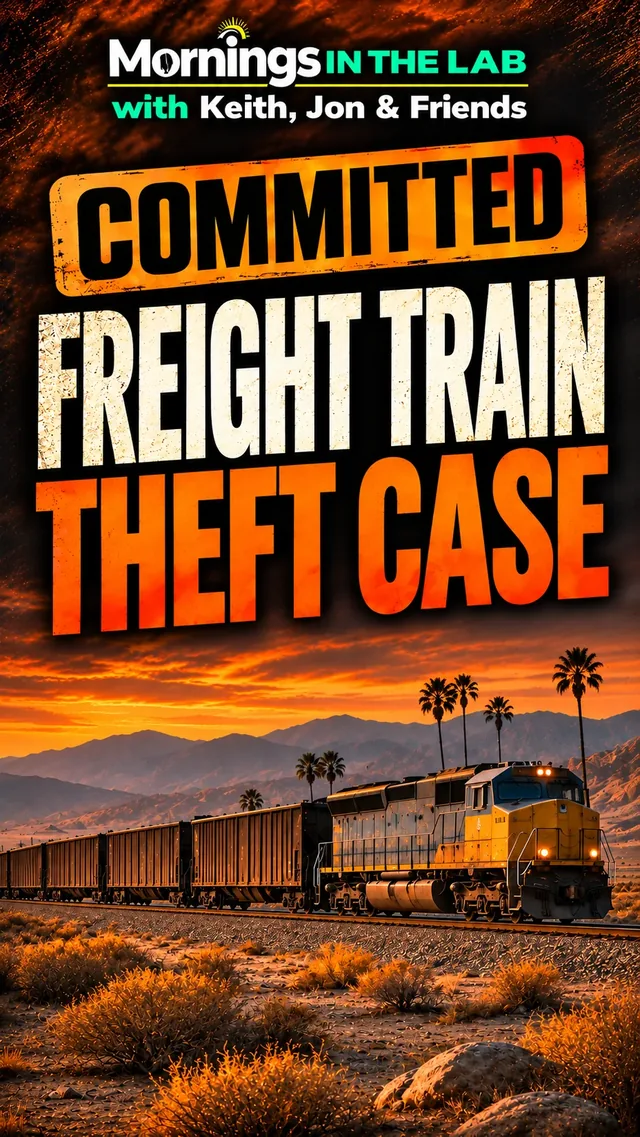
No, no, this is the, uh, uh, uh, yeah, Jimmy, let's do this- Let's Jon Andersen: talk about, this is back in, like in, uh, in the, I never seen, see it personally. This is what happened in fucking, uh, Germany. Keith: Uh, yeah. Oh, Jimmy, do I have the wrong one up there, pal? Maybe I have the wrong one. Run, run committed for it 'cause Jon Andersen: we had- Takes a wheelbarrow of fucking cash to buy a loaf of bread when- Oh, Keith: yeah. Oh- … Jon Andersen: inflation hits … Keith: sorry Jimmy, I had the wrong one. Let's do, let's do this. Let's do the guy stealing. Yeah, look at this. So check this out, man. I had the wrong one up here this morning. So these guys here, brother, uh, $22.5 million freight train, they st- this train's running, Johnny. They, they, they, they broke in while the train's running. They stole $22.5 million worth of Nikes and shoes. So look at these guys. These guys busted onto a train, and they filmed their whole experience opening this thing up, and, uh, 14 people were charged. You talk about committed. You j- you and I joke all the time about dudes that are, they're doing like, you know, if they put this energy into something positive, like Bill Sullivan and parasites, this, these guys here busted into this train and, uh, stole a bunch of- How Jon Andersen: many fucking boxes did they s- I mean, 22 million, that's a lot of fucking sneakers. Keith: Yeah. That's a lot of fucking sneakers, yeah. Jon Andersen: Uh- I mean, where the f- how many boxes- So- … did they wipe out? Keith: Dude, this is in southern California too. Jon Andersen: Goddamn. Keith: Yeah, yeah. Jon Andersen: But see that, that's a container box, right? Yes. How many of those containers did they have to wipe out to get $22 million worth of sneakers? Keith: Wow. Unbelievable, man. That's fucking crazy. Jon Andersen: Unless these were like the crazy high-end Jordans where you, each one was like 2,500 bucks. Keith: Yeah. Yeah, yeah, yeah. Yeah, I know. I know. I know. All right, Bill Sullivan joins in a couple minutes. We're gonna talk, uh, some parasites. Before we do that, uh, again, I, I, I like putting this on the table because, um, it is a Jon Andersen: real quick- Hey, real quick. If that was in southern California, why was their fucking breath c- showing that it was really cold? Keith: Uh, maybe it was an overnight or a cold. I, I'll get the details. We'll get Jon Andersen: the- You don't get that in California. Keith: Yeah, you're absolutely right. They don't, Jon Andersen: yeah. That's fucking bullshit. That wasn't Southern California. Maybe fucking way up north. Keith: Uh, yeah, w- or Northern California. Yeah, yeah, yeah. Jon Andersen: Way the fuck up there, and even then it's questionable this time of year. Keith: Hey, so we're talking about restaurants that are
Uh, it happened in Southern California, mainly along railroad tracks in Pico Rivera, Fullerton, and other spots in the Los Angeles County area. I mean, Jon Andersen: that's, that… We could go… That, there's no time of the day where your breath is gonna do that right Keith: now. Maybe they were smoking. Jon Andersen: That's, there's something fucking fishy with Keith: that. We got some words of wisdom. Jimmy, put some words of wisdom up for your guest in this morning, Bill Spencer.
A major cargo-theft indictment gets the Committed treatment—and the hosts stop to question whether the clip in front of them belongs to the same story.
Read story +
The scale is what grabs the room: federal prosecutors describe an alleged series of freight-train thefts involving more than $22.5 million in cargo. Keith and Jon react to the planning, the logistics and the sheer nerve of it.
Then the footage itself becomes the question. Jon notices visible breath and challenges the location being implied; Keith returns to that doubt after the next item. It is a useful pause in the morning’s spectacle: a real case and a circulating clip do not automatically verify one another.
When does an ambitious plan become a very bad idea?
So yesterday on the show, uh, we broke some news, which is what we do here on mornings and live with Keith John and friends. We absolutely do. We like to break news here on the show. And yesterday during the show, live on the show, guess what happened? Yeah, Jimmy, run the clip Preston: Huang cheated, resigned as NVIDIA's CEO, and got his job back 11 days later. My damn dishwasher holds a grudge longer. One reported affair involved a suspected Chinese spy. The board said no comeback, then voted him back in. That's one hell of a reboot. Gentlemen, the board gave him his chair back. If you cheated, how the hell would you convince your wife to let you back in bed? Keith: So guys, yesterday on November 12th, I'm sorry, November 12th, the guy resigned. Yeah, he resigned as Nvidia's CEO and, uh, after admitting an affair with a woman suspected of being a Chinese spy. Guys, this video yesterday morning. Uh, yeah, and he's basically standing there humble, and he's saying to everybody going, "Ah, yeah, I messed up. I messed up big time, and, uh, I'm here to apologize. I'm here to put… I'm here to say I'm sorry that I put you guys through all this mess." And, uh, that's exactly what he is doing right there in that vid- Well, um, what happened was, uh, Mr. President Trump got involved, and he's like, "No, uh, we need to have, uh, we need to get this guy. We need him leading J- uh, we need him leading Nvidia." So he gets involved, and next thing you know, uh, he's leading again. Uh, because, uh, as we know, uh, the President is very much, uh, interested in having a great stock market, and yesterday or a couple days ago, the market crashed as, uh, as Nvidia, uh, uh, uh, Jensen Huang was, uh, was displaced as CEO. Uh, well, uh, the big dog, yeah, the big dog himself, uh, the President D-double O-N-A-L-D Drump, Mr. Trump here, he says, "No, we gotta get him back because the stock market's crashing." So yesterday reinstated, uh, Jensen Huang. And to me the bigger question ends up being this. So, you know, does… With wealth comes big responsibilities, but here's the reality, is, uh, are we in a new, or Jimmy, are we in a new era right now of leadership where actually leaders can do no wrong? Now, you can go and, uh, uh, uh, bang a bunch of people, whether it's female or male, do crazy shit, and people are still going to accept you back at the place that you led. I don't know. Is that, uh, is that the era? But, you know, I guess the same breath though, Jim, it makes sense, right? You know, we have a leader of, uh, of the nation right now that, uh, some would say might not be the most, uh, uh, honest caveat, so maybe it's the same, maybe it's the same thing. It's funny because, uh, the big old El Presidente, yesterday he, uh, he puts a picture up and, uh, of, uh, of his, uh, uh, of, of Trump's assassination attempt. That, that picture where he was couple… I guess about a year ago, where he was shot and standing up on the air doing this. Well, he put a picture up of Huang doing the same thing, Jimmy, but the guy's holding a fucking, uh, a, a red bra. Yeah. Craziness, man. Absolutely craziness. So here's the thing. Uh, is he forgiven or is everybody just, uh, is everybody just over themselves about this whole situation, and are we gonna, are we gonna forgive and forget over time? Yeah, that's the big question. All right. Let's get into our next topic this morning as I spill my coffee
Keith: Yeah, Petra, our very own Doc John Peccelli says, uh, uh, he's talking in the vertical slide, "If with spies, uh, is one thing, but an extramarital affair itself is irrelevant. Let me be without, uh, sin cast the f- Yeah, let, uh, let he without sin… Jimmy, Jimmy having a hard time reading your screenshot here. Uh, let he, uh, without sin cast without stone. Yeah, so I think, I, I think the consensus with humans is very much we don't care that he's out there having extramarital affairs. Yes, hold on. I'm not, I'm… Listen, guys, I, I'm not accepting it. Nobody's saying the extramarital affairs is good shit. No, no. Uh, it, that, that's not, that's not working at all. What I'm s- what Petra was suggesting is, listen, dude, if you're gonna go out there doing the spying shit, that's where we're having challenges, so, uh… All right, we got comments from Whitaker saying, uh, y- yeah, good morning, nation. Good morning, Whitaker. Uh, hey, Jimmy. We're learning. We got the crew hanging out with us in the vertical channel here this morning. So I think what I'm gonna do as well, I'm gonna get the vertical
Jensen Huang’s return to NVIDIA opens a bigger question about second chances: what should restoring a leader’s job require?
Read story +
The Morning Loop returns to NVIDIA and Jensen Huang’s reinstatement. Keith uses the comeback to ask where accountability ends and a second chance begins—especially when a company has so much invested in one person.
The discussion moves between the boardroom and personal relationships. An apology can open a door, but the conversation asks what else people need to see before they trust someone with the same responsibility again.
What would you need to see before offering someone a second chance?
Let's get into our next topic this morning as I spill my coffee all over my desk this morning. Yeah. Uh, noted, need a towel on desk. Uh, I guess when we go to the commercial we can do that. Uh, all right. So hey, let's do this one right now. Your friend needs a car for the entire day. Yeah, they need a car for the entire day. Are you gonna hand over the keys? Or do you offer, or do you offer e- do, or do you offer that car and say, "I trust you, but don't crash it"? That is funny, Jimmy, 'cause this morning What's going on, Kiesel? What's going on, Kiesel? How's that conversation happening in your house this morning, Kiesel? Coming up, Jon Anderson joining me this morning on the show. But here's the question: are you saying to somebody, "I'll give you my car," or are you saying to somebody, "Here's my keys"? That's exactly this morning's Pick a Side, uh, which is, uh, are you talking to somebody about saying, "Hey, man, uh, here's my car," or are you saying to somebody, "No, uh, you can't have my car. Instead, I am going to, uh, give you my keys"? That's today's topic this morning on, on, uh, today's Pick a Side. Uh, hey, Jim, if you got a CTA, why don't you run it so I can go get a towel and clean up my little mess on the ta- on the tabletop here.
Your oldest friend needs your new car for a day. Hand over the keys, or offer to drive? The favor reveals a boundary.
Read story +
Pick a Side takes a small request and gives it a friendship-sized complication. Lending a car may feel like trust in action; offering a ride may be the way to help while keeping a limit that matters to you.
Keith puts the choice to the chat without pretending there is one rule for every friendship. The useful part is being able to say what you are comfortable doing before a favor becomes a grievance.
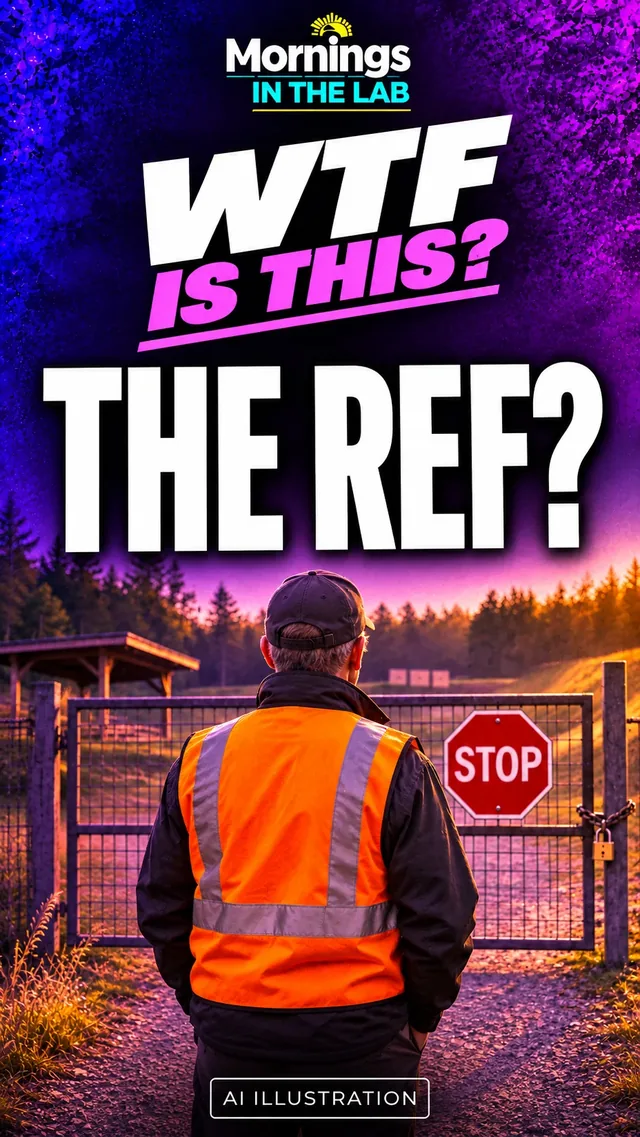
whole thing, so that's the conversation we got coming up later this week. But before we do that, uh, Jimmy, Johnny, Bill, the referee is usually the one who stops a competition when something goes wrong. Well, I found this little event in, uh, in Poland where the, the competitor, uh, was shot by the referee during the event. Check this out. So the ref's getting something s- figured out, and the guy shoots the guy in the ass. Oh Jon Andersen: my, was that a real fucking gun? Keith: Real shotgun. Shot the guy in the ass as he was setting it up, and, uh- Jon Andersen: What the Keith: fuck? It's well, that's exactly, yeah. Well, it Jon Andersen: looks like he's even trying. Keith: Well, so it's just one of those, oh- Jon Andersen: He doesn't look like he's got much remorse either. Keith: Well, and he didn't ru- I mean, he didn't rush over there to check on the guy's ass. That's what I mean. Jon Andersen: He was like, "You fucking deserve that, you cocksucker." You Keith: know? He didn't, he didn't rush the guy. He didn't check the, he didn't rush to check the guy's ass out or nothing, but, uh- Yeah, yeah.
A shooting-range clip produces the kind of reaction that stops the room before anyone finds the right words.
Read story +
WTF Is This? breaks into the Center Stage conversation with a clip involving a referee at a shooting event. Keith, Jon and Bill respond with disbelief and dark humor, then return to the interview.
The useful question is the serious one underneath the reaction: who can call a stop when something looks unsafe? The short broadcast exchange does not establish the full circumstances or outcome of the incident.
Who should be able to stop an activity when something feels wrong?
Uh, okay, we got one more topic left on the desk this morning, and, uh, I think it has to do with who can see your phone. Jimmy, let's get to it before we tease tomorrow's show. Preston: I opened a private chat and my phone's AI leaned over my shoulder. Frankie: Damn. Preston: Siri, buy me dinner before you read my dirty texts. Signals blocking screenshots on iOS 27 and enabling protection on supported Android devices when it detects AI screen access. Back the hell up. So who decides when AI can read our messages? Us? Or the app? Or the nosy little bastard living in our phones? Keith: I saw that with Aaron, so I was actually gonna throw that one to Johnny. So Keith and Johnny are using Signal these days to communicate. Well, the app Signal is stopping screenshots because what they're finding is that, uh, the AI tools that we all use are grabbing them. So A- so Signal, which prides itself on, on privacy, is like, "Nah, we're turning that off." All right, tomorrow on the show, Jimmy, Jimmy, tomorrow on the
Signal is pushing back on AI systems that can read what is on your screen. Keith asks who gets access to a conversation you thought was private.
Read story +
Encryption protects a message on its journey, but an assistant that reads the screen raises a different question at the destination. Keith brings Signal’s response into the Closing Loop as another example of convenience arriving with a less obvious cost.
Signal says it is restricting certain screen capture on iOS 27 and Android where it can detect an AI assistant attempting to read the app. The company also acknowledges that these measures cannot address every route to device data.
What should an AI assistant be allowed to read on your phone?
Hey, uh, Jonny, before you go; Brianna, before you go; so I lived in a world that this happened, and I just had to show you guys this because this is fucked up bad. Yeah. So that wasn't me, the handsome one. But I'll tell you, I had aunts and uncles, and yes, when cigarettes were part of my world, it was, "Hey, Keith, would you light the smoke for me?" So sure enough, you go over to the stove. Jonny, this is common at the farm, man, honest to God. Because there's no lighters or matches. Did you ever see witnesses like Jon Andersen: that? You don't have to put your face in it. You can just put the tip there, get it hot, pull it up to your mouth, and fucking pull it for Christ's sake. Keith: Well, I learned that after I d- a few times. Jon Andersen: But- Jesus Christ … but look at- That just makes perfect… This isn't your… This is just shows that common sense thing that you sometimes miss. This is a perfect example. Keith: But, but look, it's a Cabbage Patch Kid, Brianna. It's a Cabbage Patch fucking doll. Jon Andersen: All right. That, that's, this is b- before I start to get nasty, the entertainment's leaving.
A childhood memory lands differently when you picture an adult giving the same instruction today.
Read story +
Vintage Throwback takes the room back to Cabbage Patch dolls, household rules and the startling things children remember being told. The humor comes from how ordinary an instruction could seem at the time and how strange it sounds in hindsight.
It is a memory lane moment with Briana, Keith and Jon, not an invitation to recreate the unsafe parts. The shared recognition matters more than deciding whose childhood was the wildest.
What instruction from home would need an explanation today?
Maya: Chief, I once learned a word from a book, said it out loud, and found out I'd been saying it wrong for years. But if someone gets a word wrong in front of everyone, is correcting them helpful or just embarrassing? Nation, what word surprised you, and when should someone correct a friend? Chief, take it away. Keith: All right, we're back. Wrapping up with, uh, a hanger stand life hack as we wrap up the show here in a few moments. Uh, but what I want to do is, uh, yeah, say that again. Guys, if you are going through your day today, I got some fun for us right now. Um, yep, Jimmy, I- you g- d- Jimmy, you got it right, pal. That's exactly where we wanna be this morning. Uh, we wanna get to this conversation starter, which is all around saying it again. Yes, so, uh, doo, doo, doo, doo, doo, doo, doo. Um- Yeah. I'm, uh, I'm looking for my notes and I am, uh, uh, they're not showing up in front of me. Can you believe they're not showing up in front of me? No, I see them, Jim, but they actually haven't spelled them out. Uh, yeah, that didn't work. Oh, here we go. Yeah. Oh, here we go. Yeah. Here we go. Worcestershire sauce. Jim, you know how to say that word? So how do you guys say it? Is it Worcestershire or Worcestershire? Worcestershire sauce. There's one of them. Yeah. So Worcestershire sauce is the word that people still struggle to say again. Gyro. Gyro or gyro. Jimmy, what is it? Gyro or gyro. And then of course, we've got dachshund. Yeah. Those three guys are the top three words that are ranking of US pronunciation searches. So right now, Jimmy, this week, there are folks stumbling around North America going, "Hmm, I don't know how to fucking say the word dachshund. I don't know how to say the word gyro. I don't know how to say the word Worcestershire sauce." All that shit. Yeah. And, uh, uh, trending searches for those three big words. So there you go. I'm dropping you guys nuggets today. So as you go through your Thanksgiving week and you walk into the room and maybe you get some Worcestershire sauce, yeah, or, or you're walking into your family's house with their dog, it's a, a dachshund. That's what it is. There you go. According to the handsome chief.
Worcestershire, gyro, dachshund: the familiar words that can still make a confident person hesitate.
Read story +
The Closing Loop gives pronunciation its moment. Keith works through words people look up and gets the pleasure of saying them out loud, trying again and recognizing that a familiar spelling does not guarantee a familiar sound.
The list is a conversation starter, not a definitive ranking of what everyone says wrong. It is an excuse to laugh at the small pauses in everyday speech—and perhaps learn a new way to order lunch.
That, that's, this is b- before I start to get nasty, the entertainment's leaving. Keith: Jon, before you go… Jimmy, get him out of here. Frankie: Hey, Jon, before you go, I think I found where they keep the good steaks. Pat LaFrieda's dry aging room can hold more than 12,000 large cuts of beef. That's not a fridge. That's a steak vault. Imagine walking in hungry. By the time I picked a steak, I'd need another one for the walk back. I'm taking a ribeye. If it's got enough marbling, I might frame it before I eat it. I'll take a porterhouse. Preston: Two steaks sharing a bone, Frankie: one steak in a loophole. Preston: Jon would walk in, hug every steak, and call it a family reunion. Which Frankie: one's coming home with you, buddy? Jon AI: Ribeye, baby. And tell the others I love them. I'll be back after dinner Keith: I figured you'd like that, Anderson. Anderson, be safe, drive safe. Look at that guy. We, we could have a lot of fun in that lab there, man. Look at all that fucking meat. Oh, man. And Johnny, after the conversation you had with Bill Sullivan, there may be a little bit of parasites happening around there. Jon Andersen: Yeah, just a few. I would Keith: say. Just a few. Anderson, be safe, okay? Jon Andersen: I- absolutely. And Brianna, have a wonderful Thanksgiving. I know Keith, you're gonna do, you're gonna do an American Thanksgiving as well. So everybody have a wonderful Thanksgiving. Keith: Lovely. Awesome, my brother. Thank you. We'll talk to you tomorrow. Drive safe, pal. See you later. Jon Andersen: Have a good loop, my people. Keith: Anderson's out of here. Keith and Bee are left for a few little minutes here. Uh, Bee, I'm excited to welcome you in in a couple weeks or so.
Jon’s exit arrives with a vault full of dry-aged beef—and a callback to the interview he has just heard.
Read story +
Jon, Before You Go sends him off with the Pat LaFrieda meat vault, presented on the show as holding thousands of large cuts. The visual is almost designed to test how quickly he can turn admiration into a travel plan.
After the earlier discussion of parasites and undercooked meat, the steak enthusiasm comes with an extra layer of comedy. The segment ends on appetite, personality and the kind of exaggerated farewell the regulars know well.
How much of a great meal is the food—and how much is the story around it?
being affected by GLPs. You know, we hear- we're talking about it all the time. Guy- you know, it's funny 'cause I was- I was sitting down, had, uh, had lu- had dinner at a, a awesome, a rib joint here on Friday. A, a friend of mine who owns a rib joint. Oh, goddammit. And, uh, and, uh- All right … I was asking him about, I was asking him about people's affecting with their, their, their restaurant, like eating less. He's like, "Yeah, people are eating less." Well, listen, Europe reporting, uh, GLPs, Johnny, are affecting people's grocery budgets. A billion dollar grocery shift. People buying different food because of GLPs. Sterling Preston, set it up. Preston: Preston, put the crisps down. The tech stack just robbed this grocery store of its horniest customer, my appetite. Across Britain, households using the tech stack spent an estimated one billion pounds less on groceries than expected. Even the crisps are filing for unemployment. Frozen meals are up, the crisps are fucked, and my cart's in therapy. Preston, what happens when an entire grocery aisle goes on a diet? Keith: Yeah. Well, there, there you go. Uh, oh, hey, Johnny, I got the news from Jimmy here.
Weight-loss medication is showing up in the shopping basket. A spending estimate gives the show a different way to think about changing appetites.
Read story +
The conversation moves from medication as a personal decision to its wider commercial effects. If people want less of some foods, the change reaches supermarket shelves, portion sizes and the businesses built around familiar shopping habits.
The £1 billion figure is a Worldpanel estimate about grocery spending in the UK, reported by Reuters. It gives the hosts something substantial to react to without telling us what any one household—or any one patient—will experience.
If appetites change, what changes at the grocery store?
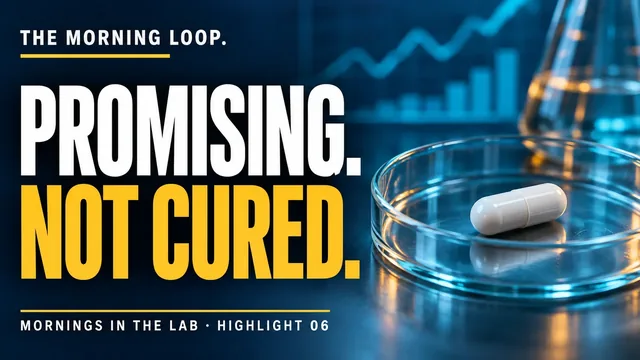
But hey, before we get into that, Jimmy, let's do some conversation desk topics. This is a pretty big one. Um, there is, uh, so this is, so I saw this on Friday, and then, uh, it wasn't going away. Uh, but there is, uh, there is evidence that they have been finding, uh, some early trials with, uh, tumors. Yeah, like actual cancer tumors shrinking because of a drug that, uh, is, is, is heading to the market. Jimmy, let's run this clip. Preston: An experimental cancer pill hit a 60% response rate in a small trial group. The headlines already booking a victory parade. Hide the confetti cannon. Oraska reports tumor responses in three of five lung cancer patients and 11 of 25 pancreatic cancer patients. They'd already received previous treatments. Promising doesn't mean cured. A patient died from lung inflammation at another dose. So why the hell do headlines sound like the game's over? Keith: That, that was where I kind of went with this too, because the headline was, hey, this is shrinking cancer, uh, pancreatic cancer cells, and we know pancreatic cancer largely kills people right off the bat. But, uh, they found evidence where some folks that were taking this drug, uh, were, were actually… It was, uh, the re- the tumors were leaving, gone. And, uh, as, as, as, as the, uh, as the, um, news was that there, there were a few that still died, but 11 out of the 25, Johnny, tumor gone with this drug. So, um, cancer's an interesting thing, isn't it? 'Cause we hear it, we get scared of it, and, uh, uh, it's, it's, it's interesting to me. Well, Jon Andersen: dude, we… You finish. I mean, there's no fucking joke. There's no question about it. No. But the way that we fucking eat- Keith: Yeah … Jon Andersen: feeds this shit. Keith: Yes. Wow. Yes. Jon Andersen: It's like, okay, we got a fucking forest fire. You see the fucking firemen running around squirting gasoline on it? No. Well, what the fuck, man? Yeah. I mean, think about it. And it, and it's not even… It, it's almost the, I think I've said this before. You know, somebody gets cancer, right? And they start with their fucking treatments, and they need to fucking… They're having a hard time eating. Keith: Yeah. Jon Andersen: And everybody brings them fucking cookies and fucking, you know, brownies. Keith: Well, that, Jon Andersen: yeah, yes. This is the shit that's making the cancer fight. Yes. You want to starve the fucking cancer. So it's almost like we've just been bred to fucking make it worse. Keith: Yeah. Yeah. I, absolutely. Absolutely. Hey, yeah, two things, uh, kind of coming together with something here.
Small early-trial groups showed tumor responses. The hopeful headline needs the same sentence as the limits of the evidence.
Read story +
Preston’s setup deliberately slows the victory lap. Erasca reported responses in three of five lung-cancer patients and eleven of twenty-five pancreatic-cancer patients in the specific early-trial groups discussed. Those numbers draw Keith and Jon into a conversation about hope, headlines and what progress would mean.
The central distinction is response versus cure. Early results can justify further research without proving a treatment is ready for general use or that the people responding have been cured. The show’s excitement is understandable; the evidence remains preliminary.
How do we make room for hope without getting ahead of the evidence?
work towards wrapping up the show. Jimmy, what do we got left up on the desk, my brother? Preston: Holy shit, Preston. There's a suspected body outside of business. Regina Police called in Major Crimes and Forensics. This just got real. Stand down. Police say it's an inanimate human-like figure. Great news, and the weirdest damn cancellation notice I've ever read. So what the hell was it? Police are insane. You see something that looks like a body, calling 911 or poking it first? Keith: Yeah, people in Regina. Police in Regina are like, "What the hell is this?" Uh, that's a funny one, man. I invite you to check that story out. We're gonna put it up on the Mornings in the Lab magazine. Uh, the magazine guys working on that. It's dropping about, uh … Hey, Jim Jim, after the show, we get that, uh, video up in Descript, we'll get that magazine made for Mornings in the Lab Nation.
A reported death investigation ends with a very different finding: an inanimate, human-like figure.
Read story +
Near the end of the show, Keith brings in the Regina report that changes character as soon as investigators get closer. What was initially treated as possible human remains turned out to be a human-like object.
The reveal is the story. Regina Police said the investigation had concluded, giving this strange morning item an unusually clear ending.
How quickly do we build a story from what we think we saw?
Hey, yeah, two things, uh, kind of coming together with something here. Uh, so last week, uh, GTA was launched. Probably the last monocultural type thing that was launched that just kind of stopped society. What's GTA? Uh, Grand, uh, Grand Theft Auto, uh, Six. Uh, I know you don't play it. I don't play it. It's not really kind of been part of our world. But the last time it came out was 13 years ago, and it came out over the weekend here. And, uh, it's been, it's been, you know, it's been disrupting culture, let's just so to speak. But what's interesting, Johnny, is we also talked Neuralink and, uh, and Elon. Well, uh, a guy was playing GTA with a Neuralink brain implant. You talk about the future happening right now, well, this story sets it up. Sterling, Preston, let's set it up. Preston: A man flew a plane in GTA 6 with his brain. Preston, I need both hands just to crash into a fucking palm tree. He used to game with a mouth stick. In a Neuralink trial, he imagined moving his hand to pull the plane up. Show off. That's one hell of an upgrade. Nation, what game are you playing first? Are you landing that plane or flying straight into a strip club? Keith: Like, dude, that's, that, that's future shit, man. Like, like actually using your brain to, to play a video game without using your fingers and your hands. Like, this is just purely this guy thinking it. You know, this is Terminator shit, dude, that you and I grew up with. Like, watching some, like, just thinking it and it happening. Like, seriously, man. Like, that's just kind of like, what? Yeah. Thinking it Jon Andersen: I mean Keith: it's- It's Jon Andersen: bizarre … it's just such, it's just such a different fucking space. Keith: Yeah, 100%. Jon Andersen: My brain, my brain doesn't actually start to connect all the possibilities yet. It's still too far away. Keith: Yeah, well then let's go here then, Jon Andersen: because we- Almost like the agents, you know, when you started- Yeah, yeah … talking about them. Keith: Yeah. Jon Andersen: I had, I just was, my brain was just having a hard time, you know… I mean, tech has never been my thing. Keith: Well, that's why I'm Jon Andersen: so lucky- I still think I, I, I'm the opposite way. You know, like I w- I was actually talking to a buddy of mine about the agents and stuff- Yeah … how we're implementing. Yeah, yeah, Keith: yeah. Jon Andersen: Yeah. He's like, "Dude, I need to learn." I was like, "Fuck you." So- I said, "To be honest, it's fucking way out of my… I'm, it's the tip of my understanding too." I said, "It's, at this point, you just gotta get close to somebody who can help you understand." Keith: I'm not… So I'll be honest as your friend, I'm, I'm really flattered that I have the opportunity to, to, to, to teach with you and do this with you. It's really cool to me. It's cool to me personally, maybe the same way that I was able to learn from you with our Age Strong journey. So I'm really getting a lot of vibe teaching you this shit too, man, I'm being a part of that with you.
A Neuralink trial participant playing Grand Theft Auto gets Keith and Jon talking about independence, adaptation and how quickly technology can change the ordinary.
Read story +
The striking part of the demonstration is not just the game. A familiar leisure activity becomes a way to understand what a brain-computer interface might make possible for someone whose usual controls are inaccessible.
Keith and Jon react with amazement, then wander into the learning curve that comes with every new tool. The reported demonstration involves a trial participant; the conversation does not establish that this is a generally available consumer product.
What would meaningful progress look like beyond an impressive demonstration?
It's, it's really in- interesting to me. Bill Sullivan, I see you sitting in the green. We're gonna bring you up in a couple minutes, my brother. So Johnny, let's keep the future here. Uh, drones. So this is like a fucking no-brainer to me when I saw this. Like, "Oh yeah, of course." So Johnny, you look, there's power lines everywhere. Well, when drones fly, and we saw how war has been shaping the world over in, uh, U- Ukraine with drones, well now they've got drones that actually land on a power line to recharge. True story. Oh, my. Yeah, you got- Preston: Sterling, that drone just straddled a live power line. It's either charging or we're about to witness the world's tiniest vasectomy. Nomadix drone actually charges from the line while monitoring it. Preston, step away from the pole. You are not wireless charging compatible. Fine, but if that little bastard can spot trouble up there, how long before it reports my extension cord situation? Let's talk Keith: Okay, so Jon Andersen: there you go- Why not just, I mean, why not just go fucking steal power from another country? Just go fu- I mean, send a fucking drone in there- … with a fucking battery pack the size of a fucking school bus. Suck up all the resources, fly home and fucking, now we got a… You know what I mean? Keith: You Jon Andersen: know what I mean? I guess. I mean, when is this thing gonna stop? Keith: Oh my God. I guess, yeah. Yeah, there we go. Bill Sullivan joining us. In a couple minutes we're talking parasites with- Jon Andersen: Because you're ste- if, if you're s- if you're sending that fucker in enemy territory- Look at this. Keith: Look at that … Jon Andersen: you're steal- you're stealing their power, correct? Keith: That's… I… You send it to fucking steal p- Uh, so a little drone, a drone ended up in Poland, Poland airspace. They don't know where- Jon Andersen: That's what I mean. Yeah So they're stealing Poland's fucking power. Why don't we take this to a mass level? Keith: We're talking parasites- 'Cause Jon Andersen: don't we have an energy crisis? Well, Keith: we do. Yes- This is, this is the answer … we do. Yes, we do. Before we bring in Bill Sullivan, Jim, let's l- Johnny, have you
A drone that recharges on the power line it inspects makes the refueling stop part of the job.
Read story +
Keith brings up a machine that can land on a live power line and draw energy inductively. Jon takes the premise in the direction of a power-theft joke; the underlying application is utility inspection and monitoring.
Nomadic says its NOMAD drones are already operating on grids, while further remote-relocation capabilities are planned for production in 2027. The interesting change is the relationship between the machine and the infrastructure: the place it works can also keep it running.
What changes when a machine can refuel where it works?
Jimmy, where the fuck's the handsome one? Oh, yeah, it's me. I'm the handsome one. My name's Keith Phillips. We are live every single Monday through Friday. We call Mornings in the Lab with Keith, Jon, and friends. Over there we got wind aloft. We're talking conversation starter, and then coming up next, I got the morning folks, a little bit of a monologue. What would you miss? All right, Jimmy, let's tee it up, my brother. Um, guys, this is pretty cool, man. Wind power aloft. Well, listen, um, you know, we're looking for alternative forms of power all over the place. Jimmy, let's set this conversation up Maya: Chief, imagine a turbine bigger than a basketball court floating outside my town. I'd have one question: who's holding the string? And I'd wanna know what happens when a storm rolls in. It's an exciting idea, but somebody has to bring it down safely. Nation, what about you? Would you welcome a flying turbine near your town, or would you need some answers first? Chief, take it away. Keith: Hey, guys. Here's the question for you. Here's the question for you. Here's the question for you. Yes, so if you had an opportunity, if the power company wanted to float a turbine, a turbine, uh, well, bigger than a basketball court outside your town… So Jimmy, is this like the data center conversation? Um, "I don't want the data center in my backyard because it's gonna fucking make me have cancer or something." Well, here's the thing, if, if somebody's like, "No, I wanna float a big wind turbine in your backyard, and, uh, it can help you make some money," w- would you do it? Right? So here's the thing, this thing, uh, was developed in China, of course, yeah, and, uh, it's, uh… And it looks like it's about 1,500 bucks. It floats, it stays tethered to the ground, and it carries 12 small turbines. And the first test was about getting the platform up and back down, including in strong winds. But guys, so you know, we see people with solar panels and solar roofs, uh, well, this one here is all about setting up a big fucking, uh, thing in your backyard which is like a big balloon. So Jimmy, would you do it? I think it'd be kind of interesting, right? I, I, I, I might be interested in doing something like that, having this big, big balloon in my backyard just f- just floating away, generating power for the whole neighborhood. It's funny, this reminds me, when I built the house back here, I was, uh… And I put a pool in my backyard. Jimmy, I wanted to put a, like a… I wanted to put this, like, dome over my yard because I was like, fuck, I didn't want the mosquitoes and shit. Uh, so I could only imagine, if I put the dome and then the we- big wind power, people'd be like, "What the fuck, man? What's going on with that?" Yeah. So anyways, there's the question. Would you take the opportunity to create this little, take this balloon, drop 1,500 bucks, float it in your backyard, and generate power for yourself or your neighborhood? I don't know. I, I might. I think it might be kind of interesting to do that. Uh, all right. Hey, uh, let's, uh, let's keep it rolling here, guys. Uh, we are live right now on Morning's Live with Keith John and Friends,
The S1500 airborne wind system gives the show a big visual idea: put the turbines where the wind is, then bring the power down a tether.
Read story +
The scale catches Keith’s attention first. A floating structure larger than a basketball court turns wind power into something that looks as much like an aircraft as an energy installation.
The source report describes a September 2025 test flight in Xinjiang, with work on the floating platform and further testing ahead. The interesting questions are practical ones: deployment, weather, retrieval and whether the system can deliver reliably over time.
Where would you draw the line between a promising prototype and a proven solution?
Um, but nonetheless, you know, the, the whole point of, you know, the who does what, right? It, it's, it's not so much about one party, you know, being begrudgingly kind of coming along and stretching their bank account. It's silent resentment. It's, it's building resentment against that friend, right? Silent Keith: resentment. Briana: Yeah, you might not wanna say- Yes … that's not in budget or I can't afford it. And then also in the, in the, in the higher earnings friend defense, friend's defense- Keith: Yeah … Briana: the, the lower earning friend also doesn't wanna say let's go somewhere crappier or stay at a, a three-star instead of a five-star and bring the friend down either. Like, you know, I don't think both parties are trying to be, you know, s- sucky about all this. It's just a weird thing to do. But yeah.
Briana names the danger when friends keep stretching a budget instead of speaking about it.
Read story +
The awkwardness can run both ways. One friend does not want to admit the plan costs too much; the other may not realize the strain. Briana calls out the resentment that can grow in that silence, even when neither person is trying to be unkind.
What would make an honest budget conversation easier?
Jon Andersen: But what if you love the life that this fucking parasite has created for you? Why take the test? Bill Sullivan: Oh, yeah. Now you're getting into one of my most favorite philosophical questions. I run a lab at the Indiana University School of Medicine, and we're trying to cure this thing. Currently, there is no way to get these cysts out of your brain, okay? We can control a prolific acute infection with, with certain drugs, but they don't eliminate the cysts. Nothing can. So we've developed some compounds that can do just that. Doesn't eliminate them completely, but knocks them down. So what if we're successful one day and we can eliminate these cysts from the brain with a new drug? Would we fundamentally change some people's behavior and their personality? Yeah, Jon Andersen: I wouldn't, I wouldn't take the drug. I would like- Would that be helpful to some people? You know what? Because my risk-taking has served me fucking really well for, I, I'm living the life that I… Fuck, as a fat little boy, I didn't know how to dream this big.
Jon turns the parasite interview into a question about identity, and Bill follows him there.
Read story +
If biology contributes to who we become, what might changing it mean? Jon’s provocation opens a philosophical exchange with Sullivan about future research. The human behavior studies discussed are correlational; this is not evidence that an infection explains Jon’s life or that a personality-changing treatment exists.
How much change could happen before you felt like a different person?
So quick Jon Andersen: question. When you said, "I wanna work with you," that means I wanna pay you. Keith: That's exactly it. Jon Andersen: Because a lot of times they say, "I wanna work with you." Yes. "Here's what I can do for you." Yes. Yeah. "Please pay me." Oh, Keith: yes. You're Jon Andersen: absolutely- And my, my first question though is, I wanna work with you, and my first question is, "Okay, who's paying who?" Keith: It's true. Yeah, that's Jon Andersen: so true. Literally, the first question out of the gate. It's so Keith: true. Jon Andersen: Yes. Yeah. They'll write this big fucking paragraph. "I saw your content." Yes. "It's wonderful. It's this. I would like to work together." Me too. What's your response coming back is, "Who's paying who?"
Jon’s first question cuts through a very familiar business invitation.
Read story +
Someone says they love the content and want to work together. Jon points out that this could be a customer, a collaborator or someone hoping you will hire them. His blunt question gets the laugh because it also gets to the necessary detail.
What needs to be clear before a collaboration starts?
Failure. You got, you, you really need to redefine this. You see, most people are more afraid of what people are gonna say because they failed than the failure itself. Huge, huge problem. Once you understand that failure is your roadmap or your front door to success, you realize that you need to start failing to get what you want. So what's the tip? Stop fucking worrying about everybody else, number one. And number two, fail fast. Go get what you want. Rock and roll. Preston: Frankie: Why does the office door require a monthly subscription?
A short lifestyle tip about the audience in your head.
Read story +
Jon argues that other people’s imagined judgment can become more frightening than an unsuccessful attempt. His advice is to redefine the attempt as part of the route forward, then get moving.
What are you putting off because someone might see the first attempt?
I enjoyed stepping away. I enjoyed having a little patch of that day that belonged to who? Me. Yes. And sometimes that was the first 10 minutes I'd spent alone with a thought. You know, we talk about idea of thinking. Yes, and of course, I wanted that back the next day. Because imagine you sit in your car for 50 minutes after work scrolling on your phone. What do you do? You tell yourself that, ah, the phone's the problem. And you know, and here's the thing. Maybe you're right about the scrolling. You might be right about the scrolling, but if you put that phone away and walk straight into a house that needs five things from you, you may miss the 50 minutes more than you miss the phone, and that, my friends, that's worth knowing. Because now you can try keeping those 50 minutes to yourself. Maybe. Maybe it's just about taking a different route home and stopping for a walk. Or maybe it's sitting somewhere quiet for a few minutes and letting yourself thrive and letting yourself think. Yes. Choose.
Keith separates a habit from the breathing room it was giving him.
Read story +
The phone may be the thing you want to put down. The few minutes before the next set of demands may be the thing you still need. Keith explores keeping that space through a walk or a quiet pause, so changing the habit does not mean losing its useful purpose.
What part of the routine would you want to preserve?
Preston: An experimental cancer pill hit a 60% response rate in a small trial group. The headlines already booking a victory parade. Hide the confetti cannon. Oraska reports tumor responses in three of five lung cancer patients and 11 of 25 pancreatic cancer patients. They'd already received previous treatments. Promising doesn't mean cured. A patient died from lung inflammation at another dose. So why the hell do headlines sound like the game's over?
Preston puts a necessary brake on the cancer-trial victory lap.
Read story +
The opening setup pairs reported tumor responses with small patient groups and unresolved safety questions. Its best sentence keeps the research in perspective: early promise is a reason to keep studying, not a declaration that the disease has been beaten.
What would you want to know beyond the headline number?
having any excuses to do something. This young lady has no fucking excuse. One leg, one arm, and she is crushing the fucking whole vault. Oh, I didn't even Jon Andersen: see the one arm. I was looking at the leg. That's fucking savage. Keith: This is not AI. That is a fucking savage right there. So if you want the definition- That, the, the Jon Andersen: one leg is tough enough. Yeah. One arm? Are you fucking kidding me? I, that girl is- Give her her leg back … Keith: dude. Jon Andersen: Two legs and one arm is still fucking crazy. Keith: I, I, I'm saying the same thing, my brother. That is fucking- That is way out there … I, I'm getting goosebumps, man. That's fucking Jon Andersen: savage … way out there. I've, I wouldn't, I would've fucking ho- I wouldn't even think that would be possible. Keith: Like, Bill, no excuse in life, is there, Bill? No excuse. Bill Sullivan: Absolutely not. Keith: No excuse in life. You only live Bill Sullivan: once, and it's really short. Go out there, make something happen. Jon Andersen: Yeah, yeah. And that's what the, that's what the fucking, the, the fucking, the cysts
An adaptive pole-vault clip interrupts the interview with a burst of technique, surprise and admiration.
Read story +
Epic Spot gives the room a quick change of pace. The hosts react to an athlete adapting the pole vault around a physical disability, with the movement itself doing most of the talking.
There is no need to invent a record or a biography to appreciate the attempt. The segment is about what the hosts notice in the clip: coordination, commitment and a way of approaching the event they were not expecting.
What do you notice first: the obstacle or the technique?
Hey, before you go, Jimmy Hudson gets through Did You Know before we walk Brianna out of the lab. Preston: Did you know a hot drink can sometimes help your body store less heat during exercise? Only when sweat can evaporate. In 2012, nine men cycled while drinking water at different temperatures. Researchers measured how much heat their bodies stored. That hot water made them sweat more. When the extra sweat evaporated, it carried away more heat than the drink added. Frankie: That's the catch. Sweat must evaporate. In humid air or under heavy clothing, extra sweat might just drip away. Preston: So no, this doesn't mean hot coffee beats iced water everywhere. The experiment wasn't a heat illness treatment or a universal summer rule. Frankie: Evaporation decides Preston: whether it works. That's our Today's Did You Know. Back to Keith and John. Keith: Wrap it up with Brianna. So kid, I woke up yesterday, Sunday morning, was having my coffee, 4:15, fireplace off in the, in the li- on in the living room, you'll
A hot drink can sometimes reduce stored body heat during exercise. The important word is “sometimes.”
Read story +
Did You Know takes an apparently backwards idea and supplies the condition that makes it interesting. A warmer drink can increase sweating enough to offset the heat it adds—but that only helps if the sweat can evaporate.
The 2012 study discussed involved nine men cycling under conditions that permitted evaporation. It is a narrow finding about heat storage in those conditions, not a universal instruction to choose a hot drink in hot weather.
When has the explanation been more interesting than the headline?
Jimmy, what do you got some words of wisdom this morning? Seven things people learn too late in life. Uh, got a little bit of a reminder here. Jimmy, let's pull it up here for us there, brother. Uh, let's do some words of wisdom this morning live on the big show. We call it Mornings in the Live with Keith, Jon, and Friends. Uh, so let's check it out there, Jimmy. So there you go. Seven things people learn a little bit too late in life. Number one, time. Johnny, you and I talk about it all the time, man. Time, the most valuable thing you have, and once it's gone, you never, ever fucking get… It's gone. It's actually gone. Time means everything Jon Andersen: because if you never get to a point where you have more money than time, you never understand time. Keith: Yeah, absolutely. Number two, Jimmy, it is health. Oh, we talk about this. EEATE strong, Keith and Johnny are helping dudes, dudettes get after it. Your health matters more than your work, your money. And this one, man, every human, I'm just gonna paint the brush. Uh, I think this, we put this one at the bottom all the time, where yet it's the most important one, but we can't see it because we take it for granted. Like, oh, I'm gonna live forever. Number three, Jimmy, is happiness. Yes, happiness. This morning, man, I did my journal, Johnny. You know what I said? I feel fucking great this morning. That's exactly what my journal was. Uh, 'cause I log it every morning, my feelings, my emotional state. Brother, I was so happy today. Happy. Like, you look at that simple word, happy. Fuck, man. Happy, happy. Number four, Jimmy. Number four is failure. Failure is not the end, it is proof that you are trying. And actually, number five, before we welcome in Bill Spencer, is what really matters. Because in the end, all that truly matters is how you lived, how you loved, and how you made, Johnny, I know you love this last word as much as I do, feel, right? So how you made people feel and how you feel about yourself. And then of course, number six, guys, just get fucking started. Just get started. So I know this is obvious stuff. We talk about it every single day on the show, but sometimes we need that awareness and we need that reminder. All right, Jim, Sophia Grant, let's get it going here.
Time, health, happiness and failure: a short list becomes a reminder that knowing something and living it can be years apart.
Read story +
Words of Wisdom moves quickly through the things people tend to understand after they needed them. Keith returns to time as a resource that does not come back, health as something to look after, and happiness as more than a result delivered by someone else.
The latter part turns toward failure, how people feel around you and the value of getting started. The broadcast does not dwell on a perfect numbered list; it asks which lesson you can actually use today.
What do you know now that you wish you had understood then?
Jon Andersen: All right, I'm gonna keep this short and sweet as we have had the lovely Brianna Bath sitting back there for almost 10 minutes for Christ's sake. Anyway, so this is more of a reminder, but it is so powerful. And I'm sure I've said this in many different ways over the, over the time we doing this lifestyle tip, but here it is Failure. You got, you, you really need to redefine this. You see, most people are more afraid of what people are gonna say because they failed than the failure itself. Huge, huge problem. Once you understand that failure is your roadmap or your front door to success, you realize that you need to start failing to get what you want. So what's the tip? Stop fucking worrying about everybody else, number one. And number two, fail fast. Go get what you want. Rock and roll. Preston: Frankie: Why does the office door require a monthly subscription?
Jon keeps the lifestyle tip short: stop organizing your choices around what people might say if you fail.
Read story +
The fear Jon wants to name is not always the failed attempt itself. It is the imagined audience—the comments, the judgment and the story someone else might tell about it.
His invitation is to treat an unsuccessful attempt as part of finding the route forward. Start, learn and try again. The point is movement toward something you want, without waiting for the guarantee that nobody will criticize you.
What would you try if embarrassment stopped getting the final vote?
Life Hackers Next, Mornings in the Lab with Keith, John, and friends. Maya: Life Hacker time, nation. My laptop sits flat, but I want it tilted. Frankie, can a hanger really give it a lift? Preston: Press both ends of a wire hanger over the desk edge. Turn the hook, then rest the laptop on the raised frame. Maya: This tilts your laptop, but the wire may bend under its weight. Check the stand for flexing before putting your laptop on it. Preston: If it flexes or wobbles, use a proper laptop stand instead. Today's life hacker: a lift isn't worth a drop.
A wire hanger becomes a laptop stand—at least long enough to ask whether the hack is worth trusting with the laptop.
Read story +
Life Hacker closes with a familiar bargain: use something already in the house to solve a small problem. The clip bends a hanger into a stand and lets the audience consider the result.
The segment itself supplies the sensible limit. If it wobbles, use a proper stand. An inventive shortcut only earns its place if the thing you put on it is secure.
Would you use it—or reach for something made for the job?
I'm pretty excited about, uh, yesterday. I'm quite proud of this. So yesterday, Johnny, it happened and, and, and I s- I sent a text. Uh, uh, so I got your note yesterday. Thank you for that asynchronous note. Uh, I, uh, I sent, uh, I sent the note to Melissa after it happened. I said, "It's happening again." And you're gonna say, "What's happening again?" Well, brother, uh, we, MITL Studio, the company that we have taken the time to build over the last couple years, had a cold call yesterday. Somebody knocked on our door and said, "Hey, we saw content you make." We were looking for the guy who's leading this, what you're making. We wanna talk to you. Said fucking… So Johnny, I'm actually, I walked, actually walking on the treadmill. I went for like a middle of the morning walkish. I'm walking and I'm, I'm getting work done on my phone. I'm just getting shit done. All of a sudden I look and it says, "Hey, Keith, you have an appointment right now." I'm like, "What? Like, what the fuck you mean right now?" I go upstairs and sure enough, there's this lady at my door in my, in my meeting room with her whole team going, "'Cause you-" Jon Andersen: You mean, you mean virtually? Keith: Yeah, virtually. Like show up at your home. Okay. But sure, yeah, yeah. Sorry. Yeah, yeah. At your Jon Andersen: door- But, yeah most people would think- Yeah … someone's at your front door. Keith: Yeah. But, but she's like, "Hey, we saw your content with Jon Kiesler on the roofing stuff. I saw MITL Studio and I wanna work with you." I'm like, "Holy shit." And I gotta tell you, brother, I told you a couple weeks ago, I'm in, I'm in a really good spot in life right now because I'm building tomorrow with people around me like yourself and Melissa and Jimmy and Kiesler. So quick Jon Andersen: question. When you said, "I wanna work with you," that means I wanna pay you. Keith: That's exactly it. Jon Andersen: Because a lot of times they say, "I wanna work with you." Yes. "Here's what I can do for you." Yes. Yeah. "Please pay me." Oh, Keith: yes. You're Jon Andersen: absolutely- And my, my first question though is, I wanna work with you, and my first question is, "Okay, who's paying who?" Keith: It's true. Yeah, that's Jon Andersen: so true. Literally, the first question out of the gate. It's so Keith: true. Jon Andersen: Yes. Yeah. They'll write this big fucking paragraph. "I saw your content." Yes. "It's wonderful. It's this. I would like to work together." Me too. What's your response coming back is, "Who's paying who?" Keith: And then you know what, pal? I gotta tell you, it got even better. So she's like, uh, she's like, "How quick can you get this done for us?" I'm like, "Oh, so you're clearly standing at my door right now with your credit card in your wallet saying, 'I want to buy.'" And she's like, "Yes." So we had a great conversation. So I was, d- did some work for her yesterday, and just before I got on the show, I sent her a note just to test, Johnny. I said, uh, "Can we meet tomorrow or Thursday?" I knew it was Thanksgiving. I said, "Okay, I'll see how, see how serious and busy she is. Uh, can we meet tomorrow or Thursday to review what I built for you?" Johnny, she responded instantly. She goes, "I can't tomorrow, but I can meet Friday." I'm like, "Holy fuck." So sure enough, she's legitimately standing outside there with her credit card going, "I wanna work with you." So pretty cool. But, but just, it's affirming, Anderson. It's, what is it? It's affirmation, right? And it's, it's pretty… It's, it's affirmation for all the cool shit that we're doing here every single day, so. Which, uh, it's pretty damn exciting. Pretty damn exciting. Jon Andersen: Yeah. Absolutely. Keith: Hey, uh, so I hear the question for you. It's kind, it's a fun question.
Someone sees the roofing content and asks to work with the studio. Jon immediately wants one detail clarified: who is paying whom?
Read story +
Keith shares the lift that comes from a prospective client recognizing the work. The approach came through content already out in the world, connecting the daily effort of building the studio to a concrete business conversation.
Jon makes the practical distinction that supplies one of the morning’s best lines. A message saying someone wants to work together can mean several things. Before the excitement takes over, find out what each person is actually proposing.
When someone says “let’s work together,” what do you ask next?
Keith: Happy birthday- Oh … to you. Yes. Whoa. She's getting Briana: off the camera. No, no, no, no, no, no. Keith: What's up Double B, Double B? Brianna Bass is here with a new hairstyle today. What's going on, kid? Good to see you in the lab. Yeah, I- How are you? Briana: I'm certainly not a double D, let's just say that. Keith: No, I said Double B, I said, you s- you twit. Briana: I, I thought, I thought you said, I thought you said double D and then Double B. Keith: Oh, Briana: you said Keith: tw- And I was like, "Oh, no." Yes, I just called you a twit. I love you, kid. Hey, so hold on. Before… So Johnny doesn't know this. Uh, so tha- first of all, thank you for the pictures. They were awesome. They were awesome, man. Yeah. Looks like you and partner had an awesome time. Briana: Yeah, a amazing time. So I'd only been to New Orleans a few times for work, always business. Yes, yes. Very in and out. Maybe dinner was had, but that's it. So this time was, was very different than that, and did all the things. And, um, yeah, it was a blast. Food was… Oh my God, the food f- all it was e- I mean, food was incredible. Keith: Yeah? That's awesome. That's awesome. Yeah. So, uh, we're gonna get into today's show. We're gonna have some fun today, keep it kinda light here. So Brianna, have you had folks come through… Johnny, look who's here. Jon Andersen: I see that. I was the one who basically apologized for you being fucking 10 minutes late for Keith: work. Well, no, she was actually a couple minutes late, too. Jon Andersen: W- okay, but just 'cause she's two doesn't mean you can be 10. Keith: So Johnny, it was her birthday last week. Jon Andersen: Yes. Keith: And she went to New Orleans with her partner and she had a wonderful time, so we'll leave that there.
Uh, Bee, I'm excited to welcome you in in a couple weeks or so. It's, um, I'm eager to have that going. I'm getting shit set up in here for us, and that's gonna be a lot of fun. It's gonna be a lot of fun. So hey, before we do that though, let's just k- let's go back to New Orleans for a second if you don't mind. I'd like to have a little chat with you. So I saw the pictures, saw the fun. Uh, what'd you guys do, three days, four nights, four days, three nights kind of thing? Or what was it? And just food and just fun, basically? Or just kind of just exploring? Briana: Just two nights, just in and out. Yeah. Yeah. Because I can fly from Dallas- Keith: Yeah … Briana: to, I mean, a lot of places, but definitely New Orleans, but a few others in, like, 45 minutes. Keith: Yeah. Briana: So these flights are just in and out. It's no big deal. Um, and I still am youthful enough where I'm- Yes I'm still taking 6:00 AM, 7:00 AM flights and making a day out of that initial day. I love it. I'm s- I haven't crossed that threshold yet. Keith: I'm still youthful enough, says Brianna Bass. I love it. That's, that's exactly the answer. Hey, uh, so here's a fun little chat with you.
4:15, fireplace off in the, in the li- on in the living room, you'll see it, and outside the window, my friend, was some snowflakes. So when you arrive in a couple weeks, there might still be some snowflakes on the ground. I'm crossing my fingers that there aren't any, because I live here, and I don't want them here when you're here, but there might be snow in a couple of weeks. I'm just telling you, and I'll keep you informed about what you should be bringing to Manitoba when we hang out. Briana: I, I, um, I absolutely love snow, absolutely love snow. What I don't love, though, is any kind of flight delay. That's not gonna work for me. Keith: Yes, Briana: I Keith: know. Briana: Um, yeah. I know. So you know me, I'm like, I literally plan l- lit- I live my life, I plan my days by actual, no exaggeration, like, I make, "Okay, this is a three-minute window here, and I can do these things in it." Keith: I love it. Briana: I love it. It is minutes by minutes, so I- I love it … as long as I don't have flight delays, I'll be okay. I love it. Keith: It's awesome. B, I appreciate you, kid. I, I guess I, I, I so enjoy our time together Tuesdays. I love seeing the messages from you, uh, out of the blue. I just got those texts. Thank you again. Briana: Yeah, I'm texting, I'm texting you right now on the show. Yeah. I'm like, "What? Can I…" See what I mean? I'm such a problem. I have to multitask. And, Keith: uh, I, I, I appreciate your friendship. I really do. So you have yourself an awesome day. Like, awesome. Just fucking… Is it gonna be an awesome one today? I woke up today, when I journaled, you know what I wrote down in my journal? What? I'm fucking happy. I'm just, the sim- Ooh, I love that. Well, 'cause a simple word, right? That simple word- Briana: Where like, I, Keith: like I, I woke up so fucking happy today. Like, happy. Just happy. Briana: Yeah. Yeah, yeah. I absolutely love that, and I would love to know more about it. I'm not… I'm being completely dead serious. Keith: Yeah. Briana: Like, I'd like to know, you know, why, how do you make sense of that? What do you assign that to or- Oh … attribute that to? Um, you know, I don't know, stuff like that. And then, yeah, how do we, how do we preserve that? I'm gonna send you a video though right now- … that I want you to watch- Uh-oh … with the sound on, so watch it when you're off the show so when you're watching the sound on. Of, uh, yeah, I'll, I'll flag it so you know which one I want you to watch on this note- Mm … on this topic. Keith: I look forward to seeing it. Double B. Yes, I said double B. My friend, Bria- Brianna- And Briana: then that's accurate, and that's accurate. Keith: My friend Brianna Mass every single Tuesday. Hey, Brianna, on Wednesdays, I don't know if I told you this, but on Wednesdays we have a new guy on the show, uh, who sits in your seat on, and John on Fridays. His name is Mika Trevino. I don't know if I told you this. He's a cartel insider, so he lives in Texas. Oh. Y- exactly. He lives in Texas and, uh, uh, I can't re- I can't reveal where and what his real name is, but he lives in Texas. And Brianna, he's connected with the cartel, and he writes, and he talks, and he, he breaks news. So last week he's like, "Yeah, this is what's gonna happen." Sure enough, they arrested, like, the biggest fucking cartel guy. He knew about it. We're breaking it down I know. We're breaking it down tomorrow. Whoa. And then a couple of weeks ago he's like, "Hey, uh, this is going to happen with the cartel. They're gonna catch this guy," and it happened. So every single, every single, every second Wednesday, we got Mika Trevino joining us for Cartel Insider because I'm look- 'cause Brianna- Briana: That's super cool Keith: I'm looking to build our cartel audience. Briana: Yeah, that's super cool. Yeah. I wonder if, uh, not that I'm any, any source of… I have no idea what I'm talking about. But I'm wondering if you even just had like a few resident guests, like, uh, whatever however many you need to make up the days of the week. Call, so call it three- Yeah permanent guests- Yes … and then you only just had the rotating people just maybe two days or maybe even one day. I love the rotating people, though. I mean, that's awesome. I'm always like- Yeah, it's, Keith: it's fun. It's always fun. Oh, Briana: it's so fun. It's always fun. Yeah. It's so fun. Um, yeah, so don't wanna get rid of that entirely, but I wonder if you did, you know, majority resident, resident guests, and then, and then… Anyways, whatever. Yeah. So. Keith: It's fun. Cool. All right, kid. Hey, I liked your hair today. Well done. Briana: Yeah. Keith: I haven't seen it that way before. Briana: But it, but you can't… It doesn't focus in screen. I gotta like, you know, uh, it keeps… Yeah. Anyways, boring out. Keith: No, the, the makeup's nice. The hair is nice. You're looking like you're ready to rock and roll today. Awesome. All right, Double B's here every S- every, every Tuesday for No Safe Words. Hey, guys, uh, we got a bunch of fun things happening with Brianna coming up. We got, uh, we got the project we're working on with Brianna. We're gonna launch it very, very soon, as well as we are gonna get our X account. The No Safe Words X account is rocking. Uh, I just got it working on this weekend, although last… I didn't tell you this, Brianna. Last week I had a fucking week, man. I had, I had these rogue agents wrecking all of our shit. So last week I lost- Commercial: Yeah, Keith: yeah. I lost a whole week trying to figure out why, while during our show was live, they were taking the show down. They were un- they were deleting, they were doing shit. I was like, "What the fuck?" So, uh, uh, all because of the time change, because they were programmed to work when the show ended- Oh … and then the show didn't end, and yeah, it was a mess. Anyways. Briana: Oh, well, good, good. So nothing nefarious, just some- Keith: But I solved it. I solved it all. Yeah. Yeah, the handsome one solved it. All right, Brianna's out of here, and I'm left with Jimmy. Have a great day, my girl. We'll talk later, okay? Briana: Bye-bye. Keith: Awesome. Brianna's out of here. We're gonna do a little bit of a reset, Jimmy. Check this…
All right, tomorrow on the show, Jimmy, Jimmy, tomorrow on the show, guys, we got Mika Trivino joining myself and John Anderson. The Mexican government dropped a kingpin. Down. We're talking about it with Mika and myself and Johnny on the big show we call Mornings Live with Keith, John, and friends. And of course, Sophia Grants. And Jimmy, who's that? Is that Bill Sullivan or Bill Spencer? No, Robert Exeter. Yes, Robert Exeter is joining myself and Johnny, uh, live on tomorrow's show called Mornings and Live with Keith, John, and Friends. Hey, guys, what do you think of the new set? What do you think of the new fucking set? Jimmy, I gotta pause, man, and just tell you this, man. Dude, I think we fucking did it today. We had one camera outage, but for the most part, I think, uh, we're getting ourselves organized in our new set, in our new surroundings, our new comfortable surroundings. Would you agree, Jimmy? I think you'd agree. I, I, I, I… You know, we only had a couple little blips in the situation, uh, but cameras are working well, the prompters are working well. And to all of you on the vertical comments, I am fucking sorry that I could not address you today because they're not showing up on my stream. So, uh, we are gonna get that sorted out. Uh, Jimmy, if you can make that a priority for us today, if you don't mind, and whatever I can do to assist you with that, I wanna do that. But, uh, I wanna get this sorted out so we can bring all the comments together as we continue to build the biggest live morning show that we call Life Hackers Next, Mornings in the Lab with Keith, John, and friends.
Birthday travel, a Manitoba visit, tomorrow’s guests and the work of keeping the show connected: the conversations between the headlines are part of the show.
Read story +
Briana’s New Orleans birthday trip becomes a conversation about fitting a lot of living into a short visit. Later, the talk turns to seeing one another in Manitoba, the weather and the pleasure of spending time together away from a screen.
Keith looks ahead to Mica Treviño’s Cartel Insider return and talks about the regular guests who give different mornings their character. There are also candid production updates about cameras, vertical comments and the recent scheduling trouble.
The thread through the detours is community. Keith describes feeling good about the people around the work; the audience gets to hear the relationships that make a daily program feel like a place.
Who makes an ordinary morning feel like somewhere you belong?
Keith: What's going on, Johnny? Jon Andersen: What's up, brother? How are you? Keith: I'm fantastic. How are you today? Jon Andersen: I've got a really good night's sleep. I've had some really good night's sleep, which is nice. Keith: Yes. Yeah, feels good, eh? Yeah. Feels Jon Andersen: fucking Keith: great. Jon Andersen: Kinda just like… Well, I mean, I wake up and I'm like, "Okay, I feel pretty good." I'm like, "Okay, yeah, you can be confident it's time to get up." Like, sometimes you wake up and you're like, "Oh, fuck, what time is it?" Yeah. Fucking midnight, you know? Keith: Yes. Jon Andersen: And like, no, this morning it was… I was coming to, I was like, "Yeah, it's gonna be close to my time to get up," and I was just kinda like, just kinda taking inventory, so to speak, and all of a sudden the alarm went off. It was perfect. Keith: Nicely done. Yeah, so I, I, I'm going through some similar situations. Uh, again, I'm getting really good at the… Like, dude, I'm not peeing until like… So I'm in bed at 8:00, 8:30. I'm not peeing until, like, midnight, 1:00, so I'm getting a good stretch in, and then, brother, by fucking 3:00, my brain's like, "Okay, it's time to get up." And I'm like, "Fuck, man, no. You got another hour yet to go to sleep." And I'm wor- And I know you're like… You're, you know, we've been talking yesterday about get up or go back to bed. But, uh, I'm just not ready to get up at 3:00 yet. I gotta go back to bed, so fuck, I'm working on it, man. It's been a pain in the ass for me. Jon Andersen: What is it that makes you feel like you don't wanna get up, or you wanna s- what, what's the, what are you feeling? Keith: That's a fair question. Uh, I know when I get up, the dogs are up, and the dogs get started, and I'm like, I don't, I don't wanna get the dogs on that fucking 3:00 AM, 3:15 habit. I really don't. And I know you're like, "Well, fuck, it's the dogs." I know, but the dogs have a fucking brain of their own. So I'm just, uh, uh, and I just, I don't, I don't need to start my day at 3:00 AM. Simple as that, actually. Jon Andersen: Well, the dogs, the dogs will… If you get up at 2:00, they'll get up at 2:00. You get up at 6:00, the dogs get up- Oh, I, Keith: well, I know. I Jon Andersen: believe you … and they'll Keith: follow you. Yes. I, I believe you. I know. I when I wasn't so disciplined on my time, it was like, "Fuck, are you guys getting up now?" Jon Andersen: But it's- But is, is the dogs the primary reason here, or is it- No … you kinda just, are you kinda sorting through the reasons and not quite Keith: know if the dogs are one- Yeah, it's probably a pro- probably a little bit of it all, Anderson. It's probably all of it, actually. It's probably my own. You know, and that's what I said to myself this morning, I was like, "All right, well, am I gonna fucking lay here?" And sure enough, I did go back to sleep. Remember, we were talking yesterday, like, "Well, go back to sleep if you, if you sleep." So I did. I slept until, whatever it was, 3:50, but before 4:00 my alarm went off, I just fucking got up. So, but I'm, but, uh, I- 'Cause Jon Andersen: here's a thought that… Here's just something- Yeah … to think about. Keith: Yeah. Jon Andersen: Let- let's just pretend- Keith: Yeah … Jon Andersen: that you keep waking up at 3:00 and have a hard time going Keith: back to sleep. Well, then that's telling me I gotta get up at 3:00. My bi- my circadian rhythm is saying I guess it's 3:00. Jon Andersen: Well, then what you do is you just shift everything. Keith: Yes. Jon Andersen: If you wanna get up at 4:00- Yeah, yeah … then you stay up an hour later. Now you've got your ti- your, your pattern is tight enough, you can just, you can move it a little bit. I mean, I wouldn't do it. I would just, you know, move it over a couple night period, like 30 minutes, a couple nights. But ultimately, you found your body says, "I need this much sleep." It's good. Yeah. Keith: Yeah. Yeah, you're absolutely correct. So- 'Cause that's what I think I'm learning, it's exactly that. It's exactly Jon Andersen: that. If you d- if 3:00 seems when you wanna wake up, just real- don't look at it as 3:00, look at it as my body's had enough, then you can start adjusting your schedule so you could have an hour more at night with your wife. Keith: Yeah. Well, it's funny because that's the, that, that's, that's where my… Well, the thing is, though, is if I'm getting up earlier, I'm going to bed earlier. So I don't wanna, like, I don't wanna be going to fucking, uh, I don't want to- Jon Andersen: Well, I'm saying go the other way Keith: Oh yeah. Yeah, yeah, yeah. Yes. Yeah. Yeah, Jon Andersen: so what- I'm saying if you keep waking up at 3:00, you're going to bed at 8:00, go- waking up at 3:00 and you can't go back to sleep, then go to bed at 9:00 Keith: and get up- Yes. Well, it's interesting because that's exactly where my, my brain might be moving towards, which is okay. I guess I'm, I guess I'm stretching it closer to 9:00 instead of 8:00, 8:30, right? So, 'cause I'm getting my six and a half, 6:15, six and a half, six, almost under seven hours of sleep, uh, every single night, which, uh, which is actually… But I've been, I've been tracking, which is pretty- Jon Andersen: But just make sure that pattern stays in place for a while- Yes, Keith: yes … Jon Andersen: before you do it. Yeah. Because if you, two, three nights doesn't create a pattern enough to really register- Keith: 100% … there. Jon Andersen: So- Especially with the holidays coming. Yeah. It's gonna throw you, it's gonna wi- throw you a wiggle here. Yes. I should actually…
Keith is awake before the day needs him. Jon helps turn a familiar early-morning complaint into a conversation about patterns and routines.
Read story +
Before the headlines gather speed, Keith and Jon compare notes on waking early. Dogs, bedtime and the body’s own schedule all find their way into the exchange.
Jon’s response is to look for a pattern before reorganizing everything around one bad night. This is the hosts sharing experience, with the same question many viewers bring to the coffee pot: am I rested, or just awake?
What tells you that an early start is working for you?
Hey, uh, so here's a fun little chat with you. I know we never talk politics, and I have no desire to talk it with you, but I just gotta put this on the table. So, uh, uh, you know, I've been doing a lot of reading lately and talking with folks. Like, the state of Texas right now, Brianna, wakes up wondering who it is Right? It's, it's, uh, you know, we, we, I'll put we, we, we plurally have grown up with Texas being a certain color for the longest time. Texas woke up a couple of weeks a different color. Texas waking up going, "Wait a minute, who, who are we?" We have an identity crisis. And you know what I wonder out loud, Brianna? I wonder if that identity crisis perhaps is a microcosm of what more of North America actually is. Maybe a little more to the middle, then maybe a little bit over there and a little over there. It's like we wake up going, "We kinda like a little bit of this. We kinda like a little bit about that. But what we really like is just some fucking common sense." Do you know what I mean? Briana: Yeah. Yeah. Um, yeah, it's a, it's a hard topic since I gotta stay so incredibly neutral, but it is… I'll say just, yes, it is- Frankie: It's Keith: interesting to me Briana: shocking and it is- Yes … interesting. Right? Fascinating Keith: to me. Yeah. Briana: Yes. Um, I guess from what I am understanding, it's not even that Texas is truly blue, although o- obviously the, the data says that, but that Republicans or red, being red, can't just rest. Um, it's not a by default anymore. Um- Keith: So what, what… Yes. Yeah. And what I find fascinating, and we can talk more about it when we're one-on-one in a couple of weeks, is that, uh, I, I, I will predict we actually might get stuff, more stuff done in Texas because there might be more willingness to do so instead of this, uh… So I just, I believe there might be more similarities than differences, and maybe that's what we, we are discovering. So we'll talk more about that when you and me and all of us are hanging out in a couple of weeks privately. Oh, Briana: yeah. But she like- I'd love to talk about that Keith: privately. Yeah, me too. Yeah, Briana: I Keith: would Briana: love Keith: to. Me too. Me too. Briana: 100. Yeah, it is, it is very interesting. Yeah, it Keith: is very- Yeah. Yeah, yeah.
Keith and Briana briefly step into political identity, then bring the conversation back to the possibility of working across differences.
Read story +
Keith wonders aloud whether people hold more mixed views than party labels suggest. Briana is careful about remaining neutral, while acknowledging that assumptions about a place and its voters can be challenged.
The exchange is personal reflection rather than an election analysis. They leave the longer debate for another conversation, with Keith’s hope that shared concerns might make cooperation easier.
What shared concern could keep a difficult conversation going?
Nation, comment Y-I-E-S or no. Do you actually know your neighbors? Preston: We can be certain a habit needs to change and still find ourselves looking forward to it. That's a hard thing to admit. Maya: Knowing the downside isn't always the same as being ready to stop. This isn't just a question of information. Preston: We tell ourselves we'll deal with it tomorrow, then the same moment arrives, and the old routine feels easier than the decision. Maya: Meanwhile, we can spend a lot of time arguing with ourselves. That's time and energy we don't get back. Preston: It's also fair to admit that a habit can feel good. The fact that we enjoy something doesn't mean we're foolish. Maya: Still, enjoying it doesn't erase the reason we wanted to change. We have to be honest about both sides. Preston: Next time the urge shows up, notice what's happening around it. Are we looking for a break, some quiet, or a moment to ourselves? Maya: That can be uncomfortable to face. If the habit gives us something we value, changing it can feel like losing more than we expected. Preston: Handsome chief has been sitting with that tension himself. This morning, he's asking us to look more closely at what keeps us coming back.
Keith: Hey guys, send this to somebody who's ever said, "One last time." Yeah, and meant it for like nine minutes during their snooze. Yeah, just send them the show. Send them the motherfucking show to say, "Hey, it's time to get up, get after it, and join Keith, Johnny, Brianna on Tuesdays, Mika Trevino on Wednesdays, and, uh, of course, Dr. Jon Petrucelli every Friday over on the big show called Mornings in the Live with Keith, Jon, and Friends." All right. Here's where it goes. Today's morning monologue, it goes a little bit like this. You see, I can know exactly why I want to quit something and still look forward to doing it. And I had to say that out loud to myself while I was writing Aid Strong, my journal over at aidstrong.life, because every time I told myself I should, uh, I should change the habit, I had a very good argument with my fucking self. You see, and every time that familiar moment came around, I had a practically good reason to enjoy it one more time, 'cause here's what I did, Jimmy. I enjoyed stepping away. I enjoyed having a little patch of that day that belonged to who? Me. Yes. And sometimes that was the first 10 minutes I'd spent alone with a thought. You know, we talk about idea of thinking. Yes, and of course, I wanted that back the next day. Because imagine you sit in your car for 50 minutes after work scrolling on your phone. What do you do? You tell yourself that, ah, the phone's the problem. And you know, and here's the thing. Maybe you're right about the scrolling. You might be right about the scrolling, but if you put that phone away and walk straight into a house that needs five things from you, you may miss the 50 minutes more than you miss the phone, and that, my friends, that's worth knowing. Because now you can try keeping those 50 minutes to yourself. Maybe. Maybe it's just about taking a different route home and stopping for a walk. Or maybe it's sitting somewhere quiet for a few minutes and letting yourself thrive and letting yourself think. Yes. Choose. Here's today, guys. Choose something you'd actually look forward to doing, and then here's what you want you to do. I want you to spend a long time making the case against a habit before you might get curious about why you made room for that habit in the first place. Here's the question I wished I asked myself earlier. If I stop tomorrow, if I stop tomorrow, Jimmy, what part of me would I miss on this Tuesday? And hey, here's my invitation for you. Give yourself an honest answer, because there might be something in that answer worth keeping, or it might be worth tossing out the fucking window. So here's the question, Jimmy, before we wrap it up. What would you miss? Give yourself the honest answer. Up next, conversation starters. I found some things that… What? What? What? Jimmy, let's do it.
What Would You Miss About the Habit You Want to Quit?
Before you remove a habit, ask what it gives you. Keith’s closing monologue makes room for the quiet, the pause and the time that still belong to you.
Read story +
Keith starts with a contradiction he recognizes in himself: knowing why he wants to stop something and still looking forward to it. That does not make the reasons for changing disappear. It does mean that the habit may be doing a job he has not named.
His example is time spent in the car after work, scrolling before walking into a house that needs things. Put away the phone and the need for a pause may remain. A walk, a quiet stop or a few minutes to think could keep the useful part while changing the routine.
The invitation is to answer honestly before judging yourself. What would you miss if you stopped tomorrow? Somewhere in the answer may be something worth keeping.
What is the habit doing for you that you would want to keep?
The run of today’s show.
Find what we were talking about. Times follow the full recording.
Search the complete exported conversation. Original automated wording is preserved, including recognition errors and strong language. Speaker names are the export’s automatic labels and may contain errors.
Opinions and claims are part of the conversation and are not independently verified by this transcript. The supplied export starts with the episode opener at 04:21.427. No captions were supplied for the earlier recording interval.
Sophia: You're happy your friend made it Frankie: You're just not sure you can afford to celebrate the way they do Sophia: Can you tell them that without making things weird? Frankie: Today, we're talking friendship, money, and the conversations nobody wants to have Sophia: Only on The Big Show. Keith: Good morning, nation. Good morning, good morning, good morning, good morning, good morning. Good morning, and welcome back to Mornings in the Live with Keith, Jon, and Friends, your live morning show for real talk, motivating content, and big conversations.
We got Jimmy on the buttons, and of course, we got our very own producer, Neiman, out there making sure the words sound as good as I look this morning. We got Duane and Rico doing the fucking arm wrestle for who's gonna own the baby boomer token. Our very own Dr. Jon Petrucelli, our resident bullshit professor. Brianna, you're always teaching around every single Tuesday. Nation, you will not find this kind of knowledge anywhere on the planet to
start your day, other than Mornings in the Live with Keith, Jon, and Friends. You know where you are? You- There we go. Yeah, your friend gets rich.
Great. Yeah. Jimmy says, "What?" Yeah. Hey, get good, good morning, everybody. Yeah, your friend gets rich, you're happy, and then they say, "Hey, let's do a weekend away." And they're like, "Yo, it really means actually that I miss you." And then you're looking at the hotel rate, you're going, "Wait a minute. I'm about to miss a mortgage payment."
So what do you text back? What do you, what do you text back to your friend? What are you saying? What are you saying to your friend? You're like, "Oh, yeah, you wanna get after it? Well, hey, listen, let's get after it together." Good morning, everybody, and welcome back to the big show we call Mornings in the Lab with Jim, John, and friends. Today on No Safe Words, can you stay friends? Yeah. Can you stay friends with the one who gets rich and you're not? I wanna know who gets to pick the plan when you're no longer spending the
same kind of money, and if your friend offers to pay, does it feel like the generation- the generosity, or does it make you wonder what you just agreed to? I got some comments on that. And hey, before we get there, NVIDIA brought back the guy we broke it on the show yesterday. 11 days ago, he resigned. Yeah, because he was out, out doing a bunch of crazy shit. So hey, here's the question: What would you need to know before you
gave somebody else their old job back? Yeah. The guy with the old chair. Trump got up there and said, "Hey, we gotta get this guy back. The stock market's crashing. We gotta get Jensen back in the chair." So what happens? I wake up yesterday, we do the show. Sure enough, NVIDIA's Jensen Huang back leading NVIDIA. And then I'm gonna put a much smarter decision in front of you. A friend needs your car for a day. Yeah. What are you doing? Are you doing the keys or are you taking- are you, are you giving them the keys to
your car or are you giving them a ride? Yeah. What are you doing this morning? Then I got, I got a bunch of other… Jimmy, we found a person with a Neuralink interface in their head playing some Grand Theft Auto. Yeah, they absolutely did. A drone. Yes, a drone that can draw some power from a line and a figure that got mistaken for a body. We got Bill Sullivan joining us today on center stage. We're gonna talk about parasites growing quietly in your body.
Jimmy, I wonder if we're gonna get into some ivermectin with, with, uh, with Johnny on the show here today. And hey, it's a good day, yeah, when that laptop stand in the, uh, uh, is the least stable thing we talk about. We got a cool life hacker coming up. So guys, I got an invitation for you. Jump into the chat. Jimmy, are we got chat going on vertical and horizontal? Let's do a double check. And, uh, we wanna bring the crew in, uh, to say good morning to everybody
in Mornings in the Lab nation. So guys, let's get after it. Let's get into it, Jimmy. The morning loop, it starts right Frankie: Good morning, nation. Yesterday was a perfectly normal morning here in the lab. Nothing unusual whatsoever. We discussed fart volume and smell. According to the Big Dog, it's not about the volume, it's about the heat.
Then we met a guest who got expelled from seminary for questioning everything. Apparently, laughing at a crying priest didn't help his case either. But the biggest surprise wasn't even part of the discussion. After last week's technical nightmares, the show stayed live for two whole hours. The chief's got new cameras, new buttons, and a foot pedal. Finding his mouse was apparently the final boss.
Now that we've survived Monday, let's see if we can make it two days in a row. Let's start the morning loop Keith: All right, guys. So listen, your oldest friends wants, your oldest friend wants your brand-new car for the day. Are you heading over… Are you handing over the keys or you're offering, are you offering to drive?
What are you doing? Drop your answer in the chat before. Pick a side. Before we do that, you guys, we're gonna get to our trending topic coming up on The Morning Loop. Hey, guys, if you're out there in the vertical chat, in the vertical chat, uh, for some ridiculous reason, uh, they are not showing up in our horizontal. Um, hey, Jim, I know you're solo today, so, uh, if Mildred's around, let's bring her in here and see if we can figure this out, um, because, uh, I don't like this. Yeah, uh, something's, uh…
And I, and I gotta be honest with… I, I'm gonna be frank, I don't think it's StreamYard. No, I, I think since what happened last week, I gotta look into what… We gotta look into our side of things, because I'm suspecting it might have something to do with our setup. Um, so, uh, if not, we need to get an email out to StreamYard ASAP, uh, because this is absolutely, uh, affecting, uh, the show. So, uh, guys, trending topic this morning, uh, we are gonna get into it right now.
So yesterday on the show, uh, we broke some news, which is what we do here on mornings and live with Keith John and friends. We absolutely do. We like to break news here on the show. And yesterday during the show, live on the show, guess what happened? Yeah, Jimmy, run the clip Preston: Huang cheated, resigned as NVIDIA's CEO, and got his job back 11 days later. My damn dishwasher holds a grudge longer. One reported affair involved a suspected Chinese spy.
The board said no comeback, then voted him back in. That's one hell of a reboot. Gentlemen, the board gave him his chair back. If you cheated, how the hell would you convince your wife to let you back in bed? Keith: So guys, yesterday on November 12th, I'm sorry, November 12th, the guy resigned. Yeah, he resigned as Nvidia's CEO and, uh, after admitting an affair with a woman suspected of being a Chinese spy.
Guys, this video yesterday morning. Uh, yeah, and he's basically standing there humble, and he's saying to everybody going, "Ah, yeah, I messed up. I messed up big time, and, uh, I'm here to apologize. I'm here to put… I'm here to say I'm sorry that I put you guys through all this mess." And, uh, that's exactly what he is doing right there in that vid- Well, um, what happened was, uh, Mr.
President Trump got involved, and he's like, "No, uh, we need to have, uh, we need to get this guy. We need him leading J- uh, we need him leading Nvidia." So he gets involved, and next thing you know, uh, he's leading again. Uh, because, uh, as we know, uh, the President is very much, uh, interested in having a great stock market, and yesterday or a couple days ago, the market crashed as, uh, as Nvidia, uh, uh, uh, Jensen Huang was, uh, was displaced as CEO.
Uh, well, uh, the big dog, yeah, the big dog himself, uh, the President D-double O-N-A-L-D Drump, Mr. Trump here, he says, "No, we gotta get him back because the stock market's crashing." So yesterday reinstated, uh, Jensen Huang. And to me the bigger question ends up being this. So, you know, does… With wealth comes big responsibilities, but here's the reality, is, uh, are
we in a new, or Jimmy, are we in a new era right now of leadership where actually leaders can do no wrong? Now, you can go and, uh, uh, uh, bang a bunch of people, whether it's female or male, do crazy shit, and people are still going to accept you back at the place that you led. I don't know. Is that, uh, is that the era? But, you know, I guess the same breath though, Jim, it makes sense, right? You know, we have a leader of, uh, of the nation right now that, uh,
some would say might not be the most, uh, uh, honest caveat, so maybe it's the same, maybe it's the same thing. It's funny because, uh, the big old El Presidente, yesterday he, uh, he puts a picture up and, uh, of, uh, of his, uh, uh, of, of Trump's assassination attempt. That, that picture where he was couple… I guess about a year ago, where he was shot and standing up on the air doing this. Well, he put a picture up of Huang doing the same thing, Jimmy, but the guy's
holding a fucking, uh, a, a red bra. Yeah. Craziness, man. Absolutely craziness. So here's the thing. Uh, is he forgiven or is everybody just, uh, is everybody just over themselves about this whole situation, and are we gonna, are we gonna forgive and forget over time? Yeah, that's the big question. All right. Let's get into our next topic this morning as I spill my coffee all over my desk this morning.
Yeah. Uh, noted, need a towel on desk. Uh, I guess when we go to the commercial we can do that. Uh, all right. So hey, let's do this one right now. Your friend needs a car for the entire day. Yeah, they need a car for the entire day. Are you gonna hand over the keys? Or do you offer, or do you offer e- do, or do you offer that car and say, "I trust you, but don't crash it"?
That is funny, Jimmy, 'cause this morning What's going on, Kiesel? What's going on, Kiesel? How's that conversation happening in your house this morning, Kiesel? Coming up, Jon Anderson joining me this morning on the show. But here's the question: are you saying to somebody, "I'll give you my car," or are you saying to somebody, "Here's my keys"? That's exactly this morning's Pick a Side, uh, which is, uh, are you talking
to somebody about saying, "Hey, man, uh, here's my car," or are you saying to somebody, "No, uh, you can't have my car. Instead, I am going to, uh, give you my keys"? That's today's topic this morning on, on, uh, today's Pick a Side. Uh, hey, Jim, if you got a CTA, why don't you run it so I can go get a towel and clean up my little mess on the ta- on the tabletop here. Let's do that. Up next, what if, what if you remembered everything?
Like, could you imagine if you just absolutely remembered everything in your life, and, uh, you just, you were the dude, you were the dudette that remember- And you walked around just remembering everything happening. Uh, how would that be? So, uh, we got a CTA coming, a call to action. We'll run a little commercial bit, and then, uh, we're gonna keep the show going here in about 20 seconds. Uh, because what if you remembered everything you ever read? Coming up, Jon Anderson, as well as our big guest today on center stage.
Uh, let's do it, Jimmy. Preston: I developed a professional snake response strategy. Step one: remain calm. Step two: keep your distance. Step three: leave the country, nation. Tag the friend who would run before step one What if you woke up remembering every word you've ever read? Every book, every text, even the messages you wish you'd missed.
I'm going straight to a game show. Every book I've ever read is suddenly a cheat sheet. You'd remember old texts too. That painful breakup message would still be there, word for word. Frankie: Wait, people could use me as a human backup. One glance at their secret plans and I'm carrying them forever. Preston: Nation, would you take perfect recall of everything you read, including the words you'd rather forget, or would you pass?
Keith: Yeah, Petra, our very own Doc John Peccelli says, uh, uh, he's talking in the vertical slide, "If with spies, uh, is one thing, but an extramarital affair itself is irrelevant. Let me be without, uh, sin cast the f- Yeah, let, uh, let he without sin… Jimmy, Jimmy having a hard time reading your screenshot here. Uh, let he, uh, without sin cast without stone. Yeah, so I think, I, I think the consensus with humans is very
much we don't care that he's out there having extramarital affairs. Yes, hold on. I'm not, I'm… Listen, guys, I, I'm not accepting it. Nobody's saying the extramarital affairs is good shit. No, no. Uh, it, that, that's not, that's not working at all. What I'm s- what Petra was suggesting is, listen, dude, if you're gonna go out there doing the spying shit, that's where we're having challenges, so, uh… All right, we got comments from Whitaker saying, uh, y- yeah, good morning, nation.
Good morning, Whitaker. Uh, hey, Jimmy. We're learning. We got the crew hanging out with us in the vertical channel here this morning. So I think what I'm gonna do as well, I'm gonna get the vertical channel on my screen in front of me here so I can see you guys. But guys, let's do this. Imagine if your dog could leave you an, uh… Oh, no, that's not the right one. I got, uh, what if, what if you remembered everything? Yeah, there he is, Johnny Anderson waiting for us. Jimmy, let's bring him up
Jon AI: Yesterday, Keith wanted to know if we'd share our secret family recipes. Mine's been passed down for generations Chief, here it is. Chicken, salt, discipline. That's the whole fucking secret Keith: What's going on, Johnny? Jon Andersen: What's up, brother?
How are you? Keith: I'm fantastic. How are you today? Jon Andersen: I've got a really good night's sleep. I've had some really good night's sleep, which is nice. Keith: Yes. Yeah, feels good, eh? Yeah. Feels Jon Andersen: fucking Keith: great. Jon Andersen: Kinda just like… Well, I mean, I wake up and I'm like, "Okay, I feel pretty good." I'm like, "Okay, yeah, you can be confident it's time to get up." Like, sometimes you wake up and you're like, "Oh, fuck, what time is it?" Yeah. Fucking midnight, you know?
Keith: Yes. Jon Andersen: And like, no, this morning it was… I was coming to, I was like, "Yeah, it's gonna be close to my time to get up," and I was just kinda like, just kinda taking inventory, so to speak, and all of a sudden the alarm went off. It was perfect. Keith: Nicely done. Yeah, so I, I, I'm going through some similar situations. Uh, again, I'm getting really good at the… Like, dude, I'm not peeing until like… So I'm in bed at 8:00, 8:30. I'm not peeing until, like, midnight, 1:00, so I'm getting a good stretch in, and then, brother, by fucking 3:00, my brain's like, "Okay, it's time to get up."
And I'm like, "Fuck, man, no. You got another hour yet to go to sleep." And I'm wor- And I know you're like… You're, you know, we've been talking yesterday about get up or go back to bed. But, uh, I'm just not ready to get up at 3:00 yet. I gotta go back to bed, so fuck, I'm working on it, man. It's been a pain in the ass for me. Jon Andersen: What is it that makes you feel like you don't wanna get up, or you wanna s- what, what's the, what are you feeling? Keith: That's a fair question. Uh, I know when I get up, the dogs are up, and the dogs get started, and I'm
like, I don't, I don't wanna get the dogs on that fucking 3:00 AM, 3:15 habit. I really don't. And I know you're like, "Well, fuck, it's the dogs." I know, but the dogs have a fucking brain of their own. So I'm just, uh, uh, and I just, I don't, I don't need to start my day at 3:00 AM. Simple as that, actually. Jon Andersen: Well, the dogs, the dogs will… If you get up at 2:00, they'll get up at 2:00. You get up at 6:00, the dogs get up- Oh, I, Keith: well, I know. I Jon Andersen: believe you … and they'll Keith: follow you. Yes. I, I believe you.
I know. I when I wasn't so disciplined on my time, it was like, "Fuck, are you guys getting up now?" Jon Andersen: But it's- But is, is the dogs the primary reason here, or is it- No … you kinda just, are you kinda sorting through the reasons and not quite Keith: know if the dogs are one- Yeah, it's probably a pro- probably a little bit of it all, Anderson. It's probably all of it, actually. It's probably my own. You know, and that's what I said to myself this morning, I was like, "All right, well, am I gonna fucking lay here?" And sure enough, I did go back to sleep. Remember, we were talking yesterday, like, "Well, go back
to sleep if you, if you sleep." So I did. I slept until, whatever it was, 3:50, but before 4:00 my alarm went off, I just fucking got up. So, but I'm, but, uh, I- 'Cause Jon Andersen: here's a thought that… Here's just something- Yeah … to think about. Keith: Yeah. Jon Andersen: Let- let's just pretend- Keith: Yeah … Jon Andersen: that you keep waking up at 3:00 and have a hard time going Keith: back to sleep. Well, then that's telling me I gotta get up at 3:00. My bi- my circadian rhythm is saying I guess it's 3:00. Jon Andersen: Well, then what you do is you just shift everything.
Keith: Yes. Jon Andersen: If you wanna get up at 4:00- Yeah, yeah … then you stay up an hour later. Now you've got your ti- your, your pattern is tight enough, you can just, you can move it a little bit. I mean, I wouldn't do it. I would just, you know, move it over a couple night period, like 30 minutes, a couple nights. But ultimately, you found your body says, "I need this much sleep." It's good. Yeah. Keith: Yeah. Yeah, you're absolutely correct. So- 'Cause that's what I think I'm learning, it's exactly that. It's exactly Jon Andersen: that. If you d- if 3:00 seems when you wanna wake up, just real- don't look at it
as 3:00, look at it as my body's had enough, then you can start adjusting your schedule so you could have an hour more at night with your wife. Keith: Yeah. Well, it's funny because that's the, that, that's, that's where my… Well, the thing is, though, is if I'm getting up earlier, I'm going to bed earlier. So I don't wanna, like, I don't wanna be going to fucking, uh, I don't want to- Jon Andersen: Well, I'm saying go the other way Keith: Oh yeah. Yeah, yeah, yeah. Yes. Yeah. Yeah, Jon Andersen: so what- I'm saying if you keep waking up at 3:00, you're
going to bed at 8:00, go- waking up at 3:00 and you can't go back to sleep, then go to bed at 9:00 Keith: and get up- Yes. Well, it's interesting because that's exactly where my, my brain might be moving towards, which is okay. I guess I'm, I guess I'm stretching it closer to 9:00 instead of 8:00, 8:30, right? So, 'cause I'm getting my six and a half, 6:15, six and a half, six, almost under seven hours of sleep, uh, every single night, which, uh, which is actually… But I've been, I've been tracking, which is pretty-
Jon Andersen: But just make sure that pattern stays in place for a while- Yes, Keith: yes … Jon Andersen: before you do it. Yeah. Because if you, two, three nights doesn't create a pattern enough to really register- Keith: 100% … there. Jon Andersen: So- Especially with the holidays coming. Yeah. It's gonna throw you, it's gonna wi- throw you a wiggle here. Yes. I should actually… Uh, you guys already did Thanksgiving, didn't you? Keith: Yeah. Well, so, yeah, like, so Canada did. But dude, listen, I, just because I physically live here, I fucking am American, dude.
I my whole, my friends, my- You're Jon Andersen: American, dude, only when you wanna be. Keith: Well, no, so I'm a little bit of both. But here's the thing, man. Jon Andersen: You- Like, I- You denounce, you denounce Canada, you denounce USA whenever they do something wrong. You just pick whatever side works best in the conversation … Keith: Hey, I'll invite you up here too, man. You can be part of me too. But here's the thing, I know it's Thanksgiving coming up here. Well, so when I was building ICUC, it was kind of the same thing, right?
All my customers were American. It was, you know, the world lives on Eastern Time and American shit anyway, so, uh, I kinda, I kinda play the f- I kinda play the saddle on both fences. But, uh, yeah, it's, it's a slower week, yeah, so to Jon Andersen: speak. I mean, Canada and America are pretty, you know… It's, it's not like- Keith: 100%. Yeah. Jon Andersen: It's not like, you know, saying UK and USA. It's not- Keith: No, no, no, no. So dude, I gotta tell you something pretty hot. I'm pretty excited about, uh, yesterday.
I'm quite proud of this. So yesterday, Johnny, it happened and, and, and I s- I sent a text. Uh, uh, so I got your note yesterday. Thank you for that asynchronous note. Uh, I, uh, I sent, uh, I sent the note to Melissa after it happened. I said, "It's happening again." And you're gonna say, "What's happening again?" Well, brother, uh, we, MITL Studio, the company that we have taken the time to build over the last couple years, had a cold call yesterday.
Somebody knocked on our door and said, "Hey, we saw content you make." We were looking for the guy who's leading this, what you're making. We wanna talk to you. Said fucking… So Johnny, I'm actually, I walked, actually walking on the treadmill. I went for like a middle of the morning walkish. I'm walking and I'm, I'm getting work done on my phone. I'm just getting shit done. All of a sudden I look and it says, "Hey, Keith, you have an appointment right now." I'm like, "What? Like, what the fuck you mean right now?" I go upstairs and sure enough, there's this lady at my door in
my, in my meeting room with her whole team going, "'Cause you-" Jon Andersen: You mean, you mean virtually? Keith: Yeah, virtually. Like show up at your home. Okay. But sure, yeah, yeah. Sorry. Yeah, yeah. At your Jon Andersen: door- But, yeah most people would think- Yeah … someone's at your front door. Keith: Yeah. But, but she's like, "Hey, we saw your content with Jon Kiesler on the roofing stuff. I saw MITL Studio and I wanna work with you." I'm like, "Holy shit." And I gotta tell you, brother, I told you a couple weeks ago, I'm in, I'm
in a really good spot in life right now because I'm building tomorrow with people around me like yourself and Melissa and Jimmy and Kiesler. So quick Jon Andersen: question. When you said, "I wanna work with you," that means I wanna pay you. Keith: That's exactly it. Jon Andersen: Because a lot of times they say, "I wanna work with you." Yes. "Here's what I can do for you." Yes. Yeah. "Please pay me." Oh, Keith: yes. You're Jon Andersen: absolutely- And my, my first question though is, I wanna work with you, and my first question is, "Okay, who's paying who?"
Keith: It's true. Yeah, that's Jon Andersen: so true. Literally, the first question out of the gate. It's so Keith: true. Jon Andersen: Yes. Yeah. They'll write this big fucking paragraph. "I saw your content." Yes. "It's wonderful. It's this. I would like to work together." Me too. What's your response coming back is, "Who's paying who?" Keith: And then you know what, pal? I gotta tell you, it got even better. So she's like, uh, she's like, "How quick can you get this done for us?" I'm like, "Oh, so you're clearly standing at my door right now with your credit card
in your wallet saying, 'I want to buy.'" And she's like, "Yes." So we had a great conversation. So I was, d- did some work for her yesterday, and just before I got on the show, I sent her a note just to test, Johnny. I said, uh, "Can we meet tomorrow or Thursday?" I knew it was Thanksgiving. I said, "Okay, I'll see how, see how serious and busy she is. Uh, can we meet tomorrow or Thursday to review what I built for you?" Johnny, she responded instantly. She goes, "I can't tomorrow, but I can meet Friday."
I'm like, "Holy fuck." So sure enough, she's legitimately standing outside there with her credit card going, "I wanna work with you." So pretty cool. But, but just, it's affirming, Anderson. It's, what is it? It's affirmation, right? And it's, it's pretty… It's, it's affirmation for all the cool shit that we're doing here every single day, so. Which, uh, it's pretty damn exciting. Pretty damn exciting. Jon Andersen: Yeah. Absolutely. Keith: Hey, uh, so I hear the question for you. It's kind, it's a fun question.
It's a fun question. So you have a good memory. Uh, you know, you might not think you do, but you have a fucking pretty great memory. I have a good Jon Andersen: memory in some things. Keith: Yeah. Well, yeah, you, I, I would say you do. What if you remembered everything you ever read or had? Could you imagine, like, as a human being, you could just sit back, like, right now and go, "Holy fuck, I remember that conversation with da, da, da, da, da"? It, it's just, that's just a fun, loose little conversation to get the show going here, but could you imagine, Johnny?
Like- Jon Andersen: Wouldn't that… Yeah, it would be kind of like a person who has a photographic memory. Keith: Yeah. And I, I don't know if it would be any good, actually. You know, because my brain's fucking crazy enough as it is, and so is yours. You're like, "Okay, I gotta get… My brain's going fucking crazy. I gotta go to…" Like, if you remembered everything, I just, I wonder if that would be any good. That's why I like these agents, 'cause I can let them remember everything for me, and I can just execute being the human. You know? Like, it might be, it might be a deucer
Jon Andersen: You could see that go, you could see that going multiple ways because- I Keith: think so, yeah Jon Andersen: you know, if you, if you were able to categorize everything- Keith: Yes … Jon Andersen: and say, "Okay, this is a category- Oh my God … I want to remember. This is a category- Yeah … I don't." Keith: Yes. Jon Andersen: Like, you could actually kinda like gather and, and kinda keep the shit that, that you knew you were gonna go back to and- Yes … get rid of the stuff that you knew was a waste of your, your brain bank space. Keith: Yes, yes.
Jon Andersen: That would be fucking killer. Keith: Well, yeah, for sure it would. Absolutely it would, yeah. 100% it would. Uh, hey, we've got a dude on the show today. Uh, coming up on the show today, uh, we have a fellow named, uh, what's his name here today? Uh- Hey, Jon Andersen: before I forget, we're traveling today, so we gotta cut me out five, 10 minutes early. Keith: Yeah, sounds good. Sounds good. We'll get you out of here. Yeah, absolutely. Uh, Bill Sullivan, the parasite that hid in your brain for years.
Uh, it's funny 'cause I made a joke saying, "I wonder if you're gonna get into your I- ivermectin conversation today." We got, we got a fellow talking about parasites on the show. But hey, before we get into that, Jimmy, let's do some conversation desk topics. This is a pretty big one. Um, there is, uh, so this is, so I saw this on Friday, and then, uh, it wasn't going away. Uh, but there is, uh, there is evidence that they have been finding, uh, some early trials with, uh, tumors.
Yeah, like actual cancer tumors shrinking because of a drug that, uh, is, is, is heading to the market. Jimmy, let's run this clip. Preston: An experimental cancer pill hit a 60% response rate in a small trial group. The headlines already booking a victory parade. Hide the confetti cannon. Oraska reports tumor responses in three of five lung cancer patients and 11 of 25 pancreatic cancer patients.
They'd already received previous treatments. Promising doesn't mean cured. A patient died from lung inflammation at another dose. So why the hell do headlines sound like the game's over? Keith: That, that was where I kind of went with this too, because the headline was, hey, this is shrinking cancer, uh, pancreatic cancer cells, and we know pancreatic cancer largely kills people right off the bat. But, uh, they found evidence where some folks that were taking this
drug, uh, were, were actually… It was, uh, the re- the tumors were leaving, gone. And, uh, as, as, as, as the, uh, as the, um, news was that there, there were a few that still died, but 11 out of the 25, Johnny, tumor gone with this drug. So, um, cancer's an interesting thing, isn't it? 'Cause we hear it, we get scared of it, and, uh, uh, it's, it's, it's interesting to me.
Well, Jon Andersen: dude, we… You finish. I mean, there's no fucking joke. There's no question about it. No. But the way that we fucking eat- Keith: Yeah … Jon Andersen: feeds this shit. Keith: Yes. Wow. Yes. Jon Andersen: It's like, okay, we got a fucking forest fire. You see the fucking firemen running around squirting gasoline on it? No. Well, what the fuck, man?
Yeah. I mean, think about it. And it, and it's not even… It, it's almost the, I think I've said this before. You know, somebody gets cancer, right? And they start with their fucking treatments, and they need to fucking… They're having a hard time eating. Keith: Yeah. Jon Andersen: And everybody brings them fucking cookies and fucking, you know, brownies. Keith: Well, that, Jon Andersen: yeah, yes. This is the shit that's making the cancer fight. Yes. You want to starve the fucking cancer. So it's almost like we've just been bred to fucking make it worse.
Keith: Yeah. Yeah. I, absolutely. Absolutely. Hey, yeah, two things, uh, kind of coming together with something here. Uh, so last week, uh, GTA was launched. Probably the last monocultural type thing that was launched that just kind of stopped society. What's GTA? Uh, Grand, uh, Grand Theft Auto, uh, Six. Uh, I know you don't play it. I don't play it. It's not really kind of been part of our world. But the last time it came out was 13 years ago, and it came out over the weekend here. And, uh, it's been, it's been, you know, it's been disrupting
culture, let's just so to speak. But what's interesting, Johnny, is we also talked Neuralink and, uh, and Elon. Well, uh, a guy was playing GTA with a Neuralink brain implant. You talk about the future happening right now, well, this story sets it up. Sterling, Preston, let's set it up. Preston: A man flew a plane in GTA 6 with his brain. Preston, I need both hands just to crash into a fucking palm tree.
He used to game with a mouth stick. In a Neuralink trial, he imagined moving his hand to pull the plane up. Show off. That's one hell of an upgrade. Nation, what game are you playing first? Are you landing that plane or flying straight into a strip club? Keith: Like, dude, that's, that, that's future shit, man. Like, like actually using your brain to, to play a video game without using your fingers and your hands.
Like, this is just purely this guy thinking it. You know, this is Terminator shit, dude, that you and I grew up with. Like, watching some, like, just thinking it and it happening. Like, seriously, man. Like, that's just kind of like, what? Yeah. Thinking it Jon Andersen: I mean Keith: it's- It's Jon Andersen: bizarre … it's just such, it's just such a different fucking space. Keith: Yeah, 100%. Jon Andersen: My brain, my brain doesn't actually start to connect all the possibilities yet.
It's still too far away. Keith: Yeah, well then let's go here then, Jon Andersen: because we- Almost like the agents, you know, when you started- Yeah, yeah … talking about them. Keith: Yeah. Jon Andersen: I had, I just was, my brain was just having a hard time, you know… I mean, tech has never been my thing. Keith: Well, that's why I'm Jon Andersen: so lucky- I still think I, I, I'm the opposite way. You know, like I w- I was actually talking to a buddy of mine about the agents and stuff- Yeah … how we're implementing. Yeah, yeah, Keith: yeah. Jon Andersen: Yeah. He's like, "Dude, I need to learn."
I was like, "Fuck you." So- I said, "To be honest, it's fucking way out of my… I'm, it's the tip of my understanding too." I said, "It's, at this point, you just gotta get close to somebody who can help you understand." Keith: I'm not… So I'll be honest as your friend, I'm, I'm really flattered that I have the opportunity to, to, to, to teach with you and do this with you. It's really cool to me. It's cool to me personally, maybe the same way that I was able to learn from you with our Age Strong journey. So I'm really getting a lot of vibe teaching you this shit too, man,
I'm being a part of that with you. It's, it's really in- interesting to me. Bill Sullivan, I see you sitting in the green. We're gonna bring you up in a couple minutes, my brother. So Johnny, let's keep the future here. Uh, drones. So this is like a fucking no-brainer to me when I saw this. Like, "Oh yeah, of course." So Johnny, you look, there's power lines everywhere. Well, when drones fly, and we saw how war has been shaping the world over in, uh, U- Ukraine with drones, well now they've got drones that actually
land on a power line to recharge. True story. Oh, my. Yeah, you got- Preston: Sterling, that drone just straddled a live power line. It's either charging or we're about to witness the world's tiniest vasectomy. Nomadix drone actually charges from the line while monitoring it. Preston, step away from the pole. You are not wireless charging compatible. Fine, but if that little bastard can spot trouble up there, how long before
it reports my extension cord situation? Let's talk Keith: Okay, so Jon Andersen: there you go- Why not just, I mean, why not just go fucking steal power from another country? Just go fu- I mean, send a fucking drone in there- … with a fucking battery pack the size of a fucking school bus. Suck up all the resources, fly home and fucking, now we got a… You know what I mean?
Keith: You Jon Andersen: know what I mean? I guess. I mean, when is this thing gonna stop? Keith: Oh my God. I guess, yeah. Yeah, there we go. Bill Sullivan joining us. In a couple minutes we're talking parasites with- Jon Andersen: Because you're ste- if, if you're s- if you're sending that fucker in enemy territory- Look at this. Keith: Look at that … Jon Andersen: you're steal- you're stealing their power, correct? Keith: That's… I… You send it to fucking steal p- Uh, so a little drone, a drone ended up in Poland, Poland airspace. They don't know where- Jon Andersen: That's what I mean. Yeah So they're stealing Poland's fucking power.
Why don't we take this to a mass level? Keith: We're talking parasites- 'Cause Jon Andersen: don't we have an energy crisis? Well, Keith: we do. Yes- This is, this is the answer … we do. Yes, we do. Before we bring in Bill Sullivan, Jim, let's l- Johnny, have you ever seen a dude, uh, walk around with a wheelbarrow full of cash? Check this out, man. This is, uh… Oh, no, no, this one. No, no, this is the, uh, uh, uh, yeah, Jimmy, let's do this- Let's
Jon Andersen: talk about, this is back in, like in, uh, in the, I never seen, see it personally. This is what happened in fucking, uh, Germany. Keith: Uh, yeah. Oh, Jimmy, do I have the wrong one up there, pal? Maybe I have the wrong one. Run, run committed for it 'cause Jon Andersen: we had- Takes a wheelbarrow of fucking cash to buy a loaf of bread when- Oh, Keith: yeah. Oh- … Jon Andersen: inflation hits … Keith: sorry Jimmy, I had the wrong one. Let's do, let's do this. Let's do the guy stealing. Yeah, look at this. So check this out, man. I had the wrong one up here this morning. So these guys here, brother, uh, $22.5
million freight train, they st- this train's running, Johnny. They, they, they, they broke in while the train's running. They stole $22.5 million worth of Nikes and shoes. So look at these guys. These guys busted onto a train, and they filmed their whole experience opening this thing up, and, uh, 14 people were charged. You talk about committed. You j- you and I joke all the time about dudes that are, they're doing like, you know, if they put this energy into something positive, like
Bill Sullivan and parasites, this, these guys here busted into this train and, uh, stole a bunch of- How Jon Andersen: many fucking boxes did they s- I mean, 22 million, that's a lot of fucking sneakers. Keith: Yeah. That's a lot of fucking sneakers, yeah. Jon Andersen: Uh- I mean, where the f- how many boxes- So- … did they wipe out? Keith: Dude, this is in southern California too. Jon Andersen: Goddamn. Keith: Yeah, yeah. Jon Andersen: But see that, that's a container box, right?
Yes. How many of those containers did they have to wipe out to get $22 million worth of sneakers? Keith: Wow. Unbelievable, man. That's fucking crazy. Jon Andersen: Unless these were like the crazy high-end Jordans where you, each one was like 2,500 bucks. Keith: Yeah. Yeah, yeah, yeah. Yeah, I know. I know. I know. All right, Bill Sullivan joins in a couple minutes. We're gonna talk, uh, some parasites. Before we do that, uh, again, I, I, I like putting this on
the table because, um, it is a Jon Andersen: real quick- Hey, real quick. If that was in southern California, why was their fucking breath c- showing that it was really cold? Keith: Uh, maybe it was an overnight or a cold. I, I'll get the details. We'll get Jon Andersen: the- You don't get that in California. Keith: Yeah, you're absolutely right. They don't, Jon Andersen: yeah. That's fucking bullshit. That wasn't Southern California. Maybe fucking way up north. Keith: Uh, yeah, w- or Northern California. Yeah, yeah, yeah. Jon Andersen: Way the fuck up there, and even then it's
questionable this time of year. Keith: Hey, so we're talking about restaurants that are being affected by GLPs. You know, we hear- we're talking about it all the time. Guy- you know, it's funny 'cause I was- I was sitting down, had, uh, had lu- had dinner at a, a awesome, a rib joint here on Friday. A, a friend of mine who owns a rib joint. Oh, goddammit. And, uh, and, uh- All right … I was asking him about, I was asking him about people's affecting with their, their, their restaurant, like eating less. He's like, "Yeah, people are eating less."
Well, listen, Europe reporting, uh, GLPs, Johnny, are affecting people's grocery budgets. A billion dollar grocery shift. People buying different food because of GLPs. Sterling Preston, set it up. Preston: Preston, put the crisps down. The tech stack just robbed this grocery store of its horniest customer, my appetite. Across Britain, households using the tech stack spent an estimated one billion
pounds less on groceries than expected. Even the crisps are filing for unemployment. Frozen meals are up, the crisps are fucked, and my cart's in therapy. Preston, what happens when an entire grocery aisle goes on a diet? Keith: Yeah. Well, there, there you go. Uh, oh, hey, Johnny, I got the news from Jimmy here. Uh, it happened in Southern California, mainly along railroad tracks in Pico Rivera, Fullerton, and other spots in the Los Angeles County area.
I mean, Jon Andersen: that's, that… We could go… That, there's no time of the day where your breath is gonna do that right Keith: now. Maybe they were smoking. Jon Andersen: That's, there's something fucking fishy with Keith: that. We got some words of wisdom. Jimmy, put some words of wisdom up for your guest in this morning, Bill Spencer. Uh, we're gonna talk parasites. Jimmy, what do you got some words of wisdom this morning? Seven things people learn too late in life. Uh, got a little bit of a reminder here.
Jimmy, let's pull it up here for us there, brother. Uh, let's do some words of wisdom this morning live on the big show. We call it Mornings in the Live with Keith, Jon, and Friends. Uh, so let's check it out there, Jimmy. So there you go. Seven things people learn a little bit too late in life. Number one, time. Johnny, you and I talk about it all the time, man. Time, the most valuable thing you have, and once it's gone, you never, ever fucking get… It's gone. It's actually gone. Time means everything Jon Andersen: because if you never get to a point where you have more money
than time, you never understand time. Keith: Yeah, absolutely. Number two, Jimmy, it is health. Oh, we talk about this. EEATE strong, Keith and Johnny are helping dudes, dudettes get after it. Your health matters more than your work, your money. And this one, man, every human, I'm just gonna paint the brush. Uh, I think this, we put this one at the bottom all the time, where yet it's the most important one, but we can't see it because we take it for granted. Like, oh, I'm gonna live forever. Number three, Jimmy, is happiness.
Yes, happiness. This morning, man, I did my journal, Johnny. You know what I said? I feel fucking great this morning. That's exactly what my journal was. Uh, 'cause I log it every morning, my feelings, my emotional state. Brother, I was so happy today. Happy. Like, you look at that simple word, happy. Fuck, man. Happy, happy. Number four, Jimmy. Number four is failure. Failure is not the end, it is proof that you are trying.
And actually, number five, before we welcome in Bill Spencer, is what really matters. Because in the end, all that truly matters is how you lived, how you loved, and how you made, Johnny, I know you love this last word as much as I do, feel, right? So how you made people feel and how you feel about yourself. And then of course, number six, guys, just get fucking started. Just get started.
So I know this is obvious stuff. We talk about it every single day on the show, but sometimes we need that awareness and we need that reminder. All right, Jim, Sophia Grant, let's get it going here. Uh, let's do a CTA. We'll bring up Sophia Grant, Bill Spencer. We're talking parasites live on the big show. We call it Mornings in the Live with Keith, my brother Johnny, and all of our friends. Preston: Frankie submitted his household budget: rent, groceries, utilities, and
something called emergency luxury snacks. His snacks cost more than electricity. Nation, vote: essential purchase or financial crime? Sophia: Nation, imagine feeling perfectly fine while a parasite you picked up years ago is still tucked away in your brain. Bill Sullivan studies that parasite. He's got a talk called How My Lab Will Stop the Zombie Apocalypse.
I'd go. Are you coming along, John? The parasite is called toxoplasma, and it can lie dormant in tiny cysts. Here's the catch: drugs can treat the infection while it's active. The parasite can survive treatment inside those cysts, and if your immune defenses weaken, that same parasite can wake up years later and make you seriously ill. Bill and his team found a clue.
When the parasite goes dormant, it changes which proteins it makes. I thought the zombie apocalypse was the creepy part. Turns out it's the bit where everything goes quiet. Bill, we've got questions. Welcome to the lab Keith: Bringing our guest this morning. Hit subscribe if you like a show that makes you reconsider who owns that river.
Epic spot, we're gonna show you why a jaguar doesn't have to stay on any dry land to hunt. But before we do that, let's bring up our guest this morning. This morning, can you trust your memory, Bill Sullivan? What's going on, Bill? Bill Sullivan: Good morning, guys. It's a pleasure to be here. Keith: It's a pleasure to have you here. We're talking parasites, my brother. Bill Sullivan: That's right. Toxoplasma gondii is the one we've been studying in my lab.
I've been working on that- … since I was a graduate student way back when. A fascinating parasite. About a third of the world carries this parasite in their brain, and virtually no one knows about it. Jon Andersen: So right, let's- Dude … let me jump in right there, brother. First off, pleasure to meet you. So a third of the people, what is it that they demonstrate or that they do or that you see that helps you identify that they have it?
So, like, give us a way to- Oh, yeah … if there's… if it's possible to self-diagnose, let's talk through that. Bill Sullivan: I don't know that it's possible to self-diagnose. There are some risk factors that you can make some correlations to. But Jon, to answer your question, the primary answer we get is very quantifiable. It's scientific. It's a blood test. So when people, um, you know, submit to physicals or volunteer for
certain studies, we do epidemiology studies for toxoplasma positivity. We can see antibodies to toxoplasma in people's blood, we consider them positive for the parasite, and we deduce from that that they currently have the latent form in their brain if they're not showing any overt symptoms at the time. Jon Andersen: So what are the, what are the severe symptoms of this? Bill Sullivan: Well, this is what we call a stealthy parasite.
Toxoplasma is a single-celled organism. Okay? In scientific terms, that… we call that a protozoan organism, and it's transmitted to humans and virtually all warm-blooded animals, uh, through the cat feces, its eggs. It enters life in a very unglamorous way. It comes out of a cat's rear end in a pile of crap and- Oh, Keith: Billy, you Bill Sullivan: hit- you hit Keith: the mute.
There we go. Keep going, sorry. Bill Sullivan: A- and those, um, those parasite eggs are in- are highly infectious, and they're stable in the environment for up to one to two years. That's one way to get the parasite. Jesus. Second way to Jon Andersen: get the parasite- So, so real quick, if, if someone's ever played with cat shit, they've got this thing Bill Sullivan: Yeah, I generally don't advise playing with cat shit. That's not a good way to start your day Jon Andersen: or- Just, just, just kind of helping people understand here
Bill Sullivan: But you bring up a really good point, Jon. You do have to be very careful if you own a cat to, um, properly take care of it. In other words, clean the litter box promptly, because those parasite eggs take about 24 hours to undergo a process called sporulation to become infectious. So if you clean up the cat shit before that happens, probably gonna be okay.
But a really clinically important reason why we need to do that is because one of the other ways this parasite can transmit is from mother to child. Really? So many, um, you know, many mothers who are pregnant- One of the first things the doctor says is get someone else to clean the litter box. Toxoplasma is why. Because if she acquires the parasite, becomes infected for the first time
in her life during the pregnancy, the parasite can cross the placenta, uh, and infect the fetus, and that can cause, uh, abortion, it can cause stillbirth or congenital birth defects. Uh, and that's a very, a clinically important reason why we need to be very careful about this parasite. The third reason, and this is another biggie, eating undercooked meat
or unwashed vegetables can also- Well, can I, real quick, can I, Jon Andersen: can I go back real quick? … uh, transmit the parasite. We'll Bill Sullivan: go quick back to the… Jon Andersen: Let me just ask on the cat shit. So I was making a joke, I said play with cats. But if you're cleaning up cat, cat shit and you get some on your hand, is that enough? I mean, just have contact with it? Bill Sullivan: Oh, no. No, good point. Jon Andersen: Um- So you gotta wipe this shit on your face to get it. Bill Sullivan: N- no. You literally have to ingest it. Jon Andersen: Oh, Christ.
Okay. So, so- So we're, we got, so we got a little bit of a barrier here. But Bill Sullivan: there's- Got a little bit of a barrier, but- … it gets interesting, okay? Real quick. Jon Andersen: Fucking Keith: God. Bill Sullivan: If you don't, like, wear gloves or wash your hands and you accidentally eat a hot dog or something after you clean the litter box- … you Jon Andersen: know? Yeah. Yeah. That's gonna- Don't dip your hot dog in the cat shit. Bill Sullivan: Yeah. I- it basically, you've put a little more than mustard on that hot dog, right?
Jon Andersen: Yeah. Bill Sullivan: Yeah. Um, so that, that is the oral, the fecal-oral route is one way, but, and this is where, like, kitty litter gets a little dangerous, and in dry households it can, it can dry that out, right? You can inhale. There's evidence that inhaling these oocysts, either from the litter box or a dirty litter- Oh, really? or even out in the environment, you know, like a sandbox or a garden,
anywhere cats like to go to the bathroom, you could potentially inhale the Jon Andersen: cysts. I never liked sandboxes for that fucking reason. You know, you're, you're making a sand castle, next thing you got fucking cat Keith: shit. Hey, Bill, a solution, not just get a fucking cat. Have a dog instead. Bill Sullivan: That's one way you can handle it. Jon Andersen: But, you know, but, you know, Keith: real quick, did you- See, I knew it, Anderson. I knew it, Anderson. Did you, did you hear- 'Cause I, I want a fucking dog anyway.
I don't want a cat anyways. I just want, I want- Well, Jon Andersen: brother, did you hear? I stopped him when he opened up the next topic about- eating fucking raw, rare meat. I was like- I know … "I don't know if I'm ready to hear that one yet." I know. Let's go back to the cat shit, 'cause I do- Keith: I heard you rewind it. Jon Andersen: I was like- I was like, "No, I'm not ready to go there yet. I, I'm gonna, I'm gonna procrastinate on the cat shit a little more." Bill Sullivan: Yeah. I'm sorry, John. I, I have to, I have to be honest and say-
Jon Andersen: Goddammit Keith: Oh, my God … Jon Andersen: I was thinking I was Scot-free 'cause I live in a Bill Sullivan: cat. But to Keith's point, you know, there was actually a study that just came out very recently that shows- Um, that people who, or countries who have high cat ownership tend to be happier. Now, that's a correlation. I don't know how much, you know, uh, you'd want to- Bullshit … bet on that kind of study.
But what we can, uh, say safely is that a lot of people, I don't think the three of us perhaps, but a lot of people get a lot of, um, you know, reward from owning a cat. And they can be very therapeutic- My, my middle daughter is, is Jon Andersen: exactly that person you're talking about Bill Sullivan: in certain cases. We, we, we are just, um, you know, advising people to be responsible in how they take care of that cat.
You know, there's diseases you can get from a dog as well. Um, but, but you know, at the end of the day, I don't own a cat, not because of toxoplasma, it's because I'm allergic to them, and I really don't… You know, if I wanted to talk to something that didn't care if I existed or not, you know, I got my children for that. So I don't, I don't need a cat. Jon Andersen: So let's get into the meat.
How much fucking… Because I eat a lot of fucking meat, baby. Yeah. I eat a lot of meat, and I've eaten a lot of fucking raw meat, and I eat rare meat almost fucking daily. Bill Sullivan: Yep. I, and yeah, yeah, and a lot of Americans do. That is, um, you know, people are- Well, and this Keith: week of Thanksgiving, there'll be a lot of people crushing meat. Bill Sullivan: Yeah, yeah. A- and to overcook it, a lot of people, that doesn't work well with their palate.
No, that doesn't work at all. They prefer it, uh, um, a, you know, uh, an undercooked form. What I can tell you, John, is that American beef and, um, uh, swine, generally pretty safe compared- Oh … to some other countries. Frankie: Oh, really? Bill Sullivan: Um, the, um, level of toxoplasma in, uh, those animals, fairly low, especially if they're factory farmed.
The risk does increase if they're on, um, an organic farm, you know, which is a little counterintuitive, but- No shit those farms are not, um, as well regulated and controlled as some of the factory farms. In other words, you may have feral cats- So- … running around at the same time. Jon Andersen: Well, I thought you were gonna say, "So all the fucked up shit that Americans- … that farmers do to their cows actually kills this stuff."
Bill Sullivan: Well, it doesn't kill. It just helps them prevent… It prevents them from getting it. Because if, if the animal's on a farm where feral cats are running around, there's really strong odds that that animal's going to be infected with toxoplasma. It incysts in their muscle tissue. Just like at the introduction we said it incysts in the brain, toxoplasma loves the brain, it loves the heart, it loves the muscle tissue. So if you have an infected animal on your plate and that meat's not cooked
to 165 Fahrenheit, um, you know, if it's, if it's infected with toxoplasma, that's a good way to catch the parasite Keith: Interesting Bill Sullivan: Lamb is one of the major culprits. That is one of the, um, foods that tends to be served on the less well-cooked side. And sheep and lamb have a preponderance of toxoplasma. Um, in fact, that is probably one of the most common, uh, animals through which
people, uh, acquire toxoplasma infection Jon Andersen: So once you got this shit, what starts happening to you? Yeah. Is it, is it like g- is it like catching fucking mad cow disease where your brain starts chewing itself from the ins- inside out? Bill Sullivan: No. No. But that's what's so stealthy about it. This thing is really sinister, really devious. In most normal, healthy people, this parasite doesn't do much more than, like,
give you symptoms of a cold or minor flu. You will never know you got infected with it. Um, and this is why so, I, you know, I get emails from time to time, uh, from people who just had a congenitally infected infant. This happens up to 4,000 times in the United States every year, and we- Good Lord … don't test for it, okay? It costs us between $8 and $10 billion, um, in, in taxpayer money
to deal with this problem, whereas a testing program would be even cheaper. Um, but that's, that's another can of worms. Uh, no pun intended. Um, but- … but, but yeah, you, you got, you, you initially get very minor illness if you have symptoms at all. But, uh, what is very cryptic about this is that even after the parasite goes into its encysted form, and this can take place inside of your neurons,
okay, inside your brain cells, if you become immunocompromised later in life, that can reactivate and cause a life-threatening acute infection. Or, as some studies suggest, it starts to, you know, deviously, uh, potentially modify your behavior and even your personality, and this is where s- things get really interesting.
And, you know, we can't, we can only do correlational studies in humans, but we can do them from a variety of angles, and we keep seeing some of the same trends popping up. But in well-defined laboratory or field experiments, you can positively say that latent toxoplasma infection has a major impact on the behavior
of rodents, like rats and mice. Jon Andersen: Wow. Wow. Like, what does it do to them? Yeah. What are they doing? Bill Sullivan: They, they get really strange. They get really weird. The primary thing that gets the most press is that rodents that are infected with toxoplasma, and this is the latent form. There's no, like, symptoms. You can't tell this, this rat is sick in any way, shape, or form, unless
you go in and look at its brain. Until it starts acting Jon Andersen: all these fucked up behavior Bill Sullivan: things. And then, you know, you start observing them in the cage, okay? Myself this morning live. They start running around a lot more than an uninfected, uh, mouse. They start picking fights a lot more than an uninfected mouse. And one of the more striking findings is that- Mm … if you have a uninfected mouse and it smells cat urine, for example, it'll scurry to
the other end of the arena, right? It'll get a, it'll get as far away as from it as it can Of course it would. We've all seen Tom and Jerry, you know? That, that's what it should do. Keith: Yeah. Jon Andersen: Cat piss- But- … is one of the worst smelling piss Keith: Oh my God, cat piss is absolutely one Bill Sullivan: of the worst smelling. You're a connoisseur of, of animal urine, Jon. Jon Andersen: I had a fucking cat that I used to be, I… We didn't get along, and the little fucker would piss in my laundry all the time.
Oh. Bill Sullivan: Oh, man. No wonder you don't like cats. Jon Andersen: Yeah. Well, you know, I just don't like that cat. Keith: That's true. My, my, my ex had a cat, and I, uh, we didn't get along either, Anderson, so I can, uh, I can certainly, uh, take, take- Well, once you Jon Andersen: piss in my fucking, in my, my, my freshly done laundry, we've got a problem. Keith: Yeah. Yeah, yeah, yeah, yeah. Bill Sullivan: I'll remember that if I ever come to your house, Jon. Keith: That's it. That's it. Hey, so guys, the referees- Jon Andersen: So hold on.
So real quick, what is the, the rat then has this stuff. What, does he run up and start lapping the fucking cat piss up? Bill Sullivan: You're right. It doesn't run away from it at all. It is unafraid of it. So here's where things get really evolutionarily interesting, because that's exactly what the parasite would want to do. Once it's in the rodent brain, it would want to, um, restructure that brain, rewire it, if you will, to be unafraid of cats.
Because then the infected rat is more likely to be eaten by the cat. The cat is what we call the definitive host for the parasite. It's where it wants to really be. Wow. Because only in the cat gut- Oh, Jesus Jon Andersen: Christ … Bill Sullivan: is where the parasite- Wow … can undergo the sexual stage of its life cycle and make those oocysts that I talked about earlier that gets spread into the environment.
So the cat is the major vehicle of transmission for the parasite. It's where it wants to be. It's the only place it can have sex, right? So it really wants to be in the belly of a cat. So if it, if it finds itself in a rat, the next best thing it can do is go to its brain, rewire it, and make it unafraid of cats. Jon Andersen: And then the cat eats it, and now the son of a bitch is back in its belly.
Bill Sullivan: Exactly. Yeah. Jon Andersen: Yeah, yeah, yeah. Yeah. And they've done studies to- Quite a fucking cycle of life here. Bill Sullivan: Jesus Jon Andersen: Christ. Bill Sullivan: Yeah, it's a s- it's a different take on The Lion King, Jon Andersen: right? Thank fucking Christ- A different kind of cycle of life cats aren't like 10 feet taller. We'd all be in big fucking trouble. Bill Sullivan: Well, they've done studies in chimps, okay? S- chimps that are infected with Toxoplasma gondii are less afraid of leopards
Jon Andersen: Really? Oh. Holy shit Really? So it is, oh my God. So it's, wow, that's fucking heavy. No kidding. Bill Sullivan: Now, in, in humans we can't really, like, put people next to a lion cage and see if they'll jump in, um, if they're infected with toxoplasma. But we can do correlational studies, and the same theme of risk aversion pops up.
So in humans that are infected with toxoplasma, for example, they're three times more likely to be involved in a car accident. They're more prone to rage disorder. They're more prone, um, to fly off the handle, um, y- you know, if they're angered, and they're more prone to be engaging in risky business, things like gambling, drug addiction, uh, things of that sort.
So this theme of heightened risk-taking, uh, is, is correlated in humans that are infected. Jesus Christ. You know, I had a lot of Jon Andersen: cats Bill Sullivan: when I was a Jon Andersen: kid. You're starting to describe me more and more the deeper we get into this. I'm wondering if maybe I caught this when I was a kid. Bill Sullivan: Well, that kind of circles back to the beginning. How can you tell if you have it? Well, if you've been around cats or eat a lot of rare meat, and you take a lot of risks that you really can't explain, you know, there is a blood test.
You can ask your doctor, uh, you know. Jon Andersen: But what if you love the life that this fucking parasite has created for you? Why take the test? Bill Sullivan: Oh, yeah. Now you're getting into one of my most favorite philosophical questions. I run a lab at the Indiana University School of Medicine, and we're trying to cure this thing. Currently, there is no way to get these cysts out of your brain, okay? We can control a prolific acute infection with, with certain drugs,
but they don't eliminate the cysts. Nothing can. So we've developed some compounds that can do just that. Doesn't eliminate them completely, but knocks them down. So what if we're successful one day and we can eliminate these cysts from the brain with a new drug? Would we fundamentally change some people's behavior and their personality? Yeah, Jon Andersen: I wouldn't, I wouldn't take the drug. I would like- Would that be helpful to some people? You know what?
Because my risk-taking has served me fucking really well for, I, I'm living the life that I… Fuck, as a fat little boy, I didn't know how to dream this big. Bill Sullivan: Keith, Jon, did you know there's another study that's been done on humans that says entrepreneurs, people who engage in risky business, are more likely to be infected with toxoplasma? Jon Andersen: I've never had a job in my life, not one. Really? I've never collected a paycheck. Keith: So, Jon Andersen: so what I- And I had fucking cats, and when I say play with
cat shit, I, not that I intended to play with cat shit, but I guarantee I've had cat shit on me before. I had to clean that shit up. They shit in the house all the time, and I had to fucking clean it up. Keith: Brianna Bass is joining us. In a few moments, we're hanging with Bill Sullivan this morning. We are talking parasites. Bill, how did you, uh, how did you discover this whole situation? Bill Sullivan: Well, I was a graduate student at University of Penn in the '90s,
and I had no idea what I wanted to do. So for your, before you begin your PhD, you rotate in various labs, and I rotated in a couple labs. It didn't really resonate with me. I rotated in the third lab just because I really liked the guy, David Roos. He was really funny and approachable, and I thought I could get along with him well. Frankly, I didn't care what he studied. I wanted to work with this guy.
And, um, I looked under the microscope, and I was watching these parasites just eat their way through human fibroblast cells in a culture dish, and I was blown away. And I was like, "This is in one-third of human brains all around the world, and there's no cure? Sign me up. I wanna work on this thing Jon Andersen: Well, brother, real quick, I would say if I was a young scientist and I was in your- I would, I would look at you and I would say the same thing.
I, I like this motherfucker. I don't give a shit what he's studying, I wanna fucking join his team. Oh. So you picked up some really cool traits from that dude, and you carry a, you're, you literally pro- you are, you literally described yourself when you talked about him. Bill Sullivan: Oh, well, thanks, John. That means a lot, man. Jon Andersen: Yeah. Hey, guys- You know, you're, I mean, with scientists, you're, you're a cool motherfucker. Jesus Christ- … a lot of times talking to scientists is like talking to fucking a, a brick wall that won't speak up.
Keith: Anderson, I got a topic coming up- Yeah, I wish I was … I got a topic in the lab coming up this week that, uh, uh, Bill, there's scientists around the world that are arguing, and we have one that hangs out as a co-host every single Friday. His name's Dr. John Petrocelli. He's a bullshit professor. But, uh, they, uh, they're arguing over what a scientist is, Bill. And, and, and, and the idea of what science is and what science has become.
And, uh, and it's interesting because science is competitive, as I'm learning from Petro. And, uh, uh, and then there's, there's folk scientists arguing about this whole thing, so that's the conversation we got coming up later this week. But before we do that, uh, Jimmy, Johnny, Bill, the referee is usually the one who stops a competition when something goes wrong. Well, I found this little event in, uh, in Poland where the, the competitor, uh,
was shot by the referee during the event. Check this out. So the ref's getting something s- figured out, and the guy shoots the guy in the ass. Oh Jon Andersen: my, was that a real fucking gun? Keith: Real shotgun. Shot the guy in the ass as he was setting it up, and, uh- Jon Andersen: What the Keith: fuck? It's well, that's exactly, yeah. Well, it Jon Andersen: looks like he's even trying. Keith: Well, so it's just one of those, oh-
Jon Andersen: He doesn't look like he's got much remorse either. Keith: Well, and he didn't ru- I mean, he didn't rush over there to check on the guy's ass. That's what I mean. Jon Andersen: He was like, "You fucking deserve that, you cocksucker." You Keith: know? He didn't, he didn't rush the guy. He didn't check the, he didn't rush to check the guy's ass out or nothing, but, uh- Yeah, yeah. Bill Sullivan: Well, I d- don't have a blood test handy, but I'm willing to bet he's toxoplasma infected. Keith: Oh my God, Bill Sullivan hanging out with us this morning.
So Bill, uh, one of the, one of the things we, we heard about during COVID was ivermectin and, uh, and parasites. Uh, please lean into, uh, that for, uh, for a couple sec- for a couple minutes before we wrap up and bring our g- uh, our next, uh, guest in, Brianna Bass. Bill. Bill Sullivan: Yeah, so, uh, ivermectin is a wonderful drug if you have worms. Uh, it's a parasitic worm drug. It paralyzes the worm, um, and it works in a m- a, upon a
multicellular animal like a worm. There's very little to no evidence that it works in a viral infection Um, so, and I think clinical trials have even been carried out, uh, just to thoroughly investigate the notion that it might work in some undefined way that we haven't discovered yet. But there hasn't been any promising leads that ivermectin is effective,
effective against the, the COVID virus. Jon Andersen: Uh, Bill Sullivan: just for the worms, 100% Jon Andersen: But it does make for a Bill Sullivan: wonderful anti-worm drug. Jon Andersen: Yeah. That's, uh, yeah, well, I, I've taken it a few times, and it's been about making sure that if I got shit living in my tract, we, I, you know, I'm able to crap it out versus it qui- keeps swimming. You know, these bastards keep sw- swimming upstream. You can't get rid of them. Keith: Yeah. So Bil, what, Bill Sullivan: let's- Is that because of the rare meat that you consume?
Uh, you know- Are you worried about tapeworms and things like that? Jon Andersen: A buddy of mine took some ivermectin, and he sent me a fucking picture, and I was like, "Dude, tell me you're fucking getting ready to go fishing." He's like, " Keith: No." Jon Andersen: He's like, "No, this is from ivermectin." I was like, "Okay, where did you get it? I'm ready." Keith: Oh, wow. Wow. Yeah, no shit. Uh, or every shit along the way.
No pun Bill Sullivan: intended, right? Keith: Yeah, every pun intended. Yeah, yeah, yeah. Hey, Jimmy. Hi. Check this out. Johnny, Bill, uh, one of the things that we stand for in this lab, Bill, is never having any excuses to do something. This young lady has no fucking excuse. One leg, one arm, and she is crushing the fucking whole vault. Oh, I didn't even Jon Andersen: see the one arm. I was looking at the leg. That's fucking savage. Keith: This is not AI.
That is a fucking savage right there. So if you want the definition- That, the, the Jon Andersen: one leg is tough enough. Yeah. One arm? Are you fucking kidding me? I, that girl is- Give her her leg back … Keith: dude. Jon Andersen: Two legs and one arm is still fucking crazy. Keith: I, I, I'm saying the same thing, my brother. That is fucking- That is way out there … I, I'm getting goosebumps, man. That's fucking Jon Andersen: savage … way out there. I've, I wouldn't, I would've fucking ho- I wouldn't even think that would be possible. Keith: Like, Bill, no excuse in life, is there, Bill?
No excuse. Bill Sullivan: Absolutely not. Keith: No excuse in life. You only live Bill Sullivan: once, and it's really short. Go out there, make something happen. Jon Andersen: Yeah, yeah. And that's what the, that's what the fucking, the, the fucking, the cysts in my brain tell me to do all the time. Bill Sullivan: And it, it, I don't have those cysts, and I still have that philosophy, so, uh- I love it, brother we're just a little more universally human, um, than we think.
Keith: We're, we're wrapping up with Bill in a couple moments here. But before we do that, Sophia Grant, our lovely host who hosts this segment for us, uh, she's got a question for Bill, uh, before we set up hour two here. Jo- uh, Jimmy, let's bring up Sophia Grant Sophia: Your public talks include how my lab will stop the zombie apocalypse. What's the wildest monster myth people bring to you that accidentally
contains a real piece of biology? Keith: Oh, good one Bill Sullivan: Yeah. Yeah. So one of the monster myths out there that people, uh, enjoy, you know, we're obsessed with zombies. It's, it's a, it's been- Yes … a huge part of our culture- Sure … for a couple decades now. And the latest and greatest take on the zombie, um, you know, uh, uh, cultural,
um, in- invasion is The Last of Us. Started out as a video game, now it's a- Yeah … television show. Yes. Yeah And, um, everyone knows the concept. You know, there's this contagious fungal spore that people can inhale and then they become zombified. But this is actually based on a real living creature, the cordyceps fungus, or so-called zombie ant fungus. And the writers of this game and this show have done a reasonably
good job of extrapolating what that fungus might look like if it were ever to exist in human beings. And the first thing I'll do is reassure you that's never gonna happen. Um, but- … this thing can invade invertebrates like ants- Um, or excuse me, it c- yeah, it can invade ants and spiders and some other things. And what it does, just like you see on the show, it attacks, um…
The spores fall onto the ant, and the fungus attaches itself and starts growing throughout the ant's body. It makes its way to the brain and starts to change the, um, ant's behavior. Wow. The ant will leave the colony, which ants normally don't do, climb up to the underside of a bush or a, or a shrub, and clamp itself down on the middle of a leaf. And there it will die as the fungus takes over the rest of its body.
And after the fungus- Dude … does that, it starts to rain spores down onto the ant floor where all of his little buddies are crawling, so that he's basically infecting, you know, his family and friends down below. And then those ants get infected and the cycle repeats itself. But that's exactly what is, um, d- that, that's where they drew the idea from when they created The Last of Us, and that's a real, uh, organism out there
that I find endlessly fascinating. And has a few parallels to things like toxoplasma. These, uh, infectious agents get to the brain or release some agent that can contaminate the brain and fundamentally alters who we're supposed to be. Keith: Jeez. Bill Sullivan, Keith Bilous, Jon Anderson. Love it. Jonny, what an interesting, gross, sorry Bill, conversation for the
last 30 minutes about parasites. Jonny? You know, Jon Andersen: I, I didn't even think it was gross. I thought it was extremely intriguing. I mean- Oh, Keith: me too … like, there'd be things- I s- I u- I use a fun word, but yeah, I Jon Andersen: agree with you. Yeah. I mean, when we're, when we're- Yeah … talking about cat shit, I'll give you- Keith: Yeah. Jon Andersen: But, but just the fact that these things- My head right now are altering our behavior, it's, whoa, way out there, man. Keith: Yeah, yeah. Bill Sullivan: Br- It's, um, some really deep philosophical questions, doesn't it?
Keith: Yeah, yeah. A little. So Bill, you, Bill, you might have to come back and have some of those deep philosophical questions with us because, uh, you know, we like to have them here in the lab, and I think you currently could probably fit in and have some of them with us. Brianna Bass will join us in a couple minutes. Uh, but before we do that, Bill, where can folks find you, work with you, learn more, and say, "Hey, Bill, I might have a parasite in my brain. What do I do now?" Bill Sullivan: Yeah, well, go see your doctor.
I'm a scientist, damn it. I'm not a, I'm not a physician. Keith: I'm a scientist, damn it. I'm not a physician. Bill Sullivan: That's right. Um, so yeah, do n- I get that all the time. Do not email me pictures of your feces or anything like that. I really don't wanna see that when I open my email in the morning. I'm not a physician. I can't write a prescription for you, um, and I can't do a blood test, so I'm a scientist.
I'm trying to work on new drugs that your physician then can then prescribe you. But I'll be more than happy to answer questions about toxoplasma or any other thing. I would love to come back and, um, chat with you guys. This is a great way to start the day. Keith: Yes. Bill Sullivan: And, um, people can find me… I wrote a book, actually, that talks about toxoplasma and some of these other microbes that influence who we are. It's called Pleased to Meet Me. Keith: Yeah. Bill Sullivan: Genes, Germs, and the Curious Forces That Make Us Who We Are.
Pleased to Meet Me. Yeah. And, um, you can find that and some of my current writing at authorbillsullivan.com. Keith: Authorbillsullivan.com. Johnny, look at this dude. Look at this dude. Look at Stephen King on the right, and look at our guest today. Johnny, do not tell me this guy is not the same fucking guy. Jon Andersen: He's way better looking. Keith: I agree, but he's c- so… Who, Bill or, or Stephen?
Jon Andersen: Our guest. Keith: I suspect Bill is much smarter than Stephen King, but look at… Bill, have you ever been told you look like Stephen King? Look at you. You look just like the dude, man. Bill Sullivan: That's the first time I've gotten that one. Keith: But you would have- I would have Jon Andersen: to… If somebody said that, I'd… If I was you, I'd be like, "Keith, fuck off. I'm way better Keith: looking." Bill, you're awesome, man. I'm a big fan. I really enjoyed having you on the show today. I'd like to have you back and dig further into this, man.
I think you… Johnny, I suspect this fellow probably has a few other interesting topics up his sleeve. Look at the bookshelf behind him, man. Do you Jon Andersen: think? Keith: Do you think? Yeah. Yeah. Do you think? Yeah, I think he has a few. So Bill, what… Do you read all those books behind you or just part of them? Bill Sullivan: All of those have been read. Keith: Oh, Bill Sullivan: good. The stack that I have to read is much higher, and it's in the other room. Keith: Nice. Well done. Well done. Bill- I tell you Jon Andersen: what, something tells me there's not a lot
of pictures in those books. Keith: No. Bill Sullivan: No, they're all pop-up books, Keith: Jon. Hey, Sullivan, you are welcome back here anytime, my friend. Anytime. You come hang out with us. Come find us. Uh, come tune into the mornings, Mornings Live with Keith, Jon, and friends. We go live at 8:00. We'd love to see you in the comments. We'd love to see your engagement, and we'd love to hear your point of view, man. I like what you have to offer. You dropped some nuggets for us today, my brother.
Preston: Thanks, Jon Andersen: man. Hey, it's been a blast. Thank you, brother. Keith: Awesome. Awesome. Bill's out of here. Bringing up Bri- Brianna Bass. We're gonna do an hour or two reset. But guys, at ainestrong.life, I write, along with my brother over there, Johnny, I write about the ordinary days, especially the ones where the plan doesn't survive breakfast. Yes, after the reset, No Safe Words asks whether the friendship still works when one of you can afford the whole weekend, Brianna, who celebrated a birthday last
week in New Orleans, and the other can't. Coming up next, lifestyle reset. Brianna Bass, Keith, Jon. Brianna up next, Mornings Live with Keith, Jon, and friends. Preston: Tommy, I sincerely apologize for drinking your coffee. I have reflected, grown, and become a different man. You are holding my second cup. Nation, comment what actually makes an apology count.
Jon Andersen: All right, I'm gonna keep this short and sweet as we have had the lovely Brianna Bath sitting back there for almost 10 minutes for Christ's sake. Anyway, so this is more of a reminder, but it is so powerful. And I'm sure I've said this in many different ways over the, over the time we doing this lifestyle tip, but here it is Failure. You got, you, you really need to redefine this.
You see, most people are more afraid of what people are gonna say because they failed than the failure itself. Huge, huge problem. Once you understand that failure is your roadmap or your front door to success, you realize that you need to start failing to get what you want. So what's the tip? Stop fucking worrying about everybody else, number one. And number two, fail fast.
Go get what you want. Rock and roll. Preston: Frankie: Why does the office door require a monthly subscription? We already own the building. Ownership is basic. Access is premium. Nation, share this with somebody tired of subscriptions for everything
Keith: Good morning, Nation. Yes, if you're just joining us, good morning. This is hour two in the lab. We started with a CEO, his name's Jensen Wang, going back to the job he just left, a friend asking for the keys, and a question about whether you'd want to remember anything that you read. Yeah, and now the pressure test. It's the same friend you've always had, but they all of a sudden have a bunch more cash. We're talking cash, we're talking friendships, we're talking Brianna's
birthday, plus a bunch of other topics. Look behind me. Hour two, we're getting after it, and it starts right fucking now. Maya: Frankie thinks every unread message is an emergency. He installed a timer to measure how fast people reply. He is timing his own mother. Nation, comment. How long is a reasonable wait for a text reply?
Preston: Your friend says it's just a weekend away. Then you see the price and realize it's a very different kind of weekend. Yeah. You wanna go, but you're doing math in your head while they're already picking restaurants. And when one friend gets rich, how do you stay close without pretending you can still spend the same way? You can suggest something cheaper, and if they offer to pay, you can ask what they mean without assuming there's a catch.
Keith, Brianna, what would make that offer feel like generosity instead of something hanging over the friendship? Keith: Happy birthday- Oh … to you. Yes.
Whoa. She's getting Briana: off the camera. No, no, no, no, no, no. Keith: What's up Double B, Double B? Brianna Bass is here with a new hairstyle today. What's going on, kid? Good to see you in the lab. Yeah, I- How are you? Briana: I'm certainly not a double D, let's just say that. Keith: No, I said Double B, I said, you s- you twit. Briana: I, I thought, I thought you said, I thought you said double D and then Double B.
Keith: Oh, Briana: you said Keith: tw- And I was like, "Oh, no." Yes, I just called you a twit. I love you, kid. Hey, so hold on. Before… So Johnny doesn't know this. Uh, so tha- first of all, thank you for the pictures. They were awesome. They were awesome, man. Yeah. Looks like you and partner had an awesome time. Briana: Yeah, a amazing time. So I'd only been to New Orleans a few times for work, always business. Yes, yes. Very in and out.
Maybe dinner was had, but that's it. So this time was, was very different than that, and did all the things. And, um, yeah, it was a blast. Food was… Oh my God, the food f- all it was e- I mean, food was incredible. Keith: Yeah? That's awesome. That's awesome. Yeah. So, uh, we're gonna get into today's show. We're gonna have some fun today, keep it kinda light here. So Brianna, have you had folks come through… Johnny, look who's here.
Jon Andersen: I see that. I was the one who basically apologized for you being fucking 10 minutes late for Keith: work. Well, no, she was actually a couple minutes late, too. Jon Andersen: W- okay, but just 'cause she's two doesn't mean you can be 10. Keith: So Johnny, it was her birthday last week. Jon Andersen: Yes. Keith: And she went to New Orleans with her partner and she had a wonderful time, so we'll leave that there.
Jon Andersen: Oh, I can, I can imagine. Keith: Yeah. That was wonderful. So, so B, let's get into this. So my- so kind of a different topic. I, I wanted to… Uh, couples and family… I'm sorry, couples and friendships and do people come into your lab and ever talk about how life has changed for them? All of a sudden they have cash and, and/or their friends have cash and, and they're like, "Oh, uh, our social circle is changing considerably because,
because Brianna and partner wanna go there and they're gonna stay here, they're gonna do that, but we can't afford to do that and it's changing our life." Maybe it sounds kind of fluffy, but I think it's kind of real 'cause I kind of went through it and I wanna talk about it with you today, Brianna. Briana: Yeah, this is an interesting conversation. I, you know, I, I always wanna be as accurate as possible, and so this one- Yeah … coming up in, in session, you know, not so much on the nose, but- Yes, yes
overall the subject of finance is the subject of being left behind, uh, all the time. All the time. Left behind in, in, in the finance space, but left behind also in other ways in which, um, people may describe their lives, right? You know, I'm, I'm, uh, the Instagram culture, comparison culture, um, you know, I'm not making enough at work. Just in general the subject of feeling like somebody else has more than you and
you're kind of the underdog in a dynamic. That absolutely all the time is, is talked about. Keith: It's a thing, eh? It's an absolute thing. Johnny, have you ex- have you and Terri experienced this with your friends? And I'm serious. Have you guys experienced it where, you know, I know you've done well in life where you and Terri might be going one way. Yeah. Jon Andersen: Yeah? 'Cause there's, I mean, there's some relationships that you're not gonna distance because they can't afford.
Keith: Yeah. Jon Andersen: So you just fucking pay for them. Bring them along. You bring them along. Yes, exactly. Right You buy the fucking ticket. You buy, you buy the, the airfare. You buy the tickets. You buy, you do what you gotta do, you know? And you bring them, you know, you… I mean, then there's some relationships that, that that's a very easy way to create the distance because they can't afford. Keith: Yeah. Oh, yes. That is the easy way, isn't it? Brianna. Briana: Yeah. I, um, but the, the, the que- so I love John's point, and I, and I agree with
him, but I don't know if John and I are in the majority on this, 'cause I've ran u- into conversations, or not conversations, situations where there was a party and I- Yeah … the family members and things like that that are in a, a, a different, a different planet financially, and they never s- call it sponsor anything. Um, versus- Ah, yeah … my, my attitude is like John's where I'm
going, I win the lottery today, I would take my people with me. I'd be saying, "John and Steve-" Yes … "don't worry about it." Like, it would be my pleasure, uh, it would be my privilege, um, for me to, to pick up that tab. Like John's talking about, I wanna go do these things, and I want you to come with me. Yeah. Uh, but that I don't think is that common. Um, but nonetheless, you know, the, the whole point of, you
know, the who does what, right? It, it's, it's not so much about one party, you know, being begrudgingly kind of coming along and stretching their bank account. It's silent resentment. It's, it's building resentment against that friend, right? Silent Keith: resentment. Briana: Yeah, you might not wanna say- Yes … that's not in budget or I can't afford it. And then also in the, in the, in the higher earnings friend defense, friend's defense-
Keith: Yeah … Briana: the, the lower earning friend also doesn't wanna say let's go somewhere crappier or stay at a, a three-star instead of a five-star and bring the friend down either. Like, you know, I don't think both parties are trying to be, you know, s- sucky about all this. It's just a weird thing to do. But yeah. Keith: Yeah. The idea, resentment's a crazy word, man, whether it's in relationships or whether it's just friendships.
Jon Andersen: Well, that fucking ends the whole deal right there. I know. Yes. I've, I've had… That's another, if- Keith: Yes … Jon Andersen: if so- I was just having a conversation with one of my buddies who's done really well, too, and he's like, he bought this fucking… Well, he shows me this, the listing of this house he bought. It's like a $3 million house. Beautiful. And I was like, "Dude, that is fucking awesome." And he's, it's like, he texted me back. He goes, "I, I'm so happy you responded like that."
He goes, "I, I-" Oh … "had a feeling you would." He goes, "But I can't tell you how many people just… It's just, it's, it's the fucking, I guess the resentment, the je-" Whatever other adjectives we connect to that. When people aren't happy for others' success, that doesn't under- I don't know. It doesn't make sense to me. Keith: Jon, I went through that. I, so I, I did. When my life changed and I, I built my home and made some money- Mm … um,
I, I had that, those, that, that exact conversation, Jonny, with your buddy where people didn't wanna come to my house anymore, because it's like, "Oh, uh, we don't wanna go to your house because when you come to our house, you're not gonna feel as…" Like, I see Brianna nodding, and it was awkward, man, for a while because people would come over and they're like, "Oh, oh." And I'm like, "What?" They're like, "Oh." And it was r- it was a kind of a, it was a, it was, it was an awkward feeling.
And my real estate, when I built the house, the guy's like, "People are gonna question." I was like, "What?" I, it was, 'cause I'm blue collar guy and, and… But it was a thing. It was an actual thing I had to go through for a while. And then for my birthday, Jonny and Brianna, for my 40th, I took a bunch of people to Vegas. That was a thing, too, 'cause, guys, I paid for everybody, but that was a thing. It w- because people were like, it was an uncomfortable thing for those, and it was an odd situation
Briana: Yeah, yep, yep. Um, envy and, and, and jealousy, right, is, is a lot of it. Yes. And, and the thing is people get bucket into these very black and white things. It's not that simple. Just because somebody doesn't want to go to- Yes … your house or they don't want to do the thing doesn't necessarily mean they want to take it away from you and give it to themselves, right? It's envy… Envy is I want what you have, right? Yes. Jealousy is I'm afraid that you'll take what I have.
True. En- envy is about comparison- Mm … and jealousy is about attachment and loss, right? It- So, yeah … Keith: these words are interesting though, Brianna, because n- I know you, you specialize in relationships, which is three words we just talked about, resentment, envy, and jealousy. Whether it's friendships or couples, those words are, those are, those are, those are tough words for, for humans, right? Like, you know, Keith and Lauren, whether it's envy or jealousy, and I'm
not saying it is, but those words or resentment, you resent somebody, those can creep up and kill relationships. Eh, Brianna? Briana: Yeah. Re- e- envy and jealousy I don't see too much in relationships unless of course- Okay … you're talking about the threat of another- Keith: Yes, Briana: yes … partner. That's different. But, you know, i- ideally you're going, "Your wins are, are my wins." Um, now you might feel like there is some sort of disproportionate, you
know, m- management of that wins. You know, maybe the breadwinner then gets to spend the funds. The other person has to ask about it. You get into some weird dynamics about that. But usually jealousy and envy I see in a, a platonic, friends, colleagues, work, people that we used to know, exes, right? No one wants an ex that's, that's, that's, uh, best friends- Right, Commercial: right with your spouse. Right, yes. Briana: Yeah, right? Yeah, yeah. So, uh, yeah, yeah, yeah.
But jealousy, jealousy often says more about insecurity- Yes … and the person who is the one that is jealous than the, the rival, the target. Jealousy is… Right? So I- I have a, I have a, a, an empathy and a compassion for jealousy. When I hear about the people- Oh, really? who go to your house, yeah, and people going to your house and feeling insecure about it, right, I know that that's not about Keith. They don't want to take it from you and, and give it to themselves.
They just want to have it also. Jon Andersen: Right. Briana: Um, so yeah. Mm-hmm. Jon Andersen: But you're- Yeah, you're reminding, you're reminding them of what they're not doing. Briana: Yeah. Ri- Jon Andersen: ah. Right. Briana: What a confrontation. What a confrontation, especially if they've known you for a while because you're going- Well, and it's interesting … from technically a celebrity, right? You can automatically in your head file that away. You're like, "Well, they're a whole world away. There's nepotism.
They got… You know what? Whatever." But then yeah, somebody in your life, somebody you went to high school with, somebody you went to college with, somebody you've known for a while, seeing them climb and climb and climb going, "Uh-oh." That's a whole different confrontation with yourself. Yeah. Because we had the same resources. We had access to kind of the, the same things here. That's really painful. Keith: So we're gonna walk Jon in here in a quick second here 'cause I know he's got to rock and roll. But Jon, that's why we're talking to you for a quick sec 'cause you've
gone on a, on a similar journey. Like, you, you've done well for yourself. I, uh, um, that, that, that whole idea of, uh, of, of, of, of folks not having what you have or Brianna or s- or somebody has, it's like I don't- I had to go through a point, guys, where I didn't wanna make apologies for the work that I put in. Well, no, I fucking worked hard for this. I worked hard for my bank account, so don't judge me 'cause I work hard.
Don't wor- don't judge me 'cause of the decisions that I make. Don't judge me 'cause of the sacrifices that I make, Jon Anderson. You know what I mean? No, there's a balance there, isn't there, Jonny? Without kind of being a dick about it. Jon Andersen: When there, you wanna, b- when, a- and here's the thing. There's, we're talking about a status of, of things. Then there's status of the, we have many statuses. We have obviously our, our bank accounts. We have our relationships.
We have our physiques. We have all these different… And, and if you're fucking crushing all of them, then you're really fucking pulling, you know, the, especially those people that, you know, you, you were equal to when you were a kid, or in my case, lesser to for many of them. Keith: Right. Right. Jon Andersen: And all of a sudden, it's not just one pillar, it's like, and even accomplishment, like, you know, with athletics and this, that. So it's, it's, it's, there, there can be so many different
pillars that this can happen on. And when you put them all together, then it's like, you know, that, that's really when you pull the, that's when you hit the biggest string, I, I believe. Keith: Yeah, no shit. No shit. Jon, I'm gonna get you out of here, 'cause I promised to get you out of here, uh, in good time. Uh- I Jon Andersen: just wanna hear, I do wanna hear Breanna speak about- Yeah … the, the, the concept with pillars beyond cash
Briana: Oh, yeah. Um, are we talking about jealousy still? Jon Andersen: Yes Briana: We're talking about jealousy Jon Andersen: all the above. Briana: Yeah, yeah. And the Jon Andersen: jealousy. Briana: Yeah, yeah. Yeah, a, a jealous person is, is not often reacting to the other person, right? They're reacting to the pillars that Jon's saying, which sure, absolutely. Are you kidding me? Absolutely pass cash. We're talking attention that they're get- that the other person's getting, the freedom that they have, the status, um, success, happiness, the s- the assumed
quality of life being in a relationship. Uh, anything that you feel deficit in, right? The other person, if they represent, um, the abundance of that or the having of that, that's that confrontation that I talk about. Yeah. And you feel it in your stomach, right? And as we get older, okay, as we get older, jealousy has a different kind of weight to it.
It's still just as powerful when we're, let's say, in high school. You know, those feelings are some of the strongest. But as we get older, our relationship with jealousy changes, becomes i- because it becomes more existential, okay? It's less of what she has or what he has, and it's did I make the wrong choices? Did I make the right choices in life?
Am I running out of time? So jealousy when we're 40 feels really, really different than when we're 20. Keith: Um- Briana: Wow. Keith: Yes. Briana: Yeah. Keith: Yeah, yeah, yeah, yeah. Hey, uh, Jonny, before you go; Brianna, before you go; so I lived in a world that this happened, and I just had to show you guys this because this is fucked up bad.
Yeah. So that wasn't me, the handsome one. But I'll tell you, I had aunts and uncles, and yes, when cigarettes were part of my world, it was, "Hey, Keith, would you light the smoke for me?" So sure enough, you go over to the stove. Jonny, this is common at the farm, man, honest to God. Because there's no lighters or matches. Did you ever see witnesses like Jon Andersen: that? You don't have to put your face in it. You can just put the tip there, get it hot, pull it up to your mouth, and fucking pull it for Christ's sake. Keith: Well, I learned that after I d- a few times.
Jon Andersen: But- Jesus Christ … but look at- That just makes perfect… This isn't your… This is just shows that common sense thing that you sometimes miss. This is a perfect example. Keith: But, but look, it's a Cabbage Patch Kid, Brianna. It's a Cabbage Patch fucking doll. Jon Andersen: All right. That, that's, this is b- before I start to get nasty, the entertainment's leaving. Keith: Jon, before you go… Jimmy, get him out of here.
Frankie: Hey, Jon, before you go, I think I found where they keep the good steaks. Pat LaFrieda's dry aging room can hold more than 12,000 large cuts of beef. That's not a fridge. That's a steak vault. Imagine walking in hungry. By the time I picked a steak, I'd need another one for the walk back. I'm taking a ribeye. If it's got enough marbling, I might frame it before I eat it. I'll take a porterhouse.
Preston: Two steaks sharing a bone, Frankie: one steak in a loophole. Preston: Jon would walk in, hug every steak, and call it a family reunion. Which Frankie: one's coming home with you, buddy? Jon AI: Ribeye, baby. And tell the others I love them. I'll be back after dinner Keith: I figured you'd like that, Anderson. Anderson, be safe, drive safe. Look at that guy. We, we could have a lot of fun in that lab there, man. Look at all that fucking meat.
Oh, man. And Johnny, after the conversation you had with Bill Sullivan, there may be a little bit of parasites happening around there. Jon Andersen: Yeah, just a few. I would Keith: say. Just a few. Anderson, be safe, okay? Jon Andersen: I- absolutely. And Brianna, have a wonderful Thanksgiving. I know Keith, you're gonna do, you're gonna do an American Thanksgiving as well. So everybody have a wonderful Thanksgiving. Keith: Lovely. Awesome, my brother. Thank you. We'll talk to you tomorrow. Drive safe, pal. See you later. Jon Andersen: Have a good loop, my people. Keith: Anderson's out of here. Keith and Bee are left for a few little minutes here.
Uh, Bee, I'm excited to welcome you in in a couple weeks or so. It's, um, I'm eager to have that going. I'm getting shit set up in here for us, and that's gonna be a lot of fun. It's gonna be a lot of fun. So hey, before we do that though, let's just k- let's go back to New Orleans for a second if you don't mind. I'd like to have a little chat with you. So I saw the pictures, saw the fun. Uh, what'd you guys do, three days, four nights, four days, three nights kind of thing? Or what was it? And just food and just fun, basically? Or just kind of just exploring? Briana: Just two nights, just in and out.
Yeah. Yeah. Because I can fly from Dallas- Keith: Yeah … Briana: to, I mean, a lot of places, but definitely New Orleans, but a few others in, like, 45 minutes. Keith: Yeah. Briana: So these flights are just in and out. It's no big deal. Um, and I still am youthful enough where I'm- Yes I'm still taking 6:00 AM, 7:00 AM flights and making a day out of that initial day. I love it. I'm s- I haven't crossed that threshold yet.
Keith: I'm still youthful enough, says Brianna Bass. I love it. That's, that's exactly the answer. Hey, uh, so here's a fun little chat with you. I know we never talk politics, and I have no desire to talk it with you, but I just gotta put this on the table. So, uh, uh, you know, I've been doing a lot of reading lately and talking with folks. Like, the state of Texas right now, Brianna, wakes up wondering who it is Right? It's, it's, uh, you know, we, we, I'll put we, we, we plurally
have grown up with Texas being a certain color for the longest time. Texas woke up a couple of weeks a different color. Texas waking up going, "Wait a minute, who, who are we?" We have an identity crisis. And you know what I wonder out loud, Brianna? I wonder if that identity crisis perhaps is a microcosm of what more of North America actually is. Maybe a little more to the middle, then maybe a little bit over there and a little over there.
It's like we wake up going, "We kinda like a little bit of this. We kinda like a little bit about that. But what we really like is just some fucking common sense." Do you know what I mean? Briana: Yeah. Yeah. Um, yeah, it's a, it's a hard topic since I gotta stay so incredibly neutral, but it is… I'll say just, yes, it is- Frankie: It's Keith: interesting to me Briana: shocking and it is- Yes … interesting. Right? Fascinating
Keith: to me. Yeah. Briana: Yes. Um, I guess from what I am understanding, it's not even that Texas is truly blue, although o- obviously the, the data says that, but that Republicans or red, being red, can't just rest. Um, it's not a by default anymore. Um- Keith: So what, what…
Yes. Yeah. And what I find fascinating, and we can talk more about it when we're one-on-one in a couple of weeks, is that, uh, I, I, I will predict we actually might get stuff, more stuff done in Texas because there might be more willingness to do so instead of this, uh… So I just, I believe there might be more similarities than differences, and maybe that's what we, we are discovering. So we'll talk more about that when you and me and all of us are hanging
out in a couple of weeks privately. Oh, Briana: yeah. But she like- I'd love to talk about that Keith: privately. Yeah, me too. Yeah, Briana: I Keith: would Briana: love Keith: to. Me too. Me too. Briana: 100. Yeah, it is, it is very interesting. Yeah, it Keith: is very- Yeah. Yeah, yeah. Hey, before you go, Jimmy Hudson gets through Did You Know before we walk Brianna out of the lab. Preston: Did you know a hot drink can sometimes help your body store less heat during exercise? Only when sweat can evaporate. In 2012, nine men cycled while drinking water at different temperatures.
Researchers measured how much heat their bodies stored. That hot water made them sweat more. When the extra sweat evaporated, it carried away more heat than the drink added. Frankie: That's the catch. Sweat must evaporate. In humid air or under heavy clothing, extra sweat might just drip away. Preston: So no, this doesn't mean hot coffee beats iced water everywhere. The experiment wasn't a heat illness treatment or a universal summer rule.
Frankie: Evaporation decides Preston: whether it works. That's our Today's Did You Know. Back to Keith and John. Keith: Wrap it up with Brianna. So kid, I woke up yesterday, Sunday morning, was having my coffee, 4:15, fireplace off in the, in the li- on in the living room, you'll see it, and outside the window, my friend, was some snowflakes.
So when you arrive in a couple weeks, there might still be some snowflakes on the ground. I'm crossing my fingers that there aren't any, because I live here, and I don't want them here when you're here, but there might be snow in a couple of weeks. I'm just telling you, and I'll keep you informed about what you should be bringing to Manitoba when we hang out. Briana: I, I, um, I absolutely love snow, absolutely love snow.
What I don't love, though, is any kind of flight delay. That's not gonna work for me. Keith: Yes, Briana: I Keith: know. Briana: Um, yeah. I know. So you know me, I'm like, I literally plan l- lit- I live my life, I plan my days by actual, no exaggeration, like, I make, "Okay, this is a three-minute window here, and I can do these things in it." Keith: I love it. Briana: I love it. It is minutes by minutes, so I- I love it … as long as I don't have flight delays, I'll be okay. I love it.
Keith: It's awesome. B, I appreciate you, kid. I, I guess I, I, I so enjoy our time together Tuesdays. I love seeing the messages from you, uh, out of the blue. I just got those texts. Thank you again. Briana: Yeah, I'm texting, I'm texting you right now on the show. Yeah. I'm like, "What? Can I…" See what I mean? I'm such a problem. I have to multitask. And, Keith: uh, I, I, I appreciate your friendship. I really do. So you have yourself an awesome day. Like, awesome. Just fucking… Is it gonna be an awesome one today? I woke up today, when I journaled, you know what I wrote down in my journal?
What? I'm fucking happy. I'm just, the sim- Ooh, I love that. Well, 'cause a simple word, right? That simple word- Briana: Where like, I, Keith: like I, I woke up so fucking happy today. Like, happy. Just happy. Briana: Yeah. Yeah, yeah. I absolutely love that, and I would love to know more about it. I'm not… I'm being completely dead serious. Keith: Yeah. Briana: Like, I'd like to know, you know, why, how do you make sense of that? What do you assign that to or- Oh … attribute that to?
Um, you know, I don't know, stuff like that. And then, yeah, how do we, how do we preserve that? I'm gonna send you a video though right now- … that I want you to watch- Uh-oh … with the sound on, so watch it when you're off the show so when you're watching the sound on. Of, uh, yeah, I'll, I'll flag it so you know which one I want you to watch on this note- Mm … on this topic. Keith: I look forward to seeing it. Double B. Yes, I said double B. My friend, Bria- Brianna- And Briana: then that's accurate, and that's accurate.
Keith: My friend Brianna Mass every single Tuesday. Hey, Brianna, on Wednesdays, I don't know if I told you this, but on Wednesdays we have a new guy on the show, uh, who sits in your seat on, and John on Fridays. His name is Mika Trevino. I don't know if I told you this. He's a cartel insider, so he lives in Texas. Oh. Y- exactly. He lives in Texas and, uh, uh, I can't re- I can't reveal where and what his real name is, but he lives in Texas.
And Brianna, he's connected with the cartel, and he writes, and he talks, and he, he breaks news. So last week he's like, "Yeah, this is what's gonna happen." Sure enough, they arrested, like, the biggest fucking cartel guy. He knew about it. We're breaking it down I know. We're breaking it down tomorrow. Whoa. And then a couple of weeks ago he's like, "Hey, uh, this is going to happen with the cartel. They're gonna catch this guy," and it happened. So every single, every single, every second Wednesday, we got Mika
Trevino joining us for Cartel Insider because I'm look- 'cause Brianna- Briana: That's super cool Keith: I'm looking to build our cartel audience. Briana: Yeah, that's super cool. Yeah. I wonder if, uh, not that I'm any, any source of… I have no idea what I'm talking about. But I'm wondering if you even just had like a few resident guests, like, uh, whatever however many you need to make up the days of the week. Call, so call it three- Yeah permanent guests- Yes … and then you only just had the rotating people just
maybe two days or maybe even one day. I love the rotating people, though. I mean, that's awesome. I'm always like- Yeah, it's, Keith: it's fun. It's always fun. Oh, Briana: it's so fun. It's always fun. Yeah. It's so fun. Um, yeah, so don't wanna get rid of that entirely, but I wonder if you did, you know, majority resident, resident guests, and then, and then… Anyways, whatever. Yeah. So. Keith: It's fun. Cool. All right, kid. Hey, I liked your hair today. Well done. Briana: Yeah. Keith: I haven't seen it that way before.
Briana: But it, but you can't… It doesn't focus in screen. I gotta like, you know, uh, it keeps… Yeah. Anyways, boring out. Keith: No, the, the makeup's nice. The hair is nice. You're looking like you're ready to rock and roll today. Awesome. All right, Double B's here every S- every, every Tuesday for No Safe Words. Hey, guys, uh, we got a bunch of fun things happening with Brianna coming up. We got, uh, we got the project we're working on with Brianna. We're gonna launch it very, very soon, as well as we are gonna get our X account.
The No Safe Words X account is rocking. Uh, I just got it working on this weekend, although last… I didn't tell you this, Brianna. Last week I had a fucking week, man. I had, I had these rogue agents wrecking all of our shit. So last week I lost- Commercial: Yeah, Keith: yeah. I lost a whole week trying to figure out why, while during our show was live, they were taking the show down. They were un- they were deleting, they were doing shit. I was like, "What the fuck?" So, uh, uh, all because of the time change, because they were
programmed to work when the show ended- Oh … and then the show didn't end, and yeah, it was a mess. Anyways. Briana: Oh, well, good, good. So nothing nefarious, just some- Keith: But I solved it. I solved it all. Yeah. Yeah, the handsome one solved it. All right, Brianna's out of here, and I'm left with Jimmy. Have a great day, my girl. We'll talk later, okay? Briana: Bye-bye. Keith: Awesome. Brianna's out of here. We're gonna do a little bit of a reset, Jimmy. Check this… Jimmy, I got a new screen for us this morning.
Check this out. All right, coming up, guys. Uh, I have got what I'm calling… Jimmy, I got a new, I got a little new, I got a new little, uh, closer for you. We're calling it Closing the Loop. Look at that, Jimmy. Look at that. Closing the Loop. Boom, boom. I got a couple things. I got a monologue, and I got, I, I, I got… Guys, if you go somewhere and you're like, "I need to put my laptop on a stand,"
well, fuck, man, just go into your closet. A hanger will work. So Jim Jim, uh, let's do this, my friend. Uh, I gotta bl- I need a bladder break, so I'm gonna head over there for the bladder break, and I would like you to, uh, uh, reset the bottom 30 and, uh, for our conversation starter with a CTA or whatever commercial. But, uh, my, my bladder needs a few minutes, Jimmy Jimmy, all right? Let's do it. Commercial: Before the noise, before the scroll, before the world starts
asking for everything you've got, some people are already at work, not for attention, not for applause, for clarity, for strength, for focus, for the discipline to meet the day on purpose. Different lives, different routines, same standard. And when that kind of intention comes together, it becomes more than a morning.
It becomes a signal. Mornings in the lab, different mornings, one signal Keith: We are back live with the handsome one. Jimmy, where the fuck's the handsome one? Oh, yeah, it's me. I'm the handsome one. My name's Keith Phillips. We are live every single Monday through Friday. We call Mornings in the Lab with Keith, Jon, and friends.
Over there we got wind aloft. We're talking conversation starter, and then coming up next, I got the morning folks, a little bit of a monologue. What would you miss? All right, Jimmy, let's tee it up, my brother. Um, guys, this is pretty cool, man. Wind power aloft. Well, listen, um, you know, we're looking for alternative forms of power all over the place. Jimmy, let's set this conversation up
Maya: Chief, imagine a turbine bigger than a basketball court floating outside my town. I'd have one question: who's holding the string? And I'd wanna know what happens when a storm rolls in. It's an exciting idea, but somebody has to bring it down safely. Nation, what about you? Would you welcome a flying turbine near your town, or would you need some answers first? Chief, take it away.
Keith: Hey, guys. Here's the question for you. Here's the question for you. Here's the question for you. Yes, so if you had an opportunity, if the power company wanted to float a turbine, a turbine, uh, well, bigger than a basketball court outside your town… So Jimmy, is this like the data center conversation? Um, "I don't want the data center in my backyard because it's gonna fucking make me have cancer or something."
Well, here's the thing, if, if somebody's like, "No, I wanna float a big wind turbine in your backyard, and, uh, it can help you make some money," w- would you do it? Right? So here's the thing, this thing, uh, was developed in China, of course, yeah, and, uh, it's, uh… And it looks like it's about 1,500 bucks. It floats, it stays tethered to the ground, and it carries 12 small turbines.
And the first test was about getting the platform up and back down, including in strong winds. But guys, so you know, we see people with solar panels and solar roofs, uh, well, this one here is all about setting up a big fucking, uh, thing in your backyard which is like a big balloon. So Jimmy, would you do it? I think it'd be kind of interesting, right? I, I, I, I might be interested in doing something like that, having this big, big balloon in my backyard just f- just floating away, generating
power for the whole neighborhood. It's funny, this reminds me, when I built the house back here, I was, uh… And I put a pool in my backyard. Jimmy, I wanted to put a, like a… I wanted to put this, like, dome over my yard because I was like, fuck, I didn't want the mosquitoes and shit. Uh, so I could only imagine, if I put the dome and then the we- big wind power, people'd be like, "What the fuck, man? What's going on with that?" Yeah. So anyways, there's the question. Would you take the opportunity to create this little, take this
balloon, drop 1,500 bucks, float it in your backyard, and generate power for yourself or your neighborhood? I don't know. I, I might. I think it might be kind of interesting to do that. Uh, all right. Hey, uh, let's, uh, let's keep it rolling here, guys. Uh, we are live right now on Morning's Live with Keith John and Friends, and, uh, working on what we're calling the closing, closing the loop. Yes, we are closing the loop, and, uh, we're gonna close the loop up next, uh, with our next, uh, piece, which is the morning focus.
Guys, what would you miss? What would you miss? What would you miss? And I took this out of my Age Strong journal. At agestrong.life, I write down, yes, I do, baby, what I actually did, not the polished version of it. And I'm gonna tell you at the end of the whole 90 days. Yeah, so guys, check it out, agestrong.life. There's my journey.
I don't look like the guy on the left anymore. I look more like the guy on the right. Yeah. Hey, Jim, so one day I might just show up with a shirt off. I just wanna do… Sh- just tops off. Maybe that's the day we gotta invite Petro onto the show. Yeah, and then you behind the scenes, Jeremy, you too could do like, uh, shirts off too. So you in the Philippines without shirt, and me here in North America without shirt, and then J- uh, Petra without shirt. We could do shirts off. Yeah. Agestrong.life,
go check it out, um, if you're looking to kick off 2027 to get your life in order. Guys, we talk sleep, we talk food, we talk tech, we talk what it will take to help you. Um, you don't have to look like me, and, and, and you know this is not all about, uh, getting to become muscle man. No, it's about losing some of that little bit of insulation that we carry along the way.
Uh, all right, Jim, let's do it, man. Let's get to the Morning Focus Live. Uh, I got something for you guys, and I'm gonna get to it in about 70 seconds. Jimmy. Preston: I waved at my neighbor. He looked confused, so I pretended I was stretching. Maya: Impressive social avoidance. Nation, comment Y-I-E-S or no. Do you actually know your neighbors?
Preston: We can be certain a habit needs to change and still find ourselves looking forward to it. That's a hard thing to admit. Maya: Knowing the downside isn't always the same as being ready to stop. This isn't just a question of information. Preston: We tell ourselves we'll deal with it tomorrow, then the same moment arrives, and the old routine feels easier than the decision. Maya: Meanwhile, we can spend a lot of time arguing with ourselves. That's time and energy we don't get back.
Preston: It's also fair to admit that a habit can feel good. The fact that we enjoy something doesn't mean we're foolish. Maya: Still, enjoying it doesn't erase the reason we wanted to change. We have to be honest about both sides. Preston: Next time the urge shows up, notice what's happening around it. Are we looking for a break, some quiet, or a moment to ourselves? Maya: That can be uncomfortable to face. If the habit gives us something we value, changing it can feel
like losing more than we expected. Preston: Handsome chief has been sitting with that tension himself. This morning, he's asking us to look more closely at what keeps us coming back. Keith: Hey guys, send this to somebody who's ever said, "One last time." Yeah, and meant it for like nine minutes during their snooze.
Yeah, just send them the show. Send them the motherfucking show to say, "Hey, it's time to get up, get after it, and join Keith, Johnny, Brianna on Tuesdays, Mika Trevino on Wednesdays, and, uh, of course, Dr. Jon Petrucelli every Friday over on the big show called Mornings in the Live with Keith, Jon, and Friends." All right. Here's where it goes. Today's morning monologue, it goes a little bit like this.
You see, I can know exactly why I want to quit something and still look forward to doing it. And I had to say that out loud to myself while I was writing Aid Strong, my journal over at aidstrong.life, because every time I told myself I should, uh, I should change the habit, I had a very good argument with my fucking self. You see, and every time that familiar moment came around, I had a practically
good reason to enjoy it one more time, 'cause here's what I did, Jimmy. I enjoyed stepping away. I enjoyed having a little patch of that day that belonged to who? Me. Yes. And sometimes that was the first 10 minutes I'd spent alone with a thought. You know, we talk about idea of thinking. Yes, and of course, I wanted that back the next day. Because imagine you sit in your car for 50 minutes after
work scrolling on your phone. What do you do? You tell yourself that, ah, the phone's the problem. And you know, and here's the thing. Maybe you're right about the scrolling. You might be right about the scrolling, but if you put that phone away and walk straight into a house that needs five things from you, you may miss the 50 minutes more than you miss the phone, and that, my friends, that's worth knowing. Because now you can try keeping those 50 minutes to yourself.
Maybe. Maybe it's just about taking a different route home and stopping for a walk. Or maybe it's sitting somewhere quiet for a few minutes and letting yourself thrive and letting yourself think. Yes. Choose. Here's today, guys. Choose something you'd actually look forward to doing, and then here's what you want you to do. I want you to spend a long time making the case against a habit before you
might get curious about why you made room for that habit in the first place. Here's the question I wished I asked myself earlier. If I stop tomorrow, if I stop tomorrow, Jimmy, what part of me would I miss on this Tuesday? And hey, here's my invitation for you. Give yourself an honest answer, because there might be something in that
answer worth keeping, or it might be worth tossing out the fucking window. So here's the question, Jimmy, before we wrap it up. What would you miss? Give yourself the honest answer. Up next, conversation starters. I found some things that… What? What? What? Jimmy, let's do it.
Maya: Chief, I once learned a word from a book, said it out loud, and found out I'd been saying it wrong for years. But if someone gets a word wrong in front of everyone, is correcting them helpful or just embarrassing? Nation, what word surprised you, and when should someone correct a friend? Chief, take it away. Keith: All right, we're back.
Wrapping up with, uh, a hanger stand life hack as we wrap up the show here in a few moments. Uh, but what I want to do is, uh, yeah, say that again. Guys, if you are going through your day today, I got some fun for us right now. Um, yep, Jimmy, I- you g- d- Jimmy, you got it right, pal. That's exactly where we wanna be this morning. Uh, we wanna get to this conversation starter, which is all around saying it again.
Yes, so, uh, doo, doo, doo, doo, doo, doo, doo. Um- Yeah. I'm, uh, I'm looking for my notes and I am, uh, uh, they're not showing up in front of me. Can you believe they're not showing up in front of me? No, I see them, Jim, but they actually haven't spelled them out. Uh, yeah, that didn't work. Oh, here we go. Yeah. Oh, here we go.
Yeah. Here we go. Worcestershire sauce. Jim, you know how to say that word? So how do you guys say it? Is it Worcestershire or Worcestershire? Worcestershire sauce. There's one of them. Yeah. So Worcestershire sauce is the word that people still struggle to say again. Gyro. Gyro or gyro. Jimmy, what is it? Gyro or gyro. And then of course, we've got dachshund. Yeah. Those three guys are the top three words that are ranking
of US pronunciation searches. So right now, Jimmy, this week, there are folks stumbling around North America going, "Hmm, I don't know how to fucking say the word dachshund. I don't know how to say the word gyro. I don't know how to say the word Worcestershire sauce." All that shit. Yeah. And, uh, uh, trending searches for those three big words. So there you go. I'm dropping you guys nuggets today.
So as you go through your Thanksgiving week and you walk into the room and maybe you get some Worcestershire sauce, yeah, or, or you're walking into your family's house with their dog, it's a, a dachshund. That's what it is. There you go. According to the handsome chief. Yes. Hey, Jim, I think we've got a couple of conversation desk topics we did not get to this morning. I think we should, uh, put them on the table and, uh, and, and work towards wrapping up the show.
Jimmy, what do we got left up on the desk, my brother? Preston: Holy shit, Preston. There's a suspected body outside of business. Regina Police called in Major Crimes and Forensics. This just got real. Stand down. Police say it's an inanimate human-like figure. Great news, and the weirdest damn cancellation notice I've ever read. So what the hell was it? Police are insane.
You see something that looks like a body, calling 911 or poking it first? Keith: Yeah, people in Regina. Police in Regina are like, "What the hell is this?" Uh, that's a funny one, man. I invite you to check that story out. We're gonna put it up on the Mornings in the Lab magazine. Uh, the magazine guys working on that. It's dropping about, uh … Hey, Jim Jim, after the show, we get that, uh, video up in Descript, we'll get that magazine made for Mornings in the Lab Nation.
So, uh, guys, you can find the magazine, you can digest our show, uh, either live with us Monday through Friday right here at 8:00 Eastern Time, or you can chop it up and get it delivered to your inbox, uh, that we are working on. Well, fuck, man. If I would've had last week back, uh, we would've had it to you last week, but, uh, it's, it's been kind of, uh, eh, we had a little bit of fun happening in the agent world.
Yes, we absolutely did. Uh, okay, we got one more topic left on the desk this morning, and, uh, I think it has to do with who can see your phone. Jimmy, let's get to it before we tease tomorrow's show. Preston: I opened a private chat and my phone's AI leaned over my shoulder. Frankie: Damn. Preston: Siri, buy me dinner before you read my dirty texts. Signals blocking screenshots on iOS 27 and enabling protection on supported Android
devices when it detects AI screen access. Back the hell up. So who decides when AI can read our messages? Us? Or the app? Or the nosy little bastard living in our phones? Keith: I saw that with Aaron, so I was actually gonna throw that one to Johnny. So Keith and Johnny are using Signal these days to communicate. Well, the app Signal is stopping screenshots because what they're finding is that, uh, the AI tools that we all use are grabbing them.
So A- so Signal, which prides itself on, on privacy, is like, "Nah, we're turning that off." All right, tomorrow on the show, Jimmy, Jimmy, tomorrow on the show, guys, we got Mika Trivino joining myself and John Anderson. The Mexican government dropped a kingpin. Down. We're talking about it with Mika and myself and Johnny on the big show we call Mornings Live with Keith, John, and friends.
And of course, Sophia Grants. And Jimmy, who's that? Is that Bill Sullivan or Bill Spencer? No, Robert Exeter. Yes, Robert Exeter is joining myself and Johnny, uh, live on tomorrow's show called Mornings and Live with Keith, John, and Friends. Hey, guys, what do you think of the new set? What do you think of the new fucking set? Jimmy, I gotta pause, man, and just tell you this, man. Dude, I think we fucking did it today. We had one camera outage, but for the most part, I think, uh, we're
getting ourselves organized in our new set, in our new surroundings, our new comfortable surroundings. Would you agree, Jimmy? I think you'd agree. I, I, I, I… You know, we only had a couple little blips in the situation, uh, but cameras are working well, the prompters are working well. And to all of you on the vertical comments, I am fucking sorry that I could not address you today because they're not showing up on my stream. So, uh, we are gonna get that sorted out. Uh, Jimmy, if you can make that a priority for us today, if you don't
mind, and whatever I can do to assist you with that, I wanna do that. But, uh, I wanna get this sorted out so we can bring all the comments together as we continue to build the biggest live morning show that we call Life Hackers Next, Mornings in the Lab with Keith, John, and friends. Maya: Life Hacker time, nation. My laptop sits flat, but I want it tilted.
Frankie, can a hanger really give it a lift? Preston: Press both ends of a wire hanger over the desk edge. Turn the hook, then rest the laptop on the raised frame. Maya: This tilts your laptop, but the wire may bend under its weight. Check the stand for flexing before putting your laptop on it. Preston: If it flexes or wobbles, use a proper laptop stand instead. Today's life hacker: a lift isn't worth a drop.
Keith: Hey guys, got one last question for you. I got one last question for you. Stick around for the outro. Yeah, I'm gonna get to it right now, and then I want to put one answer in the chat before you go. If your oldest friend, Jimmy, if your oldest friend offered to pay for the whole thing, would you go? Would you go? Let me know in the chat or bring it back to the show tomorrow, or would the money change how it felt for you?
Look behind me, guys. This is what we got into on the entire show today. It was a fucking fun one. Yeah, I had to emphasize that. It was a fucking fun one. Thanks to Jimmy on the buttons. Yeah. Thanks to Melissa on the words. Wait a minute, me and Jimmy, Melissa's not even here. But guys, before you go, think of a friend you'd call if the plan was just coffee. Not the friend who gets the invite when there's a big thing, the one you'd sit with for 20 minutes on a Tuesday.
Yes, send the text. Give them a day and a place. And if the last time you turned down that invite, it was really about the money, well, try being honest. There's more than I wanna spend. I still see you, and I love you. A friend can do a lot more than just with, "Hey, sorry, I'm busy." So guys, thanks for keeping me company live this morning. The show is getting bigger, it's getting better, and you can find it at themornings.network.
Or, and if you're looking for an Age Strong experience to get after your future, go check us out, agestrong.life. Nation, my invitation goes like this: Own your morning, own your life. Nation, we'll see you in the morning. I'm the handsome one. I'm out of here Preston: Tuesday is wrapping up.
Frankie submitted an expense report for emotional damage caused by waking up early. Claim denied. Nation, join us live tomorrow for Wednesday's show. We will see whether Frankie files an appeal