Search the complete conversation.
Complete original automatic captions, including their automatic speaker labels. Names and wording may contain transcription errors. Times refer to the source recording; unchanged TXT and SRT downloads are available below.
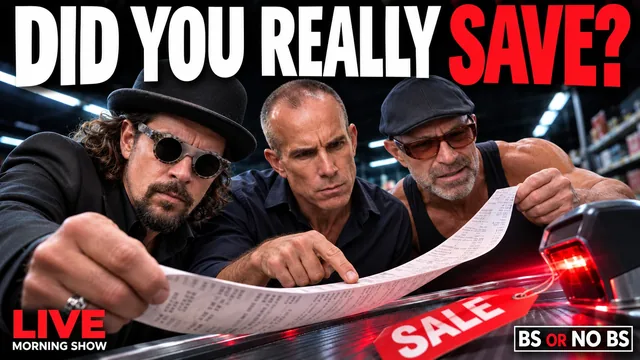
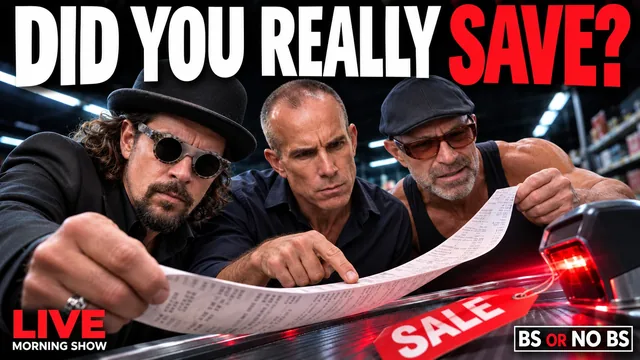
Read the complete transcript 00:02:55 Preston: You find something on sale that you never knew you wanted.
00:02:57 You buy it, take it home, and use it all the time.
00:03:01 So was it an impulse buy or a genuinely good deal?
00:03:04 Today, we're putting the bargain to the test only on The Big Show.
00:03:10 Keith: Good morning, nation.
00:03:10 Good morning, good morning, good morning, good morning, good morning.
00:03:13 Good morning, and welcome back to Mornings in the Live with Keith, Jon, and Friends,
00:03:17 your live morning show for real talk, motivating cons, and big conversations.
00:03:23 We got Jimmy on the buttons, and of course, we got our very own producer,
00:03:25 Neiman, out there making sure the words sound as good as I look this morning.
00:03:29 We got Duane and Rico doing the fucking arm wrestle for who's
00:03:32 gonna own the baby boomer token.
00:03:35 Our very own Dr.
00:03:36 Jon Paciocchi, our resident bullshit professor.
00:03:39 Brianna, you're always teaching around every single Tuesday.
00:03:41 Nation, you will not find this kind of knowledge anywhere on the planet to
00:03:45 start your day other than Mornings in the Live with Keith, Jon, and Friends.
00:03:49 You know who you are.
00:03:51 You're in the house.
00:04:11 Keith: Oh, hey, you showed up on a Friday of Thanksgiving week and you
00:04:14 walked into Costco for toothpaste.
00:04:16 Now you're holding a half-price jacket you didn't want 10 minutes ago.
00:04:20 Yeah.
00:04:20 What changed?
00:04:21 Hey, put saved or spent in the chat, and if you're voting saved, tell
00:04:24 me what you were going to spend before you walked into Costco.
00:04:28 Good morning, nation, and welcome back to the big show that we call mornings
00:04:32 in the lab with Keith John and friends.
00:04:33 I am the handsome one.
00:04:34 Yes, I am.
00:04:35 My name is Keith Bilous, and we are getting up and after it this morning.
00:04:39 Good morning, everybody.
00:04:40 Where are you joining me from here today?
00:04:42 I would love to have you join the conversation.
00:04:44 It is Friday, and I wanna see how many of you can defend
00:04:47 the contents of our own carts.
00:04:50 Yes, we got a conversation with Petro in the lab today.
00:04:53 We're talking about, yeah, uh, saving money.
00:04:56 It-- So it's funny.
00:04:57 You can save mon- But if I don't need it, am I still saving the money?
00:05:01 If I don't need what they're telling me I should buy right now, am I
00:05:03 still saving the money, or is it completely a psychological situation?
00:05:08 All right, coming up, trending topic.
00:05:09 We, we kinda teased it a little bit yesterday.
00:05:11 Andy Taylor.
00:05:12 Yeah, if you grew up with Duran Duran, you probably heard his
00:05:16 guitar before you knew his name.
00:05:18 He died at sixty-five after living with prostate cancer.
00:05:21 We'll remember the music, talk a little about why it can be so damn
00:05:24 easy to put off a conversation about your motherfucking health.
00:05:28 Yeah, then I'm gonna give you a real choice.
00:05:29 Same thing on the shelf, two different prices.
00:05:32 Do you shop local, or do you take the better deal?
00:05:34 I hope you're going local.
00:05:35 Hey, I want a number from the people voting local.
00:05:38 Five bucks more, fifty bucks more.
00:05:39 Where does your answer change?
00:05:41 If you can get it from the guy over there, do you drop it, or do you get it
00:05:44 over there if you can get it quicker?
00:05:45 Good morning, Rico.
00:05:46 Good morning, Sullivan.
00:05:46 Good morning, Petro.
00:05:48 Good morning, everybody.
00:05:49 Good to see you guys out in the community this morning.
00:05:51 Hope you guys crushed Thanksgiving yesterday.
00:05:53 Hope you guys had an awesome day.
00:05:55 Uh, and hey, and what if your house can read your mood?
00:05:59 Is it looking out for you, or is it looking out for, uh, is it looking out
00:06:01 for y-y-your, how your house suddenly knows things you never meant to tell it?
00:06:05 Could you imagine if your house knew your mood?
00:06:07 Yeah.
00:06:07 And at the desk, we're gonna separate a bunch of fun topics today.
00:06:10 Guys, there's apparently a big Nevada UFO vault they're burying in the
00:06:15 ground with a bunch of UFO stuff.
00:06:17 You know how we're digging into UFOs here.
00:06:18 Coming up at eight thirty today, Sean Wieronna, the guy who won the first
00:06:23 ultimate typing championship at South by Southwest with a hundred and sixty-three
00:06:28 words a minute on regular text.
00:06:30 Really?
00:06:30 We're actually having that conversation today.
00:06:32 Yes, we are.
00:06:33 And I wanna ask him…
00:06:34 Yes, Jimmy, I'm making fun of the guest already.
00:06:37 We're actually fucking talking about typing.
00:06:39 Yeah, who found this guest?
00:06:40 Anyway, Sean Wieronna is dropping in the lab this morning.
00:06:42 Looking forward to that.
00:06:43 I know, Neiman, you're a typer.
00:06:45 You're a word writer.
00:06:45 We're talking typing.
00:06:47 It's always gonna be one question and out.
00:06:48 "Hey, Sean, how fast…"
00:06:49 Okay, see you later.
00:06:50 Yeah, bye.
00:06:51 video clip: Yeah,
00:06:51 Keith: there you go.
00:06:52 That's it.
00:06:52 Just fucking two questions with the guy.
00:06:55 Hey, what do you guys think of the g- Oh, hey, we, no, Neiman, we,
00:06:59 do, do we have a, a memory guy?
00:07:02 Was there a memory guy?
00:07:03 Hey, Jim, Jim, you wanna bump my volume up a little bit?
00:07:05 I think my, I think the music can go up my…
00:07:07 Uh, hold on.
00:07:07 Maybe it's my side here, actually.
00:07:09 Uh, there we go.
00:07:12 All right.
00:07:13 There we go.
00:07:13 Yeah.
00:07:14 Hey, I wanna…
00:07:15 So, no, I think we had a memory guy, Neiman.
00:07:17 I think we had a memory guy in the lab a few months ago that was, uh, fast
00:07:19 at memory, but maybe we had a typer.
00:07:21 I don't know.
00:07:22 Also, coming up, Dr.
00:07:23 Jon Petschel, hour two, we're gonna talk bullshit or no bullshit.
00:07:26 Uh, plus, I got a bunch of other fun topics on the board here today
00:07:28 if you guys can look behind me.
00:07:29 We got a full packed show, a big board, a lot of activities.
00:07:32 I found a dog bathing in a hammock.
00:07:34 Yeah.
00:07:35 And, uh, well, you guys can see.
00:07:37 We got the UFO vault.
00:07:38 Apparently, people are going blind on GLPs.
00:07:41 We're gonna talk about that today as well.
00:07:43 And, uh, but hey, guys, I wanna see you in the chat.
00:07:45 Put your city in the chat, because you're just coming in, and talk to me.
00:07:49 Are you doing saved or are you doing spent?
00:07:53 Coming up next live on Mornings in the Lab with Keith, Jon, and friends.
00:07:58 Welcome to Friday at Mornings in the Lab.
00:08:00 I formed a committee to decide exactly when the weekend begins.
00:08:04 Meeting denied.
00:08:05 Nation, comment your first move when Friday work is done
00:08:12 video clip: Good morning, Nation.
00:08:13 We hope our American friends had a fantastic Thanksgiving.
00:08:17 Preston: Yesterday we asked whether you could be grateful and still want more.
00:08:20 The chief certainly thinks you can.
00:08:22 Keith: He compared life to racing cars.
00:08:24 You're grateful you won the race, but you're
00:08:26 Preston: still looking for ways to go faster.
00:08:28 Yesterday's words of wisdom actually made sense.
00:08:30 Be like ass hair, no sunshine, surrounded by shit, and somehow it keeps growing.
00:08:35 video clip: Whether you're winning races or dealing with life's
00:08:37 bullshit, don't stop growing.
00:08:40 That's one Thanksgiving lesson worth keeping.
00:08:42 Preston: It's Friday, Nation.
00:08:43 We've got Petro joining us, so who knows what good shit's coming our way.
00:08:47 Let's start the morning loop
00:08:57 Keith: It was Howard Steven Berg.
00:08:58 That's who it was, Neiman.
00:08:59 Jimmy, Howard Steven Berg, yeah, the fastest reader.
00:09:02 Oh, we're going, so from fastest reader to fastest, uh, writer.
00:09:06 Hey, what do you guys think of the brand new set we're dropping here this
00:09:08 morning on Mornings and Alive to keep you on and friends, it's Friday, ah,
00:09:11 J- J- November 27th, and the handsome one's gotten much, much taller.
00:09:14 Hey, guys, say the shop down the street has what you need, but if it costs
00:09:19 20 bucks more than the same thing online, do you buy it local or do
00:09:22 you buy it over there with the deal?
00:09:24 Put local or deal in the chat before Pick A Side joins us in a number of minutes.
00:09:28 But Jimmy, let's get here, pal.
00:09:29 Let's get to the trending topic this morning.
00:09:31 What Duran Duran song takes you straight back to the place you can still see?
00:09:36 Give me the song and title in chat.
00:09:37 I wanna hear about it from you guys.
00:09:38 Hey, getting after it this morning.
00:09:39 Good morning, my baby.
00:09:40 Getting after it on the treadmill this morning, crushing her big run and
00:09:44 coaching her good friend, uh, yesterday, which I fucking love watching that.
00:09:47 Hey, Andy Taylor was one of those guitarists who made that sound.
00:09:52 You guys wanna hear me play Duran Duran sound, Jimmy?
00:09:55 Should I do the little bit of Duran Duran?
00:09:57 No.
00:09:57 Hold the horses.
00:09:58 No Duran Duran coming up here.
00:10:00 His family and band said he died at home on Monday this week, surrounded by family.
00:10:04 The guy was 65.
00:10:05 I'm talking about it for one reason, one reason only, to
00:10:09 create awareness for all of you.
00:10:10 Yes, the guy died of prostate cancer, and none of us need to do the same thing.
00:10:14 Jimmy, let's run the clip to get the conversation started.
00:10:18 We'll spend three hours comparing air fryers, but ask us to call a doctor
00:10:22 and suddenly we're too fucking busy.
00:10:25 Duran Duran guitarist, Andy Taylor, died at 65 after living
00:10:28 with advanced prostate cancer.
00:10:30 Behind the music, he was a husband, dad, and grandfather.
00:10:33 Jon, what keeps men from asking about their health?
00:10:35 Time, fear, or the ancient male tradition of saying, "I'm
00:10:39 fine," while falling apart?
00:10:42 Yeah, so uh, I'm looking at the comments, guys.
00:10:44 We'll come back to Pick A Side here.
00:10:45 But guys, Andy Taylor, in 2022 when Duran Duran went into the Rock and Roll
00:10:49 Hall of Fame, he couldn't be there.
00:10:52 Sucked, man.
00:10:53 The band shared that his l- the band shared at the time that he was living
00:10:56 with some advanced prostate cancer.
00:10:58 Uh, so guys, I would invite you to take this conversation this morning,
00:11:01 we're gonna stay here for a minute, and just do one thing with it.
00:11:03 Please, do one thing with it.
00:11:04 Take it with you today.
00:11:06 Take it with you today.
00:11:07 If you have not been to the doc, if you have not looked in your own
00:11:09 mirror at your own health, today is the day to do that because, Jimmy, we
00:11:14 don't wanna lose any of the audience.
00:11:15 We don't want J- we don't want Good Time to go anywhere, we don't want Rico to
00:11:18 go anywhere, we don't want the Whitakers to go anywhere, and we do not want M- M-
00:11:22 M- M- M- Mike Sullivan to go anywhere.
00:11:23 And we definitely do not want our very own resident doctor,
00:11:27 John Petrucelli, going anywhere.
00:11:29 So guys, if you haven't done anything lately, please go and
00:11:33 get yourself taken care of.
00:11:34 And if you haven't, why haven't you?
00:11:36 I know Rico's taking care of himself.
00:11:38 Our very own Rico was, uh, was holed up somewhere, I'm not gonna say it, a few
00:11:42 weeks ago, but he's back at it getting up with us every single morning, you guys.
00:11:45 So we're talking Andy Taylor.
00:11:47 Guys, it's simple, and I'm just gonna add a little F word in the middle, so
00:11:50 if you've got kids around, warn them.
00:11:53 Don't fucking wait.
00:11:54 Men, get your job done.
00:11:56 Honeys, get your husband out there to get it done.
00:11:58 Kids, if you're listening to me right now, get your dad to get his ass checked.
00:12:01 Get that prostate checked, guys.
00:12:03 I want you here li- hanging … And here's the thing, here's the thing, here's the
00:12:07 absolute, and re- and, and Good Time knows this, there's no buggering going on.
00:12:11 There's no, there's no fingers up the rear end.
00:12:13 N- none of that.
00:12:13 It's a PSA test that measures protein in the blood.
00:12:16 A high result can have cau- have causes other than cancer, but guys,
00:12:20 it's get your blood done, get it taken care of so we can get on with it.
00:12:23 All right, let's get on over here this morning on Pick A Side, and
00:12:27 I see you guys in the comments.
00:12:28 Good morning.
00:12:29 Oh, good morning, this is Lover.
00:12:31 Oh.
00:12:32 Hold on.
00:12:32 Oh.
00:12:34 We got Whitaker with O, L, S and D.
00:12:38 Yeah.
00:12:39 This is Cheryl signed in from another YouTube channel, and
00:12:42 yeah, check those prostates.
00:12:44 We got our very own Cheryl Whitaker on the show today.
00:12:45 Hey, Whitaker, where do you think of the new set?
00:12:47 Yeah, I'm trying to get Cheryl go- Well, I'm, I'm not trying.
00:12:50 I'm encouraging Cheryl to lean into new sets in her backyard.
00:12:53 Yeah, or in her, in her little environment there.
00:12:54 So, uh, uh, good morning, Cheryl Whitaker.
00:12:56 Good morning, everybody.
00:12:57 Here we go, guys.
00:12:57 We're gonna get into this one right now.
00:12:58 I see your guys' comments.
00:12:59 Rico's going local.
00:13:01 Uh, uh, Petro's going local.
00:13:02 Sullivan's going local.
00:13:03 But are you going local?
00:13:04 The shop down the street wants 100 bucks.
00:13:07 Online, it's 80.
00:13:08 Are you giving the guy down the street the extra 20 bucks,
00:13:11 or are you gonna go online?
00:13:12 Now, I'm gonna be honest, there are times where I will lean into the good old
00:13:15 Amazons, and I, I'm, I'm an Amazon freak.
00:13:18 But if I can go local, I absolutely do.
00:13:21 I'll tell you guys right now, all the bikes that my family has
00:13:23 bought have all been bought local.
00:13:24 I, uh…
00:13:25 Actually, I lied.
00:13:26 I lied.
00:13:27 Uh, the last couple of little bikes we bought from Canadian Tire.
00:13:29 But the big bikes for all of us, we went down to the local shop
00:13:32 so we can support the local guy, uh, because you gotta buy local.
00:13:35 That'd be my, uh…
00:13:36 Uh, and it's harder than ever, right?
00:13:38 It's, it's, it's harder than ever to, uh, uh, to buy local,
00:13:41 especially- Welcome to Pick a Side.
00:13:44 Doing right by your neighborhood can put your wallet on the spot.
00:13:47 The shop down the street wants $100.
00:13:49 Online, it's $80.
00:13:51 It's the same item with the same return terms.
00:13:53 That's $20 for keeping it local.
00:13:54 So nation, pick a side.
00:13:57 Do you pay more to support your local shop, or take the
00:14:00 better deal and keep that $20?
00:14:09 side this morning.
00:14:10 Are we going local or are we going, are we going local or are we going online?
00:14:13 Do what we can to get what we can.
00:14:15 And, uh, uh, yes, if you can go local, I'm not sure why you wouldn't be.
00:14:19 Uh, hey, guys, coming up in a few moments we're gonna talk GL-
00:14:22 apparently GLPs are making your eye…
00:14:24 making people go blind.
00:14:25 Yeah.
00:14:25 And also, I found some news, my friends.
00:14:28 Canadians consuming more cannabis than alcohol ever.
00:14:33 Yeah, true story.
00:14:33 That's shifting.
00:14:34 The plans are shifting.
00:14:35 Uh, all right, let's head over to What If, Jimmy Jimmy.
00:14:38 Hey, guys, here's this one.
00:14:39 Get this.
00:14:39 Check this out, guys.
00:14:40 We're gonna get this conversation going here.
00:14:41 You come home in a great mood.
00:14:42 Johnny Anderson's here.
00:14:43 Hang tight, Jimmy.
00:14:44 Hang tight, Jimmy.
00:14:44 Hang tight, Jimmy.
00:14:45 You come home in a great mood, your house decides you need calming
00:14:49 down, and it puts on whale sounds.
00:14:51 Yeah, do you guys have a smart home?
00:14:53 Yeah, could you imagine coming home, the lights are setting up nicely,
00:14:56 uh, the sounds are setting up nicely.
00:14:58 Are you typing cozy or creepy?
00:15:00 Yeah, yesterday I had the window open, had the fireplace on, and I was getting a lot
00:15:04 of stuff done on a Thanksgiving Thursday.
00:15:06 And hey, let's go lean into this guy.
00:15:08 What's this guy been up to?
00:15:09 His name is Jon Anderson
00:15:12 video clip: Yesterday we talked about being grateful and still wanting more.
00:15:17 I tested that theory at Thanksgiving dinner.
00:15:22 Chief, I was grateful for the turkey.
00:15:24 I just wanted another fucking turkey
00:15:29 Keith: What's up, Johnny?
00:15:30 Johnny, how are you, pal?
00:15:32 Jon Andersen: Good, brother.
00:15:32 How are you?
00:15:33 Keith: I'm fantastic.
00:15:34 Good to see you here this morning.
00:15:35 Uh, we'll do the same thing we did yesterday.
00:15:37 Keep you around for a few little moments, have some fun, and get shits and giggles
00:15:40 with you, then we'll get you on your way.
00:15:41 How are you?
00:15:43 Jon Andersen: I'm a little tired, but I'm good.
00:15:45 I slept good.
00:15:46 It was- Yeah … just got to bed a little late, a little later than normal.
00:15:48 Keith: Yeah, I can tell you're a little bit tired.
00:15:50 It's funny when you hang out with somebody enough and like,
00:15:51 "Oh yeah, he's tired today."
00:15:53 Yeah.
00:15:53 Yeah, yeah, yeah.
00:15:54 Hey, dude, um, couple quick things for you.
00:15:56 Uh, uh, we, we talked about it yesterday.
00:15:58 Uh, um, a Duran Duran guy passed, but he's still trending here, so
00:16:01 we talked a little bit about it.
00:16:02 Uh, how was your day with the family yesterday?
00:16:04 Uh, were the king, the king…
00:16:05 And seriously, King Tide's gone, or is that like a one day- It was
00:16:12 Jon Andersen: Fuck, I don't know.
00:16:13 Jesus Christ, it's, it's…
00:16:14 I mean, I, as far as I…
00:16:17 Well, uh, the
00:16:20 it, eight feet over what it normally is.
00:16:24 Keith: Oh, wow.
00:16:24 Okay.
00:16:25 Yeah.
00:16:25 Oh, I know.
00:16:25 I saw, I saw some…
00:16:27 Yeah, I saw s- I saw some video-
00:16:29 Jon Andersen: So, so imagine if you walk out to a normal, a normal beach, right?
00:16:32 You went to- Yeah … right where the water is.
00:16:34 Keith: Yeah.
00:16:34 Jon Andersen: If I put my hand over my head- Yeah
00:16:36 Keith: I
00:16:37 Jon Andersen: would be completely underwater.
00:16:38 Keith: Dude, that's crazy, man.
00:16:40 Well, it's funny because I, I, I'm, I'm picking up a green
00:16:42 screen for the studio here.
00:16:44 Uh, I know, in Canadian, I didn't get it local.
00:16:46 I couldn't get it local.
00:16:46 I had to go to Amazon, uh, because we got Brianna making some
00:16:49 content next week with me here.
00:16:50 So I was doing height measurement because we know, like, I'm almost
00:16:53 s- I'm almost sev- like, I'm almost seven feet tall, dude.
00:16:55 Like, I'm 6'7".
00:16:57 I'm not.
00:16:58 So I was standing, I was standing here in my set and I'm- 5'6".
00:17:02 Y- yeah.
00:17:02 Well, no, according to my family, I might, I might be lucky if I'm 5'6".
00:17:06 But I was standing here in my studio yesterday just trying to measure height.
00:17:10 Yeah, yeah, exactly.
00:17:12 So, uh, Eric, so Kate says-
00:17:13 Jon Andersen: But, but brother, in here, but in here, in here you're nine,
00:17:16 you're nine feet tall and 500 pounds.
00:17:18 Keith: That, that's exactly correct.
00:17:20 In here, I'm nine feet tall and more than anything.
00:17:23 Yeah, absolutely, 100%.
00:17:24 But it's funny 'cause I was thinking of more height.
00:17:26 So when you were talking, I remember you actually said eight feet.
00:17:28 I'm like, holy shit, that's, like, actually almost to
00:17:30 my ceilings in my house.
00:17:32 Like, just natural, dude.
00:17:33 Dude, that's
00:17:33 Jon Andersen: almost, that's like a normal ceiling, dude.
00:17:35 That's
00:17:35 Keith: crazy.
00:17:35 That's crazy, man.
00:17:36 Yeah.
00:17:36 Yeah, yeah, yeah.
00:17:37 Yeah, 100%.
00:17:38 Jon Andersen: And
00:17:38 Keith: it's on- Hey, Andrew
00:17:39 … Jon Andersen: both coasts.
00:17:40 Keith: So you- What, you…
00:17:41 So I…
00:17:41 Yeah, I know the East Coast- Where the fuck am I?
00:17:43 … got
00:17:43 Jon Andersen: slammed, eh?
00:17:43 Is, so is there, like, another part of world where the water's way low?
00:17:48 Keith: Oh, Jimmy, Jimmy, good job, man.
00:17:50 Check this out.
00:17:50 Uh, yeah, so this is some of those king tides happening, man.
00:17:52 Like, just, uh, it's nastiness, uh, all, all over the planet there.
00:17:56 Uh, hey, did you, um, did you crush some, uh, crush some good meat yesterday?
00:18:02 Jon Andersen: Yeah, it was actually the, uh, the order- Talk
00:18:04 Keith: to me
00:18:05 … Jon Andersen: which rib and prawns.
00:18:08 Keith: Oh.
00:18:08 So
00:18:09 Jon Andersen: I stayed in, I stayed in that because, you know, if I start
00:18:11 eating cheese and shit like that too- No … or if my stomach just acts up.
00:18:15 Keith: 100%.
00:18:15 Yeah, yeah.
00:18:16 So just lean into the pra- let's talk about that.
00:18:18 So you, you took the opportunity just to lean heavily into the…
00:18:21 You found a choice, the prawns, and you went there, right?
00:18:23 Simple as that.
00:18:25 Jon Andersen: When, and 'cause the thing, thing I re- always remind myself is of
00:18:29 course it's great food, but if I eat something that makes me fucking feel
00:18:33 terrible and it wrecks my mood, that's why I'm here, to be with my people.
00:18:37 Keith: Yeah.
00:18:38 Yeah, exactly.
00:18:39 Jon Andersen: You- So I'm gonna feel fucked up 'cause I ate a bunch of
00:18:40 shit that, that, that doesn't make me feel good doesn't make sense, so.
00:18:44 Keith: Nah, it doesn't at all, does it?
00:18:45 I, I'm with you.
00:18:46 100, 100% with you.
00:18:47 Yeah.
00:18:47 Yeah, yeah, yeah.
00:18:48 Yeah.
00:18:48 Yeah, I was fucking I've been…
00:18:50 Dude, I'm, I'm trying to grow, right?
00:18:51 So I've just been crushing meat, dude.
00:18:53 God, I've been fucking eating f- meat.
00:18:56 Like I, I'm-
00:18:57 Jon Andersen: Has your, has the scale changed at all?
00:18:59 Keith: No, and I mean that in a good way.
00:19:02 Like, like we…
00:19:03 Like seriously, dude.
00:19:04 Like, like, uh, and I'm feeling, I'm feeling stronger, I'm feeling
00:19:08 bigger, but I'm not going…
00:19:09 My, my weight is not going down, but on my body comp thing, my
00:19:11 body fat continues to go down.
00:19:13 But dude- Yeah … I'm eating…
00:19:15 So, um, so I'm on to- Here's what's gonna happen.
00:19:17 … Jon Andersen: 100%.
00:19:17 Keith: Here's what's gonna happen, okay?
00:19:18 Talk to me.
00:19:18 Talk to me.
00:19:19 Jon Andersen: So as you eat more, your body fat's still going
00:19:22 down, the scale's not moving.
00:19:23 So you're-
00:19:24 Keith: Yes
00:19:24 … Jon Andersen: still, you're basically, at this point, you're one-to-one recomping.
00:19:28 Keith: Okay.
00:19:28 Yeah.
00:19:28 That's kinda what I figured.
00:19:29 So- I am, yeah
00:19:30 … Jon Andersen: at a certain point, there'll be no more fat to, to, to burn.
00:19:34 Keith: Yes.
00:19:34 Jon Andersen: Right?
00:19:34 And then that, it'll be muscle showing up on the scale.
00:19:38 Keith: Oh, yeah.
00:19:38 Yeah, yeah, yeah, yeah, yeah.
00:19:39 Yeah, yeah.
00:19:40 Like, um, uh, from 120, 'cause I'm on 148 right now, so kinda the last 30 days, we,
00:19:45 we, we, we are very much on a stable…
00:19:48 Like, it's been like just a fluctuation, but no like wong,- Yeah … no
00:19:52 bong Just very steady as she goes.
00:19:53 Just very much this.
00:19:53 100%.
00:19:54 That's exactly it.
00:19:55 Yeah.
00:19:56 And you know what's funny?
00:19:57 It's funny how you learn when you do th- and you've been doing this
00:19:58 your whole fucking life, but…
00:20:00 So I had a, I had, I had a burger yesterday with Lauren
00:20:02 and I had a bun with it, okay?
00:20:03 So whatever, I had a bun.
00:20:04 And it's funny 'cause I get on the scale today, just 'cause I do my
00:20:06 daily thing, and you see how it blips up just a little bit 'cause
00:20:09 you got a little bit extra water and carbohydrates in your body, right?
00:20:11 And then as the day goes on, I get back on it again tomorrow, when I'm doing my
00:20:14 carbs, it'll go back to the same thing.
00:20:15 But I just find it's fascinating, man, because I've been learning
00:20:17 from you, um, this whole thing and, and, and, uh, it's good.
00:20:21 It's, I'm eating more meat than ever, I'm feeling stronger than ever,
00:20:24 and it's, uh, it's, it's fucking pretty awesome, man, is what it is.
00:20:27 100%.
00:20:27 Yeah, absolutely.
00:20:28 And, and, and the family members are feeling-
00:20:32 Jon Andersen: I love how it translated into literally a direct translation
00:20:35 into the funnel of the show.
00:20:37 Keith: Yes.
00:20:38 Well, yeah, who's, who's speaking?
00:20:39 I got a text come-
00:20:40 Jon Andersen: That's part of, that's part of the, that's part of what makes
00:20:42 it so powerful is that people understand that- Once you level up one part of your
00:20:48 life, the other parts start going with it
00:20:50 Keith: Yeah.
00:20:51 Well, hey, you saw that text I sent you yesterday.
00:20:53 So I sent Anderson a little text into the behind-the-scenes of
00:20:55 what's happening in the business here, and he's like, "Fuck yeah."
00:20:58 I go, "Yeah."
00:20:59 And then, of course, I butchered up his saying about put your, put your
00:21:02 head down for 40 yards and work at it, 'cause I butcher everything up.
00:21:05 You put,
00:21:06 Jon Andersen: you put, you put, like, three of them together.
00:21:08 Keith: I totally did.
00:21:09 I absolutely, totally did.
00:21:11 Hey, so I wanna put this one on the table.
00:21:13 So, 'cause we talk GLPs on the show all the time, we talk, uh, the tech stack.
00:21:16 Uh, there is some concerns in the world, uh, and I, I, I'm
00:21:20 just gonna put it out there.
00:21:21 Uh, and I don't say concern like negative-negative, but there are…
00:21:24 There's awareness.
00:21:25 Uh, there are some folks that are experiencing, uh, loss of or
00:21:29 decrease of eyesight because of GLPs.
00:21:31 Sterling Preston, set it up.
00:21:34 Why the fuck does this eye chart say my tech stack might be coming for my retinas?
00:21:38 Relax.
00:21:39 A review of 142 trials found about four extra cases of diabetic
00:21:43 retinopathy per thousand people, mostly in diabetes trials.
00:21:46 Fewer glaucoma cases, but the optic nerve question's still a mystery.
00:21:50 Doc, do I read the eye chart or my damn prescription first?
00:21:56 Yeah, so guys, you know, we, you know, I, I, I like to kind of strip
00:21:58 back from the headlines, but if a headline says a drug raises your risk,
00:22:02 uh, do you want the percentage or the number of people it happened to?
00:22:05 'Cause here's the thing, I wanna hear from you, people or percentage?
00:22:08 Uh, the review on this card pulled 142 randomized trials.
00:22:12 Like, Johnny, we're talking 142 people.
00:22:15 We're not talking 14 million or 140 million people.
00:22:19 Uh, 142- So
00:22:20 Jon Andersen: tell me when you want me to jump in and solve this for you.
00:22:23 Keith: 142, boy, you're, you're gonna, you're gonna get to it in
00:22:26 a quick second, because it came from the world of diabetes, right?
00:22:29 So most of the evidence came from people with type 2 diabetes.
00:22:34 So maybe, just maybe, that, that, that precursor was a part of this.
00:22:41 Uh, I'm not suggesting it is or isn't, but- All right, here's
00:22:43 what, here's what I'm getting.
00:22:43 Go ahead, Johnny.
00:22:44 Jon Andersen: Here's what I…
00:22:44 I don't have the guaranteed proof of this.
00:22:46 Keith: Yeah, yeah.
00:22:47 Jon Andersen: But I'm gonna venture to say that if we took those same two type
00:22:51 2s, obviously they're type 2s, they gave that to themselves through shitty
00:22:54 eating, so we know that they're fucked up.
00:22:56 Keith: Yeah.
00:22:57 Yes.
00:22:57 Jon Andersen: So now you give them, now you give them some other
00:22:59 agent, let's just call it an agent-
00:23:01 Keith: Yes,
00:23:02 Jon Andersen: yes … to make it easier for them to even be more
00:23:05 fucked up with their malnourishment.
00:23:07 Keith: Yeah,
00:23:07 Jon Andersen: well, yeah, there you go.
00:23:08 So let's just talk about people losing eyesight from malnourishment, let's put
00:23:11 all of the, the, the mechanisms away.
00:23:14 Keith: Yeah.
00:23:14 Yeah.
00:23:15 Jon Andersen: Well- 'Cause I bet this study doesn't change much.
00:23:17 No, well, so- The question is, what agents helped them get further malnourished?
00:23:21 X, Y, Z, A, B, C, I don't think it matters.
00:23:24 Keith: So, and th- this is why- They had huge
00:23:25 Jon Andersen: gaps of malnourishment
00:23:26 … Keith: and this is why I feel like it's kind of my mission, uh, and pr-
00:23:29 and I, I think you probably share the same values that I do with this,
00:23:32 is that I'm really trying to cut through the headlines and the garbage
00:23:35 headlines, and the garbage news, right?
00:23:38 Um, because we know these tools work, um, but, uh, uh, so here's the thing.
00:23:43 It estimated about four more cases of diabetic re- re- uh,
00:23:47 retinopathy over per thousand people.
00:23:50 But here's what it didn't find, Johnny.
00:23:51 The review found fewer glaucoma cases.
00:23:54 So again, guys, uh, I'm just, I wanna cut through the headline.
00:23:58 When you see the headline that says, "GLPs are causing blindness,"
00:24:02 hold the fucking horses.
00:24:04 Go and peel back the onion.
00:24:05 Go read, do your research, go ask a lot of questions instead of just sitting
00:24:09 down at the fucking dinner table with everybody going, "Oh, so you're on a
00:24:12 GLP, and I guess you're gonna go blind."
00:24:13 No, doesn't fucking work that way.
00:24:16 I'll tell you how it works up here in Canada, Johnny.
00:24:18 Jimmy, let's go here, man.
00:24:19 Folks in Canada, for the first ever time ever, are consuming
00:24:23 more cannabis than alcohol.
00:24:24 Jimmy, set it up.
00:24:26 The weed shop next door just beat this liquor store in Canada's daily use race.
00:24:30 The fucking weed shop.
00:24:32 Nobody saw that coming.
00:24:33 Almost daily, too.
00:24:34 In the survey, 5.7%
00:24:36 for cannabis, 5.2
00:24:37 for alcohol.
00:24:38 A close race, despite one team forgetting where the finish line is.
00:24:41 So the liquor store is looking across the street like, "You stole my customers?"
00:24:45 Canada, what's changed?
00:24:46 The habit or just the aisle?
00:24:50 So Johnny, this is a big one, man.
00:24:52 So researchers, researchers with this one looked at nearly 100,000
00:24:56 Canadians, 100,000 adults, so not just 10 fucking people, right?
00:24:59 100,000 people.
00:25:01 And this is fascinating to me because, you know, we know, uh, a number of years ago
00:25:04 Canada federally legalized the product.
00:25:06 The United States is still politically trying to get themselves there.
00:25:09 Uh, but 100,000 people surveyed.
00:25:11 Uh, more people now consume f- almost 6% Canadians will consume cannabis
00:25:17 daily compared to, uh, just 5% alcohol.
00:25:20 So you're seeing the pass now.
00:25:22 People are like, "Nah, it's less."
00:25:23 Uh, so there you go.
00:25:24 There's the stats shifting right in front of us.
00:25:26 Jon Andersen: Well, I think at a certain point people realize that they
00:25:29 have far less problems smoking weed
00:25:32 Keith: than drinking.
00:25:33 Yes.
00:25:33 Just-
00:25:34 Jon Andersen: When was the last time you saw two fucking pot smokers in
00:25:36 a parking lot fucking duking it out?
00:25:38 Keith: You never do.
00:25:39 Oh, speaking of duking it out.
00:25:41 Yeah.
00:25:41 Speaking of duking it out, Jimmy, I think I put this…
00:25:44 I think it's Epic or D- if not, Jimmy, did I put that fight?
00:25:47 I wanted to show Anderson this fight, uh, the, the hockey fight, Jimmy, that,
00:25:50 that ran a couple nights ago in Boston.
00:25:52 Uh, and I, and I apologize that if I didn't gr- I, I'm
00:25:54 sure I grabbed that somewhere.
00:25:55 If I didn't, uh, I think, I think I do have it.
00:25:58 I'm looking at your, your, your text here, Jimmy, 'cause I, I, I,
00:26:01 uh, I, I wanted to show Anderson this thing, man, 'cause I know
00:26:04 Anderson's not the biggest hockey guy.
00:26:06 Uh, no.
00:26:07 Jimmy, if you can find it while Johnny's here, that'd be awesome.
00:26:09 But if not, we can, we can get after it on Monday.
00:26:11 Uh, but anyway, so Canadians are consuming more, more cannabis than, uh, than,
00:26:15 than, than alcohol than ever before.
00:26:18 Uh, so here's something else that's, that's funny, man.
00:26:20 So, uh, this also…
00:26:21 So it's funny how I find news tends to happen when…
00:26:24 So it's Thanksgiving week, and maybe it's a slow news week, maybe it's not.
00:26:28 But, uh, uh, the big, the big El Presidente and his, uh, his Secretary
00:26:33 of War Hegseth are in the news because apparently, Johnny, there is
00:26:37 a secret vault in Nevada, uh, that has a ton of UFO material evidence.
00:26:47 Jim, run the clip.
00:26:48 Sterling, these blueprints have three-foot walls and a steel door.
00:26:52 What the hell are we locking up?
00:26:54 Alien junk or my search history?
00:26:56 Pentagon contractor planned a Nevada vault for unusual
00:26:59 hardware and biological samples.
00:27:01 No public record says it was built.
00:27:03 Hell of a just in case.
00:27:04 Nation, is this evidence of aliens, or did somebody design the world's
00:27:07 most expensive empty-ass junk drawer?
00:27:10 Let us know in the comments
00:27:13 So they actually, so- Don't
00:27:15 Jon Andersen: they call this place Area 51 or something like that?
00:27:17 Keith: Y- you're right, yeah.
00:27:18 So the…
00:27:18 You're absolutely correct.
00:27:19 But here's what turned up in 2009.
00:27:21 A Pentagon contractor drew up plans for an underground vault in North Las
00:27:26 Vegas, because I guess they wanted to, uh, they wanted somewhere to store this
00:27:31 unusual hardware, uh, if they found any.
00:27:35 So it's like, yeah.
00:27:36 So by the…
00:27:36 But I guess now this contractor has gone public, saying, "Yeah, they
00:27:39 wanted me to build this vault," but he ended up building it.
00:27:42 So now I guess the administration's kind of backtracking, going, "Uh, yes,
00:27:46 we did ask somebody to build this."
00:27:48 And, uh, you know, as time keeps going on, it's just connect- the connecting
00:27:51 the dots whether these UFOs are real or not real or whatever it is.
00:27:54 The fact of the matter is they're fucking real, Johnny.
00:27:56 They're real.
00:27:57 UFOs are real.
00:27:57 Shawn Rhoden joining us in a number of minutes here.
00:27:59 We're talking typing- I
00:28:00 Jon Andersen: mean, to th- to think that there's, to think
00:28:03 that we're the only fucking creatures in the universe is silly.
00:28:06 Keith: Oh, it's absolutely silly.
00:28:08 Absolutely fucking
00:28:09 Jon Andersen: silly, huh?
00:28:10 And we're, we're like a fucking pimple on, on a dog's ass.
00:28:14 Keith: Yes.
00:28:14 Jon Andersen: On a, on a fucking elephant's ass.
00:28:16 We're just this little bitty piece of the universe.
00:28:18 To think that- Yeah … we're the only fucking life, Jesus.
00:28:20 We're probably, like, the most uncivilized life that's out there, for Christ's
00:28:25 Keith: sake.
00:28:25 Well, yeah, yeah.
00:28:26 Coming up, Shawn Rhoden's joining us.
00:28:28 In a few minutes, we'll walk Johnny out, and then we'll bring
00:28:30 Shawn and we're gonna talk typing.
00:28:31 Hey, Johnny, here's something really fascinating, man.
00:28:33 So this is one of these stories you kind of look at and you're like, "Really?
00:28:36 Really?"
00:28:37 But it's happening.
00:28:38 And here's a question for you: Can you thicken Arctic ice?
00:28:42 Sterling, Preston, let's set this one up for Johnny.
00:28:45 Preston: Sterling, they're pumping seawater onto Arctic
00:28:48 ice to make it thicker.
00:28:49 Finally, a pump that might actually do what the internet promised me.
00:28:53 Keith: In Cambridge Bay, some treated patches were up to 32 centimeters
00:28:57 thicker than untreated ice.
00:28:58 That's 12 inches, with actual measurements.
00:29:01 12 inches on one patch?
00:29:02 Yeah.
00:29:03 I'm impressed.
00:29:03 Yeah.
00:29:04 But who's paying for a bigger one?
00:29:05 And do the locals want this icy-ass experiment in their backyard?
00:29:11 What up?
00:29:11 Sean Royer talking Speed Type.
00:29:12 But Johnny, a team in Nunavut made a patch of sea ice thicker, uh, because
00:29:17 they wa- because w- obviously, uh, global warming is, is, is removing ice.
00:29:21 So these guys, uh, during the 2024-25 winter in Cambridge Bay,
00:29:24 researchers pumped seawater onto existing, existing sea ice to let it
00:29:30 freeze so that they could see if they could actually make the ice thicker.
00:29:35 Now, I know you're thinking, "Go, wait a minute, they're gonna
00:29:37 fucking freeze the whole Arctic?"
00:29:38 Well, that's not the goal, but they're…
00:29:40 It's just, it's, it's because ice is leaving the planet, they're,
00:29:45 these researchers are finding ways to say, "Okay, well, how
00:29:47 can we add more ice instead of having, uh, the sun melt the ice?"
00:29:52 Now, this seems so fucking obvious because all the water on Earth, but- Freeze that
00:29:55 John Petrocelli: frost
00:29:55 … Keith: yeah, well, that's exa- that's exactly it, yeah.
00:29:58 I just thought it was one of those- Mm … wow, that's a little, that's like a needle
00:30:01 in the haystack kind of problem because look at all the water on the planet, and
00:30:04 they're gonna try to make it thicker.
00:30:05 Like, look at this fucking picture.
00:30:08 Crazy Canadians, man.
00:30:09 Speaking of crazy Canadians, Jimmy found the fight.
00:30:11 I wanna show, I wanna show Johnny this one.
00:30:12 Johnny, check this out, man.
00:30:14 So one of the things that Canadians love…
00:30:15 Petro, eyes up on this one.
00:30:17 So look at this fight.
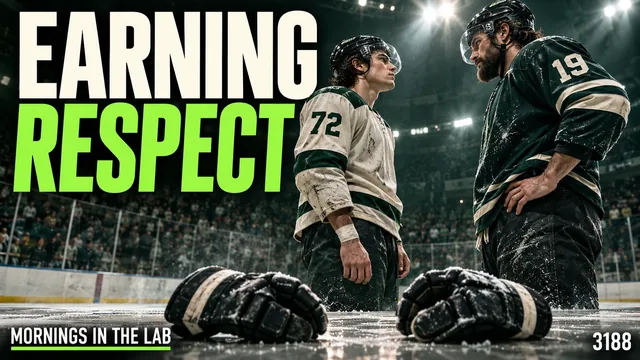
00:30:18 This happened two nights ago in Boston, so it goes almost a minute.
00:30:21 Check this out.
00:30:21 So, um, this is a heavyweight fucking fight and, um, it's, it's, uh, it- Are
00:30:29 Jon Andersen: these like, are these like two of the badasses of the team?
00:30:31 Keith: It, it is.
00:30:32 Yeah, it absolutely is.
00:30:33 And, uh, they go for almost- Like the
00:30:35 Jon Andersen: team's enforcer
00:30:36 Keith: is what I'm hearing … that's exactly, yeah.
00:30:37 That's exactly it.
00:30:38 And they just go at it for a good minute.
00:30:41 And so, so Johnny, just to give you perspective, the guy from Boston,
00:30:44 he's a well-respected enforcer.
00:30:47 Oh.
00:30:47 The guy from Winnipeg in white, he's the new guy and, uh, he made the team this
00:30:51 year and, uh, his role is- Oh, he's a
00:30:54 Jon Andersen: Keith.
00:30:54 Yeah, fucking A.
00:30:55 Get out there and fucking slow these motherfuckers down.
00:30:58 Keith: That's exactly it.
00:30:59 So they actually…
00:31:00 So J-
00:31:04 Like most of the league is like, "This is the fight of the season," because the
00:31:08 young guy took the big guy on, and the big guy's on, "Yeah, this kid, uh, he's, he,
00:31:12 he's making a name for himself," and he, and he, he wanted to help him basically.
00:31:15 Like, "Yeah, I, I, I, uh, you know, I, I see the respect and I wanna
00:31:19 give the respect and I wanna help this kid get the respect, man."
00:31:22 So pretty cool, eh?
00:31:23 That's fucking cool, dude.
00:31:24 It's the only sport on the planet, Johnny, where these guys can go out there and
00:31:27 beat the shit out of each other and then get celebrated for it and not go to jail.
00:31:33 And no, they, they weren't smoking weed or on cannabis . By the way, it's,
00:31:36 Jon Andersen: it's, it's, it's, it's the only sport where that happens where
00:31:39 the s- where the game is not to fight.
00:31:41 Keith: Yeah.
00:31:42 Yeah, yeah, yes.
00:31:44 Hey, I knew the dude who,
00:31:45 Jon Andersen: uh- Because I mean UFC is the, they, this is like
00:31:48 a, a UFC- I know, I know … like fight and that's all the game is.
00:31:51 That's it.
00:31:51 This is a totally separate game.
00:31:52 Like, hey, let's have some, let's have a few dukes in the process, you know?
00:31:55 Keith: That's absolutely it, yeah.
00:31:57 Uh, I knew a guy here, uh, Johnny, in Manitoba that, uh, ah, fuck, 20, 25
00:32:01 years ago, he started a sport called hockey fighting, and it didn't go
00:32:04 very well 'cause he, he was, he was trying to find retired hockey guys,
00:32:07 put skates on, and go fight on ice.
00:32:09 And he was, he was gonna kinda create like a WWE kind of, uh, like, like event.
00:32:14 And, uh, but the politics of it all, and 'cause you can imagine all the, the neg-
00:32:18 political spiel that would get involved, he, he didn't succeed at it, but he tried.
00:32:22 And, uh, he was booking venues around the
00:32:24 Jon Andersen: planet.
00:32:25 But nobody wants to bring the fucking retired guys back to f-
00:32:27 I mean, Jesus Christ, you know?
00:32:28 Keith: Yeah.
00:32:29 Yeah, exactly.
00:32:30 Sean Rhoden joins us in a couple minutes.
00:32:32 Hey, Johnny, so here's something else that I'm really excited about that
00:32:34 I like talking about all the time.
00:32:35 Neuralink, Elon's pro- uh, Elon, Elon's product has gotten
00:32:38 approval for a pivotal ALS trial.
00:32:42 Jimmy, let's run this one, man.
00:32:43 This is a fucking game changer for the planet.
00:32:47 Sterling, if my brain controls a computer, my search history is about
00:32:51 to become a fucking crime scene.
00:32:53 Relax.
00:32:54 Neuralink says the FDA cleared a trial for people with severe paralysis from ALS, not
00:32:58 a chip that uploads your dirty thoughts.
00:33:00 Good, because my brain has 47 tabs open.
00:33:03 Chat, if your thoughts could control a device, what would you pick first?
00:33:08 So this is, so this is cool, man.
00:33:10 So I, I'm, I'm a nerd, I'm a tech nerd, I like this, but it…
00:33:12 N- so Neuralink.
00:33:13 So the FDA has given Neuralink the go-ahead to begin installing Link,
00:33:18 their product Link, into folks with ALS.
00:33:21 And what does that mean?
00:33:23 Johnny, they're gonna be able to communicate.
00:33:24 I got a guy across the street from me that, that, uh, fucking sad, man.
00:33:27 Means
00:33:27 Jon Andersen: they're back there playing video games without controllers.
00:33:29 Keith: Yeah, yeah.
00:33:31 But that's, but I got a guy across the street that all of a sudden, you
00:33:34 know, over a period of time I was like, "Oh, what happened to buddy?"
00:33:37 And, you know, he was diagnosed with ALS.
00:33:39 And I know Lauren works in that world with these folks, and it's such a sad s-
00:33:42 Lou Gehrig's disease, as we know, right?
00:33:44 Uh, but, uh, this is a game changer.
00:33:46 Uh, it, uh, it's, it's, because people are gonna have this installed, essentially
00:33:50 installed in their brain, and be able to communicate with their loved ones, right?
00:33:55 So, uh, this is, uh, this is pretty significant, and I'm gonna c- I'm gonna
00:33:59 keep following the world of Neuralink 'cause this shit fascinates me.
00:34:02 And this is why I think the next 50 years of medicine, Johnny, between GLPs, and
00:34:05 AI, and technology like Elon's doing, uh, is only gonna continue to change,
00:34:10 change, change, change the world.
00:34:11 So, uh, Sean Rona, I see you there in the green room.
00:34:13 We're gonna bring you up in a quick minute.
00:34:14 But before I walk Johnny out, I wanna do a segment called, what we call Committed.
00:34:18 Jimmy, let's run Committed.
00:34:19 And, uh, what are we doing Committed this morning?
00:34:22 Uh, check this out.
00:34:23 Look at this little guy.
00:34:24 Johnny, this is a little bit of inspiration to walk you out
00:34:25 for your coffee this morning.
00:34:26 Look at this little guy.
00:34:27 'Cause you know how you said I love t- f- to- He
00:34:29 Jon Andersen: looks just like a fucking baby.
00:34:31 Keith: I was thinking this is your grandson one day.
00:34:33 But look at him.
00:34:34 He fucking did it, Anderson.
00:34:35 He did, though.
00:34:36 He did it, though.
00:34:36 Look.
00:34:37 And no one is here to tell him- I wanna get- I know, look.
00:34:40 That's so awesome, man.
00:34:43 And he's so proud, too.
00:34:44 And that tire's
00:34:44 Jon Andersen: a guy.
00:34:45 That tire's i- I mean-
00:34:46 Keith: Yeah
00:34:47 … Jon Andersen: you can see how tall the tire is to him.
00:34:48 That's actually a pretty good scale.
00:34:50 Keith: That's awesome.
00:34:51 And I saw that and I got nothing but goosebumps,
00:34:53 chicken skin, and a warm heart.
00:34:55 And it's like, I gotta share that with Anderson and nation because if this
00:34:58 doesn't move you to get your day going, or get off the couch, or to feel good about
00:35:02 yourself, I don't know what does it, man.
00:35:04 There's
00:35:04 Jon Andersen: absolutely- Dude, he probably watched his fucking dad do it.
00:35:07 Keith: I was just gonna
00:35:08 Jon Andersen: say.
00:35:08 And he, he's i- all he's doing is imitating.
00:35:10 Keith: That's all he's doing, I know.
00:35:12 That's exactly it.
00:35:13 Yeah.
00:35:13 That's exactly it.
00:35:14 Yeah.
00:35:14 Jon Andersen: So-
00:35:15 Keith: That's exactly
00:35:15 Jon Andersen: it … what do you have?
00:35:15 What are you showing your kids?
00:35:17 Yeah.
00:35:18 Are you showing your kids how to be a fat piece of shit, or are you showing
00:35:20 them how to be a, a pillar of society?
00:35:22 Keith: Yes.
00:35:23 Yeah, absolutely.
00:35:24 All right, Jimmy, let's do this one last thing before we bring Sean up here,
00:35:26 and then we'll get Johnny out of here.
00:35:27 Uh, what should come…
00:35:29 Guys, again, we're banging the drum on GLPs, 'cause I talk about it daily.
00:35:33 Folks do them and they, they don't, they don't get no support.
00:35:35 Jimmy, what should come with the GL- Doc, I started the tech
00:35:39 stack, and now my toilet and I are in a committed relationship.
00:35:42 Nobody mentioned this shit at checkout.
00:35:44 A UConn doctor flagged three problems: not protecting muscle, stopping
00:35:48 without a maintenance plan, and letting side effects run the damn show.
00:35:51 So I leave the exam room with a prescription and a prayer.
00:35:53 Where's the follow-up, the side effect plan, and the number
00:35:56 for toilet couples therapy?
00:36:00 So I put this one up because it's an obvious one, right?
00:36:03 If you're gonna go on a GLP, you gotta eat.
00:36:05 You gotta eat, you gotta eat, you gotta eat because people complete- do- people
00:36:08 complain about the side effects, Johnny.
00:36:09 And, uh, you'll have side effects if you're not doing it properly.
00:36:13 It's as simple as that.
00:36:14 Talk to Petro, talk to myself, talk to any of my family members that have been part
00:36:18 of it, and talk to Johnny's people that…
00:36:20 And are there side effects?
00:36:22 Sure, but they're not the negative ones that all the headlines gather.
00:36:27 Eat your food, get your sleep, hit your marks, and, uh, you're gonna be just fine.
00:36:31 Simple as that.
00:36:33 Anderson, I love you, man.
00:36:34 I got some stuff for you today.
00:36:36 I'm gonna send you a text.
00:36:37 Um, Age Strong has been fucking rocking and rolling yesterday.
00:36:39 A lot of stuff happening behind the scenes over there.
00:36:42 Uh, but I need a few things from you, so I'm gonna send you a couple
00:36:45 texts here today and, uh, they're either gonna go to you or to Ben
00:36:48 or a little bit of both, okay?
00:36:49 So don't, don't worry about it, but we'll get it taken care of.
00:36:50 All right.
00:36:51 Jon Andersen: You got it, my brother.
00:36:52 You got it, my brother.
00:36:53 Well, it's, it's Friday, isn't it?
00:36:55 Holy shit.
00:36:55 Say hi to Petro for me.
00:36:56 Keith: I will, for sure.
00:36:57 Yeah, you enjoy your time today with the family.
00:36:59 Uh, say hi to mom for me.
00:37:00 Lots of love.
00:37:00 You get yourself out of here, okay, pal?
00:37:02 Jon Andersen: Have a good loop, my brother.
00:37:05 Keith: All right, Johnny's joining us from Cal.
00:37:07 All right, we got our guest.
00:37:09 Sophia is patiently waiting.
00:37:11 Yes, and, uh, Petro, I know, man, I, I, I agree with you, dude.
00:37:16 That video might be the best video that we see today, um, uh, uh, that's
00:37:21 from that, uh, that young little boy.
00:37:23 Pick it up.
00:37:24 Pick it up, eight tire, 100%.
00:37:27 I see you, Sullivan.
00:37:28 Hey, guys, I got some humor for you.
00:37:30 So, uh, okay, I'm gonna peel the onion back on, on the handsome one's eyes.
00:37:34 So I got a monitor in front of me here.
00:37:35 You guys can see it, right?
00:37:37 And then I got a monitor across the room there.
00:37:39 Hey, Jimmy, is it weird that my eyes can see the comments 30 feet
00:37:43 across the room, but my eyes can't see the comments in front of me?
00:37:46 Hey, is that the pick a side, guys?
00:37:48 Can you relate?
00:37:49 Are you nearsighted or farsighted?
00:37:52 All right, Sophia, I see you patiently waiting.
00:37:54 Uh, oh, the guest is not ready.
00:37:57 Nope, nope, nope.
00:37:58 Oh, wait a minute.
00:38:00 I'm just looking at the comments here.
00:38:01 Okay.
00:38:04 Hey, Jimmy, you wanna run a quick little commercial here, and we'll, uh, we'll do
00:38:07 a little reset and see who the guest is.
00:38:08 Then we'll come back, and if we have to get some starters,
00:38:10 we'll get after 'em, my pal.
00:38:10 Let's do it.
00:38:11 Maya: Preston locked himself in the evidence room.
00:38:13 Apparently, he is checking whether Frankie really said something ridiculous.
00:38:17 Keith: He did.
00:38:18 Twice.
00:38:18 Nation, watch the replay and hear it for yourself.
00:38:21 I need independent witnesses
00:38:25 commercial: Before the noise, before the scroll, before the world starts
00:38:29 asking for everything you've got, some people are already at work.
00:38:34 Not for attention, not for applause.
00:38:37 For clarity, for strength, for focus, for the discipline to meet the day on purpose.
00:38:44 Different lives, different routines, same standard.
00:38:48 And when that kind of intention comes together, it becomes more than a morning.
00:38:53 It becomes a signal.
00:38:55 Mornings in the lab, different mornings, one signal
00:39:03 Keith: And Jimmy and I were laughing.
00:39:04 And, uh, apparently we have, uh, Sean Morona joining us.
00:39:08 Uh, I think that if he, uh…
00:39:10 So Jimmy, is Sean Morona
00:39:14 I see the text from Melissa.
00:39:17 Nope.
00:39:18 Nope.
00:39:20 Hey, if Apple's secret- Apple made a secret car, would you have bought it?
00:39:25 I'm gonna talk about that in a couple minutes, and I'm saying that just to
00:39:27 get, uh, just to get Jimmy sorted out.
00:39:31 We are supposed to talk 163 words a minute today.
00:39:34 Fuck, I'm in a good mood, man.
00:39:35 I'm happy this morning.
00:39:36 So it was funny, before the show, I'm standing back here getting
00:39:38 ready with the show, and Jimmy and I are talking with the handsome one.
00:39:41 And for those of you that know me personally, you would know
00:39:43 how ridiculous that I think this whole fucking thing is, you know?
00:39:47 I was talking with Whitaker a few weeks back.
00:39:48 She's like, "You're, you're really enjoying yourself, aren't you?"
00:39:50 I'm like, "Yes, I am.
00:39:52 Why not?"
00:39:53 You know, I was talking with Cardi yesterday too, and Jimmy.
00:39:55 Like, the world just takes themselves too fucking seriously everywhere, right?
00:39:58 So my invitation for all of you is to get up with me and hang out with me and Jimmy
00:40:02 and Johnny and have just a good fucking time because if you can start your day
00:40:06 with a video like that young little boy flipping a tire, why is that a bad thing?
00:40:10 And if you can start your day talking to a guest that can type 163 words a minute,
00:40:15 I don't know why I find that so funny.
00:40:19 So what?
00:40:20 No, I'm, it's, I'm just kidding.
00:40:22 Good for you.
00:40:23 163 words a minute.
00:40:25 That is something that I would put on the mantle too, 100%.
00:40:28 Yeah.
00:40:29 All right, so listen, if Apple bought…
00:40:31 Yes, you are hanging out with, uh, with Ki- I'm with you, Jimmy.
00:40:35 Life is absolutely too serious.
00:40:36 Oh, so you know, I was talking to Neiman this morning off-show and I said, "Hey,
00:40:39 I'm gonna come see you, like, next year."
00:40:40 But then I decided to myself, and I haven't told her yet, maybe I'll just
00:40:44 bring Jimmy and N- Jimmy and Neiman here.
00:40:46 Yeah, maybe you guys gotta come here and hang out in the
00:40:48 studio, hang out in the lab.
00:40:49 We could do, like, a fucking fun party in the lab.
00:40:51 The thing is, guys, Jimmy…
00:40:52 So Jimmy, I don't know, have you…
00:40:54 Jimmy, uh, have you flown to North America before?
00:40:56 You wanna get on an airplane and come hang out with me?
00:40:58 How about you come out in January when it's a little bit of cold here?
00:41:01 Yeah.
00:41:01 Yeah.
00:41:02 No, Neiman, I'm thinking about bringing you and Isaac here in January, February.
00:41:05 Uh, or you guys can come for my birthday.
00:41:07 It's def- it's definitely warm in, uh, in March, just a little bit.
00:41:10 Yeah, 100%.
00:41:10 All right.
00:41:11 Um, I'm gonna go here with you guys right now while we're waiting
00:41:14 for our guest, Sean Morona.
00:41:15 No, you know what, Jim, Jim, let's do this pal.
00:41:16 Oh yeah, let's do this.
00:41:17 Guys, check this out.
00:41:19 Whoa.
00:41:20 Yeah, every single day, 8:00, Monday through Friday on the big show.
00:41:25 We call it Mornings in the Lab with Keith, Jon, and friends, the
00:41:27 handsome one, and the other guy.
00:41:29 commercial: Yeah,
00:41:29 Keith: the other guy and the handsome one.
00:41:30 Go check us out, 8:00.
00:41:32 And you can find us on themornings.network
00:41:34 is where you'll find our fun.
00:41:36 And then of course, guys, of course, we got a brand-new network.
00:41:40 We got another network called the Roofing Authority Network.
00:41:43 So if you're in the roofing industry, all my friends, uh, you are watching
00:41:47 that entire fucking industry be disrupted by a guy named Keith Bilous.
00:41:53 Yeah.
00:41:56 True story.
00:42:01 No, nobody's taking himself too seriously around here.
00:42:03 Yeah, Roofing Authority, guys.
00:42:04 Roofing content, we are…
00:42:06 So listen, um, I believe the roofing industry is more of a tech industry than
00:42:11 it is an old school blue collar industry.
00:42:13 Uh, it's data, it's robots, it's drones.
00:42:15 It is very fucking cool shit, and we're getting after it every single
00:42:19 Thursday with, uh, Jon and Steve and Ryan, every single Wednesday with
00:42:24 Reid and Joey, and, uh, we got a bunch of other new shows dropping.
00:42:27 Speaking of, guys, on Wednesday, I got something proud to share with you guys.
00:42:31 On Wednesday, Wednesday, Wednesday, Wednesday, uh, we had, we absolutely
00:42:36 had four live shows going on one time.
00:42:39 Yeah.
00:42:40 So here's what's really cool, guys.
00:42:41 You guys have been hanging out with me since, uh, day one here, uh, when
00:42:44 there was just, uh, me and one of you.
00:42:46 Yeah.
00:42:46 So now Niem and Jimmy and Mildred and Celine and the small little
00:42:49 gang here, Wednesday, four shows.
00:42:52 We had Mornings in the Lab.
00:42:53 We had Starts with Joy.
00:42:54 We had The Tie-In.
00:42:55 We had, uh, uh, Service, the Service Side.
00:42:58 Four live shows this little team produces, and we're doing it every single day.
00:43:02 You know what's really cool about this, guys?
00:43:04 Is that, uh, when we started this little business, uh, a couple years
00:43:07 back, uh, I knew this was inevitable.
00:43:10 And I don't say that to be braggadocious, but I knew this was inevitable, and
00:43:13 it's so fulfilling and rewarding to see it come to life with all of you.
00:43:19 Uh, all right, Jim.
00:43:20 Let's get on over here, my friend.
00:43:21 Let's get on over to the Apple Car project.
00:43:24 Um, so Apple's secret car.
00:43:26 Um, would you have bought the car?
00:43:29 I don't know.
00:43:30 Let's talk about them.
00:43:30 Jimmy.
00:43:33 Maya: Chief, imagine Apple made a car.
00:43:35 Would trusting them with your phone make you comfortable
00:43:37 trusting them with your brakes?
00:43:39 Maybe, but a car is a bigger commitment.
00:43:41 Would an easy-to-use dashboard matter if getting it repaired were a hassle?
00:43:45 That's the question.
00:43:46 Nation, what would an Apple car have to get right before you'd consider buying it?
00:43:50 Chief, what do you think?
00:43:54 Keith: Dude, I fucking love this.
00:43:55 I, I love when a plan comes together because, you know, we had, uh,
00:43:58 we had Sean Roarna joining us on the show here this morning.
00:44:00 We're talking speed typing apparently.
00:44:02 Uh, but we're getting that sorted out.
00:44:03 But, uh, every good host, every good leader, every good
00:44:08 leader has a backup plan.
00:44:10 So as I was talking to you guys over here, and I was looking, "Oh,
00:44:13 we gotta pivot, we gotta pivot."
00:44:15 But imagine if Apple sends you that familiar invitation, one more
00:44:19 thing, and then a car rolls out.
00:44:21 So here's the question, guys.
00:44:22 Would you have bought it?
00:44:23 Would you have bought the Apple Car?
00:44:25 I wanna hear if you put the car or put phone in the chat.
00:44:28 And be honest.
00:44:30 Like, would, would, would you, would you actually buy…
00:44:32 So there was, th- this work was happening in 2018.
00:44:36 Uh, a- and, and, and here's how we know about it, because the
00:44:39 Justice Department case identified Apple's autonomous vehicle project.
00:44:43 But here's the thing, the car never made it to buyers at all.
00:44:48 They spent billions of dollars making this thing, and then they shelved it.
00:44:52 Why?
00:44:53 Because they realized it wasn't gonna be the right thing.
00:44:56 Talk about courage.
00:44:57 You talk about courage, right?
00:44:59 So, uh, you know, companies have a hard enough time making a
00:45:02 decision for hundreds of dollars.
00:45:03 Apple's like, "No, we're gonna spend a billion dollars investing in
00:45:06 this thing, um, but it's not gonna work, so we're gonna shelve it."
00:45:09 But…
00:45:10 Excuse me.
00:45:10 Oh, yeah, I g- I, I got the chicken burps this morning.
00:45:13 But, um, so I, I would've bought the Apple Car 100%.
00:45:16 I, I, I absolutely would've bought the Apple Car.
00:45:19 I think it would've been, uh, a, a pretty cool unit.
00:45:21 Um,
00:45:22 John Petrocelli: oh, oh,
00:45:23 Keith: we got, um, we got, we got a, we got a note from the guest.
00:45:26 So you know what?
00:45:26 I think we're gonna set a rule here on the show, Jimmy, Melissa.
00:45:29 I think that, uh, if the guest agrees to come on the show, the guest agrees
00:45:34 to potentially get thrown under the bus because that's, because we like, because
00:45:37 we show love with, with, with guest.
00:45:40 Jon AI: Yeah.
00:45:40 Keith: So let's see what the guest has had to say.
00:45:43 Jimmy, shall I read it out loud?
00:45:45 Yeah.
00:45:48 All right, here it goes.
00:45:49 Yes, I am.
00:45:51 I was supposed to have earbuds plugged into my ears to remove excess audio bleed,
00:45:55 and I was trying to plug it into one of my USB ports in the front of my computer.
00:45:59 The screen reported that there was a power surge, and then my webcam shut off.
00:46:03 I tried to plug in several more times into both my computer and my laptop,
00:46:08 and it looks like I might have fried it.
00:46:10 Oh, no.
00:46:11 So it looks like, um…
00:46:14 And I'm also not sure if my Blue Yeti microphone is working either.
00:46:19 But I think the camera's the bigger issue, so I think that we're
00:46:23 not talking speed typing today.
00:46:26 Yeah, there's a high chance that, uh, Mornings in the Lab nation is not
00:46:30 talking speed, uh, writing today, Jimmy.
00:46:32 That's okay.
00:46:33 That's absolutely okay because you know who we do have coming up?
00:46:35 We have Petro joining me in the lab, and I got a bunch of fun topics today to talk
00:46:38 about with Petro, including this whole idea that, uh, are, are we saving money
00:46:43 on a deal even if it's, we don't need it?
00:46:46 Right?
00:46:46 So imagine this, right?
00:46:47 You go to the store and you're like, "Uh, I don't need this,
00:46:51 but it's 1,000 bucks off."
00:46:53 So are you actually saving money?
00:46:56 And, and, and th- eh.
00:46:59 It's a psychological question, right?
00:47:00 Because if you don't need it, are you saving it or are you spending
00:47:04 it when you don't actually need it?
00:47:05 That's what I'm quite interested in.
00:47:07 We're gonna talk about that with Petro.
00:47:08 I'm sure there's a social science reason behind that.
00:47:11 Plus I got a bunch of other fun things to throw at the young man himself.
00:47:14 His name is Dr.
00:47:15 Don Petriccelli.
00:47:16 Hey, Jim, Jim, let's go to this one, man.
00:47:18 Uh, oh, what do you got?
00:47:20 Put it up there, Jimmy.
00:47:20 What do you got?
00:47:21 What's next?
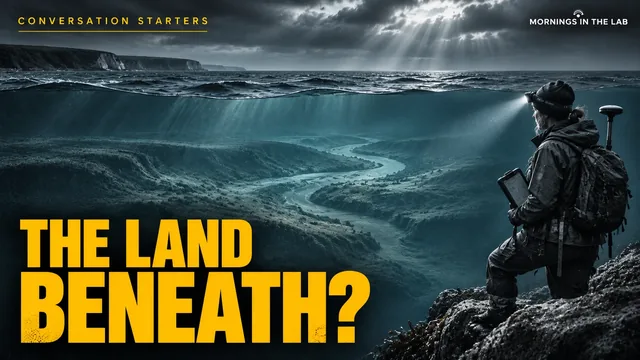
00:47:25 Maya: Chief, imagine finding out the land between Britain and
00:47:28 Europe is beneath the North Sea.
00:47:30 Sophia, what would you wanna know about it?
00:47:32 I'd be curious about the people who lived there.
00:47:34 But could the rising water tell us something just as important?
00:47:38 Nation, what would you investigate first, and why?
00:47:42 Chief, where would you start?
00:47:46 Keith: All right, we've got our very own Jimmy Barleo on the buttons.
00:47:48 He's fucking getting after it today.
00:47:50 Hey, Jimmy, Jimmy Nation, Nation, let's send some love to our very own Jimmy.
00:47:54 He had a loss in the family.
00:47:55 Uh, he's gotta scoot out of here later today, uh, to, to go spend
00:47:58 some, uh, uh, time with his family to get some, uh, get some, uh,
00:48:02 uh, to pay respects and so forth.
00:48:03 So Nation, send some love to the Jim Jim.
00:48:05 Uh, his family's going through some shit.
00:48:07 All right.
00:48:07 But what if I told you, what if I told you that you could walk once from Britain
00:48:12 to mainland Europe, and the place you walk through is now under the North Sea?
00:48:17 Now listen, guys, you guys know I'm a fucking nerd, and my goal is to
00:48:19 leave you guys with stuff you can take through your day and have some fun with.
00:48:22 Go into conversations with others and say, "Hey, did you know,
00:48:25 well, this country's called…
00:48:26 Was it, Jimmy, do you call it Doggerland or Dodgerland?"
00:48:29 N- no, guys, no, it's not called Atlantis.
00:48:33 It was real ground with real valleys and a landscape that people could use.
00:48:38 And research at University of Bradford and their partners have
00:48:42 mapped parts of it using seismic data, but there's been more recent
00:48:45 work found traces of ancient woodland in sediments from beneath the sea.
00:48:51 So, um, if you could…
00:48:53 Oh, oh, Dogger as in Dogger, I think, says Melissa.
00:48:57 Yeah, the, the wordsmith on our team.
00:48:59 Yeah.
00:49:00 Anyways, but pretty cool, eh?
00:49:01 So here's a question for you guys.
00:49:03 If you can send one research team, what would you look for?
00:49:07 First, would you look for how people lived there, or what
00:49:10 happened as the sea came in?
00:49:13 Talk to me, guys.
00:49:14 P- people or, or water in the chat.
00:49:16 What would you want to find that would actually change your mind?
00:49:19 And actually, here's a question for the curious folks of
00:49:21 Mornings in the Lab Nation.
00:49:24 If you had a chance to send some researchers out anywhere
00:49:26 in the world, what would you do?
00:49:28 Like, what would you absolutely do?
00:49:30 Where would you go?
00:49:31 What would you do?
00:49:32 Hey, Jim Jim, we got an epic spot.
00:49:33 If you got an epic spot, let's put it on the screen and have some fun with it, pal.
00:49:36 Uh, let's get, uh, yeah, what do we got here this morning?
00:49:38 Oh, dude.
00:49:39 Dude, check this out.
00:49:41 Guys, check this fucking thing out.
00:49:44 Have you ever seen this boat before?
00:49:45 Eyes up on the screen, guys.
00:49:46 Eyes up on the screen.
00:49:48 Yes.
00:49:49 This boat, look at this.
00:49:51 I've never seen this before in my entire life.
00:49:52 That's why I had to share it with you guys.
00:49:53 It flips 90 degrees.
00:49:56 Jimmy, could you imagine going for…
00:49:57 Could you imagine Hangover Anderson, he goes for a dump, and, uh, and he uses
00:50:01 the bidet, and then the fucking ship's fl- uh, flipping on the side there?
00:50:04 Yeah.
00:50:05 Oy, that'd be horrible.
00:50:06 I think that could be, that could be a little bit of a mess, do you think?
00:50:09 Just a little bit of a mess.
00:50:10 Jon AI: Yeah, I think so.
00:50:13 Keith: But that's pretty cool, man.
00:50:15 So anyways, this ship, what it does is, uh…
00:50:18 Let me just find the, the, let me find this so I can talk to you guys about this.
00:50:22 But this ship, uh, flips over and, uh, let me just see why.
00:50:26 And I, I, 'cause I, I have the reason why.
00:50:28 Uh, oh, no, that's not gonna work for me very well.
00:50:30 No, let's do this here.
00:50:31 Uh, it's okay, Jim Jim, I got it.
00:50:33 Don't worry, Jimmy.
00:50:34 Don't rush to my…
00:50:35 Jimmy, do not rush to my aid.
00:50:37 No, I got it taken care of.
00:50:44 This looks like the moment you're supposed to grab a jacket, but actually no.
00:50:48 This flip, this ship actually…
00:50:50 So the ship is called Flip.
00:50:51 Yes, and it looks like a ship lying flat, but, but, uh, but it's described
00:50:56 as a floating research platform.
00:50:59 So a tug takes it out to sea, and then it turns 90 degrees on purpose.
00:51:04 Guys, this thing is five foot, six feet long.
00:51:07 As tall as Keith.
00:51:09 Joking.
00:51:09 Nah, it was 355 feet long, but once it stood upright,
00:51:14 300 feet of it is underwater.
00:51:18 Pretty fucking cool, eh?
00:51:20 And you know, I, I, I love this fascinating engineering stuff because
00:51:23 we see these things that you just don't think exist anywhere in the world,
00:51:26 but sure enough, there's a ship called the Flip Ship with its whole purpose
00:51:31 to, uh, to flip upside down with this.
00:51:33 But here, here's the question, guys.
00:51:34 Here's the question.
00:51:34 Be honest.
00:51:35 If the crew told you this was all perfectly normal, would
00:51:40 you stick around for this flip?
00:51:42 That's pretty cool.
00:51:43 It's absolutely pretty cool.
00:51:44 Uh, yeah.
00:51:45 Oh, it was built in '62 for the US Navy and operated for decades by the
00:51:49 Scripps Institute of Oceanography.
00:51:52 Wow.
00:51:53 Designed to give scientists a wave resistance, ultra quiet base for
00:52:00 acoustic and oceanographic research.
00:52:03 All right, guys, you're on hour one of Mornings in the Lab
00:52:05 with Keith John and Friends.
00:52:07 Coming up next hour, we have our guy, Dr.
00:52:10 Jon Petrucelli, joining us to hang out and, uh, we're gonna talk, do you
00:52:15 save money when you go to the store even if you don't need it or want it?
00:52:20 But hey, guys, Tuesdays, check it out.
00:52:22 We got our very own Brianna Bass on the board behind us.
00:52:25 Brianna Bass, no safe words.
00:52:27 Every single Tuesday, eight o'clock Eastern Time, right here on the
00:52:29 big show called Mornings in the Lab with Keith John and Friends.
00:52:32 And of course, as you guys know, we are launching a course with Brianna.
00:52:36 It's called More Than Fine, and, uh, she's actually on her way to Winnipeg
00:52:40 next week, and, uh, we're gonna spend some time in the Mornings in the Lab
00:52:43 studio, uh, to get some work done and create some content together to
00:52:47 help her bring that course to life.
00:52:48 Uh, so if you're looking for relationship advice or if your life is not more than
00:52:55 fine, come hang out with us on Tuesdays.
00:52:57 Relationship conversations with our very own Brianna Bass,
00:53:00 Keith Bilous, and Jon Anderson.
00:53:03 Jimmy, why don't we run a little commercial break, and, uh, we'll
00:53:05 come back and reset the next seven minutes before we bring in Dr.
00:53:08 Jon Petrucelli this morning on the big show.
00:53:10 We call it Mornings in the Lab with Keith John and Friends.
00:53:44 All right.
00:53:45 Coming up, Petro's joining me.
00:53:47 Guys, before we go there, check it out on the board behind me.
00:53:49 I gotta get used to this over here.
00:53:51 Age Strong.
00:53:52 At 54, I started again, and myself and Anderson are helping you guys.
00:53:57 Agestrong.life.
00:53:59 If you're looking to join the journey to get yourself better, into a
00:54:03 better spot in life, I invite you.
00:54:04 Join myself and, and, and Anderson at agestrong.life.
00:54:08 Uh, we got the stack, the food, the sleep, everything you need to help
00:54:14 yourself get to that next stage in life.
00:54:15 And, uh, Dr.
00:54:16 Jon Petrucelli has been on the plan as well.
00:54:18 He is aging strong, and, uh, looking forward to connecting with him
00:54:22 a little bit later this morning.
00:54:23 But guys, check it out, agestrong.life
00:54:25 if you're looking for some help in the department of getting yourself sorted out.
00:54:30 Yes, you can hit it at agestrong.life.
00:54:32 Uh, all right, Jim, let's do this one.
00:54:34 Oh, yeah.
00:54:35 Uh, three people, guys, three people you never help twice.
00:54:40 You know what those are?
00:54:41 Who are the three people?
00:54:43 Here's the question for you guys before I throw it up on the screen.
00:54:45 Do you…
00:54:46 Is, uh…
00:54:46 Here's the question.
00:54:48 Is there somebody that you've helped once, and they're like, "All
00:54:50 right," and then they fucked up?
00:54:53 Then you helped them twice, and they fucked up again, and you're like,
00:54:55 "Oh, I gotta help one more time"?
00:54:56 Well, I got some words of wisdom.
00:54:58 Jim, let's run the clip
00:55:00 video clip: Never help twice.
00:55:03 One, the one who borrowed then forgot.
00:55:06 The money, the drill, the ladder, he did not forget.
00:55:10 He decided.
00:55:11 Two, the one who did not say thank you.
00:55:14 Thank you is free.
00:55:15 If he keeps even that, he will keep everything.
00:55:19 Three, the one who was busy when you called.
00:55:22 You helped him in March.
00:55:24 In June, he was busy.
00:55:26 Help once, then you know.
00:55:29 Keith: I love it, man.
00:55:30 Some fucking words of advice.
00:55:32 You know, I like that one, right?
00:55:33 It's, uh, uh, if you borrowed something, he kept it.
00:55:36 Good morning, Spartacus.
00:55:37 Good to see you there.
00:55:37 Happy Thanksgiving.
00:55:38 Our very own Spartacus joining me in the lab this morning.
00:55:41 Always love when I see Spartacus popping by here and saying hi.
00:55:44 You know, and here's what I enjoy about that is, you know, Spartacus gets up,
00:55:47 gets his day rolling, and, uh, whether he has, you know, the alert on or whether
00:55:51 he just knows, he pops in, says hello, uh, comes contributes some great comments
00:55:56 and, uh, and gets on after his day.
00:55:57 So Spartacus, you've been hanging with us for a while.
00:56:00 I certainly very much appreciate you and hope you're having
00:56:03 an awesome Thanksgiving.
00:56:04 Uh, hey, Spartacus, what do you think of the new set?
00:56:07 Pretty fucking cool, eh?
00:56:08 Yeah.
00:56:08 Uh, Spartacus was telling me yesterday on, on, on managing the depth.
00:56:11 Uh, you guys, just so you guys know, we are actually out here.
00:56:14 We're in downtown Winnipeg.
00:56:15 Yeah, downtown Winnipeg.
00:56:16 This work right behind me here is called The Cube, and, uh, we are just
00:56:19 outside of, uh, downtown Winnipeg in the Mornings in the Lab studio.
00:56:22 And, uh, uh, you know, we, uh, we're, we're looking at changing
00:56:25 that set here on a, on a daily basis.
00:56:27 So you tune into the show on a daily basis, you will see a new look, a new
00:56:31 set, a new entity bringing our show to life, uh, every single morning at
00:56:35 8:00, right here on Mornings in the Lab with Keith, Jon, and friends.
00:56:40 Uh, all right, Jim, let's go to back to another conversation starter.
00:56:43 Uh, I have, uh, I got one here.
00:56:45 They timed what?
00:56:47 Yeah.
00:56:47 So why scientists timed mammals going to the bathroom.
00:56:53 And you guys are gonna be going, "Why the fuck is this guy talking about this?"
00:56:56 Well, listen, scientists took a stopwatch to the can.
00:57:00 Yeah.
00:57:00 N-not, not, not their can.
00:57:03 A bunch of mammals' cans.
00:57:04 Jimmy, do you think they used the bidet?
00:57:07 Do you think they st-
00:57:08 Maya: Chief, scientists timed mammals going to the bathroom.
00:57:11 What everyday mystery would make you reach for a stopwatch?
00:57:14 That's an unusual one, Maya.
00:57:16 Does research need a practical payoff, or is curiosity enough?
00:57:21 Good question.
00:57:22 Nation, what everyday mystery would you spend a research grant to solve, and why?
00:57:29 Keith: Guys, coming up after we reset hour two, our very own Dr.
00:57:32 Jon Patrick Schelle were showing up with me.
00:57:35 Look at this guy, second hour.
00:57:37 Yeah, look at that.
00:57:38 We got a dog in the bath.
00:57:40 We're talking did you really save, did you really save if you went to Costco looking
00:57:45 to spend 100 bucks on your groceries, but you walked out spending $1,000 on
00:57:50 things you didn't need, but because it was all on sale, you saved money?
00:57:56 I don't know.
00:57:56 I think it's a fucking scam.
00:57:58 But hey, the team, the team that did this, they timed
00:58:01 animals of every different size.
00:58:03 Yeah, and what they did was they reported a surprisingly
00:58:06 similar average in their sample.
00:58:08 And, and, uh, uh, and that's a result from the animals that they, uh, they measured,
00:58:13 uh, when they took them to the can.
00:58:14 Now, here's the question, Jimmy: Do you think there…
00:58:16 Do you think it was a, a, a bidet can, or was it like a, uh, a, a
00:58:20 regular toilet where they, where they washed it, where, where they took it?
00:58:23 But here's the thing, um, the result came from the animals.
00:58:26 They observed.
00:58:26 It's a…
00:58:27 It's not a rule for your dog, your elephant, or you, but the reality was
00:58:31 they just, they, they, they wanted to know how long things were taking.
00:58:34 Yeah, 100%.
00:58:35 Spartacus says, "Oh yeah, see, Jimmy, I can read it over there.
00:58:38 The beauty of this show, there's always great and new content."
00:58:42 Hey, dude, I'm always looking for shit.
00:58:44 Yeah, I'm always looking for fun stuff.
00:58:46 I found a dog bathing in a hammock and, uh, well…
00:58:49 Oh.
00:58:50 So, d- I think we're gonna change the Jon before you go to this other
00:58:53 Jon because, um, guys, before you go, being gay, not your decision.
00:58:59 No, I know, but hold on.
00:59:00 I know.
00:59:02 Not here to offend anybody because we know the originating word gay is happy.
00:59:06 100%.
00:59:08 And I'm always happy.
00:59:09 All right, let's do it, Jimmy.
00:59:10 Let's reset hour two.
00:59:12 We're gonna do a reset hour two.
00:59:14 We're gonna drop a little bit of commercial break.
00:59:15 We're gonna do an hour two reset.
00:59:17 Spartacus, stick around.
00:59:18 Sullivan, stick around.
00:59:20 Uh, Petro, stick around.
00:59:21 Oh yeah, Petro's on the show.
00:59:22 Whitaker, stick around.
00:59:24 Coming up, did you really save?
00:59:25 You're going to Costco this weekend to spend 100 bucks, but you spend 1,000.
00:59:29 900 of it on shit you didn't need, but because it was on
00:59:33 sale, you fucking saved money.
00:59:36 Did you really save money?
00:59:37 Hour two coming up next live.
00:59:40 Where?
00:59:41 Where?
00:59:41 Where?
00:59:43 Oh, where?
00:59:44 Right here.
00:59:45 Right here.
00:59:45 Right here.
00:59:46 Right here.
00:59:47 8:00, Mornings in a Lab with Keith, Jon, and friends.
00:59:49 Jimmy, hour two.
00:59:50 My coaching program guarantees success overnight.
00:59:53 No hard work, no sacrifices, just one ridiculously expensive workbook.
00:59:57 That is a coloring book.
00:59:59 Nation, follow the show for conversations about actual
01:00:02 progress, not imaginary shortcuts
01:00:14 All right, welcome back to Mornings in the Lab with Keith, Jon, and friends.
01:00:17 Yes, we are back and we are live.
01:00:19 Hour two.
01:00:22 Hour two.
01:00:23 Yes, I see the other note from Jon here.
01:00:25 Hour two, Keith and Petro are getting after.
01:00:28 We're talking dogs in the water.
01:00:29 We're talking is this still working?
01:00:31 We're talking what?
01:00:33 And we're talking about,
01:00:34 Jon Andersen: yep, being gay is not your decision.
01:00:36 Keith: No, you gotta stick around for that one.
01:00:37 But did you really save money if you went to Costco, or
01:00:41 did you just get a good deal?
01:00:42 Next, Petro Bilous breaking it all down, live on the big show.
01:00:45 Jimmy, let's run it.
01:00:47 Frankie spent 20 minutes arguing that cereal is technically soup.
01:00:51 He even brought visual evidence.
01:00:53 Maya: The evidence is a spoon.
01:00:54 Nation, comment, cereal is soup, yes or absolutely not?
01:01:01 Keith: I went in for toothpaste and came out with a jacket.
01:01:04 It was half price, so naturally I told myself I'd saved 100 bucks.
01:01:08 Hold on.
01:01:09 You weren't planning to buy a jacket.
01:01:11 You walked out with $100 less.
01:01:13 True, but I like it, and I'll wear it all winter.
01:01:16 commercial: Can an unplanned purchase still be a bargain?
01:01:19 Keith: Sure.
01:01:20 Liking the jacket is a good reason to buy it.
01:01:22 I'm just not sure the sale saved you anything.
01:01:24 Petro, when I tell Keith I saved 100 bucks on that jacket, am I making a
01:01:29 fair point or bullshitting myself?
01:01:40 There he is.
01:01:40 There he is right here.
01:01:41 How AI is reshaping strategy.
01:01:44 He's always bringing knowledge to the lab.
01:01:46 His name is The Doc, Dr.
01:01:48 Jon Petke.
01:01:48 Tell me what's going on, brother?
01:01:50 John Petrocelli: Hey man, what's up?
01:01:51 Keith: Oh, I'm fantastic this morning.
01:01:53 How are you doing this morning?
01:01:55 John Petrocelli: Excellent.
01:01:55 Excellent.
01:01:56 Keith: Did you crush some food yesterday?
01:02:00 John Petrocelli: Well, I guess I, I modified my, my meal a little bit, but-
01:02:05 Keith: Yes.
01:02:06 Yeah.
01:02:07 How you feeling today?
01:02:07 Good?
01:02:09 John Petrocelli: Excellent.
01:02:10 Keith: Nice.
01:02:10 Excellent.
01:02:10 John Petrocelli: Yeah.
01:02:10 Keith: Nice, nicely done.
01:02:12 John Petrocelli: Down some, some turkey, um, a little bit of ham.
01:02:17 Keith: Yes.
01:02:18 John Petrocelli: L- little bit, little different from the, from the meal
01:02:21 plan, but it was still primarily meat.
01:02:24 Keith: That's awesome.
01:02:24 John Petrocelli: Yes.
01:02:25 So,
01:02:25 Keith: yeah.
01:02:25 And, and maybe, maybe a little different from years past,
01:02:27 but you still crushed today.
01:02:29 John Petrocelli: Oh, yeah.
01:02:29 Yeah.
01:02:29 But- No, no, um, no, I, I, I, I held on the sweet potatoes
01:02:37 and the, and the stuffing.
01:02:39 Keith: Love it.
01:02:39 Love it.
01:02:39 Love it.
01:02:40 Not
01:02:40 John Petrocelli: necessary.
01:02:40 Not
01:02:41 Keith: necessary.
01:02:41 Yes.
01:02:41 There you go.
01:02:42 There you go.
01:02:43 Hey, Petro.
01:02:43 So I have an interesting topic r- for today's show.
01:02:45 I got a few things for us to dig into.
01:02:47 This is the one I wanted to get into with you, because it's Black Friday,
01:02:50 it's Thanksgiving weekend, people are starting to shop for Christmas
01:02:53 and shop for the season, and, uh, there's sales and savings everywhere.
01:02:58 And you know I was jo- I was joking, right?
01:02:59 You go to Costco to spend 100 bucks, but you walk away spending 1,000, uh,
01:03:03 because there's a bunch of things on sale or things you haven't seen before.
01:03:07 So Petro, let's dig into the, the, the psychology of this idea of did
01:03:11 you really save when you went in to buy something you didn't need, but
01:03:16 because it was on sale you saved?
01:03:18 Talk to me about this whole fucking thing.
01:03:21 John Petrocelli: Yeah.
01:03:21 Well, the research on this is a resounding no to that, to that question.
01:03:26 Keith: Seriously?
01:03:27 John Petrocelli: Resounding no.
01:03:28 Yeah.
01:03:29 Yeah, if, if you never planned to buy the jacket in the first place,
01:03:34 what exactly did you save, right?
01:03:36 Jon AI: Well, that's-
01:03:37 John Petrocelli: Um-
01:03:37 Jon AI: That's it.
01:03:39 John Petrocelli: And there's, there's this really…
01:03:40 There's a great paper that- Yes … Richard Thaler wrote back in 1985,
01:03:45 which is, um, probably one of the most heavily cited papers in all of judgment
01:03:49 decision-making research called-
01:03:51 Jon AI: Yeah
01:03:51 John Petrocelli: The M- the Mental Accounting and Consumer Choice.
01:03:56 Okay?
01:03:56 And in that paper makes a, a very clear distinction between acquisition utility-
01:04:03 Keith: Yes
01:04:04 … John Petrocelli: that, that's what you think, that's what
01:04:05 you think the item is worth.
01:04:07 Yes, yes.
01:04:07 That's, that's, that's how much value, right?
01:04:09 Yes.
01:04:10 And the trans- and then the transaction utility.
01:04:14 So that, that might be the pleasure or, or the displeasure of the deal itself.
01:04:20 So savings, the, the feeling of savings is actually kinda working
01:04:27 both of those things together.
01:04:28 The
01:04:28 Keith: feeling of savings.
01:04:31 John Petrocelli: Yeah, it's the feeling of savings.
01:04:32 So if, if you, for instance, if you planned to buy a jacket-
01:04:38 Keith: Yes
01:04:38 … John Petrocelli: and you said, "Okay, well, it's $200."
01:04:41 Keith: Yes.
01:04:42 John Petrocelli: Right?
01:04:42 And then you decided, "Okay, I'm gonna go to the store and
01:04:46 I'm gonna get this jacket."
01:04:48 And then you discover that, oh, it's only, it's only $120, right?
01:04:53 But you were planning to spend $200.
01:04:57 That, that's the only time that you may feel as though you've earned or
01:05:01 you've kept $80 in your pocket, right?
01:05:05 Keith: Because-
01:05:05 John Petrocelli: Yeah, because you planned
01:05:06 Keith: to, because you planned to … yeah.
01:05:08 John Petrocelli: Yes, but, but if you weren't, if you were not willing to pay-
01:05:12 You know, uh, if you're, if you were only willing to pay $120 for the jacket-
01:05:17 Yes … you were not willing to pay 200.
01:05:20 But you knew or you thought that, or, or the, or the, the seller
01:05:25 had set up an anchor for you.
01:05:28 Maybe last week it was $200 and now it's $120, but you
01:05:32 were not willing to pay $200.
01:05:34 You may feel as though you've saved $80 when you buy it for 120, but you haven't.
01:05:40 Nope, you've spent $120.
01:05:43 So there's, there's, there's no, there's no savings in what you,
01:05:46 what you are not willing to, to buy at a, at a higher price.
01:05:52 Well, and- Both of th- both of these types of utility, the acquisition-
01:05:57 Keith: Yeah
01:05:57 … John Petrocelli: and the transaction utility, both of
01:05:59 those drive decision-making.
01:06:01 Keith: Petro Bilous breaking it down.
01:06:03 So I love this, 'cause doesn't this happen often, Petro, in the travel industry?
01:06:07 Where it's like, so th- yeah, nice expression.
01:06:11 This hotel r- this room or this resort is worth, uh, it's $7,000 for this week,
01:06:17 but because you're gonna book it right now it's only gonna cost you 1,500 bucks.
01:06:21 "No, but I wasn't planning on going anyways."
01:06:23 "No, but you're saving $1,500."
01:06:26 Am I, am I wrong?
01:06:27 John Petrocelli: No, no.
01:06:27 No, you're not.
01:06:28 I wrong…
01:06:28 And, and in that particular industry-
01:06:31 Keith: Yes?
01:06:32 … John Petrocelli: th- they have mastered-
01:06:34 Keith: Yes
01:06:34 … John Petrocelli: making, making everything look like a bargain.
01:06:38 Everything.
01:06:38 Okay?
01:06:41 Timeshare salespeople-
01:06:43 Keith: Oh … for
01:06:43 John Petrocelli: instance,
01:06:44 Keith: right?
01:06:44 Oh.
01:06:44 Oh.
01:06:45 John Petrocelli: Have, have mastered…
01:06:46 They, they, they've done, they've done all the research.
01:06:49 They've done all…
01:06:49 They, they've looked at all of the papers that provide the
01:06:54 persuasion tools that they need.
01:06:57 Okay?
01:06:58 What, what, what they will do is they will set up an appointment for you for
01:07:04 time, you know, to consider timeshare.
01:07:06 It's all free, you know, we're gonna give you a free dinner.
01:07:10 Uh- Yes, yes … but they'll set up the appointment at, like, 10:30 AM.
01:07:15 Okay?
01:07:16 So they know that you're not gonna eat lunch, like, before 10:30 AM.
01:07:21 Jon Andersen: Yes.
01:07:21 John Petrocelli: And you may or may not have had breakfast, right?
01:07:24 But then you sit in the lounge for at least an hour and a half- Yes … before
01:07:30 they call you in to then observe and, and explore their model homes
01:07:36 or their model, you know, timeshares.
01:07:39 And then by the time they're finished with that, it's, like, 3:00 PM, okay?
01:07:43 Keith: Yeah.
01:07:44 John Petrocelli: So you're starving, you're exhausted, you're depleted of your
01:07:49 regulatory resources, and then that's when they want you to make a decision, right?
01:07:54 Keith: Yes.
01:07:54 John Petrocelli: So, so, but and, of course, everything looks like
01:07:58 a bargain at that point, right?
01:08:00 And there is an entire industry of law to help people get
01:08:05 out of- timeshare agreements.
01:08:08 Okay?
01:08:09 So
01:08:09 Keith: I knew of that, but I don't think I knew of how bad it actually was.
01:08:12 John Petrocelli: Yeah.
01:08:13 Oh, yeah, it's…
01:08:14 Well, they ha- again, they have mastered this bargaining, making
01:08:18 everything look like a great bargain, as, as if you're, as if you are
01:08:23 stupid for not taking the deal, right?
01:08:26 They've set it- But, yes … they've set it up that way.
01:08:28 What?
01:08:28 And that you're gonna, you're gonna lose out, right?
01:08:30 Yeah.
01:08:31 They, they know that losses, potential losses actually is a stronger driver of
01:08:39 decision-making than potential gains.
01:08:41 Keith: Oh.
01:08:43 Really.
01:08:43 Oh.
01:08:44 It's like if you, if I'm…
01:08:45 So again, I go back to, like, a vacation thing.
01:08:48 The ti- the potential loss, if you don't do it now, you're gonna
01:08:52 lose the opportunity to get it at this price kind of thing.
01:08:55 Yeah.
01:08:56 Right?
01:08:56 When…
01:08:56 It's funny because I, I, uh, I, I'm heading to a, a, um, heading to a wedding
01:09:00 in January, uh, down in Arizona, and I was look- looking at booking some flights,
01:09:04 and there were deals a few weeks ago.
01:09:07 But, but I have a, I have a view on deals.
01:09:09 I- if a deal was around two weeks ago, it's also gonna be around
01:09:12 two weeks later, and it's gonna be around a month later, or six.
01:09:14 You know what I mean?
01:09:15 Like, like, there's really no such thing as a fucking deal
01:09:17 with an expiry date on it.
01:09:18 Am I wrong?
01:09:20 John Petrocelli: I- in most cases, in most cases, yeah, Keith, you're right.
01:09:23 I mean, it's…
01:09:24 What they're adding on top of, of the bargain before you
01:09:28 is, is a layer of scarcity.
01:09:30 Y- yeah, the urgency.
01:09:31 You don't- You don't wanna
01:09:32 Keith: miss it.
01:09:33 John Petrocelli: Exactly.
01:09:34 Like, in, in most cases, if you call the 1-800 number, you know-
01:09:39 Keith: Yeah.
01:09:40 John Petrocelli: Yes … even, I don't care, four months after the, you know,
01:09:45 you know, "Sales, sales end today.
01:09:48 Buy, you know, call today," whatever.
01:09:50 Yes.
01:09:50 You call four months later, if they still have them available for 29.99,
01:09:55 whatever it is-
01:09:56 Keith: They're selling
01:09:56 John Petrocelli: it to you … they're gonna sell it to you for that price.
01:09:58 But, but they're just adding this, this feeling of, of urgency that you've
01:10:04 gotta do it now, uh, because they know that people are much more likely
01:10:08 to say yes if they feel that, "Ooh, I'm gonna lose out on this, on this
01:10:13 opportunity that I may not have tomorrow."
01:10:16 But this is one of my favor- today is actually one of my
01:10:19 favorite days of the year, okay?
01:10:21 Because you see all of these-
01:10:24 Keith: Yes
01:10:24 … John Petrocelli: all of these bargains, right?
01:10:26 Yes.
01:10:26 You know, two for, two for one, buy one, get one free, whatever.
01:10:29 All, all of these- Yeah, yeah … deals, right?
01:10:31 Both online and, and local even, right?
01:10:37 But I stay, I stay at home.
01:10:38 I completely stay out of it.
01:10:41 Keith: Well,
01:10:41 John Petrocelli: yeah.
01:10:41 I, I, I'm not, I'm not pulled in by it at all, and I just, I just
01:10:45 rest and I watch some football.
01:10:48 Uh, all of the craziness going on today, um, you know, most of it aren't, most
01:10:54 of them are not bargains, especially if you are looking at the price, you
01:11:01 know, a month ago, two months ago.
01:11:03 So it's really easy to make something look like a bargain, you know,
01:11:08 uh, buy one get one free, right?
01:11:10 If you're not looking at the price that it was a week ago, right?
01:11:15 So if you're buying, if you're buying pork tenderloin-
01:11:18 Keith: Yeah
01:11:18 … John Petrocelli: you know, for $10, um, and then all of a sudden, you know, the
01:11:23 next day there's a sale, you know, buy one get one free pork tenderloin $20 and
01:11:32 you, and you fall for the bargain, right?
01:11:35 Keith: Yes.
01:11:35 John Petrocelli: All you did is you, is you bought t- you bought
01:11:37 two for 10 this price for $10.
01:11:40 And I, I think most people, most people understand this, but it, it
01:11:45 doesn't s- it doesn't fully get…
01:11:48 It doesn't get rid of that transaction utility.
01:11:50 It doesn't get away…
01:11:51 It doesn't evaporate the feeling, the pleasure of that, "Ooh, I got
01:11:56 a deal and I saved some money."
01:11:59 And, and that's what…
01:12:00 I mean, and if, if that's what you're willing to pay for, then
01:12:02 I think, I think then maybe it, maybe it is still a bargain.
01:12:06 But-
01:12:06 Keith: I, I feel like this conversation, and you opened the door
01:12:09 to the segue we're gonna go here in a second to football, my brother.
01:12:11 Uh, 'cause there's a little bit of news happening in your back world,
01:12:14 in the world of football, but we're gonna go there in a second.
01:12:15 But before we do that, um, this is where I call it the hypocrisy of humanity.
01:12:20 You've heard me use that term before, right?
01:12:22 You know, we, we all don't like Ticketmaster, yet we're the first to
01:12:25 rush out to buy the fucking tickets.
01:12:27 Well, it's the same thing with kind of Black Friday or deals, right?
01:12:29 So, so Petro, this is a human thing, right?
01:12:32 It's just purely a human social science thing, which is our brains
01:12:35 are just wired to go and chase the fucking deal even though we feel
01:12:39 better at the end of the day, right?
01:12:41 Like really.
01:12:43 John Petrocelli: Yeah, and I think there, there's, there's some pride in that
01:12:46 too because when you feel- Oh … that you've, you've saved, you, you know- Yeah.
01:12:50 Yes … you've saved some money- Yes … well, you've got a, a fantastic bargain.
01:12:53 It's very easy then to think, um, you know, I'm…
01:12:57 Hey, shredded cheese that- Yes.
01:13:01 Yes … you know, it's, uh, buy, buy two get three free.
01:13:05 Hell, I'll buy, I'll, I'll buy six and, uh, and get - Yeah … and I'll
01:13:10 get, you know- Yes … whatever, 15 free or whatever, right?
01:13:14 As, a- and as long as you're, as long as you are, are, are gonna be able to
01:13:19 consume all of that cheese with the, you know, before it, before it goes
01:13:23 bad, man, maybe it's a good bargain.
01:13:25 But again, if they've tripled the price of a single bag, then
01:13:30 it, then it's not a bargain.
01:13:31 But or, or if you're, you're planning on kinda-
01:13:36 well, blowing up, blowing up- Yes, yes … those next couple weeks on
01:13:41 all of that cheese, then maybe it, maybe it's still a good bargain.
01:13:44 But I, I do think there, there's a sense of, you know,
01:13:47 I made a good decis- I'm, I…
01:13:49 There's, I'm, I'm proud of myself that I, that I saved all of this money.
01:13:53 Um, but, but really that's quite the de- the, the delusion, um, especially
01:13:59 if people are then just hoarding things that they, they don't need,
01:14:02 which is, is sort of the- Boston
01:14:04 the end game of this I think of, of-
01:14:07 Keith: Yeah
01:14:07 … John Petrocelli: of, you know, of companies that are trying to-
01:14:10 Keith: I like how you frame that … get their bargain.
01:14:11 I like how you frame that.
01:14:12 And it's, it's, uh, you know, we sell on guilt often for, for Black Friday.
01:14:16 Make…
01:14:16 And, and I love that you talk ab- we talk, as you know, we talk
01:14:19 feelings on the show all the time.
01:14:21 This is Feelings.
01:14:22 Speaking of feelings, somebody's gonna go today and buy a hammock for their dog.
01:14:26 Yeah.
01:14:26 Jimmy, what is this, man?
01:14:27 What the WTF is this?
01:14:29 We both have, we all love our dogs.
01:14:31 Look at this.
01:14:31 Would you get, would you buy one of this for your dog?
01:14:33 I gotta be honest, man, it's actually looking pretty convenient, eh?
01:14:37 John Petrocelli: Yeah,
01:14:37 Keith: well- It would.
01:14:38 That's pretty slick
01:14:39 … John Petrocelli: actually, that's, that, that looks pretty
01:14:41 good i- if he'll stay in there.
01:14:43 Keith: Yeah.
01:14:44 John Petrocelli: Yeah.
01:14:46 Keith: I was thinking about getting one for Anderson and creating
01:14:48 some content with Anderson.
01:14:49 So, uh, maybe, uh, maybe, maybe in 2027 I'll get you and Anderson to
01:14:52 Manitoba here in the backyard and we'll get one of these things for Anderson,
01:14:55 and we can spray him down, Petro.
01:14:56 And see how that looks.
01:14:58 John Petrocelli: You're gonna have to put a little bit of weight on that too.
01:15:01 That
01:15:01 Keith: dog- Just a little bit of weight.
01:15:02 Yeah
01:15:02 … John Petrocelli: yeah, yeah.
01:15:03 That, that, um, whatever, that golden retriever there, that
01:15:06 he, he's probably able to…
01:15:09 If he starts wiggling around, that thing's gonna be off the deck
01:15:11 Keith: in no time.
01:15:12 He's just sitting there loving it though.
01:15:13 Hey, just bathing in the water.
01:15:15 Yeah.
01:15:15 You're hanging out with Petro Bilous on Mornings and Alive
01:15:17 with Keith John and friends.
01:15:18 Every Friday Petro joins us.
01:15:19 Uh, Jim, before we go back to Pittsburgh to break down Petro's views
01:15:23 on the news coming out of Pittsburgh this week, uh, did you know, Jimmy-
01:15:29 Did you know a thunderstorm can produce incredible temperatures?
01:15:32 Which gets hotter, the air heated by lightning or the sun's visible surface?
01:15:36 Lock in your guess.
01:15:37 The National Weather Service says lightning can heat the air in its
01:15:41 path to 50,000 degrees Fahrenheit.
01:15:43 That's about five times hotter than the sun's visible surface, which sits at
01:15:48 approximately 10,000 degrees Fahrenheit.
01:15:51 But don't confuse the surface with the core.
01:15:53 Deep inside the sun, temperatures reach around 27 million degrees Fahrenheit.
01:15:58 And here's the important difference: lightning briefly
01:16:00 heats a narrow channel of air.
01:16:02 Higher temperature doesn't mean more total energy than the sun.
01:16:05 Next time someone says, "Hotter than the sun," ask which part.
01:16:09 That's our today's Did You Know?
01:16:10 Back to Keith and Jon.
01:16:16 So Petra, a little bit of news coming out of Pittsburgh this week with
01:16:19 Mike McCarthy, the Steelers, Terry Bradshaw, Aaron Rodgers, Th- Tom Brady.
01:16:25 Everybody's weighing in on
01:16:30 Was he sleeping or not sleeping?
01:16:31 Yeah.
01:16:32 Comments from the local Pittsburgh guy, Mr.
01:16:33 Petra Jelly.
01:16:35 John Petrocelli: Yeah, yeah, everybody's weighing in.
01:16:37 Everybody has their two cents and- Yes … and apparently, apparently
01:16:40 more than one is willing to just throw-
01:16:43 Keith: I
01:16:43 John Petrocelli: can relate … throw the coach under the bus.
01:16:45 I mean-
01:16:46 Keith: I
01:16:46 John Petrocelli: know … good gracious.
01:16:48 I would, I would think they, they would find a way to get along because, you
01:16:52 Keith: know- Yes
01:16:52 … John Petrocelli: Aaron Rodgers and Mike McCarthy have worked
01:16:54 together, you know- Yes
01:16:56 with, with pre, and pre- with previous teams and several years,
01:17:00 and you'd think they'd be able to, to, to find some resolutions here.
01:17:04 But I, I think they actually got wro- they got rid of the wrong player.
01:17:09 Keith: Well, it seems, yeah.
01:17:10 They, they got- Yeah
01:17:11 … John Petrocelli: they got rid of Aaron Rodgers, but I think they
01:17:14 should've gotten rid of, of DK Metcalf.
01:17:17 Well, 100.
01:17:18 Metcalf is, is making 30 million or more, and he can't catch
01:17:23 anything thrown right to him.
01:17:25 I mean, we've had
01:17:25 … Keith: Are you
01:17:27 John Petrocelli: s- Some interceptions that, that are just bobbled and, and
01:17:30 they, those count against Rodgers.
01:17:31 Yeah.
01:17:31 But-
01:17:32 Keith: Yes
01:17:32 … John Petrocelli: but, uh, they were basically bobbled catches right to the
01:17:36 hands, and then, you know, the defenders are catching the, these bobbled balls
01:17:42 that, that Metcalf should be catching.
01:17:43 But, um, yeah, that, that, that would be my two cents.
01:17:47 Just got rid, rid of the wrong player.
01:17:49 Keith: I'm surprised how many former players did not support Aaron Rodgers.
01:17:56 John Petrocelli: Oh, and it, well, I think, I think there
01:17:57 is a general- Kings and players
01:17:59 Keith: community
01:18:00 … John Petrocelli: yeah, I think there is sort of a general, uh-
01:18:04 Keith: Dislike?
01:18:06 John Petrocelli: Well, well there's, well certainly Rogers probably had,
01:18:09 uh, quite a few enemies over- Yes, yes
01:18:11 his, his years.
01:18:12 But I think there's a general loyalty to the leader or the coach of a team.
01:18:17 Keith: Yes.
01:18:17 John Petrocelli: You know, uh, I think generally.
01:18:19 And, and players will tend to, you know, to stand up for their, for their
01:18:23 coach, um, especially if they're, you know, they feel he- he's a good
01:18:27 coach, he's making good decisions.
01:18:28 video clip: Yeah, yeah.
01:18:30 John Petrocelli: And I, and I'm guessing maybe, hey, if, if you're
01:18:32 sleeping in meetings, that probably means that you're working overtime,
01:18:36 uh, uh, I would assume, you know?
01:18:38 And so I, and I mean co- I mean, both college coaches and, and professional
01:18:43 coaches, I mean, these are the most, these are the busiest guys in the world.
01:18:46 Oh.
01:18:46 I mean, they're trying to, they're trying to please an
01:18:48 entire city and fan base- Yeah
01:18:51 who are making decisions left and right, and it's a cutthroat business.
01:18:55 It's really- 100%, yes … if you're not performing, I, I don't know of many other
01:18:59 businesses that are, that are so, uh, constantly devoted to finding the best
01:19:08 players, you know, at, or the best people at these positions, you know, constantly.
01:19:13 And again, if you, if, if you're not, if you're not performing, um,
01:19:17 they'll find somebody who will.
01:19:19 And so- It's interesting, right?
01:19:20 … you're in a cutthroat business.
01:19:21 But to be ab- to be doing that constantly, you know, with your
01:19:24 whatever 60-man squad- Yeah,
01:19:26 Keith: yeah … or,
01:19:27 John Petrocelli: is a difficult, it's a difficult task.
01:19:29 Keith: Um- And I, you know, you know how I like to pick up on words.
01:19:32 You're right, the word constantly.
01:19:34 Think about that, right?
01:19:35 In fact they're, they're constantly trying to, you know, find a better
01:19:39 Petro or find a better Bilous, and say, "Okay, we're watching Petro's play.
01:19:42 We have Bilous' play.
01:19:43 Oh, he's sucking.
01:19:44 I, I gotta get somebody else."
01:19:45 Because to your point, it's so cutthroat that if, if, if, if it's
01:19:49 just not working, see you later, alligator, bring the next guy in, right?
01:19:52 It's a fucking carousel, isn't it, Petro?
01:19:55 John Petrocelli: Yeah, and every, every position has its special statistics too.
01:19:59 So you're, you're getting- Yes, yes … you're getting these performance metrics
01:20:02 in, you know, in real time, you know?
01:20:05 You know, if T- if TJ Watt, even as good as he is- Yeah … TJ Watt,
01:20:09 defensive end, what, as good as he is, if, if, if he's not, if he's not
01:20:13 recording, uh, maybe a sack per game-
01:20:16 Keith: Yeah
01:20:17 John Petrocelli: they, they'll find somebody who will, you
01:20:19 Keith: know?
01:20:19 But that's exactly it.
01:20:20 Yes.
01:20:21 Yeah.
01:20:22 There, there's a guy in our, on our local hockey team here, you might
01:20:25 have heard of, Nino Niederreiter, who can't get into the lineup.
01:20:27 And, uh, you know, he's, uh, he's one point shy of his 500th point.
01:20:31 Uh, but he's 34.
01:20:33 He can't carry it, and, uh, he's, and, and he's being taken up a
01:20:38 spot by a guy like Nick T- Tyro- Tyro Bibar with that big fight.
01:20:41 The same kind of idea, right?
01:20:42 If you're not performing for you lately, what have you done for me lately?
01:20:46 It's interesting 'cause Rico puts a comment here.
01:20:47 He says, "They should pay wa- high wages for sports professionals by
01:20:51 productivity and not by contract."
01:20:54 Well, that's inter- so I think in some ways they do 'cause you're paid
01:20:57 based upon your, your results, right?
01:20:59 I think the idea of a sports contract is out the window though, Petra, because look
01:21:02 what's happened in, in, in, in Detroit with Larkin and Winnipeg with Hellebuych.
01:21:06 It's like, what the fuck does the contract mean?
01:21:08 If I wanna be somewhere else, I go somewhere else.
01:21:10 But I guess it's the same way with the sports owners though, right?
01:21:12 Like, seriously.
01:21:13 Like, if you're the owner and I have a co- so I'm the owner,
01:21:16 you're playing with me on my team.
01:21:18 If I don't like you anymore, I can trade you.
01:21:21 Like, that's kinda, it works the same way, no?
01:21:23 John Petrocelli: Yeah, certainly.
01:21:24 I, I, I would think it would make a lot of sense though, to have y-
01:21:27 maybe you get your base salary- Yes
01:21:30 and then you have some contingency, uh, incentives.
01:21:34 So, you know, if you- Yes,
01:21:37 Keith: yes
01:21:37 … John Petrocelli: if y- you, you make th- this many touchdowns or
01:21:39 whatever in a season, then you get, then you get a bonus or whatever.
01:21:42 And th- and then you would, I think, I think you would have, uh, players
01:21:46 who are, are, are being rewarded, you know, in real time as opposed to after
01:21:52 the fact, which is what we usually have with, with, with contracts.
01:21:56 It's like you, you produce, you have a great year, then you get the reward of
01:21:59 the big contract, you know, for the next, you know, three or four years after that.
01:22:03 But it, but usually mo- most of these players, especially, you know, your,
01:22:08 your, your receivers I think, and your running backs, the people are,
01:22:11 and the quarterbacks, those racking up a lot of the yards, usually there,
01:22:15 it's, it's a, their performance looks like a normal distribution.
01:22:21 They, they build- Mm-hmm … they build, they build, they kind of
01:22:23 plateau, and then it's downhill.
01:22:25 And we're going- Ah,
01:22:26 Keith: yeah
01:22:26 … John Petrocelli: when, if you can identify that, um, when a player is,
01:22:31 is im- you know, improving and, and they're, they're, they're in the upward
01:22:36 trajectory of their performance, that's when they should be, that's when they
01:22:40 sh- if you can reward them along that trajectory, then you have a good deal.
01:22:44 And that's, that's what the, the, the Pittsburgh Steelers I think have,
01:22:47 have traditionally done very well.
01:22:49 But the last, the last few years in some of their acquisitions I,
01:22:53 I, I've questioned 'cause it looked a little bit like a completely
01:22:58 different Steelers organization.
01:23:00 You know, hunting for players kind of towards the end of their career or beyond
01:23:06 the mi- the midpoint of their career with, with both Rogers and Metcalfe
01:23:11 doesn't look like the, the method of the, the traditional Pittsburgh Steelers.
01:23:17 And so-
01:23:18 Keith: Right
01:23:18 … John Petrocelli: I think that's why they're, they're having, they're having
01:23:20 some growing pains here with, you know, based on the decisions that they've made.
01:23:24 Keith: I look at Charlie's comment there and he says, "Uh, sports were
01:23:26 built to distract us, uh, uh, from, from the government screwing us.
01:23:32 Nobody's worth 30 million to play a game."
01:23:35 Well, so Charlie, what's interesting about your comment is I go
01:23:37 back to hypocrisy of humanity.
01:23:40 As long as Bilous, and Petro, and you, Charlie, are buying tickets to the games,
01:23:44 we're gonna keep paying athletes 30, 40, 50, hundreds of millions of dollars
01:23:49 like Soheilo Tonu there in, in, in…
01:23:51 And I know, Goodtime, I hear you.
01:23:53 I'm just jealous.
01:23:53 I, I get you.
01:23:54 But, you know, he, as long as humans are willing to shell the money
01:23:57 out, it's not gonna change, Petro.
01:23:59 It's never gonna change, frankly.
01:24:01 John Petrocelli: Yeah.
01:24:01 I, I, what I would love though too is, is if they made more salient
01:24:05 what are the owners actually making?
01:24:07 What is the, what's the organization actually making?
01:24:10 Keith: Okay.
01:24:10 John Petrocelli: And that'll, that'll help put in perspective, you know,
01:24:14 the, the right or wrong as to what, what players are actually making
01:24:19 in, you know, in their salaries.
01:24:20 Keith: Well then, so Cal, let's stay here in the…
01:24:21 'cause I know, I know you're a big, big baseball aficionado.
01:24:24 You're a m- massive fan of it.
01:24:25 There, there is some suggested labor unrest maybe around the corner with MLB.
01:24:31 Petro, a multi-quadrillion industry- And you've got guys making half a billion
01:24:37 dollars, but they can't decide…
01:24:39 I'm, I'm, I'm obviously paraphrasing, but they can't decide how to split a dollar.
01:24:43 What's your solution for that?
01:24:45 Like so, so are, are, are, are…
01:24:48 Can they go on strike and expect fans to be, like to come back?
01:24:52 John Petrocelli: Yeah, that, well-
01:24:54 Keith: Like Petro
01:24:55 … John Petrocelli: it always takes a…
01:24:56 In, in, in the past-
01:24:57 Keith: Yeah
01:24:58 … John Petrocelli: it always takes a hit.
01:24:59 Yes,
01:25:00 Keith: yes, yes.
01:25:00 You,
01:25:01 John Petrocelli: you lose a, you lose a lot of fan, and it usually-
01:25:03 Keith: Yes
01:25:03 … John Petrocelli: what I, what I expect, I would say like probably takes another
01:25:09 five to 10 years to, to regain it back.
01:25:12 Keith: Do you think they go on…
01:25:13 Do you think, do you think there's labor unrest coming in, in baseball, Petro?
01:25:16 Because you're clo- closer to it than I am, so I, I hold
01:25:18 your opinion in high regard.
01:25:19 Do you think it's coming?
01:25:19 John Petrocelli: I think it, I think it's…
01:25:20 Yeah, it's, it's a…
01:25:21 I would suspect it's a matter of time that it, it would happen.
01:25:24 Maybe not, you know, maybe not this year or next year, but eventually
01:25:28 this, this, this cycle continues.
01:25:31 You know, and, you know, owners don't wanna…
01:25:34 You know, owners wanna make a lot of money too, you know?
01:25:36 Yes.
01:25:36 But, and, and the entire organization does.
01:25:39 And, and, um, so I think, I think there's, there's sort of a, a back and forth.
01:25:44 You know, you look throughout history, um, probably as, as early as the 1960s,
01:25:51 uh, when you had players actually kind of-
01:25:53 Keith: Yeah
01:25:54 John Petrocelli: standing up and actually taking like legal action, you know?
01:25:57 Keith: Oh, like Mer- remember Marilyn Lemue?
01:25:59 Remember Pittsburgh, he…
01:26:00 Remember…
01:26:00 Yeah, your backyard, dude.
01:26:01 Your backyard.
01:26:02 Lemue way.
01:26:03 So guys, Lemue wakes up one day and is like, "Uh, this is Ron Buckle.
01:26:07 Uh, we can't afford to pay you 'cause we got no money."
01:26:09 What?
01:26:10 John Petrocelli: Yeah.
01:26:11 Keith: Remember?
01:26:12 John Petrocelli: And e- yeah, exactly.
01:26:13 And if, I think if you- Yeah … you put that in perspective with- Yeah … what
01:26:18 the, what the owners and the entire organization is actually making, you know?
01:26:22 Yes.
01:26:23 If you do a, a cost benefit analysis, you'll find out that, that in
01:26:27 most cases, relative to owners and organization, the players are, are losing.
01:26:33 They're, they're losing that battle.
01:26:35 And then, and when, when that becomes more significant to them that they're actually
01:26:42 getting the shitty end of the stick on, on
01:26:45 Keith: the league- Well, so dude, this is fascinating, man.
01:26:47 I'm loving this.
01:26:48 This is fascinating to me.
01:26:49 Uh, I don't disagree with you, Rico.
01:26:50 Yes, Taylor Smith- Swift is a smart business woman.
01:26:54 There's no question about that.
01:26:55 She knows her stuff.
01:26:56 But Petro, so here's what's fascinating to me though, right?
01:26:59 Is there a game without the players?
01:27:01 Right?
01:27:01 And you know, and you know, so like who, who, who is the sport?
01:27:05 Right?
01:27:06 If Bilous and Petro can't, you know, if Bilous and Petro pool our money
01:27:08 together to, to set up a team, well, you can't have a team without us owning it.
01:27:12 Like, it's, it's, it's, it's a fascinating…
01:27:14 So it is, I guess in many ways, to your point, it should be 50/50.
01:27:21 It should be.
01:27:22 John Petrocelli: Yeah, there, there's gotta be, there's gotta be an
01:27:24 agreement somewhere that, that, that both parties would be happy with.
01:27:28 And but what, what I see time and time again- Yeah … throughout history is
01:27:33 the, is that the players are dissatisfied with, with the agreement in general.
01:27:37 And so then eventually they, if, if they, you know, push comes to shove,
01:27:41 they'll end, they'll end up on strike.
01:27:42 People will still watch the s- people will still watch sports, but it
01:27:46 oftentimes take, if, if the fan base is in agreement with the players-
01:27:51 Keith: Yes
01:27:52 … John Petrocelli: then, then, then I, I don't think you see that drop
01:27:55 in, in popularity and, and the, uh, amount that people are willing
01:27:59 to pay for tickets for that.
01:28:00 The
01:28:00 Keith: business, the b- the business of sport's fascinating to me.
01:28:02 Here, Charlie says, "And I'm the guy that says, 'Oh, hey, good time.
01:28:06 It's happening up here in Canada.
01:28:07 Uh, why are all these games on so many different channels?'"
01:28:11 Remember the old days, there's one, two channels?
01:28:13 Yeah.
01:28:14 Also, up here in Canada, it's, you know, uh, Sportsnet took a bunch of their
01:28:17 games and put 'em onto Sportsnet Plus.
01:28:20 Well, if you're a Sportsnet subscriber, uh, you can't watch what's on Sportsnet
01:28:24 Plus unless you pay for the Plus.
01:28:26 Like, it's just, it's…
01:28:27 And, and the fan- fans are kinda like, I think fans are getting
01:28:30 tired of the fucking kinda like the, the, the always wanting more.
01:28:33 Always want a little bit more.
01:28:34 Always want a little bit more.
01:28:36 How about this, Petro?
01:28:36 This broke this week.
01:28:37 Uh, so, um, did y- I don't know if you knew this.
01:28:41 The guy who owns the Jets, David Thomson, and Mark Chipman's a
01:28:44 local guy, but David Thomson, do you know that name, David Thomson?
01:28:47 So-
01:28:47 John Petrocelli: No.
01:28:48 No, but that's…
01:28:48 Yeah, go ahead.
01:28:49 Yeah.
01:28:49 Keith: So David Thomson, uh, owns Roy- Reuters, Thomson.
01:28:54 He's the richest owner in all of professional sport in the entire
01:28:58 fucking world, actually in the entire w- because of his family wealth.
01:29:02 They bought the Jets from Atlanta, $160 million.
01:29:07 John Petrocelli: Wow.
01:29:08 Keith: Okay.
01:29:08 This week, Forbes, 1.25
01:29:11 billion.
01:29:12 John Petrocelli: Wow.
01:29:13 Okay.
01:29:13 Keith: That's the worth of it today.
01:29:14 Wow.
01:29:14 Look at that.
01:29:15 Wow.
01:29:15 Uh, and it ca- 11 years ago, so 15 years.
01:29:18 Wow.
01:29:18 Uh, that's a pretty damn good investment, Mr.
01:29:20 Petrocelli.
01:29:22 But, but okay, the other side of that coin, if, if, if Thomson and, and,
01:29:28 and Chipman don't stand up to put their money on the line with risk-
01:29:32 Then there's not jobs for 30 players.
01:29:36 So you know what I mean?
01:29:39 John Petrocelli: Yeah.
01:29:39 Well, what, what I find, what I find fascinating too- Yeah
01:29:43 is as much, as much money as they're making off of these, uh, off of this
01:29:47 business, is that they oftentimes will get the city to pay for the new stadium.
01:29:54 Keith: Oh, so let's go there.
01:29:56 Yeah.
01:29:57 Well, that, that, that's a fucking go- That's a racket that happens across every,
01:30:02 every community in, in, in North America.
01:30:04 John Petrocelli: Yeah.
01:30:05 Keith: It's a racket.
01:30:05 John Petrocelli: And, and they'll then, then also take credit for
01:30:08 all of the jobs they've created.
01:30:10 Yes.
01:30:10 Yeah, yeah, yes, yes.
01:30:12 Yeah, so it's like, it's like a triple, it's a win-win-win for, oftentimes for
01:30:17 the, for the o- organization owners.
01:30:19 But, um- Yeah, it must, it must be a lucrative business.
01:30:25 It must be a great, great thing.
01:30:26 That's why I said we should get together and try to buy a team.
01:30:29 Keith: I'm, dude, I'm all over that.
01:30:30 I would…
01:30:31 I think it'd be fun to own a sports team.
01:30:33 Uh, but it's funny 'cause I was, I was flying, I was on a flight a
01:30:35 number of years ago, uh, uh, with a fella that owned a professional
01:30:38 sports team here in Canada, and, uh, I'll never forget what he said to me.
01:30:42 He's like, "What, what fans don't realize is the balance
01:30:46 you have with being the owner."
01:30:48 And yeah, there he is right there.
01:30:49 Yeah, there we go.
01:30:50 I guess that's, that's…
01:30:51 So it's funny 'cause I, I was on a…
01:30:53 I, I flew over to London with the guy.
01:30:54 True story.
01:30:55 Not with the guy, but I was on, I was on a flight to London a few
01:30:57 years back and, and I'm sitting on…
01:30:58 Uh, we're both over in first class there, and I'm laying back and I
01:31:01 see this guy come on, on the plane.
01:31:02 I'm like, "Holy fuck.
01:31:03 Uh, this guy's pretty famous.
01:31:04 He's got a few bucks."
01:31:05 And, uh, so we exit the plane together and I, I ha- You know how I, I never
01:31:10 have regrets in life, but I wish I would've made a different decision.
01:31:14 So we're walking out together.
01:31:15 I had a ride arranged.
01:31:16 He's like, "Oh, Keith, can I give you a ride?"
01:31:18 I'm like, "No, I'm fine."
01:31:19 Then I'm like, then I'm, then I'm getting, I know, and then I'm getting
01:31:22 a ride to my hotel- Oh my God … and I'm like, "Bilous, what the fuck, man?
01:31:26 Why did you say no to that guy?"
01:31:27 Because he offered me a ride.
01:31:29 He offered me…
01:31:30 He's like, "Do you ever…?"
01:31:30 I'm like, "No, I'm all sorted out."
01:31:31 But yeah, the guy offered me a ride, and we, uh, we talked hockey a little bit.
01:31:34 It was an eight-hour flight from fucking Toronto, or seven-hour flight from
01:31:37 Toronto to London, Toronto to London.
01:31:40 So we chatted a little bit and, and, uh, this happened just after the Jets
01:31:43 came back and he's really low profile.
01:31:45 He's a very quiet, quiet, quiet fellow.
01:31:48 Um, but, uh, uh, but anyways, the owner said it's fascinating because he says,
01:31:53 "My accountant," uh, I'll never forget.
01:31:55 He said, "My CFO doesn't give a flying fuck whether we win or lose."
01:31:59 He's like, "He only cares whether there's money, uh, you know, whether
01:32:03 it's green or red on the books."
01:32:05 He says, "So I go into a meeting with my CFO that's trying to run a
01:32:09 business, and then I leave, and I'm inundated by the hockey department
01:32:15 that is trying to win games.
01:32:16 That has nothing to do with this.
01:32:18 It's completely disconnected."
01:32:20 He says, it's…
01:32:22 He, he's a successful business owner.
01:32:24 He says, "I've never experienced anything like it because you're raised with
01:32:29 business that you should drive profit.
01:32:31 Ra- But in sports, it's not always about The profit, right?
01:32:37 John Petrocelli: Yeah, yeah.
01:32:38 And it's, and it's not always about the w- the wins.
01:32:41 It is.
01:32:41 You would think that if we just- Yes … will make more profits with the wins.
01:32:45 This is the problem the Pittsburgh Pirates have.
01:32:47 Keith: Yes.
01:32:48 Y- oh, yeah.
01:32:49 John Petrocelli: It, it, the ownership a- appears to not care how many wins.
01:32:55 Uh, they like the winning, but, but the people visit…
01:32:59 You know, people buy the tickets, and it's the…
01:33:01 PNC Park is one of the most beautiful parks in all of baseball.
01:33:05 Okay, okay.
01:33:06 And that's part of what, that's what part of it is bringing people
01:33:10 into that stadium, you know, game, you know, 81 games a year.
01:33:14 Um, and it's, it's, it's certainly not the wins because the Pirates are, are,
01:33:18 are lucky enough to get to 500 every year.
01:33:21 But, um- But, but it must, it must still be a quite lucrative business,
01:33:26 uh, despite the, the losses.
01:33:29 I mean, we haven't gone to a World Series since 1979.
01:33:32 It's one of the longest, kinda, holdouts- Wow … in
01:33:35 professional, professional sports.
01:33:37 But we've always had a, a very small, uh, salary, you know, cap for the, for
01:33:43 the Pirates, and if they get to 500 most times p- fans are, are, are, are pleased
01:33:49 with that because they know- Well,
01:33:50 Keith: and I think that's a good example to kinda even segue that to, to, to, to
01:33:54 Good Times' comments 'cause I watched the NASCAR lawsuit and, uh, they ended up
01:33:58 having to show how much the teams make.
01:34:00 Very interesting.
01:34:01 'Cause Jordan was the only owner to stand up to NASCAR because
01:34:04 he had the money to do so.
01:34:06 Right.
01:34:06 So when I think about the Pirates or I think about other organizations around
01:34:09 the league that might not perform in the win or loss column, but what you're really
01:34:14 performing is as the business, right?
01:34:15 You're kind of ignoring all that and going, "No, no, I'm running a good
01:34:18 business" and one day when I sell it, uh, the value is in the equity of
01:34:22 what we've built, so to speak, right?
01:34:24 It's not so much- Yes … that we've built the equity in wins and losses
01:34:27 and those assets; we've built the business like a traditional business.
01:34:30 John Petrocelli: Yes, yes.
01:34:31 But the- Right … I do think you have, you do have some other teams that they
01:34:35 need, they actually need to do both.
01:34:37 Keith: Y- yeah, yes.
01:34:38 John Petrocelli: But it's, I mean- Yes … like, like the New York Yankees are like
01:34:41 the complete opposite- Oh … of PNC Park.
01:34:43 Keith: Just printing fucking money.
01:34:45 John Petrocelli: But, but the, the thing is, so, so I've gone to one Yankees game.
01:34:49 Keith: Okay.
01:34:49 John Petrocelli: It's like three years ago, and at, at the time they were playing
01:34:52 the last place Kansas City Royals at the
01:34:55 Keith: time.
01:34:55 John Petrocelli: Yeah.
01:34:55 But, okay, this was like a Tu- it was a Tuesday night
01:34:59 and I, you know, I, I walk in.
01:35:01 The entire stadium was completely packed.
01:35:04 I mean, there was- Dude … there was little elbow room ev- I mean- Yeah
01:35:07 it was so packed and I'm thinking, "If they can sell out a Tuesday night game
01:35:12 against the last place Kansas City Royals, you know, um, you know, what…
01:35:18 The sky's the limit for, you know, for the Yankees."
01:35:21 And they do have, they traditionally have the highest, you know, combined salaries
01:35:25 but, but, uh, but they need to win.
01:35:28 You know, people get really- Really?
01:35:32 Keith: Yes.
01:35:32 Oh, I know.
01:35:33 John Petrocelli: Oh Especially New York, if the Yankees are not doing well.
01:35:35 Keith: Yes.
01:35:36 Well, I d- and I guess similarly here in Canada if you got the Montreal Canadiens
01:35:39 or the Toronto Maple Leafs, right?
01:35:41 Like, there's so many- Yeah, yeah … people that are, like, so
01:35:43 invested in, in, uh, in that, right?
01:35:46 Uh, Charlie says he odored how much NASCAR was making and that they
01:35:49 basically had a monopoly because they own all the, uh, all the racetracks.
01:35:53 They didn't wanna go to Toronto.
01:35:53 I know.
01:35:54 He's absolutely correct.
01:35:55 I know 'cause I spent some time.
01:35:56 I, I, I, I understand that industry.
01:35:58 I've spent some time in it, and it is a fucking racket.
01:36:01 It's actually a racket, and I use that term very, very loosely.
01:36:05 Petro, I'm gonna get you out of here in two minutes, but hey, man,
01:36:08 I found a specific vintage spot for you and me because I was this kid.
01:36:14 The Scholastic Book Fair.
01:36:16 So Jimmy, I don't think he has- Oh, yes … I don't think he has the image.
01:36:18 Jimmy, I'm sorry about I, I had an image there- Yeah
01:36:20 but n- not your fault, mine.
01:36:22 Do you remember the Scholastic Book Fair?
01:36:24 Dude, I-
01:36:25 John Petrocelli: Yeah, when they had those, those…
01:36:26 Even that paper that they- Yes … had catalogs came
01:36:29 Keith: out.
01:36:29 Yes.
01:36:30 John Petrocelli: I mean-
01:36:30 Keith: Yes
01:36:31 … John Petrocelli: once again, everything looked like a bargain.
01:36:34 Yes.
01:36:34 And it was just like, like a-
01:36:36 Keith: Good segue back to the original- Yeah … 'cause that's exactly it.
01:36:39 And man, I, I think that's where my decision-making as a young man went
01:36:44 sideways because I couldn't decide what to buy 'cause I wanted everything.
01:36:47 And then I'm thinking because I love you, your biggest, that's where you
01:36:50 started the 50% thing because you're like, "I'm gonna get all these books.
01:36:54 I'm gonna get all these books, and I'm only gonna…
01:36:56 Mom, Dad, I'm only reading half of them."
01:36:59 John Petrocelli: Yeah.
01:36:59 By, by the time you have to be selective and-
01:37:02 Keith: The Scholastic Book Fair was awesome, man.
01:37:05 I loved
01:37:06 John Petrocelli: it … I love, I love those things.
01:37:07 Yeah, and they- Yes … they actually s- they actually still exist.
01:37:10 Keith: I know.
01:37:11 So- I know we do.
01:37:12 Yes … yeah.
01:37:12 My kids, my daughter still go to them.
01:37:14 Yep, 100%.
01:37:15 John Petrocelli: Yeah.
01:37:15 Yeah, they haven't changed.
01:37:16 I mean, those, those things must still work.
01:37:18 I mean, they, they put those things.
01:37:20 The kids come home with, you know, from school with, with…
01:37:23 It's just usually it's just one piece of paper, right?
01:37:25 But they make it look like- Yes, yes … somehow they've
01:37:28 made it look like 10 pieces of,
01:37:30 Keith: or 10 pages- I know, I know, I know, I know, I know, I know.
01:37:34 I love it … it's like magic.
01:37:35 I love it.
01:37:35 I love it.
01:37:36 Okay, I'm gonna have some fun with you.
01:37:37 So, uh, you know, the world just takes itself too seriously with certain
01:37:41 words, and I had to have some fun with this certain word, you guys,
01:37:45 and because I'm really happy today.
01:37:47 I've been, I've, I've been…
01:37:48 And how do I know?
01:37:49 'Cause I've been journaling, and I journal daily, and I, and I,
01:37:51 and I s- and I'm serious, dude.
01:37:52 I specifically journal my emotions, how I'm feeling when I wake up in the
01:37:55 morning, how I go through the day, and how I g- go to bed in the evening.
01:37:58 And, and my journal's saying, "Pete, you've been happy a
01:38:00 lot," like, 'cause I'm happy.
01:38:01 And, and to some would say that, um, I'm also very gay 'cause I'm happy.
01:38:06 Jon, uh, before you go
01:38:09 Preston: Hey, Jon, before you go, a guy says being gay isn't your decision.
01:38:12 It's his decision.
01:38:14 Then he points and says, "You are gay."
01:38:17 Keith: The confidence.
01:38:18 No questions, no paperwork, just a finger point and a verdict.
01:38:22 Then he wishes you a wonderful evening, like he just updated
01:38:27 Preston: your account and sent you on your way.
01:38:29 video clip: I need that confidence at a restaurant.
01:38:31 You are having the fries.
01:38:33 Have a wonderful evening.
01:38:34 Preston: Look, I have no problem being called gay, but Sterling and I aren't gay.
01:38:38 We're just enjoying the man's authority.
01:38:41 Sterling: And Jon, we know what you're thinking.
01:38:42 Preston and Sterling together?
01:38:44 I knew it.
01:38:45 Put the wedding invitations down, buddy.
01:38:47 Jon AI: I wasn't planning a wedding, but if you two change your minds, I'll bring
01:38:50 the steaks and give a beautiful speech
01:38:55 Keith: Jimmy, awesome stuff on the back, man.
01:38:56 That's awesome work, Jimmy.
01:38:57 That's fucking awesome work.
01:38:59 But no, this guy's funny, man.
01:39:00 I just, dude run this clip, man.
01:39:01 This is pretty cute because the guy's like, uh, listen-
01:39:06 video clip: It's not your decision.
01:39:07 It's my decision.
01:39:09 You are gay, and now I wish you a wonderful evening.
01:39:17 Keith: Yes, so I say that, guys, be happy.
01:39:19 It's Friday.
01:39:20 It's a long weekend for some of you guys celebrating Thanksgiving,
01:39:23 and you know that I do not, I do not take myself too seriously here.
01:39:27 I call myself the handsome chief.
01:39:29 So fuck you guys.
01:39:30 Chill out.
01:39:31 Uh, and I'm gonna, and I'm gonna leave, and I'm gonna leave this because
01:39:34 I think this might be the greatest image to start the weekend off.
01:39:38 Uh, 'cause I know Petro is like myself.
01:39:40 He likes to be…
01:39:40 He likes mo- He likes…
01:39:42 Like Petro, isn't this…
01:39:42 Like guys, sorry, isn't this awesome?
01:39:44 Like this- I love that.
01:39:45 Me too.
01:39:46 I just love this because if that doesn't give you any reason to get yourself moving
01:39:51 today, I don't know what else there is.
01:39:53 No one is there to tell him it's impossible.
01:39:55 And, uh, and Anderson's right.
01:39:57 The kid saw his…
01:39:58 The kid saw that somewhere.
01:40:01 Saw that, right?
01:40:02 So, uh- Yeah.
01:40:04 I, I love fucking tires.
01:40:04 Had to figure it out,
01:40:05 John Petrocelli: yeah.
01:40:06 Keith: Yeah, exactly.
01:40:06 He
01:40:06 John Petrocelli: tried a couple of different
01:40:07 Keith: techniques and- Yes,
01:40:08 John Petrocelli: yes … you know, it's, wasn't easy.
01:40:10 Keith: Yeah, I know, I know.
01:40:12 And you're right, g- g- Todd.
01:40:13 There is nothing wrong with being gay.
01:40:15 No.
01:40:16 Being happy.
01:40:16 And I, listen, and when it come to your sexuality, I actually don't care.
01:40:20 Just go get your prostate checked because we don't wanna have an early
01:40:22 death like Nick Taylor from Duran Duran.
01:40:24 True story.
01:40:25 Yeah.
01:40:26 Petro- Either
01:40:27 John Petrocelli: way, either way, yes … 100.
01:40:28 Keith: Either way,
01:40:28 John Petrocelli: do that.
01:40:29 Keith: 100%.
01:40:29 How are you, buddy?
01:40:30 You got, you got a busy weekend?
01:40:31 What's, what's going on with the weekend?
01:40:32 And oh, did you guys make a choice from two weeks ago?
01:40:35 John Petrocelli: Oh, you mean on, on school?
01:40:37 Keith: Yes.
01:40:38 John Petrocelli: Yeah, yeah, I think, uh, not, not officially, but yeah.
01:40:43 Okay.
01:40:43 Okay.
01:40:43 Keith: Yeah, yeah.
01:40:44 John Petrocelli: But lean- lean- leaning one way- In a direction
01:40:46 … very, very, very strongly.
01:40:48 So, um, but yeah, hey, I wanna, I wanna do say too, like, you know,
01:40:52 with, with that, that thing that I sent you earlier on- Oh, yes.
01:40:56 Yes … on control, I just wanna, I just wanted to say that, that,
01:40:59 um, a- adding, adding control, you know, to, to the sort of the aging
01:41:06 strong or, or weak, it's up to you.
01:41:10 You know?
01:41:10 The…
01:41:11 I love that poster, but- Feeling so you're in control of your own health and the
01:41:20 way you look is not on, is not on the list, but I, I would add both of those.
01:41:24 I, I would, you know, mo- let's say, I guess, a little more than eight weeks ago,
01:41:29 I would've agreed with that entire list.
01:41:31 Um, but yeah, I think it's, it's missing a, it's missing a few 'cause that,
01:41:35 that's the one thing I, I think I get a lot of happiness out of, is that I feel
01:41:40 as though I actually have some control over how I look, how I feel- Yeah.
01:41:45 Oh, dude … and my overall health, which- Yeah … which, you know,
01:41:49 took me 51 years to figure that out.
01:41:51 Oh, dude.
01:41:52 But, but, uh, yeah.
01:41:54 Do you- Having some sense of control over it is, uh, it's, it's the, it's
01:41:59 the greatest bargain I've, I've had.
01:42:01 Keith: Oh, man.
01:42:02 I…
01:42:02 Hallelujah.
01:42:03 Hallelujah.
01:42:04 I, uh, I've never had more flexibility within the structure and control
01:42:10 that I have in my life than I do now.
01:42:12 You know, so guys, Petro sent me this morning, and I just, I, I, uh, uh, I just
01:42:16 didn't get a chance to get into the show, but it said an awesome thing, and I think
01:42:18 maybe we'll talk more about next week.
01:42:20 But he's got things you can control, and I love this.
01:42:22 I'm gonna go through the list.
01:42:23 You can control your being, your beliefs, your attitude, your thought, your
01:42:29 perspective, your habits, how honest you are, how you treat yourself, how you
01:42:33 talk to yourself, how kind you are to others, how you spend your energy, how
01:42:37 you interpret your situations, how you express your thoughts, whether or not you
01:42:42 ask for help, whom you spend your energy on, how much time you spend working,
01:42:46 how often you think about your past, how often you think about your future,
01:42:51 how often you prioritize yourself, how many risks you take, how you interpret
01:42:55 failure, and how you interpret success.
01:42:58 What a great list.
01:42:59 And you know, I, I've said this to a few people too, Petro, when it comes
01:43:02 to choices, you know, and I, and I, I think not many consider this.
01:43:07 But every single day- You know, we have one of the biggest choices that humans
01:43:12 make, and it's what we put in our mouth.
01:43:14 And so no- no- nobody's forcing stuff in your mouth.
01:43:16 You are making a choice to put something in your mouth.
01:43:19 Yeah.
01:43:19 And then one of two things happen from that.
01:43:22 That food is gonna dictate how you feel.
01:43:24 You might be miserable because you're eating shitty, or you might be using
01:43:28 bad words because you're feeling shitty.
01:43:30 My point is, the power of that selection of what you eat, I think in many ways
01:43:36 is an indicator of how you speak.
01:43:38 Because if you're eating shitty food and you're ha- you have bad habits- Yeah
01:43:41 … you're probably dropping bad words, bad food, and you're not communicating.
01:43:45 So it's really crazy, Jo- uh, Petro, when you talk about control, man, because the
01:43:49 simplest thing, what you put into your body, I'd argue controls everything else.
01:43:53 John Petrocelli: Yeah.
01:43:54 Yeah.
01:43:54 I would say…
01:43:54 Yeah, and I, for years, I was so frustrated because-
01:43:58 Keith: You and me
01:43:58 John Petrocelli: both … I, I was at a point, I was, I had
01:44:01 been doing 10 workouts a week.
01:44:04 Keith: Yeah.
01:44:04 You know,
01:44:05 John Petrocelli: so, you know, sometimes, you know, starving myself-
01:44:09 Yeah … doing 10 workouts a week, and I still had the handles, you know?
01:44:15 And it, it was easy to become very frustrated and it, like, to feel as
01:44:20 though I had actually really no control on how I looked and how, how I felt.
01:44:25 Um- What?
01:44:26 … but, but it's just, it, it's a very different method, and I, and I'm now
01:44:30 convinced, I am convinced that, uh, that is actually quite controllable.
01:44:34 Sterling: Oh.
01:44:35 John Petrocelli: But it's, but, you know, it's, it, it may, it may take some time to
01:44:40 figure out what, what it is or, or to…
01:44:42 Or, or you could fast track it and just find, you can find Jon Anderson and-
01:44:47 Keith: Yes.
01:44:47 Well, and this is where, and this is where I get- … and keep going- Yeah … and
01:44:50 John Petrocelli: stay strong.
01:44:51 Keith: And you too.
01:44:52 And this is where I get frustrated, Petro, because, um, you know, and this
01:44:55 is why I'm determined doing our show and creating content with guys like yourself
01:44:58 and Anderson and so forth, that, you know, we both know it's taken us 50
01:45:03 some odd fucking years to figure it out.
01:45:04 The love handles and the abs are not built out there.
01:45:07 They're built in the kitchen.
01:45:08 Like, they're, they're built in the kitchen.
01:45:10 Let's just be frank, dude.
01:45:11 They're just…
01:45:11 There's no magical, um, do 10 workouts of sit-ups because you're gonna get abs.
01:45:16 Well, if you, you're gonna have abs, but if you keep crushing your
01:45:19 fa- your favorites and my favorites off the table right now, there's
01:45:22 no abs coming out, brother, right?
01:45:24 It's, it starts in the kitchen, my friend.
01:45:26 John Petrocelli: Yeah.
01:45:27 Well, I think, I think even, you know, 30 years ago, I think if you had said
01:45:30 like, "Here, here, here, here's the deal."
01:45:33 Yes.
01:45:34 "You, you do A, B, and C-
01:45:37 Keith: Yes
01:45:38 … John Petrocelli: and X, Y, and Z, you will…
01:45:41 This is, this will be the outcome."
01:45:43 Keith: Yes.
01:45:43 John Petrocelli: And I would…
01:45:44 I said, "Okay, I'll, I'll try it."
01:45:46 And I, I would've been on track 30 years ago because it, it really does give you
01:45:50 a sense of control over the outcome.
01:45:53 And I-
01:45:53 Keith: Oh, does it
01:45:54 John Petrocelli: ever … I found, I found in my own, my own methods, um,
01:45:58 nothing act- nothing had the, nothing had the results of, of what I'm doing now.
01:46:04 Keith: Well, I'll tell you what.
01:46:05 Um, I, I will not control the outcome of what's gonna happen next
01:46:08 if I don't walk you out of here, because my bladder is saying- Okay
01:46:11 "Bilous, you're 54, and it's time for you to go over there."
01:46:14 So Petra, I love you like nothing.
01:46:15 I love you so much.
01:46:16 You're awesome, dude.
01:46:17 Thank you for hanging out with us every single Friday.
01:46:19 You have an awesome weekend, pal.
01:46:20 Have a great weekend.
01:46:22 John Petrocelli: All right, you too, man.
01:46:23 Thanks.
01:46:23 Keith: We'll talk to you soon.
01:46:24 Petra's out of here.
01:46:25 Bye, everybody, guys.
01:46:25 Love you too, pal.
01:46:26 I'm off to the can.
01:46:27 Jim, run me a commercial so I don't, uh, yeah, you know.
01:46:31 I activated do not disturb.
01:46:33 No calls, no texts, no distractions.
01:46:35 Only genuine emergencies get through.
01:46:38 He marked pizza delivery a national emergency.
01:46:41 Nation, comment which notifications actually deserve an immediate answer
01:46:47 Maya: We usually tell the story once something works and
01:46:50 there's a result to celebrate.
01:46:51 Our families live through the uncertain days before that happens.
01:46:54 Keith: This isn't about wanting applause for every long day.
01:46:57 It's about what it means when someone sees the effort before
01:47:00 there's a result to celebrate.
01:47:02 Maya: We convince ourselves the work only counts when we have good news.
01:47:05 Until then, we treat the struggle like it doesn't belong in the story.
01:47:08 Keith: When we leave that part out, we can feel alone, even with people beside us.
01:47:13 They may have seen more than we think.
01:47:15 Maya: The people close to us are living through the uncertainty, too.
01:47:18 They might care deeply and still not know whether their words will help.
01:47:22 Keith: Our kids see more than the finished product.
01:47:24 They see how we handle days when the answer hasn't come
01:47:27 and the work still needs doing.
01:47:28 Maya: Think of someone working through a difficult stretch.
01:47:31 Tell them one specific thing you've seen them do, without waiting
01:47:34 for the outcome to celebrate.
01:47:36 Keith: It can be hard to acknowledge effort when we can't promise it'll pay
01:47:39 off, but being seen can matter while someone's still finding their way.
01:47:43 Maya: Handsome Chief's taking us into that uncertain middle this morning.
01:47:46 What can we learn when the people closest to us tell us what they saw?
01:47:57 Keith: All right, guys.
01:47:58 Hey, this monologue, please send this to somebody who thinks their kids never
01:48:03 noticed how hard they were trying.
01:48:05 Coming up in the morning, folks, I'm gonna tell you what my kids wrote in a card that
01:48:09 frankly, fuck, man, it stopped me cold.
01:48:14 Guys, my kids once gave me a card and, uh, man, about how, how hard
01:48:19 they've seen me work, and I gotta tell you guys, man, the last three
01:48:22 years have been a fucking go at it.
01:48:24 You guys watch it every single day, getting up, getting after
01:48:26 it, dark mornings, dark days.
01:48:29 And I can't remember whether it was my birthday or whether it
01:48:32 was Father Day, but there was a day, and I remember I was crying.
01:48:37 Because when you tell the story of building something, you usually start
01:48:41 with the part that people recognize.
01:48:43 You know, the deal closed.
01:48:45 Yeah, the guy sold his company for 50 million bucks.
01:48:47 The show launched.
01:48:49 The thing finally worked, is what you're saying to somebody.
01:48:53 Well, my kids have been living in this house during the part
01:48:55 that was very hard to describe.
01:48:58 You know, they'd seen the work when I didn't know what would come of it.
01:49:02 They'd seen the days it got to me.
01:49:03 They'd seen the laugh again, too.
01:49:07 And then when they had a chance to tell me, to tell me what stood out,
01:49:12 they told me they noticed the work.
01:49:16 Huh.
01:49:17 It stopped me in my fucking tracks.
01:49:20 I don't think I fully understood what that meant until I was
01:49:23 writing about building again at 54.
01:49:27 Because when I built my first company, my kids were either too young to see the
01:49:32 chapter clearly, or they hadn't been born.
01:49:35 But this time, fuck man, this time…
01:49:39 I'm getting goosebumps sharing this with you guys.
01:49:40 This time they've been around for the middle of all of it.
01:49:44 They've seen those dark Tuesdays on the couch.
01:49:47 They've seen those dark mornings of saying no to, "Can we do this?
01:49:51 Can we do this?"
01:49:52 And it wasn't that we couldn't, I didn't feel the desire or the pride to do it.
01:49:57 And I'm glad that they've seen what happens on a Tuesday or
01:50:01 a Wednesday or a Thursday when the answer still hasn't come.
01:50:05 Like, "Fuck, I don't know guys.
01:50:06 I don't know.
01:50:06 Like I, I don't know.
01:50:07 I, I, I gotta hit, I gotta hit payroll.
01:50:10 We gotta invest in the business."
01:50:12 You know?
01:50:12 And I hope it makes their own messy Tuesdays or Wednesdays or Thursdays
01:50:18 feel a little more ordinary.
01:50:20 You see?
01:50:20 Because that card that they gave me also changed what I
01:50:24 try to notice in other people.
01:50:27 You see, when somebody you know, somebody you know is up to their neck
01:50:33 in just doing something hard, you gotta tell them exactly what you've
01:50:37 seen them do, because they still might be waiting for the good news.
01:50:41 Like, "Oh fuck, where's the good news?"
01:50:42 I see the good news.
01:50:44 You're working hard like a motherfucker.
01:50:46 You're getting up and getting after it every single morning.
01:50:48 You're not being on the couch.
01:50:49 You're trying to be the one percenter.
01:50:50 And I can tell you, I can tell you right now how much it means
01:50:54 to hear that somebody noticed what it tooks to get this far.
01:50:58 So Jimmy, don't wrap it up yet.
01:51:00 So if there's somebody that you see working hard daily, getting after it, but
01:51:07 not, but not having the success that they want, all you gotta do is say one thing,
01:51:16 and it goes like this, "I see the work."
01:51:21 Maya: Frankie ranked his friends by how quickly they reply.
01:51:24 He placed himself first on the spreadsheet.
01:51:27 Keith: I am ranked last.
01:51:29 Excellent.
01:51:29 Nation, share this with a friend you actually want to catch up with.
01:51:35 Maya: Life hacker time.
01:51:36 Someone put what looks like raw steak in a pop-up toaster.
01:51:40 Tommy, show us a safer move.
01:51:42 Keith: Keep the steak out of the toaster.
01:51:43 Put it in a skillet or on a grill instead.
01:51:47 Maya: Fat dripping into a toaster can catch fire, and even in a
01:51:50 skillet, a browned outside doesn't guarantee the steak is safely cooked.
01:51:54 Keith: Use a food thermometer.
01:51:55 Cook steak to at least 145 degrees Fahrenheit, then
01:51:58 rest it for three minutes.
01:51:59 Today's life hacker, skillet not toaster.
01:52:09 Guys, guys, guys, what a fucking fun show here today.
01:52:13 Whoa.
01:52:15 Don't tell Anderson.
01:52:16 Hey guys, before you go, think of one person, just one, one person please,
01:52:21 who's been doing good work for a while and hasn't had much good news to show for it.
01:52:26 Maybe it's your kids, maybe it's your wife, maybe it's your buddy.
01:52:29 Tell them.
01:52:29 And while you're at it, if it's your buddy, tell him to
01:52:32 go get his p- prostate checked.
01:52:33 We do not wanna have early unnecessary death because we're maybe too scared
01:52:37 or too trepid to go get it checked.
01:52:39 And hey, if you want somebody to, to be a part of that with you,
01:52:42 send me a text, 431-300-3005.
01:52:44 Charlie, I see your text, but as you can see by the new studio
01:52:47 here, uh, my phone is right there.
01:52:50 So I need to figure out a way to get your text when you text me in the
01:52:52 show to make it part of our show.
01:52:54 But guys, you can see what's coming behind me next week.
01:52:56 We got a fun pack of shows next week, man.
01:52:58 Oh.
01:52:59 Oh yeah, there he is right there.
01:53:00 There's the handsome one, 431-300-3005.
01:53:03 Fuck, shout out to Jimmy.
01:53:04 We're getting on here a little bit early today.
01:53:05 Jimmy's gotta go take care of some family stuff, and, uh, lots of love
01:53:08 shouting out to Jimmy up there, guys.
01:53:09 But guys, if you need somebody to accompany you mentally or
01:53:13 even just emotionally to that situation you're scared of, I would
01:53:16 be honored to do that with you.
01:53:19 Yeah, do it with me.
01:53:19 431-300-3005 is how you can connect to me and send me a text like
01:53:24 Charlie does on a regular basis.
01:53:26 I appreciate that.
01:53:27 Guys, coming up next week, we got lionfish hunting.
01:53:29 Jimmy, what do we got?
01:53:30 We got 20 feet of balloons.
01:53:32 We got blind on Everest.
01:53:33 Oh, we got blind on Everest, and we have, uh, uh, yeah, all clean power.
01:53:38 We got a bunch of fun guests popping up next week in the show.
01:53:41 Uh, looking forward to that one.
01:53:42 Uh, so guys, if you're still thinking about that jacket, yeah,
01:53:47 here's what I want you to do.
01:53:48 Cover the price.
01:53:49 Ask yourself, do you need the jacket or is it just the jacket?
01:53:54 Guys, thanks for spending Friday morning with me, with Johnny, with
01:53:57 Jimmy, with Melissa, with Petro.
01:54:00 And hey, if you came back later today, start the replay with Andy Taylor.
01:54:04 If you're a Gen X-er like me, Duran Duran.
01:54:07 Guys, go get it checked out.
01:54:08 I'm out of here.
01:54:09 I'm the handsome one.
01:54:10 Own your morning.
01:54:11 Own your life.
01:54:11 We'll see you Monday.
01:54:12 This is Mornings in the Lab with Keith, Jon, Jimmy, Melissa, and everybody else.
01:54:16 We'll see you guys Monday.
01:54:17 Boom.
01:54:24 Friday is wrapped.
01:54:25 We survived another week.
01:54:26 I am officially recruiting reinforcements for Monday.
01:54:29 Applications are open.
01:54:31 Bring someone with common sense.
01:54:33 Nation, enjoy your weekend and bring a friend when we
01:54:36 are back live Monday morning