NEXT LIVEMornings in the Lab with Keith, Jon & Friendsin 2h 31m
← All network guests
Tom Ritchie
Mornings in the Lab · Community Corner

Tom Ritchie

Tactical Empathy Expert

Tactical EmpathyNegotiation SkillsEmotional Intelligence
Watch the conversation

Watch Tom Ritchie’s appearance in the full show.

Watch guest appearance on YouTube ↗

Questions this episode answers

How does Tom Ritchie practise staying steady under pressure?

Tom Ritchie says he reads each morning and meditates as part of practising a more stoic response. He acknowledges that the heat of the moment can still test him and describes steadiness as something that takes repeated work.

Read this moment in the transcript →

What does tactical empathy look like when an employee is struggling?

Ritchie describes pausing to ask why someone is leaving early or having difficulty with their work. He says the aim is to understand what would help them through the day, challenge or project and work with them.

Read this moment in the transcript →

Why did Tom Ritchie keep podcasting before he knew people were listening?

Ritchie recalls wondering whether anyone was listening when he started his podcast and continuing to show up anyway. He says that around eighty episodes later he could see an audience building and more engagement, using the experience to illustrate the importance of continuing the work.

Read this moment in the transcript →

Summary

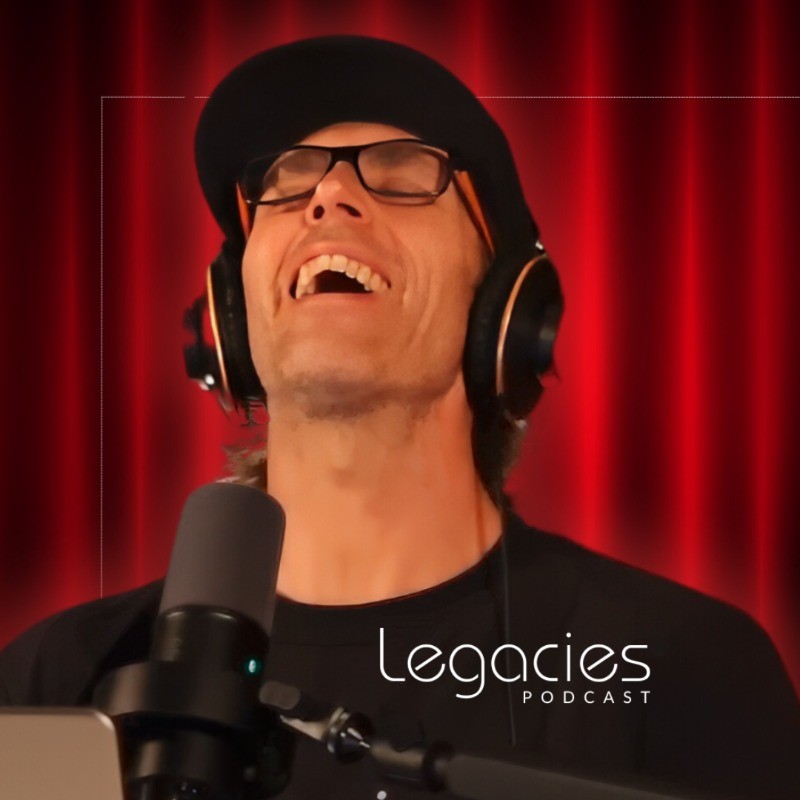
Tom Ritchie discusses stoicism as an ongoing practice and describes learning to lead with greater empathy after recognizing how forcefully he had once pushed other people. He traces a varied career from teenage housing insecurity, mostly couch-surfing with some nights on the street, through steel-industry asset management and an advertising media venture. Ritchie explains how his curiosity about tracking cannabis led him to join Ample Organics as director of training, bringing cultivation and team-building experience. Discussing the Legacies podcast and his wider work, he identifies normalizing conversation about cannabis as his central mission and invites people to engage with questions.

Key takeaways

  • Ritchie says reading and meditation help him practise steadiness, while acknowledging that remaining stoic becomes harder in the heat of the moment.
  • His management example replaces an immediate judgment about poor performance or leaving early with questions about what the employee is struggling with and what help would move the work forward.
  • He argues that growing excellent cannabis is only part of building a business: producers also need a recognizable brand, marketing and relationships so people become aware of the product.
  • His move into cannabis technology began with a specific question about how plant tracking could work, followed by reaching out for a conversation that exposed a role suited to his existing experience.
  • Ritchie recalls continuing the podcast when he was unsure anyone was listening, then seeing more audience engagement after many episodes; his example makes showing up a repeated action before visible momentum.
Read the transcript →

Jump into the conversation

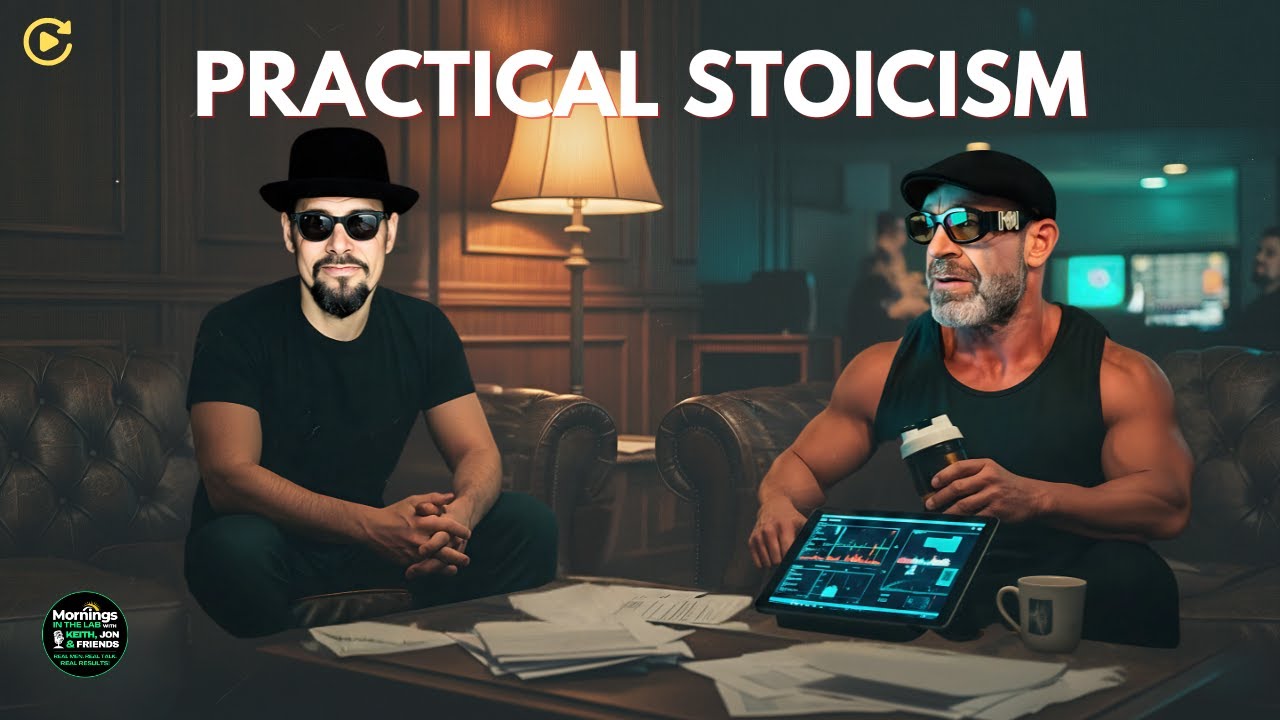
His Biohack Turned Him GREEN | Stoicism & Tactical Empathy for Men
  1. 00:00Intro & The "Green Piss" Tease
  2. 06:00The Morning Loop: Urine & Stress Levels
  3. 15:00Jon's Peptide Stack & The Methylene Blue Disaster
  4. 43:00Top 10 Side Effects of Dehydration (with Grok)
  5. 48:00Apple Watch's New Hypertension Feature
  6. 01:06:00Enter Tom Richie: From Steel to Cannabis
  7. 01:09:00The 4 Stoic Virtues & "The Obstacle Is The Way"
  8. 01:21:00Tactical Empathy: Negotiation for Leaders
  9. 01:38:00Tom's Story: Homeless in Winnipeg at 16
  10. 02:12:00Creator Spotlight: Griffin Coombs & The "What If" Method

Their story

Tom Ritchie is a communications expert specializing in tactical empathy, a powerful technique popularized by former FBI hostage negotiator Chris Voss in his bestselling book 'Never Split the Difference.' Tactical empathy goes beyond basic emotional intelligence; it involves understanding the counterpart's perspective, labeling their emotions, and using calibrated questions to navigate high-stakes conversations, negotiations, and conflicts. Ritchie appeared as an on-air guest on 'Mornings in the Lab' (Episode #2134, October 2025), hosted by Keith Bilous, where he discussed how tactical empathy can transform everyday interactions into opportunities for connection and influence [[nino-guest-lookup.json](https://workspace/home/user/nino-guest-lookup.json), [Mornings in the Lab](https://mornings.live)].

Read the full guest story

Tom Ritchie is a communications expert specializing in tactical empathy, a powerful technique popularized by former FBI hostage negotiator Chris Voss in his bestselling book 'Never Split the Difference.' Tactical empathy goes beyond basic emotional intelligence; it involves understanding the counterpart's perspective, labeling their emotions, and using calibrated questions to navigate high-stakes conversations, negotiations, and conflicts. Ritchie appeared as an on-air guest on 'Mornings in the Lab' (Episode #2134, October 2025), hosted by Keith Bilous, where he discussed how tactical empathy can transform everyday interactions into opportunities for connection and influence [[nino-guest-lookup.json](https://workspace/home/user/nino-guest-lookup.json), [Mornings in the Lab](https://mornings.live)]. With a career dedicated to teaching practical communication skills, Ritchie helps professionals, leaders, and individuals master the art of listening actively, mirroring statements, and building trust under pressure. His expertise draws from real-world applications in business negotiations, sales, leadership, and personal relationships. By emphasizing 'late-night DJ voice'—a calm, soothing tone—and techniques like summarizing the other party's position, Ritchie empowers people to de-escalate tensions and uncover hidden needs. 'It seems like you're frustrated because...' is a classic label he teaches, allowing the other side to feel heard and open up [[Martin John Training](https://martinjohn-training.com/what-is-tactical-empathy/), [MasterClass Chris Voss](https://www.masterclass.com/classes/chris-voss-teaches-the-art-of-negotiation/chapters/tactical-empathy)]. Ritchie's approach is grounded in the belief that negotiation is collaboration, not combat. He advocates for silence after questions to let the other party fill the void with valuable information, and for framing offers in terms of the counterpart's priorities. Whether in boardrooms or family discussions, his methods have proven effective in achieving win-win outcomes without aggression. As businesses face increasing remote work and diverse teams, Ritchie's insights on emotional labeling and cultural sensitivity are more relevant than ever. Through workshops and coaching, Ritchie has impacted countless careers, teaching that true influence comes from empathy on steroids. His work bridges psychology, neuroscience, and practical strategy, making complex interpersonal dynamics accessible. As he shared on the podcast, tactical empathy turns 'no' into the beginning of dialogue, not the end. Ritchie's narrative reminds us that the most powerful tool in any conversation is genuine understanding.
In their own words

Negotiation Strategy

Tactical empathy beats aggression.

In negotiations, labeling emotions and showing understanding builds trust faster than pushing hard, leading to better deals and relationships.

Overcoming Objections

'No' is the beginning, not the end.

Hearing 'no' reveals constraints and opens problem-solving; it matters for persistence in sales and leadership.

Communication Tone

Use the late-night DJ voice: calm and poised.

Tone de-escalates emotions, signaling safety and authority, crucial for high-stakes talks.

Active Listening

Mirror the last words to encourage more revelation.

Simple repetition makes the other feel heard, unlocking black swans—unexpected insights.

Appearances & videos

  • Mornings in the Lab · Community CornerSeptember 12, 2025
  • Mornings in the LabOctober 1, 2025

From the interview

Tactical empathy is emotional intelligence on steroids.
No is the beginning of the negotiation, not the end.

The guest conversation

[01:06:49] Keith: Absolutely. John Anderson, Keith Billis this morning, our mornings in the lab. We're talking stoicism and we've just had a gentleman join us in the lab this morning. [01:06:56] Keith: He's gonna, he's gonna join us a little bit later, but he is jumping in early today, Johnny. We've got Tom Ritchie here joining us from just across the country here in Canada. He's the host of the Legacies podcast, founder of High Flyer Media. He's got nearly a decade of cannabis cultivation experience before entering the corporate side. [01:07:12] Keith: And John, it was Tom who was commenting on your methol blue here as we were talking earlier today. So, Richie, dude, you're here, man. You're on the show and I'm so happy to have you on the lab in the lab this morning. Tom Ritchie, welcome to the show, [01:07:24] Tom Richie: brother. I'm glad to be here. It's what does what does stern …

Read the full transcript →
Guest gallery

Appeared in

Follow the ideas