NEXT LIVEMornings in the Lab with Keith, Jon & Friendsin 2h 14m
← All network guests
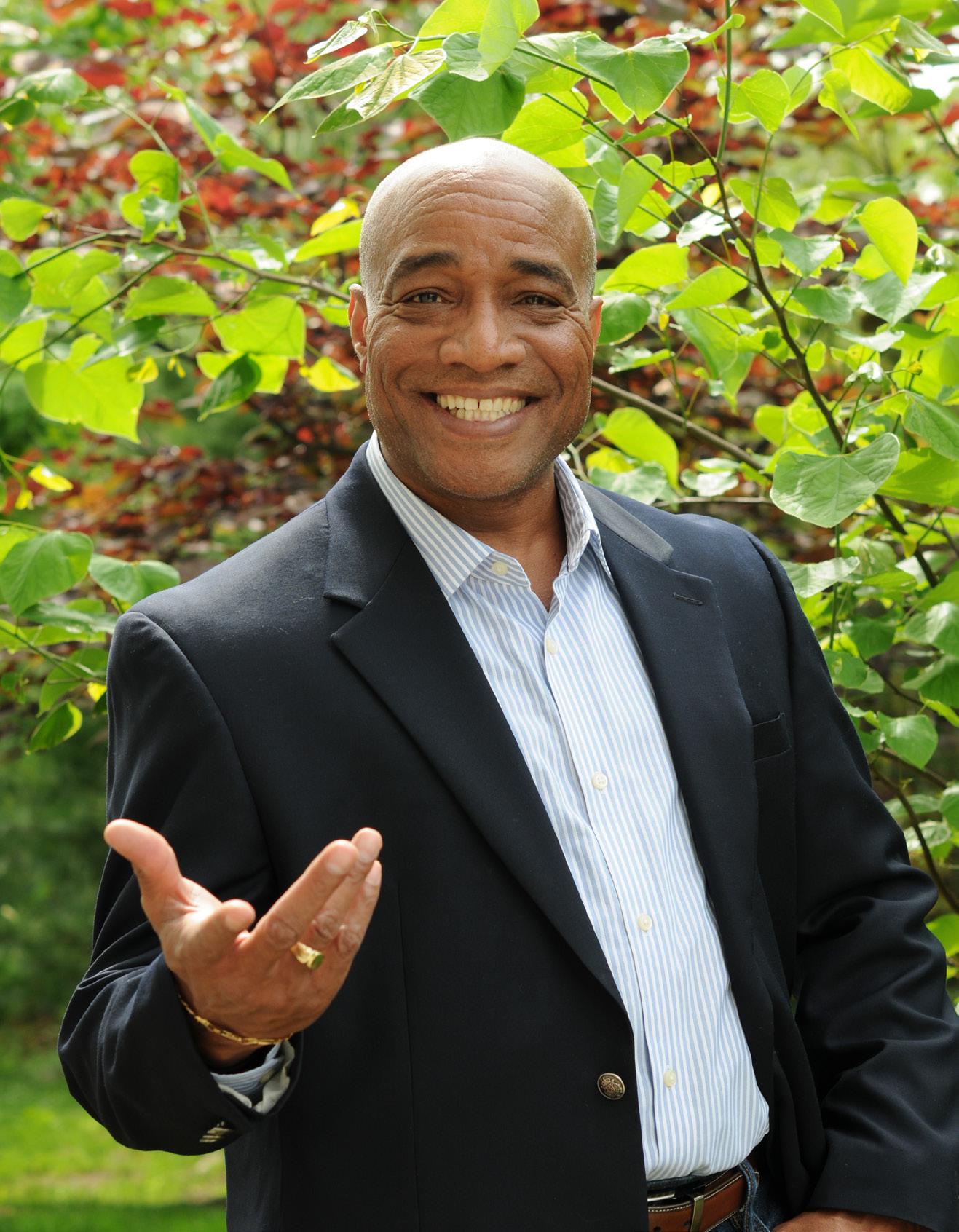
Dwayne Whitaker
Mornings in the Lab · Center Stage

Dwayne Whitaker

Retired U.S. Army CID Special Agent | Hostage Negotiator | Speaker

Tactical empathy and human connectionExecutive protection and VIP securityLeadership under extreme pressure
Watch the conversation
Watch on YouTube ↗

Questions this episode answers

How does Dwayne Whitaker approach a difficult conversation?

Dwayne says he tries to step outside his own perception and understand the other person’s perspective. He connects that approach with his experience as a hostage negotiator and describes it as building a bridge to someone.

Read this moment in the transcript →

Can empathy coexist with holding someone accountable?

Dwayne says understanding a person does not mean overlooking a harmful action or its consequences. He describes being able to acknowledge someone’s perspective while still telling them they have broken the law and must answer for it.

Read this moment in the transcript →

What does Dwayne Whitaker say builds trust under pressure?

Dwayne emphasizes being honest, using simple language and standing by your word. He says doing what you promised helps the other person see that you are being real rather than trying to trick them.

Read this moment in the transcript →

Summary

Dwayne Whitaker draws on his Army CID and hostage-negotiation experience to discuss calm communication and understanding another person’s perspective. He describes empathy as compatible with holding someone accountable for harmful actions. His examples emphasize simple language, honesty and keeping promises when trying to build trust.

Key takeaways

  • Whitaker describes meekness as strength under control and recalls calming a conflict by stating plainly that he wanted peace.
  • He says understanding someone’s perspective does not require excusing their conduct or abandoning accountability.
  • His negotiation examples rely on being truthful, using simple language and doing what he said he would do.
  • He points out that people may share basic needs while ranking security, health or wealth differently.
Read the transcript →

Jump into the conversation

Hostage Negotiator Reveals the Spy Trick That Changes Everything | Dwayne Whitaker
  1. 00:00Introducing Dwayne Whitaker: Brooklyn to the battlefield
  2. 03:00Hawks and Doves: why peace is so hard to find
  3. 05:30Perception vs perspective: the spy trick that changes everything
  4. 08:00Hostage negotiation: real stories from the field
  5. 13:00Tactical empathy and treating people like humans
  6. 16:00What movie best represents Army CID? Jack Reacher
  7. 22:00The Guthrie case and Monday morning quarterbacks
  8. 26:00Marine stops armed robbery: breakdown and analysis
  9. 32:00The six basic human needs and what drives us

Their story

Dwayne Whitaker is a man who spent the better part of his adult life doing work that most people only encounter in movies. Born and raised in Bedford-Stuyvesant, Brooklyn — a neighborhood whose culture of toughness and street-level social intelligence shaped him long before any military training could — Dwayne entered the U.S. Army and discovered that his natural instincts for reading people, building trust, and finding connection even in adversarial situations were not common. They were rare. And they were valuable.

Read the full guest story

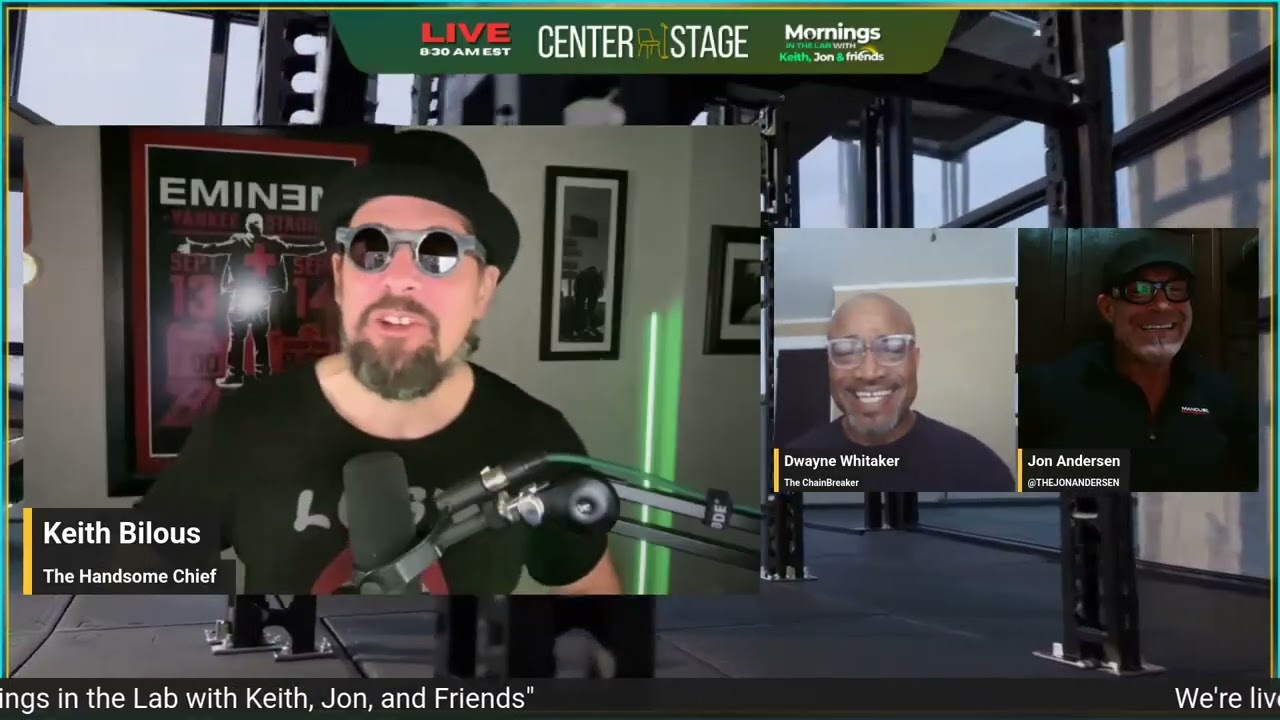
Dwayne Whitaker is a man who spent the better part of his adult life doing work that most people only encounter in movies. Born and raised in Bedford-Stuyvesant, Brooklyn — a neighborhood whose culture of toughness and street-level social intelligence shaped him long before any military training could — Dwayne entered the U.S. Army and discovered that his natural instincts for reading people, building trust, and finding connection even in adversarial situations were not common. They were rare. And they were valuable. Over more than a decade of active service, Dwayne became a CID Special Agent — a member of the Army's Criminal Investigation Division, the military equivalent of the FBI, operating at a classification level where the stakes are always high and the margin for error is narrow. He served across multiple theaters: New Jersey, Germany, South Korea, and beyond. His portfolio was as broad as the range of human darkness: drugs, crimes against persons, forensic work, anti-terrorism, and high-level executive protection. He augmented Secret Service details on assignments involving two presidents, Colin Powell, and Dick Cheney. At 20 years old, still new to the work, he was navigating environments that veteran operators found harrowing. But the assignment that would come to define Dwayne's understanding of human nature — and that would give him the framework he uses in every conversation today — was his role as a primary hostage negotiator for New York and New Jersey for approximately two and a half years. In that role, he developed what he calls the discipline of perspective-shifting: the ability to exit your own perception and enter the cognitive and emotional landscape of another person, even one who is doing something terrible. Not to condone. Not to reason away accountability. But to understand — because understanding is the only path to resolution. The insight he brings from that work is deceptively simple and counterintuitive: people don't care what you know. They remember how you made them feel. Dwayne tells the story of a young man he arrested for a significant drug offense, treated with dignity and humanity despite the criminality of the act. Years later, that man tracked Dwayne down to thank him — having turned his life around, finished school, and built a business — because Dwayne treated him like a human being. That interaction is both a personal validation and a universal lesson. Dwayne's framework — one he articulates with natural clarity and a Brooklyn realness that makes it land differently than any corporate training manual — is built around perspective versus perception. Everyone operates from their own perception, which is unique and non-transferable. The only way to influence, connect, or resolve conflict is to shift into someone else's perspective: to understand what they see, what they fear, what they need. He demonstrates this through a beloved Bugs Bunny illustration — the one where Bugs pulls the gun down into the hole and emerges standing beside Elmer Fudd, having maneuvered from target to ally without the opponent noticing the transition. Dwayne Whitaker appeared on the Center Stage segment of Mornings in the Lab, where the hosts — clearly struck by both his background and his natural charisma — spent much of the conversation drawing out the lessons from his career and applying them to everyday leadership, communication, and human connection.
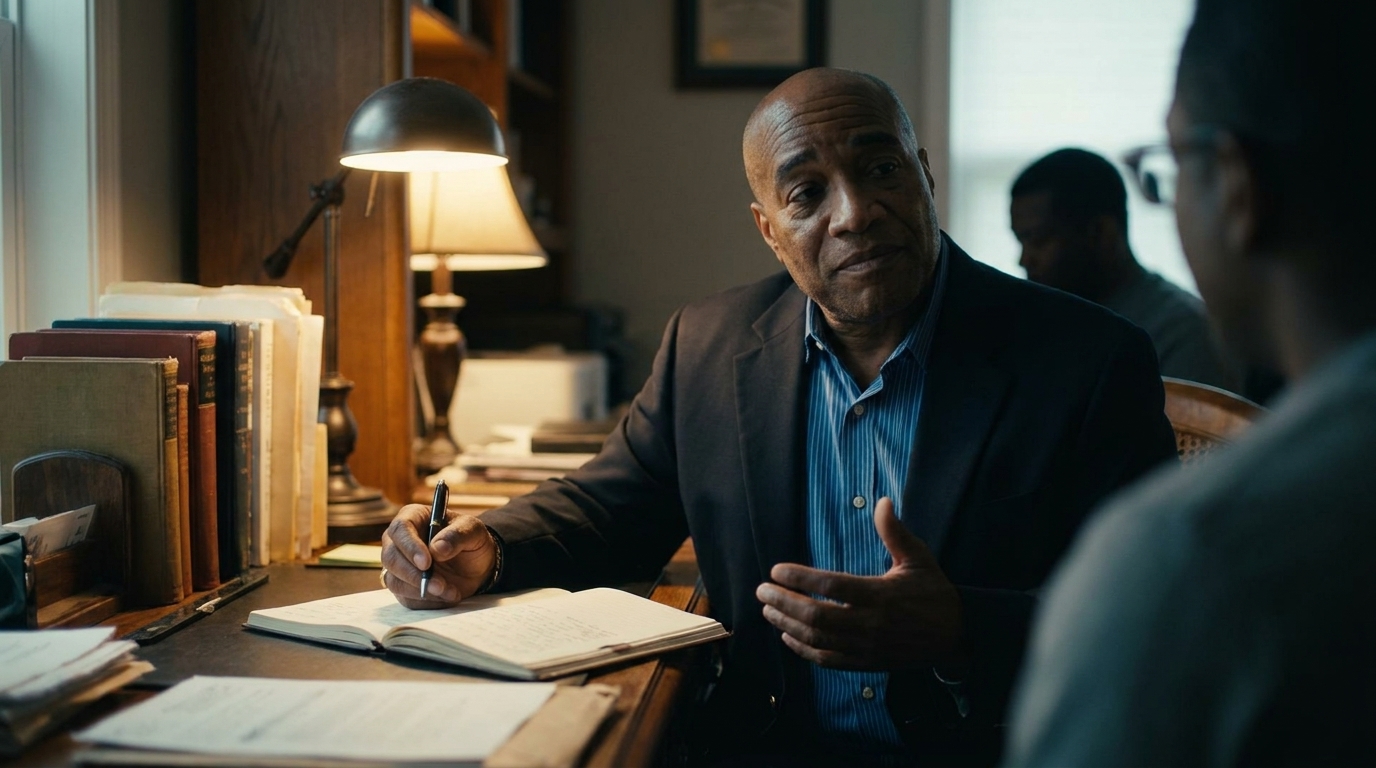
In their own words

Clarity as the path to peace

Clarity is just another way to find your own peace, you know.

Dwayne's first meaningful line on the show — a philosophical observation made in response to learning that his wife had told the hosts he said 'I want peace' early in their relationship. The connection between clarity and peace reveals the operating principle behind his entire career: clarity about situations, people, and motivations is the prerequisite for any resolution.

Baptized by fire as a hostage negotiator

In my career, my professional career as a CID special agent, one of my tasks was I was a primary hostage negotiator for New York and New Jersey for like two and a half years. So, I was baptized by fire early.

Dwayne describing the defining assignment of his military career — a role that forced him to develop perspective-shifting and tactical communication under genuine life-or-death stakes in one of the most pressure-intense operational environments imaginable.

Perception vs. perspective: the spy trick

I got to get out of my perception and get into your perspective.

Dwayne articulating the foundational principle of effective hostage negotiation — and, as he makes clear, of all human influence and connection. Moving from perception (your own interpretation) to perspective (another person's lived reality) is the mechanism behind every successful negotiation, sale, conflict resolution, and meaningful conversation.

People remember how you made them feel

People don't care what we know. They just remember how you made them feel. And that's a jewel that I always took with me.

Dwayne's most shareable and universally applicable insight — drawn directly from his career in law enforcement and hostage negotiation. The drug offender who returned to thank him years later is the story that proves this principle is not a platitude but an operational fact.

Treating people like humans even when arresting them

I had this kid walk up and shake my hand. He said you arrested me. He walked up to me and thanked me because I treated him like a human being. And as a result of that, he learned the lesson, changed his life, started, went, finished school, started his own business.

Dwayne's most powerful story — a validation of his entire operating philosophy delivered by someone who had every reason not to be grateful. Treating someone with dignity in a moment of their worst choices is not weakness; it is the most powerful intervention available to a person in authority.

Tactical empathy in live hostage negotiations

I want to keep you alive, you know. So there's people over there that want to take you out. So, I want to keep you alive.

Dwayne recounting his approach during an active hostage situation — aligning himself with the subject's most fundamental interest (survival) rather than positioning as an adversary. This is the essence of tactical empathy: find the shared goal, make it explicit, and let that shared interest become the bridge to resolution.

Resolving a hostage situation through trust

After about five hours, everybody came out. Now he became worried about getting killed coming out. So I got him out and said, 'Look, you do what I say I do. You'll get out of this alive.' And that was it.

Dwayne describing the culmination of a real hostage situation — five hours of relationship-building that ended with the subject trusting him enough to walk out alive. The simplicity of the resolution ('you do what I say, you'll get out alive') is the payoff of the entire framework.

The philosophy that carried through life

You know, it's it's that's what made me carry that through life — when I had a kid walk up to me and told me, 'I did wrong, but I want to thank you for treating me like a human being.'

Dwayne identifying the moment that crystallized his life philosophy — the intersection of professional performance and human dignity. This is the lesson that travels across every domain: from military operations to marriage to business to the morning show conversation he was having with Keith and John.

Appearances & videos

Original interview details

Hostage Negotiator Reveals the Spy Trick That Changes Everything

Episode #CS-033

Center Stage

  • Mornings in the Lab · Center StageFebruary 23, 2026Watch →

From the interview

I got to get out of my perception and get into your perspective.
People don't care what we know. They just remember how you made them feel.
I had this kid walk up and thank me because I treated him like a human being. And as a result of that, he learned the lesson, changed his life, started his own business.

The guest conversation

The original excerpt is preserved below, followed by an additional guest conversation. Timestamps refer to each recording.

Original published excerpt We're about to welcome someone special to the lab. A man who spent a lifetime making other people feel safe. Born and raised in Brooklyn, New York, service wasn't a phase for him. It was a standard. CID special agent worked across New Jersey, Germany, South Korea, and beyond. He's handled pressure most people only watch in movies. Over 10 years in the US Army, including military police at West Point. That kind of discipline doesn't talk loud. It shows up on time. And yes, he's Cheryl Whitaker's husband. Dwayne, welcome to Mornings in the Lab. We're honored you're here. >> Dwayne. Dwayne. >> Oh, yo, what's up, guys? Good morning. Good morning. >> How are you? >> Yes, we made it. You made it in with us, my friend. How are you, pal? >> Oh, man. Happy to be here, meet you guys, and pleasure to meet you, John. Excited to hang out with you guys, man. I got to say, b…

Read the full transcript →
Guest gallery
Pre-show shareable graphic generated by the Authority Page Builder.
Announcement card · Pre-show shareable graphic generated by the Authority Page Builder.
Clarity as the path to peace
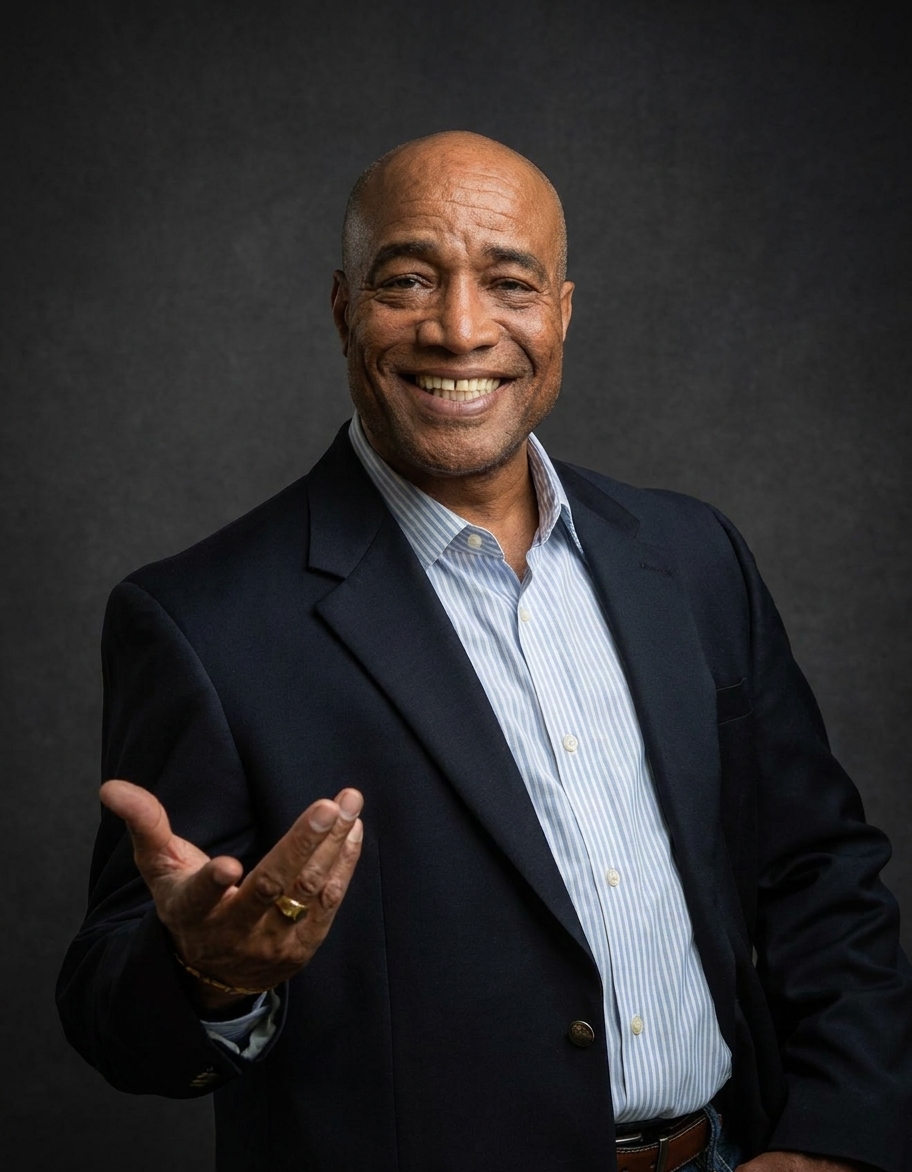
Original headshot ↗
Conversation topics

Introduction: Brooklyn-born, Army-disciplined · ~3 minutes · The hosts introduce Dwayne as a man born in Brooklyn whose life has been defined by a commitment to making others feel safe — over 10 years in the U.S. Army, CID Special Agent, and husband of Cheryl Whitaker. His first line — 'I want peace' — sets up the philosophical dimension of the conversation. · The 'I want peace' philosophy and seeking clarity · ~4 minutes · Dwayne connects his early statement to Cheryl — 'I want peace' — to his broader operating principle that clarity is the mechanism for finding peace. Drawn from military culture ('KISS — Keep It Simple, Stupid'), this simple framework guides every aspect of how he engages with the world. · The perception vs. perspective framework · ~6 minutes · A former intelligence operative's video clip triggers a rich discussion of perception versus perspective. Dwayne explains why most people spend their lives trying to convince others of their own perception — and why the only way to influence, connect, or resolve conflict is to shift into another person's perspective. He illustrates this with his Bugs Bunny analogy. · Career overview: CID, hostage negotiation, protection · ~5 minutes · Dwayne describes the full breadth of his Army CID career — from drug enforcement and homicide investigations to forensic work and anti-terrorism — and clarifies the distinction between CID and Secret Service. He references the comparison to Jack Reacher and describes the emotional and operational range of the work. · The hostage negotiation years: baptized by fire · ~7 minutes · Dwayne recounts his two and a half years as primary hostage negotiator for New York and New Jersey, describing the live case in which five hours of trust-building resolved a situation in which he was invited into a building full of weapons and hostages. The discipline of perspective-shifting played out in real time under lethal stakes. · The man who came back to thank him · ~4 minutes · Dwayne shares the story that crystallized his life philosophy — the drug arrestee who found him years later to say thank you for being treated like a human being, and who had since transformed his life. This story is the proof of concept for his entire framework of human-centered engagement. · The six basic human needs and what drives behavior · ~4 minutes · Dwayne introduces the framework of six basic human needs — security, love, acceptance, respect, and others — and explains how understanding what sits at the top of someone's hierarchy is the key to understanding their behavior and finding the lever that creates connection and movement. · Brooklyn in me: authenticity, humor, and the real Dwayne · ~3 minutes · The conversation gets warm and funny as Dwayne's Brooklyn personality fully emerges — the Bugs Bunny illustrations, the self-deprecating humor, the directness. He and the hosts find common ground on authenticity as a non-negotiable, and the segment ends with genuine rapport and laughter.

Appeared in