Skip to the appearance

Center Stage · Guest appearance

Bill SullivanThe hidden life of a parasite.

What makes a parasite so hard to clear—and what can it teach us about behavior? Bill Sullivan joins Keith and Jon to explore Toxoplasma, the difference between animal experiments and human correlations, and the moment under a microscope that set his career in motion.

Center Stage · Episode 318528:46

Full appearance 28:46

Illustrative Center Stage production artwork featuring Bill Sullivan and Sophia Grant.

Worth taking with you

Two moments. A bigger story.

Watch it. Keep it. Pass it on.

The parasite’s life cycle 70 sec

Illustrative artwork featuring Bill Sullivan and Sophia Grant.

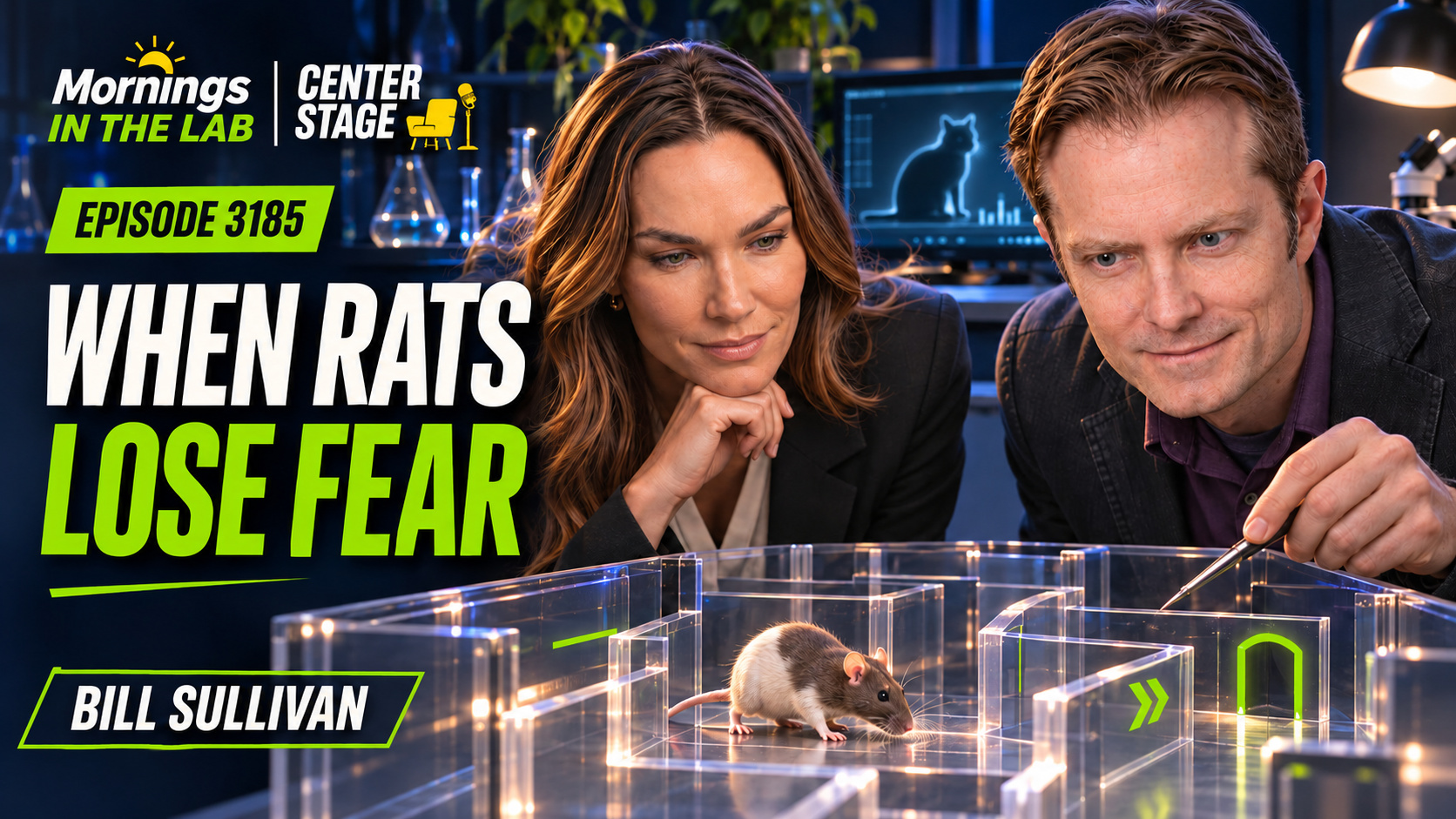
When rats lose fear.

Bill explains why a change in an infected rodent’s response to cats matters to Toxoplasma’s life cycle. This passage describes animal findings; human behavioral associations do not establish the same causal effect.


Artwork

Finding his research calling 81 sec

Illustrative artwork featuring Bill Sullivan and Sophia Grant.

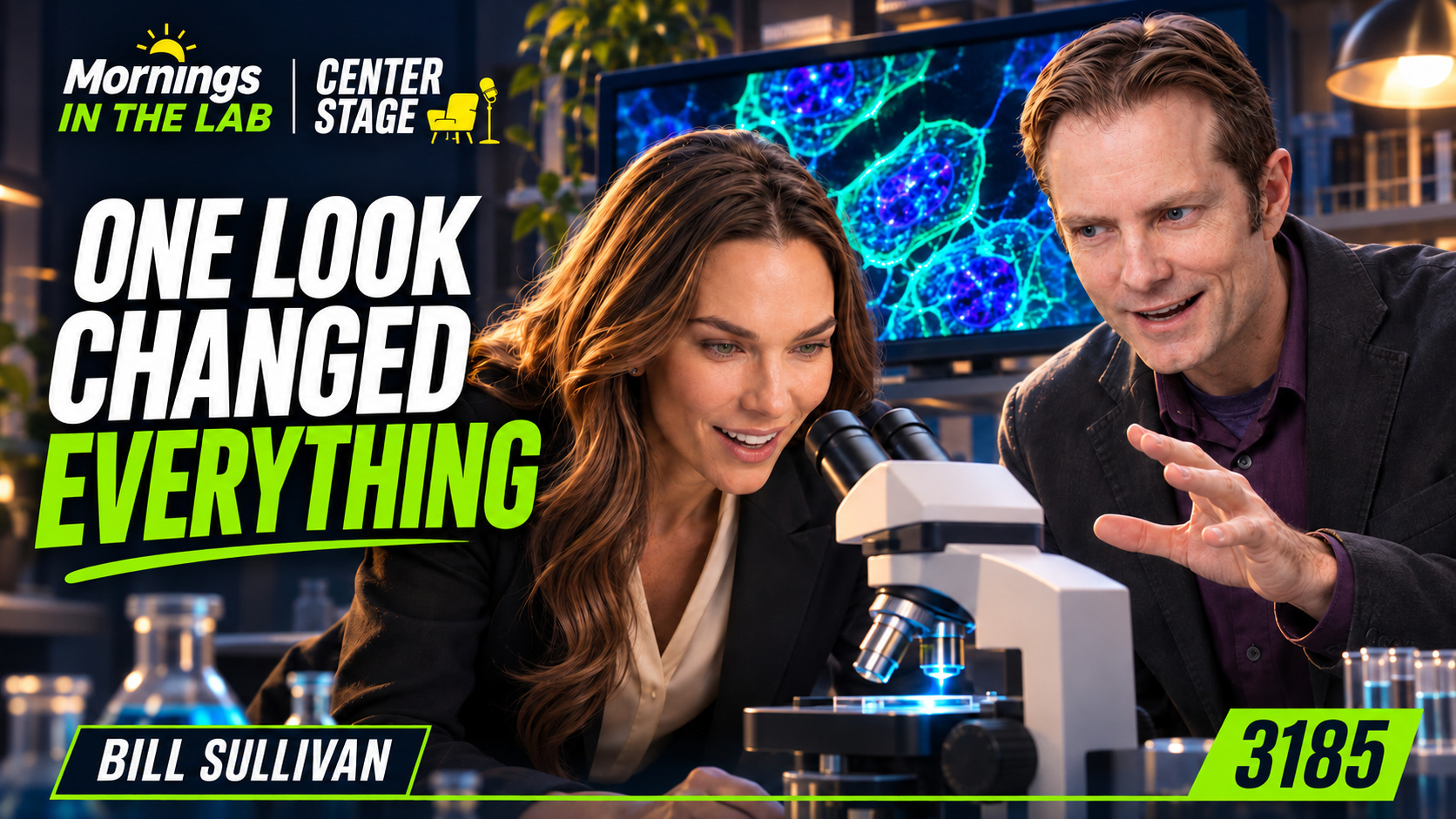
One look changed everything.

An approachable mentor brought Bill into a lab. Watching parasites move through cells convinced him to stay. He recalls the graduate-school discovery that launched decades of research.

Artwork

In the guest’s words

“I wanted to work with this guy.”
Bill Sullivan

Sophia’s produced introduction and Bill’s complete visit through his farewell are included, along with Sophia’s later question. A short host-only promotional tease between introduction and interview is removed. Bill leaves before the hour-two reset. Times follow this guest edit.

Beyond this conversation

Meet Bill.

Infectious-disease researcher · Indiana University professor · Author

Bill Sullivan, PhD, is a Showalter Professor at Indiana University School of Medicine, where he studies Toxoplasma gondii and the biology that allows this parasite to persist inside its hosts. He began studying Toxoplasma as a graduate student at the University of Pennsylvania in 1994 and joined the IU faculty in 2003. He is the author of Pleased to Meet Me: Genes, Germs, and the Curious Forces That Make Us Who We Are and writes about science for general audiences.

Bill speaks as a biomedical researcher and science communicator, not a physician. Interview summaries distinguish research findings, correlations and experimental treatments. Sophia Grant presents the produced introduction and a later recorded question.

Ideas worth returning to

From the conversation.

Key questions, answered from the interview.

Editorial summaries of Bill’s account. Follow each source to read the supporting words in context.

How does Bill explain testing for Toxoplasma infection?

Bill says he does not think people can reliably diagnose themselves from symptoms or behavior. He describes blood tests that look for antibodies to Toxoplasma and explains how researchers use those results in epidemiological studies.

Read source · 01:30–02:10 ›

Why is Toxoplasma difficult to eliminate?

Bill distinguishes treating an active infection from eliminating the parasite’s persistent tissue cysts. He says existing treatments do not clear those cysts and describes experimental compounds his laboratory is studying to reduce them. He frames complete elimination as a research goal, not an available cure, and raises questions about what future treatment might reveal about behavior.

Read source · 15:50–16:27 ›

What real biology inspired The Last of Us?

In response to Sophia’s question, Bill connects the fictional story to fungi that infect insects and alter their behavior. He describes an infected ant leaving its colony, climbing vegetation and becoming a source of spores that can infect other ants. He explicitly separates that real insect biology from the fictional scenario of a fungus turning people into zombies.

Read source · 23:00–25:15 ›

The words, in context

Read the conversation.

Every timestamp opens the full appearance above.

Automatic transcript, not fully reviewed against the audio. The original contains unreliable speaker labels and overlapping voices; uncertain labels are removed and passages remain “Show audio.” Words, names and attribution may contain errors. The original captions are preserved in the source archive. Times refer to this appearance, not the full episode.

72 passages

Show audio

Nation, imagine feeling perfectly fine while a parasite you picked up years ago is still tucked away in your brain. Bill Sullivan studies that parasite. He's got a talk called How My Lab Will Stop the Zombie Apocalypse. I'd go. Are you coming along, John? The parasite is called toxoplasma, and it can lie dormant in tiny cysts. Here's the catch: drugs can treat the infection while it's active.

Link to passage

Show audio

The parasite can survive treatment inside those cysts, and if your immune defenses weaken, that same parasite can wake up years later and make you seriously ill. Bill and his team found a clue. When the parasite goes dormant, it changes which proteins it makes. I thought the zombie apocalypse was the creepy part. Turns out it's the bit where everything goes quiet.

Link to passage

Show audio

Bill, we've got questions. Welcome to the lab But before we do that, let's bring up our guest this morning. This morning, can you trust your memory, Bill Sullivan? What's going on, Bill? Good morning, guys. It's a pleasure to be here. It's a pleasure to have you here. We're talking parasites, my brother. That's right. Toxoplasma gondii is the one we've been studying in my lab.

Link to passage

Show audio

I've been working on that- … since I was a graduate student way back when. A fascinating parasite. About a third of the world carries this parasite in their brain, and virtually no one knows about it. So right, let's- Dude … let me jump in right there, brother. First off, pleasure to meet you. So a third of the people, what is it that they demonstrate or that they do or that you see that helps you identify that they have it?

Link to passage

Show audio

So, like, give us a way to- Oh, yeah … if there's… if it's possible to self-diagnose, let's talk through that. I don't know that it's possible to self-diagnose. There are some risk factors that you can make some correlations to. But Jon, to answer your question, the primary answer we get is very quantifiable. It's scientific. It's a blood test. So when people, um, you know, submit to physicals or volunteer for certain studies, we do epidemiology studies for toxoplasma positivity.

Link to passage

Show audio

We can see antibodies to toxoplasma in people's blood, we consider them positive for the parasite, and we deduce from that that they currently have the latent form in their brain if they're not showing any overt symptoms at the time. So what are the, what are the severe symptoms of this? Well, this is what we call a stealthy parasite. Toxoplasma is a single-celled organism.

Link to passage

Show audio

Okay? In scientific terms, that… we call that a protozoan organism, and it's transmitted to humans and virtually all warm-blooded animals, uh, through the cat feces, its eggs. It enters life in a very unglamorous way. It comes out of a cat's rear end in a pile of crap and- Oh, Billy, you hit- you hit the mute. There we go. Keep going, sorry.

Link to passage

Show audio

A- and those, um, those parasite eggs are in- are highly infectious, and they're stable in the environment for up to one to two years. That's one way to get the parasite. Jesus. Second way to get the parasite- So, so real quick, if, if someone's ever played with cat shit, they've got this thing Yeah, I generally don't advise playing with cat shit. That's not a good way to start your day or- Just, just, just kind of helping people understand here But you bring up a really good point, Jon.

Link to passage

Show audio

You do have to be very careful if you own a cat to, um, properly take care of it. In other words, clean the litter box promptly, because those parasite eggs take about 24 hours to undergo a process called sporulation to become infectious. So if you clean up the cat shit before that happens, probably gonna be okay.

Link to passage

Show audio

But a really clinically important reason why we need to do that is because one of the other ways this parasite can transmit is from mother to child. Really? So many, um, you know, many mothers who are pregnant- One of the first things the doctor says is get someone else to clean the litter box. Toxoplasma is why. Because if she acquires the parasite, becomes infected for the first time in her life during the pregnancy, the parasite can cross the placenta, uh, and infect the fetus, and that can cause, uh, abortion, it can cause

Link to passage

Show audio

stillbirth or congenital birth defects. Uh, and that's a very, a clinically important reason why we need to be very careful about this parasite. The third reason, and this is another biggie, eating undercooked meat or unwashed vegetables can also- Well, can I, real quick, can I, can I go back real quick? … uh, transmit the parasite. We'll go quick back to the… Let me just ask on the cat shit. So I was making a joke, I said play with cats.

Link to passage

Show audio

But if you're cleaning up cat, cat shit and you get some on your hand, is that enough? I mean, just have contact with it? Oh, no. No, good point. Um- So you gotta wipe this shit on your face to get it. N- no. You literally have to ingest it. Oh, Christ. Okay. So, so- So we're, we got, so we got a little bit of a barrier here. But there's- Got a little bit of a barrier, but- … it gets interesting, okay?

Link to passage

Show audio

Real quick. Fucking God. If you don't, like, wear gloves or wash your hands and you accidentally eat a hot dog or something after you clean the litter box- … you know? Yeah. Yeah. That's gonna- Don't dip your hot dog in the cat shit. Yeah. I- it basically, you've put a little more than mustard on that hot dog, right? Yeah. Yeah. Um, so that, that is the oral, the fecal-oral route is one way, but, and this is where, like, kitty litter gets a little dangerous, and in dry households it can, it can dry that out, right?

Link to passage

Show audio

You can inhale. There's evidence that inhaling these oocysts, either from the litter box or a dirty litter- Oh, really? or even out in the environment, you know, like a sandbox or a garden, anywhere cats like to go to the bathroom, you could potentially inhale the cysts. I never liked sandboxes for that fucking reason. You know, you're, you're making a sand castle, next thing you got fucking cat shit.

Link to passage

Show audio

Hey, Bill, a solution, not just get a fucking cat. Have a dog instead. That's one way you can handle it. But, you know, but, you know, real quick, did you- See, I knew it, Anderson. I knew it, Anderson. Did you, did you hear- 'Cause I, I want a fucking dog anyway. I don't want a cat anyways. I just want, I want- Well, brother, did you hear? I stopped him when he opened up the next topic about- eating fucking raw, rare meat. I was like- I know … "I don't know if I'm ready to hear that one yet." I know.

Link to passage

Show audio

Let's go back to the cat shit, 'cause I do- I heard you rewind it. I was like- I was like, "No, I'm not ready to go there yet. I, I'm gonna, I'm gonna procrastinate on the cat shit a little more." Yeah. I'm sorry, John. I, I have to, I have to be honest and say- Goddammit Oh, my God … I was thinking I was Scot-free 'cause I live in a cat. But to Keith's point, you know, there was actually a study that just came out very recently that shows- Um, that people who, or countries who have

Link to passage

Show audio

high cat ownership tend to be happier. Now, that's a correlation. I don't know how much, you know, uh, you'd want to- Bullshit … bet on that kind of study. But what we can, uh, say safely is that a lot of people, I don't think the three of us perhaps, but a lot of people get a lot of, um, you know, reward from owning a cat. And they can be very therapeutic- My, my middle daughter is, is exactly that person you're talking about in certain cases.

Link to passage

Show audio

We, we, we are just, um, you know, advising people to be responsible in how they take care of that cat. You know, there's diseases you can get from a dog as well. Um, but, but you know, at the end of the day, I don't own a cat, not because of toxoplasma, it's because I'm allergic to them, and I really don't… You know, if I wanted to talk to something that didn't care if I existed or not, you know, I got my children for that.

Link to passage

Show audio

So I don't, I don't need a cat. So let's get into the meat. How much fucking… Because I eat a lot of fucking meat, baby. Yeah. I eat a lot of meat, and I've eaten a lot of fucking raw meat, and I eat rare meat almost fucking daily. Yep. I, and yeah, yeah, and a lot of Americans do. That is, um, you know, people are- Well, and this week of Thanksgiving, there'll be a lot of people crushing meat.

Link to passage

Show audio

Yeah, yeah. A- and to overcook it, a lot of people, that doesn't work well with their palate. No, that doesn't work at all. They prefer it, uh, um, a, you know, uh, an undercooked form. What I can tell you, John, is that American beef and, um, uh, swine, generally pretty safe compared- Oh … to some other countries. Oh, really? Um, the, um, level of toxoplasma in, uh, those animals, fairly low, especially if they're factory farmed.

Link to passage

Show audio

The risk does increase if they're on, um, an organic farm, you know, which is a little counterintuitive, but- No shit those farms are not, um, as well regulated and controlled as some of the factory farms. In other words, you may have feral cats- So- … running around at the same time. Well, I thought you were gonna say, "So all the fucked up shit that Americans- … that farmers do to their cows actually kills this stuff." Well, it doesn't kill.

Link to passage

Show audio

It just helps them prevent… It prevents them from getting it. Because if, if the animal's on a farm where feral cats are running around, there's really strong odds that that animal's going to be infected with toxoplasma. It incysts in their muscle tissue. Just like at the introduction we said it incysts in the brain, toxoplasma loves the brain, it loves the heart, it loves the muscle tissue.

Link to passage

Show audio

So if you have an infected animal on your plate and that meat's not cooked to 165 Fahrenheit, um, you know, if it's, if it's infected with toxoplasma, that's a good way to catch the parasite Interesting Lamb is one of the major culprits. That is one of the, um, foods that tends to be served on the less well-cooked side. And sheep and lamb have a preponderance of toxoplasma.

Link to passage

Show audio

Um, in fact, that is probably one of the most common, uh, animals through which people, uh, acquire toxoplasma infection So once you got this shit, what starts happening to you? Yeah. Is it, is it like g- is it like catching fucking mad cow disease where your brain starts chewing itself from the ins- inside out? No.

Link to passage

Show audio

No. But that's what's so stealthy about it. This thing is really sinister, really devious. In most normal, healthy people, this parasite doesn't do much more than, like, give you symptoms of a cold or minor flu. You will never know you got infected with it. Um, and this is why so, I, you know, I get emails from time to time, uh, from people who just had a congenitally infected infant.

Link to passage

Show audio

This happens up to 4,000 times in the United States every year, and we- Good Lord … don't test for it, okay? It costs us between $8 and $10 billion, um, in, in taxpayer money to deal with this problem, whereas a testing program would be even cheaper. Um, but that's, that's another can of worms. Uh, no pun intended. Um, but- … but, but yeah, you, you got, you, you initially get very minor illness if you have symptoms at all.

Link to passage

Show audio

But, uh, what is very cryptic about this is that even after the parasite goes into its encysted form, and this can take place inside of your neurons, okay, inside your brain cells, if you become immunocompromised later in life, that can reactivate and cause a life-threatening acute infection. Or, as some studies suggest, it starts to, you know, deviously, uh, potentially modify your behavior and even your personality, and this is

Link to passage

Show audio

where s- things get really interesting. And, you know, we can't, we can only do correlational studies in humans, but we can do them from a variety of angles, and we keep seeing some of the same trends popping up. But in well-defined laboratory or field experiments, you can positively say that latent toxoplasma infection has a major impact on the behavior of rodents, like rats and mice.

Link to passage

Show audio

Wow. Wow. Like, what does it do to them? Yeah. What are they doing? They, they get really strange. They get really weird. The primary thing that gets the most press is that rodents that are infected with toxoplasma, and this is the latent form. There's no, like, symptoms. You can't tell this, this rat is sick in any way, shape, or form, unless you go in and look at its brain.

Link to passage

Show audio

Until it starts acting all these fucked up behavior things. And then, you know, you start observing them in the cage, okay? Myself this morning live. They start running around a lot more than an uninfected, uh, mouse. They start picking fights a lot more than an uninfected mouse. And one of the more striking findings is that- Mm … if you have a uninfected mouse and it smells cat urine, for example, it'll scurry to the other end of the arena, right?

Link to passage

Show audio

It'll get a, it'll get as far away as from it as it can Of course it would. We've all seen Tom and Jerry, you know? That, that's what it should do. Yeah. Cat piss- But- … is one of the worst smelling piss Oh my God, cat piss is absolutely one of the worst smelling. You're a connoisseur of, of animal urine, Jon. I had a fucking cat that I used to be, I… We didn't get along, and the little fucker would piss in my laundry all the time.

Link to passage

Show audio

Oh. Oh, man. No wonder you don't like cats. Yeah. Well, you know, I just don't like that cat. That's true. My, my, my ex had a cat, and I, uh, we didn't get along either, Anderson, so I can, uh, I can certainly, uh, take, take- Well, once you piss in my fucking, in my, my, my freshly done laundry, we've got a problem. Yeah. Yeah, yeah, yeah, yeah. I'll remember that if I ever come to your house, Jon. That's it. That's it.

Link to passage

Show audio

Hey, so guys, the referees- So hold on. So real quick, what is the, the rat then has this stuff. What, does he run up and start lapping the fucking cat piss up? You're right. It doesn't run away from it at all. It is unafraid of it. So here's where things get really evolutionarily interesting, because that's exactly what the parasite would want to do. Once it's in the rodent brain, it would want to, um, restructure that brain, rewire it, if you will, to be unafraid of cats.

Link to passage

Show audio

Because then the infected rat is more likely to be eaten by the cat. The cat is what we call the definitive host for the parasite. It's where it wants to really be. Wow. Because only in the cat gut- Oh, Jesus Christ … is where the parasite- Wow … can undergo the sexual stage of its life cycle and make those oocysts that I talked about earlier that gets spread into the environment.

Link to passage

Show audio

So the cat is the major vehicle of transmission for the parasite. It's where it wants to be. It's the only place it can have sex, right? So it really wants to be in the belly of a cat. So if it, if it finds itself in a rat, the next best thing it can do is go to its brain, rewire it, and make it unafraid of cats. And then the cat eats it, and now the son of a bitch is back in its belly.

Link to passage

Show audio

Exactly. Yeah. Yeah, yeah, yeah. Yeah. And they've done studies to- Quite a fucking cycle of life here. Jesus Christ. Yeah, it's a s- it's a different take on The Lion King, right? Thank fucking Christ- A different kind of cycle of life cats aren't like 10 feet taller. We'd all be in big fucking trouble. Well, they've done studies in chimps, okay? S- chimps that are infected with Toxoplasma gondii are less afraid of leopards Really?

Link to passage

Show audio

Oh. Holy shit Really? So it is, oh my God. So it's, wow, that's fucking heavy. No kidding. Now, in, in humans we can't really, like, put people next to a lion cage and see if they'll jump in, um, if they're infected with toxoplasma. But we can do correlational studies, and the same theme of risk aversion pops up.

Link to passage

Show audio

So in humans that are infected with toxoplasma, for example, they're three times more likely to be involved in a car accident. They're more prone to rage disorder. They're more prone, um, to fly off the handle, um, y- you know, if they're angered, and they're more prone to be engaging in risky business, things like gambling, drug addiction, uh, things of that sort.

Link to passage

Show audio

So this theme of heightened risk-taking, uh, is, is correlated in humans that are infected. Jesus Christ. You know, I had a lot of cats when I was a kid. You're starting to describe me more and more the deeper we get into this. I'm wondering if maybe I caught this when I was a kid. Well, that kind of circles back to the beginning. How can you tell if you have it? Well, if you've been around cats or eat a lot of rare meat, and you take a lot of risks that you really can't explain, you know, there is a blood test.

Link to passage

Show audio

You can ask your doctor, uh, you know. But what if you love the life that this fucking parasite has created for you? Why take the test? Oh, yeah. Now you're getting into one of my most favorite philosophical questions. I run a lab at the Indiana University School of Medicine, and we're trying to cure this thing. Currently, there is no way to get these cysts out of your brain, okay? We can control a prolific acute infection with, with certain drugs, but they don't eliminate the cysts.

Link to passage

Show audio

Nothing can. So we've developed some compounds that can do just that. Doesn't eliminate them completely, but knocks them down. So what if we're successful one day and we can eliminate these cysts from the brain with a new drug? Would we fundamentally change some people's behavior and their personality? Yeah, I wouldn't, I wouldn't take the drug. I would like- Would that be helpful to some people?

Link to passage

Show audio

You know what? Because my risk-taking has served me fucking really well for, I, I'm living the life that I… Fuck, as a fat little boy, I didn't know how to dream this big. Keith, Jon, did you know there's another study that's been done on humans that says entrepreneurs, people who engage in risky business, are more likely to be infected with toxoplasma? I've never had a job in my life, not one. Really? I've never collected a paycheck.

Link to passage

Show audio

So, so what I- And I had fucking cats, and when I say play with cat shit, I, not that I intended to play with cat shit, but I guarantee I've had cat shit on me before. I had to clean that shit up. They shit in the house all the time, and I had to fucking clean it up. Brianna Bass is joining us. In a few moments, we're hanging with Bill Sullivan this morning. We are talking parasites. Bill, how did you, uh, how did you discover this whole situation?

Link to passage

Show audio

Well, I was a graduate student at University of Penn in the '90s, and I had no idea what I wanted to do. So for your, before you begin your PhD, you rotate in various labs, and I rotated in a couple labs. It didn't really resonate with me. I rotated in the third lab just because I really liked the guy, David Roos. He was really funny and approachable, and I thought I could get along with him well.

Link to passage

Show audio

Frankly, I didn't care what he studied. I wanted to work with this guy. And, um, I looked under the microscope, and I was watching these parasites just eat their way through human fibroblast cells in a culture dish, and I was blown away. And I was like, "This is in one-third of human brains all around the world, and there's no cure? Sign me up. I wanna work on this thing Well, brother, real quick, I would say if I was a young scientist and I was in your- I would, I would look at you and I would say the same thing.

Link to passage

Show audio

I, I like this motherfucker. I don't give a shit what he's studying, I wanna fucking join his team. Oh. So you picked up some really cool traits from that dude, and you carry a, you're, you literally pro- you are, you literally described yourself when you talked about him. Oh, well, thanks, John. That means a lot, man. Yeah. Hey, guys- You know, you're, I mean, with scientists, you're, you're a cool motherfucker. Jesus Christ- … a lot of times talking to scientists is like talking to fucking a, a brick wall that won't speak up.

Link to passage

Show audio

Anderson, I got a topic coming up- Yeah, I wish I was … I got a topic in the lab coming up this week that, uh, uh, Bill, there's scientists around the world that are arguing, and we have one that hangs out as a co-host every single Friday. His name's Dr. John Petrocelli. He's a bullshit professor. But, uh, they, uh, they're arguing over what a scientist is, Bill. And, and, and, and the idea of what science is and what science has become.

Link to passage

Show audio

And, uh, and it's interesting because science is competitive, as I'm learning from Petro. And, uh, uh, and then there's, there's folk scientists arguing about this whole thing, so that's the conversation we got coming up later this week. But before we do that, uh, Jimmy, Johnny, Bill, the referee is usually the one who stops a competition when something goes wrong. Well, I found this little event in, uh, in Poland where the, the competitor, uh, was shot by the referee during the event.

Link to passage

Show audio

Check this out. So the ref's getting something s- figured out, and the guy shoots the guy in the ass. Oh my, was that a real fucking gun? Real shotgun. Shot the guy in the ass as he was setting it up, and, uh- What the fuck? It's well, that's exactly, yeah. Well, it looks like he's even trying. Well, so it's just one of those, oh- He doesn't look like he's got much remorse either.

Link to passage

Show audio

Well, and he didn't ru- I mean, he didn't rush over there to check on the guy's ass. That's what I mean. He was like, "You fucking deserve that, you cocksucker." You know? He didn't, he didn't rush the guy. He didn't check the, he didn't rush to check the guy's ass out or nothing, but, uh- Yeah, yeah. Well, I d- don't have a blood test handy, but I'm willing to bet he's toxoplasma infected. Oh my God, Bill Sullivan hanging out with us this morning.

Link to passage

Show audio

So Bill, uh, one of the, one of the things we, we heard about during COVID was ivermectin and, uh, and parasites. Uh, please lean into, uh, that for, uh, for a couple sec- for a couple minutes before we wrap up and bring our g- uh, our next, uh, guest in, Brianna Bass. Bill. Yeah, so, uh, ivermectin is a wonderful drug if you have worms. Uh, it's a parasitic worm drug. It paralyzes the worm, um, and it works in a m- a, upon a multicellular animal like a worm.

Link to passage

Show audio

There's very little to no evidence that it works in a viral infection Um, so, and I think clinical trials have even been carried out, uh, just to thoroughly investigate the notion that it might work in some undefined way that we haven't discovered yet. But there hasn't been any promising leads that ivermectin is effective, effective against the, the COVID virus.

Link to passage

Show audio

Uh, just for the worms, 100% But it does make for a wonderful anti-worm drug. Yeah. That's, uh, yeah, well, I, I've taken it a few times, and it's been about making sure that if I got shit living in my tract, we, I, you know, I'm able to crap it out versus it qui- keeps swimming. You know, these bastards keep sw- swimming upstream. You can't get rid of them. Yeah. So Bil, what, let's- Is that because of the rare meat that you consume?

Link to passage

Show audio

Uh, you know- Are you worried about tapeworms and things like that? A buddy of mine took some ivermectin, and he sent me a fucking picture, and I was like, "Dude, tell me you're fucking getting ready to go fishing." He's like, " No." He's like, "No, this is from ivermectin." I was like, "Okay, where did you get it? I'm ready." Oh, wow. Wow. Yeah, no shit.

Link to passage

Show audio

Uh, or every shit along the way. No pun intended, right? Yeah, every pun intended. Yeah, yeah, yeah. Hey, Jimmy. Hi. Check this out. Johnny, Bill, uh, one of the things that we stand for in this lab, Bill, is never having any excuses to do something. This young lady has no fucking excuse. One leg, one arm, and she is crushing the fucking whole vault. Oh, I didn't even see the one arm.

Link to passage

Show audio

I was looking at the leg. That's fucking savage. This is not AI. That is a fucking savage right there. So if you want the definition- That, the, the one leg is tough enough. Yeah. One arm? Are you fucking kidding me? I, that girl is- Give her her leg back … dude. Two legs and one arm is still fucking crazy. I, I, I'm saying the same thing, my brother. That is fucking- That is way out there … I, I'm getting goosebumps, man. That's fucking savage … way out there.

Link to passage

Show audio

I've, I wouldn't, I would've fucking ho- I wouldn't even think that would be possible. Like, Bill, no excuse in life, is there, Bill? No excuse. Absolutely not. No excuse in life. You only live once, and it's really short. Go out there, make something happen. Yeah, yeah. And that's what the, that's what the fucking, the, the fucking, the cysts in my brain tell me to do all the time. And it, it, I don't have those cysts, and I still have that philosophy, so, uh- I love it, brother we're just a little more universally human, um, than we think.

Link to passage

Show audio

We're, we're wrapping up with Bill in a couple moments here. But before we do that, Sophia Grant, our lovely host who hosts this segment for us, uh, she's got a question for Bill, uh, before we set up hour two here. Jo- uh, Jimmy, let's bring up Sophia Grant Your public talks include how my lab will stop the zombie apocalypse. What's the wildest monster myth people bring to you that accidentally contains a real piece of biology?

Link to passage

Show audio

Oh, good one Yeah. Yeah. So one of the monster myths out there that people, uh, enjoy, you know, we're obsessed with zombies. It's, it's a, it's been- Yes … a huge part of our culture- Sure … for a couple decades now. And the latest and greatest take on the zombie, um, you know, uh, uh, cultural, um, in- invasion is The Last of Us.

Link to passage

Show audio

Started out as a video game, now it's a- Yeah … television show. Yes. Yeah And, um, everyone knows the concept. You know, there's this contagious fungal spore that people can inhale and then they become zombified. But this is actually based on a real living creature, the cordyceps fungus, or so-called zombie ant fungus. And the writers of this game and this show have done a reasonably good job of extrapolating what that fungus might look like if it were ever to exist in human beings.

Link to passage

Show audio

And the first thing I'll do is reassure you that's never gonna happen. Um, but- … this thing can invade invertebrates like ants- Um, or excuse me, it c- yeah, it can invade ants and spiders and some other things. And what it does, just like you see on the show, it attacks, um… The spores fall onto the ant, and the fungus attaches itself and starts growing throughout the ant's body.

Link to passage

Show audio

It makes its way to the brain and starts to change the, um, ant's behavior. Wow. The ant will leave the colony, which ants normally don't do, climb up to the underside of a bush or a, or a shrub, and clamp itself down on the middle of a leaf. And there it will die as the fungus takes over the rest of its body. And after the fungus- Dude … does that, it starts to rain spores down onto the ant floor where all of his little buddies are crawling, so that he's basically infecting, you know, his family and friends down below.

Link to passage

Show audio

And then those ants get infected and the cycle repeats itself. But that's exactly what is, um, d- that, that's where they drew the idea from when they created The Last of Us, and that's a real, uh, organism out there that I find endlessly fascinating. And has a few parallels to things like toxoplasma. These, uh, infectious agents get to the brain or release some agent that can contaminate the brain and fundamentally alters who we're supposed to be.

Link to passage

Show audio

Jeez. Bill Sullivan, Keith Bilous, Jon Anderson. Love it. Jonny, what an interesting, gross, sorry Bill, conversation for the last 30 minutes about parasites. Jonny? You know, I, I didn't even think it was gross. I thought it was extremely intriguing. I mean- Oh, me too … like, there'd be things- I s- I u- I use a fun word, but yeah, I agree with you. Yeah. I mean, when we're, when we're- Yeah … talking about cat shit, I'll give you- Yeah. But, but just the fact that these things- My head right now are altering our behavior, it's, whoa, way out there, man.

Link to passage

Show audio

Yeah, yeah. Br- It's, um, some really deep philosophical questions, doesn't it? Yeah, yeah. A little. So Bill, you, Bill, you might have to come back and have some of those deep philosophical questions with us because, uh, you know, we like to have them here in the lab, and I think you currently could probably fit in and have some of them with us. Brianna Bass will join us in a couple minutes. Uh, but before we do that, Bill, where can folks find you, work with you, learn more, and say, "Hey, Bill, I might have a parasite in my brain.

Link to passage

Show audio

What do I do now?" Yeah, well, go see your doctor. I'm a scientist, damn it. I'm not a, I'm not a physician. I'm a scientist, damn it. I'm not a physician. That's right. Um, so yeah, do n- I get that all the time. Do not email me pictures of your feces or anything like that. I really don't wanna see that when I open my email in the morning. I'm not a physician.

Link to passage

Show audio

I can't write a prescription for you, um, and I can't do a blood test, so I'm a scientist. I'm trying to work on new drugs that your physician then can then prescribe you. But I'll be more than happy to answer questions about toxoplasma or any other thing. I would love to come back and, um, chat with you guys. This is a great way to start the day. Yes. And, um, people can find me… I wrote a book, actually, that talks about toxoplasma and some of these other microbes that influence who we are.

Link to passage

Show audio

It's called Pleased to Meet Me. Yeah. Genes, Germs, and the Curious Forces That Make Us Who We Are. Pleased to Meet Me. Yeah. And, um, you can find that and some of my current writing at authorbillsullivan.com. Authorbillsullivan.com. Johnny, look at this dude. Look at this dude. Look at Stephen King on the right, and look at our guest today. Johnny, do not tell me this guy is not the same fucking guy.

Link to passage

Show audio

He's way better looking. I agree, but he's c- so… Who, Bill or, or Stephen? Our guest. I suspect Bill is much smarter than Stephen King, but look at… Bill, have you ever been told you look like Stephen King? Look at you. You look just like the dude, man. That's the first time I've gotten that one. But you would have- I would have to… If somebody said that, I'd… If I was you, I'd be like, "Keith, fuck off.

Link to passage

Show audio

I'm way better looking." Bill, you're awesome, man. I'm a big fan. I really enjoyed having you on the show today. I'd like to have you back and dig further into this, man. I think you… Johnny, I suspect this fellow probably has a few other interesting topics up his sleeve. Look at the bookshelf behind him, man. Do you think? Do you think? Yeah. Yeah. Do you think? Yeah, I think he has a few.

Link to passage

Show audio

So Bill, what… Do you read all those books behind you or just part of them? All of those have been read. Oh, good. The stack that I have to read is much higher, and it's in the other room. Nice. Well done. Well done. Bill- I tell you what, something tells me there's not a lot of pictures in those books. No. No, they're all pop-up books, Jon. Hey, Sullivan, you are welcome back here anytime, my friend.

Link to passage

Show audio

Anytime. You come hang out with us. Come find us. Uh, come tune into the mornings, Mornings Live with Keith, Jon, and friends. We go live at 8:00. We'd love to see you in the comments. We'd love to see your engagement, and we'd love to hear your point of view, man. I like what you have to offer. You dropped some nuggets for us today, my brother. Thanks, man. Hey, it's been a blast. Thank you, brother. Awesome. Awesome.

Link to passage

The wider conversation

A good conversation travels.

Who needs to hear this?

Send them Bill’s story.

Center Stage · Episode 3185 · November 24, 2026Bill Sullivan (guest) · Keith Bilous (host) · Jon Andersen (host) · Sophia Grant (presenter)View the published guest page ›