NEXT LIVEMornings in the Lab with Keith, Jon & Friendsin 2h 30m
← All network guests
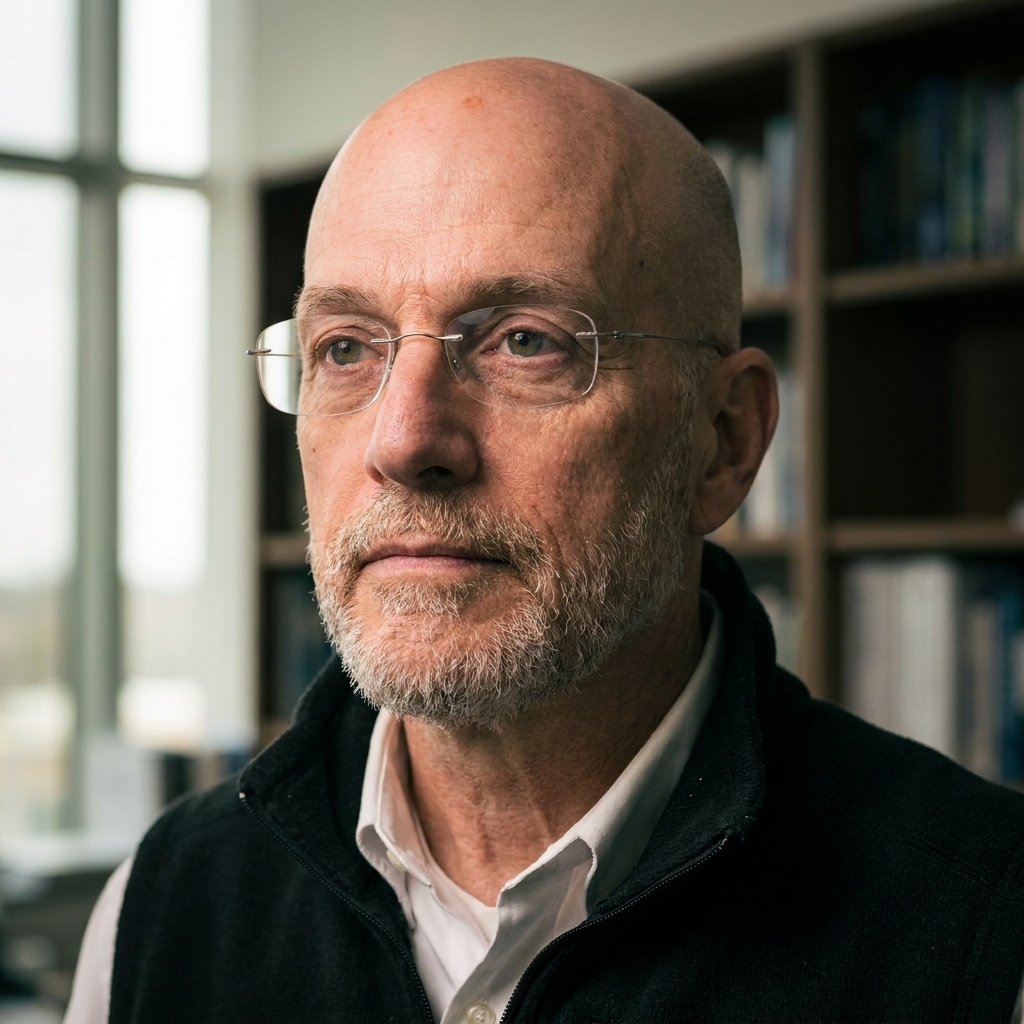
David M Porterfield
Mornings in the Lab · Center Stage

David M Porterfield

Ex-NASA Chief: Why We're NOT Ready for Mars (And the Fungi Solution That Could Save Earth)

space explorationbioregenerative systemssustainable technology
Watch the conversation
Watch on YouTube ↗

Questions this episode answers

What is mycoponics?

David M Porterfield describes mycoponics as a way of growing fungi with liquid nutrients and a ceramic interface rather than soil or another substrate. He says the fungi live in that interface and can produce mushrooms and mycelium.

Read this moment in the transcript →

How could plants and fungi support people living in space?

Porterfield describes plants as a way to produce food, regenerate the atmosphere and provide water that can be recovered. He says fungi and bacteria are also needed to recycle the inedible plant material and recover nutrients.

Read this moment in the transcript →

Why test a moon habitat on Earth first?

Porterfield calls for an Earth-based test site where life-support technologies can be validated before crews depend on them. He describes building an analogue moon base first and then taking the tested approach to the Moon.

Read this moment in the transcript →

Summary

Marshall Porterfield discusses the challenge of sustaining people beyond Earth, separating transportation from the systems needed to produce food, recycle resources and handle waste. He describes canceled American life-support research and Chinese ground trials, arguing for renewed investment and testing before crews depend on such systems in space. He explains mycoponics as a way to grow fungi using liquid nutrients and a ceramic interface, and describes research into food, materials and pharmaceutical production. He also recounts funding the initial mycoponics work himself to develop its intellectual property, with the goal of supporting future research through commercialization.

Key takeaways

  • Porterfield frames life support as a logistics problem: the more a habitat can produce and recycle locally, the less it must depend on transporting supplies from Earth.
  • He supports testing systems in stages, defending rocket-development milestones and calling for an Earth-based habitat where life-support technologies can be validated before crews rely on them.
  • His ecosystem approach connects plants that provide food and recycle air and water with fungi and bacteria that process the inedible material and recover nutrients.
  • He describes mycoponics as a production platform as well as a food-growing method, saying his team is scaling it for lovastatin production and experimenting with mycelial leather.
Read the transcript →

Jump into the conversation

David M. Porterfield: The NASA Scientist Growing Mushrooms in Space—And Why It Could Save Humanity
  1. 3:12Transportation and habitation in space
  2. 5:27Designing life-support systems
  3. 12:20Plants and resource recycling
  4. 14:15His explanation of mycoponics
  5. 21:33Funding research and protecting ideas

Their story

Marshall is professor and Ex NASA Leader. Bioregenerative life support for deep space human exploration. How technology developed for deep space is poised to spinoff a new generation of green sustainable systems for solving our environmental problems on earth.

Expertise

NASA spaceflight engineering · bioregenerative life support systems · space agriculture specialist · cellular biophysics researcher · space-to-Earth technology transfer · astrobiology systems design

Appearances & videos

  • Mornings in the Lab · Center StageMay 22, 2026Watch →

The guest conversation

[00:00:00] Maya: You've been in that meeting where the future gets treated like a cost center. A bold idea gets trimmed, then shelved, then somebody else builds the advantage you were too cautious to keep. In space, that kind of decision has a sharper edge. Food, oxygen, and biology become survival. And somehow, yes, this story runs straight through mushrooms and the moon. [00:00:22] Maya: Dr. D. Marshall Porterfield goes by Marshall. His work circles one stubborn question: Can humans survive beyond Earth? At NASA, Marshall led space life and physical sciences, where life support wasn't theory. It was mission architecture. He originated Gene Lab, opening space biology data so researchers could study what life does when Earth is gone. [00:00:43] Maya: Today, he still has one foot in the moon shot, leading NASA Leaf Science for Artemis III. But he also watched America cut bioregenerative…

Read the full transcript →
Guest gallery
Original headshot ↗

Appeared in